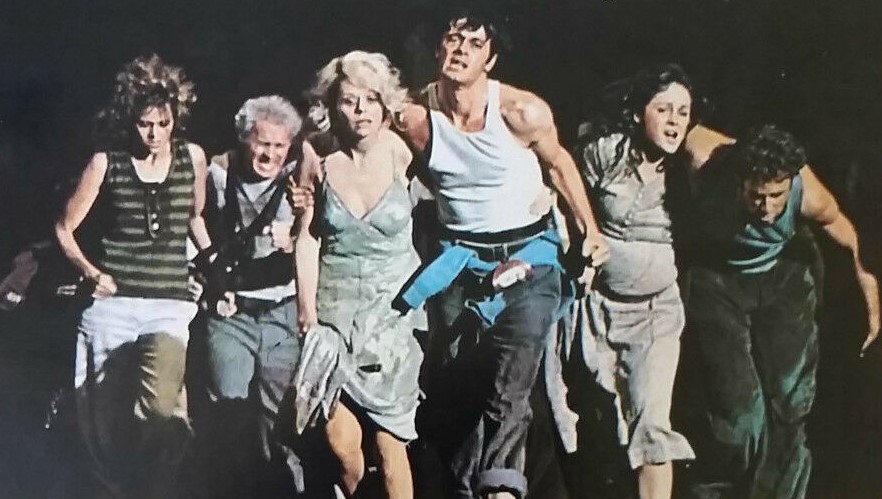
Behind the Scenes: “They Shoot Horses, Don’t They” (1969)

Dream Team Number One: Clark Gable and Jean Harlow. This was of course a good 30 years before the movie actually got made. The Horace McCoy novel was purchased in 1935 by MGM as a big-budget project teaming Clark Gable and Jean Harlow. This was despite Variety proclaiming it was “not screen material.” The premature death of Harlow put paid to the idea. Next, actor Wallace Ford (Freaks, 1932) bought it with Broadway in mind. A production was scheduled to open in 1939, but never did.  

Dream Team Number Two: Charlie Chaplin and Marilyn Monroe. When the comedian purchased the rights in the early 1950s he intended Marilyn Monroe to play the leading female. Although she was a mere starlet Chaplin had form in building up newcomers. Author McCoy had by that point become an accomplished screenwriter with over 30 credits including Gentleman Jim (1942), film noir Kiss Tomorrow Goodbye (1950) and The Lusty Men (1952) That concept fell by the wayside when Chaplin was effectively banished from America while launching Limelight (1951) in Britain.

It was another 14 years before interest in the novel was revived by screenwriter James Poe, who purchased the rights from the McCoy estate. Although most famous within the trade for being accused of fraudulent behaviour in relation to his screenplay for Around the World in 80 Days (1956). Despite an Oscar for the film he was sued for $250,000. However, he had a sterling body of work including Cat on a Hot Tin Roof (1958), Sanctuary (1960), Lilies of the Field (1963), The Bedford Incident (1965) and Riot (1969) and two other Oscar nominations.

In 1965 he had signed a multi-picture writer-director deal with Columbia. He was either going to make his directorial on The Gambler or They Shoot Horses, Don’t They. It turned out to be the latter. Failing to get the movie off the ground with Columbia or under his own steam, he turned to new studio Palomar, which was a production entity set up by the ABC television network, which bought over his rights as well as his script but kept Poe on as director.

Dream Team Number Three: Faye Dunaway. Yep, one big star, not two. Poe’s screenplay, while not eliminating the male lead, spun on a female star. Dunaway, hot after Bonnie and Clyde (1967), was offered $600,000 to play the role. Mia Farrow was also in contention, for $500,000. The only problem was, the budget could not remotely stretch to that. As helmed by Poe, it was to cost no more than $900,000. The film was scheduled to begin shooting in spring 1968 but a month later the start date shifted to June.

Two relative newcomers Robert Chartoff and Irwin Winkler were brought in as producers to move the project along. Later they would be responsible for such classics as Rocky (1976), The Raging Bull (1980), The Wolf of Wall Street (2013) and The Irishman (2018), but at this point they had just three pictures under their belt, although that included Point Blank (1967), Their first task: persuade Poe to rewrite the script. They felt the third act needed work with restructuring elsewhere to make the pay-off work.

But Poe, believing his position was sacrosanct, refused to discuss a rewrite. He refused to discuss anything, period, treating the producers as his assistants rather than people with some power within the studio. According to Irwin Winkler, “Poe seemed unaware of the of the normal process of preparation, even though he’d been around movie sets for decades.”

Realising that getting a star on their budget was impossible, Chartoff and Winkler changed tack and talked to good actors, but even then few were interested. A less dramatic star than Jane Fonda you could not imagine, her resume filled with light comedies, French films that utilised her sexuality or the extravaganza that went by the name of Barbarella (1968). But the pregnant Fonda was keen on change. The film was delayed until after she had given birth. Michael Sarrazin should have been out of the equation. John Schlesinger had lined him up for the Jon Voigt role in Midnight Cowboy (1969) but Universal, to whom he was under contract, asked too much to send him out on loan.

With no sign of the rewrites, the producers became antsy about the director. However, they showed their true mettle as producers, convincing Palomar there was no way the original budget would cover the ballroom set, huge number of extras, live orchestra and salaries. It would need to at least triple.

In a picture of one predicament following another, there was one crisis the producers had not foreseen. They were going to be fired. Apart from anything else, they were only executives on the picture with any experience, it being not only Poe’s first movie but that of Chartoff and Winkler’s superiors at the studio. The outcome – the guy who had told the pair they were being fired was shown the door instead.

Susannah York was cast after the producers saw a sneak of The Killing of Sister George (1969) at the Robert Aldrich studios. She had committed to Peter O’Toole vehicle Country Dance/Brotherly Love (1970), written by her cousin James Kennaway (Tunes of Glory, 1960). After too many delays on They Shoot Horses she planned to pull out in favour of the other film. Although Sally Kellerman (Mash, 1970) was set as a last-minute replacement, the issue was resolved by asking MGM to delay the start on the rival picture.

Believing Poe was in no position to helm such a big-budget picture enterprise, Chartoff and Winkler began the process of removing him only for Jane Fonda to dig her heels in. She changed her mind after witnessing first-hand Poe’s directorial skills – or lack of them – when she took part in a screen test for Bonnie Bedelia. Winkler recollected, “On the set Jane asked Poe questions about the blocking of the scene, why she moves in one direction rather than another, why in front of a sofa rather than behind it etc. He couldn’t answer her questions and told her to talk to the cameraman.” Exit Poe.

In terms of a replacement, Chartoff and Winkler set their sights of Sydney Pollack (The Scalphunters, 1968) with whom they had previous dealings, and William Friedkin, then being hailed for The Homecoming (1968) – luckily The Night They Raided Minsky’s (1968) had yet to be released. But studio executives had a third director in mind, Jack Smight (No Way to Treat a Lady, 1968). Friedkin should have been in pole position, having only received $75,000 for The Homecoming. His agent, sensing an opportunity, demanded $200,000. Jack Smight’s agent also got greedy and wanted $250,000. Pollack’s agent was happy with the $150,000 on offer.

When Poe was eased out, filming was announced as beginning on February 17, 1969, the budget having now increased to $3.2 million – including $400,000 for extras. However, acoustic issues – seawater had eaten away the bottom of the pier – prevented use of the old Aragon ballroom in Santa Monica. That set was constructed on the Warner lot.

Pollack then turned it down. He had reservations about the script, which had still never been rewritten. When Robert E. Thompson, a television writer but “a Horace McCoy expert,” was mooted, Pollack changed his mind. The new script contained the “flash forward” scenes that prepared audiences for the shock ending. However, the new scenes and delays in starting increased the budget which now ballooned to $4.7 million.

It turned out the director was the best actor of all. “I was impressed with Sydney Pollack’s ease on the set,” recalled Irwin Winkler. “He never seemed to be working hard and yet was able to get marvelous performances out of the actors. Everybody in the company adored him.” Asked by Winkler how he remained so calm dealing with the actors and all the extras and the complicated camera set-ups, he replied, “it was really quite easy.” That same afternoon he collapsed on set and was diagnosed with “nervousness.”

The studio, the stars, the producers, all seemed confident about the picture. All they had to do was convince the audience. But at the first preview in San Francisco the audience roared with laugher at the climactic scene. That shocked the studio to the core until the producers were able to reassure the head honchos that the “fast forwards” would smooth over that problem. Which they did.

It was nominated for nine Oscars – Best Director, Best Screenplay, nods for Jane Fonda, Gig Young and Susannah York among others. Only Gig Young won.  

SOURCES: Irwin Winkler, A Life in Movies, (Abrams Press, New York, 2019) p34-47;  “Tough Stuff,” Variety, August 7, 1935, p59; “Ford Buys for B’Way,” Variety, September 11, 1939, p42; “Dance Marathon Reprise,” Variety, August 3, 1966, p24;  “IT&T In No Way Slowing Down Theatrical Feature Program of ABC,” Variety, January 10, 1968, p4; “Crowded Slate for Palomar,” Variety, February 28, 1968, p18; “Bob Evans Chips-Service To Writers As Stars At Paramount,” Variety, May 1, 1969, p19; “Jane Fonda Gets Top Role in Palomar’s Horses,” Box Office, July 22, 1968, pW1; “Palomar Horses on W7 Space,” Variety, October 23, 1968, p3; “Jan 6 Filming Date for They Shoot Horses,” Box Office, December 16, 1968, pW5; “Cheery Side of Delay on Horses,” Variety, January 15, 1969, p21; “Winkler Wants Films With Social Comment,” Box Office, January 19, 1970, pW1.
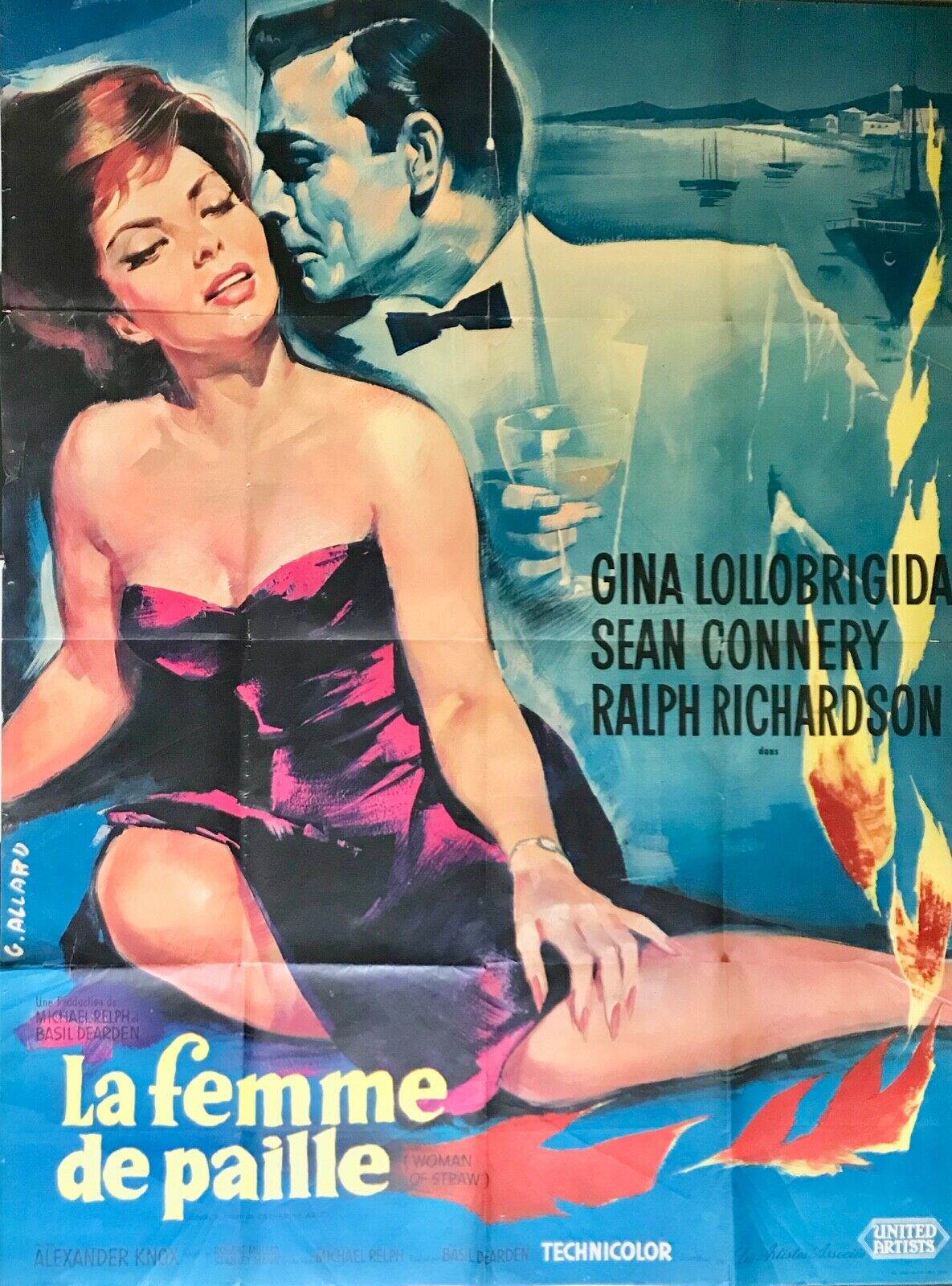
We Need To Talk About Sir Sean – Racism in “Woman of Straw” (1964)

Of course racism was endemic in Britain and the remainder of the British colonies in the 1960s where people of whatever color were treated as inferiors, underlings and at times with a brutality that bordered on slavery. So I’m not intending to say anything new here. But I was incredibly shocked by one scene of racism in Woman of Straw (1964) that I reviewed yesterday, a thriller in the Hitchcock mould starring Sean Connery and Gina Lollobrigida with Ralph Richardson as the wealthy man the subject of a murder plot.

Richardson’s character, Charles, is completely heinous, treating everyone badly, and they being in his thrall cannot bite back, unlike his dogs.

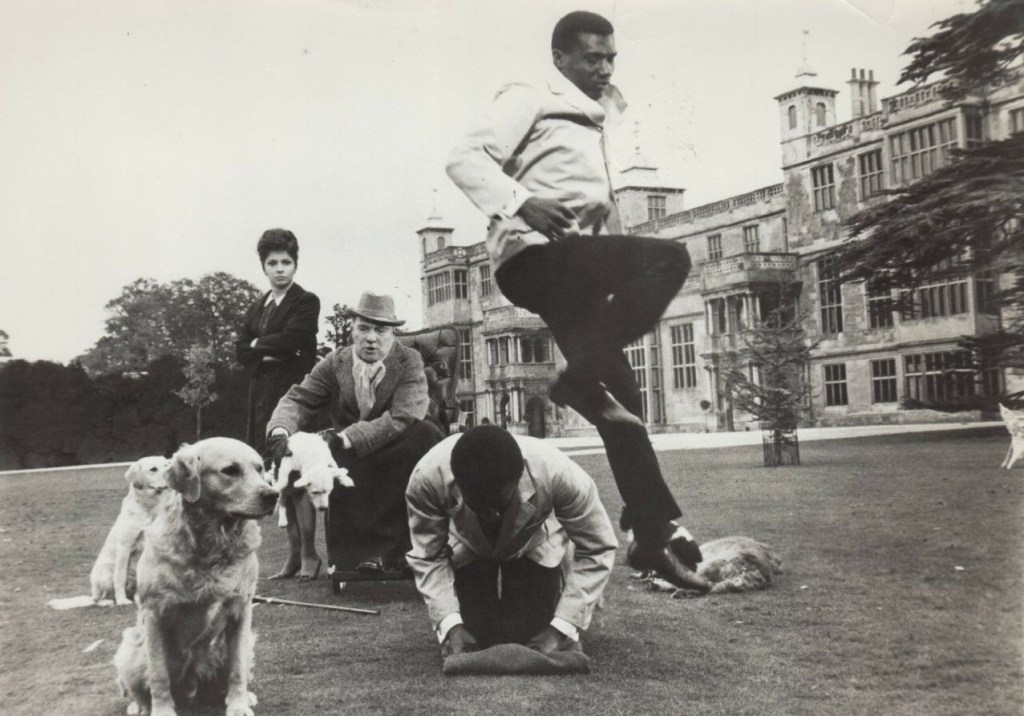
This is a still from the picture showing the offensive incident and would have been
used to promote the movie. As good an indication as any of the prevalent
racism is that clearly nobody believed this to be in bad taste.

For reasons best known to himself, Charles wants his dogs to be able to jump over each other. And when they fail to obey his commands, he instructs his two black servants, played by Johnny Sekka and Danny Daniels, to show them how it is done. One has to kneel on the grass like a dog and the other to jump over him. In due course, the dogs get the hang of it, leaping over the humiliated man on the ground.

There are enough other instances in the film to ensure the audience gets the right idea about Charles without this.

But I was shocked to the core. I have seen many instances of black people treated much worse in films, but in 1964 I guess such treatment would not have been permitted by the censor and this was the closest they could get to the abject degradation required. I can’t have been the only person shocked by it. But nobody was in 1964 otherwise it would not have got past the British censor – eliminating the scene would not have affected the plot – not a murmur from a critic, and certainly no sign of audiences leaving in droves.

But why should it be left to post-production? Did Sean Connery really think there was nothing untoward in the script? If it had been a Scotsman being used in this fashion might he have complained? Did Gina Lollobrigida think nothing of the scene? Similarly, had it been an Italian servant might she have objected? Connery and Lollobrigida either individually or collectively had far more box office cachet than the director – in fact this was Dearden’s move into the big time – so could easily have asked for the scene to be eliminated.

And what of Sir Ralph Richardson, at the time considered one of the great theatrical triumvirate (Olivier and Gielgud the others) who played the character? A forthright person in many other ways, but not here. Perhaps the most surprising person to be blind to the offensiveness of the scene was director Basil Dearden, especially since a previous film Victim (1961) was sympathetic to gay men. I would like to know if the scene was in the source novel by Catherine Arlay.

Whatever, one of the reasons that racism remained so endemic in the 1960s and far beyond was because people failed to see it when it was right in front of their eyes. I’ve no idea who owns the rights to this otherwise good thriller but it might be a good idea for them to take a look and excise this scene or at least give warning that it exists.

The British Board of Film Censors gave this a “12” rating when it came out on DVD. I contacted the BBFC to see if anybody had ever re-watched the film to come to the ratings conclusion. Naturally, I am still waiting to hear back.

You can check out what I’m referring to on YouTube which has a reasonable print. This incident occurs at the 16-17 minute mark. 

Moonfall (2022) ***- Seen at the Cinema

Whether you enjoy the latest offering of Roland Emmerich (Independence Day, 1996) depends very much on how you liked your sci-fi served up. If you require your characters to wear long robes, spout cod philosophy, use superpowers and exist in empires with deposed heirs and family conflict, and whose story cannot be told in one sitting, this may not be for you. Emmerich protagonists tend to be ordinary people, albeit of the planet-saving variety if push comes to shove, and in this case not only does he prioritize diversity but the two most courageous are the wrong shape for heroes.

Where his previous films have enjoyed a longer build-up before catastrophe or invasion, here we are almost straight into the action. The moon is out of orbit, the government wants to hush it up against the advice of senior scientist Jo Fowler (Halle Berry), but conspiracy theory geek K.C. Houseman (John Bradley) activates social media to send the world into panic. Into the mix comes disgraced astronaut Brian Harper (Patrick Wilson) and it falls to these three not to just save the world, but first save the moon in order to prevent Earth’s destruction. They are certainly not quick enough off the mark to stop tidal waves swamping Manhattan, a bombardment of moon debris, and assorted earthquakes and tectonic activity, and in a piece of sfx bravura a gigantic gravity wave.

The trio leave behind loved ones, who are basically left to their own devices to combat the onslaught of destruction. And that is in stark contrast to officials in high office who abandon their positions in order to head for the hills (literally). In one spicy exchange two generals who hold the keys to a nuclear weapon are divided over who to save. In the various sub-plots which all coalesce, the theme is character transition.

The trailer doesn’t give away the movie’s big secret and I’m not about to either but it’s a whopper as Emmerich tracks back to favored ruminations about Earth’s origins. You can chuck away Genesis and the Big Bang as he settles on a different explanation. There are nods to Ridley Scott and even Stanley Kubrick’s 2001: A Space Odyssey, but in the end Emmerich ploughs his own path of originality. The second half is amazing and really lifts the picture.

One of the problems of science fiction movies is that virtually every one falls apart under micro examination. They are filled with plot holes and make up for lack of genuine characterization by having heroes plagued by preposterous villains and back stories that lack any sense. But who the hell cares?

Emmerich films tend to take a hammering because the hero is a close relative of Tom Hanks, the dependable guy whose life has gone a little awry but wants to make amends. Here, both Brian and Jo have family issues and make wrong decisions, both, in effect, abandoning their children for the greater good, and while that might seem to set up a series of sub plots it’s no different to any superhero picture where a beloved relative is put in harm’s way because  said superhero unleashes devastation in order to rein in the villain.

Emmerich could easily have anchored this with younger talent. Will Smith was in his late 20s when he starred in Independence Day. But going for older actors allows Emmerich more leeway with the family issues he brings to the fore. Nor do his disaster movies tend to top-bill a female star. That changes here with Oscar-winning Halle Berry (Bruised, 2020), who hasn’t had a hit in years, receiving a well-deserved career boost for a thoughtful role. Patrick Wilson, usually relegated to horror, also steps up.

John Bradley (Game of Thrones) is the wide-eyed geek who sees disaster as another name for adventure and as far removed from the clever-clogs Jeff Goldblum of Independence Day as you can get. Michael Pena (Fantasy Island, 2020) is the pick of the supporting roles. Donald Sutherland (The Hunger Games) has a cameo. Younger players worth a mention are Charlie Plummer (All the Money in the World, 2017) and Wenwen Yu (Forever Passion, 2021) and

Admittedly, the dialogue is cheesy in places, occasionally overburdened with scientific gibberish, but that’s par for the course.

A good old-fashioned fun ride.  

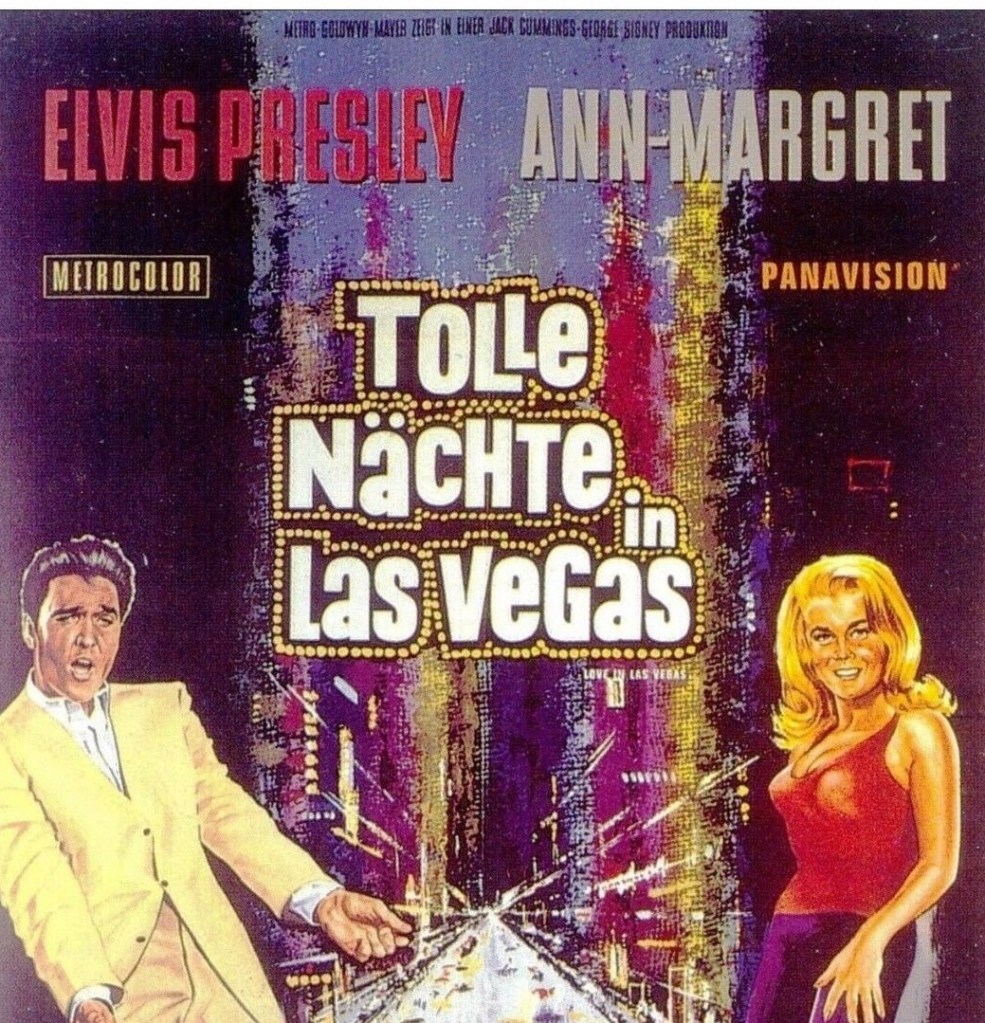
Viva Las Vegas (1964) / Love in Las Vegas ***

Screen chemistry, a great racing sequence and some good songs set alight this typical Presley vehicle. Unlike previous recording giants Frank Sinatra and Bing Crosby, Elvis Presley had not made much attempt to be anything other than himself on screen, nor elevated his status by taking on adaptations of hit Broadway shows, so his movies tended to need a certain extra something to set them apart, if only from his other pictures  – he was churning them out at the rate of three or four a year. The certain something, a whole bag of je ne sais quoi, came in the shape of Ann-Margret.

Garage mechanic Lucky (Elvis Presley), a racing driver wannabe, gets the hots for Rusty (Ann-Margret) after he tunes up her car. Chasing her to Las Vegas where she is a swimming instructor rather than a hot-shot performer, he takes a job as a hotel waiter. He has a rival, both in driving and romance, in Count Emo Mancini (Cesare Danova). Initially, Rusty  brushes Lucky and even when they get closer she fears getting too close since the consequences of falling in love with a man who chases danger are obvious.

There’s no danger of a picture like this straying from the most obvious path and helping fill in the screen time are nods to tourism, excerpts from Vegas shows, some water ski-ing and a helicopter ride over the Boulder Dam (Rusty supplying an earnest educational lecture). There is some lackluster comedy and not much in the way of subplot.

The race is well done for the times (i.e. pre-Grand Prix, 1966) with plenty of crashes, and it looks realistic enough although probably the cars were speeded up in the cameras.

But the pairing is dynamite. Rusty, all sizzle, smoky eyes and pout, dances Presley off the screen. She has the curves and she has the moves. Not a great deal of acting is required by either – they were in the early throes of an affair – but Rusty, a homely girl after all, keeps her sexuality in check long enough to hook her suitor.

The title song – shot in one take – is a winner but what lingers in the memory is the dazzling choreography (involving multiple camera) for Lucky’s dance numbers. And Lucky dancing. Only so many ways to say that that woman can shake her booty, but she shakes it in so many different ways the outcome is sensational.

But in the end just as dancing in an Ann-Margret picture was never enough to hit the box office heights so singing, except in his first screen forays, was not enough to create the longest queues for a Presley picture. Although previous Presley movies had featured the likes of Ursula Andress (Fun in Acapulco, 1963) and Stella Stevens (Girls! Girls! Girls!, 1963) none had the impact of Ann-Margret.

Perhaps fearful that audiences might respond more to his co-star, Ann-Margret’s musical contribution was limited. The pair performed a duet on one number, “The Lady Loves Me” – two other duets were recorded but dropped from the film – and she contributed two solo songs. By comparison, Presley was accorded eight solos. The theory being, I suppose, that audiences had come to hear Presley sing. And that might have been correct, in theory, but once the public saw Ann-Margret on screen they would surely have been calling for more.

It was both the shortest film of Presley’s career and the highest grossing. While Ann-Margret was entitled to have her name above the title – not equal billing as some would have it since his name came first (equal would have put them in alphabetical order) – some cinemas took matters into their own hands and on the marquees, over which studios could exert no contractual control, put Ann-Margret’s name first.

Perhaps more interesting was the question of career development. Presley kept on doing the same old stuff until Charro (1969) by which point it was too late to save his career. Within a year, however, she was moving on to more serious roles such as Once a Thief (1965) and The Cincinnati Kid (1965).   

Taking the helm was veteran George Sidney who had directed Ann-Margret in Bye Bye Birdie (1962) and was also responsible for Pal Joey (1957), Show Boat (1951)  and Anchors Aweigh (1945). He could have done this kind of picture in his sleep, so all credit to him that he brought it to such life.

Amulet (2020) ** – Seen at the Cinema

Succession has a lot to answer for. Even demons stuck in the attic are now looking for an heir. Even demons who either puke up or give birth to hairless bats – it’s unclear which. A lot is unclear here, deliberately opaque, artistically opaque or, worst, carelessly opaque, like someone who can’t be bothered to join up any dots. Horror films rich in atmosphere are often short of the elements that make a good horror film.

Eastern European (no clue as to which country) Tomas (Alec Secareanu) who was once a border guard (or two miles away from the border and no clue as to why two miles away from the border was important) is working on a London building site when a fire renders him homeless. Spotted on the street by Sister Claire (Imelda Staunton), she provides him with shelter in a run-down house inhabited by Magda (Carla Juri) on the assumption he can spruce the place up a bit. Although a handyman, he does nothing, doesn’t scrape down any walls, fix a roof, or anything sensible. Instead, he takes a chisel to the ceiling (reason unexplained) where he uncovers something only he can see.

Magda is clearly unhinged, though she is a good cook. The longer the film went on I was hoping she was secretly poisoning him because the movie takes too long to go anywhere and by that time you’re already far ahead of the film. One of the reasons the movie is so reluctant to engage in a proper narrative is that the director delights in loitering over images of a snail, or the inside of a gutted fish or pans with what appears longing to the tops of very tall trees.

Occasionally, we get a flashback. Let me tell you how important this guard post is. It’s in a forest road in the middle of nowhere (all right then, two miles from the border). Tomas guards it during the day, but at night anyone could walk past. He’s not one half of a shift. He spends his time reading philosophy which makes him an “interesting character.”

Given he’s got nothing else to do all day it eventually occurs to Tomas there’s something odd going on what with banging on the ceiling and the occasional eye appearing through the cracks and someone nasty stabbing Magda when she peers through a keyhole. Turns out she is “looking after” her dying mother, although her definition of care leaves a lot to the imagination. When not adding to the world’s supply of bats, her ancient crone of a mother crawls around in a bare attic.

Not surprisingly, the good nun turns out not to be even a bad nun but not a nun at all – who would have guessed it? But in on the whole Succession business.

All this would have been fine – many horror films are pure barmy – if there was even one tiny scare, even an inkling of one. Horror movies, in case anyone has forgotten, are meant to scare the living daylights out of you. Either you get to jump in the cinema or if it’s the more subtle kind of horror picture it keeps you up at night worrying about the potential implications. The amulet turns out not to be a red herring as such but definitely not up to scratch.

I’m sure Carla Juri and Alex Secareanu are good actors, but the material here is so scant you never get the chance to find out. I never believed for a minute that Imelda Staunton was a nun, whether good or bad.

I thought we might at least be able to blame the National Lottery, the British Film Institute, the BBC or Channel four – the most common funding sources for stinkers – but it seems this was independently made. Debut director Romola Garai can’t even blame the script since she wrote the damn thing. Her talent as an actor (Miss Marx, 2020) hasn’t been duplicated here though she may improve given a second chance and a better script or script editor.  

In cinemas now – where I saw it. I should point out that I pay for my cinema ticket.

Discover WordPress

A daily selection of the best content published on WordPress, collected for you by humans who love to read.

The Atavist Magazine

by Brian Hannan

WordPress.com News

The latest news on WordPress.com and the WordPress community.