
The disaster picture in embryo. Well, the disaster picture without the actual disaster, but setting up the disaster narrative formula of who lives and who dies.
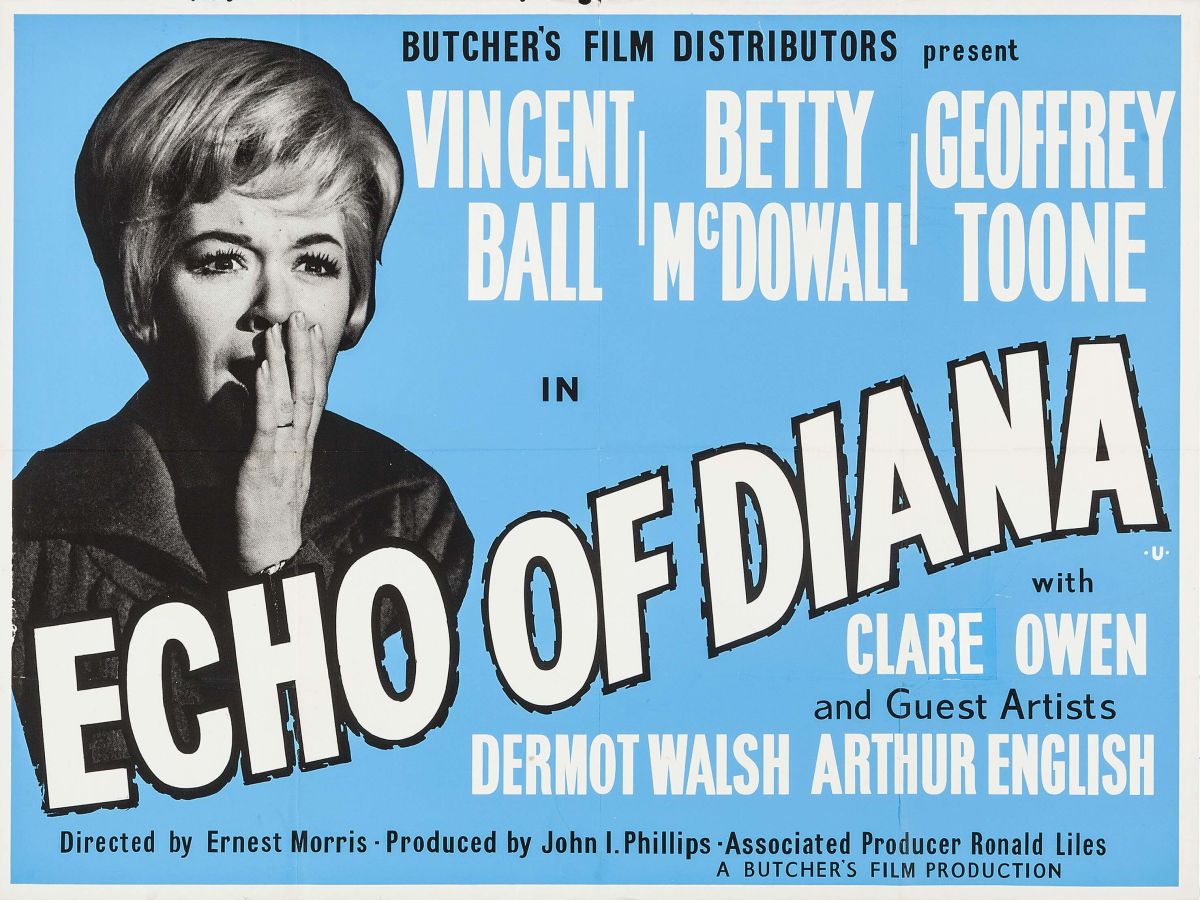
But before we go on to that, spot the deliberate mistake – in the poster I mean. At least I’ve realized it comes from an entirely different movie whereas imdb and Rotten Tomatoes clearly do not. But I’m using it as I guess for the same reason they did – due to the lack of a genuine poster for this picture.

the one from 1945 not the one being reviewed.
Regarding the survival lottery, your card is somewhat marked, this being the innocent start of the 1960s and not a few decades later where screenplays adopted a more cynical – and shock-bait – approach to narrative. The minute you know that the lives of four children depend on the survival of various adults involved in a plane crash in the Swiss Alps then you can guess pretty much who will come out of the disaster scot-free.
But as would later be de rigeur for the disaster movie, the narrative concerns itself with a limited number of characters. There are only ten people on board the plane. We know from the outset only three have survived. So the question is – who?
But instead of following the survivors as they battle the crash and the snowbound mountains and fierce storms and freezing cold and whatnot, instead we focus on the back stories of the passengers and crew through John (Richard Wyler) and Jenny (Pauline Yates), seasoned and novice reporter, respectively, as they go through their door-stepping paces.
So, essentially, it’s an expanded portmanteau, ten stories, ten families’ lives in the balance.
Our cross-section of society includes a few who might benefit from someone not surviving – lawyer Jamieson (John Gabriel) hoping the main witness against his villainous client won’t be able to testify, adulterous wife Mrs Sylvester hoping her husband’s death will leave her free to marry lover Ray (John Carson). To counter those conniving characters, we have the heart-tugging tales of two child refugees from Poland awaiting the arrival of their adoptee mother Mrs Phillips, parent Ken (Vincent Ball) whose child will die if an eminent surgeon doesn’t return, and pilot’s wife Pam (Nyree Dawn Porter) in a maternity ward with a newborn baby.
Movie agent Charlie (Martin Wyldeck) takes advantage of unexpected publicity for his ageing client, praying survival will boost her fading career. But he’s cynical enough to already be imagining headlines: “Farewell Performance” if she dies, “Return Farewell Performance” if she lives.
The journalists are not as hard-bitten as they imagine. Sure, Ken does report fraudster Philbert (Peter Elliott) to the police, but he stops short of revealing the fact that her daughter is on the plane to a blind mother whose family are keeping the news from her. In theory, Jenny, is the more conscience-stricken of the journalists, but that’s only if you excuse the tape recorder hidden in her handbag.
By the time our motley crew head out to Switzerland to meet the rescuers coming down the mountain and find out if their loved ones have made it, some home truths have been spelled out. Mrs Sylvester discovers her lover only seduced her to win a job from her husband. “Think I’ve been hanging around here for the pleasure your company?” snarls Ray. “If your husband’s dead you’re no use to me.” Not one to take a put-down lying down, she chats up a smooth gangster in Switzerland. “I’ll ring you some time,” he says when they part. “You don’t know my number,” she wails.
By the time the journos and those waiting are assembled in the bar at the Swiss airport, you might have expected Hercule Poirot to waltz through the door and start interrogating them – generally the only reason for such an assembly.
By this point, John and Jenny have cosied up, at least she’s cooked him a meal, though that proves not a precursor to seduction. But the movie skips past the joy of the child-related survivors and ends on a couple of telling visuals: the welcome home cake for the daughter who won’t return and the tape unspooling from the recorder as Jenny decides being a hard-nosed journalist isn’t for her. While in some senses Mrs Sylvester gets her come-uppance, husband dead, lover fled, this is no morality tale – the villain gets off with murder.
As usual, with these trim British B-pictures, don’t expect much in the acting department, but the story is well told, sufficient and interesting variety of characters, especially when the narrative goes outside the point-of-view of the reporters and focuses on facial expression of those involved.
Pauline Yates (Darling, 1965) has more spark than Richard Wyler (The Ugly Ones, 1966) while Nyree Dawn Porter (BBC’s The Forsyte Saga, 1967) and Vincent Ball (Echo of Diana, 1963) flesh out minor roles. Valentine Dyall (The City of the Dead/ Horror Hotel, 1960) plays a grumpy newspaper editor.
Directed with occasional nifty touches by Frank Marshall (A Guy Called Caesar, 1962) from a screenplay by Brian Clemens (The Corrupt Ones / The Peking Medallion, 1967).
Another plum on Talking Pictures TV.
 The Magnificent 60s