Behind the Scenes: “Valdez Is Coming” (1971) – Book Into Film

Elmore Leonard novels were catnip to the movies. From The Tall T (1957) and 3:10 to Yuma (1957) a shelf load of his books have been filmed by Hollywood – some of them (3:10 to Yuma, 52 Pick Up, The Big Bounce, Get Shorty) twice. What he brings to the table is a lean story and an interesting lead character, whether in the western – Hombre (1967), Joe Kidd (1972) – or crime division such as Mr Majestyk (1974) or Get Shorty (1995).

What you probably don’t realize is that pulp fiction (books that made their debut in paperback) were generally short, limited to 50,000-60,000 words rather than the 120,000-150,000 blockbuster “airport” novels, published first in hardcover, that dominated the bestseller lists. The shorter novel led to a leaner narrative, less characters, little in the way of subplot and information drop.

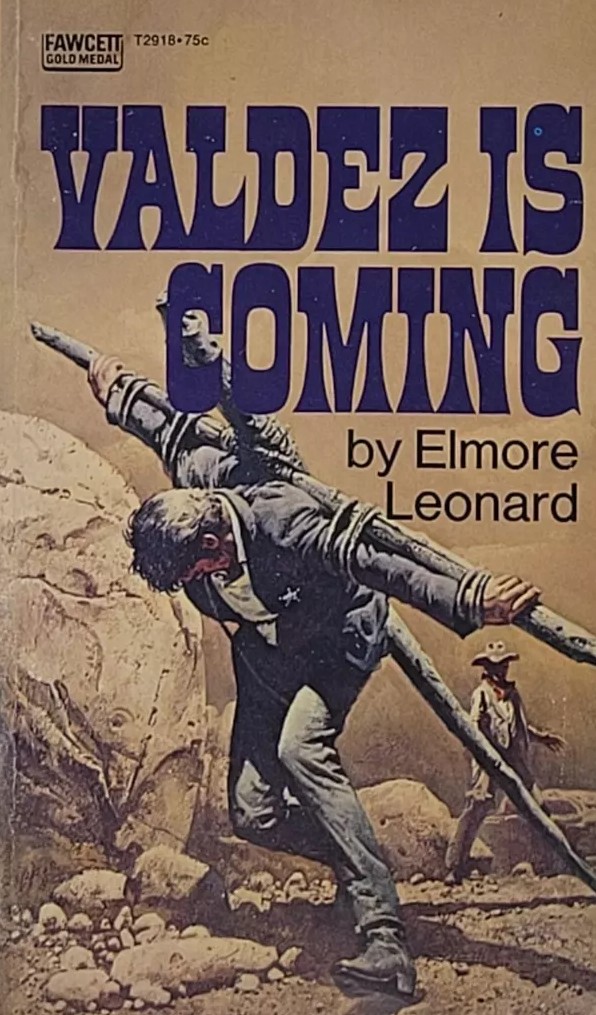
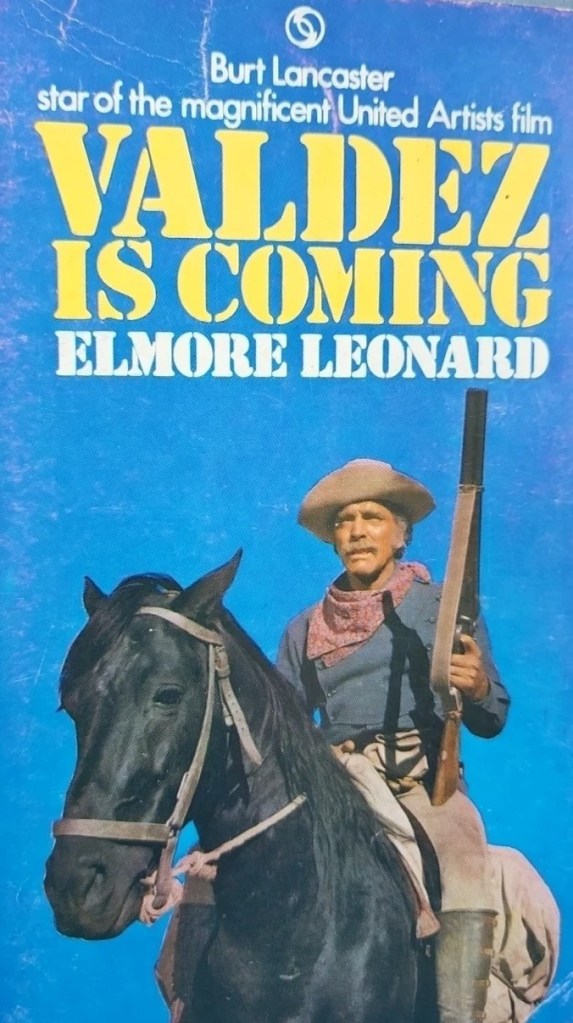
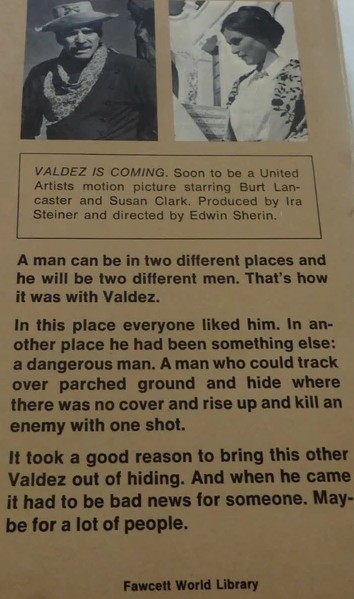
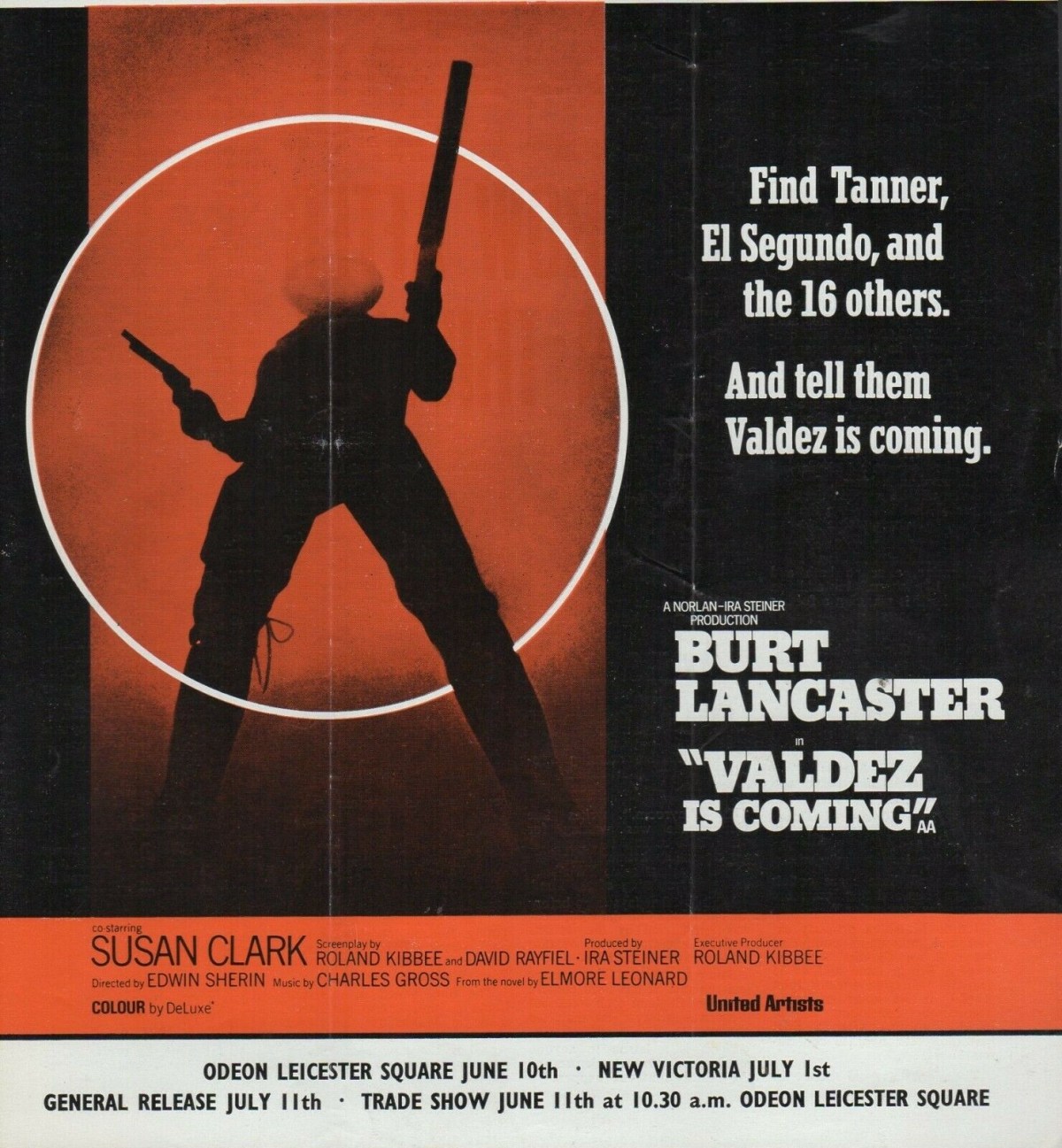
Valdez Is Coming made a speedy transition from paperback (published by Fawcett in the US in 1970, though it did achieve a hardcover edition in the UK) to movie (United Artists release 1971) and it’s interesting to see what changes, if any were made by screenwriters Roland Kibbee (The Appaloosa, 1966) and David Rayfiel (Castle Keep, 1969). You could literally transpose Leonard’s dialog and it would easily stand up in a movie. So the basic, very simple, plot is retained.

Mexican sheriff Valdez (Burt Lancaster in the film) gets it into his head that the mistaken killing of an African American requires monetary compensation and determines that cattle baron Frank Tanner whose mistake led to the killing should be the one to cough up. Tanner sees is differently, sends Valdez packing and when the sheriff returns a second time to plead his case exacts brutal punishment in the form a rudimentary crucifixion.

This triggers a personality change in Valdez. He reverts from being the subservient suit-wearing lawman to the feared sharpshooter who previously hunted down Apaches.

So one of the alterations in the book to film is this transition. In the book we know from the outset he has kept buried his older self in order not to attract attention and to live a peaceful life. That is verbalized via internal monologue and a scene with brothel keeper Inez, who is absent from the film. In the movie his past is visualized, as he pulls out from under his bed a hidden armory and a photo of his previous self.

In the film he is introduced riding shotgun on a stagecoach. He works part-time as a “constable” rather than a sheriff. In the book riding shotgun is the bigger job, keeping the peace requiring little of his time.

All the main incidents – initial rebuff by Tanner, the shooting of bullets around Valdez, the crucifixion, the kidnapping of Tanner’s wife Gay (Susan Clark), the involvement of wannabe gunslinger RL Davies (Richard Jordan), the picking off one-by-one of Tanner’s men and the final stand-off (a Mexican stand-off if ever there was one) – come straight from Elmore Leonard.

But the screenwriters make some critical changes. In the film the kidnapping is accidental, Gay snatched as a hostage as Valdez escapes from a gunfight at Tanner’s house. In the book, there’s no shoot-out at the house, Valdez kidnaps Gay in order to have something to trade with.

In the film it’s – rather surprisingly given his role so far – the weaselly gunman Davies who cuts Valdez free of the bonds of the crucifix. But that’s a considerable simplification from the book. For quite a long time in the book, Valdez believes that Gay cut him loose. And until Davies challenges that assertion, she lets Valdez believe it was her.

For the biggest change is the screenwriters’ decision to eliminate the Valdez-Gay romance. After being captured, in the book she makes overtures to him, whether initially out of survival instinct is unclear, and they make love and he begins to fall for her. We learn why she killed her husband – domestic abuse. Also that Tanner is a convicted felon and that he is a gunrunner supplying arms to Mexican rebels.

So by the time we come to the end there’s more riding on it in the book. Tanner is left isolated not just by his gang boss backing off but by his lover siding with Valdez.

One other point, I noted that in the film the guy called El Segundo (Barton Hayman) was referred to as “the segundo” (in lower case letters) in the book. So I looked it up. Literally, “Segundo” means “number two” which made sense either way.

I’ve been so used to comparing blockbuster novels with their movie adaptation and trying to work what they kept in – and why – that it never occurred to me that one of the reasons so many pulp fiction books were purchased by the movies was because screenwriters had to tussle with less plot and fewer characters.

If you’ve never read any Elmore Leonard this is as good a place as any to start.

Valdez Is Coming (1971) *****

Five-star review for a long-forgotten much-maligned western? Let me explain. Let me start with one of the most stunning cinematic images I have ever seen that in the hands of a better director would be considered one of the greatest ever devised. The titular Valdez (Burt Lancaster) appears on the top of a hill arms stretched out back contorted under the weight of a crucifix strapped to his back. Another director, more conscious of the image potential, would probably have had him straighten up at that point and positioned the camera for a close-up so the image could be captured against the sky. Even so, it’s an extraordinary image for a director, Edwin Sherin, making his debut.

But that’s not the only one. We’re familiar with the innocent man being forced to dance as the area around his feet is peppered with bullets from a sadistic gunslinger. Here, the victim of gunman Davis (Richard Jordan) is an old Native American woman. As she walks from a hut to collect water, he assails her with a barrage of shots. Does she dance? Does she dickey! She doesn’t even pause. As though she’s used to worse.

The movie opens with another stunning image. Valdez, a local Arizona Territory constable (presumably a less important title than sheriff though he wears the badge), takes time out from riding shotgun to watch a bunch of young bucks blast away at a target. Which appears to be the hut I mentioned. Takes a while for an explanation to be forthcoming. Said hut houses a fugitive from justice.

There’s another startling image when Valdez is used as target practice by the thugs employed by local bigwig Tanner (Jon Cypher). As if he was the equivalent to the target girl in a knife-throwing act, every space around his body is hit by a bullet.

And that’s before we come to the audacious freeze frame ending which, theoretically at least, leaves matters unresolved.

There’s also a post-modern post-whatever feel to this which should very much appeal to the contemporary audience. Very little is explained. Valdez has anglicized his Christian name of Roberto to Bob. He can’t get rid of his Mexican accent but he talks so softly that mostly you don’t notice. From his later demeanor, it’s quite clear that earlier on he is making a huge effort to fit in, not stand out, in a town dominated by white Americans.

But we also never find out why Tanner is hunting a man. He’s responsible for putting the man in the hut under siege. And although that turns out to be  case of mistaken identity, we never find out who Tanner is chasing or why.

Tanner’s  live-in girlfriend Gay (Susan Clark), a widow, has murdered her husband and we never find out why either. But she’s not the only unusual character. The gunslinger Davies is a misfit, finding out the hard way that intemperance and impulsiveness are not the way to make friends, and even Tanner has little time for a gunslinger too handy with a gun, but despite the callous exterior he has a softer side. And while that softer side turns out to be lucky at one point for Valdez, the lawman still doesn’t trust the capricious youngster.

The tale, such as it is, is one of principle. Valdez has been tricked into killing the man in the hut. Given the man proved innocent, Valdez thinks it right his widow, the Native American victim of the target practice, should receive some compensation. A hundred dollars seems a small price to pay. But Tanner is insulted at the very thought. In his eyes, the dead man was a no-account African American.

When Valdez insists, he is trussed up in the makeshift crucifix and left to make a humiliating walk home. That’s when he reverts, shuffles off his disguise as a soft-spoken relatively harmless lawman in a town where the most he will be called upon to do is ride occasional shotgun and jail an occasional drunk.

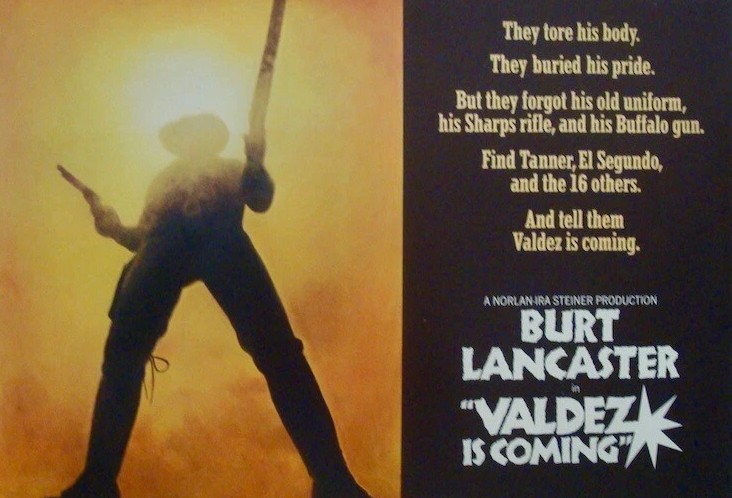
It’s vague too – you’d have to be well up on western lore to know the significance of the photograph he keeps under his bed – regarding his past. But hidden under the bed is what was known as a buffalo gun, a long-range rifle, manufactured by Sharps (hence the term “sharpshooter”) and suddenly he’s a different, more threatening, person, kitted out in his old cavalry uniform, hat brim upturned.

He interrupts Tanner and Gay making love to demand his hundred dollars. He only takes  Gay hostage to make his escape, minus the cash, and then kidnaps her to provide him with something to trade. Unlike in The Hunting Party (1971), the weapon doesn’t magically ease his path. He doesn’t just take pot-shots from a distance. He spends most of the time rushing up and down hills, using boulders as cover. He can’t afford to use the gun since that would pinpoint his position. So he’s got to knock out Tanner’s advance scouts in other ways.   

Meanwhile, Gay, who initially sympathized with Valdez, is less keen on him once she’s a victim, and spends most of her time trying to escape. In due course, Valdez’s marksmanship reduces the pursuing force by eleven.

He just about escapes but in a spectacular piece of stunt work involving horses colliding and people being thrown from the saddle, he is surrounded. Chief thug El Segundo (Barton Heyman) realizes that he and Valdez have something in common. Valdez wasn’t a buffalo hunter at all, but a stalker of Apaches, the enemy of El Segundo.

So El Segundo pulls back his men leaving Tanner to face up to Valdez alone. Or perhaps pay up the hundred dollars. We never find out because the image is frozen on the screen as the camera pulls back.

Edwin Scherin was rewarded for his boldness by only being allowed to make one more movie (My Old Man’s Place, 1971). This was the first of Burt Lancaster’s western trilogy that encompassed Michael Winner’s Lawman (1971) and Robert Aldrich’s Ulzana’s Raid (1972), completing his move into more of the flawed character he first essayed in The Swimmer (1969). Susan Clark (Coogan’s Bluff, 1968) makes the most of a role that permits her to switch from sympathetic to hard-nosed. Richard Jordan (Chato’s Land, 1972) has a peach of a part as the swithering gunman desperate for attention. Screenplay by Roland Kibbee (The Appaloosa, 1966) and David Rayfiel (Castle Keep, 1969) based on the novel by Elmore Leonard (Mr Majestyk, 1974).

So, sure, justified vengeance but exceptionally well done.

Catch this on Amazon Prime.

Well worth checking it out.

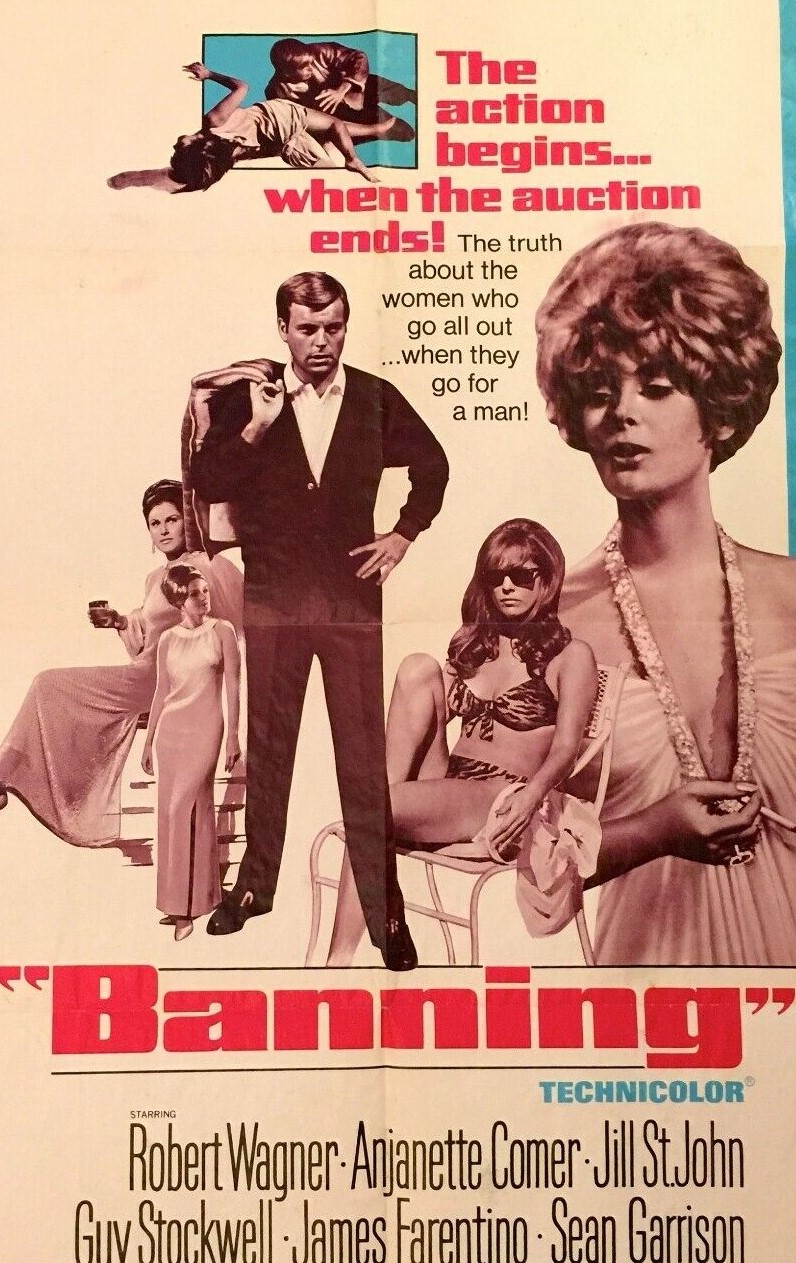
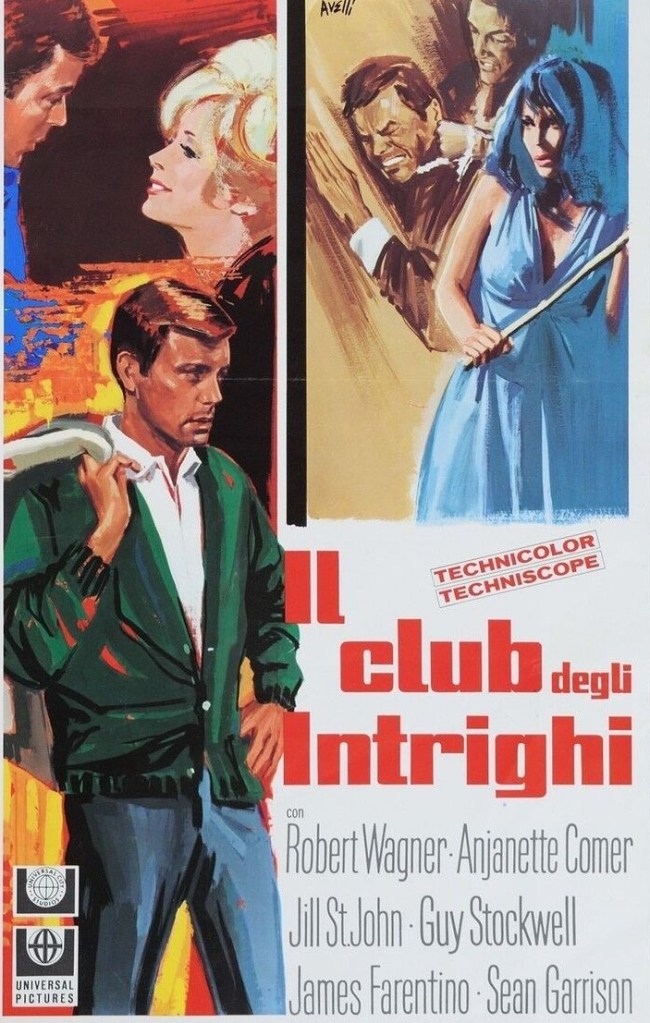
Banning (1967) ***

Robert Wagner’s bid for stardom is scuppered by a limp plot set in the overheated world of the country club set where a posse of sexually predatory women operate. It doesn’t help that the main narrative thrust finds trouble just hanging in there.

Ex-professional golfer Banning (Robert Wagner), a “moral diabetic” on the run from a loan shark, pitches up at an upmarket country club where he finds work as the assistant golf pro to Jonathan (Guy Stockwell). His most arduous task appears to be picking his way between the toned bikini-ed bodies lounging around the pool and avoiding the advances of Angela (Jill St John) and Jonathan’s wife Cynthia (Susan Clark) while coming on strong to overpaid secretary Carol (Anjanette Comer).

There’s an element of Life at the Top (1965) here, with Jonathan married to the boss’s daughter, resenting their close relationship while not making the executive advances he would like. Every now and then bits of what sound like a complicated past implicating Jonathan and the alcoholic Tommy Del Gaddo (Gene Hackman) pop up and around the halfway mark a subplot kicks in, involving something called a “Calcutta,” a golf tourney which looks like it’s being rigged.

Given that it’s organised by a club boss (Howard St John) who claims every gimme going and feigns drunkenness to skin members at poker, it’s almost a given that Banning is going to come out worst. I have to tell you you probably couldn’t care less, since most of the action, and all of the fun, is off course, and not so much in the bedroom stakes as the war between women for available men.

“I bought you,” purrs Angela in her  most seductive attire after she has made it possible for Banning to find a way to pay off his debts. “I want you,” snaps single mother Carol, making a forthright play after spending most of the picture fending off his advances. Standing on the side-lines, watching Angela making her moves, Cynthia observes, “I’d say Angela’s had at least a dozen husbands,” pause for the punchline, “including mine for all I know.”

Predatory moves are not all one way. Turns out the price Carol pays for a salary five times the going rate and a nice house and private schooling for her daughter is setting aside Thursday afternoons for Jonathan. But in the pragmatic manner that appears inbred in the country club, she states, “No apologies, no excuses.”

And before Carol works out just how attractive Banning actually is she had to cut him dead a couple of times and, in a scene guaranteed to put off the modern audience, prevent him drunkenly raping her. It was almost a throwback to the 1940s and 1950s when, it appeared, a woman just needed a good smack on the chops before she could submit and start billing and cooing.

Robert Wagner (The Biggest Bundle of Them All, 1968), tanned within an inch of his life, doesn’t so much miss the target as not being given a target worth hitting. There’s very little sense danger, of a man on the run from the mob or whichever gangster has picked up the tab for his debt, and he’s not a lounge lizard. Acting-wise, he relies on a raised eyebrow, an eye swivel and that scene-stealing trick, copyright Robert Vaughn, of raising his lowered head to open his closed eyes, a neat device for a supporting star but hardly required when you are top-billed.

Anjanette Comer (Guns for San Sebastian, 1968) doesn’t snatch the brass ring either, relying on a tremulous lower lip to evoke emotion. In fact, it’s a toss-up between the classier Jill St John (The King’s Pirate, 1967) and Susan Clark (Tell Them Willie Boy Is Here, 1969) as to who steals the most scenes, both winging it with striking dialog, emanating power, regarding men as weak and playthings.

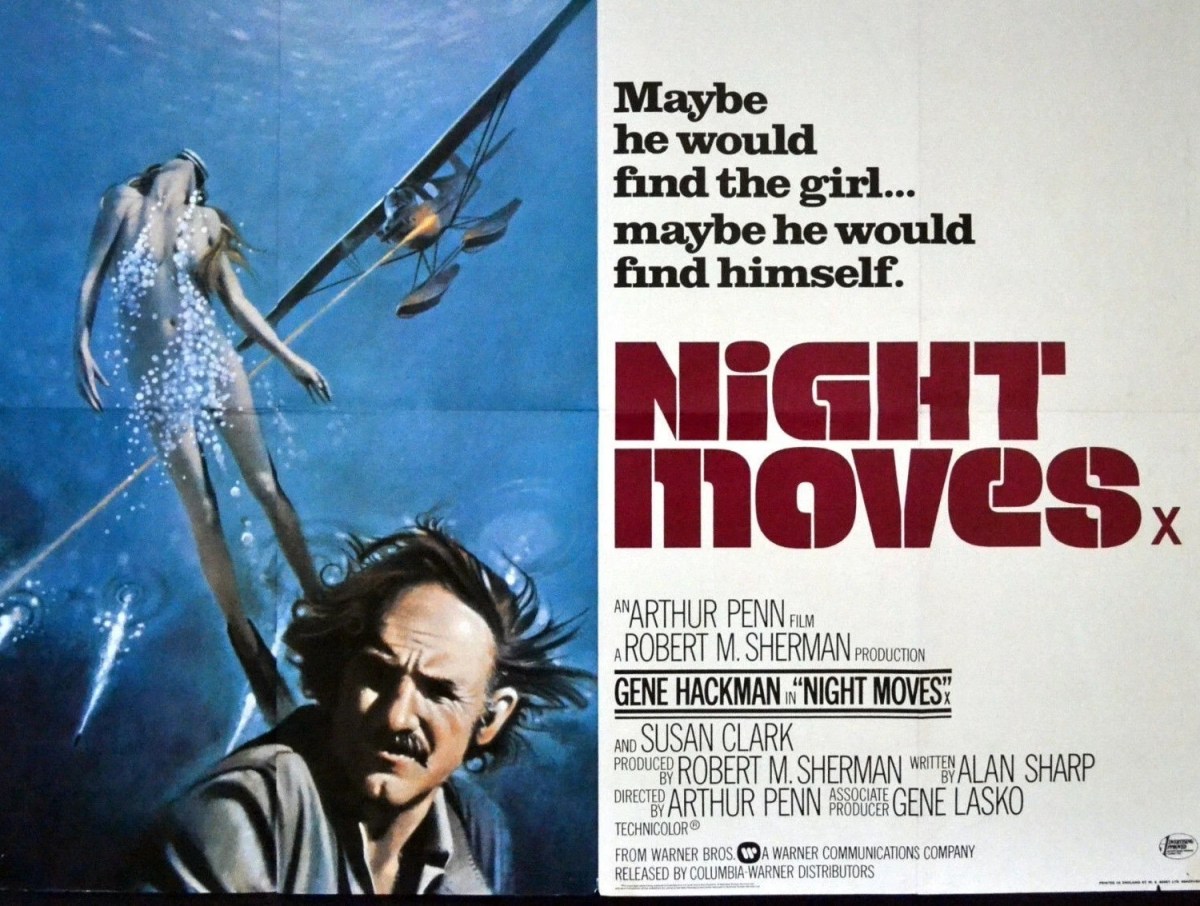
Gene Hackman (Lilith, 1964), generally a prime contender for scene stealing, especially with trademark chuckle now in full swing, unfortunately does himself no favors by over-acting.  You might also spot James Farentino (Rosie, 1967) and Sean Garrison (Moment to Moment, 1966).

Ron Winston (Ambush Bay, 1966) directed from a screenplay by James Lee (Counterpoint, 1967). It would have worked better to concentrate more on the bitchy women than the sub-plots.

I’m sorry to say you’ll have a hard job finding this since I purchased my DVD on the second-hand market. Worth the hunt if you’re a fan of St John and Clark or to discover why Wagner’s promising screen career never took off.

Coogan’s Bluff (1968) ***

Almost a curiosity in the Clint Eastwood canon from the later perspective, this modern western concerning a maverick Arizona cop pursuing a fugitive in New York could also be interpreted as a riposte to the violent avenger of the “Dollars” trilogy and Hang ‘Em High (1968). Like Rio Conchos (1964) there’s an action-packed start and finish and not much in between unless you count Coogan (Clint Eastwood) being beaten up, and like Firecreek, made in the same year but less of an audience attraction, a slow burn with little of the depth of the Vincent McEveety effort.

It fits more neatly into the “victim” niche of The Beguiled (1970) and Play Misty for Me (1971) with Eastwood, while attempting to present a macho image, set upon by predatory women. Here, although led into a trap by the girlfriend Linny (Tisha Sterling) of the wanted Ringerman (Don Stroud), the victim elements are mostly humorous, Coogan a fish-out-of-water taken advantage of by cab drivers and hoteliers and by a justice system that takes more note of due process than he is accustomed to. Otherwise, it’s pretty much a romance as Coogan, for whom persistence pays off, beds probation officer Julie (Susan Clark).

Coogan is a paid up member of the wham-bam-thank-you-ma’am fraternity, frolicking with an adulterous lover in Arizona, and displaying no qualms about getting it on with Linny. In the hands of Jack Lemmon this would be a comedy, so it’s a strange choice for Eastwood unless for experimental purposes, trying to set himself up more as Steve McQueen than John Wayne.

The picture opens with Coogan tracking down a Native American, and manacling him to a pole outside a house while he repairs inside for sex. Interrupted by a sheriff frustrated by his ways, he is despatched to New York where he manages, through a bluff, to have Ringerman removed from Bellevue mental hospital. On the way home, he is ambushed by Linny and some thugs, losing consciousness and his gun, neither going down well with the more bureaucratically-minded Lt. McElroy (Lee J Cobb) whose undercover stake-out plans he has also ruined.

Luckliy, Coogan has chanced upon probation officer Julie who can’t quite manage to deter his amorous advances and at an appropriate moment he sneaks a look at her files for his next lead. Not quite as sharp as he imagines, and clearly not much good at assimilating painful lessons, after a dalliance with Linny, he is astonished to be led into yet another trap. In the end, of course, he gets his man, courtesy of a motorbike chase. But there’s a curious ending. Not only does Julie, who he has betrayed with Linny, turn up to wave him off, but, as if he has now turned into a kinder, more humane specimen, he affords his prisoner a smoke, something he pointedly refused to do with the Native American.

It’s not dated particularly well and modern audiences will have trouble accepting domestic abuse and rape as comedic situations and eyebrows are scarcely going to be raised at the drug-addled Linny nor the club where naked women fly overhead on trapezes. The idea that intelligent women like Julie, weighed down with psych jargon and over-concern for offenders, just need a big hunk in their lives doesn’t fly either.

But if you accept the out-of-towner trope, and are happy to see Clint practising his squint and double take , you will find in between the action  and “victim” agenda, a quite tolerable romance. It was a bold choice for a star best known for killing people. Tough guy that he is, he is flummoxed by the big city and has a hell of a job getting his man. On the other hand Eastwood and Clark have excellent chemistry. This is embryo Eastwood, almost as if he is trying on a variety of screen persona to see what will fit. After Dirty Harry (1971) there was little truck with romance except for The Bridges of Madison County (1995) and In the Line of Fire (1993) so it’s interesting to see his moves, albeit that the best romantic work he did was in the director’s chair with Breezy (1973).

Susan Clark is superb, all the professional confidence of Tell Them Willie Boy Is Here (1969) but the romantic cynicism replaced by an appealing hesitancy. Lee J. Cobb (Exodus, 1960) has little to do except be grumpy, Don Stroud (Madigan, 1968) doesn’t feature prominently enough while Tisha Sterling (Journey to Shiloh, 1968) makes the bigger impact.

Don Siegel (Dirty Harry) would become an Eastwood long-time confederate, directing him in six movies, of which this was the first. He had just made a Hollywood comeback after six years in the feature film wilderness with Madigan (1968), a tougher cop picture. I would be inclined to lavish more critical plaudits on the idea of playing around with the tough guy persona, but I’m not sure that was the intention.

Discover WordPress

A daily selection of the best content published on WordPress, collected for you by humans who love to read.

The Atavist Magazine

by Brian Hannan

WordPress.com News

The latest news on WordPress.com and the WordPress community.