Behold a Pale Horse (1964) ***

Old causes never die but they do go out of fashion and interest from movie audiences in the issues surrounding the Spanish Civil War had fallen from the peak when they attracted artists of the caliber of Ernest Hemingway and Pablo Picasso. But passions surrounding the conflict remained high even 20 years after its conclusion as indicated in this Fred Zinnemann (The Sundowners, 1960) drama.

Manuel Artiquez (Gregory Peck) plays a disillusioned guerilla living in exile in France, who has ceased raiding the Spanish border town under the thrall of corrupt Captain Vinolas (Anthony Quinn). Artiguez has two compelling reasons to return home – a young boy Paco asks him to revenge the death of his father at the hands of Vinolas and his mother is dying. But Artiquez is disinclined to do either. Heroism has lost its luster. He has grown more fearful and prefers to live out his life drinking wine and casting lustful glances at young women.
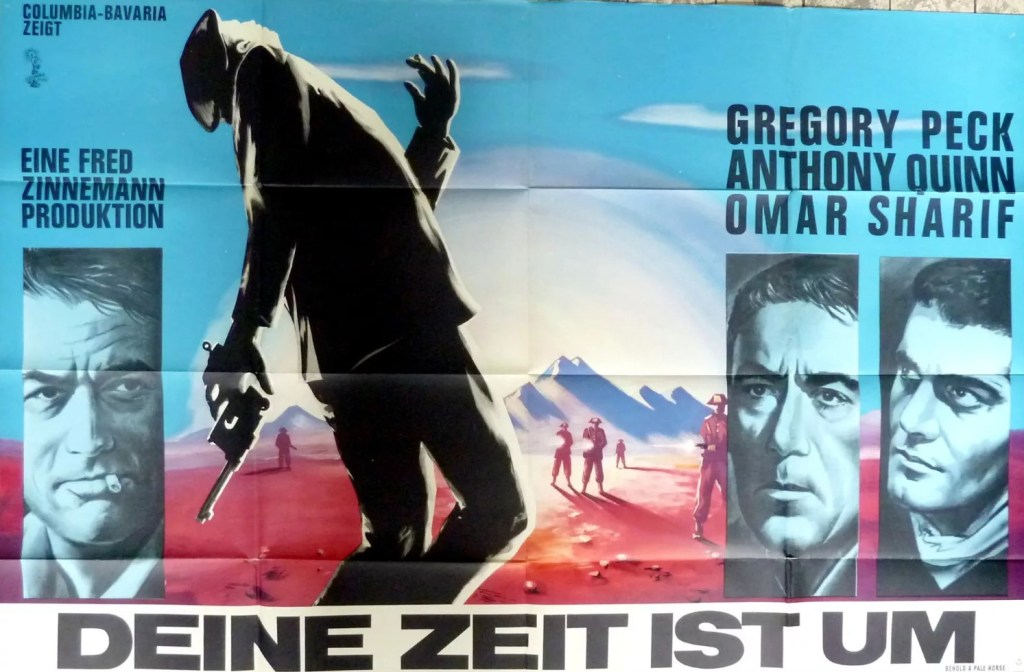
In France he enjoys a freedom he would be denied in Spain. He is not hidden. Ask anybody in the street where he lives and they will tell you. This is a crusty old soldier, unshaven, long past finding refuge in memories, but not destroyed either by regret. There is a fair bit of plot, some of it stretching incredulity. The action sequence at the end, conducted in complete silence, is very well done, but mostly this is a character piece.

This is not the upstanding Gregory Peck of his Oscar-winning To Kill a Mockingbird. He is a considerably less attractive character, burnt-out, shabby, grizzled, lazy, easily duped, unwilling to risk his life to see his mother. We have seen aspects of the Anthony Quinn character before but he brings a certain humanity to his villain, bombastic to hide his own failings, coarse but occasionally charming, suitably embarrassed when caught by his wife visiting his mistress and praying earnestly to God to deliver Artiquez into his hands. Omar Sharif has the most conflicted character, forced by conscience to help an enemy of the Church.

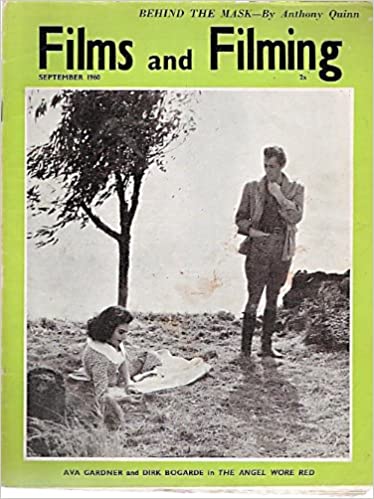
However, two elements in the picture don’t make much sense. Paco tears up a letter (critical to the plot) to Artiquez which I just cannot see a young boy doing, not in an era when children respected and feared their elders. And I am also wondering what was it about Spain that stopped directors filming it in color. This is the third Spain-set picture I have reviewed in this blog after The Happy Thieves and The Angel Wore Red. For the first two I can see perhaps budget restrictions being the cause, but given the stars involved – Rex Harrison and Rita Hayworth in the first and Ava Gardner and Dirk Bogarde in the second – hardly facing the production dilemmas of a genuine B-picture.

But Behold a Pale Horse was a big-budget effort from Columbia and while black-and-white camerawork may achieve an artistic  darkness of tone it feels artificial. This was never going to be the colorful Spain of fiestas and tourist vistas but it would have perhaps been more inviting to audiences had it taken more advantage of ordinary scenery.

J.P. Miller (Days of Wine and Roses, 1962) adapted the film from the novel Killing a Mouse on Sunday by Emeric Pressburger who in tandem with Michael Powell had made films like Black Narcissus (1947) and The Red Shoes (1948). The film caused calamity for Columbia in Spain, the depiction of Vinolas with a mistress and taking bribes so upset the authorities that all the studio’s movies were banned.   

The Angel Wore Red (1960) ***

Given that this is filmed in black-and-white, it seems a curious title. So I’m assuming the color is a reference to a scarlet woman which, indeed, Ava Gardner (Mayerling, 1968) is, working in a “cabaret” in an unnamed town at the start of the Spanish Civil War. Strangely enough, the decision to shoot in black-and-white works in the actress’s favor. She was one of the last relics of the Hollywood Golden Age when brilliant cinematographers used innovative lighting to capture on screen not so much great beauty but tantalizing emotion.

The close-up was almost exclusively the preserve of actresses who could convey deep feeling with minute changes of expression or simply through their eyes. Here, a couple of joint close-ups prove the point: Gardner’s face illuminated, even in repose struggling to contain passion; that of lover Dirk Bogarde (Victim, 1961) merely the same as always.  

This Italian-American production is a curiosity, part homily, part reverential, part brutal. Arturo (Dirk Bogarde) is a priest on the run from the invading Communist forces. He takes refuge in a cabaret (code for brothel) where he is sheltered by Soedad (Ava Gardner). He has just denounced his faith so when captured is not executed as an enemy of the state, thus allowing him to begin a relationship with her.

They share an unusual type of innocence, Soledad because, as what was known in those days as a woman of easy virtue, she has never known true love, Arturo, for obvious reasons, denied such an emotion. Their trembling acceptance of this wondrous state of affairs is the beauty of the film.

The love story which would surely in any case have a tragic outcome unfortunately too often plays second fiddle to a subsidiary tale of safeguarding a sacred relic – about whose importance, strangely enough, both sides are agreed – and of arguments between various other political elements over the conflict. Hawthorne ( Joseph Cotton), a cynical journalist – are there any other kind? – bears testimony to the opposing perspectives while no-nonsense General Clave (Vittorio de Sica) deplores the “dirty” war. Neither side comes out well in the conflict the Communists, like a mob storming Dracula’s castle, destroy the cathedral, the Republicans committed to killing all prisoners so as not to hold up their advance. Only the clergy retain their principles even when tortured. 

No one can portray a fallen woman like Gardner, but even as a mature woman her steps towards true love are hesitant, almost believing it is tucked away beyond the rainbow way out of reach, while inner conflict had become central to the Bogarde screen persona.

Writer-director Nunnally Johnson (The Three Faces of Eve, 1957), in his final movie in the hyphenate capacity, had good reason for choosing to film in black-and white – it permitted use of newsreel footage of diving Stuka bombers and more importantly since much of the story takes place at night it creates a haunted background of dark alleys. Color would have destroyed such a vision. You could argue there is artistic purpose here, filming a country which has fallen into a state of spiritual darkness. But that would not be true of the star – black-and-white allows rare opportunity to show what the camera adores in Ava Gardner, her face, even in repose, absorbing the light, as if she were, indeed, redemption. 

A film that doesn’t take sides with characters caught in the middle can’t quite make up its mind where it wants to go.   

Garner rather than Bogarde is the reason to see it.

Behold a Pale Horse (1964) ***

Old causes never die but they do go out of fashion and interest from movie audiences in the issues surrounding the Spanish Civil War had fallen from the peak when they attracted artists of the caliber of Ernest Hemingway and Pablo Picasso. But passions surrounding the conflict remained high even 20 years after its conclusion as indicated in this Fred Zinnemann (The Sundowners, 1960) drama.

Manuel Artiguez (Gregory Peck) plays a disillusioned guerilla living in exile in France who has ceased raiding the Spanish border town under the thrall of the corrupt Captain Vinolas (Anthony Quinn). Artiguez has two compelling reasons to return home – a young boy Paco asks him to revenge the death of his father at the hands of Vinolas and his mother is dying. But Artiguez is disinclined to do either. Heroism has lost its luster. He has grown more fearful and prefers to live out his life drinking wine and casting lustful glances at young women.

In France he enjoys a freedom he would be denied in Spain. He is not hidden. Ask anybody in the street where he lives and they will tell you. This is a crusty old soldier, unshaven, long past finding refuge in memories, but not destroyed either by regret. There is a fair bit of plot, some of it stretching incredulity. The action sequence at the end, conducted in complete silence, is very well done, but mostly, while a shade on the earnest side, this is a character piece.

This is not the upstanding Gregory Peck of his Oscar-winning To Kill a Mockingbird (1962). He is a considerably less attractive character, burnt-out, shabby, grizzled, lazy, easily duped, unwilling to risk his life to see his mother. We have seen aspects of the Anthony Quinn character before but he brings a certain humanity to his villain, bombastic to hide his own failings, coarse but occasionally charming, suitably embarrassed when caught by his wife visiting his mistress and praying earnestly to God to deliver Artiquez into his hands. Omar Sharif is the most conflicted character, forced by conscience to help an enemy of the Church.

Movie tie-in paperback edition.
The more esoteric cover for the original hardback edition.

However, two elements in the picture don’t make much sense. Paco tears up a letter (critical to the plot) to Artiquez which I just cannot see a young boy doing, not in an era when children respected and feared their elders. And I am also wondering what was it about Spain that stopped directors filming it in color. This is the third Spain-set picture I have reviewed in this Blog after The Happy Thieves and The Angel Is Red. For the first two I can see perhaps budget restrictions being the cause, but given the stars involved – Rex Harrison and Rita Hayworth in the first and Ava Gardner and Dirk Bogarde in the second – hardly facing the production dilemmas of a genuine B-picture. But Behold a Pale Horse was a big-budget effort from Columbia and while black-and-white camerawork may achieve an artistic  darkness of tone it feels artificial. This was never going to be the colorful Spain of fiestas and tourist vistas but it would have perhaps been more inviting to audiences had it taken more advantage of ordinary scenery.

J.P. Miller (Days of Wine and Roses, 1962) adapted the film from the novel by Emeric Pressburger who in tandem with Michael Powell had made films like Black Narcissus (1947) and The Red Shoes (1948). The film caused calamity for Columbia in Spain, the depiction of Vinolas with a mistress and taking bribes so upset the authorities that all the studio’s movies were banned.   Peck and Quinn had worked together in The Guns of Navarone (1961) and Quinn and Sharif in Lawrence of Arabia (1962).

The Angel Wore Red (1961) ***

Given that this is filmed in black-and-white, it seems a curious title. So I’m assuming the color is a reference to a scarlet woman which, indeed, Ava Gardner (On the Beach, 1959) is, working in a “cabaret” in an unnamed town at the start of the Spanish Civil War. Strangely enough, the decision to shoot in black-and-white works in the actress’s favor. She was one of the last relics of the Hollywood Golden Age when brilliant cinematographers used innovative lighting to capture on screen not so much great beauty but tantalizing emotion.

The close-up was almost exclusively the preserve of actresses who could convey deep feeling with minute changes of expression or simply through their eyes. Here, a couple of joint close-ups prove the point: Gardner’s face illuminated, struggling to contain passion; that of lover Dirk Bogarde (Song without End, 1960) merely the same as always.  

This Italian-American production is part homily, part reverential, part brutal. Bogarde plays a priest on the run from the invading Communist forces during the Spanish Civil War. He takes refuge in a cabaret (code for brothel) where he is sheltered by Gardner. He has just denounced his faith so when captured is not executed as an enemy of the state, thus allowing him to begin a relationship with her. They share an unusual type of innocence, Gardner because, as what was known in those days as a woman of easy virtue, she has never known true love, Bogarde, for obvious reasons, the same. Their trembling acceptance of this wondrous state of affairs is the beauty of the film. No one can portray a fallen woman like Gardner, but even as a mature woman her steps towards true love are hesitant, almost believing it is tucked away beyond the rainbow far out of reach, while inner conflict had become central to the Bogarde screen persona.

The love story which would surely in any case have a tragic outcome unfortunately too often plays second fiddle to a subsidiary tale of safeguarding a sacred relic – about whose importance, strangely enough, both sides are agreed – and of arguments between various other political characters over the conflict. Joseph Cotten as a cynical journalist – are there any other kind? – bears testimony to the opposing perspectives while Vittorio de Sica has a glorious cameo as a no-nonsense general who nonetheless deplores the “dirty” war. Neither side comes out well in the war, the Communists, like a mob storming Dracula’s castle, destroy the cathedral, the Republicans committed to killing all prisoners so as not to hold up the advance of their troops. Only the clergy retain their principles even when tortured.  

Writer-director Nunnally Johnson had good reason for choosing to film in black-and white – it permitted use of newsreel footage of diving Stuka bombers and more importantly since much of the story takes place at night it creates a haunted background of dark alleys. Color would have destroyed such a vision. You could argue there is artistic purpose here, filming a country which has fallen into spiritual darkness. But that would not be true of the star – black-and-white allows rare opportunity to show what the camera adores in Gardner, her face, even in repose, absorbing the light, as if she were, indeed, redemption.


Discover WordPress

A daily selection of the best content published on WordPress, collected for you by humans who love to read.

The Atavist Magazine

by Brian Hannan

WordPress.com News

The latest news on WordPress.com and the WordPress community.