The Jackals (1967) **

A hoot. Definitely a contender for that most sought-after of categories – the cult movie.

When I tell you it’s Vincent Price in a western you’ll see how much fun this could be. Price spent virtually a whole decade locked into horror typecasting, those distinctive tones dealing out doom. But like all typecast actors, no doubt he was desperate to show what he could do when the horror shackles were removed.

Trouble is – he does too much. This a lollapalooza performance, so wild and barmy it will have you in stitches, at the same time as wondering what the hell was going on in his head, and why he thought such barnstorming was required, as if he felt he had to steal a picture of which he was the denoted star.

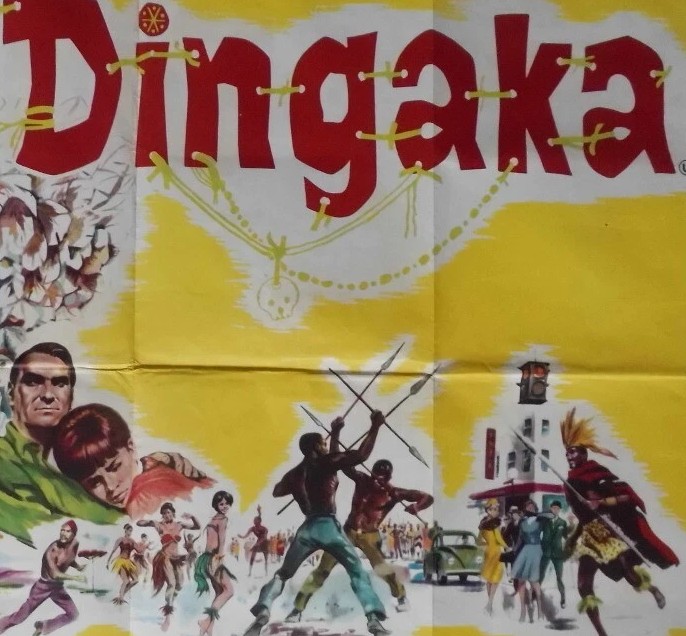
Though effectively a western with all the tropes of that genre, and a remake to boot of Yellow Sky (1948), this, adding further hilarity and extending the cult status, is set in South Africa, with variable attention paid to accent.

Stretch Hawkins (Robert Gunner) is leader of a gang of outlaws robbing banks in the Transvaal during a gold strike. They escape the pursuing posse by heading into desert territory and eventually, parched, exhausted and suffering from heat stroke, seek refuge in a ghost town, former mining town Yellow Rock abandoned except for two inhabitants, Oupa Decker (Vincent Price) and his grand-daughter Willi (Diana Ivarson).

Naturally, on spotting the lone woman, the outlaws get the wrong ideas. But she soon puts them right. When she’s not holding them at bay with a rifle she’s decking Stretch with a neat right hook. Refusing to offer them any hospitality whatsoever seems particularly mean given the poor chaps are starving and this area is bereft of the animal population- lions, elephants, hogs – that had popped up previously in the way of the random stock inserts you found in any picture set in Africa.

So the fellows spread themselves out along the riverbank which provides the only water in the vicinity and where Willi must come calling, leading to further episodes of predatory sexual behaviour. By now Stretch has taken a liking to Willi, which is eventually reciprocated, and he tends to leap to her defence.

For no apparent reason, the outlaws surmise that the only reason the old man and his daughter are still hanging around this deserted spot is because they have found gold. Instead of doing the obvious and holding the younger woman hostage, Stretch attempts to strike a deal, agreeing to take only half the old man’s £20,000 stake in return for letting them go free.

This doesn’t go down so well with the rest of the gang and the shoot-out, when it occurs, sees Stretch siding with the good guys and turning over such a good leaf that he returns the money he stole to the bank.

Despite Vincent Price threatening to ruin the picture with his mugging there are some nice touches. After Stretch’s romantic overtures are derisively dismissed for him being too smelly, he smartens himself up, coming a-courting (or a rough version of it) in fresh shirt, armpits washed and hair combed. Stretch had a touch of religion in the past when a law-observing farmer. And you can tell what a change is wrought in him when at the end he buys rather than steals a pretty hat for Willi.

It’s true there is a transformation in Vincent Price (The Oblong Box, 1969). But not for the better. The lugubrious delivery is toned down, the iconic full beard reduced to a wisp, he wears a floppy hat, cackles like a madman and every time he looks at the camera it’s with a one-eyed leer. There’s something of the country bumpkin in his interpretation of the part, and that might just be a show put on to fool the outlaws. Whatever it is, it comes across as the barmiest performance this side of the Razzies.

On the other hand Diana Ivarson (Macho Callahan, 1970), in her debut, makes a pretty good stab at the feisty independent western women, channelling her inner Barbara Stanwyck, or in those tight jeans Jane Fonda in Cat Ballou (1965). She’s a sharpshooter, capable of missing “that close on purpose.” Robert Gunner (Planet of the Apes, 1968) is scarcely a decent substitute for Gregory Peck in the original.

Director Robert Webb (The Cape Town Affair, 1967) can do little to rein Price in. Written by Harold Medford (The Cape Town Affair), adapting the original by Lamar Trotti and W.R. Burnett.

But, really, there’s little to save it from being awful except that cult pictures are judged by different criteria and this has all the making of a cult.

Must-see for all the wrong reasons.

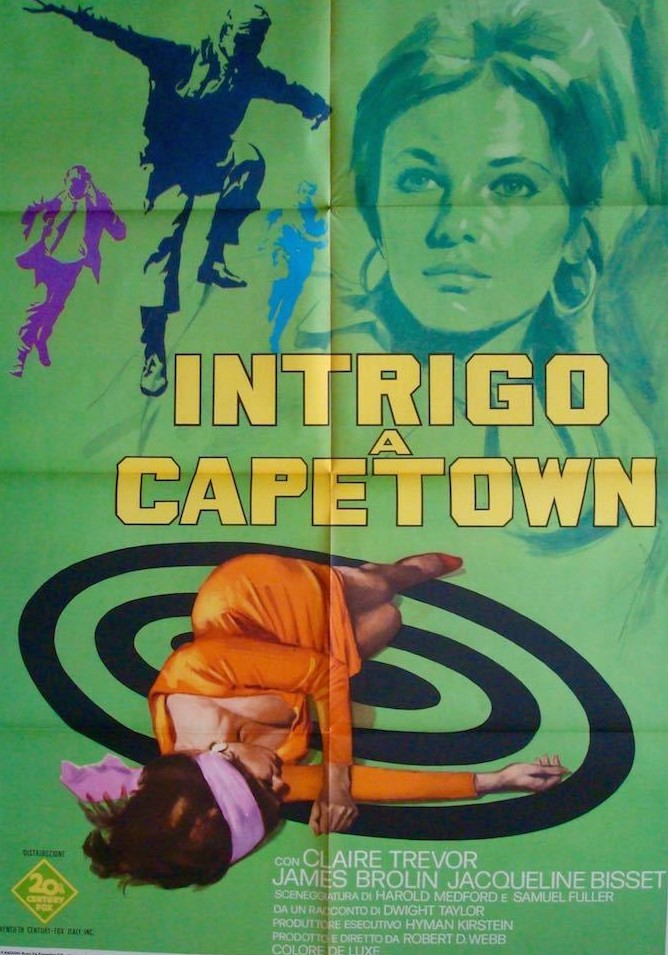
The Cape Town Affair (1967) **

It was too much to hope that a remake of Sam Fuller’s Pickup on South Street (1953) could match the original. Universal had made a decent job of a second bash at Beau Geste (1966) and Madame X (1966) and Twentieth Century Fox should be applauded for having the cojones to even attempt a reimagining of the John Ford classic when it tackled Stagecoach (1966). Generally speaking, remakes were seen as opportunities to feature up-and-coming talent rather than established marquee names.

So it was no surprise that Fox opted for rising stars in James Brolin (The Boston Strangler, 1968) and Jacqueline Bisset (The Detective, 1968), graduates of its talent school, though perhaps more of a stretch to relocate the Fuller classic to South Africa’s  Cape Town. Interestingly, the key role of the informer went to Claire Trevor, star of the original Stagecoach (1939). But while she is a decent replacement for six-time Oscar nominee Thelma Ritter (Move Over, Darling), Brolin was no match for the snarling Richard Widmark (The Bedford Incident, 1964) and Bisset pales when set against Jean Peters (Viva Zapata, 1952).

It’s really the acting that lets it down because it’s virtually the same plot as Pickup on South Street. On a bus in Cape Town pickpocket Skip McCoy (James Brolin) steals a wallet from the purse of Candy (Jacqueline Bisset). Unknown to him, she’s a courier, the wallet containing microfilm of a state secret. Unknown to her, she’s working for the Communists. Unknown to either of them she’s being tailed.

Sometime tie salesman, sometime hooker, sometime police informant Sam (Claire Trevor) identifies Skip as the most likely suspect. Secret service agents investigating his beach shack find nothing. Candy has better luck, Skip a sucker for a pretty face – and a sucker punch. She’s a bit quick in falling in love, he’s a bit too ready to ask for money, but eventually they work together to sniff out the Commies, not that that takes much. The fights are somewhat desultory and the only decent twist comes at the end when, by now loved-up, he is treating her to a romantic dinner, but still up to his pickpocketing tricks purloins the cash to pay from her handbag.

Brolin doesn’t do much but shout and come over like a male model while Bisset turns on the waterworks at the drop of a hat. If it wasn’t for the title, you wouldn’t even know this was set in Cape Town, no focus on city landmarks. There doesn’t look as if there was any budget to speak of.

Robert D. Webb (Pirates of Tortuga, 1961) directed without a hint of the comedy he injected into the swashbuckler. You can’t really blame Harold Medford (Fate Is the Hunter, 1964) for the actors messing up his screenplay.

Worth seeing if you want an example of how a rising star can surmount a debacle. Bisset went straight from this into The Sweet Ride (1968), The Detective (1968) and Bullitt (1968). But Brolin had no such luck. After a supporting role in The Boston Strangler he wouldn’t make another picture for four years and not win another starring role until Gable and Lombard (1976).

I had come at it, as is the undoing of many a movie fan, with the idea of finding a hidden gem, the long lost film of stars at the outset of the careers. Beyond the fact that Bissett looked classy and had a steal of a voice, and Brolin had at least looks, there was little worth finding. But, hey, you might be a completist and think this worth the effort.

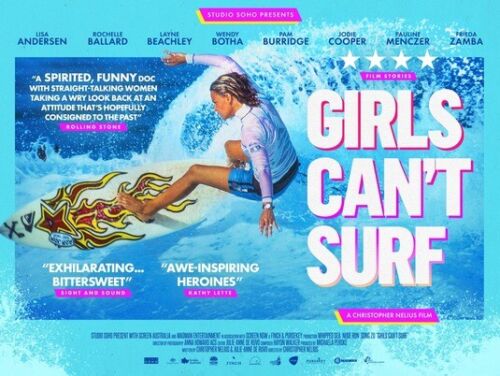
Girls Can’t Surf (2020) **** – Seen at the Cinema

Not to take anything away from this fascinating documentary about the battle for gender parity in the surfing world, but it occurred to me how few movies exist that features female athletes, compared to the plethora focusing on males. The occasional Million Dollar Baby (2004) and I, Tonya (2017) are in stark contrast to the plethora of Rocky (and now Creed)movies,  or all the American football and baseball pictures while Kevin Costner alone has managed a dozen varied sports movies and even the recent King Richard (2021), ostensibly about the Williams sisters, actually centered on the father.  

And the reason I ask is that the lives of any of the champion surfers showcased here would have made a worthy biopic, their stories mostly about overcoming adversity, battling male prejudice and finally, though only in the last few years, winning equal pay with men. Just as King Richard was as much about brand management, so is Girls Can’t Surf, although it was only by accident that big business understood the commercial impact women surfers had on sales of board clothing.

And the other reason I ask is that compared even to the long ago likes of Big Wednesday (1978)  and Endless Summer (1965) the actual surfing footage here is meagre and it got me to thinking how much better it would have been with a proper budget for filming the surfing action.

Anyway, back to the movie I actually saw rather than the one I can only imagine, this covers the growth of female surfing from being regarded as a mere appendage to the male version to the billion-dollar industry it has become, tracing the largely sexist obstacles thrown in the way of women. The biggest issue initially wasn’t prize money, but that the men hogged the best waves and the best beaches, women often allocated times where the waves would be dismal, and therefore could not show off their skills.

This isn’t a sport like tennis or soccer where muscle power gives men the edge. Here, everyone is battling the same ocean. It’s not as if women get to surf with smaller, easier waves – that’s the last thing they want. The ocean doesn’t take it any easier on the women. But the women, barely tolerated, found themselves not just squeezed out of a decent share of the prize money but, being ignored in terms of publicity and deemed unworthy of articles in the surfing magazines, lost out in the battle to raise the sponsorship required just to make a living.

Whenever recession hit the sport, the answer was always to reduce female prize money, cancel female events or attempt to drive them out of the sport altogether. There’s an entire roll-call of generation after generation of top surfers not just battling each other to become world champion (there’s a program of global events as in Formula One racing) but battling personal circumstances – Pauline Menczer was crippled by arthritis, Pam Burridge suffered from anorexia – and each other as well as endemic sexism and inappropriate male advances.

The men were the glamour pusses, and they preferred it if the women stayed in their cars and read Mills & Boon novels and watched them surf, or if they wanted to parade about it should be in bikinis for the beauty contests that appeared a constituent part of any event.

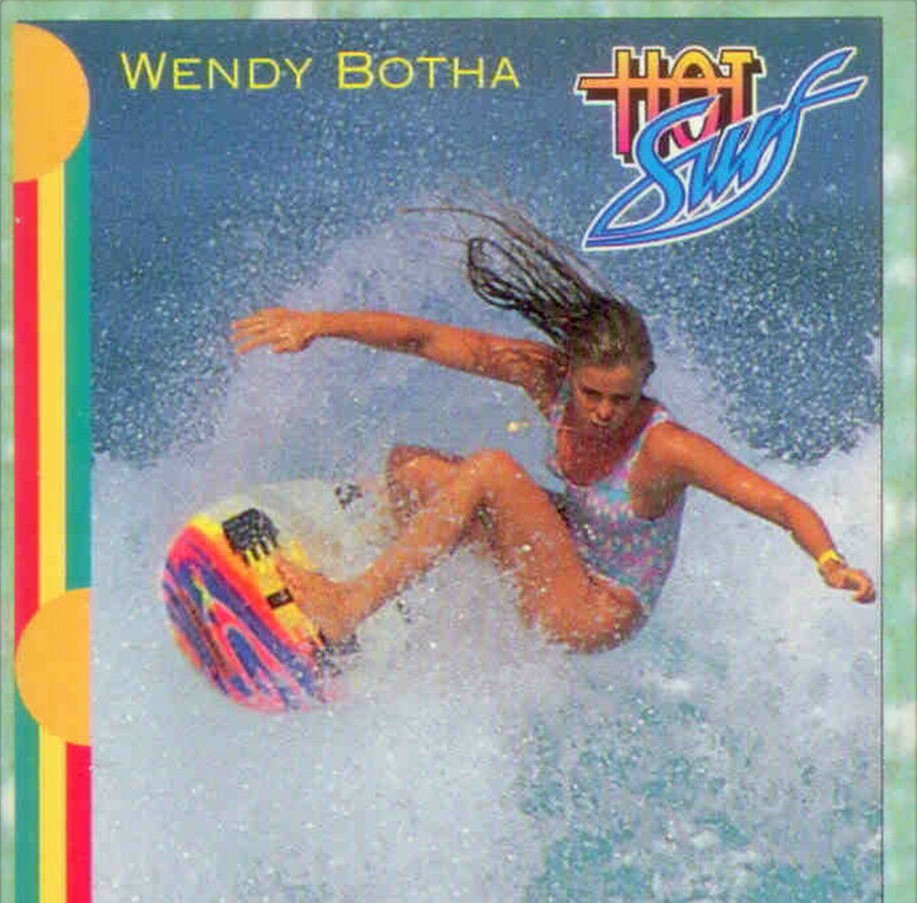
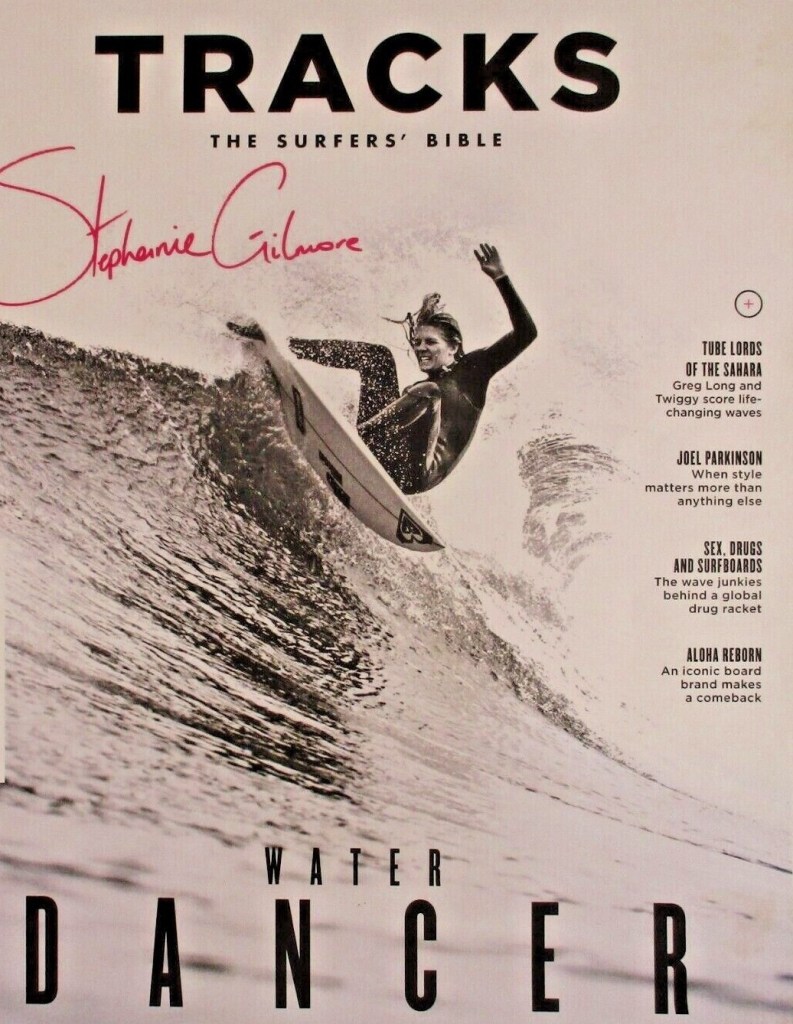
The story is told in large part by the participants, names that were unfamiliar to me, like Jodie Cooper, Frieda Zamba, Lisa Anderson, Wendy Botha, Layne Beachley and Stephanie Gilmore. But the terms they use are the same as competitive athletes the world over, the determination to win, sometimes win at all costs, and even with a world championship trophy to your name unable to attract sponsorship.

The film could easily be interpreted as all about the battle for parity. At the start female prize money was barely a tenth of the million-dollar prize fund allocated the men. But even when manufacturers recognised that females were selling product, female earnings were usually half that of men. Eventually, the women took action, effectively going on strike when offered the poorer time slots in competitions, and at some point, it’s not exactly clear when, forcing the organisers to create a more even playing field, taking competitions to places where there was no shortage of giant waves for both sexes. The men, encountering exactly the same waves as their female counterparts, were forced to admit that in some instances the women were actually better. A social media outcry spelled the end of unequal pay, although noticeably there was no back payment for the years of inequality.

So, a terrific film directed by Christopher Nelius (Storm Surfers: New Zealand, 2010) – and co-written with Julie-Anne Du Ruvo – with no shortage of potential candidates for an awesome biopic, the supposed glamor of the surfing world exposed as tawdry for the most part, a bunch of larger-than-life personalities, a dose of humor, and women riding waves you would be scared to cross in a boat never mind with just a board for company.

In some programming quirk I caught this at the cinema but apparently it’s available on DVD and it must be streaming somewhere. The small screen will no doubt diminish the action but won’t take away form the basic story.

Discover WordPress

A daily selection of the best content published on WordPress, collected for you by humans who love to read.

The Atavist Magazine

by Brian Hannan

WordPress.com News

The latest news on WordPress.com and the WordPress community.