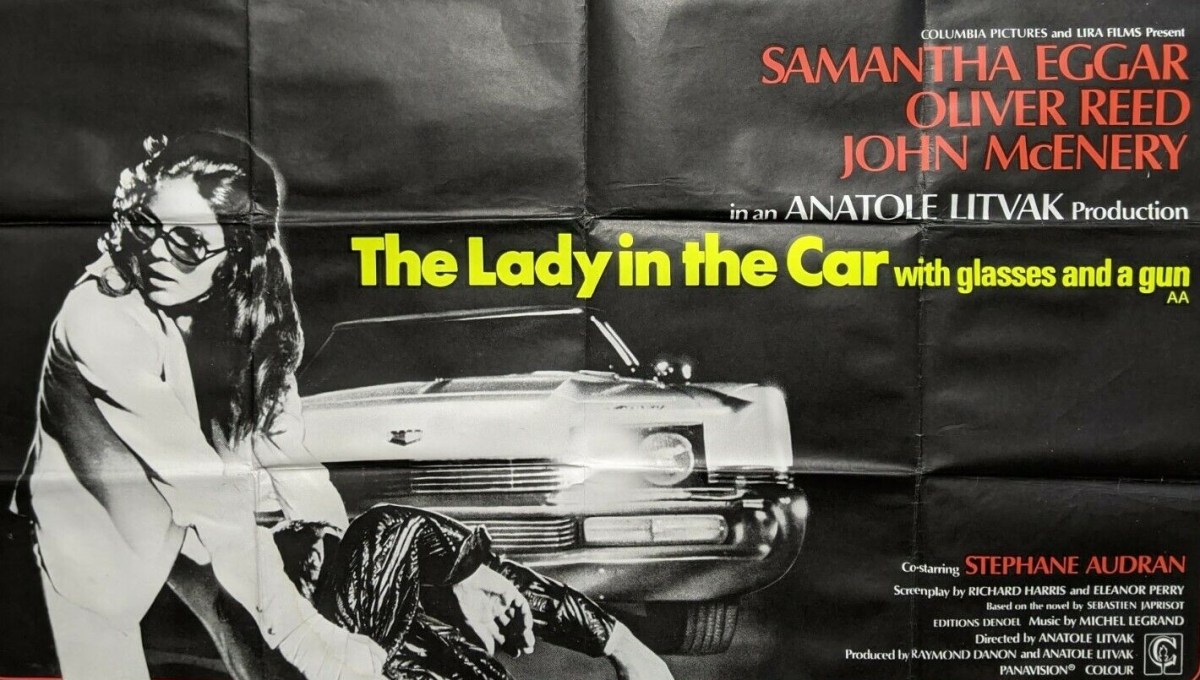
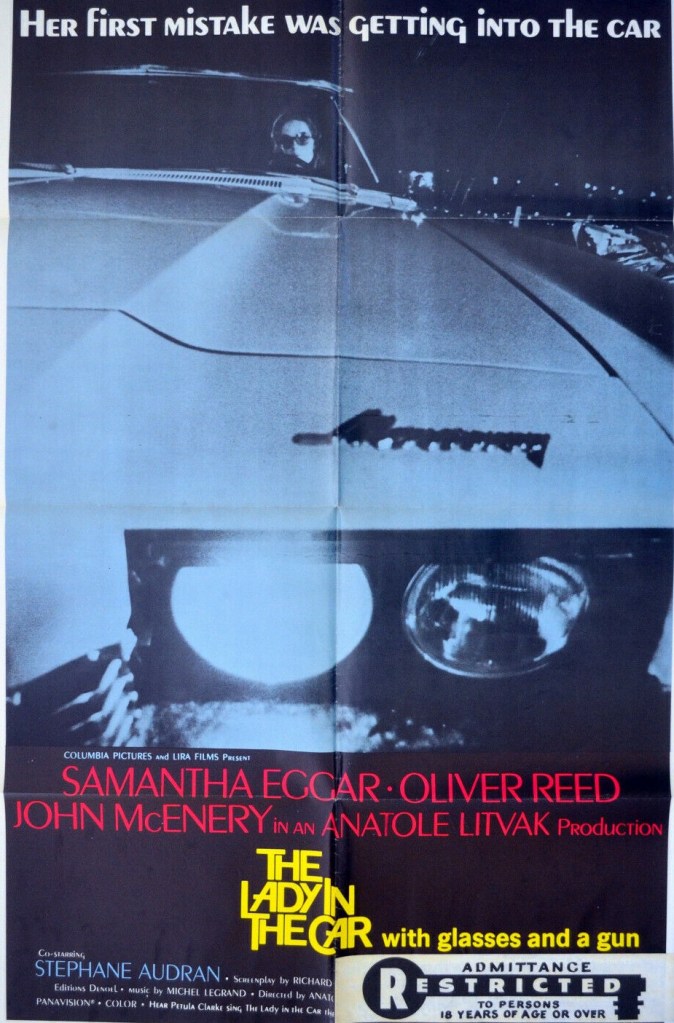
Samantha Eggar (The Collector, 1965) in her first top-billed role and an adapatation of a novel by French cult item Sebastian Japrisot (Adieu L’Ami/Farewell Friend, 1968). You couldn’t get a better mix.
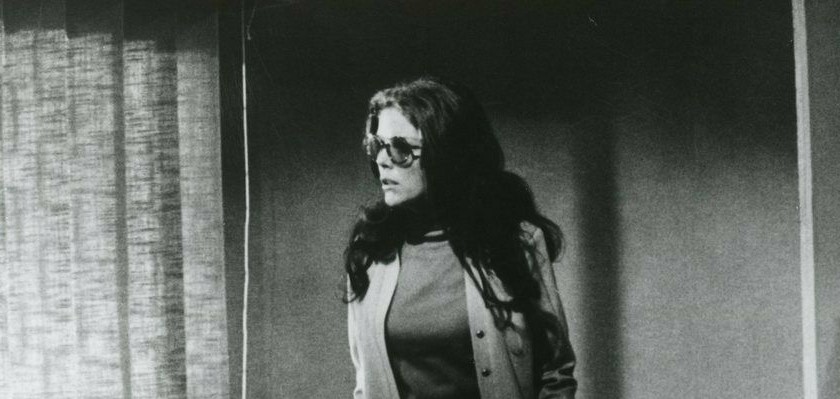
Fashion photographer Danielle (Samantha Eggar) sets off on road trip from Paris to the south of France only to discover everywhere she goes a doppelganger has been there first. She’s on edge anyway because she’s “borrowed” the car of employer Michael (Oliver Reed) and once police start recognizing her she gets jumpier still. The discovery of a body in the boot and the titular gun (a Winchester rifle) don’t help her frame of mind. But instead of reporting the corpse to the police – she’s a car thief after all – she tries to work it out herself. Amnesia maybe, madness because she keeps having flashes of memory – a spooky surgical procedure – or something worse?
She’s got a battered hand she doesn’t know how. Michael’s wife Anita (Stephane Audran) says she’s not seen Danielle in a month though she is convinced she stayed with the couple the previous night. A drifter Philippe (John McEnery) starts helping her out. Eventually she ends up in Marseilles none the wiser.
It’s a tricksy film and like Mirage (1965), recently reviewed, being limited to her point of view means the audience can only work out everything from her perspective. The string of clues sometimes lead back to the original mystery, other times appear to provide a possible solution. The explanation comes in something of a rush at the end.
Despite being the first top-billed role for Samantha Eggar (Walk Don’t Run. 1966), she would not scale that particular credit mountain again until The Demonoid (1981) but she is good in the role of a mixed-up woman struggling with identity. But since it’s based on a novel by Sebastian Japrisot (The Sleeping Car Murder, 1965) there’s a sneaky feeling a French actress might have been a better fit. Oliver Reed (Women in Love, 1969) is not quite what he seems, a difficult part sometimes to pull off, but he succeeds admirably.
Stephane Audran (Les Biches, 1969), jealous of Danielle, a friend whom she views as a rival for her husband’s affections, has the most intense part, using Danielle as an unwitting cover for betraying Michael. John McEnery (Romeo and Juliet, 1968) could almost be a London spiv, blonde hair, impecunious, clearly using women wherever he goes. Watch out for French stalwarts Marcel Bozzuffi (The French Connection, 1971) and Bernard Fresson (The French Connection II, 1975).
There’s certainly a film noir groove to the whole piece, the innocent caught up in a shifting world, and that’s hardly surprising since director Anatole Litvak began his career with dark pictures like Sorry, Wrong Number (1948) while previous effort Night of the Generals (1967) also involved murder. Litvak and Japrisot collaborated on the screenplay.
I expected a project laced with more atmosphere and a host of original characters. In truth, this is less atmospheric than the other two Japrisot adapatations , the interplay between the characters not so tightly woven, nor the climax so well-spun but it was enjoyable enough.
There was a remake in 2025 starring Freya Mayor (The Emperor of Paris, 2018).
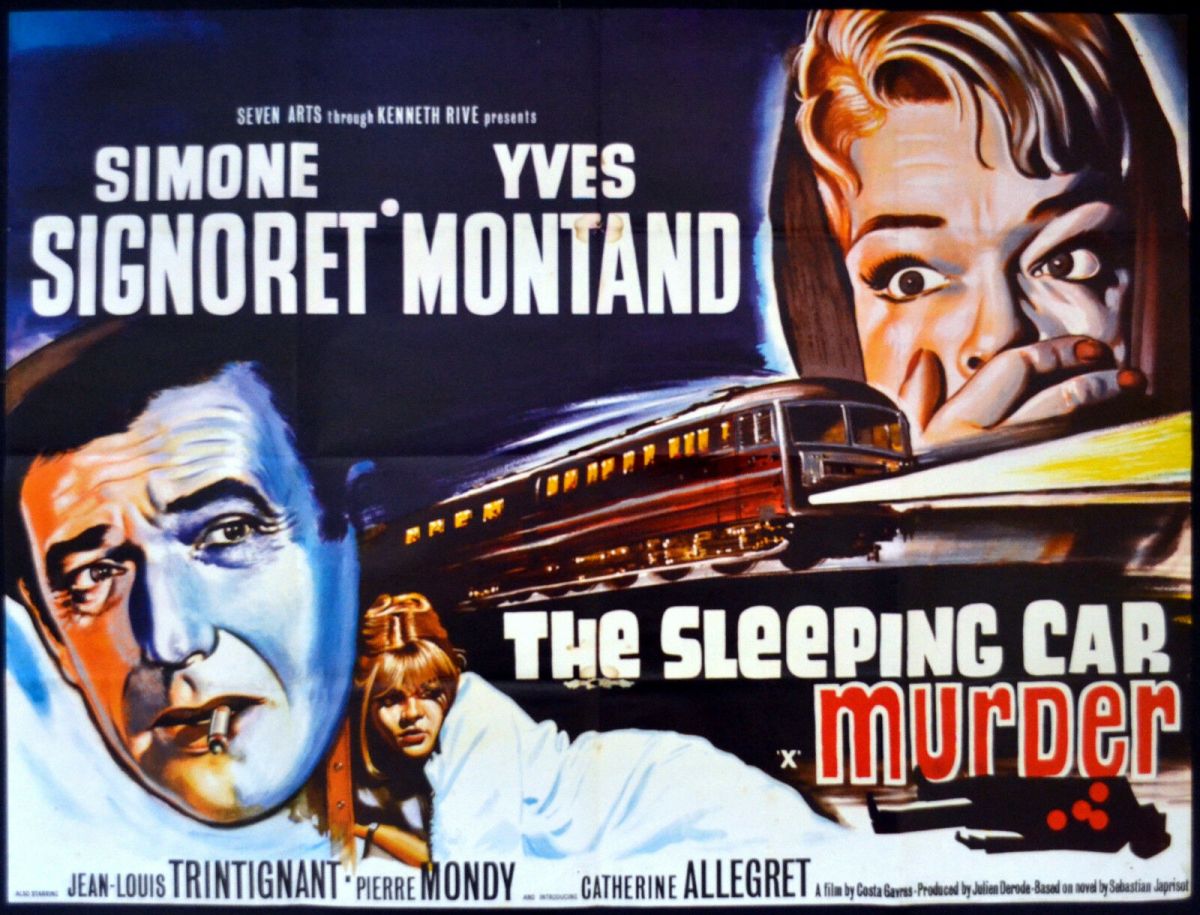
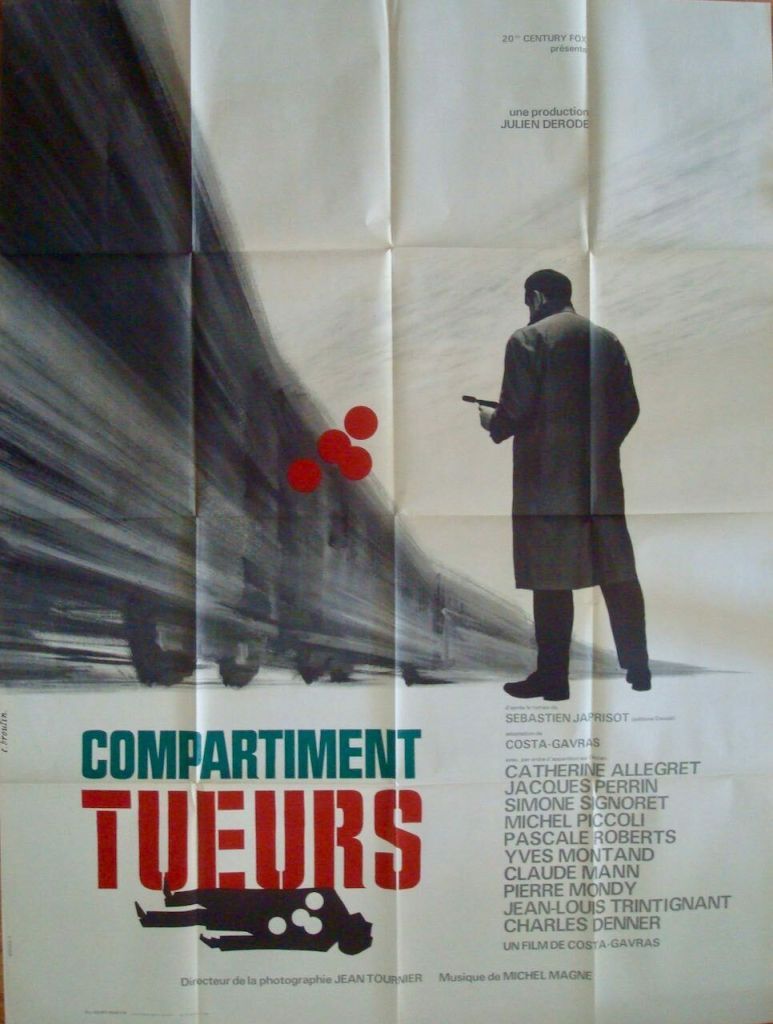
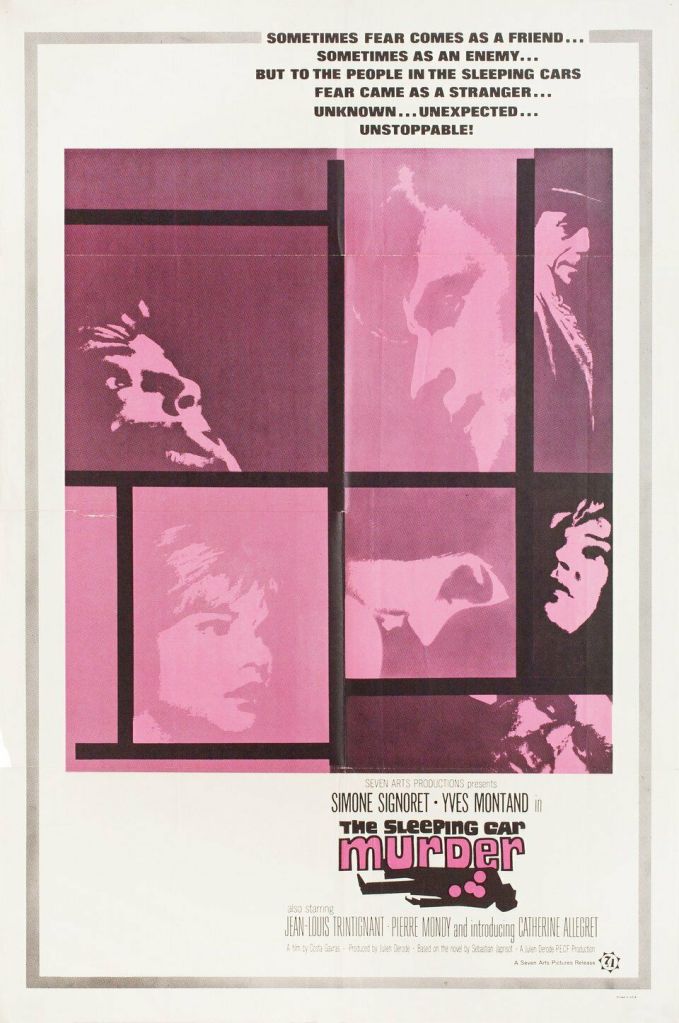
Absolutely brilliant thriller. Even after a half a century, still a knock out. A maniac on the loose, baffled cops, glimpses into the tattered lives of witnesses, victims and relatives, told at break-neck speed by Greek director Costa-Gavras (Z, 1969) on his debut and concluding with an astonishing car chase through the streets of Paris. Not just an all-star French cast – Yves Montand (Grand Prix, 1966), Oscar-winner Simone Signoret (Is Paris Burning?, 1966), Jean-Louis Trintignant (Les Biches, 1968) and Michel Piccoli (Topaz, 1969) – but directed with a Georges Simenon (creator of Maigret) sensibility to the frailties of humanity.
As well as the twists and turns of the narrative, what distinguishes this thriller are the parallel perspectives. Where most whodunits present an array of suspects, inviting the audience to work out the identity of the killer, here virtually all the characters are presented both objectively and subjectively. Some are delusional, others highly self-critical, occasionally both, and we are given glimpses into their lives through the characters’ internalized voice-over and dialog.
Tiny details open up worlds – the wife of a dead man bewailing that he would not be able to wear the fleecy shoes she had just bought him to keep out the cold during his night-time job, a policeman revealing he wanted to be a dancer, a vet who wants to create a new breed of animals, a witness whose parents committed suicide. But just as many, the flotsam and jetsam of the police life, irritate the hell out of the cops: Bob Valsky (Charles Denner) constantly berates their efforts, relatives bore the pants off their interviewer, not to mention self-important police chief Tarquin (Pierre Mondy) who has an answer for everything.
A young woman Georgette (Pascale Roberts) is discovered dead in the second-class sleeper compartment of a train after it has pulled into Paris. Initial suspicion falls on the other occupants including aging actress Eliane (Simone Signoret) in the thrall of her much younger lover Eric (Jean Louis Trintignant), impulsive blonde bombshell Bambi (Catherine Allegret), low-level office worker Rene (Michel Piccoli) and Madame Rivolani (Monique Chaumette). Weary Inspector Grazziani (Yves Montand), suffering from a cold and wanting to spend more time with his family, is handed the case. But before he can interview the suspects, they start getting knocked off.
So convinced are the police of their own theories that they ignore the testimony of Eliane and instantly home in on fantasist Rene, treated with contempt, a dishevelled lecherer who on the one hand misinterprets signals from women and on the other realizes that no one in their right mind would ever date him. Eliane is tormented by the prospect of being abandoned by her controlling lover.
It’s a race against time to find the passengers before the killer. In the middle of all this there is burgeoning romance between Bambi and clumsy mummy’s boy Daniel (Jacques Perrin), who may well hold the key to the murders. Their meet-cute is when he ladders her stockings.
I won’t spoil it for you by listing all the red herrings, surprises, mishaps, tense situations and explorations of psyche, but the pace never abates and it keeps you guessing to the end. And while all that keeps the viewer on tenterhooks what really makes the movie stand out is the depiction of the inner lives of the characters.
So often cast as a lover Yves Montand is outstanding as the diligent cop. Signoret captures beautifully the life of a once-beautiful woman who now enjoys the “empty gaze of men,” Trintignant essays a sleazier character than previously while Michel Piccoli who often at this stage of his career played oddballs invites sympathy for an unsympathetic character. Catherine Allegret (Last Tango in Paris, 1972) and Jacques Perrin (Blanche, 1971) charm as the young lovers. In tiny roles look out for director Claude Berri (Jean de Florette, 1986), Marcel Bozzuffi (The French Connection, 1971) and Claude Dauphin (Hard Contract, 1969),
Costa-Gavras constantly adds depth to the story and his innovative use of multiple voice-over, forensic detail, varying points-of-view, plus his masterful camerawork and a truly astonishing (for the time) car chase points to an early masterpiece. Sebastian Japrisot (Farewell, Friend / Adieu L’Ami, 1968) wrote the screenplay based on his novel.
Can’t remember where I got my DVD, perhaps second-hand, but there is an excellent print, taken from the 2016 restoration, available on YouTube.
This is not the Charles Bronson you think you know, the mean, truculent, monosyllabic persona who turned into a box office powerhouse later in the decade. It took the French to recognize the leading man qualities Hollywood determinedly ignored. God forbid, he is actually pretty charming, although his methods for squeezing information out of a suspect are, well, suspect. And he turns up pretty late in the picture, just when you think the focus is going to be on the suspect, Mellie (Marlene Jobert) and it’s going to be one of those pictures where an innocent woman is suspected of a crime and the man has to clear her name.
Except Mellie isn’t innocent. She’s killed a rapist who broke into her house and then dumped his body over the cliff. And she isn’t, officially at least, a suspect, local cop Inspector Toussaint (Jean Gaven) more interested in getting a loan from her husband, pilot Tony (Gabriele Tinti), to pay off gambling debts. Needless to say, any time the cop does knock on her door, she jumps out of her skin.
And she would have got away with the murder, except for the arrival of Dobbs (Charles Bronson). He turns up at a wedding, ensures she gets to see a newspaper headline of the murder, insinuates his way into her life, not too difficult once her husband heads off on another flight. She runs a bowling alley with her mother Juliette (Annie Cordy) who scarcely has a maternal bone in her body.
Rather than helping the cops solve the case, Dobbs is more interested in the red bag the rapist was carrying. But when she hands over the bag, it doesn’t contain the $60,000 Dobbs wants. We never see what Dobbs gets up to when he’s not with Mellie. But we hear it. His investigations may be carried out off screen but he’s tailing her – knows she bought a ton of newspapers – and tells her what he’s found out by speaking to cops and neighbors. Even though she’s replaced the cartridges in the shotgun she used to kill the rapist, he knows the gun has been fired. When she claims she was aiming at rats in the cellar, he points to the marks on the wall, too high for even the most acrobatic rat.
Mellie is trapped in a claustrophobic world, assailed by her own guilt and a jealous husband with too much unexplained loose cash (drug smuggling is the implication), turns against her best friend, boutique owner Nicole (Jill) who had an affair with her husband, and against her mother whom as a child she caught in bed with another man, causing her father to dump the mother.
They started to get tricky with double bills in the 1970s, trying to suggest the films were equally attractive, ignoring the fact that if they had been such hits they wouldn’t have been paired in the first place.
Most of the tension is self-inflicted but Dobbs has thing about nuts and soon is whizzing shells across rooms, some trick where they break on impact with a window, but the noise is like a shot, too close to the blast of the shotgun.
Every twist ratchets up the tension. And by concentrating on the suspect the police are ignoring and making Dobbs, by default, the chief investigator, and nobody to turn to, Mellie is turned inside out by his mere presence, never mind, when exasperated, he employs his own interrogation method, akin to waterboarding, except the liquid is alcohol, forced down her throat until her lungs are full to bursting.
The last act is a bit murky, as the locale shifts to Paris, involving a brothel owner and a set of gangsters who are even more intent on humiliating Mellie. With echoes of Charade (1963) and Moment to Moment (1966), it’s superbly directed by Rene Clement (Is Paris Burning? 1965), who doles out clues and twists like he’s playing a hand at cards.
In spite of the concentration on tension, he takes the time to build up his characters. A series of emotional flashbacks show the fault-lines in Mellie’s character, no matter that she initially appears confident with fashionable short hairstyle and white outfits bound to attract attention. Dobbs’ obsession with suddenly chucking nut shells around maintains the tension and his cavalier tone, especially his jocular use of a nickname, suggests an interesting personality behind the tough guy pose.
Like his script for The Sleeping Car Murder (1965), screenwriter Sebastian Japrisot is as concerned with ordinary life as with the thriller elements.
Charles Bronson (Farewell, Friend / Adieu L’Ami, 1968) delivers the best performance of his entire career, tough guy with a charming underbelly, kind of Cary Grant with muscle. Marlene Jobert (Catch Me a Spy, 1971) is excellent as the victim turned suspect, and even Jill Ireland, for whom a part was always found in husband Charlie’s movies, shows a different side to her screen persona.
This heist picture made Charles Bronson a star, though, like Clint Eastwood a few years previously, he had to go to Europe, in this case France, to find an audience appreciable of his particular skill set. This was such a box office smash in France that it was the reason that Once upon a Time in the West (1968), a major flop virtually everywhere else, turned into a huge hit in Paris. After a decade as a supporting actor, albeit in some quality offerings like The Magnificent Seven (1960), The Great Escape (1963) and The Dirty Dozen (1967), Bronson developed a big following, if only initially in Europe.
Farewell, Friend could also lay fair claim to stealing the title of “first buddy movie” from the following year’s Butch Cassidy and the Sundance Kid (1969) because, apart from the heist that is central to the story, it is essentially about the forging of a friendship. But it wasn’t released in the U.S. for another five years, in the wake of Bronson’s Hollywood breakthrough in The Valachi Papers (1972), and then under a different title, Honor Among Thieves.
And you can see why it was such a star-making vehicle. Bronson goes toe-to-toe with France’s number one male star Alain Delon (The Sicilian Clan, 1969). He had the walk and the stance and the look and he was given acres of screen time to allow audiences to fully appreciate for the first time what he had to offer. Like Butch Cassidy, the duo share a lot of screen time, and after initial dislike, they slowly turn, through circumstance and the same code of honor, into friends.
Dino Barran (Alain Delon) is the principled one, after a final stint as a doctor in the French Foreign Legion originally turning down overtures from Franz Propp (Charles Bronson) to become involved in a separate major robbery. Propp is an unsavory customer, making his living as a small-time thief who uses a stripper to dupe wealthy marks. Barran plans to rob a corporation’s safe during the three-day Xmas holiday of two million dollars as a favor to the slinky widow Isabelle (Olga Georges-Picot) of a former colleague, for whose death he retains guilt. Propp more or less barges his way into the caper.
It’s a clever heist. Isabelle gets Barran a job as a company doctor whose office is next door to the giant vault. But there’s a twist. Surveillance reveals only three of the seven numbers required to open the combination to the vault. But Barran reckons three days is sufficient to try out the 10,000 possible permurations.
Barran and Propp despise each other and pass the time playing juvenile tricks, locking each other into a room, stealing all the food from the one dispensing machine, winding each other up, while they take turns trying different combinations. But it opens after only 3,400 attempts and they face a shock. The vault is empty. They have been set up to take the fall for a previous robbery that must have been completed before the building closed for Xmas.
And there’s no way out. They are in lockdown, deep in a basement. The elevators can only be opened by a small squadron of guards upstairs. Food long gone, they are going to run out of water. If they use a lighter to see in the dark, or build a fire to get warm, the flames will eat up the oxygen they need to survive in the enclosed space. So the heist turns into a battle for survival and brute force attempts to escape before the building re-opens and they are discovered, exhausted and clearly guilty.
But that’s only the second act. There is a better one to follow, as their friendship is defined in an unusual manner. And there are any number of twists to maintain the suspense and tension. Butch Cassidy and the Sundance Kid were close friends when that western began. Here, we see the evolution of a friendship between two forceful characters who express their feelings with their fists.
Delon was a known quantity, but Bronson really comes to the fore, more than holding his own against a top star who oozed charisma. This is Bronson in chrysalis, the emergence of the tough guy leading man screen persona that would turn him into one of the biggest stars in the world. Surprisingly, given his later penchant for the monosyllabic, here he does a lot of talking, perhaps more actual acting than he ever did later when his roles tended to fall into a stereotype.
He has the two best scenes, both character-defining, but in different ways. He has a little scam, getting people to gamble on how many coins it would take for an already full-to-the-brim glass to overflow when a certain number of coins were dropped in. While this is a cute trick, it’s that of a small-time con artist, but watching it play out, as it does at critical moments, is surprisingly suspenseful. The second is the strip scene which shows him, as a potential leading man, in a very poor light, and although thievery is the ultimate aim, it is not far short of pimping, with Bronson standing back while the woman (Marianna Falk) is routinely humiliated. It’s the kind of scene that would be given to a supporting actor, for whom later redemption was not on the cards. It says something for Bronson’s command of the screen and the development of his character that by the end of the picture the audience has long forgotten that he could stoop so low.
It is a film of such twists I would not want to say much more for fear of giving away too much, suffice to say that Olga Georges-Picot (Je T’Aime, Je T’Aime, 1968) and her friend, mousy nurse Dominique (Brigitte Fossey, in her grown-up debut), are also stand-outs, and not just in the sense of their allure.
Director Jean Herman, in his sophomore outing, takes the bold step of dispensing with music virtually throughout, which means that during the critical heist sequence the audience is deprived of the usual musical beats that might indicate threat or suspense or change of mood, but which has the benefit of keeping the camera squarely on the two leading characters without favoring either. Most pictures focusing on character rely on slow-burn drama. In the bulk of heist pictures, characters appear fully-formed. Here, unusually, and almost uniquely in the movie canon, character development takes place during an action film.
Top French thriller writer Sebastian Japrisot (The Sleeping Car Murder, 1965) was responsible along with Herman for the screenplay. Japrisot was a key figure in the French movie thriller scene, churning out, either as original novels or original screenplays, A Trap for Cinderella (1965), Rider on the Rain (1970) and The Lady in the Car with the Glasses and the Gun (1970).
Even without Bronson, this would have been a terrific heist picture. With him, it takes on a new dimension.


 The Magnificent 60s