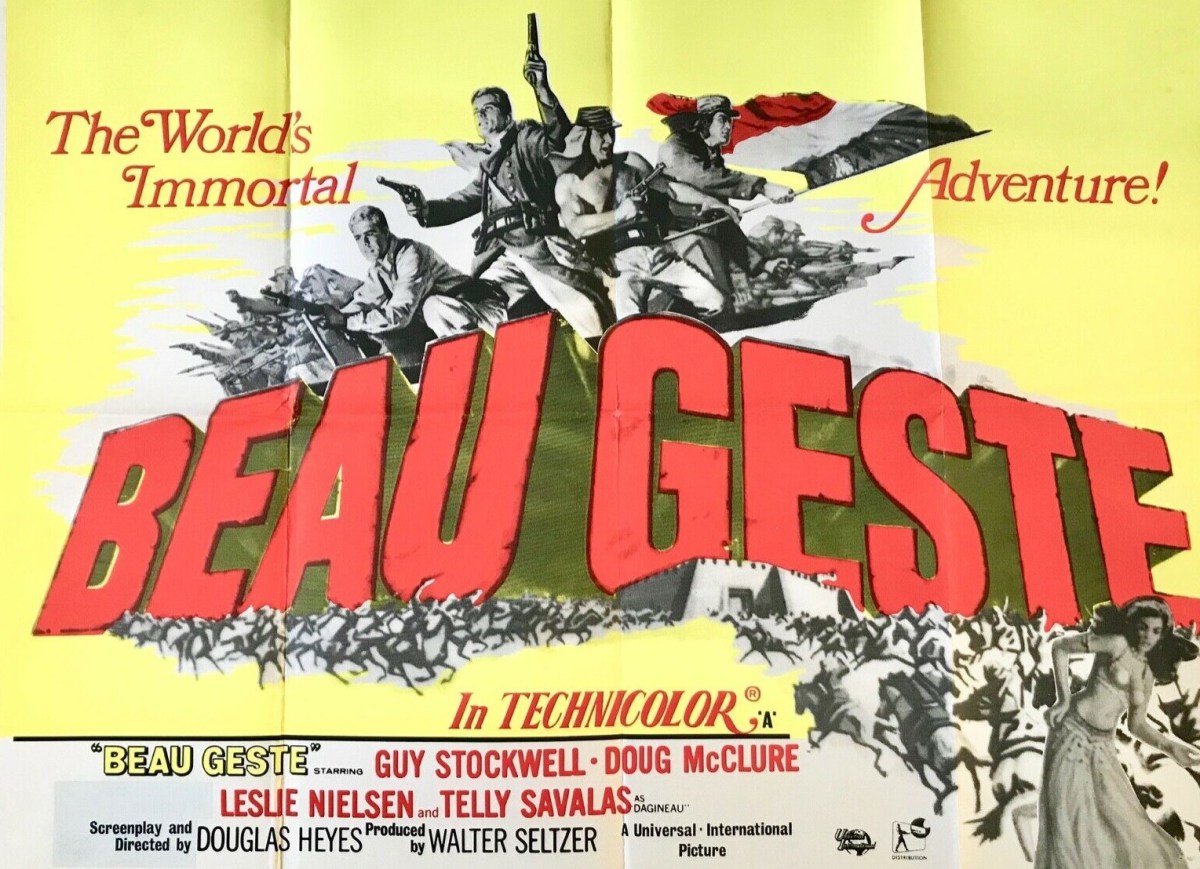
Beau Geste (1966) ***

Two brothers battle inhospitable terrain, warring tribes and a sadistic sergeant major in a  remake of the classic tale. The title translates as “noble and generous gesture” and is a pun on the name of hero Michael Geste (Guy Stockwell), an American hiding out in the French Foreign Legion in shame for being involved, innocently as it happens, in embezzlement. His attitude is markedly different to the “scum of the earth” who make up the battalion and his quick wit and refusal to kowtow make him a target for Sgt Major Dagineau (Telly Savalas), a former officer busted to the ranks.

Dagineau delights in imposing hardship and devising mental torture, making some recruits including Geste walk around blindfold at the top of a cliff. Geste’s resistance to his superior is almost suicidal and he even volunteers to take a whipping on behalf of his comrades. “It’s me he wants,” says Geste, “if not now the next time.” At another point he is buried up to his neck in the blazing sun.
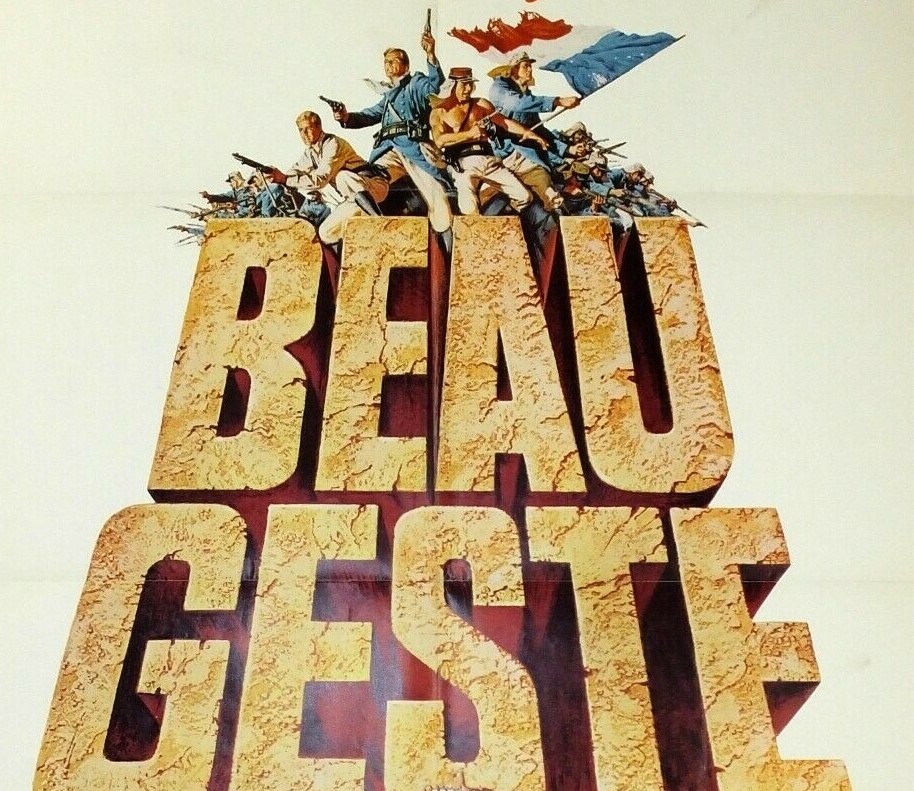
Joined by his brother John (Doug McClure), the battalion sets out as a relief force for a remote fort but when commanding officer Lt De Ruse (Leslie Nielsen) is seriously wounded, the sergeant-major takes charge. Under siege from the Tuareg tribe, honor, treachery, mutiny, fighting skills and courage all come into play in a final section.

The action and the various episodes and confrontations are strong enough and Geste has a good line in witty retort, but blame the casting for the fact that it turns into Saturday afternoon matinee material. It was always going to be a stretch to match Gary Cooper, Ray Milland and Susan Hayward from the 1939 hit version.

Stagecoach, remade the same year, was able to rustle up a bona fide box office star in Ann-Margret (Viva Las Vegas, 1964) and a host of supporting players with considerable marquee appeal including Bing Crosby (Robin and the 7 Hoods, 1964), Robert Cummings (Promise Her Anything, 1965) and Van Heflin (Cry of Battle, 1963). Nobody in the cast of Beau Geste could compare. Apart from the Spanish-made Sword of Zorro (1963), Guy Stockwell usually came second or third in the credits, as did Doug McClure (Shenandoah, 1965) while Telly Savalas, despite or because of an Oscar nomination for The Birdman of Alcatraz (1962), was viewed as a character actor.

But that was the point. Universal gambled on turning the latest graduates from its talent school into major box office commodities. The set pieces and the action are well handled and while there are excellent lines especially in the verbal duels between hero and villain, it’s not helped by the most interesting character being Dagineau, who, despite his failings, accepted his fall from grace, worked his way back up the career ladder, believing brutality the only way to control the soldiers, and in the end out of the two is the one who has the greater sense of honor, refusing to allow a lie to befoul the truth, rejecting the notion of when the legend becomes fact print the legend, And it’s a shame that the movie has to present his character in more black-and-white terms rather than invest more time in his background or accept his version of reality.   
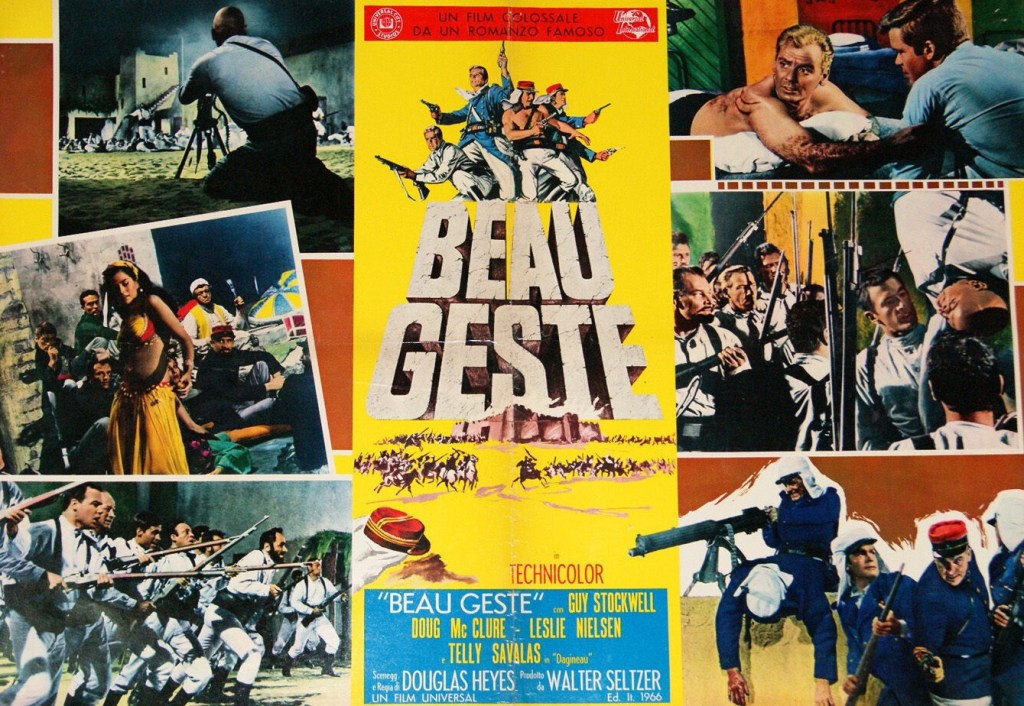
Telly Savalas (The Scalphunters, 1968) steals the show with a performance of considerable subtlety. Guy Stockwell (Tobruk, 1967) is little more than a stalwart, the heroic hero, with little sense of the irony of his situation. Doug McClure (The King’s Pirate, 1967) presents as straighforward a matinee idol. If you only know Leslie Neilsen from his later spoof comedies like Airplane! (1980) you will be surprised to see him deliver a dramatic performance as the drunken commander who still insists, in an echo of El Cid, in rising from his sick bed to lead his troops. Normally this kind of macho movie – The Magnificent Seven (1960) and The Dirty Dozen (1967) prime examples – throws up burgeoning talent who go on to make it big. It’s one of the disappointments here that this does not occur.

This was the second and final movie of Douglas Heyes (Kitten with a Whip, 1964).  

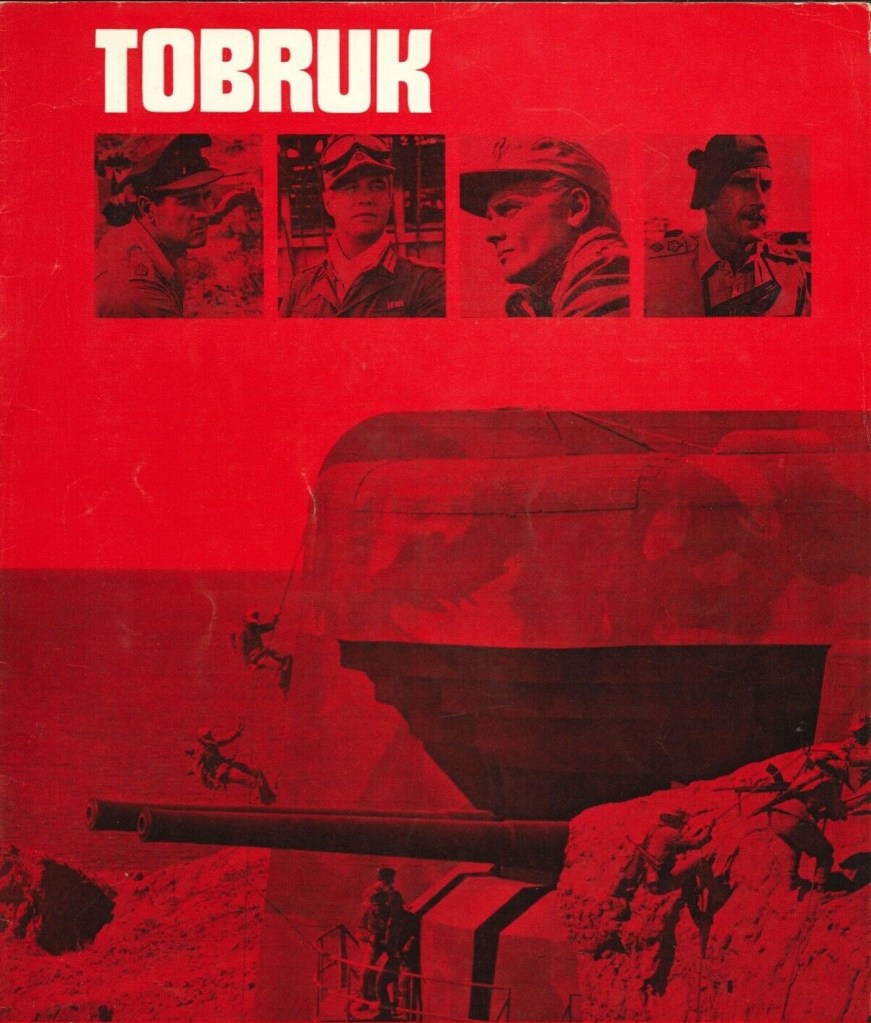
Tobruk (1967) ****

Occasionally ingenious action-packed men-on-a-mission picture that teams reluctant hero Major Craig (Rock Hudson) with Captain Bergman (George Peppard) who heads up a team of Jewish German commandos (i.e good guys). You might think the idea of German-born Jewish commandoes was a dramatic flight of fancy. But, in fact, these guys existed. They were called X-Troop although whether they actually took part in something close to this fictional operation is of course open to question.

Arthur Hiller (Promise Her Anything, 1966) directs with some skill and to increase tension often utilizes silence in Hitchcockian fashion. He meshes innate antagonism between the two principals and stiff-upper-lip British Colonel Harker (Nigel Green), two subplots that have a bearing on the final outcome, and explosive battle scenes. In addition, in supporting roles is a Sgt Major (Jack Watson) unusually solicitous of his troops and a grunt (Norman Rossington) with a fund of one-liners.

Craig is liberated by frogmen from a prison ship and flown into the Sahara on the eve of the Battle of El Alamein to guide a strike force 800 miles across the desert to blow up Rommel’s underground fuel tanks in Tobruk, Bergman’s outfit providing the perfect cover as Germans escorting British prisoners. “It’s suicide,” protests Craig. “It’s orders,” retorts Harker.

Most action pictures get by on action and personality clashes against authority but this is distinguished as well by clever ruses. First off, hemmed in by an Italian tank squadron on one side and the Germans on the other, Harker’s unit fires mortars into each, convincing them to open fire on one another. Craig, on whose topographical skills the unit depends, goes the desert version of off-piste, leading the group through a minefield, personally acting as sweeper with a bayonet as his rudimentary tool, his understanding of how the enemy lays its mines allowing him to virtually explode them all at once. But, ironically, their cover is so complete that they are strafed by a British plane, and equally ironically, have to shoot down one of their own.

Along the way they pick up a stranded father-and-daughter Henry (Liam Redmond) and Heidy Hunt (Cheryl Portman) who are on another mission entirely, to help create a Moslem uprising against the British in Egypt. Their arrival reveals the presence of a traitor in the camp. Naturally, this isn’t the only complication and problems mount as they approach Tobruk and, finding it vastly more populated with German troops than expected, they now, in addition to tackling the virtually impenetrable fuel dumps, have to knock out the city’s radio mast and neutralize the German big guns protecting the beaches.

So it’s basically one dicey situation after another, ingenuity solving problems where sheer force is not enough, and twists all the way to the end.

All the battles are particularly well done, pretty ferocious stuff, flamethrowers especially prominent, but the team are also adept at hijacking tanks, and in another brilliant ruse capturing one without blowing it up. The screenplay by Leo Gordon (The Tower of London, 1962) supplies all the main characters with considerable depth. While Craig isn’t exactly a coward, he is not interested in laying down his life for a cause. Although Harker seems a typical officious British officer, he, too, has surprising depths. But it is Bergman who is given the weightiest part, not just a German seeking revenge against his own countrymen for the treatment of Jews but a man looking to a future when Jews will fight for their own homeland in Israel.  

Hudson had begun his career in action films, mostly of the western variety, before being seduced by the likes of Doris Day and Gina Lollobrigida in romantic comedies and this is a welcome return to tough guy form. George Peppard made it two Germans in a row after The Blue Max (1966) but this is a far more nuanced performance. There are star turns from Nigel Green, Guy Stockwell (Beau Geste, 1966) as Peppard’s sidekick and the aforementioned Jack Watson (The Hill, 1965) and Norman Rossington.

This was pretty much dismissed on initial release as a straightforward gung-ho actioner and one that tipped Rock Hudson’s career in a downward spiral, but I found it both thoughtful and inventive and had much more of an on-the-ground feeling to it, with nothing going according to plan and alternatives quickly need to be found. Under-rated and well worth a look.

Discover WordPress

A daily selection of the best content published on WordPress, collected for you by humans who love to read.

The Atavist Magazine

by Brian Hannan

WordPress.com News

The latest news on WordPress.com and the WordPress community.