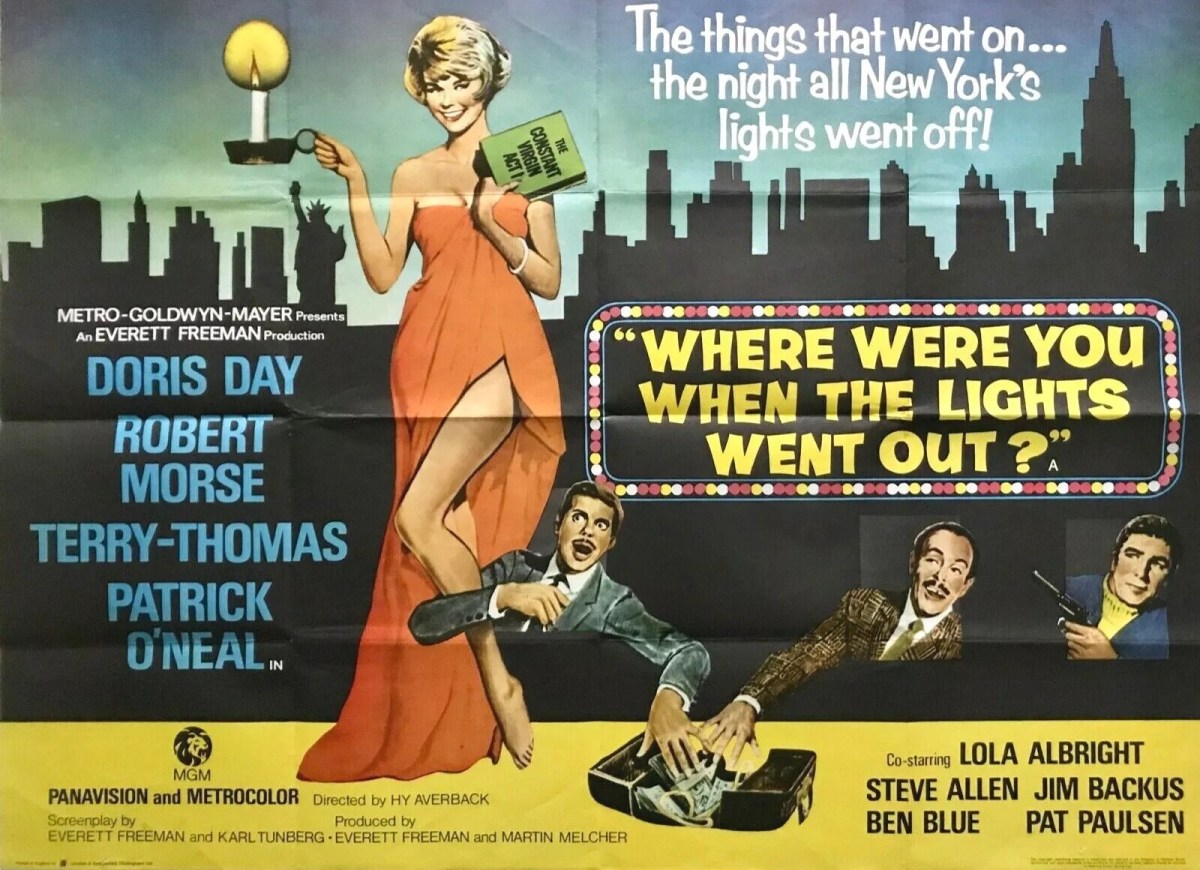
Where Were You When The Lights Went Out (1968) **

Of the 25 million stories you could have chosen when New York and the surrounding area was hit by an electricity blackout in the mid-1960s, you could have elected for something more interesting than this farce-style comedy that after the opening sections resembles nothing more than a stage play. But that’s because, somewhat surprisingly, it is based on a play and one concerning not the great fracas in the Big Apple but a similar occurrence in Paris almost a decade before. Once you know that, the farce element makes sense, but not much else does.

The three constituent parts that eventually coalesce into little more than a collage of double takes and startled expressions are: thwarted businessman Waldo (Robert Morse) making off with a couple of million bucks; Broadway star Margaret (Doris Day) finding architect husband Peter (Patrick O’Neal) in a clinch with journalist Roberta (Lola Albright); and impresario Ladislaus (Terry-Thomas), the most English-sounding Eastern European you ever came across, terrified Margaret is going to quit his play.

The lights going out malarkey is an ill-judged MacGuffin so that all except Roberta can end up in a classy Connecticut apartment and get into a quandary about who loves who and who’s cheating on who and career choices to be made. It’s pretty hard work all round to make all the pieces misalign and then fit. Waldo’s car has broken down so he has no real reason to be there nor to gulp down a beaker of alcohol that knocks him out without noticing that Margaret is fast asleep on the same couch after imbibing the same concoction.

Cue not much hilarity when guilty Peter turns up hoping to win back his wife, not expecting to find her unconscious from booze and once he discovers her bed partner convinces himself that she is as much of a cheat as himself. Meanwhile, Ladislaus tries to keep the jealousy pot boiling in the hope that she will divorce her husband and be forced to continue working.

I’m not sure I really cared whether it all worked out or not. Sure, comedies often pivot on bizarre instance, but this is just awful. More to the point, the structure doesn’t focus sufficiently on Margaret. The Waldo scenario seems wildly out of place and not enough is made of the chaos of the blackout. More to the point, with streets completely jammed and traffic signals not working, just how all four manage to get out of the city is beyond belief.

Sure, Doris Day grew up fast in the decade; at the start we worry about her losing her virginity; by the end it’s whether she’s going to embark on an affair. She’s always on the brink of the kind of sophistication that might tolerate an affair before drawing back in shock at such a notion.

The laffs are thin on the ground, even Doris Day drunk – one of her trademark touches – seems to lack punch. The best written scenes are those between Ladislaus and his cynical psychiatrist

Doris Day does her best but it’s far from the sparkling form of Pillow Talk (1959) that kicked off her very own rom-com subgenre. The quality of her male co-star had diminished over the years, from the peaks of Rock Hudson and Cary Grant to the acceptable Rod Taylor and James Garner but Patrick O’Neal (Stiletto, 1969) acts as if he is curling his lip and about to belt someone in the harder-edged dramas with which he made his name. Robert Morse (The Loved One, 1965) looks as though he’s still trying to work out what his character’s doing there. However, Terry-Thomas (Arabella, 1967) exudes such charm he’s always a joy to watch. Lola Albright (A Cold Wind in August, 1961) isn’t in it nearly enough.

The original French play by Claude Magnier was a sex farce, but casting Doris Day meant the sex angle was played down, inhibiting the movie. An unlikely vehicle for screenwriter Karl Tunberg – Ben-Hur (1959) and Harlow (1965) – who co-wrote with producer Everett Freeman (The Maltese Bippy, 1969). Director Hy Averback (The Great Bank Robbery, 1969) doesn’t come close to demonstrating the lightness of touch required to make such a ponderous effort work.

File under disappointment.

The Loved One (1965) ***

If only British director Tony Richardson had seen fit to add some meat to the bones, this satirical look at the American funeral business might have emulated the dramatic impact of Elmer Gantry (1960). As it is, the director is so preoccupied with the funereal inanities that it doesn’t so much lose sight of the plot as pretty much ignore it.

So, yes, the burying of a loved is big business and just like weddings some of the trimmings would make your toe curl. But even when reality intrudes, feet swell after death so require larger shoes and the only way to fit a suit on a corpse is to slit open the back, these are treated in humorous fashion.

And that would all be fine if this was the laff-fest Richardson intended but even with a puffed-out roster of cameos – Liberace as a salesman and James Coburn (Hard Contract, 1969) as a truculent customs officer the pick – this ends up as more documentary than movie. And that’s it’s main attraction for a contemporary audience who might be less concerned about the director’s almighty fall from grace after the stunning critical and commercial success of Tom Jones (1963).

In fact, it’s a shame the story goes anywhere near internment because the initial section concentrating on Hollywood is more successful in achieving a modicum of gentle satire. Wannabe poet Dennis (Robert Morse) has won a trip to America as a prize and lands on upper crust uncle Sir Francis, a Hollywood veteran, tasked with improving the elocution of cowboy Dusty (Robert Easton) so that he can play a British spy akin to James Bond.

That section entails gorillas turning up outside telephone booths, all sorts of monsters dawdling through the studio canteen, and head honcho (Roddy McDowell) running his father’s studio by the seat of his pants until he comes unstuck, resulting in Sir Francis being fired after 31 years. There’s some interesting, almost British, issue-dodging and Sir Francis in true British style, unable to deal the embarrassment of being sacked, commits suicide, leading the nephew into the arms of Whispering Glades funeral operative Aimee (Anjanette Comer). She’s in love with the creepy Joyboy (Rod Steiger) leaving Dennis to woo her using other people’s poems.

There’s another nutcase dropping out of the woodwork every two minutes, and occasionally there’s a mild piece of slapstick or physical comedy. Of course, using rampant sex as the basis for comedy, as with Tom Jones, works far better than death. In the absence of a decent narrative or interesting characters, once the initial heavy-handed points have been made there’s nowhere else to go except be more heavy-handed.   

Until Brideshead Revisited (1981) was turned into a triumphant mini-series, the works of British author Evelyn Waugh had difficulty being transferred to the screen. In part, this was due to his idiosyncratic style and in part that, even at his most serious, he was viewed as a comedy writer.

Screenwriter Terry Southern (Candy, 1968) wouldn’t have been my first choice to translate the Waugh essence for the big screen, but co-writer Christopher Isherwood (Cabaret, 1968) was no more successful.

Robert Morse (Guide for the Married Man, 1967) offers little beyond mild buffoonery. While Anjanette Comer (Guns for San Sebastian, 1968) is surprisingly good as the angelic ditzy object of his affections, she can’t carry the entire picture. Robert Morley (Genghis Khan, 1965) manages to keep a straight face while delivering his lines.

Without doubt hits the immediate target but somehow misses the bulls-eye.

Even so, there’s one element of the picture that would have contemporary Hollywood salivating. And that is a producer not frightened of taking risks, willing to go outside the envelope in a bid to deliver the different kind of movie that audiences obsessed over with Barbie and Oppenheimer.

Martin Ransohoff had an enviable track record in the 1960s. For MGM, he was the mastermind behind movies as offbeat as The Americanization of Emily (1964), The Cincinnati Kid (1965) Eye of the Devil (1966) and Castle Keep (1969) as well as big-budget offerings The Sandpiper (1965) and Ice Station Zebra (1968). His name was on such later diverse titles as The Wanderers (1979) and Jagged Edge (1985). As you can see from this random selection, his movies didn’t always come off, but at least they were different.

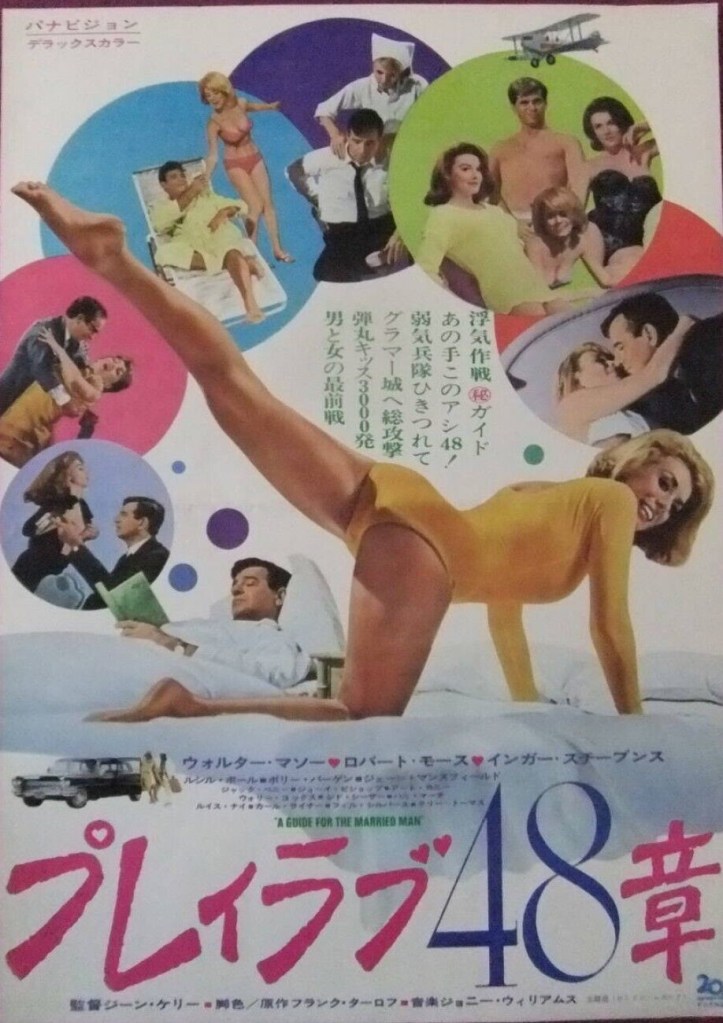
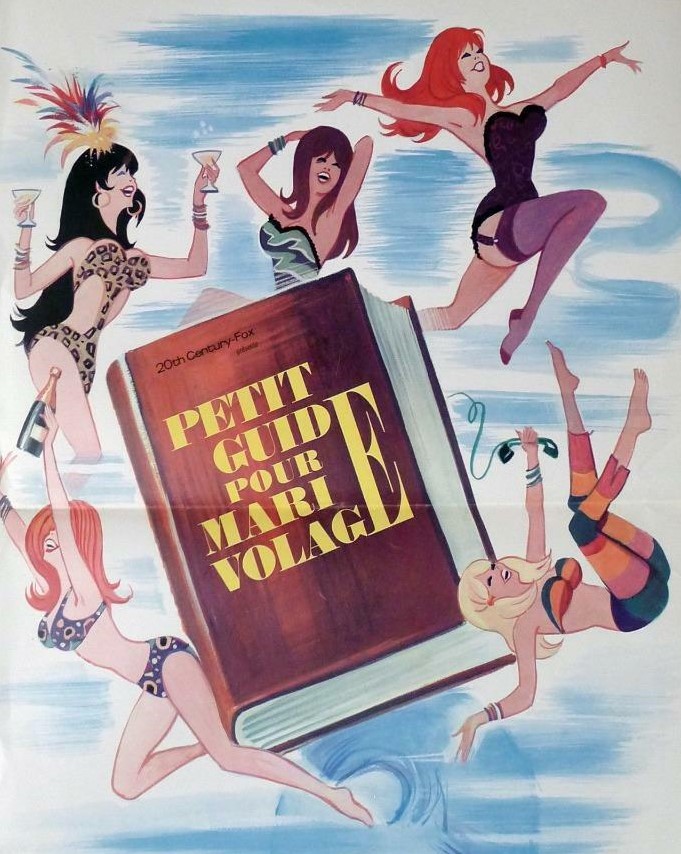
A Guide for the Married Man (1967) **

Little has dated as badly as this male supremacy sexist hogwash. While Billy Wilder can manage to inject some sophistication and even elegance into the thorny subject of adultery and male philandering (The Apartment, 1960), director Gene Kelly has little to offer but crudity.

Walter Matthau (The Fortune Cookie, 1966), top-billed for the first time, does little more than act as listener to neighbour Ed (Robert Morse), supposed expert on wifely deception and link man to a series of lame unconnected sketches featuring a battalion of cameo stars.

It’s more likely to be remembered for being the final film Jayne Mansfield (Playgirl after Dark/Too Hot to Handle, 1960) made before her premature death. Her episode might well sum up the depths of hilarity this opus stoops to – the compelling issue of what to do when your illicit companion loses her bra in your bedroom.

Perhaps the only amusing note is the notion that this has come from the pen of the Oscar-winning Frank Tarloff (Father Goose, 1964), responsible also for the source novel, drawing on the experiences of a bunch of “swingers” reputedly enjoying to the full the sexual excesses of the decade, a decidedly middle-aged gang intent on not leaving all the fun to the hippies and the liberated young

The women here are straight out of The Stepford Wives template of female docility, existing only to please their men, any passing woman automatically in the stunner bracket intent on demonstrating every wiggle possible. Worse, one is so weak that she can be easily manipulated into believing that she did not, in fact, catch her husband in bed with another woman once the wily man falls back on that old political adage of plausible deniability.

What makes the antics of Paul (Matthau) and Ed so reprehensible is that their wives are trusting knock-outs in the first place. Ruth (Inger Stevens), Paul’s other half, not just a keep-fit fanatic but a fabulous cook, able to present a superb meal on a miniscule budget.

So we are meant, I suppose, to sympathize with Paul’s flawed efforts at beginning an extra-marital affair. Or at the very least laugh at his failures, rather than mock his inadequacies as a husband. Paul’s main target is divorcee Irma (Sue Anne Langdon) but it’s no surprise Ed beats him to the punch. There’s an old-fashioned morality lesson at the end but I was hoping, instead, for a twist whereby smug Paul discovered his wife was playing away from home. Although, admittedly, that would be out of character for Ruth.

You might get through this if cameos are your thing and you want to spent a whole movie waiting for an appearance by It’s A Mad, Mad, Mad, Mad World (1963) alumni Sid Caesar, Jack Benny, Phil Silvers and Terry-Thomas plus the likes of Lucille Ball (Yours, Mine and Ours, 1968), Polly Bergen (Kisses for My President, 1964), Art Carney (Harry and Tonto, 1974), Carl Reiner (The Russians Are Coming, The Russians Are Coming, 1966), Linda Harrison (Planet of the Apes, 1968) and Jeffrey Hunter (Custer of the West, 1967).

Walter Matthau just about keeps this afloat and lucky for his career he had The Odd Couple (1968) up next. Inger Stevens (Firecreek, 1968) is wasted.

This was a box office riot on initial release, but times have changed. Gene Kelly (Hello, Dolly!, 1969) directs with a leaden hand. 

Guide to a Slimeball might be a better title.

Discover WordPress

A daily selection of the best content published on WordPress, collected for you by humans who love to read.

The Atavist Magazine

by Brian Hannan

WordPress.com News

The latest news on WordPress.com and the WordPress community.