Behind the Scenes: “Sweet Bird of Youth” (1962)

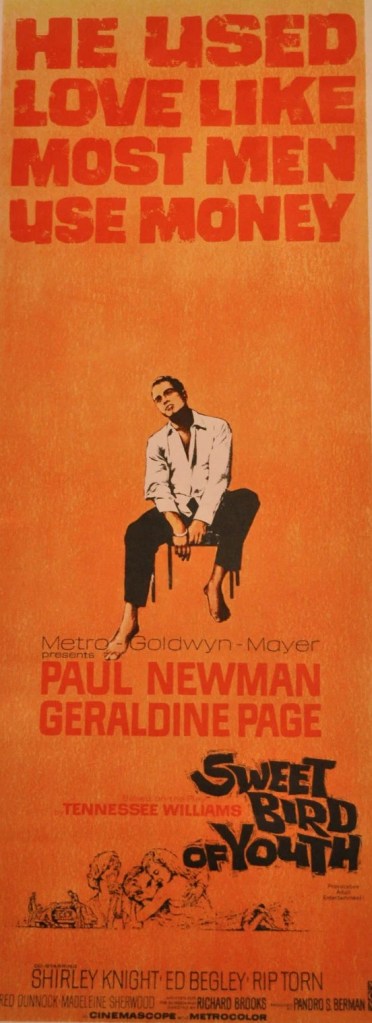
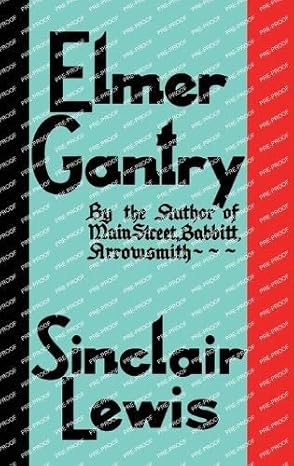
Writer-director Richard Brooks had built a reputation adapting heavyweight literary works – ranging from Dostoevsky’s The Brothers Karamazov (1958), Tennessee Williams play Cat on a Hot Tin Roof (1958) and Sinclair Lewis’s evangelism opus Elmer Gantry (1960) – the last two box office and critical hits –  and though he had Joseph Conrad’s Lord Jim in his sights he had a hankering after more simple fare. He planned to go out on his own and had paid $30,000 to acquire Arthur Woolson’s Goodbye, My Son focusing on mental health and $70,000 on The Streetwalker, written anonymously by a sex worker, and more nitty-gritty than the current stream of high-end good-time-girl pictures. The Streetwalker would take a semi-documentary approach. Brooks aimed for budgets around the $700,000 mark.

But in the end, he fell for the blandishments of producer Pandro S. Berman, for whom he had made Cat on a Hot Tin Roof, one of MGM’s biggest hits, and Paul Newman, who had played the part of Chance in the original Broadway play. It had run for nearly a year and the cast included Geraldine Page, Rip Torn and Madeleine Sherwood who reprised their roles in the film. Ed Begley had worked with Brooks on Deadline USA (1952).
By this point Newman was rid of the shackles of his Warner Bros contract and spread his wings artistically and commercially, following up Exodus (1960) with Martin Ritt’s Paris Blues and the first of his iconic roles in Robert Rossen’s The Hustler. Newman was paid $350,000, half the total sum allocated to the cast. The play cost a total of $600,000 against a budget of $2.8 million. Even so, Newman’s stock was not as high as later in the decade and even with his name attached a film based on John Hersey’s The Wall about the Warsaw Uprising failed to get backing.

Brooks was reluctant to get back into the ring with Tennessee Williams, still smarting from the “repeated sniping” that followed Cat on a Hot Tin Roof. Brooks recalled that “during filming I talked with Tennessee on the phone a number of times and all was peachy.” But later the author complained Brooks had “butchered” the play. He was especially incandescent because Williams pocketed $1.4 million while the director made do with just $68,000. Brooks demanded “a signed letter written by Williams and published in Variety to the effect that he (Williams) liked the film version” before he agreed to helm Sweet Bird of Youth.
There’s no sign that Williams acquiesced and Brooks proceeded with his version which turned into flashbacks some of the incidents dealt with on stage through dialog.

“Most people go out to Hollywood with a seven-year contract to work,” noted female lead Geraldine Page, wryly, “It looks like I had a seven-year contract to stay away.”  A rising star when selected for the female lead for John Wayne 3D western  Hondo (1954), she didn’t make another movie for seven years, largely as the result of not being considered photogenic enough. For Hondo, a scene had been added, “in which she was called upon to acknowledge that she was not beautiful,” and that designation, although intended purely to reflect a self-deprecating character, stuck. Although another explanation for her absence was that she was blacklisted for her association with Uta Hagen, but it’s unlikely that noted right-winger Wayne would have employed her in the first place has that been the case.

Despite an Oscar nomination for Hondo, she made her way on the stage instead, to critical approval, New York Drama Critics Award and Tony nomination for Sweet Bird of Youth. After an Oscar nomination for another Williams adaptation Summer and Smoke (1961), her career was revived, after the industry “found out how to employ one of the top performing talents of the last decade.” No surprise, however, that she wasn’t MGM’s first choice. The studio preferred the likes of Ava Gardner, Lana Turner and Rita Hayworth, who would be doing little acting to portray themselves as fading stars.

“When I saw how they fixed me up (for Sweet Bird),” said Page, “I said, look at me I’m gorgeous.” Brooks made her get rid of “those fluttering gestures” that he reckoned “subconsciously were efforts to cover her face.”

Shirley Knight didn’t have to audition. She and Brooks met at the Oscar ceremony. All he asked of her was that she lighten and grow her hair.

“He was a man who really knew what he wanted,” recalled Knight, “He wanted you to do a certain thing and was clear about the look of it.” She was so in thrall to the director that she followed his instruction to the steer a boat in one direction even though she knew it would lead her to smash straight into a dock.

Given the controversial nature of the play, there were concerns the entire project would be blocked by the Production Code, the U.S. censorship body. But Berman was quick with the reassurance. He claimed it would be “the cleanest picture ever made…clean as any Disney film.”  To achieve that would require considerable trimming as the play involved abortion, hysterectomy and castration. Berman ensured these elements were eliminated. Brooks changed the ending.

Commented Williams, “Richard Brooks did a fabulous screenplay of Sweet Bird of Youth but he did the same f…ing thing (as Cat on a Hot Tin Roof.) He had a happy ending. He had Heavenly and Chance go on together which is contradictory  to the meaning of the play. It was a brilliant film up to that point.”

Actually, Brooks was undecided about the ending. He wanted to shoot two endings, one as unhappy as the play. “But once the ending was on film – the one the studio wanted – production was shut down.”

Newman was more relaxed about any changes. “You have to make peace with the idea when you make a motion picture version of a play, it’s so difficult and it’s no sense struggling with things that were in the play.” With enough controversy riding on the picture, the studio banned the actors from talking to the media.

Initially, box office expectations were high when the movie hit first run. A $72,000 first week take in New York was considered “boffo.” It scored “a lusty” $28,000 in Chicago, a “bang-up” $15,000 in Buffalo, a “brilliant” $28,000 in Los Angeles, a “lush” $14,000 in Pittsburgh, a “bright” $16,000 in St Louis, and a “wow” $17,000 in Detroit. It generated a “loud” $4,500 in Portland, a “wham” $15,000 in Minneapolis and was “sockeroo” in Washington DC with $21,000.

But once it left the rarified atmosphere of the big cities, it stumbled. There was precent, the touring production of the play had also flopped once it left the environs of Broadway. Variety reckoned the timing was to blame as audiences showed “more aloofness to this type of fare” than they did a couple of years before.

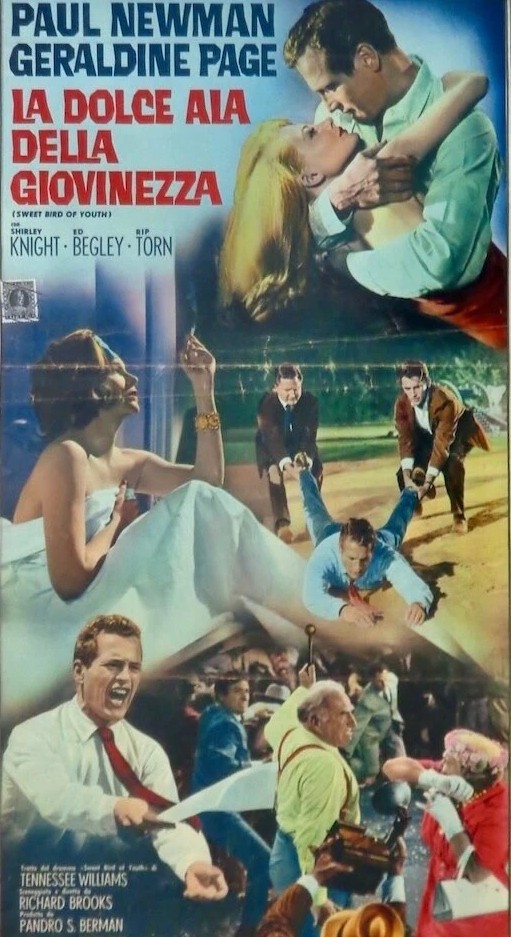
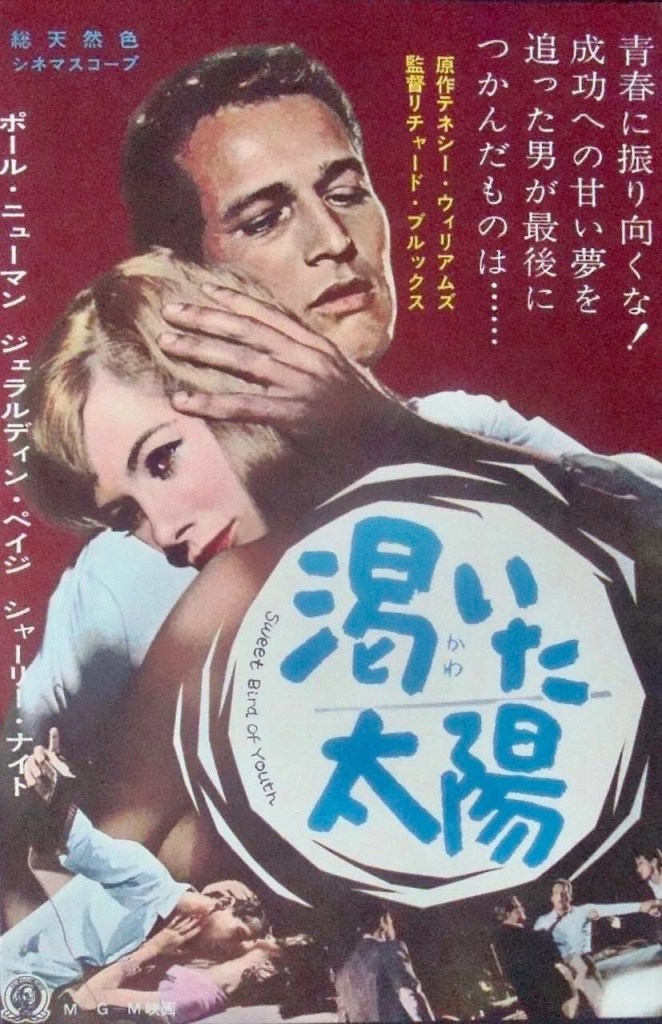
The movie limped to $2.7 million in rentals – and a lowly 30th spot on the annual rankings – at the U.S. box office though foreign was more promising, ninth overall in France and 10th in Italy.

SOURCES: Douglass K. Daniel, Tough as Nails, The Life and Films of Richard Brooks (University of Wisconsin Press). pp146-154; Daniel O’Brien, Paul Newman (Faber and Faber, 2005), pp86-7; Shawn Levy, Paul Newman, A Life  (Aurum Press, 2009), pp169-171; “Folks Don’t Dig That Freud,” Variety, May 9, 1960, p1; “Metro Hot for Brooks,” Variety, June 15, 1960, p2; “Sweet Bird of Youth Will Be Ok for Kiddies,” Variety, September 13, 1961, p5; “Brooks Prostie and Psycho Indies,” Variety, September 13, 1961, p4; Vincent Canby,  “Seven Years After Her Film Discovery, Geraldine Page May Be Accepted,” Variety, November 15, 1961, p2; “Picture Grosses”, March-May 1962, Variety; “Fun-Sex Plays, ‘Sick’ Slowing,” Variety, August 8, 1962, p11; “Big Rental Pictures of 1962,” Variety, Jan 9, 1963, p13; “Yank Films,” January 23, 1963, p18.
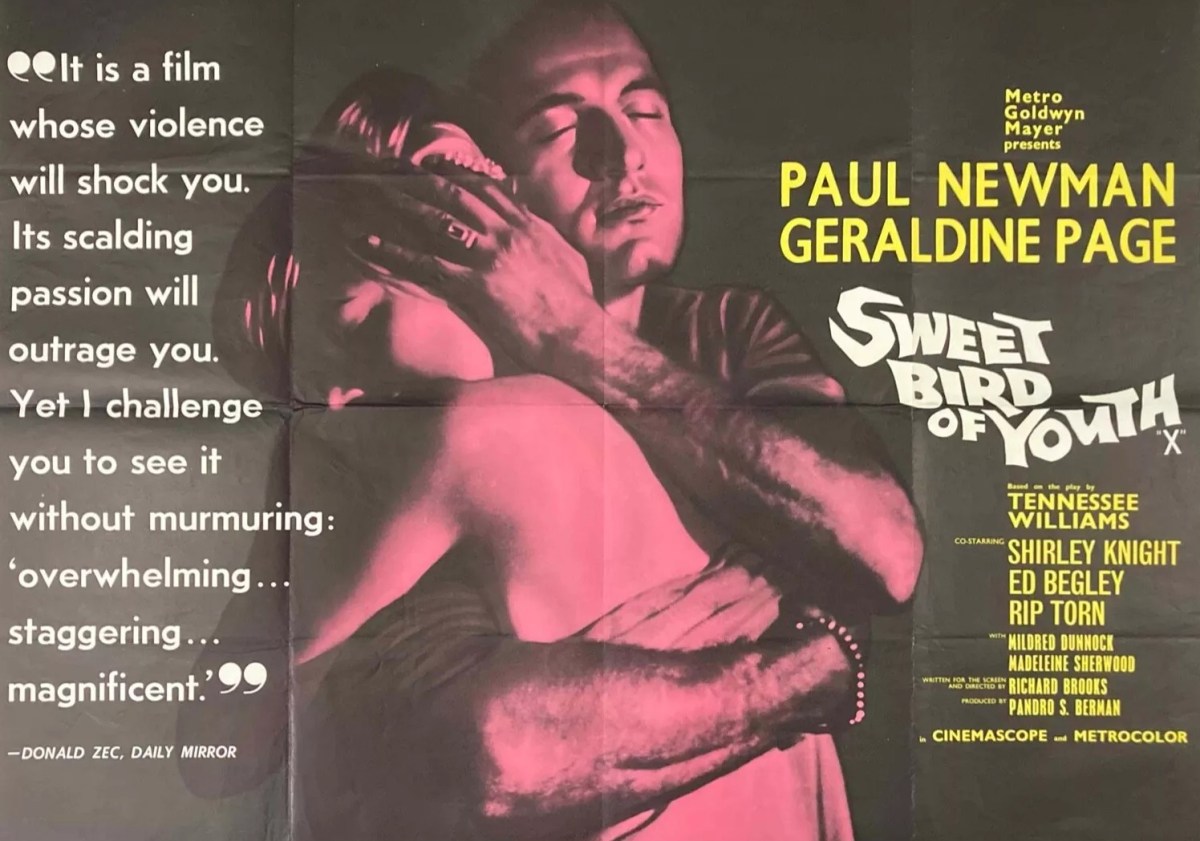
Sweet Bird of Youth (1962) ***

Tennessee Williams wrote better parts for women than he did for men. You can start with Vivien Leigh, Oscar-winner for A Streetcar Named Desire (1951) – Marlon Brando only nominated – and Anna Magnani Oscar-winner for The Rose Tattoo (1955) with Maria Pavan nominated and star Burt Lancaster left out of gong consideration. Carroll Baker and Mildred Dunnock were nominated for Baby Doll (1956) with star Karl Malden ignored. Paul Newman did receive an Oscar nomination for Cat on a Hot Tin Roof (1958) as did Elizabeth Taylor.

Montgomery Clift was frozen out of Oscar consideration for Suddenly, Last Summer (1959) while both Elizabeth Taylor and Katharine Hepburn scored nominations.  Marlon Brando received no Oscar recognition for The Fugitive Kind (1960). Ditto Laurence Harvey for Summer and Smoke (1961) though Geraldine Page and Una Merkel received nominations. Lotte Lenya was recognised with a nomination for The Roman Spring of Mrs Stone (1961).

So the omens were not particularly good for Paul Newman when he repeated the role he had essayed on Broadway of Chance Wayne in Sweet Bird of Youth. In the stage version, while he received respectable notices, it was Geraldine Page who picked up the glory, winning the New York Drama Critics Award and nominated for a Tony.

So it was going to be a long shot that Newman could outshine her in the film version, even though he received considerably more screen time – Page and Shirley Knight were nominated, Newman was not.

The flaws in the tale are more obvious in the screen version. On stage, sheer force of personality can win over an audience, on screen that’s more difficult. And in truth Chance was another of Williams’ male losers. The main difference between Williams’ male and female characters is that not only are the women more reflective and aware of their shortcomings while the men simply bulldoze ahead but they are more able to express their feelings without dialog.

Chance is a failed actor turned gigolo taking advantage of alcoholic over-the-hill movie actress Alexandra Del Lago (Geraldine Page), running away from what she believes will be her final and calamitous movie, who half the time doesn’t know where she is or who he is. Chance has dreams of using her to hustle his way into the movie business, blackmailing Del Lago over her drugs abuse to front a new picture, and begins knocking on doors, but long-distance, since he’s returned to his home town in the hope of winning back his childhood sweetheart Heavenly Finley (Shirley Knight), planning to set her up as a movie star.

Expectations that there might be a welcome for a young man made good are dashed when everybody continues to treat him as the waitperson he once was or wants to run him out of town. To protect his daughter from such an unworthy suitor, the town’s most prominent citizen and political heavyweight Tom Finley (Ed Begley) had previously managed to pay Chance to leave town. His son Tom Jr (Rip Torn)  shares his father’s aspirations.

Despite the odds Chance determines to woo Heavenly but his Hollywood dream is scuppered when Del Lago realizes that her last picture looks like becoming an unexpected success and she can once again write her own ticket rather than rely on a con man like Chance.

It doesn’t end well though, for reasons best known to him, writer-director Richard Brooks tacked on a happy ending – the play had an unhappy ending – that doesn’t ring true.

There’s nothing wrong with Paul Newman’s acting even if it didn’t attract the attention of the Oscar voters, but there’s not enough meat on the character. On the other hand, Geraldine Page and Shirley Knight (The Group, 1966) in part excel because their characters are better written. Rip Torn (Beach Red, 1967) develops his screen menace. Ed Begley’s (Warning Shot, 1966) over-the-top performance snagged him an Oscar.

The story’s just too thin and the hard edges of the play have been trimmed back so it was less appealing to an audience.

Lacks the usual Tennessee Williams bite but the female performances are well worth a watch.

I’m doing a Behind the Scenes article tomorrow so look out for that.

Behind the Scenes: “Toys in the Attic” (1963)

Producer Harold Mirisch purchased the rights to the 1960 Broadway hit play by Lilliam Hellman as a way of hooking William Wyler. He had originally signed up the director in the mid-1950s when his Paramount contract came to an end. This was before the Mirisch Brothers was an independent production entity and later responsible for films like The Apartment (1960), The Magnificent Seven (1960), West Side Story (1961) and The Great Escape (1963). At that point Mirisch worked for Allied, the upmarket offshoot of B-picture outfit Monogram. Allied backed Wyler’s Oscar-nominated western Friendly Persuasion (1956).

In 1960 Wyler was the most celebrated Hollywood director of the era, not just with three Oscars and ten nominations, but riding as high as anyone ever had after the monumental critical and commercial success of Ben-Hur (1959). He had his pick of the projects and had shown “great eagerness” to do Toys in the Attic. He was friends with the playwright Lillian Hellman and had filmed These Three (1936) from her stage play The Children’s Hour and The Little Foxes (1941) from her original screenplay.

But Wyler decided instead to opt for a remake of The Children’s Hour (1961), assuming that changes in public perceptions would permit him to bring to the fore the lesbian elements kept hidden in his previous adaptation, but, critically, it was a Mirisch production.

In his absence, the Mirisch Bros decided to stick with Toys in the Attic, possibly to bolster their attempt to be seen as a purveyor of serious pictures and hence a contender for Oscars, which would solidify their reputation, as would soon be the case. After consultations with distribution and funding partner, United Artists, “it was decided that…since we had considerable investment in (Toys in the Attic)… we should try and put together a film,” explained Walter Mirisch.

Next in line for directorial consideration was Richard Brooks who had acquired a reputation for adapting literary properties after The Brothers Karamazov (1958), Cat on a Hot Tin Roof (1958) and Elmer Gantry (1960). Initially, Brooks “had been so insistent and enthusiastic” about becoming involved. However, he, too, rejected the opportunity. He, too, after Oscar and commercial success, was riding high. “It was not because he did not wish to work with the Mirisches because he would be delighted to make a picture for them…but he felt it would be wrong for his career to do a film so similar in mood and background as the one he was working on, Sweet Bird of Youth (1962).”

In fact, it was probably more to do with his financial demands. He wanted $400,000 a picture, which was extremely high at the time, plus “a drawing account of $2,000 a week” (i.e. payment in advance of an actual production). While Cat on a Hot Tin Roof and Elmer Gantry had been box office hits, they were nothing like Ben-Hur. And Brooks already had other pictures in mind. He had purchased a book called Goodbye My Son – never filmed – and was already revving up for Lord Jim (1965) funded by Columbia.

Walter Mirisch eventually settled on television director George Roy Hill (Thoroughly Modern Millie, 1967). This would have been his debut except preparations for the movie dragged on and in between Hill helmed Period of Adjustment (1962), an adaptation of another play, this time by Tennessee Williams. He would later direct Hawaii (1966) for Mirisch.

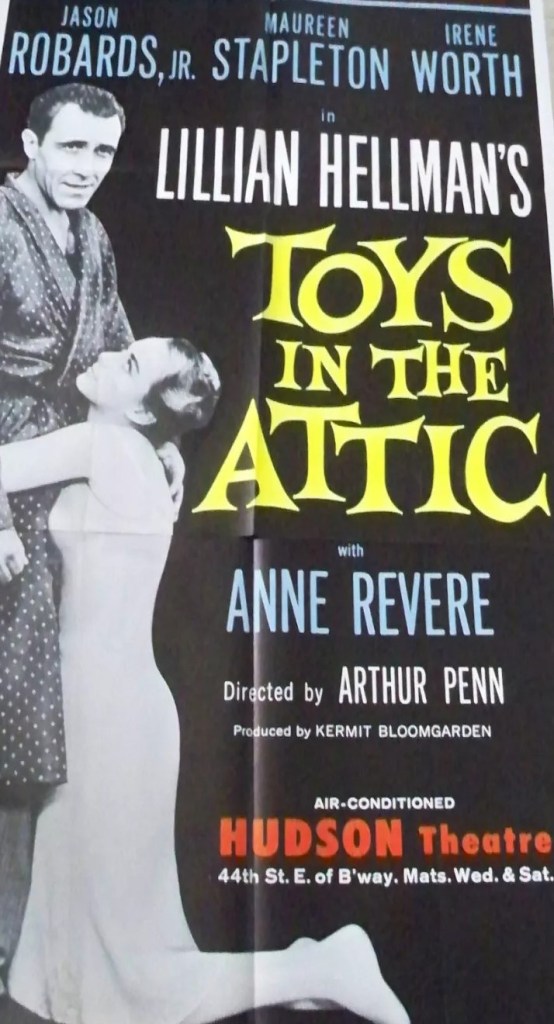
The play had been a significant hit, running for just over a year on Broadway at the Hudson Theater, and making $129,000 profit on a $125,000 investment, though it incurred a loss of $48,000 on a subsequent tour. Hellman did pretty well out of it too. She received ten per cent of the gross and twenty per cent of the profit – a total of around $36,000 – exceptionally good going for a playwright, especially when other monies would be forthcoming from movie rights and foreign and amateur runs. Director Arthur Penn’s share of gross and profit came to over $10,000 in addition to a $5,000 fee.

Turning a play or musical into a movie came with one inbuilt problem. It was inevitably subject to delay. No movie could go into production until the play had exhausted its theatrical (as in stage-play) possibilities. In this case, that meant 58 weeks in the original run and then another 20 weeks once it hit the road. Any contract with a significant movie player would have to include the possibility that in the meantime star or director would have lined up other projects while awaiting the green light on this one, and that in itself could cause further hold-ups.

Hill was in greater demand than Mirisch anticipated, juggling four separate projects – Period of Adjustment, The Rise and Fall of the Third Reich for MGM (never made), and the $2.5 million A Bullet for Charlemagne starring Sidney Poitier (not made) as well as Toys in the Attic.

Jason Robards, star of the play, was the obvious contender for the movie role. But he lacked box office cachet, so he was bypassed in favor of Dean Martin, “an attractive motion-picture figure.” However, in the time it took the movie version of the play to reach the public, Robards was potentially a screen star. He had bought himself out his stage contract after 37 weeks – paying $3,950 for the privilege – having been offered second billing on By Love Possessed (1961) opposite Lana Turner, and in Twentieth Century Fox’s ambitious mounting of Tender Is the Night (1962) opposite Jennifer Jones. While Robards would never become as big a star as Dean Martin, he was the superior actor, later adding two Oscars and one nomination to his name.

In addition to being much better known to cinema audiences than Robards, “we felt he (Martin) would bring humor to it” – Martin having originally made a splash as part of the Martin-Lewis comedy team of the 1950s – “as well as an audience that might expand the normal constituency of that type of film.” Trade magazine Box Office agreed with the decision, viewing Martin as a “good choice for the haunted show-off.”

The play’s other stars – Oscar nominee (and later winner) Maureen Stapleton (The Fugitive Kind, 1960) – and Irene Worth (Seven Seas to Calais, 1962) – were ignored in favor of Geraldine Page, who incidentally scored an Oscar nomination in Summer and Smoke, and  Wendy Hiller (Sons and Lovers, 1960), who already had an Oscar. Shooting began on September 16, 1962. Hill tried to “inject more suspense, more action, more melodrama into the movie version,” without cheapening the material. He was convinced the hiring of Martin was inspired, and would prove a personal  turning point, as he gives “the best dramatic job of his career.”

Titles didn’t matter so much on Broadway, plays sold on the name of the writer or the star. Mirisch feared Toys in the Attic would either mean nothing to a general audience ignorant of the picture’s origins or be considered so obscure as to serve to confuse them. So, they planned to rename it Fever Street or “some sensational substitute.”  Hill was furious, pointing out the “violence of his feelings” to this title. He complained that “others will assume that it is an exploitation title…a cheap gimmick to get people into the theater (cinema) … automatically puts the picture in a low budget quickie picture category that might be appropriate for 42nd St all-night houses or a second feature at Loews 86 St.”

Hill felt changing the title would demonstrate that Mirisch was “ashamed to have bought the play Toys in the Attic, have no faith in the picture, are resorting to panic tactics to get some money out.” And that Fever Street would have the opposite effect, and “keep people away in droves.” His impassioned plea worked, and the original title remained.

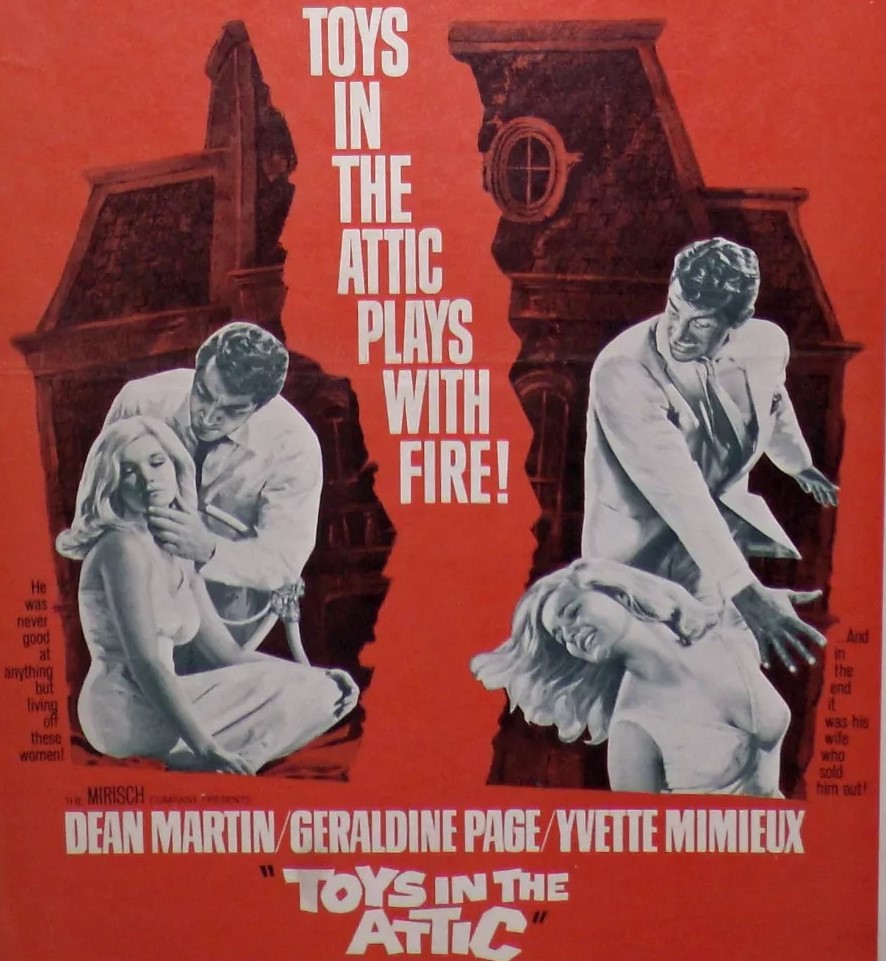
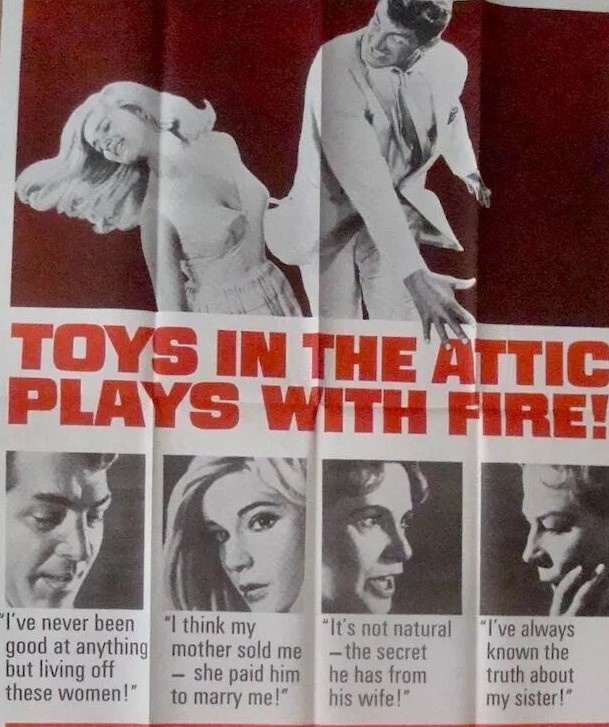
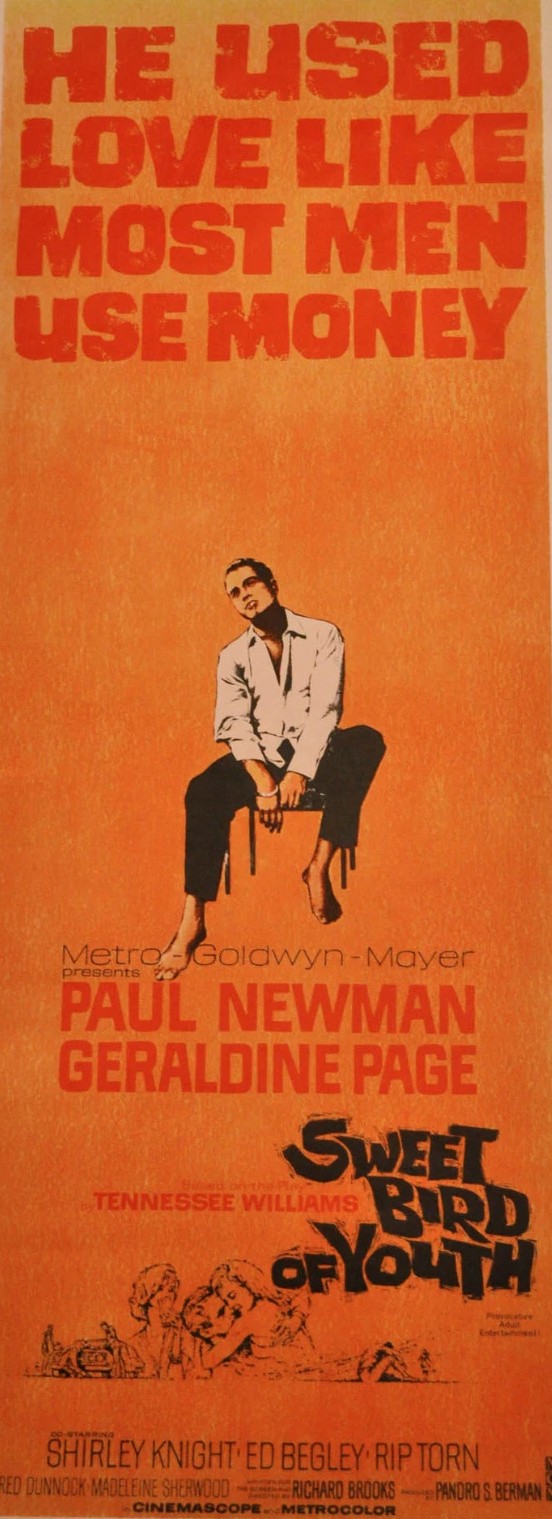
While backing down on the title, Mirisch veered towards the exploitative in the main poster which showed Dean Martin slugging Yvette Mimieux.

However, United Artists remained in two minds about the release policy. Despite the  prestige of being chosen for the San Sebastian Festival, United Artists opted to open it in New York as part of a “showcase” run. That was a relativelynew distribution notion, a version of regional wide release. It would eventually be refined to allow several weeks in prestigious first run venues first, but inclusion in this release pattern meant first run was simultaneous with an opening in – in this case – another 20 New York neighbourhood cinemas.  Had UA had more faith in the project, it might have benefitted from an opening just in first run. The $55,000 first week from two first run houses on Broadway was judged a “wow” result by Variety. First run in other major cities suggested a prestige title – “very stout” $15,000 in Boston, a “sock” $14,000 in Washington D.C., “neat” $14,000 in Buffalo, while it was “bright” in Kansas City ($8,000), Los Angeles ($10,000) and Chicago ($18,000).

Hill’s concerns about United Artists’ ability to sell the picture were mirrored in the result. “It did not turn out well,” concluded Walter Mirich, “It’s a grim story. It was not well reviewed and was not financially successful.” Part of the reason for its failure, he argued, was that it “probably appeared at the end of a cycle” of American Broadway adaptations of heavy Tennessee Williams dramas.

While the movie came in $70,000 below the $2.1 million budget, the savings were put down to the fact that it was filmed in black-and-white rather than color, as had been originally envisioned. The box office followed a common, but disturbing, trajectory, a big hit in the big cities, mostly ignored elsewhere. But it was not as bad as all that. Mirisch tallied the domestic box office as $1.7 million with another $900,000 from the overseas box office. By its estimation, once marketing costs were considered, it was facing a loss of $183,000. But that was before television revenue entered the equation and that should have at the very least, made up the difference. There were various pickings later on, too, picked up by CPI under the “Best of Broadway” label in 1981.

SOURCES: Walter Mirisch, I Thought we Were Making Movies, Not History (University of Wisconsin press, 2008) p157-159. Leon Goldberg, “Office Rushgram: Final Cost on Toys in the Attic, May 13, 1964, United Artists Files, Wisconsin Center for Film and Theater Research;  “Mirisch Pictures Box Office Figures,” UA Files; Letter,” George Roy Hill to Walter Mirisch, March 15, 1963, UA Files; “Lillian Hellman Could Mop Up if Toys Clicks,” Variety, February 4, 1960, p103; “Toys Exit,” Variety, January 18, 1961, p72; “George Roy Hill To Direct Toys for Mirisch Co,” Box Office, January 22, 1962, pE8; “Hollywood Report,” Box Office, February 22, 1962, p16; “George Roy Hill Announces First Film on UA Deal,” Box Office, March 19, 1962, p16; “Bloomgarden Had Varied Fortune,” Variety, August 29, 1962, p49; “Toys in Attic Chosen for San Sebastian Festival,” Box Office, June 10, 1963, pE8; “Premiere Showcase,” Variety, July 31, 1963, p22. Box office figures from Variety issues dated August 7, August 14, August 21, September 4, September 11 and October 23.

Behind the Scenes: Selling that Old-Time Religion – The Pressbook for “Elmer Gantry” (1960)

The one element that every movie requires – advance publicity – was denied Elmer Gantry. Shooting took place on a closed set with all visitors carefully screened. Only six actors were given access to a complete screenplay while a general synopsis was denied distributors and cinema owners.

Over 30 years after publication of the source novel by Sinclair Lewis, its contents were considered so volatile and contentious that, rather than be pre-judged by the industry on expectations of what the movie may contain, director Richard Brooks took to issuing baffling statements such as describing Elmer Gantry as “The All-American Boy.”

Even the 12-page A3 Pressbook/Campaign Book, the prime source of marketing contact between studio and theater owner, was niggardly in the extreme. Narrative detail was limited to “the story of a spellbinding evangelist” rather anything approaching a synopsis.

Stuck with how to woo an audience in advance, United Artists fell back on a teaser campaign comprising six separate ads. The sequence was as follows: “Elmer Gantry Is Coming!” / “Sinners! Elmer Gantry Is Coming!” / “Sinners! Elmer Gantry Is Coming! starring Burt Lancaster”/ “Sinners! Elmer Gantry Is Coming! Starring Jean Simmons” / “Sinners! Elmer Gantry Is Coming! starring Burt Lancaster and Jean Simmons”. The last advert was coupled with a quote from the New York Times with the final salvo the same ad repeated but with a different quote from the New York Post.

The New York campaign – in those days a movie might take a few months to spread out from initial opening locale to other cities allowing promotional ideas that worked in one area to be publicized – relied on the first two teasers. But they went out in saturation – in railroad stations, subways, buses and race tracks with additional displays on poles, stilts and drums.

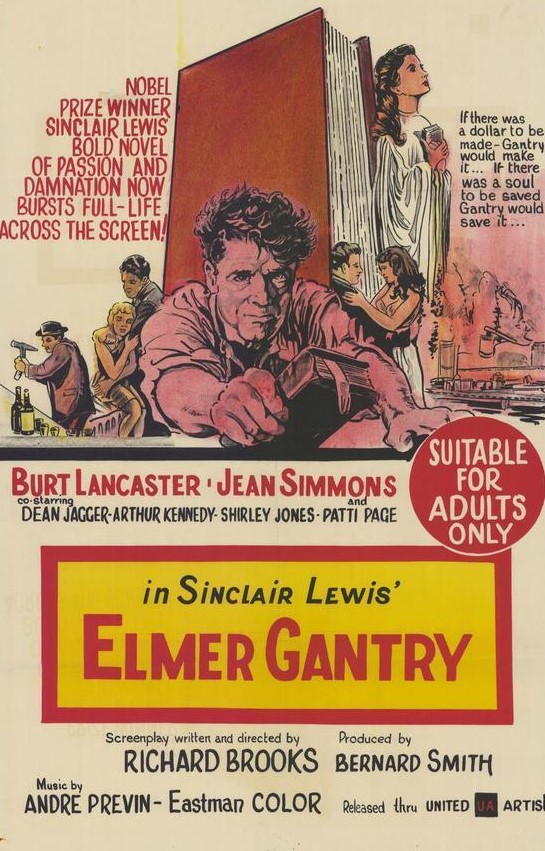
The major print advertising onslaught was led by two bold large-sized adverts intended to run facing each other on the same page. “Bless Him! Tens of thousands of believers shouted his praises!” was accompanied by the iconic illustration, Bible in hand, of Burt Lancaster. “Damn Him! Three women damned his soul” showed Lancaster grappling with Jean Simmons with Shirley Jones and Patti Paige in the background in more revealing clothing. But these two elements could also be fitted into the one ad, as shown above.

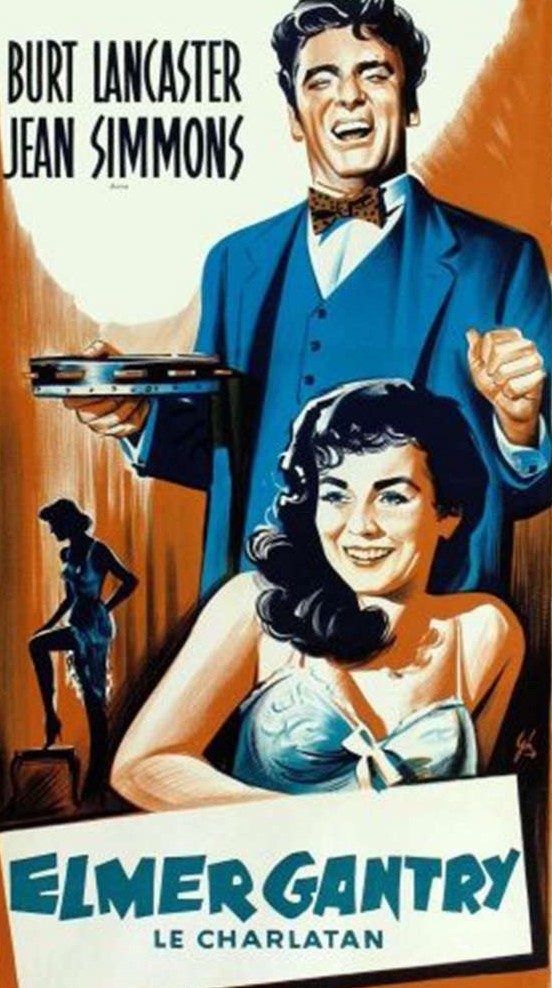
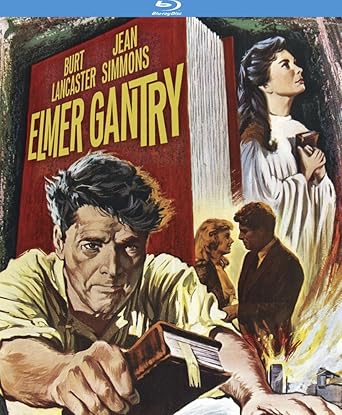
There were nearly a dozen full-size advertisements with a range of taglines. In all Lancaster is shown in the same pose with the Bible while Simmons is presented clutching a Bible and gazing heavenward. Shirley Jones appears in even skimpier outfits.

As was standard at the time, taglines could stand on their own or mix and match. Snippets for other ads were edited from this main ad: “Nobel Prize Winner Sinclair Lewis’ Bold Novel Of Passion And Damnation Bursts Full-Life Across The Screen! If there was a dollar to be made – Gantry would make it…If there was a soul to save -Gantry would save it…”

“Sinner! Elmer Gantry Wants You!” ran another ad backed up by “Are you ready, sinner? He wants you to know all about heaven…but not about his whiskey and his women!” Other adverts were fashioned from taglines like: “You’re all sinners…you’ll all burn in Hell! Tell ‘em Gantry…save ‘em from sin…lead ‘em to salvation…tell ‘em about everything…but not about your whiskey and your women!” Or included: “From the book that shook a nation with its sledgehammer theme…from a Nobel Prize-winning author…comes the raging story of a man who used the Holy Bible and broke every rule in it!”

Rarely have so many exclamation marks been employed in so short a space, but equally, rarely has a marketing team encapsulated so vividly a movie with a difficult subject matter, all tease and no substance.

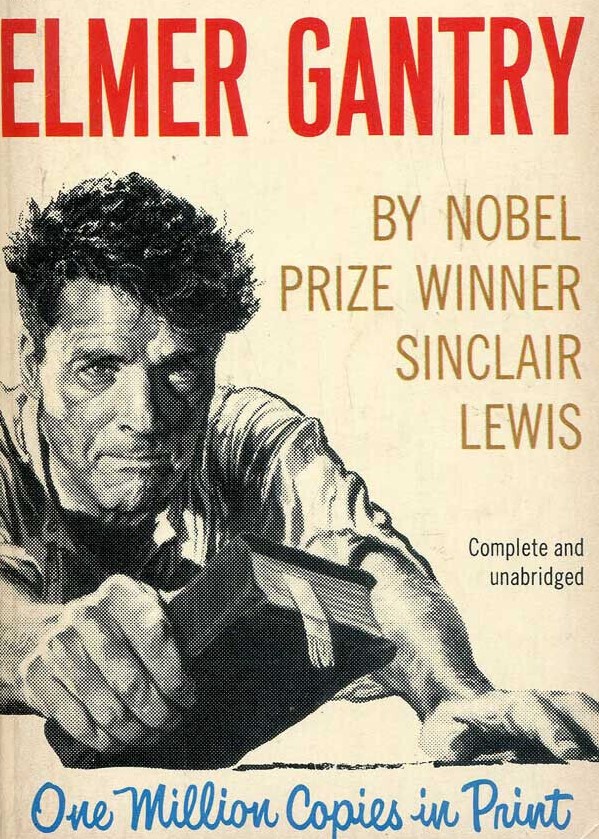
Out-with the usual marketing routes, the marketing team were able to take advantage of various ancillary promotional opportunities. Dell organized a massive paperback book tie-in in thousands of bookstores and newsstands, Burt Lancaster dominating the front cover with Simmons and Jones pictured on the back. Music retailers also played their part, United Artists Records launching the Andre Previn soundtrack album while Mercury released an album of revival tuness sung by Patti Paige, who made her movie debut in the film. With record sales exceeding 35 million, Paige’s host of fan clubs were a natural target for contact and if there was none in the local vicinity cinema managers were encouraged to start one by the simple device of setting up “a giant postcard in the lobby” and inviting fans to attach their signatures.

Department stores were called upon to run 1920s Fashion Shows.

Anniversaries, so important today, helped out. It was 30 years since Sinclair Lewis was awarded the Nobel Prize, the first American author so recognized, and 1960 was the 75th anniversary of his birth. But the promoters also played upon the book’s initial controversy, hoping to re-ignite the debate as a promotional tool.

With the bulk of the Pressbook given over to advertising and promotional ideas, barely little more than a single page was devoted to the stars, but even then there was little of the usual soft-focus puff pieces. The kind of  journalistic nuggets that might help an editor fill a vacant space were limited. All we learned of Burt Lancaster, who had worked with Richard Brooks before on Brute Force (1947), was that – as if this was a mark of respect – he agreed to read the screenplay twice. Of Jean Simmons it was pointed out she had played an evangelist in Guys and Dolls (1955) but the Pressbook erroneously states that she played a nun in Black Narcissus (1947); in fact, she was a beggar girl. Arthur Kennedy is mentioned in relation to his Oscar nominations.

Shirley Jones was the most likely to attract column inches as a result of explaining how she made the transition from more demure roles in Oklahoma (1955) and April Love (1957). “It feels just fine – now,” she told the Pressbook interviewer. “At first, well, I really don’t wear much except what you see. A slip, these shoes with the green frills, and slinky black silk wrap-around that’s transparent.

“Usually, I walk into a movie set wearing my bustle and petticoats and some of the boys turn round as I go by and say, ‘Hiya, Shirl.’ But when I walked in dressed like this the fellows all just turned round and didn’t say anything. They never turned round like that before. Well, not really. It did take some getting used to after provoking the big brother reactions for so long.

“But I guess every girl dreams of being a conversation stopper some day. This is my chance. Of course, I am embarrassed sometimes…or maybe it’s inhibited.”

Brooks rewrote the script eight times before “he felt he had captured the essence” of Gantry. Most of the scenes were filmed on sound stages or adapted from an assortment of 1920s vintage streets from the backlots of other studios. The tabernacle was constructed out of an ice skating rink on a beach pier in Santa Monica.

Art director Edward Carerre spent $6,500 erecting and furnishing a genuine evangelist tent rented from Canvas Specialty. It was slightly trimmed to fit onto two combined sound stages on the Columbia lot. A total of 400 benches each measuring eight- or ten-feet were constructed by studio carpenters to provide seating for 1,000 – the tent accommodated another 2,000 standing. The stage required 500lb of imported sawdust and banners 30ft long were specially made to incorporate Biblical quotations. Where most movies required a maximum of 15-20 sets, Elmer Gantry boasted 62.

The climactic scene, conflagration in a tent, took five days to film. Soaking the set in kerosene would not supply the instant flash of flame the director demanded. So, instead, he turned to old film footage, including some frames from It Happened One Night (1934). “We’re burning film to make film,” quipped Brooks.

Elmer Gantry (1960) *****

Burt Lancaster gives the performance of his life as the eponymous burnt-out salesman finding financial redemption in the salvation business in Richard Brooks’  riveting examination of the revivalist boom. While replete with hypocrisy, old-style religion brought succour to the rural poor, but the director takes such an even-handed approach to the subject matter, carefully nurturing a marvellous parade of characters, that you are totally sucked in.

Brooks made his name adapting famous novels but only here and In Cold Blood (1967) does he exhibit complete mastery of the material.  In fact, he pulls out a cinematic plum in having the audience, who might initially have mocked the obvious manipulation of the poor, suddenly taking the side of the itinerant preachers when they come up against the more sophisticated religious operators in the big towns.

Elmer Gantry (Burt Lancaster) has some previous in the preaching business, but only for as long as it took for him to be chucked out of divinity school for seducing the principal’s daughter, so when by accident he comes upon a touring revivalist meeting he discovers his metier as a fast-talking brazen preacher. He doesn’t quite usurp the star of the show, Sister Sharon (Jean Simmons), and in fact their styles complement one another, he preaching hell and damnation, she the love of God.

Beneath the demure guise, Sharon is anything but a push-over. Not only does she see through him right away and consistently knock him back but she is quite the businessperson, though her methods of keeping civic officials in line often rely on blackmail. But then who are the hypocritical, allowing speakeasies and prostitution to run rampant, to attempt to rein in revivalists who need account to no one for how they spend their revenue?

Eventually, of course, Elmer’s ardent wooing wins over the virgin Sharon who easily forgives his dalliance with her doe-eyed follower Sister Rachel (Patti Paige). Burgeoning romance is scuppered by a chance encounter with prostitute Lulu (Shirley Jones), the principal’s daughter. That’s just the spark needed for anti-religious fervor to take over and the enterprise ends in disaster.

But what’s so good about a film that could as easily just relied on taking pot-shots at religion is that Brooks gives equal space to the good and bad in each character. Sure, Elmer’s confession of his sins might be construed as a seduction device, but that’s tempered by a genuine ruefulness and remorse over his previous actions. And while his grand-standing in front of an audience could be interpreted as merely an actor revelling in a role, you can see that religion has as easily taken over him and provided him with an identity that he finds rewarding. He might still be a salesman but he’s selling the hell out of the product.

Sharon’s uncanny hold over a congregation may be a true skill, and she’s definitely a believer, but that is borne out of fiction. She has reinvented herself, given herself a new name and identity, that furnished her with business opportunity in a male-dominated world, but love of God has come at the expense of love of man.

Perhaps what’s best about the picture’s construction is the array of supporting characters. Journalist Jim (Arthur Kennedy) might appear the pick, ingratiating himself with the touring company only to write a searing expose, but drawing the line, and incurring the wrath of his editor, at writing the kind of tawdry tale he believes is a fabrication. While still holding a torch for Elmer, Lulu has none of the cliché prostitute’s heart of gold. Initially rejected by Elmer, she goes along with a scheme to bring him down, only to change her mind and change it again, left only with remorse.

And Brooks manages to weave in a ton of detail, sometimes in dramatic fashion, such as the church elders in big city Zenith debating the value of backing the revivalists (the touring operation usually signs up hundreds of people to local parishes), and sometimes just as background, such as when Jim dictates his front-page lead in the newspaper office, whipping it off a page at a time to throw in front of the editor.

There’s also a little-commented-upon affinity between Shirley and Elmer. She, too, is coming to the end of the line. She is approaching burn-out. The endless travel, the responsibility for her payroll, financing accommodation, dealing with officials, seeing all the people she has returned to the fold being handed over to local churches, is taking its toll. And she wants the stability of her own church, where she can soothe her congregation on a weekly basis and live a more temperate life.

If ever a movie suited Burt Lancaster’s physicality, this is it. Allowed to channel his inner dominance, every gesture overpowers and by the same token makes him more potent when at his most abject. Lancaster (The Swimmer, 1968) was in a rich vein of form that would see him deliver a series of majestic performances throughout the decade. He deservedly won the Oscar.

Jean Simmons (Rough Night in Jericho, 1967) is, effectively, both a villain, duping everyone by her creation of Sister Sharon, and the epitome of the American Dream, a girl from shantytown who makes her way bigtime. Shirley Jones (Two Rode Together, 1961) is afforded more dramatic beats and hers is a sure-footed performance, leading you to believe she will react one way and then go another. Oddly, Arthur Kennedy (Joy in the Morning, 1965) missed out on adding to his five Oscar nominations for supporting actor.

Nothing in this movie has aged. If anything, this was way ahead of its time in daring to pick holes in organized religion (The Cardinal and The Shoes of the Fisherman were a good few years away and in The Night of the Hunter a few years before Robert Mitchum only posed as a preacher).  

Extraordinary movie by Richard Brooks at the top of his form.

Behind the Scenes: “The Happy Ending” (1969)

You had to be a mean son-of-a-bitch to cast your alcoholic wife in a movie about an alcoholic wife. The title of Douglass K. Daniel’s biography of director Richard Brooks, Tough As Nails, did not specifically refer to The Happy Ending but it might as well have. But on top of what you might from the outside consider a somewhat callous attitude, you would also have to reflect on the movie’s message: that a man might be implicit in the woman turning towards the bottle and that a woman can break free of a stultifying marriage.

Marriage to Brooks in 1960 meant Jean Simmons, until then a huge star, leading lady to  opposite Marlon Brando (Desiree, 1954), Frank Sinatra (Guys and Dolls, 1956), Gregory Peck (The Big Country, 1958), Burt Lancaster (Elmer Gantry, 1960) and Kirk Douglas (Spartacus, 1960), dialled back on her career, opting instead for wifedom and motherhood. Six movies in eight years, compared to 14 pictures in the previous comparable period, spelled the extent of her commitment.

Both had been riding high at the time of their marriage. Despite the setback of Lord Jim (1965), Brooks regained favor through the commercial and critical success of The Professionals (1966) and In Cold Blood (1967). But Simmons tumbled down the pecking order with little compensation on the marital side. As single-minded a director as Brooks spent far more time on his movies than his marriage. The long separations caused by his work took their toll. Like the middle-aged character she played in The Happy Ending, “I started sitting around,” Simmons told her husband’s biographer, “looking in the mirror, feeling sorry for myself a lot. I was slugging down a lot more than anyone should. Sometimes it would bring out the ugly side – when you want to hurt people. And who do you want to hurt? Why, it’s always the one who is closest to you.”

Recognizing she was an alcoholic Simmons began a battle against the disease. Her husband came up with an unusual way of helping, one that would, in some senses, help bridge the gap between them, by writing a movie in which she would star and he would direct. I doubt if she was so far down the pecking order by that stage that if a director of Brooks’ commercial caliber had decided to cast her in a more commercial project, his heist picture $ (1971) for example, I would be surprised if he did not get his way.

However, he had set his mind on a more personal project. Though he was writer-director to trade, had tended to adapt other people’s novels or plays, he hadn’t come up with an original screenplay in nearly two decades, since Deadline U.S.A (1952). So it was odd in some respects that it was his wife’s alcoholism that fired up his creative juices.

“He was trying to help me understand alcoholics,” explained Simmons. “and he would go to (AA) meetings, too, just to find out what people talk about and what people do and didn’t do.” Even so, it was a hard part to envisage. There was too much of herself in the script, Brooks using words she had spoken in real life. “It suddenly hit me as more personal – and it hurt quite a bit to feel so exposed. It was too close to home.”

But the movie proved an original piece of therapy. “He pulled me out of it, made me straighten up, so to speak.” And it was certainly a courageous role to play, knowing that this was something you had experienced yourself and that audiences, should her alcoholism become public knowledge, might judge her as they judged the character.

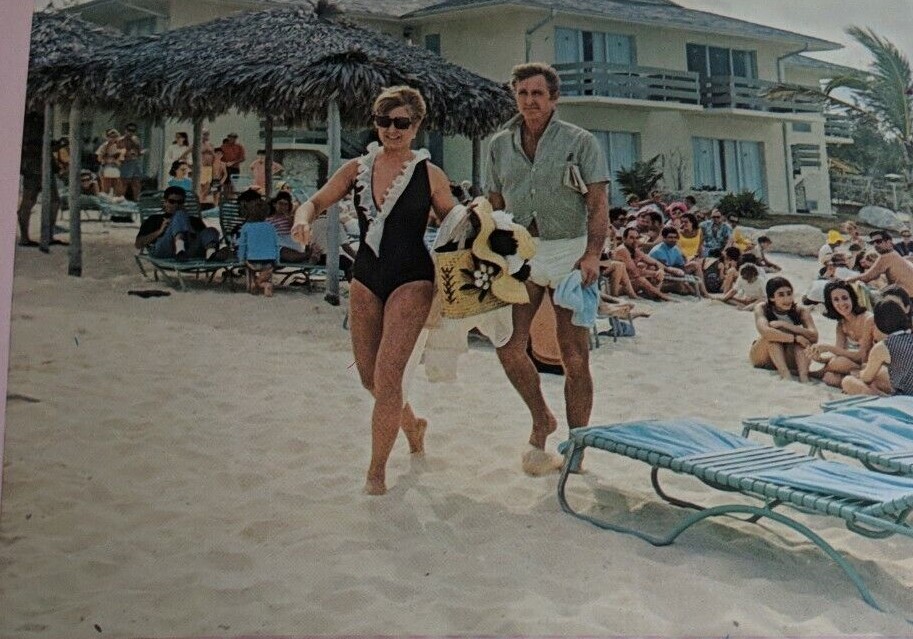
Brooks softened the potential risk for a major studio by keeping the budget low – incredibly low, in fact, just $1.7 million in the end. The movie was made mostly on location in Denver and the Bahamas, deliberately steering clear of Hollywood back lots. The cast was solid rather than costly – John Forsythe still best known for Hitchcock’s The Trouble with Harry (1955), Shirley Jones (Two Rode Together, 1961) another fading star, Teresa Wright (Shadow of a Doubt, 1943)  in only her second movie in a decade, television star Lloyd Bridges in only his fourth movie in 11 years, comedian Dick Shawn, out-of-favor Bobby Darin (Pressure Point, 1962) and Tina Louise (The Warrior Empress, 1960).

Simmons had to endure worse than she had suffered as an actual alcoholic – Brooks filmed her going through having her stomach pumped. The director employed a trick to get a reaction from Forsythe at the movie’s end. He has Simmons ask Forsythe an unexpected question and his response, in character, was just right.

Brooks saw the movie as a critique of marriage rather than a rallying call for feminism. “All I wanted to say was that marriage was not for everybody and, by itself, certainly isn’t a solution to anything,” said Brooks, clearly unaware of the impact the harm that putting such a point-of-view on screen might do to his wife.

By and large critics murdered the movie, it was cited as one of the ten worst of the year by the New York Times. Only Charles Champlin in the Los Angeles Times and Rex Reed were its only champions. Even though the Academy members recognized the strength of Simmons’ performance to give an Oscar nod, the movie, despite the meagre budget, still proved a flop.

Astonishingly, even today it is routinely ignored, only a handful of review for example on Imdb and a 33 per cent score on Rotten Tomatoes.

SOURCES: Douglas K. Daniels, Tough As Nails( University of Wisconsin Press, 2011)  p187-190

The Happy Ending (1969) ****

Vastly under-rated, critically dismissed at the time, this early reflection on feminism has now come into its own. Yet it starts out as a completely different picture. At first it appears as ruthless a depiction of the self-destructive alcoholic as the later Leaving Las Vegas (1995). In passing, skewering the conventions of marriage in an era or strata of society where divorce was not a convenient option. And a time when women, chained to the home but craving attention, might risk the humiliation of being turned away by a secretary on visiting their  husband at the office.

When love had turned into transactional sex. Where women hid out in beauty parlors, sanctuaries which men would dare not invade, to drink and play cards in peace. Or, indulging in the working aspect of such places, underwent breast augmentation or brutal hair removal or other procedures with a view to holding on to their men, seen as daily riding a wave of temptation in the Mad Men world of cocktails and expense account living. For this class of men the word “inappropriate” has never been invented as they paw at any female within reach.

From snow-kissed romance and champagne to….

A largely redundant and lengthy (eight minutes, for goodness sake) montage (including credits and a post-credits – what! – theme song) serves to emphasize the part Hollywood played in reinforcing the celluloid image of initial romance being the mere prelude to happy ever after. The reality was a much whiter shade of pale.

Facing up to their sixteenth wedding anniversary – their marriage, topically, spanning the birth of Prince Charles and his anointing as Prince of Wales, seen via cinema newsreel and television news – alcoholic middle-aged housewife Mary (Jean Simmons) re-evaluates her stultifying life. Lawyer husband Fred (John Forsythe) jokingly refers to himself as “the F.B.I.” but the surveillance he undertakes to ensure his wife has not fallen off the wagon would have earned him a gold star in that particular organization. He has housemaid Agnes (Nanette Fabray) snoop on his wife, goes through all her drawers and clothes until he finds the mercifully unopened bottle of vodka hidden in a boot, checks up on her movements at the hairdresser and even knows which bar she is likely to frequent.

Although managing to refrain from drinking anything alcoholic, Mary’s behavior take her perilously close. She drinks tomato juice from a champagne glass, buys a fellow alcoholic a whisky in a bar just to savor him drinking it. And for all her husband’s attempts to keep her away from the stuff gets pretty loaded himself at times and the catering table at a previous anniversary party fairly groaning with booze has proved a temptation too far. She’s been an extreme player – her stomach pumped out in flashback.

…anything that comes in a glass or a bottle. She even has booze secreted in a bottle of perfume.

Husband’s control extends to finance. She is denied credit card, cheque book and ready cash. Even her mother (Teresa Wright) refuses to lend her money. Unable to go through with putting another good face on their marriage via the anniversary party she pawns a necklace and jaunts off to the Bahamas. On the plane she meets old buddy Flo (Shirley Jones) who is enjoying a clandestine affair with a married man. Mary dips her toe in those illicit waters but her flight has sobered her up enough to face up to her dilemma and not cover all the wounds with alcohol.

I’m not planning to spoil the story by telling you the ending but the ending is the whole point. While the movie’s title is initially perceived as an ironic tilt at the state of marriage – the traditional movie “happy ending” – in reality the ending Mary chooses for herself is the feminist one of self-determination, independent of a man, her self-worth not tied up in his appreciation of her, and she takes the extremely bold decision to quit the marriage, not for another man as might have been de rigeur and in some ways more acceptable within society, but to find herself.

This was a terrible flop, the worst in director Richard Brooks’ career which at the time had reached the commercial and critical peaks of The Professionals (1966) and In Cold Blood (1967), for which he was Oscar-nominated. Audiences failed to respond despite Jean Simmons (Rough Night in Jericho, 1967) receiving her second Oscar nomination.

And you can see why it sank. If people didn’t walk out during the interminable montage sequence, then for the most part it was interminably depressing. The only thing worse than watching an alcoholic getting drunk is watching an alcoholic desperate to get drunk, holding back from indulging as if standing on the edge of a precipice, almost willing themselves to fall over for the sheer relief of oblivion.

And yet it is extremely watchable as the couple play out their marital game, Fred, the ostensible loving husband, protecting his wife from herself, Mary blaming her drinking for their marital problems rather than the other way round.

Jean Simmons is a compelling watch. This is really a tremendous performance and a shame she lost out to the more showy acting of Maggie Smith in The Prime of Miss Jean Brodie. As good as that was, it was pretty much all surface, Smith playing a character who was pure invention, for the most part sashaying through life by force of her incredible personality, not a woman grasping at straws from the outset, damned by all in sight who were only too aware of her affliction, unable to come to terms with herself, denied all that was casually tossed to often worthless men.

John Forsythe (Topaz, 1969), who grits his teeth so much they appear likely to puncture his cheeks, is as good as I’ve ever seen him in a whale of a part that calls upon him to play two roles effectively, the dutiful husband restrained by having to watch over his errant wife, and a man who, out of her sight, can still enjoy himself, and, it is hinted, has been illicit himself with colleague’s wife Helen (Tina Louise).

Structurally, it’s very cleverly done, and Richard Brooks continues with the façade of the happy marriage and the wife’s drinking being the root cause of their dual unhappiness before letting rip late on with the incipient feminism.

A tremendous movie and well worth seeing.

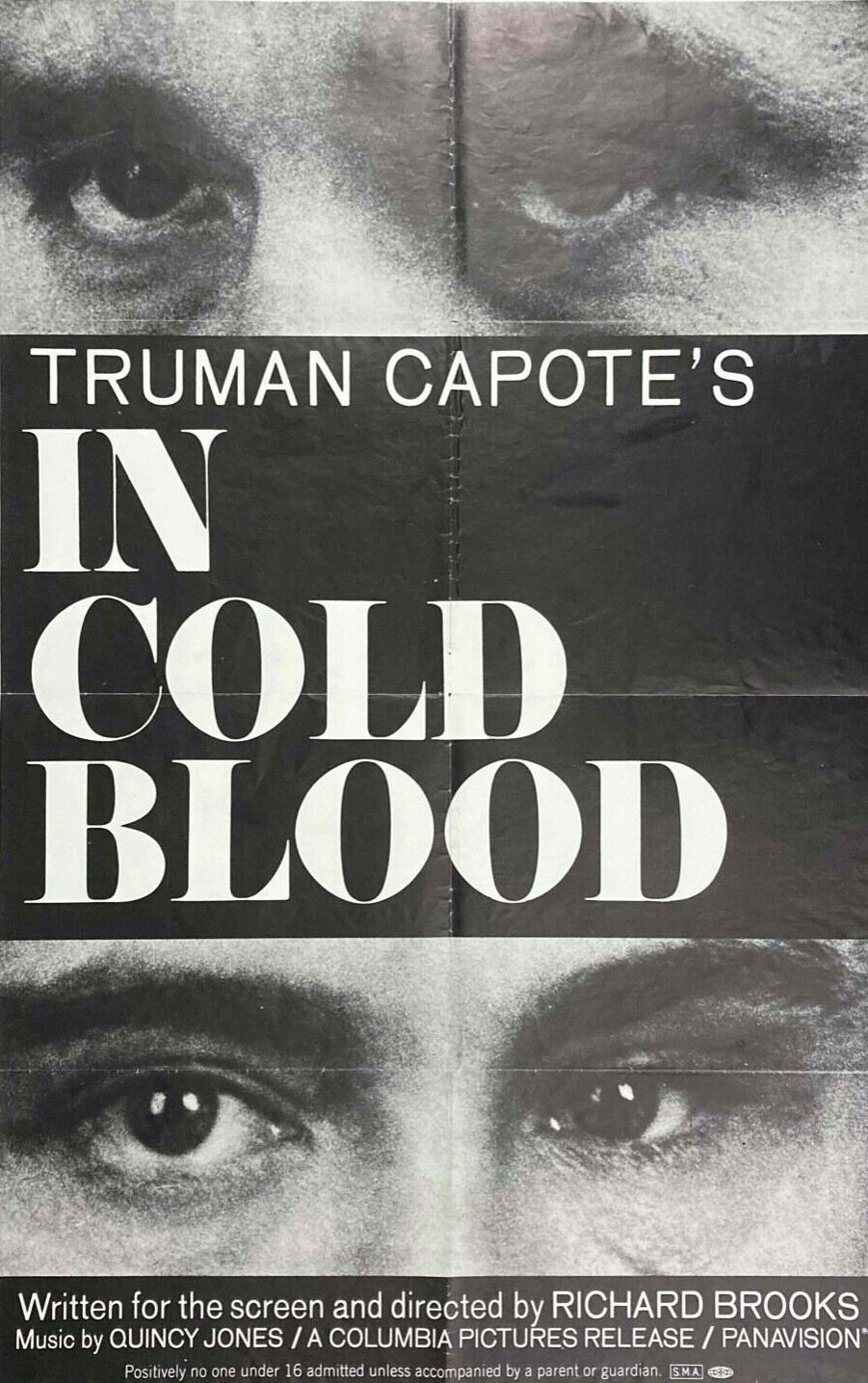
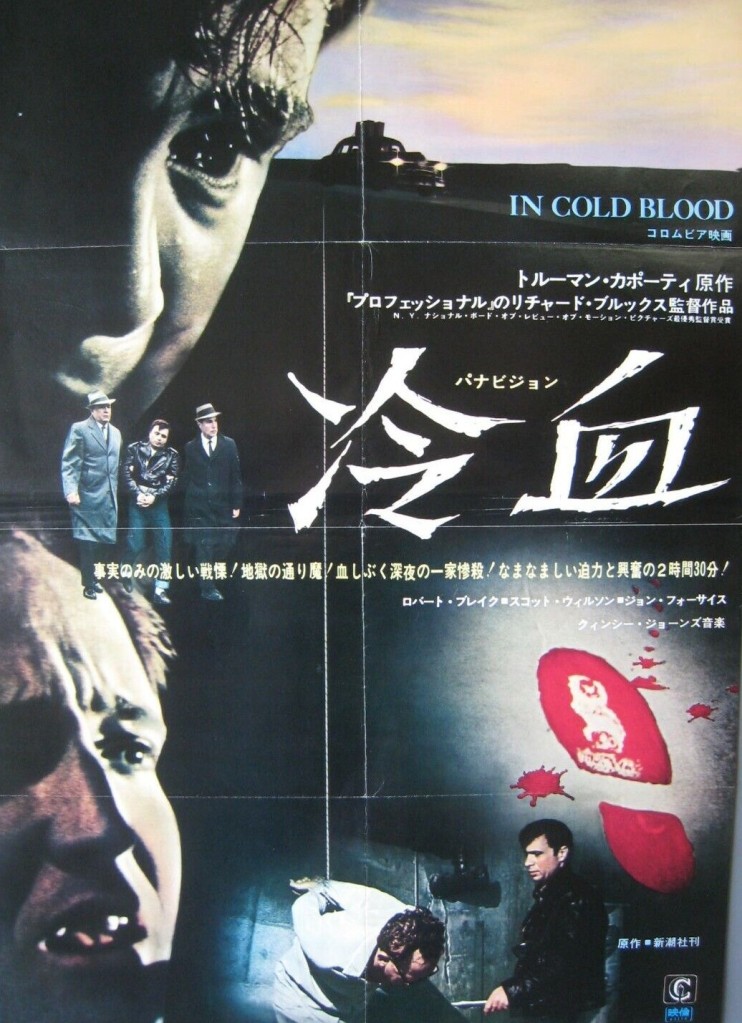
In Cold Blood (1967) *****

Unfairly overlooked in favor of the Coppola/Scorsese grandiose perspective on gangsters, this changed the shape of the crime picture as much as the best-selling book altered the way readers regarded murderers. Neither whodunit, whydunit nor film noir, nonetheless it invites us into the world of the senseless crime, providing an extremely human portrayal of two men if not natural born killers then their pitiful lives always going to lead them in the wrong direction.

Although Perry Smith (Robert Blake) is a fantasist, dreaming of becoming a singing star in Las Vegas, determined to find the lost treasure of Cortez, and convinced a giant bird protected him from vicious nuns in an orphanage, his life did already verge on the fantastical. His mother, a Cherokee, was a star rodeo performer, his father a gold prospector in Alaska, but the mother, an alcoholic, choked to death on her own vomit and the father (Charles McGraw), a hobo in all but name, is astonished that the child he brought up, so he believes, to recognise right from wrong, would stoop to crime. As a child Perry and siblings watched his mother have sex with clients and his father viciously beat her with a belt. Perry is addicted to aspirin to minimize pain from a leg injury, and you can’t help but feel sorry for this otherwise fit young man massaging the massive disfiguring scar, the result of a motorbike accident.

Dick Hickock (Scott Wilson) is a very charming cocky personable con man, leaving a trail of bad checks behind him as he masquerades as a best man who has come out without enough cash to buy a wedding outfit for his buddy and, with his convincing patter, hoodwinking store clerks not just into accepting a check for the goods, later to be sold, but also cashing a personal check. His father, too, is stunned to hear his son had criminal tendencies.

Fatherhood is represented as a holy grail. Hickock enjoyed being a parent until he was caught with another girl and had to do “the decent thing” i.e. abandon existing wife and child. The parents of both boys have wonderful, emotion-filled, memories of loving and being loved by their children.

From another prisoner, Hickock has been told of the “perfect score,” a rich farmer called Clutter in Kansas with $10,000 in his safe. The plan, to which Smith has only momentary objection, is to leave no witnesses. Even muttered in grandiose manner, this phrase surely, in anybody’s mind, conjures up slaughter, Smith’s only saving grace that he prevents Hickock raping the daughter Nancy (Benda C. Currin). Their haul amounting to $43 and a radio, you could imagine the thieves wiping out the family in a fit of fury. But that’s not the case, it’s just cold-blooded thinking, an element of leaving no trace behind.

And that’s just what they do, committing an almost perfect crime, no fingerprints, just the mark of the sole of a shoe imprinted in blood. There’s a red herring – old man Clutter had just signed off on an insurance policy worth $80,000. But detective Alvin Dewey (John Forsythe) has to solve the crime the old-fashioned way, with inter-state cooperation and months (years in reality) of footslogging. Dewey could have been straight out of film noir with his nippy one-liners and epigrams.

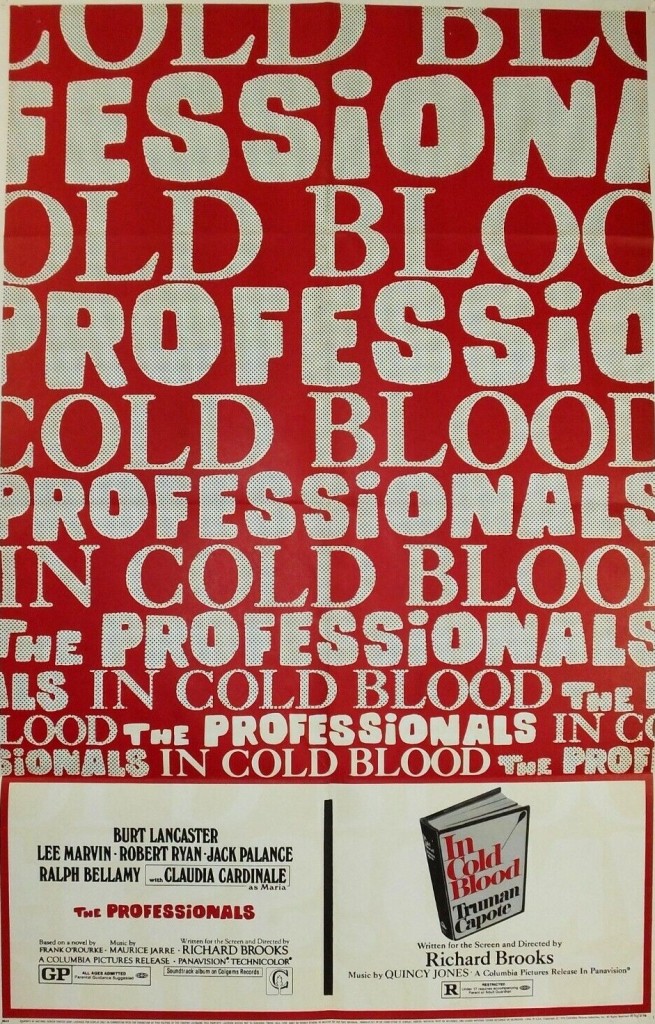
Other than Alfred Hitchcock, it was unusual for a reissue double bill to comprise
two films by the same director.

Unlike the novel which concentrated as much on the aftermath among the shocked townspeople, the film focuses on the manhunt and Dewey’s deft way with newspapermen and colleagues. The four murders occur off-camera, but by that point we already know the outcome. There’s a virtue-signalling coda that shows the inhumane conditions in which murders were kept on Death Row, but that is countered by a marvellous speech by Dewey on the inequities of being a cop: hounded by media and public for letting someone get away with heinous crime, generally getting a tough time over police methods, lambasted after catching them for not doing it quickly enough, and then having to stand by while media and public launch an outcry to prevent the killers being executed.

All shade, the documentary style achieves the contradiction of appearing sparingly told yet with a wealth of character detail (location and time are ignored) and none of the grandeur and faux community spirit invested in gangsterdom by the likes of Coppola and Scorsese. Smith and Hickock would never pass the entry test for the Mafia given that at least required discipline and the ability to follow orders. Minus the killing spree, these characters might have survived a little longer in the underclass before ending up inside again.

All three principals are brilliant in the understated manner demanded. Robert Blake (Tell Them Willie Boy Is Here, 1969) is the pick, tormented by future dreams and past nightmares, but Scott Wilson (In the Heat of the Night, 1967) has the stand-out scene, gulling store salesmen with his finely worked con, and there is a sense of the big brother in the way he looks after his friend. This might well be the best work by John Forsythe (Topaz, 1969).

And it certainly is one of the finest movies made by writer-director Richard Brooks (The Professionals, 1966) who handles a very difficult subject with at times such delicacy it is almost a complete departure in style.

Lord Jim (1965) ***

What if redemption isn’t enough? When shame is buried so deep inside the psyche it can trigger no release? That’s the central theme of Richard Brooks’ adaptation of Joseph Conrad’s classic novel.

The title character’s shame comes from, as a young officer, abandoning a ship he believed was sinking only to later discover it had been rescued with a cargo of pilgrims who point the finger of blame. He is branded a coward and kicked out of the East India Trading Company, plying his trade among the debris of humanity.

You might think he later redeemed himself by foiling a terrorist plot at great risk to his own life. But that cannot erase his shame. Nor can helping revolutionaries overthrow a despotic warlord (Eli Wallach), enduring torture and again at great risk. What other sacrifice must he make to rid himself of the millstone round his neck?

Writer-director Brooks had a solid pedigree in the adaptation stakes – The Brothers Karamazov (1958), Cat on a Hot Tin Roof (1958), Elmer Gantry (1960) and The Sweet Bird of Youth (1962) – but sometimes you felt the writer got in the way of the director. That’s the case here. There was enough here to satisfy the original intended roadshow customers, great location work, grand sets, length, a big star in Peter O’Toole, but there is no majestic camerawork. There are good scenes but no great sweep and the result is a slightly ponderous film relieved by stunning action, some moments of high tension, the occasional twist to confound the audience and ingenious ways to mount a battle.

Hired killer Gentleman Brown (James Mason) has many of the best lines – “heroism is a form of mental disease induced by vanity” and “the self-righteous stench of a converted sinner” – all in reference to Jim. Everybody has great lines except Lord Jim, as introverted as  Lawrence of Arabia, face torn up by self-torture, fear of repeating his original sin of cowardice and convinced he will be cast out again should people discover he had abandoned hundreds of pilgrims.

Apart from the storm at the outset, the central section in the beleaguered village is the best part as Jim finds sanctuary, love and purpose, and conjures up the possibility of burying the past.

Part of the problem of the film is the director’s need to remain faithful to the source work which has an odd construction and you will be surprised at the parts played by the big-name supporting cast of James Mason, Jack Hawkins and Curt Jurgens. Many of the films made in the 1960s were concerned with honor of one kind or another and, despite my reservations about the film as a whole, as a study of guilt this is probably the best in that category, in that this character’s conscience refuses to allow him an easy way out.  

Peter O’Toole (Lawrence of Arabia, 1962) is chock-full of anguish but finds it difficult to create a character of similar heroic dimensions to the David Lean picture. James Mason (Age of Consent, 1969) is surprisingly good in an unusual role. Eli Wallach (The Magnificent Seven, 1960) as The General plays a variation of a character he has essayed before.  

This may have been a step up the Hollywood ladder but it was backward move in acting terms given Daliah Lavi’s performance in The Demon (1963) – reviewed here some time ago. Her talent is somewhat wasted in an underwritten part. Also in the supporting cast: Curd Jurgens (Psyche ’59, 1964), Akim Tamiroff (The Liquidator, 1965), Andrew Keir (Quatermass and the Pit, 1967) and Jack MacGowran (Age of Consent).  

Director Richard Brooks was also on screenwriting duties.

Discover WordPress

A daily selection of the best content published on WordPress, collected for you by humans who love to read.

The Atavist Magazine

by Brian Hannan

WordPress.com News

The latest news on WordPress.com and the WordPress community.