I deserve a slap on the wrist. I wrote an enormous book (250,000 words including notes) on the history of movie reissues, revivals, encore premieres, call them what you will, and I didn’t know there was, at least in Britain, a constant source of reissue on a weekly basis, namely the “Sunday Cinema” program.
In Britain in the 1960s, movies ran from Monday to Saturday (Mon-Wed/Thu-Sat if a split week) not the current system of Friday to Thursday. So it made little sense to tag on a Sunday as the last day of a run unless the cinema was involved in roadshow presentation. On Sundays, cinemas, if they opened at all, tended to show older movies, revivals of horror pictures or ones with a sensationalist slant.
Sunday showings were a contentious issue anyway. According to the Sunday Entertainment Act of 1932, cinemas could only show movies on Sundays subject to certain conditions. The first of which was that cinema owners had to agree to give over a certain percentage of their takings to charity. And not even a charity of their choice, but one chosen by the local authority. Secondly, they could not, should they wish, show movies all day, or from the usual starting point of between 1pm and 2pm, in case that got in the way of children attending Sunday School. Though, theoretically, cinemas could open from 4pm, most cinemas restricted showings to one full program in the evening. Lastly, should enough of the local populace object to Sunday opening, that could put a stop to the process.
On the other hand, there was one advantage to Sunday opening. Operators paid a flat fee for movies, not a percentage of receipts as they did for the rest of the week. That made it a lot easier to work out costs and potential profits, i.e. whether it was worthwhile opening at all.
With the downturn in cinema attendances in part triggered by the availability of movies on television – in Britain there was a five-year restriction but few pictures except for Bond films and certain roadshows and big hits could resist the temptation of the extra cash that television could bring – cinemas were annoyed at still having to give money to charity and by the end of the decade the government nullified that condition.
There was a ready supply of older movies available on a non-percentage basis. Programs invariably comprised double bills, though often the complete program ran well under three hours.
I did a survey of suburban cinemas in my home town of Glasgow, Scotland, over three separate months – January, June and October – in 1969 and found that certain films were in constant circulation through the year.
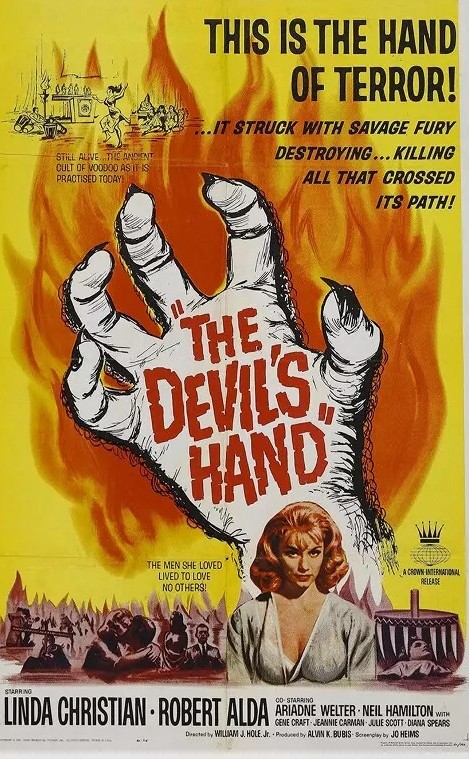
Hammer’s The Gorgon (1964) starring Christopher Lee, Peter Cushing and Barbara Shelley was shown variously with thriller Recoil (1953), occult The Devil’s Hand (1961) and sci fi 20 Million Miles To Earth (1957). But The Devil’s Hand was also the support for several bookings of horror portmanteau Twice Told Tales (1963) with Vincent Price and Recoil I found supporting The Curse of the Mummy’s Tomb (1964).
Blood beasts were on the rampage. You could choose from Roger Corman’s Night of the Bloodbeast (1958) supporting Cage of Doom (aka Terror from the Year 5000, 1958) or Revenge of the Bloodbeast plus peplum/horror mash-up Goliath and the Vampires (1961). Edgar Allan Poe was represented by The Raven (1963), TheMasque of the Red Death (1964) and The Fall of the House of Usher (1960), all the main feature, all headlining Vincent Price. City of the Dead (1960) went out variously with Screaming Skull (1958) and Cage of Doom
Other popular items included Italian occult item Sexy Party (aka Death on the Fourposter, 1964) coupled with Search for Venus and British exploitationer Beat Girl (1961) doubled up with sci fi Unearthly Stranger (1965)
It wasn’t all horror and sci fi. Gangsters occasionally put in an appearance – The Bonnie Parker Story (1958) on a killing spree with Charles Bronson as Machine Gun Kelly (1958). Westerns were rare but there was room for James Stewart in The Far Country (1954) teamed with Louis L’Amour’s Taggart (1964) and Robert Wagner in White Feather (1955) paired with exploitationer The Young Sinners (aka High School Big Shot, 1959). Just as out of place were the ultra daring, but censor-permissible, Nudes of the World (1962), espionage picture Death Is a Woman (1966) and Alan Ladd in Hell Below Zero (1954).
But what horror or sci fi aficionado could resist Invasion of the Hell Creatures (aka Invasion of the Saucer Men, 1957) and She Demons of the Swamp (aka Attack of the Giant Leeches, 1959)? Or The Brain Machine (1955) coupled with Strangler of the Swamp (1945)? Or A Bucket of Blood (1959)/ The Evil Force (aka 4D Man, 1959)?
Despite her proven marquee pull Claudia Cardinale in French-made Swordsof Blood (aka Cartouche, 1962) played second fiddle to, variously, Italian-made Perseus vs the Monster (aka Perseus the Invincible, 1963) and The Exterminators (aka Coplan FX 18, 1965).
You could catch up with – or enjoy again – such fare as The Brain Eaters (1958), The Day the World Ended (1955), The Amazing Colossal Man (1957), Deborah Kerr in The Innocents (1961), Joan Fontaine in The Witches (1966), Jack the Ripper (1959), The Sorcerers (1967) with Boris Karloff and Barbara Shelley as Cat Girl (1957).
Apparently to everyone’s surprise the extended version of Lord of the Rings: Fellowship of the Ring (2001) broke into the box office top ten the weekend before last with The Two Towers (2002) not far behind. Already cinemas are gearing up for a swathe of 1999 reissues (25th anni don’t you know) including The Matrix and American Pie and IMAX is already setting aside screens for the 10th anniversary re-release of Interstellar (2014) later in the year.
With the demise of the DVD and the domination of the streamers, you would have thought there was no room anywhere for old movies returning to the big screen. But, historically, reissues always returned to save the day, most commonly when the industry was low on product. That was generally the most obvious reason and splurges of revivals occurred in the early 1920s, late 1930, post WW2 and the mid-1950s.
But there were other reasons. I could give you chapter and verse about the reissue since I wrote a book about it, but to save you ploughing through those 250,000 words, I’ll stick to the salient points. Mary Pickford and Charlie Chaplin kicked off the revival business. In the silent era there were few prints of any new picture, often less than 100, so theaters which couldn’t afford the price of the new offerings of the King and Queen of Hollywood just brought back their old ones.
For a time, in the 1920s and 1940s, studios just retitled pictures and brought back oldies as newbies until the law caught up with them. And in another dodgy piece of business, just before Hollywood sold a bunch of titles to television, they were inclined to throw them out for one last roll of the box office dice, infuriating exhibitors and moviegoers alike.
But the big boom in reissues was nothing to do with shortage and more the realization that, as we are more fully aware these days, punters will go back again and again to see a favorite. The James Bond bandwagon kicked off this particular spree but by the 1970s many films – Butch Cassidy and the Sundance Kid (1969), Billy Jack (1971) and Jeremiah Johnson (1972) – made more on revival than they did first time around. Studios began to build into a film’s release a reissue – they even invented a phrase for it “the wind-up saturation.”
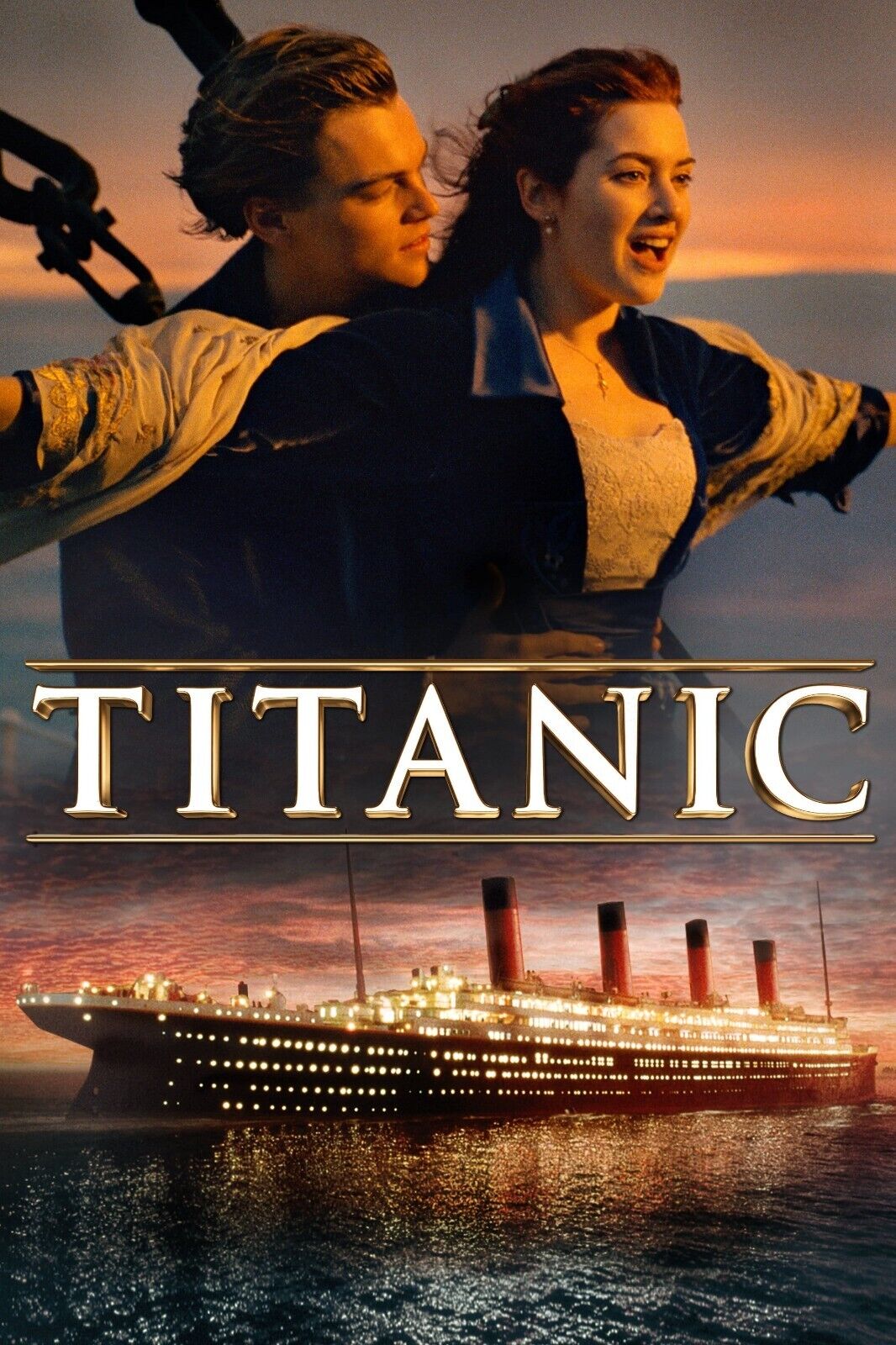
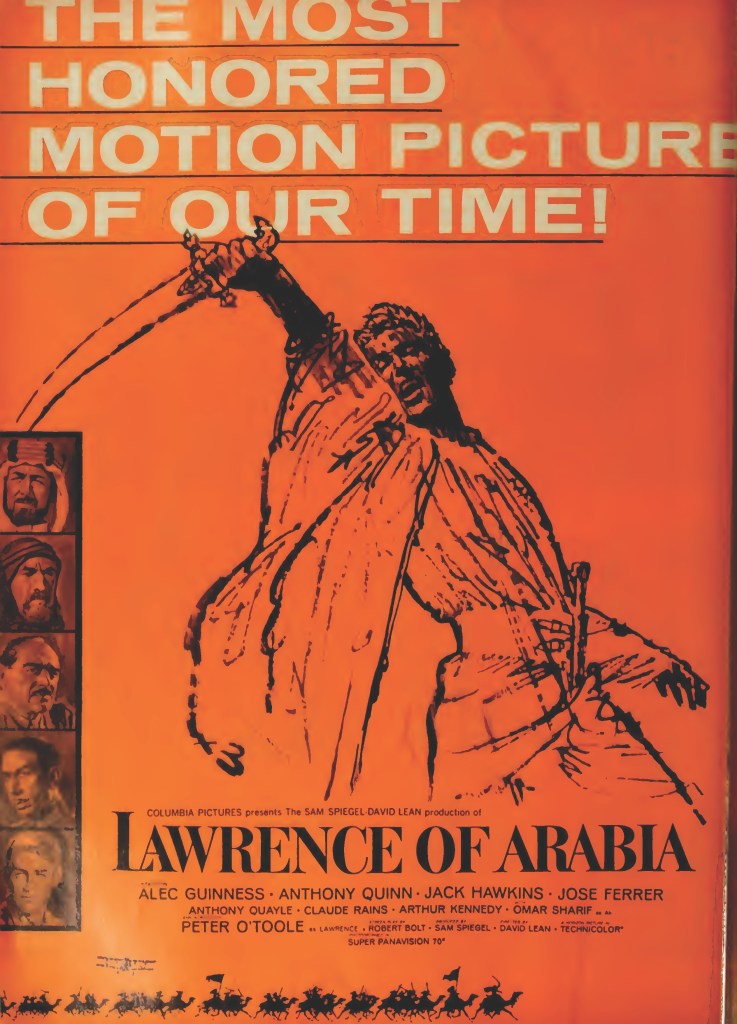
And when those particular wells began to run dry as ancillary – video, cable – took over, the art film rode to the rescue. Neglected masterpieces like Abel Gance’s Napoleon (1927) or Fritz Lang’s Metropolis (1927) were revamped while disgruntled auteurs of the caliber of David Lean found new audiences for different versions of Lawrence of Arabia (1962) and Ridley Scott took this notion to the extreme with endless iterations of Blade Runner (1982). Then Imax and 3D came into play and scooped up gazillions for further airings of Pixar or Disney classics or Titanic (1997).
However, the reissue heyday looked dead and buried once movie lovers cottoned on that old movies were constantly were only being brought back for a one-day showing because they had gone through the 4K loop, but with DVDs able to add buckets of extras, commentaries and histories, that became the de facto location for revivals.
But then Covid struck and cinemas, bereft of product, looked once again to oldies. While nobody was partying like it was 1999, it was both astonishing and satisfying to studios that older movies could take up some of the product slack. While most of the movies taking a second bite were made this century and some coming back not long after initial release, there have been a good few surprises in the mix, not least that the anniversary marketing tag was not always in play.
Take the 2020 revivals for example. Topping the list was Mamma Mia (2008) with a whopping $84.6 million gross worldwide – plus $7.2 million for the 2018 sequel – followed by Harry Potter and the Sorcerer’s Stone (2001) scooping up a wizard $31.5 million. Gravity (2013) with Sandra Bullock adrift in space notched up $24.8 million. You’d be taking something of a marketing gamble to reckon American election year could boost an old political movie but that was the case for The Post (2017), sterling cast of Meryl Streep and Tom Hanks aside unless Streep was surfing a Mamma Mia wave, which blocked out $13.9 million. Bohemian Rhapsody (2018) continued to clock up the bucks, with $7.1 million.
The traditional upswell for U.S. animated classics was long gone but Moana (2016) cleared another $21.7 million while The Lion King (1994) chomped through another $5.6 million in the wake of the remake.
Avatar (2009) was the big noise of 2021, lifting $57.9 million a year ahead of the long-awaited sequel. Harry Potter and the Sorcerer’s Stone kept going, an extra $15.5 million and, guess what, there was a welcome audience for Lord of the Rings: Fellowship of the Ring with $8.9 million.
And the original Avatar wasn’t done. In fact the following year – 2022 – it did even better, an awesome $76 million in the kitty. Given that James Bond was the original source of so much reissue wealth it was fitting that 10th anniversary status was bestowed on Skyfall (2012), with the studio rewarded by a healthy $33 million. In true Martin Scorsese style, that is by not fitting with convention, The Wolf of Wall St (2013) celebrated its ninth anniversary and plundered $15 million.
James Cameron and Christopher Nolan in 2023 went head to head for the title of reissue king. Titanic – again – won with $70 million. Interstellar – another ninth anniversary celebrant – took home $44 million. The original Toy Story (1995) resurfaced with $27.5 million and in a 30th anniversary gesture The Nightmare Before Xmas (1993) romped off with $10.4 million.
And what of this year? Star Wars: Episode 1 – The Phantom Menace (1999) leads the pack with $19.4 million. As I mentioned 1999 is getting fair old fist-pump, some marketeers with little in the way of cinematic memory going so far as to claim it was cinema’s best-ever year. That kind of all-encompassing revival branding was rolled out for Columbia’s 100th Anniversary celebrations which saw a bundle of old pictures brought out under that aegis for a total $6 million gross. The second part of Dune brought further viewings for Dune (2021) and $3.9 million. Shrek 2 (2004) was 20th anni fare – a further $2.4 million.
Yet another revival of Alien (1979) – 45th anni if you’re interested – snapping up $2.3 million – ahead of the latest in the series was no surprise but a return for Hereditary (2018) was, this Toni Collette number reflecting its growing cult status with an extra $2.4 million.
The Lord of the Rings trilogy this year has already snagged a collective $7.8 million, Fellowship in front with $3.4 million, Two Towers on $2.4 million and Return of the King with $2.2 million.
So it looks like, at least for the time being, and as long as anniversaries provide marketing heft, the reissue will keep going,
Next up, as part of the Columbia reissue juggernaut, Lawrence of Arabia (1962). As it happens, there’s a Behind the Scenes on that one on the blog.
SOURCES: Brian Hannan, Coming Back to a Theater Near You, A History of Hollywood Reissues 1914-2014 (McFarland, 2016); Box Office Mojo.
It’s become something of a Xmas tradition that I puff up the books I have written in the hope you will stick them in your (or someone else’s) Xmas stocking. I’ve authored over a dozen publications – from “Behind the Scenes” books (known as “Making of” titles in the publishing business) and compilations of my daily reviews to histories of aspects of the Hollywood business machine, as well as those concentrating on my favorite era (the 1960s in case you can’t guess), and a few relating to my home-town of Paisley in Scotland.
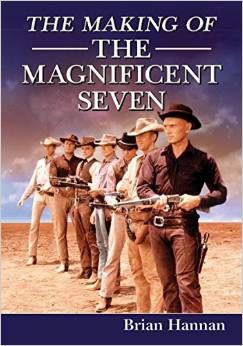
The most popular has been, without doubt, The Making of the Magnificent Seven. Telling the “Behind the Scenes” tale of how one of the most popular westerns ever made wasn’t so initially popular (it flopped in the U.S.). Given the various problems it needed to overcome – loss of three directors, umpteen screenwriters involved, Actor’s Strike. Writer’s Strike, censorship by the Mexican government, the threat of severe editing – it was a wonder it ever saw the light of day.
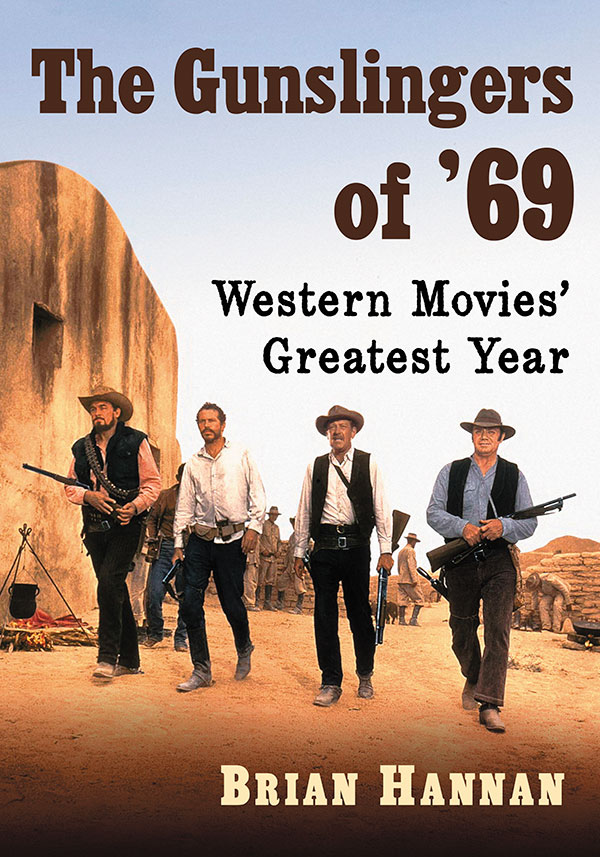
If you’re keen on this line of Hollywood history you might also be interested in a couple of other “Behind the Scenes” volumes – The Making of The Guns of Navarone (Revised Edition) and The Making of Lawrence of Arabia. For that matter, there is ample “behind the scenes” material in two other books: The Magnificent 60s – looking at the top 100 movies of the decade and which could be retitled “how the decade was born” – and The Gunslingers of ’69 which examines the western in a pivotal year that saw the release of The Wild Bunch, True Grit, Once Upon a Time in the West and Butch Cassidy and the Sundance Kid.
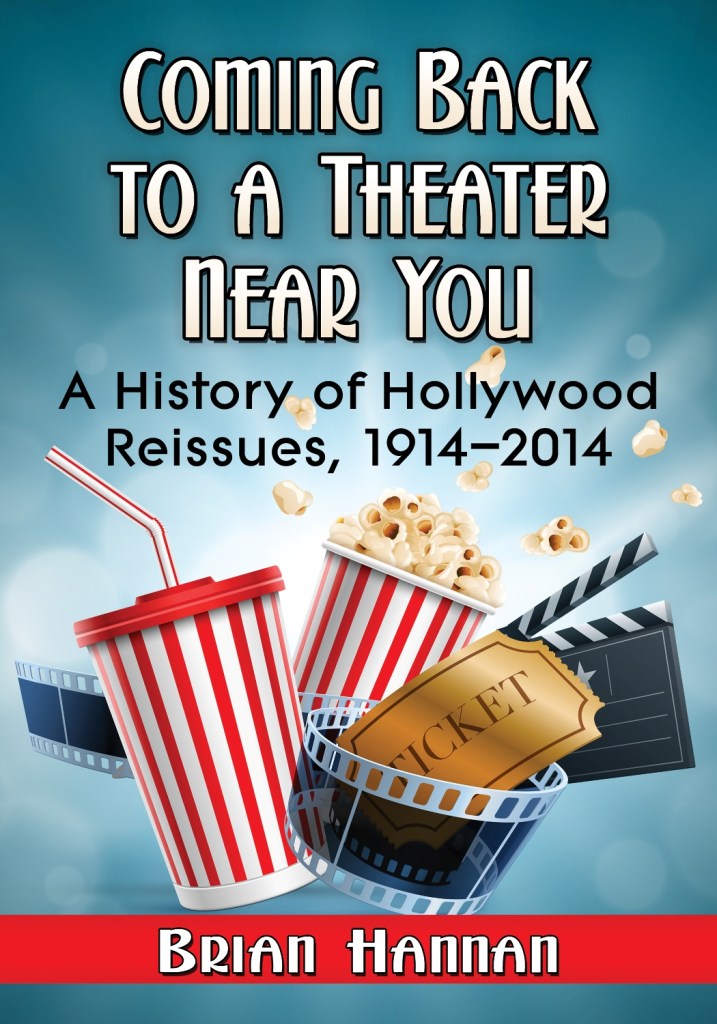
I’ve possibly had an unusual writing career in that one idea has usually led to another. While researching The Magnificent Seven, two aspects of that film fascinated me. The first, as mentioned above, is that it was a flop but that it became very successful as a reissue. So that sent me looking at the whole issue of reissue/revival. That took me way back to the Silent Era. And given no one else has written so extensively on the subject I guess I can fairly claim to be the leading expert. The result was my biggest book – 250,000 words including Notes – Coming Back to a Theater Near You, A History of Hollywood Reissues 1914-2014.
The Magnificent Seven was also given an unusual kind of release – what was called a “saturation” release with about 750 prints racing from state to state in a staggered release around the country. Eyebrows were raised because that was the way dodgy films were distributed, exploitation and horror films, whipped out of cinemas before word of mouth could kill them off. Because prints already had another pre-designated destination, The Magnificent Seven, no matter how well it played, could not be retained at any cinema, so word-of-mouth was killed stone dead.
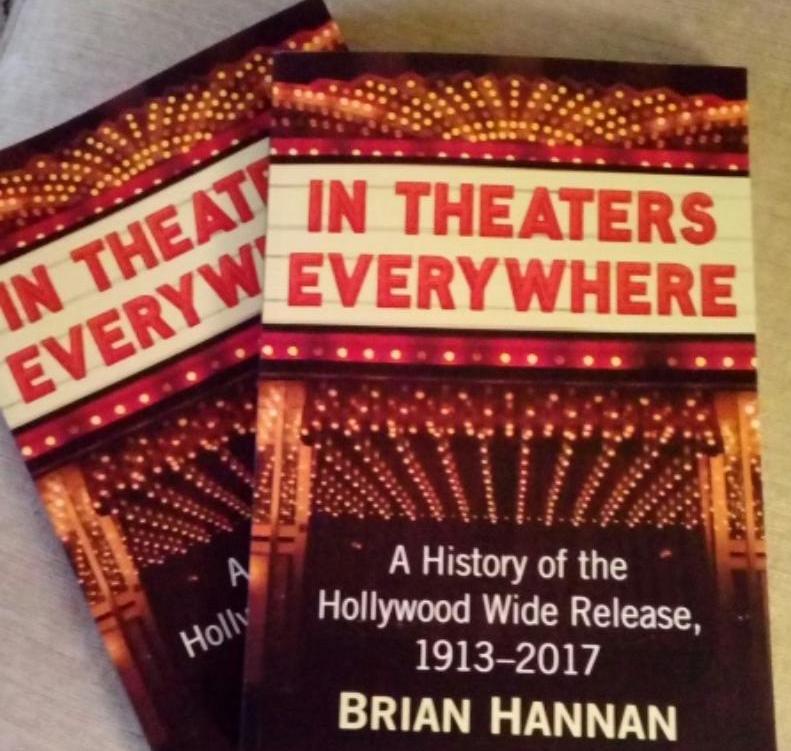
But when I did a bit of digging I discovered that the wide release had been in sporadic use since the Silent Era and I told that story in In Theaters Everywhere: A History of the Hollywood Wide Release 1913-2017.
Oddly enough, doing the research for both those books led me to my most unusual enterprise. When you go so far back in time doing research, and digging through the daily and weekly issues week-by-week of the Hollywood trade papers as was my wont, you tend to turn up other interesting facts. One of these was a report that in 1935 Mae West was the highest-paid actor (male or female).
Like everyone else I had assumed that female stars were underpaid compared to their male counterparts. But in digging deeper I came across another article that showed in the Silent Era that Mary Pickford, at the height of her box office powers, substantially out-earned a Charlie Chaplin at the height of his box office powers.
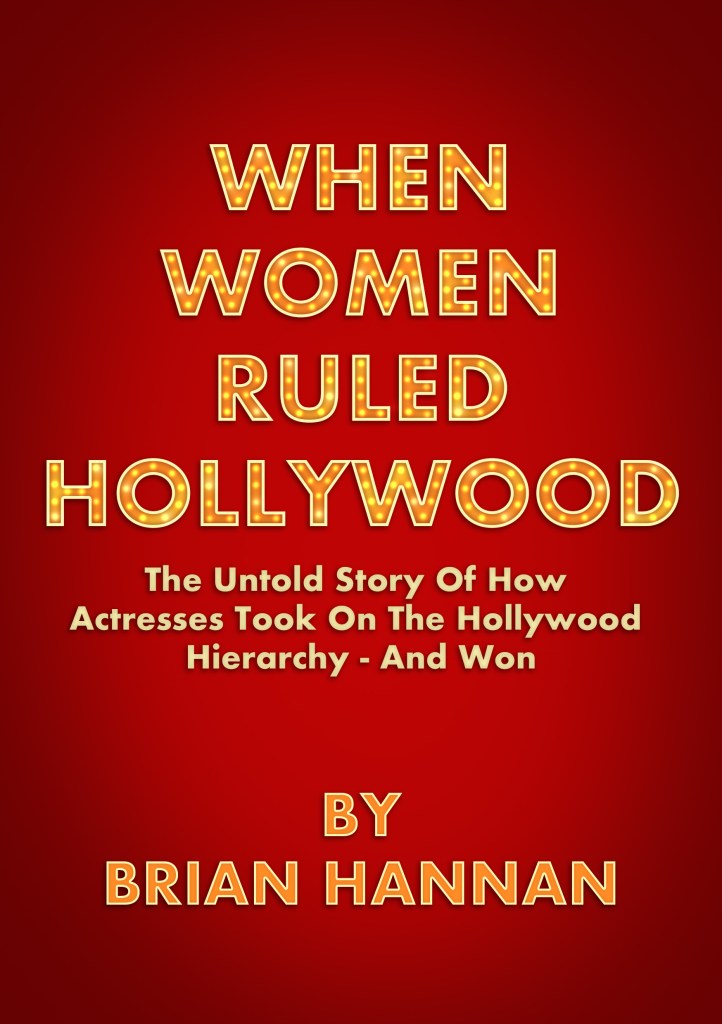
The result of that was When Women Ruled Hollywood – between 1910 and 1948 the top female stars often out-earned the top male stars – which examines the so-called gender pay divide.
Another movie-related hobby led me to a separate string of books. I have a collection of Pressbooks/Campaign Manuals dating from the 1950s. As well as providing, literally, cinemas with adverts in various sizes for a forthcoming movie, these publications (anything from double-sided A5 to 32-page full-color A3) came up with dozens of publicity wheezes. I got to wondering how many of these clever ideas a cinema manager put into practice. So I went down to the museum in Paisley, where I was living, and starting looking through five years’ worth (1950-1954) of the local newspaper the Paisley Daily Express.
In those days, local newspapers in Britian had adverts on the front page not news stories. And the biggest advert here was a block advert listing what was showing every day at the town’s eight cinemas. I didn’t find any examples at all of cinema managers using the ideas suggested in the Pressbooks but I did, as a matter of course, write down what was showing every day at every cinema. So at the end of the process I had five years’ worth of interesting data.
What to do? What else but turn the material into a book, relating the movie-going patterns of this town, what movies and stars were most popular, distribution patterns, B-movies, serials and reissues. That turned into Paisley at the Pictures 1950 (and there have been two sequels so far).
But since I’m not from Paisley, and as ever, in order to write this book, I started digging backwards into the town’s history of cinemas, I discovered that a horrific disaster had occurred in a cinema in 1929 where over 70 children attending a matinee perished. That became The Glen Cinema Disaster.
As a result of researching The Magnificent 60s book I came across so many interesting movies that didn’t fit into the remit, which was to analyze the 100 most popular films of the decade. In fact, I soon became aware, that thanks to academics, I had quite a distorted view of the 1960s cinema. And that nobody had really done any consistent work on popular rather than Oscar- or arthouse-worthy movies. And also, except for critics writing for monthly magazines, newspapers only allocated few hundred words to cover an entire week’s output. So most movies really only got potted reviews of less than 100 words. So I thought I would dig.
The initial result was this blog. But after receiving so many requests to make the material more easily available for consumption, I have started to turn the reviews and “Behind the Scenes” articles into books. Ambitious though this seems, I’m aiming to put into book form, one way or another, reviews on 1,000 films from the decade – and at the standard length I use for the blog, not reduced into capsule reviews like you get in so many other compendiums.
I’m going to have two types of books, splitting the actual reviews into one series of volumes (I’ve reached Volume Two so far) and the Behind the Scenes into another. Eventually, all will be available on both print and e-book formats.
So everything I’ve written is available on Amazon. I’m assuming the link below will take you to my Amazon page (you might find some items cheaper on Ebay) but if not then just put my name into Amazon and my page should pop up.
Even if you’re disinclined to purchase any books, you could do me a good favor by passing on details of my Blog to other interested parties. Currently, I’m approaching 90,000 views a year and I need 100,000 to be welcomed into the holy grail of Rotten Tomatoes.
If you ever wondered what kicked off the fad for having live orchestras playing at screenings of older films, you might be even more surprised to discover that Napoleon (1927) was the cause. And, for that matter, created the “event” movie, another contemporary buzzword that appears to indicate a limited-time-only showing. Abel Gance’s picture also set up another template, one that every director and critic ascribed to in their thousands, the restoration. For, in one fell swoop, the revival of this picture in 1981 after over half a century of neglect, turned restoration into an event, worthy of acres of newspaper articles, hi-hat premieres, and subsequent profitable release in both the theatrical and ancillary pipeline.
Equally, as luck would have it, Abel Gance’s Napoleon (1927), truly was an event, a silent epic, the last section projected across three screens (the famed triptych, precursor of Cinerama and 70mm), road-shown with a full orchestra and ticket prices as high as $20. It became the “must-see” cultural happening of the year. American journalists gave director Francis Coppola virtually all the credit and he was certainly due everything that went with the bold showmanship and the financial risk, underwritten by his Zoetrope company, of launching the film in America’s largest cinema, the Radio City Music Hall in New York, with a complete score (incorporating classical music) by his father Carmine and the aforementioned full orchestra.
But in fact, the actual restoration had been carried out in Britain by silent film expert Kevin Brownlow – author of The Parade’s Gone By and director of It Happened Here (1965), the documentary Abel Gance, The Charm of Dynamite (1969) and Winstanley (1976) – who had compiled his version from eleven different sources including the Cinematheque in Paris, an MGM print and a seventeen-reel version from a private collector.
Thanks to Brownlow, Napoleon became “The Greatest Reissue Story Ever Told.”
Why? Because it was the result of obsession and passion, emotions every artist shares with every cinephile. Brownlow first came across Napoleon as a fifteen-year-old, and although he only glimpsed a few fragments, it was enough to trigger a quest that was to last nearly thirty years. Ironically, it was thanks to a quirky French invention that Brownlow encountered the Gance masterpiece. Where other countries adapted the 8mm format for showing abridged features at home, the French projected these films on a 9.5mm gauge.
After being gifted such a projector for his eleventh birthday, Brownlow started hunting down and purchasing silent films. In 1954, at the age of fifteen, disappointed by Jean Epstein’s Lion des Mongols (1924) he asked for a replacement and was offered two reels of a movie of which he had never heard – Napoleon vu par Abel Gance. It proved a revelation. He was “converted as surely as Paul on the road to Damascus.” He found exhilarating the “rapid cutting and swirling camera movement…and the magic of the visuals were exceptional.” From scouring junk shops and advertising in magazines, he assembled other reels and began showing a 90-minute version to family, friends and other film lovers. Even when the British National Film Archive turned down the opportunity to view the picture Brownlow, undeterred, wrote to Gance and, by happy coincidence in 1955, was invited to meet the director at the British Film Institute.
The accepted version of the Gance story was that Napoleon was a neglected masterpiece, but that was not strictly true. If the parade had passed him by, it was not for want of trying. Napoleon was revived (although primarily in France) as Napoleon Bonaparte in 1935 and in 1953-1955 on the back of his original technological innovations and other films about the French Emperor. In directing the silent picture, Gance had anticipated the arrival of sound and made his actors speak actual dialogue which later facilitated dubbing. The 1935 sound reissue (140 minutes including new footage), partly piggybacked on a new film about Napoleon written by Mussolini.
The next revival owed everything to recognition of his part in creating the first wide screen. Another French inventor Henri Chretien, inspired by Gance’s triptych, had invented what Twentieth Century Fox marketed as CinemaScope. While delighting in Chretien’s process, French journalists recognized Gance’s contribution. In 1953, when Twentieth Century Fox toured Cinemascope throughout Europe one port of call was the Venice Film Festival where the organizers “planned to surprise those who think widescreen is a new thing” by showing Napoleon on the CinemaScope screen.
Gance timed public demonstrations of his process (called Polyvision) to coincide with the launch of The Robe. The arrival of Cinerama also sent journalists delving into the past. However, Gance’s film had to wait until 1955 for another commercial outing, when it rode in on the heels of Sacha Guitry’s phenomenally successful Napoleon (the most expensive French film ever made and a box office smash) and enjoyed a two-year run at the Studio 28 arthouse in Montmartre aided by the releases of Desiree (1954) starring Marlon Brando and King Vidor’s War and Peace (1956). Independent distributor Tomas J. Brand acquired the U.S. rights in 1954, hoping to interest Cinerama in showing the movie as a “spectacle.” Gance toured his process, renamed Magirama, through France in 1956 but his comeback venture Austerlitz (1960) with an all-star cast of Orson Welles, Claudia Cardinale, Maurice Chevalier, Leslie Caron and Vittorio de Sica flopped in the U.S.
And there, pretty much, the matter lay, the parade now racing past Gance, until 1969 when, separately, Brownlow, using the facilities of the British Film Institute, began work on restoring the silent picture, while French film director Claude Lelouch (A Man and a Woman), who owned a cinema devoted to classics, purchased the rights and with funding from the French government released in 1971 (the 150th anniversary of Napoleon’s death) the 235-minute sound version Bonaparteand the Revolution, with some new scenes shot by Gance, who had reworked other scenes and added a color preface. Outside of France, it was destined for the rarified atmosphere of the film festival circuit, turning up in Rotterdam in 1972, Boulogne in 1972, the University of California in 1973, Paris again in 1973, not reaching New York till 1976.
Brownlow was aghast at this version, which had, in effect, been butchered by its maker, but after running out of money to complete his version turned in 1975 to the British National Film Archive which made a master print. The U.S. rights were purchased by Image Film Archive in 1975, which, with the New York Museum of Modern Art, purchased the rights to the MGM negative which contained several sections never seen before and working with Brownlow produced the five-and-a-half hour silent shown at the Telluride Film Festival in late summer 1979 in the presence of the director on a giant exterior screen erected by mountaineers for a screening beginning at nine o’clock at night. This edition, with music by Carl Davis, was the highlight of the London Film Festival in November 1980.
Interesting though all this was to the film buff, it was not going to make headlines across America. That was where Coppola’s marketing genius came in. He saw the necessity of creating an event that would match Gance’s ambitious scope and in one fell swoop remove restoration from the discreet chambers of museums and arthouses and push it out in the full public spotlight. For commercial reasons, Image Film Archive trimmed an hour, achieved by projecting the film at a faster speed and, at Brownlow’s suggestion, cutting scenes from the Toulon battle and a subplot concerning the secret passion of an innkeeper’s daughter for Napoleon.
Hiring Radio City Music Hall was an act of unsurpassed faith. The premiere on January 23, 1981, and two other performances cost $150,000, break-even set at ten thousand admissions (at $10-$15 a ticket) and the days when the Music Hall commonly did that were long gone. Bookings were sluggish until an article in the New York Times stimulated interest.
Napoleon at the Radio City Music Hall counted as three days that shook the reissue world. A gross of $297,000 spurred further showings. Image Film archive envisaged a 70mm version to avoid the necessity of projecting across three screens. If New York was a marketing coup, it was just the start. Coppola and Image Film Archive conceived an even bolder strategy. The movie would embark on an old-fashioned roadshow, harking back to the days of Griffith’s Birth of a Nation, when print and orchestra traveled from city to city. The touring schedule took in Columbus, Chicago and Los Angeles (in time for Bastille Day). Tickets would cost $10-$20. The 3,890-seat Chicago theater racked up $195,000 for the first four performances, $199,000 for the second four and $173,000 for the third. The 2,750-seat Midland in Kansas City pulled in $150,000, in New Orleans at the 2,800-seat Saenger Performing Arts Center it was $232,000, in Syracuse $93,000 at the Area Landmark.
By July the gross from just forty-five performances was over $2.5 million and for cinemas that could not afford the expense of a live orchestra the score was married to the print. Two more weekends at the Radio City Music Hall in October added $834,000. By year end that had more than doubled, an unbelievable sum for a silent movie revival. The way the film was presented was seen as the reissue catalyst to fight the twin onslaught of video cassettes and cable, since it could not be mounted anywhere but a cinema.
In a move that would have far-reaching implications for the reissue business, Universal’s new classics division was emboldened to buy the worldwide rights from Image. “This will be the kind of event that will be the mainstay for exhibitors over the next five to ten years as we come to grips with home entertainment,” prophesied Ben Commack Jr., the unit’s boss. “If all we get are film buffs, we’ve failed,” he added, “There’s no reason why this film can’t be accessible to mainstream audiences.” A second release wave in 1982-1983, minus the orchestra, targeted smaller first run emporiums in eleven key cities, following a more traditional roadshow pattern of two performances a day and three on Saturdays, an intermission and sales of posters and records in the lobby.
The 70mm six-track stereo version, utilizing the Carmine Coppola score, was tested at the 915-seat Cinerama Dome ($7.50) in Los Angeles. Brochures were distributed to high schools, colleges, hospitals, corporations and museums. The concept almost fell at the first hurdle, first week only $18,400. The second week rose by $100, and fell, but not by much, over the next three weeks. When a final week was announced, takings soared to $19,900. Universal need not have worried. Seattle opened “big” on two small theaters, Philadelphia figures were excellent, Pittsburgh was “wow,” San Francisco “dandy,” Denver “impressive” and Cleveland took in a “sensational” $40,000 opener. Returning to New York, it scored $9,000 at the 549-seat Sutton (at $5 a ticket) arthouse. Although the French premiere of the revival had taken place in Le Havre in 1982, the film did not open commercially until July 1983. Running at five-and-a-quarter hours and with top tickets priced at $20, the three shows at the 3,700-seat Palais de Congress saw twelve thousand admissions.
All in all Napoleon was a triumph, grossing $7.5 million worldwide, certainly the most unexpected reissue of all time, and one that changed attitudes to revivals for the next three decades.
SOURCES: Brian Hannan, Coming Back to a Theater Near You, A History of Hollywood Reissues, 1914-2014 (McFarland, 2016) p275-279; Kevin Brownlow, Napoleon, Abel Gance’s Classic Film, (London: Jonathan Cape, 1983); “Il Duce’s World Try on Napoleon Pic,” Variety, April 3, 1935, 19; “20th Fox Adaptation of Chretien System Stirs Paris Interest in 3D,” Variety, August 19, 1953, 13; “27 Pix from 16 Lands Incl Russia in Venice Festival Race This Week,” Variety, August 19, 1953, 3; “More 3D Systems Flooding Paris,” Variety, September 2, 1953, 10; “The New Always Has a Past,” Variety, November 3, 1954, 20; “Gance Preps Polyvision Prod. like Cinerama,” Variety, August 17, 1955, 14; “Gance Takes His Screen Process on Road Tour,” Variety, November 21, 1956, 14; “Abel Gance, at Age 90, Hit of Telluride; Napoleon on 3 Screens Runs Till 3am,” Variety, September 12, 1979, 28; “Gance’s Napoleon to be Shown at Nuart,” October 23, 1979, 17; “Zoetrope Mulls Symphonic Music for Gance’s Napoleon at Radio City,” Variety, March 19, 1980, 6; “British Slighted on Napoleon,” Variety, November 4, 1980, 1; “1926 Napoleon to Play Music Hall,” Variety, November 5, 1980, 1; Vincent Canby, “Gance’s Silent Napoleon is Reconstituted,” New York Times, January 24, 1981; “1927 Napoleon Makes Strong Showing,” Variety, January 27, 1981, 3; “Napoleon Sellout Prompts Added Screenings,” Variety, January 28, 1981, 2; “Picture Grosses,” Variety, 1981 – Chicago (April 29), Kansas City (May 27); “Napoleon Wow B.O. with 232G, 4 Shows; Syracuse is also Happy,” Variety, July 8, 1981, 5; “Napoleon Grosses $2.6-Mil to Date,” Variety, July 21, 1981, 4; Kevin Brownlow, “Napoleon a Triumph,” New York Times, October 11, 1981; “U’s new deal for Napoleon,” Variety, December 4, 1981, 2; “Big Rental Films of 1981,” Variety, January 13, 1982, 42; “Napoleon Retakes Paris,” Variety, July 27, 1983, 7.
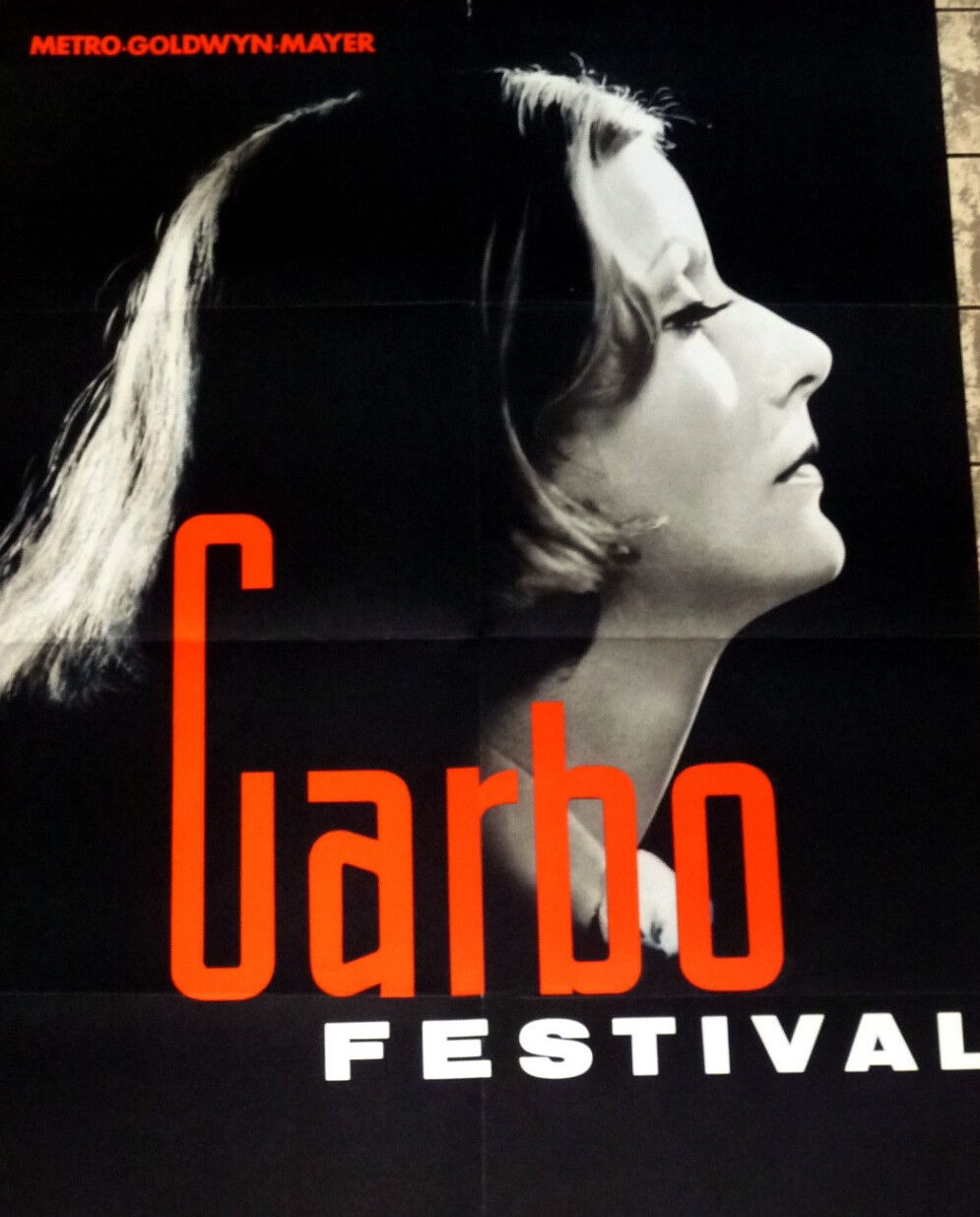
More than two decades after Greta Garbo abandoned acting she was the Queen of London’s West End in one of the most astonishing comebacks in Hollywood history.
Although her Hollywood career was relatively short-lived, lasting only 15 years and ending voluntarily in 1941, and at one point the highest-paid actor (male or female) in Hollywood, the London experience made her a big star all over again in the 1960s – and later in the 1970s – when reissues of her most famous films filled holes in a global release system starved of product.
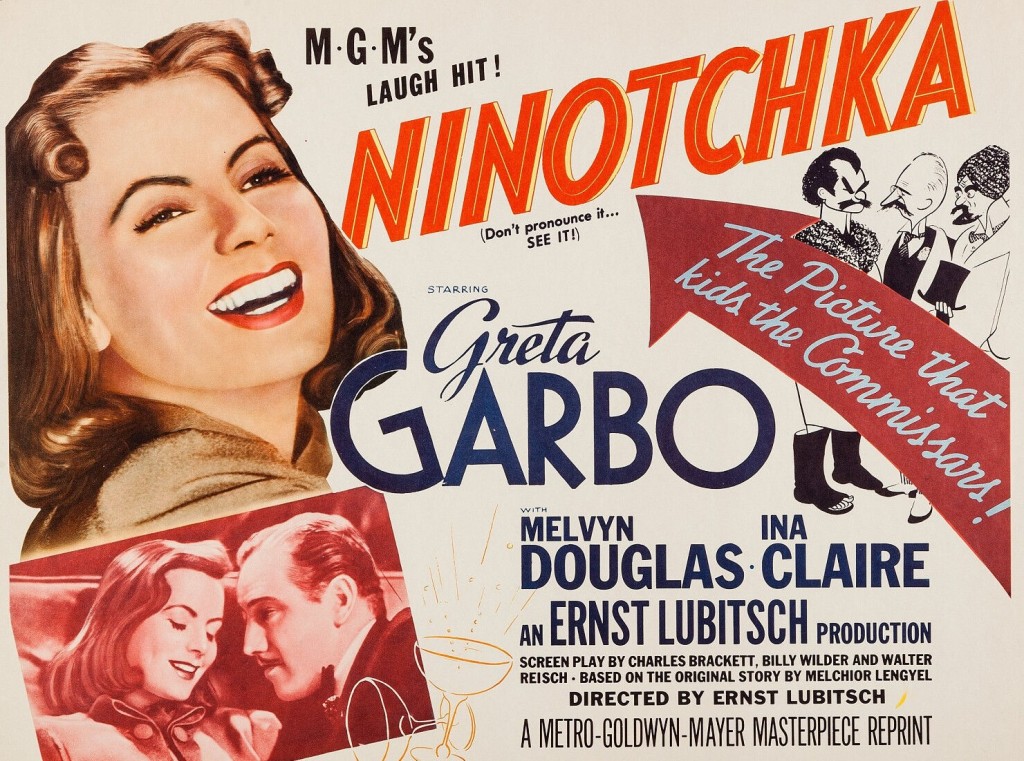
“Masterpiece Reprint” was cleaver ad-speak for getting round exhibitor phobia regarding the words “reissue” or “revival.”And it also suggested a new print since reissues were infamous for re-using long over-used old prints.
She’d first made an impact in the revival business in the U.S. reissue boom of 1948 in a double bill of San Francisco (1936) and Ninotchka (1939), a program so successful that shortly afterwards both were reissued again separately. The box office draw of pictures like these was such that some cinemas, for example, the State in Lubbock, Texas, re-launched themselves as “first run reissue” houses, the beginnings of the boom in repertory theaters.
But it wasn’t all gravy. Distribution didn’t just rely on old prints. Ninotchka, for example, not only had new prints but a new advertising campaign, campaign manual and accessories. However, apart from the first flush of revival, Ninotchka stumbled at the box office, too ambitious a level of release, quickly withdrawn after costing the studio $150,000.
The impetus for the 1960s Garbo Revival came from abroad. In the U.S., Garbo films had by this point been viewed as arthouse fare, running, as in the 1950s, on a repertory basis, rented out for a flat fee, cinemas cramming in as many as a dozen films over one week. While they were available to anyone who wanted them, they came without attendant publicity. Given, they had all been screened on U.S. television they were considered a poor bet for a more commercial revival campaign.
But British television companies, of which there were only two – BBC and ITV – were more niggardly in buying Hollywood pictures so the major studios simply refuse to sell pictures, such as those starring Garbo, at what they saw as, compared to U.S. networks, cut-price rates.
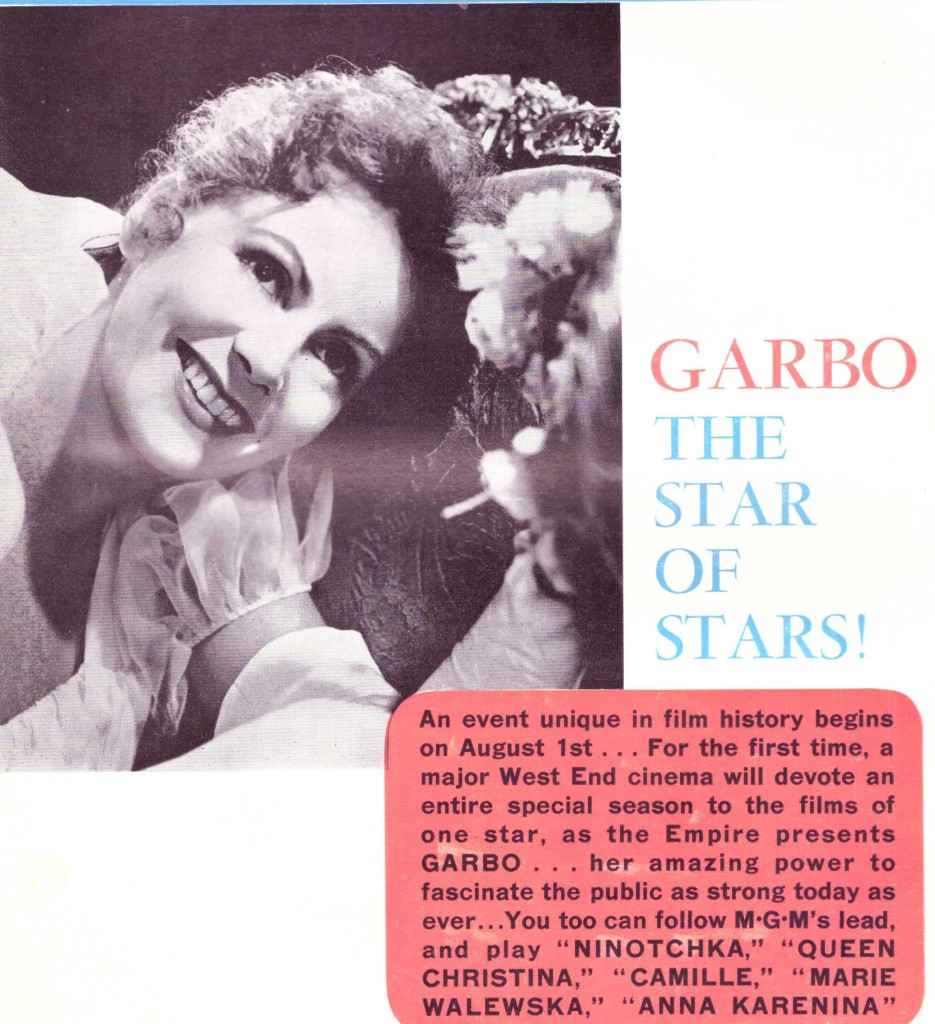
Even so, it was an act of incredible boldness for the Empire cinema in London’s West End, one of the top two theaters (the other being the Odeon Leicester Square) in Britain for movie launches, outside of roadshows, to decide to take a gamble on reviving her movies following audience response to a brief showing at the Royalty. It was the first time a major commercial house in such a heavily-competitive environment had devoted any time to what was in effect a retrospective, setting aside two months for a succession of Garbo pictures.
Two-Faced Woman (1941) – Garbo’s last picture – shored up $14,000 – equivalent to $140,000 now – in its first week. Queen Christina (1937) made a debut of $9,000 and Camille (1936) $11,000. In all, over this opening stint and a further season later on, the Empire screened eleven pictures – the others being Grand Hotel (1932), Anna Christie (1930), Mata Hari (1931), Ninotchka, AnnaKarenina (1935), Marie Walewska (aka Conquest, 1937), As You Desire Me (1932) and The Painted Veil (1934)
And there was more to come. The Empire was the release showcase for the entire ABC circuit, so anything screening there would be rolled out in the country’s biggest chain. Since ABC was decidedly not in the arthouse business, sending the movies out into the general mainstream seemed an even bigger risk. But such fears proved unfounded.
Garbo pictures were distributed throughout the country, and not just on the ABC circuit. In Glasgow, for example, the La Scala (owned by Caledonian Associated Cinemas) first-run house – rather than the city’s denoted arthouse the Cosmo – launched a three-week season comprising Ninochka, Queen Christina and Camille, two of the three going out as single bills.
Meanwhile, in the U.S. Garbo movies were being unfurled via the MGM Perpetual Product Plan, whereby classics (rented on a percentage basis) were screened for one day a week for a period of eight-to-ten weeks with audiences able to book a discounted ticket for the entire season. Abroad, there was more opportunity. Like Britain, countries like France revered the star and the movies were continually revived in Europe during the 1960s at commercial venues.
But by the end of the decade, the book should have been closed on Garbo. Because, in 1969, MGM, with the exception of perennials like Gone with the Wind (1939) and Doctor Zhivago (1965), pulled out of the reissue business. The studio withdrew from release its core library of around 100 vintage pictures because the operation was now losing money. Flat fee rentals of $100 (as opposed to the earlier percentage deals) for a three-day engagement failed to cover the costs of prints, distribution and advertising. The novelty of the one-day-a-week scheme had worn off.
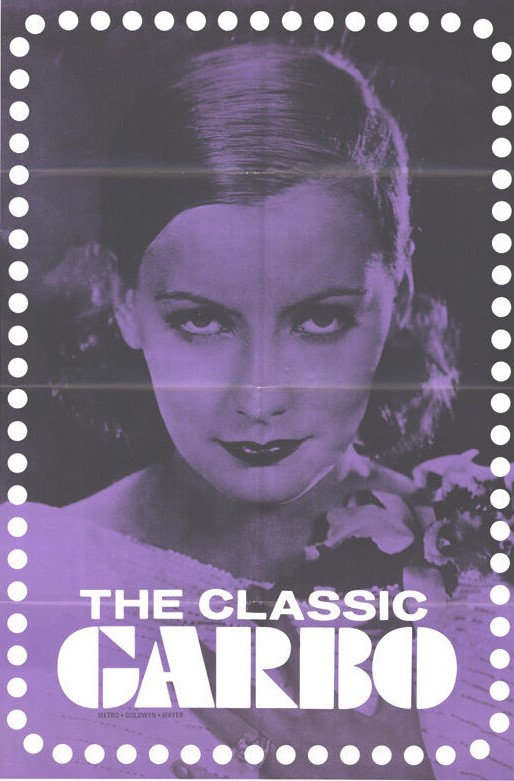
MGM intended to try out the old “creating demand” tactic by keeping its oldies out of circulation for at least four years. But the studio was in severe financial straits at the start of the new decade and not in a position to resist an offer in 1970 from Erwin Lesser of Entertainment Events who proposed taking out a two-year lease on 65 pictures that had “made film buffs out of two generations.” Lesser drew up a package of 26 “Movie Incomparables.” Garbo was the main attraction. Included in the list were As You Desire Me, not seen for 30 years. Lesser returned to rentals based on percentages rather than a flat fee.
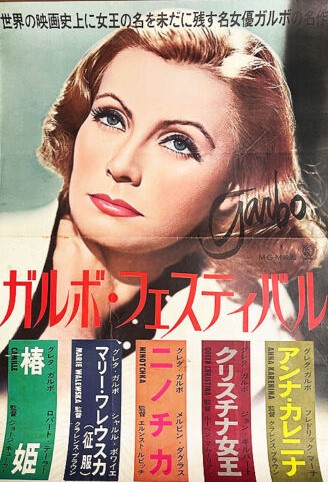
While Lesser made the movies available as single features and double bills and as support to new features, the main thrust of his marketing campaign was the “Garbo Festival,” an idea stolen from television which had taken to rewrapping old pictures as week-long events as a means of enticing viewers.
Although the Museum of Modern Arts in New York agreed to run a Garbo retrospective, that hardly produced the kind of box office juice that was required to kickstart a major revival. So Lesser bided his time, and in the end accepted a nine-day “filler engagement” in March 1971 for the 565-seat Murray Hill arthouse in New York. A “rousing” first week delivered $15,000 – $113,000 in today’s money – while the remaining two days hit a colossal $7,800.
Garbo was back – and in some style. Two months later the Garbo package returned to Murray Hill for a socko one-week $11,000 followed by a move-over to the 533-seat Paramount. And then it was game on.
One of the major elements of the Festival was its flexibility. It became an umbrella term. Exhibitors could decide whether to create a program out of single showings or double bills that could run for consecutive weeks or for an on-off event of single weeks interspersed over a longer period with other features.
In Chicago the double bill of Grand Hotel / Anna Christie romped home at the 505-seat Cinema with $8,500 in the first week and $7,500 – an amazingly low drop-off at the box office considering 40%-50% tumbles in the second week are the norm today – followed by Mata Hari / Ninotchka also on $7,500. In the same city Camille / Anna Karenina racked up $4,800 at the 598-seat Carnegie.
In Philadelphia a four-film package hoisted $19,000 running simultaneously at the 500-seat World and the 855-seat Bryn Mawr. The second week take dropped by just $1,500. Two more packages running each for a week brought in a total of $15,000. In Pittsburgh and Detroit the seasons also ran for three weeks.
But showings were not restricted to arthouses. In Cleveland the package played the 1,500-seat Beachcliff, in Dayton the 1,000-seat Cinema East and in Kansas City the 1,291-seat Midland.
Garbo’s name was kept alive all through the 1970s as revivals, either in one-week festivals, or shorter bookings, continued to bring in revenue across the USA and around the world, proving the continued box office potency of one of the industry’s greatest stars.
We’re still a few years away from the centenary of her Hollywood debut in MGM’s Torrent in 1926 so expect major reassessment then. Whether she breaks out of the arthouse confines and fuels new demand in the multiplexes might not be such a long shot. Release patterns for revivals have markedly changed, many now being promoted as “one-day-only” events (miss out at your own peril) rather than running over a week or longer. A major publicity campaign and the assistance of social media could change public perception of a star whose films embraced both the silent era and Hollywood’s Golden Age and who was never short of publicity.
In my opinion it’s always worth watching a Garbo film for one technical reason – the difference between male and female close-ups. Watch a Garbo picture and a close-up could last for minutes, the end of Queen Christina for example, as her eyes move through a variety of emotions. Male close-ups by comparison are over in a flash. With few exceptions the soul of a male actor is rarely revealed in close-up and even rarer is for expression to so dramatically change.
SOURCES: Brian Hannan, Coming Back to a Theater Near You, A History of Hollywood Reissues 1914-2014 (McFarland, 2016) pp 33, 55, 56, 58, 75, 128, 130, 133, 212, 223-225, 232 “Test Garbo Retrospective at Royalty in London,” Variety, June 23, 1963, p11; “Garbo Pic Sets London Record,” Variety, August 15, 1963, p2; “Click of Metro’s Garbo Pix in London’s Empire Cues More Runs,” Variety, August 21, 1963, p19; “British Provinces May Get Metro Garbo Films,” Variety, August 28, 1963, p23; “Metro Classic (Garbo, Marx Bros, Tuners) Withdrawn from Market,” Variety, August 27, 1969, p3; “MGM Leases 65 Pictures for Re-Releasing,” Variety, August 10, 1970, p3; “Picture Grosses,” Variety 1971 – March 31, April 7, May 11, May 25, June 9, June 23, June 30, August 18, November 22, December 8.
Next month in my home-town of Glasgow, they are holding a centenary screening of Safety Last! (1923), the movie in which Harold Lloyd made his name. No doubt the centenary revival machine will swing into action for Buster Keaton the following year for The Navigator (1924). But nobody thought a couple of years back to revive The Kid (1921), the first great film by Charlie Chaplin.
It was always so ever since academics got their teeth into the silent era and decided which stars should be venerated and who should be left by the wayside. Luckily, for the public, academics weren’t in charge in the 1960s. For in that decade – as in the previous half century – Charlie Chaplin had reigned supreme in the silent move reissue business. This was in part because long after the industry had switched to talkies, Chaplin stuck to making his movies silent.
The Charlie Chaplin reissue phenomenon dated back to 1915 and was synonymous with his rise to instant fame. Cinemas that could not afford his new films promptly re-hired his old ones. Old or new the public didn’t seem to care. They flocked to the cinema just the same. When there was a production slump in the aftermath of World War One, Chaplin oldies were to the fore, as they were once again in 1921. In 1926 Pathe paid $500,000 for the rights to four pre-United Artists Chaplin oldies – as much as studios were paying to make a new film.
Part of Chaplin’s deal with United Artists, the studio he helped to form, was that he owned the copyright to his movies so he could control when they were revived and prevent another studio from bringing them back to capitalize on his newer movies. That didn’t always work out because he didn’t own the rights to most of his shorts, allowing a dozen to be reissued, with sound and music, in the 1930s.
With the advent of television, where other older stars, believing their careers were in abeyance if not at a full stop, succumbed to the financial lure of the small screen, Chaplin point blank refused. Oddly enough, it was the centenary angle that played into his hands in the 1950s. He was 70 in 1959, although that decade had not proved as welcoming to his new pictures, Limelight (1951) excepted, and he was so out of favor with the establishment that his name was not among the 1500 initially considered for the Hollywood “Walk of Fame.”
By this time he was viewed as an arthouse darling. His oldies were so successful in 1959 that Modern Times (1925) after its re-launch in New York transferred successively to larger arthouses, each time setting a weekly record with finally, in an unprecedented switch, it ended up on a Broadway first run house.
The 1960s saw a general revival of interest in comedians spurred by the Robert Youngson compilations, a jukebox of silent movie snippets.
But in 1963, Chaplin struck again, this with an original reissue format that proved catnip to arthouses, and eventually, mainstream. Key to this was the idea of a “season” of his films. This was a sea change. Arthouses regularly brought back old movies, but only for a day or two at a time, and screened in this fashion a “season” of a star or director’s old hits could run for two or three months.
Chaplin decided his movies should run individually for as long as there was public demand for each movie. In other words, they would play like a new movie in a major first run house, which could hold onto pictures for as long as the owner wanted, retained “by public demand,” until they were played out. The “season” would last as long as the public deemed fit.
The experiment was launched at the mainstream Plaza in New York with City Lights (1931). The record opening of $35,600 beat highs set by Never on Sunday (1960). All the rest opened at the high end of expectations, figures met in Variety’s weekly box office roundup with headlines of “socko” or terms of disbelief. By letting the “retained by public demand” notion run to its limit, the entire season ran for 41 weeks – longer than most roadshows – and collected receipts of $658,000, as much as a long-running roadshow without any of the financial investment. It was boom-time for arthouses.
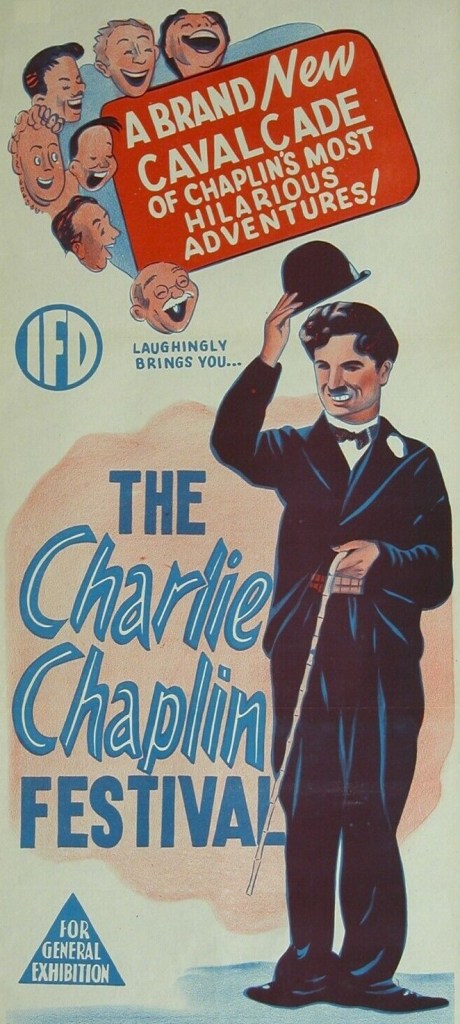
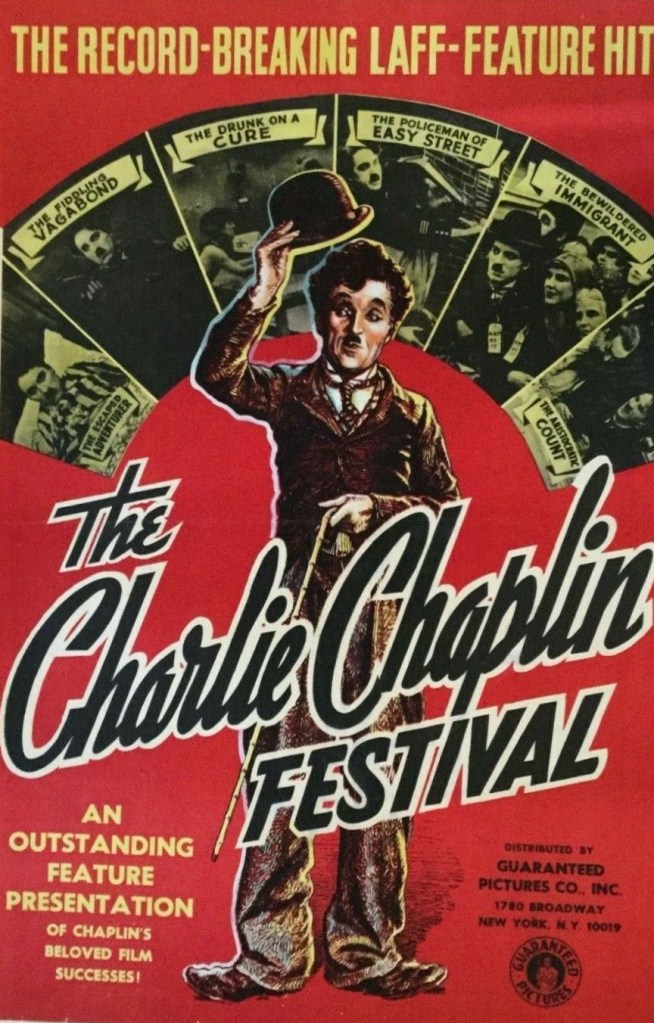
Amazingly enough, the story was repeated in the 1970s after former Columbia sales chief Mo Rothman paid $6 million (plus a percentage of the gross) for world rights to Chaplin oldies for 15 years. US rights were hived off to independent producer Oliver Unger who set about marketing The Chaplin Festival. Unger was something of a marketing whiz. He tied up a deal with the Arts Guild circuit in 15 cities – in arthouse terms this was as close to wide release as you could get. He organized a six-page feature in Vogue and a nationwide tie-in with Franklin Simon stores.
The re-launch was helped by news Chaplin would visit New York for the first time in two decades, receive a special Oscar in 1972 and finally be inducted into the Hollywood Walk of Fame. Unger lined up radio play of songs from the films and an album by Dave Brubeck consisting of theme music. As another publicity gimmick, he dreamed up a special rating – “E” for Everybody. He came up with the idea of discount tickets – in Chicago alone 34,000 moviegoers opted for the cheaper season ticket.
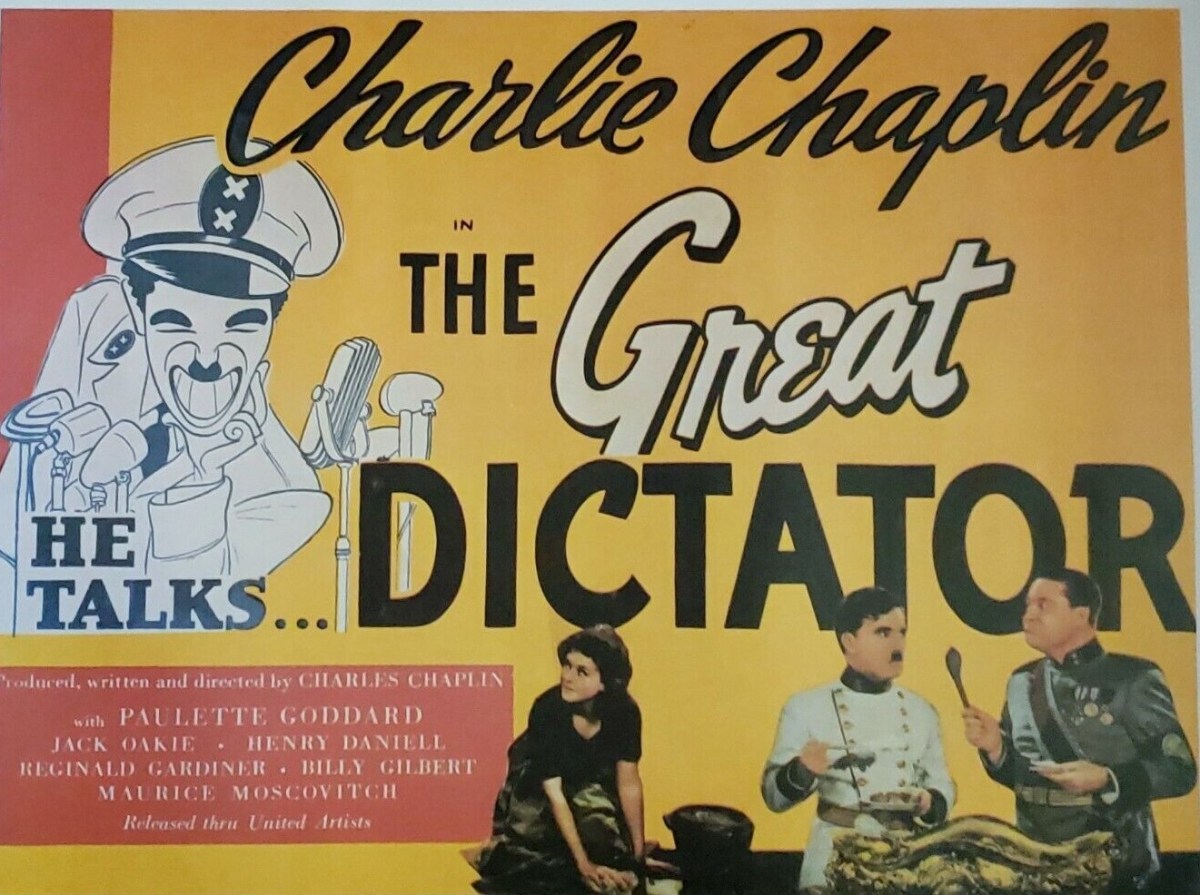
The consequence of Unger’s endeavors was that before the first movie was even screened he had tied up bookings with 36 cinemas for the Chaplin Festival. Modern Times (1936) was selected to spearhead the Festival, opening on December 18, 1971, at the 580-seat Lincoln Art Theater in New York to a record opening week of $26,000, an achievement repeated across the country. Modern Times ran for 14 weeks in New York and Boston. The series was so successful that the last film in the season, The Great Dictator (1940), didn’t hit New York till June 1972 and scored an opener of $26,800 and ran for another 10 weeks.
The arthouse runs were so successful that Unger managed to sell the concept to Columbia for $2 million. That shifted emphasis from arthouse to first run and showcase (multiple-run in a city or region). Modern Times beat Gone with the Wind to the title of the oldest film given showcase release in New York. Modern Times ran two weeks in showcase. The Great Dictator did so well in showcase it was the first silent film to appear in the weekly box office Top Ten. Limelight also went down the showcase route. The movies were also shown on airlines.
Later in the 1970s Paramount acquired many of Chaplin’s earlier shorts and sent them into the 16mm university campus market. Towards the end of the decade, with Chaplin to the fore, Kino international created a Silent Clowns Festival to coincide with the Water Kerr book of the same name. It ran for five weeks at the Eighth St Playhouse in New York.
Without doubt Chaplin was the all-time reissue champ. For over six decades, the public turned out in droves to see his movies and his revival box office was more than all the other silent stars in reissue combined.
SOURCE: Brian Hannan, Coming Back to a Theater Near You: A History of Hollywood Reissues, 1914-2014 (McFarland, 2016), p10, 20, 22, 23, 25-29, 32, 35, 37, 39, 40, 70, 75, 193, 212, 222, 232, 255, 256, 281, 285. In the book – which runs to 250,000 words – there are pages and pages of references to Chapln reissues so forgive me if I don’t quote them all here.
You are probably aware by now that Hollywood reckons the very movie to fill the Valentine’s Day gap this year is the love story that took Leonardo DiCaprio and Kate Winslet to a watery grave – Titanic (1997). The date might be a surprise but with Avatar: The Way of Water conquering box offices worldwide a re-run of his previous gigantic success was always on the cards.
What might come as a shock is how much Hollywood has come to rely on oldies to fill gaps in the release schedule – so much so that a reissue of a biggie has been slated for every month in the forthcoming year. As you are probably aware from my discursive writings on the subject, the reissue has been a staple of the industry since the 1960s, and as often as not appearing when stocks of new films were at a low ebb.
Covid was an unexpected production disaster and with new films in short supply and audiences falling short of the norm the studios felt it better to hold on to big films until cinemas were back to something approaching normality. Thank goodness someone in Hollywood can count because anniversaries make up a hefty chunk of the excuses to trot out old pictures. Anniversary used to mean a celebration of a classic made 25 or 50 years ago, but that notion has been taken to extremes, so any year seems fair game, 20th, 45th now pretty common.
But anniversary was not in the main the driving force last year. Some pretty big fish were summoned from the vaults to work their magic. The original Avatar (2009) brought in another $76 million worldwide – positioning it just outside the global top 50 for 2022. Interstellar (2014) knocked up another $72 million, Harry Potter and the Chamber of Secrets (2002) $45 million, Leonardo DiCaprio in Scorsese’s The Wolf of Wall Street (2013) worth an extra $14.8 million and the original Jurassic Park (1993) added $10 million to the coffers.
What must have seemed like nothing short of frantic experiment clearly struck a chord with audiences, so studios are taking to the reissue on a regular basis.
For a time it was Casablanca (1942) that had been the unexpected filler of the St Valentine’s Day gap. But it could hardly compete with Titanic, but rather than lose the opportunity for another annual outing, this has been re-scheduled for the beginning of March.
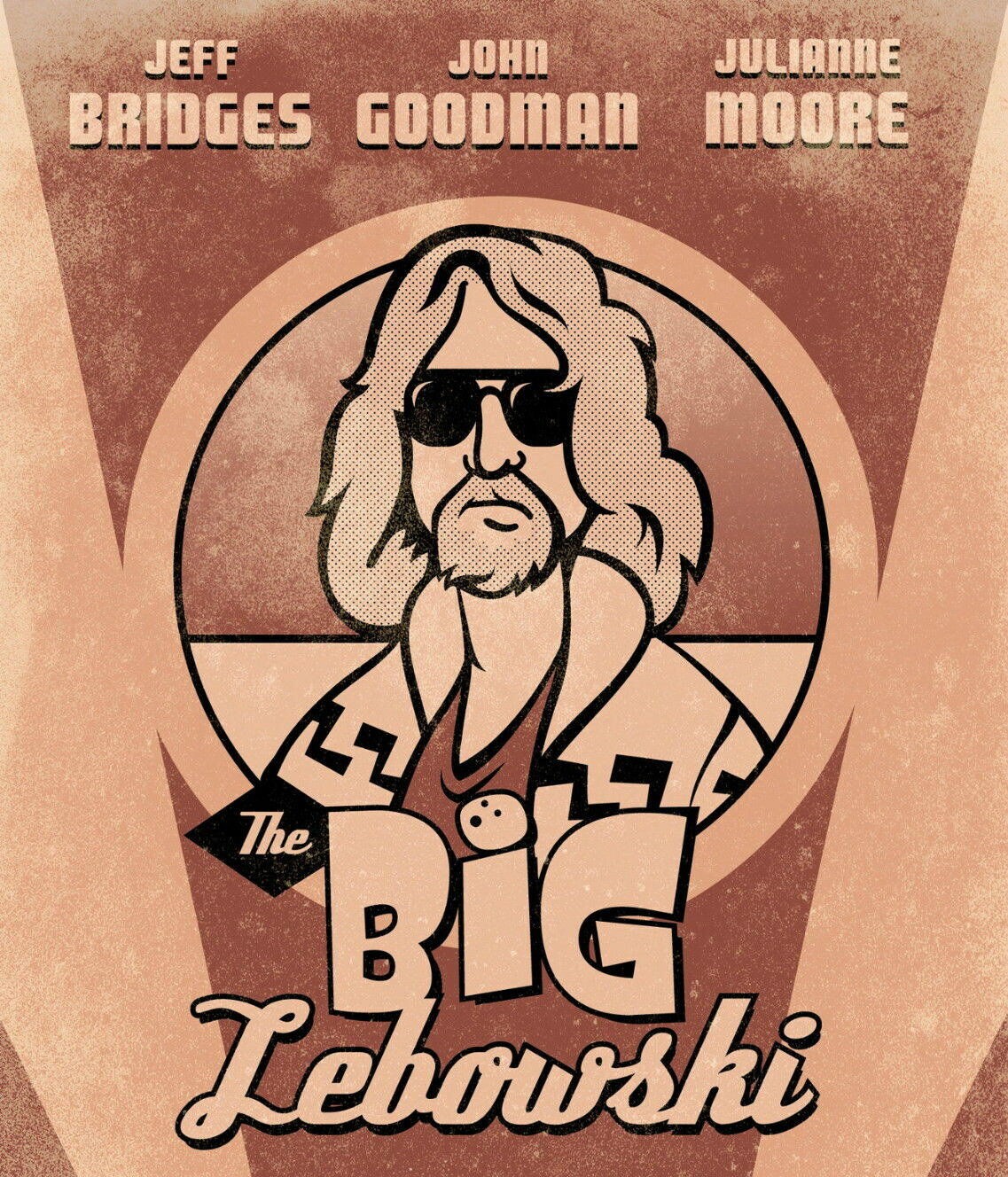
In April there will be a further chance – in a genuine 25th anniversary big bang- to see Jeff Bridges and John Goodman in the Coen Bros cult favorite The Big Lebowski (1998). Musical Grease (1978) – 45th anniversary? – with John Travolta and Olivia Newton-John is the May pick. Hardly an unusual notion this, Grease has already had more than its fair share of reissues.
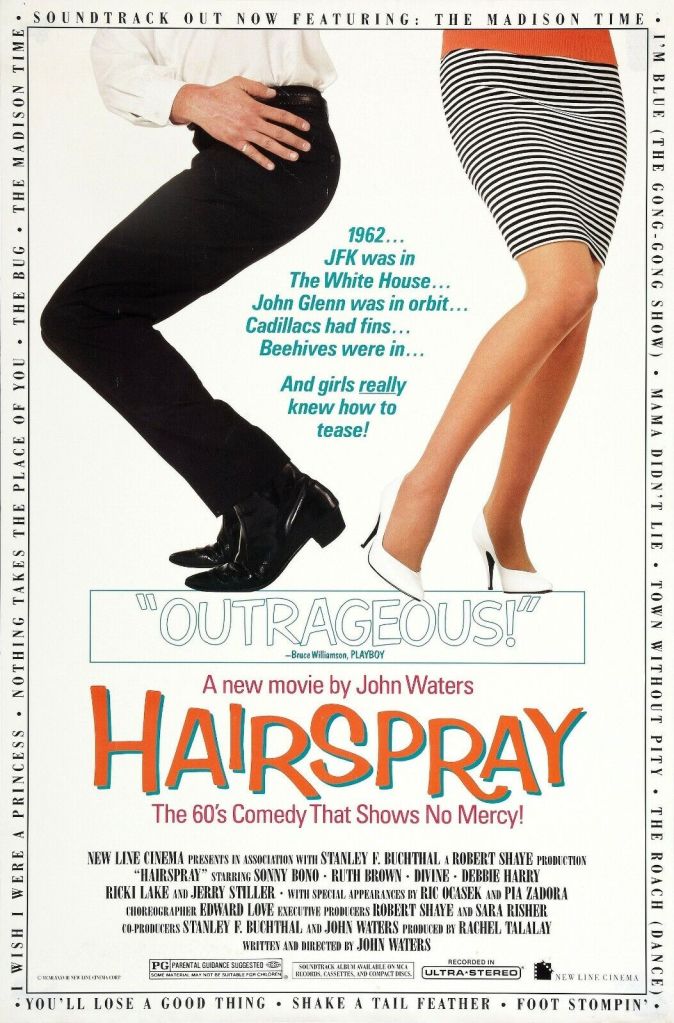
You might think it’s Travolta again in June, in Hairspray (2007), but actually it’s the John Waters original, made in 1988 – 35th anniversary!! – that became the basis of the Broadway musical. It boasts an all-time cracker of a cast – Sonny Bono (of Sonny & Cher fame), Divine (Pink Flamingos, 1972), pop star Debbie Harry (Videodrome, 1983) of Blondie, future talk show host Ricki Lake in her movie debut, and comic Jerry Stiller (father of Ben).
For the holidays what could be better than a 40th anniversary outing for National Lampoon’s Vacation (1983). Chevy Chase and Beverly D’Angelo fire up their engines for July and look out for Eugene Levy, John Candy, Jane Krakowski and Christie Brinkley in small parts.
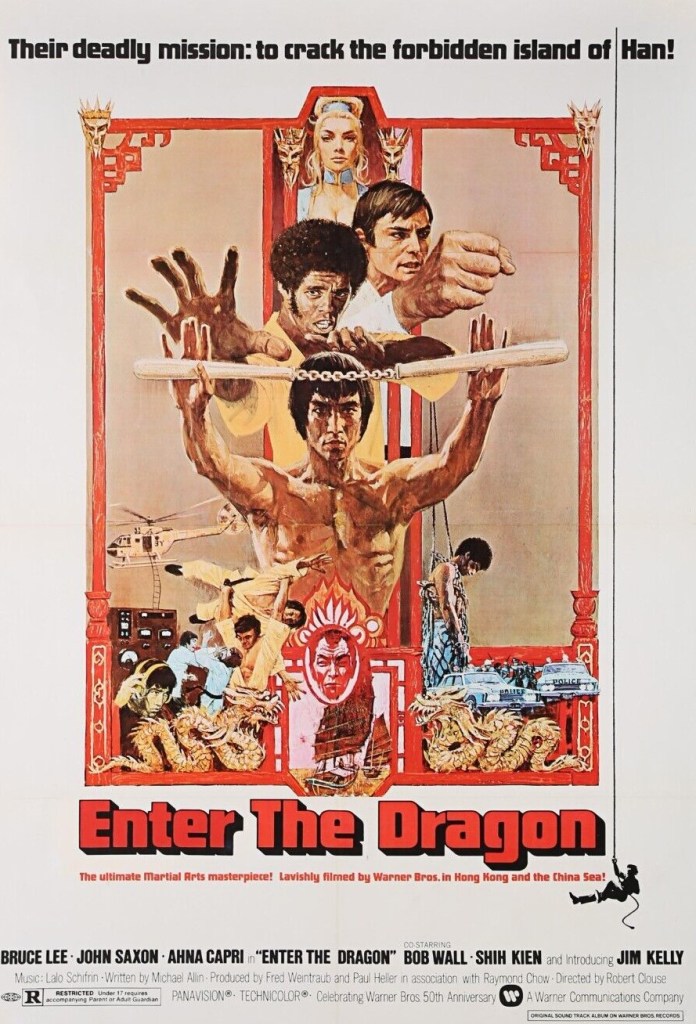
It’s a straight-out 50th anniversary slam-dunk for Enter the Dragon (1973), the kung fu actioner that cemented Bruce Lee’s reputation and sent the world into a brief glorious paroxysm of kung fu exploitation vehicles that even impinged on James Bond. Catch it in August.
You’d never guess it’s 35 years since Rain Man (1988), but don’t worry that will surely form the main plank of the marketing for its revival in September. Tom Cruise is of course still a big noise, less so Dustin Hoffman and director Barry Levinson, but they both won the Oscar, and fans of Hans Zimmer (Oscar nominated) will be more than happy to celebrate the score that brought him worldwide attention.
There’s been more than enough publicity attached to the filming of The Birds (1963), what with Tippi Hedren’s accusations of her treatment, but this 60th anniversary re-release might provide opportunity to reassess what I consider to be Alfred Hitchcock’s greatest achievement. That’s out in October.
Al Pacino’s turn as Cuban gangster Tony Montana in Brian DePalma’s Scarface (1983) – 40th anniversary – was not a huge hit at the time, audiences too easily put off by the violence and the over-the-top performance, but it’s now become a cult classic so expect big numbers to turn out in November.
Rounding out the year, unless someone can come up with something bigger/better before then, is A Christmas Story (1983) – 40th anniversary. You’ve probably forgotten all about this unless you can remember this is where the iconic “tongue frozen to flagpole” idea originated. Directed by Bob Clark, perhaps in reparation for Porky’s (1981), it sees Melinda Dillon (Close Encounters of the Third Kind, 1977) as the mother appalled her son wants a BB gun for Xmas. Wonder how that idea will play out these days!
I am already trawling through any film made in a year ending in 4 or 9 to see what Hollywood can base an anniversary re-showing on for 2024.
In the 1960s you could watch old films in the cinema in virtually every country in the world every day of the week. Except in the United States, television had not impacted so much on the availability for booking films made within the last decade, so there was generally plenty of scope to operate a picture house that specialized in old movies. They were called “repertory” theaters. Of course studios dipped in and out of the repertory business themselves, yanking out of the vaults old blockbusters, but on an irregular basis, that particular supply rapidly diminishing as old movies were sold off for small screen presentation.
Pre-television, in the United States in the 1940s a small industry had grown up, both in distribution and exhibition, either buying up the rights to old movies and recycling them as instituted by the Producers’ Releasing Corporation and Realart and PRC or establishing mini-chains of cinemas like the Academy of Proven Hits. But when television made such big inroads into old stock in the U.S. you were more likely to find old pictures turning up in arthouses, and even then that was limited to known attractions like Garbo and Bogart and occasional retrospectives of Bette Davis and Joan Crawford. Or arthouses would slip in a series of oldies one day a week.
In the 1960s “no cinema in the United States except the Thalia in New York and the Cinema Guild in Berkeley has ever made a serious attempt at presenting cinema repertory.” Occasionally, a U.S. distributor acquired a bundle of old pictures as the basis of an ongoing program distributed through arthouses, such as the 27-film series from Janus or Tom Brandon’s batch of 75. Paris, on the other hand, was a paradise for lovers of old movies.
The 1960s saw the beginning of the film studies phenomenon, so cinemas showing old movies found new custom. Prior to that, the most common way to view classics was via a film society, another booming sector. While boasting four million members worldwide, access was limited to one movie – in 16mm not 35mm – a week for one screening only and a program that ran for about half a year.
Surprisingly, Britain was at the forefront of the repertory industry. When I was growing up in Glasgow in the 1960s I was astonished to discover a commercial chain – the Classic – operating three cinemas in the city center. Two of the operations, the Classic Grand and the Tatler Classic, while retaining the company name gradually shifted into the sexploitation business, the latter as a private members’ club. But the flagship Classic, just down the road from the Odeon, one of the city’s most prestigious houses, ran a weekly program of old films.
Realart reissue from the 1940s.
At the start of the decade, Classic operated ten cinemas in London and another 80-plus throughout the United Kingdom. Programmes changed midweek if showing just one film while a double bill would run a full week. Several cinemas ran late night screenings, usually on a Saturday, but these could also be found on a Wednesday or Thursday.
Sometimes the movies shown were foreign, other times there might be a short season of Marx Bros comedies or Hitchcock thrillers, but mostly they were British or American pictures whose quality or reputation suggested they deserved repeat viewing on the big screen. One print would be enough to feed the entire system, shunted from screen to screen.
Quite a few of the films would be hired on a flat fee basis, no sharing the box office with a distributor or studio. Older audiences, fed up with the sex and violence prevalent in current movies, took refuge in safer, older films. Younger audiences, wanting to catch up with great films, found the screenings an unexpected bounty, especially to see them projected in their original dimensions.
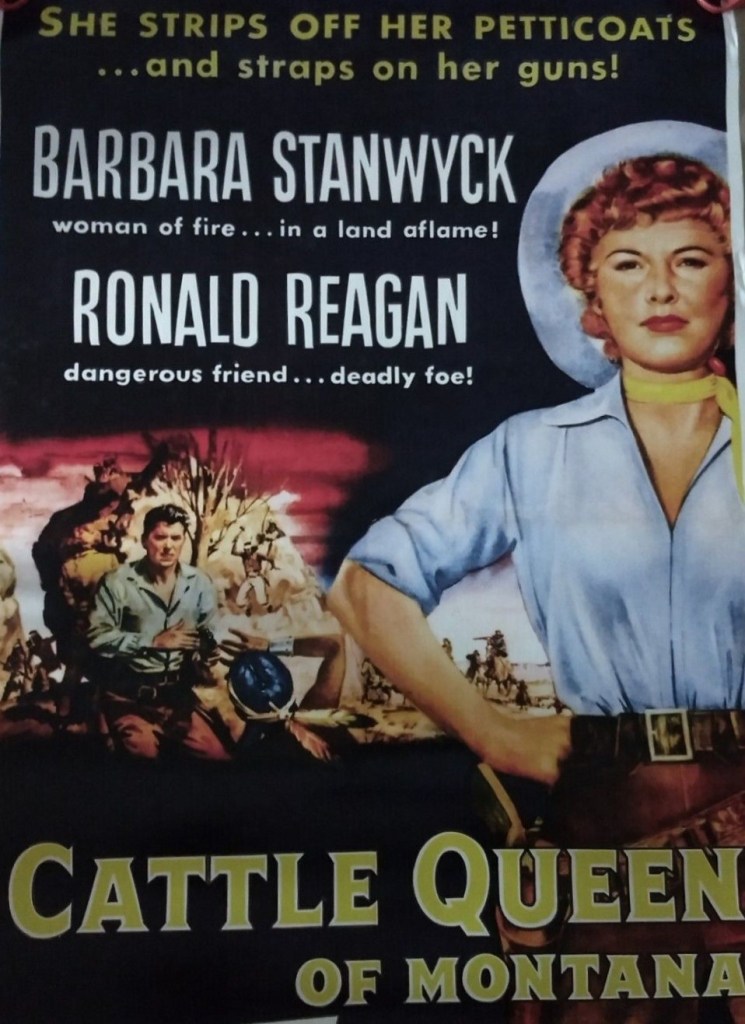
Just how old the offerings were varied. In 1968 over the period March 10-April 6 the youngest film presented on the Classic chain was Bonnie and Clyde (1967), the oldest Animal Crackers (1930), The Lady Vanishes (1938), Carol Reed’s The Stars Look Down (1940) and The Song of Bernadette (1943). In between you could choose between The Third Man (1949), Barbara Stanwyck as The Cattle Queen of Montana (1951), Viva Zapata (1952), The Brides of Dracula (1960), Billy Liar (1963), The Birds (1963), The Pawnbroker (1964) and Peter Sellers comedy After the Fox (1966).
On the foreign front, you could sample Vilgot Sjoman’s My Sister, My Love (1966), Godard’s A Woman Is A Woman (1961), offbeat French film Do You Like Women (1964) about cannibals owning a vegetarian restaurant, and Elke Sommer and Virna Lisi in Four Kinds of Women/The Dolls (1965). It was relatively easy to structure programs to cash in on a current picture by, for example, Peter Sellers or Marlon Brando or directors such as Alfred Hitchcock or Carol Reed.
By the 1970s repertory cinema was booming in America, 400 theaters in operation, major cities accommodating several, while in Britain the Classic chain was acquired by the Tigon production company.
SOURCES: Brian Hannan, Coming Back to a Theater Near You (McFarland, 2016) p48-49, 54, 63, 72-73, 77, 80-81, 72; Gideon Bachmann, “A New Generation of Critical Fans,” Variety, June 1, 1960, p5; Advertisement, Films and Filming, October 1961, p2;“One Night Revivals Add to Arthouse Profits,” Box Office, June 29, 1964, pA3; Gideon Bachmann, “International Film Societies Number 2,500,” Variety, April 20, 1967, p13; “Films in Repertory Set for Reade-Sterling House,” Box Office, February 8, 1965, pE5; “Brandon Lines Up Chain of 30 Arties for Medleys of Oldies and Offbeat Pix,” Variety, Septmeber 6, 1967, p5; “Repertory,” Films and Filming, April 1968, p23;“Squeeze More Coin on Last Run of Classic Films,” Variety, April 24, 1968, p7; “Classic Try Switch To Cinema Club,” Kine Weekly, February 8, 1969, p6; “Tigon Aims Complete Classic Deal by End July,” Kine Weekly, June 12, 1971, p3; Marianne Cotter, “Survival of Revival House,” Box Office, March 1, 1993, p24.
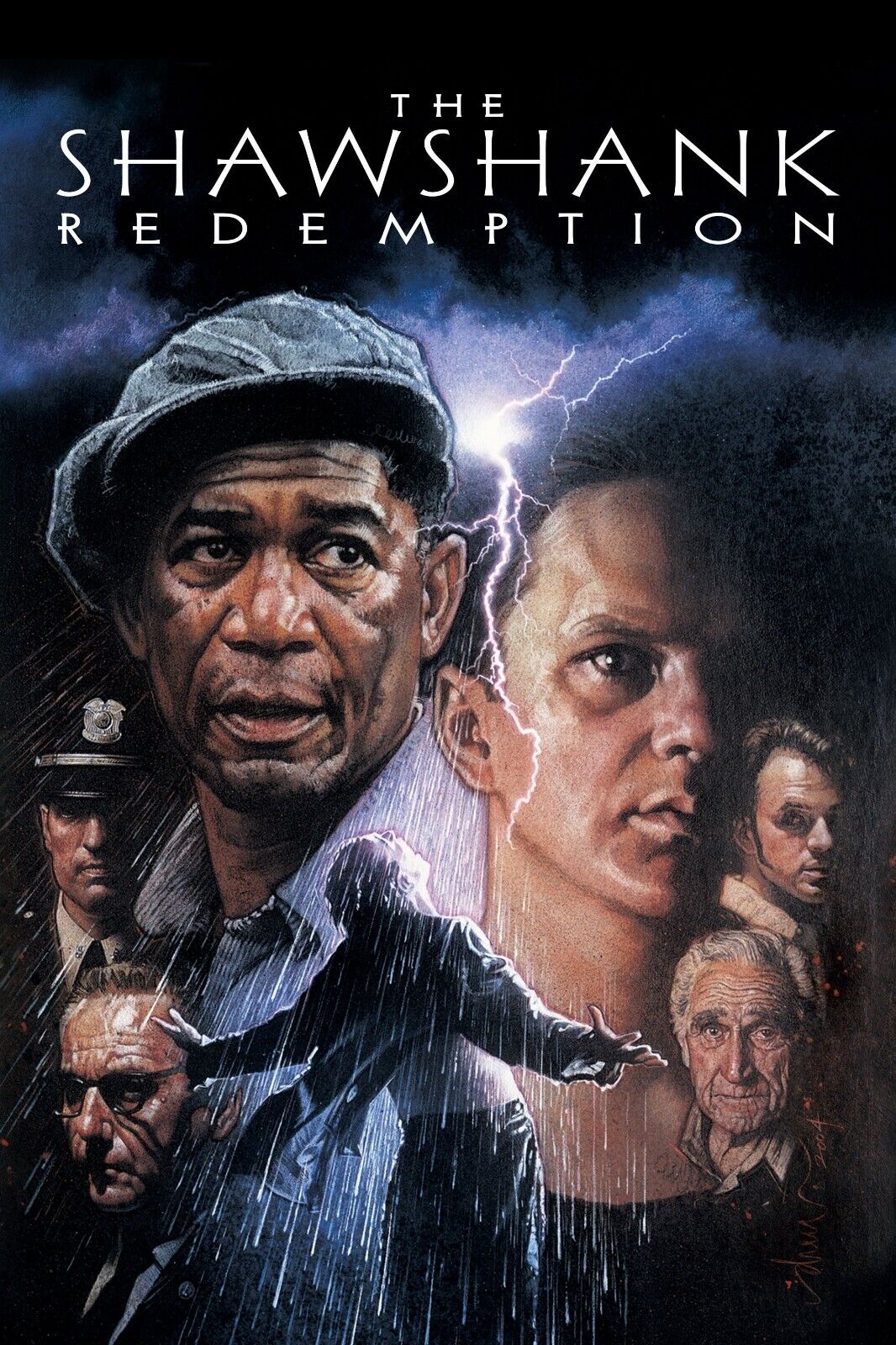
I assuming you know that the famed Stephen King novella on which the Tim Robbins/Morgan Freeman picture was based was originally entitled Rita Hayworth and the Shawshank Redemption, the poster of that movie goddess used in that version by the wannabe escapee to cover the hole he was making in his prison cell wall.
I’m making a connection to Cate Blanchett because The Shawshank Redemption (1994) was a critical success, seven Oscar nominations including Best Picture, but so conspicuously failed at the box office that it was scarcely shown abroad and only won an audience, and made more than its money back, on DVD and latterly became the poster boy for flops that somehow make a financial comeback.
Tar had all the critical support – with the exception of me, of course – that a movie could wish for and will at least pick up an Oscar nomination for Blanchett. But now that DVD is dead in the water, there’s virtually no chance of it making enough thereafter to cover the losses which are currently in the region of $30 million.
Movies used to have what was known as a “long tail,” meaning that initial box office was only one part of the equation. And a small part at that if the movie was a blockbuster. Reissue and sales to DVD, video rental, television, syndication, and early streaming services on a global scale sometimes amounted to as much as 90% of its overall earnings, especially bearing in mind that VHS/DVD in particular had various levels of revenue.
A big title might first be sold to video rental companies forking out $59.99 for the privilege and the bigger the title the more copies were purchased, so a blockbuster might easily have reaped $20-$30 million on that go-round. Then when it was released to the public, a big film would cost big money – $29.99 to $39.99 – and once that tier had done its job, the movie would be progressively sold in lower price brackets then repackaged again to supermarkets and bargain bins. More recently, the Director’s Cut, remastering and monetising anniversaries have added to that food chain.
Television went through several tiers as well. Studios never actually sold any movie to the small screen. They leased them. Usually for a period of time, say three years, and a limited number of screenings, often just two. And once that deal was done, they leased them again, and again and again. Until streaming killed off the majority of this market, movies made in the 1960s could have been leased a dozen times to television networks and even more in syndication. Cable would pay good money for a slice of that action.
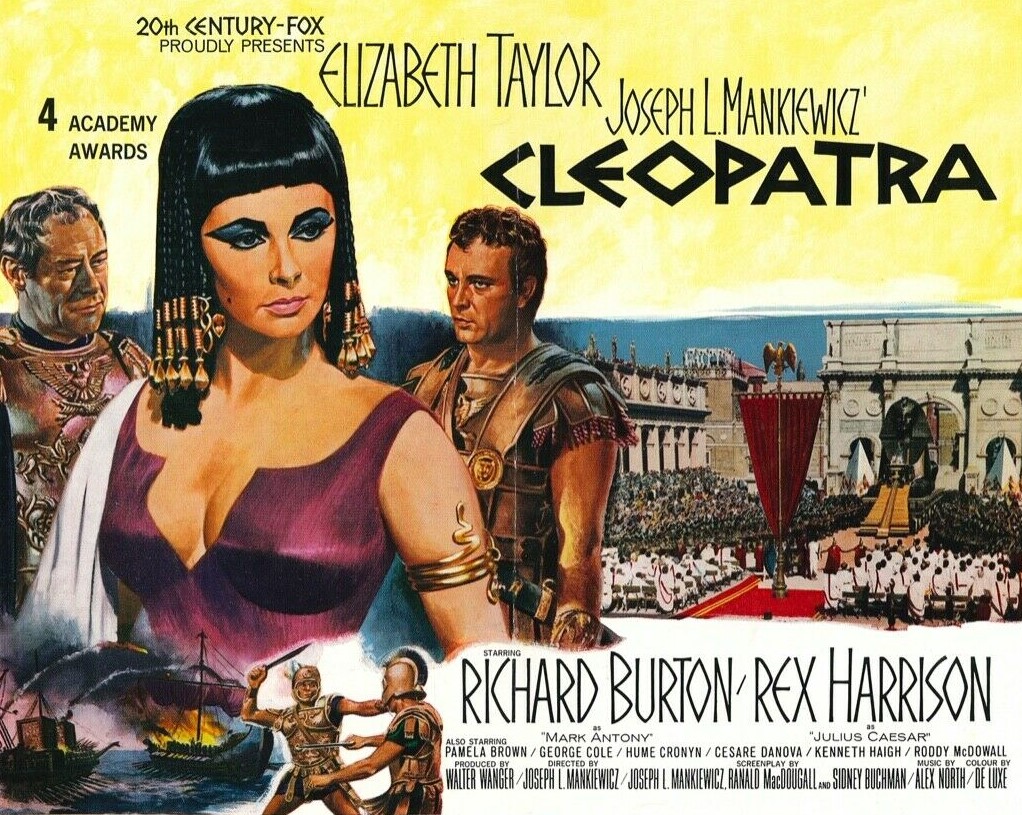
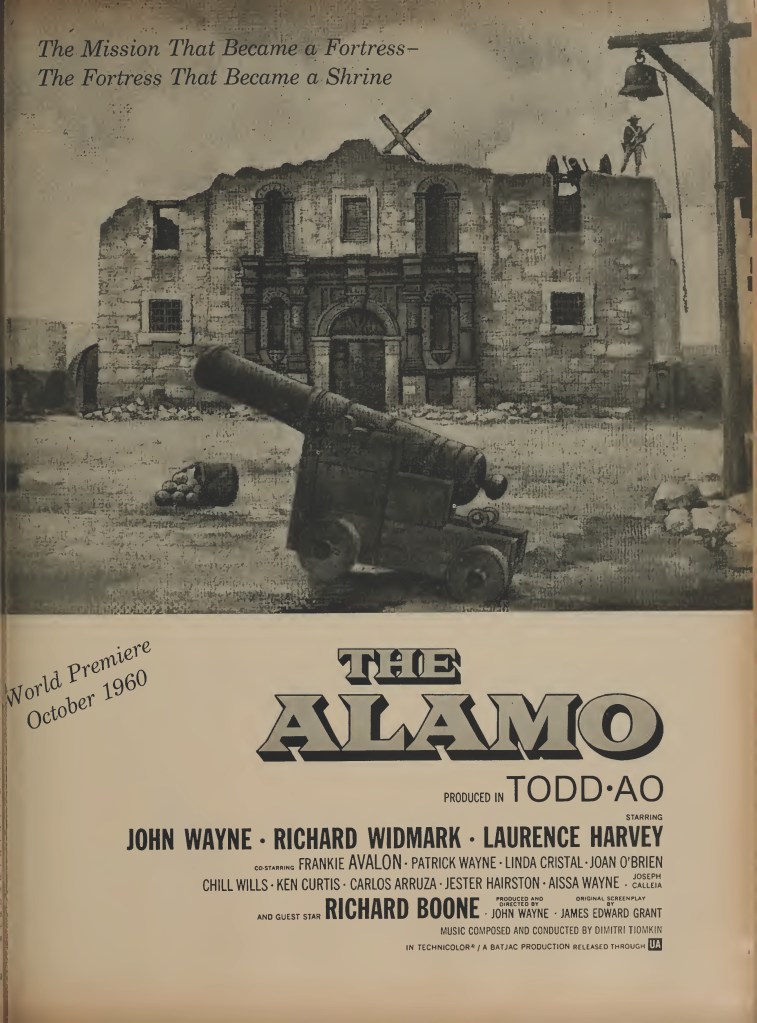
Television famously put The Alamo (1960) and Cleopatra (1963) into the black and then the combination of TV, VHS/DVD, cable etc, made them substantial profits. And studios could always wrap them up as a library and sell them off to movie-hungry stations like TCM. Imax and 3D provided reissue opportunities at the start of this century, but these days a return to a movie theater would be a seriously limited proposition and open only to major successes like The Godfather (1972).
But, in terms of redemption-sized income, virtually all those avenues have disappeared. And critics don’t have the power to turn on the money taps. I’m sure Chantal Akerman’s Jeanne Dielman…(1975) which came out of nowhere, though probably the result of a social media coup, to top the once-in-a-decade Sight & Sound Critics Poll, will bring in extra bucks, no matter that it will scarcely register on streaming and DVD sales will be limited to the arthouse fraternity.
Alfred Hitchcock is often touted as the Comeback King when Vertigo (1958) climbed to the top of the Sight & Sound Poll after initially being largely discounted in that particular race. But in the first place, Hitchcock had already been a box office giant. A very small number of his pictures lost money on initial cinema release and his “critical redemption” if you like was anything but. He achieved Sight & Sound dominance because five of his greatest pictures had been kept from public view for over two decades. When they appeared, in one of the great reissue stories, the public flocked to see them on the big screen, and on subsequent DVD release so it was from there that a new wave of critics found the films contained far more art than previously ascertained.
So, back to Tar – and other box office duds like Corsage ($2.7 million worldwide) and Empire of Light ($3.2 million). Where does it go from here?
One option is tax write-off. The companies that invested in it in the first place might have done so to avoid handing over profits to the taxman. Conversely, they can use losses to offset a future tax demand.
But that’s hardly going to stimulate the movie-making market.
Studios used to test-market films but now production companies like these shovel their pictures into an endless maw of film festivals where their movies receive the kind of reception that fills them with glee but turns out to be the opposite of what the public – even the arthouse public – actually wants.
The 60th Anniversary celebration of the James Bond phenomenon in British cinemas that has been running for a few months now sent me back to examine the extent of the James Bond Reissue Double Bill.
As I mentioned a few weeks back, the Dr No (1962)/From Russia with Love (1963) revival in 1965 kicked off the biggest-ever demand for a screen character, one of whom the public never seemed to grow tired, certainly for the next decade until the first of the series were sold to television. Prior to United Artists’ approach with the Bonds, unless a picture had Oscar-driven box office power it would not even be considered for revival for around seven years, considered a generation in audience terms.
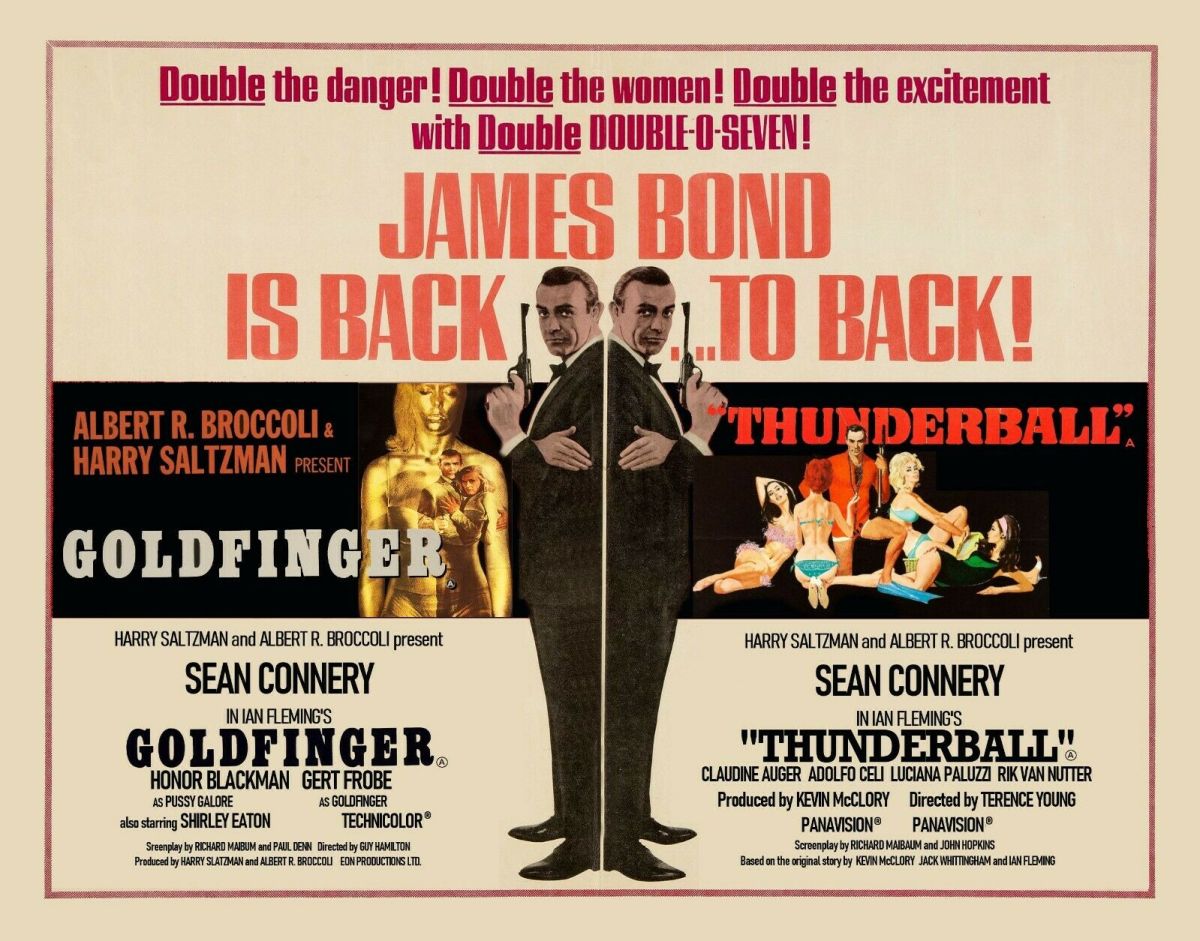
In Britain, the movies were guaranteed circuit releases on the Odeon chain. However, contrary to the approach in the United States, the movies were not thrown back into circulation right away and it wasn’t until three years later that the next double bill – Goldfinger (1964)/Thunderball (1965) – put in an appearance. But thereafter, there was no stopping the Bond bandwagon. In 1969 You Only Live Twice (1967) went out with either From Russia with Love or Dr No (cinemas could choose their preferred pairing).
In 1970, United Artists took a break from the Sean Connery reissue business by concentrating on the studio’s other big male star Clint Eastwood, doubling up For A Few Dollars More (1965) with A Fistful of Dollars (1964). But by 1971 it experimented with playing Connery and Eastwood together, first pairing You Only Live Twice/A Fistful of Dollars and later the same year Goldfinger/For a Few Dollars More. But in 1972 the studio reverted to type with Thunderball/Dr No and the following year Diamonds Are Forever (1971)/From Russia with Love.
In 1974 it was You Only Live Twice/Thunderball and few months later Dr No/Goldfinger. Come 1975 it was time for two of the later offerings to enter the revival business – Live and Let Die (1973) and On Her Majesty’s Secret Service (1969) followed at the end of the year by The Man with the Golden Gun (1974) and Live and Let Die. The next year brought a programme change – Diamonds Are Forever teamed up with new Bond Roger Moore in the non-Bond adventure Gold (1974).
In 1977, for the first time in nearly a decade the Bond reissue was absent from British cinemas although the following year saw a re-teaming of Live and let Die and The Man with the Golden Gun. But that pretty much spelled the end of the annual James Bond double bill, television by now too quickly eating up new product.
The British approach was almost conservative compared to the way the Bond revivals were handled in the US. After the sensational performance of Dr No/From Russia with Love in 1965 U.S. exhibitors had to wait only a year for Goldfinger/Dr No. United Artists showed little restraint, following a policy of “play them till they drop,” and launching the Connery/Eastwood combo in 1968 with You Only Live Twice/The Good, the Bad and the Ugly (1967) plus a straightforward Connery item Thunderball/From Russia with Love the same year followed by Goldfinger/Dr No in 1969.
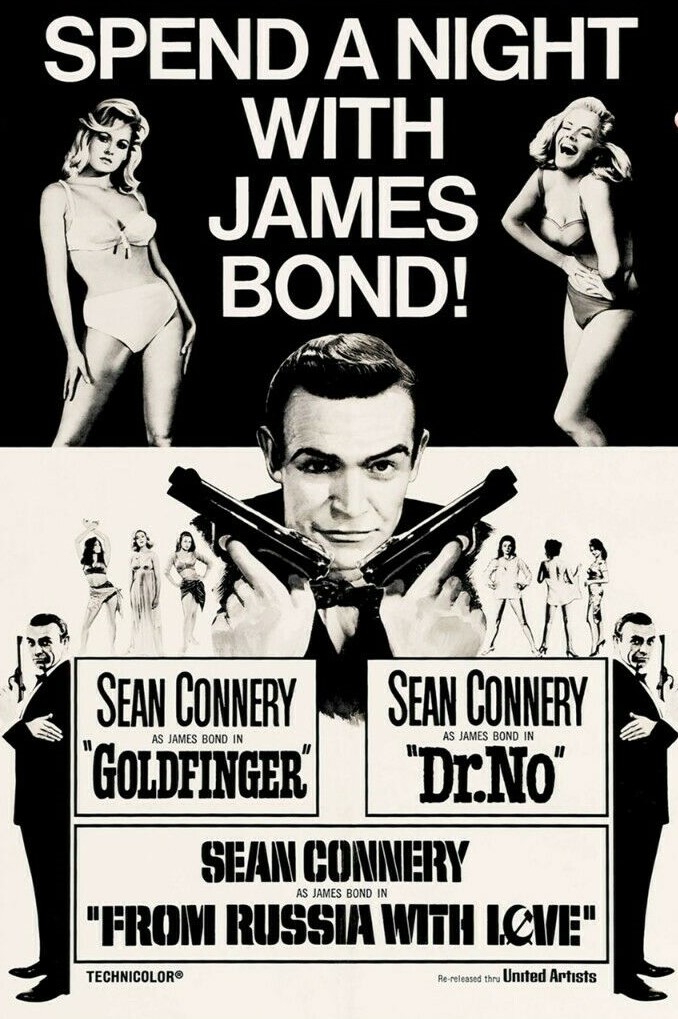
In the U.S. the year of the missing Bond reissue was 1970. But in 1971 United Artists reissued two Bond dualers six months apart. First out was Thunderball/You Only Live Twice and then Dr No/From Russia with Love. Ahead of the television premiere of Goldfinger in September 1972, UA brought back Goldfinger/From Russia with Love and then the triple bill (“Spend a Night with James Bond!”) of Goldinger/Dr No/From Russia with Love plus a double bill of Thunderball/You Only Live Twice, the last program incidentally knocking up a colossal gross of $122,000 – equivalent to $853,000 now – from 14 houses in New York in its opening week.
But the bonanza came to an end when television ponied up $17.5 million – equivalent to $126 million today – for the first seven pictures in the series. And this was before residuals kicked in from VHS, television resale and syndication, DVD, cable and streaming. Even when the MCU can guarantee billion-dollar revenues from many of its movies it’s doubtful if any one of its blockbusters made as much money as the best of the Bonds in their lifetime, much of that extra revenue coming from the way the revivals proved the enduring popularity of the series.
SOURCES: Allen Eyles, Odeon Cinemas 2: From J. Arthur Rank to the Multiplex (Cinema Theatre Association, 2005) p211-220; Brian Hannan, Coming Back to a Theater Near You (McFarland, 2016) p147-151, 175-177, 227.









 The Magnificent 60s