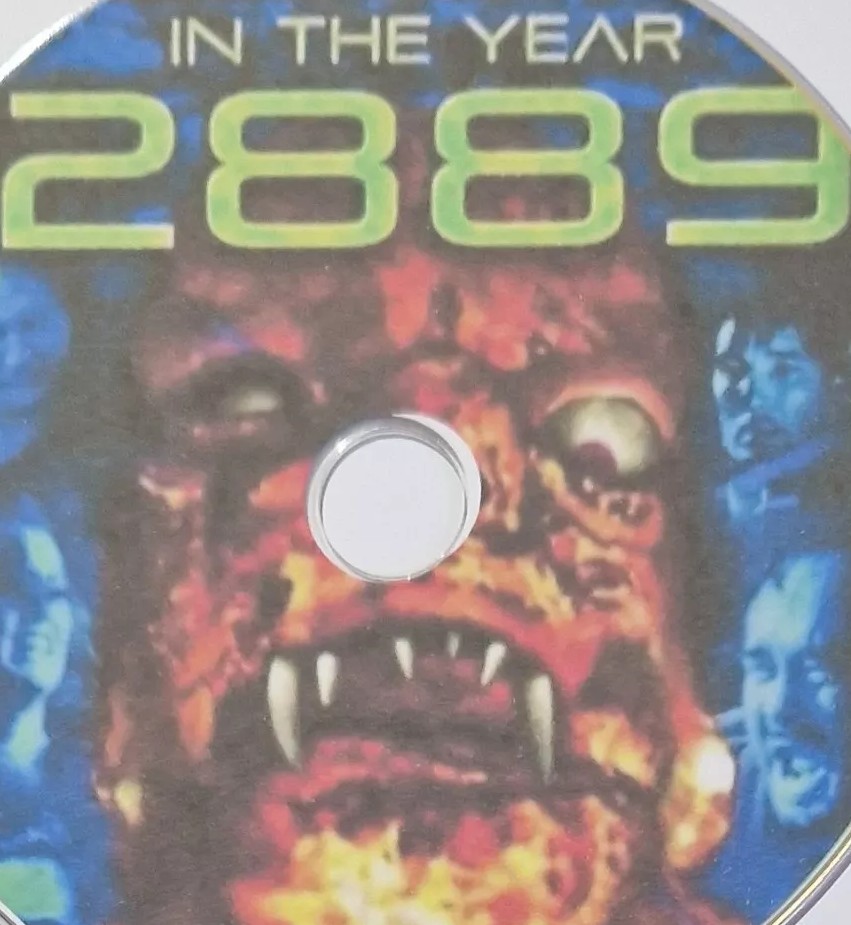
Come the apocalypse, you’d want someone like Capt Ramsay (Neil Fletcher) in your corner. He’s not the kind to be surprised by the sudden onset of a nuclear holocaust. He’s prime boy scout – always prepared. Not only has he got three months of supplies put by and his own generator but he’s picked a spot where it’s more likely he’ll survive. I wish I could show his scale model that demonstrates just how far-sighted he’s been.
His house is in a valley surrounded by cliffs full of lead ore which will remain immune to radiation. Apart from a separate source of fresh water, the lake on his doorstep is heated from underground which creates an updraft to keep away radiated clouds.
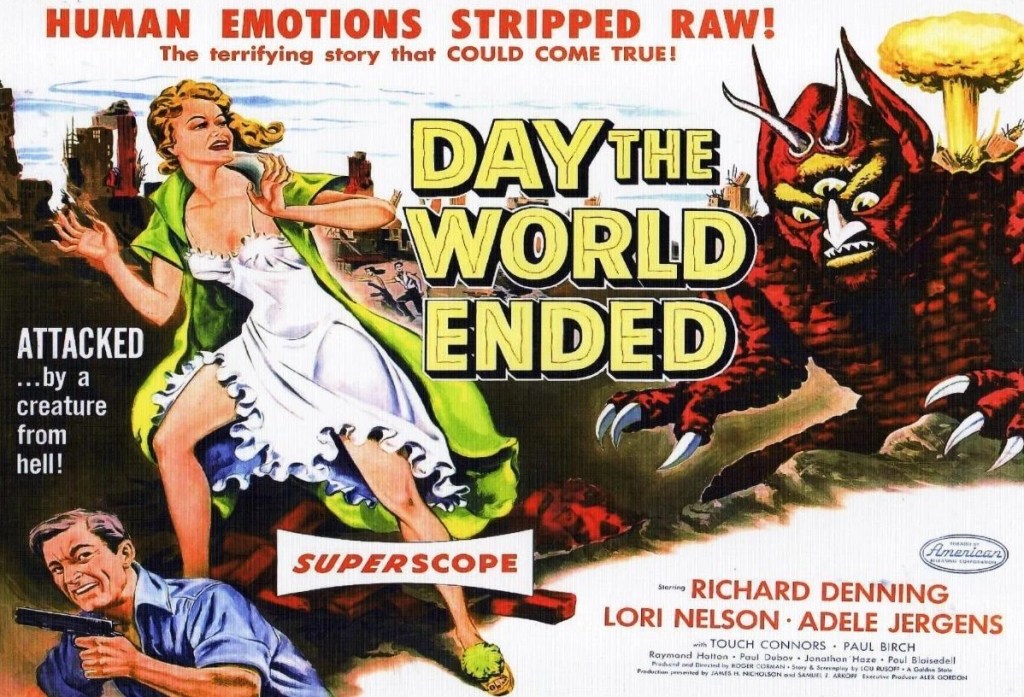
The original from 1955.
Only three things nibble away at his confidence: he’s planned on safeguarding three people – himself, daughter Joanna (Charla Doherty) and her fiancé Larry – so any unforeseen arrivals could deplete supplies; rain which could be contaminated; and mutants.
Larry hasn’t survived but five others have – Steve (Paul Petersen) and his already radiated brother Granger (Max W Anderson), small-time hood Mickey (Hugh Feagin) and his exotic dancer girlfriend Jada (Quinn O’Hara), and alcoholic rancher Tim (Bill Thurman). Plus whatever else is on the prowl out there. Granger doesn’t appear an immediate threat though he’s received levels of radiation that should have killed him. On the plus side, he can go weeks without eating or drinking. On the minus side, he’s got a hankering for fresh raw meat, but luckily not badly enough to resort to cannibalism.
Now that the absent Larry has upset his plans for the continuation of the human race, Capt Ramsay decides his daughter should pair up with geologist Steve. She’s certainly drawn to him but keeps on hearing a strange voice which she imagines to be Larry. But Mickey determines that if there’s any procreation to be done, it’ll be with him and Joanna and even though, theoretically, she’s out of his league, he works out that if he bumps everyone else off she won’t have a choice.
Meanwhile, something’s prowling out there in the dark. Luckily, it’s always dark when the creature goes prowling so we make do with barely a glimpse of whatever the director can come up with monster-wise on a tiny budget. We get a better idea of the possible mutant outcomes because the good captain was in charge of a ship carrying animals out of an H-Bomb test site and took the opportunity to make illustrations of what he saw, which was mostly emaciated bodies with sharp teeth and claws.
Mostly, we’re waiting for rain or for Mickey to begin slaughtering everyone. It’s just as well that mutants keep their distance because then tension can play out via sexual jealousy, the stern captain brooking no dissent – he also knocks on the head lewd dancing and the drinking of illicit liquor – and the gradual accumulation of the fearful.
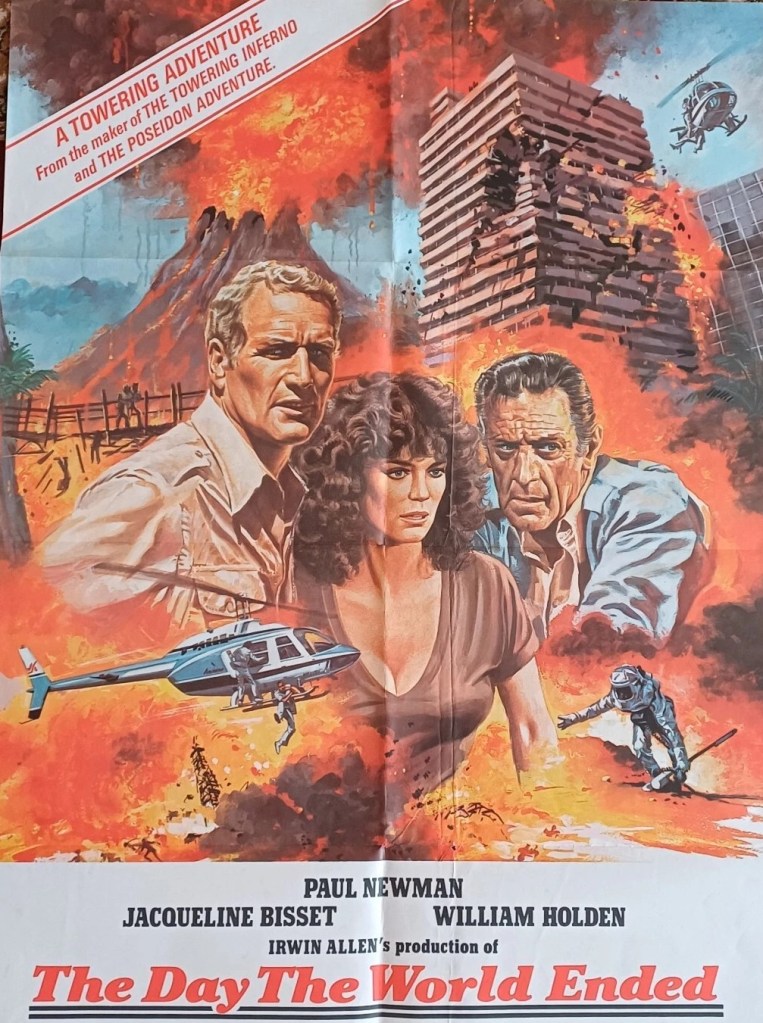
The biggest disaster this later Irwin Allen effort faced was at the box office. I reviewed it some time ago.
Had it gone down the more straightforward slasher route, Joanna would be the ideal final girl with Jada more likely to be an early victim courtesy of her profession. In fact, both make perfect foils. Joanna stands up to her father who’s inclined to prevent, by force if necessary, any visitors from entering the house while Jada tries to make her boyfriend stick to a lovers’ code of honor.
Scottish actress Quinn O’Hara (A Swingin’ Summer, 1965) should have stolen the picture given her juicy role but it’s Hugh Feagin (in his debut), all razor cheekbones and slits for eyes, and Charla Doherty (Take Her She’s Mine, 1963) who snatch what little kudos there is going.
Larry Buchanan (The Naked Witch, 1961) directs this remake of the 1955 movie from a screenplay by Harold Hoffman (The Black Cat, 1966) and Lou Rusoff (Panic in the Year Zero, 1962).
While there’s not a huge amount to recommend it, it is interesting enough given the director has to concentrate more on character than gore.
I admit it: spotting this on YouTube I couldn’t resist. After all, someone has to report on the first proper Raquel Welch picture. Plus, I had never seen a beach movie, such a staple of the decade. Plus, depending on your point of view, Raquel gets to sing.
But why waste any brainpower coming up with a new idea when you can recycle an old one – let’s put the show on in the barn. Or a version of it.
Raquel Welch – distinctive in any language.
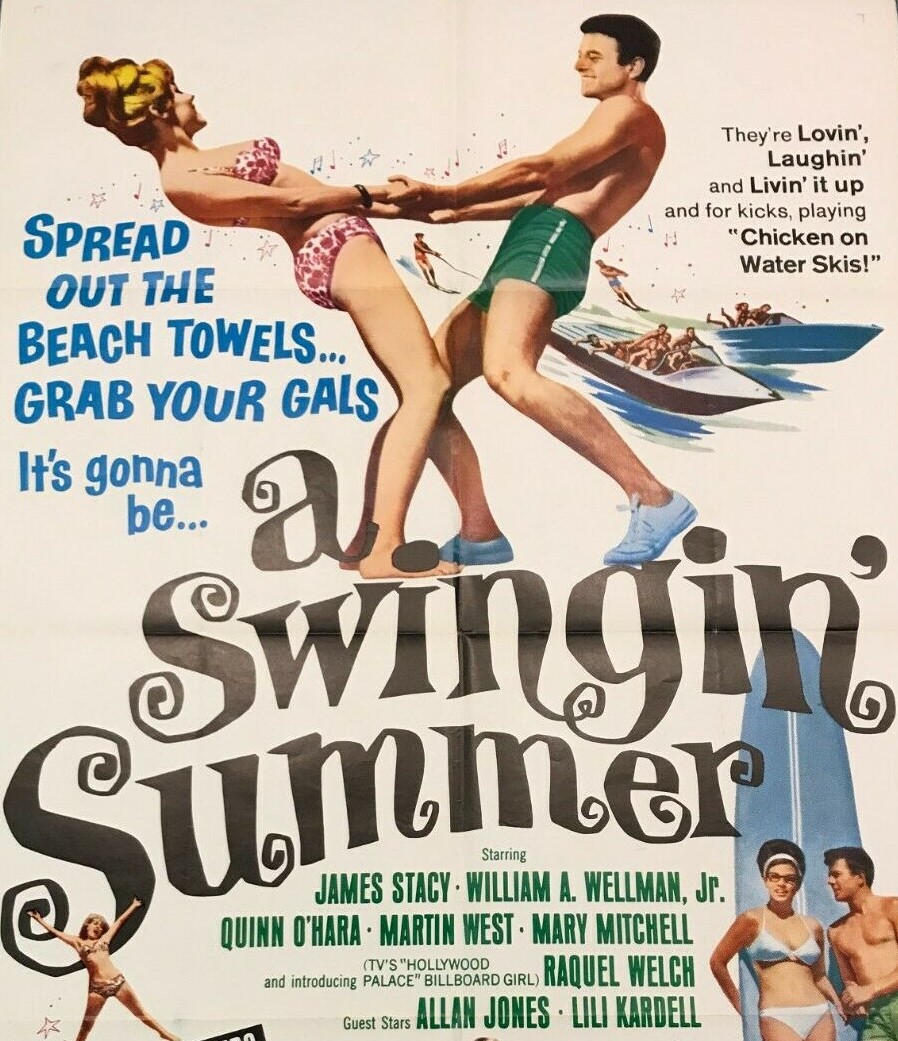
When their summer plans are dashed, students Mickey (James Stacey) and Rick (William Wellman Jr.) decide to promote a series of beach concerts. That doesn’t sit too well with lifeguard Turk (Martin West) who takes an unwelcome shine to Mickey’s neglected girlfriend Cindy (Quinn O’Hara). Rick, meanwhile, is intrigued by nerdy Jeri (Raquel Welch) but a bit put off to discover she’s more interested in a meeting of minds than anything more obvious, and possibly by her independent, proto-feminist streak, in that she selected him for her “summer romance.”
Just in case you thought there wasn’t much else to do but wait till the wannabe promoters got their act together and people fell in and out of love, there’s a hefty amount of subplot: a fistfight, a robbery and a water-ski version of “chicken.” Plus if there was any chance of you getting bored, house band Gary and the Playboys and a variety of other acts, including as the climax The Righteous Brothers, hit the stage and, in the interests of gender equality, the platoon of good-looking women hanging around are matched by a squad of good-looking men.
There’s even some effort at comedy, a few pratfalls, mostly thanks to the distractions of Jeri, and one gender-switch sight gag which seemed pretty daring for the times, and even a nod in the direction of health food fads. Perhaps, more surprisingly, are the solid characterisations, the principled Mickey who refuses to sponge off Cindy’s rich father. Discovering she bailed him out behind his back, securing the sum required for the project from her father, he accepts the money as a loan but renegotiates the interest rate.
Jeri is way ahead of her time, analysing the men she fancies and with the repartee to keep them in line. It’s pretty even-handed in the beach costume department, for every girl in a bikini or tight top there’s a bare-chested topless hunk, though it still manages to be overtly sexist, girls needing measured by an obliging male in order to enter a beauty contest.
Scottish actress Quinn O’Hara (The Ghost in the Invisible Bikini, 1966), a former beauty queen and girlfriend of pop star Fabian (Mr Hobbs Takes a Vacation, 1963), must have thought the prospect of becoming the breakout star pretty high, what with her reimagining of the Lana Turner/Jayne Mansfield tight top. Her only rival was the girl playing the nerd who hooked the male lead’s best friend. Ostensibly, the nerd was not much of a part, spouting psycho-babble most of the time.
A nerd is still a nerd, O’Hara must have assumed. Unless she’s Raquel Welch.
Welch handles the dialog very well, probably longer speeches than anyone else, but even with her horn rim glasses and hair in a bun, and determined to measure potential partners by their brain cells, she stands out as an independent thinker long before she releases her secret weapon, a yellow bikini, and smart enough to work out that if that doesn’t set a man’s pulse racing to head for second base – jumping onto the stage to strut her stuff.
It’s a bit of a stretch to argue that an appearance in a low-budget beach movie ushered her into the Hollywood fast lane, but, hey, timing is everything, especially if you happened to catch the eye of a producer looking for someone to model a fur bikini.
None of the men made much of a splash in the movie business though James Stacy was the male lead opposite Welch in Flareup (1969). Supporting actor Allan Jones was the biggest name in the cast but well past his heyday as a Marx Bros stooge.
Some of the singers were better known than the actors. Topping the bill in that respect were The Righteous Brothers – hot after “You’ve Lost That Lovin’ Feeling and “Unchained Melody” – who sang “Justine” (no smash, reaching just No 85 in the U.S. singles chart). Gary Lewis and the Playboys also topped the charts in 1965 with “This Diamond Ring.” But The Rip Chords were coming to the end of their chart life. Raquel’s song “I’m Ready to Groove” did not set the house on fire, it’s fair to say.
Robert Sparr (More Dead Than Alive, 1969) was at the helm. Leigh Chapman (Dirty MaryCrazy Larry, 1974) and Reno Carrell (Winter a-Go-Go, 1965), also the producer, collaborated on the screenplay.
A harmless curio – a neat 80 minutes long – and if you’re intent on watching a beach movie it might as well be this.
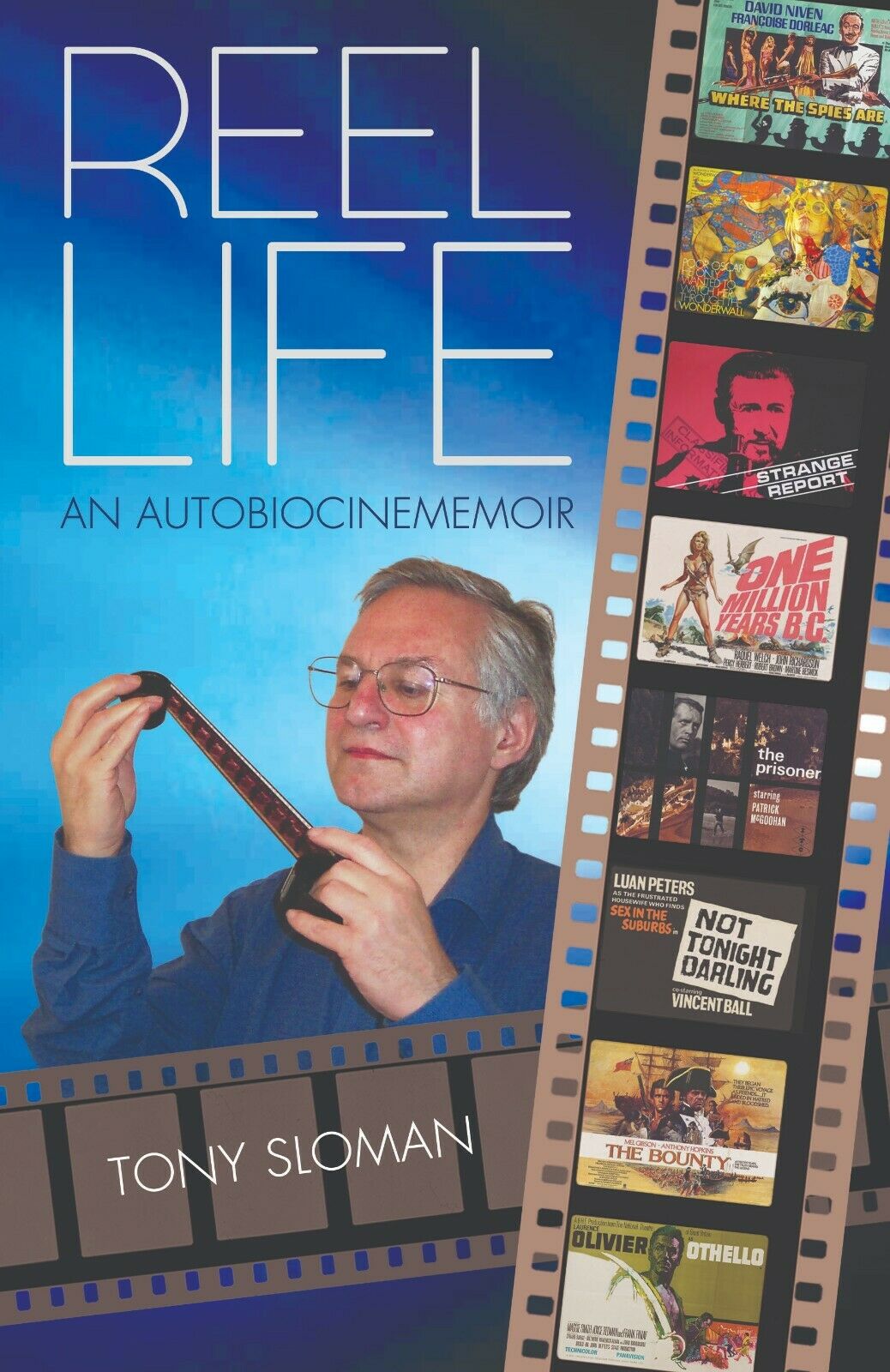
From attending to director Michael Winner’s parking meter and falling foul of the British film censor to interviewing David Lean at the National Film Theatre in London, Tony Sloman’s autobiography casts a fascinating light on the British film industry. A marvellous string of anecdotes relating to Othello (1965), One Million Years B.C. (1966), Chitty, Chitty, Bang, Bang (1968), Wonderwall (1968), De Sade (1969) and cult television series The Prisoner (1968) are augmented by insights into the less well-known aspects of how movies are made.
Most commonly associated with the sound and editing departments, he also directed two British sex films Sweet and Sexy (1971) and Not Tonight, Darling (1971). In addition, he is also a walking encyclopaedia on film – he later lectured on the subject – and a riveting part of the book involves how he fell in love with the movies. I’ve read countless biographies of actors and directors who made it big in pictures and rarely, if ever, do their stories focus on their love of the medium, of the films they saw when growing up and the experiences that entailed. So the first part of this book plays off to the soundtrack of inveterate filmgoing in the 1950s at his local cinema in London and then up to the West End, one expedition to view a revival of Gone with the Wind ending up instead with the saucier Femmes de Paris (1953).
Getting into the business was very difficult for a tailor’s son from Streatham and, having determined to become a film editor, even attending evening film classes failed to open any doors until he responded to a newspaper advert and became a dispatch boy and soon after an editor for a small suite of cutting rooms in Soho in the same building as Private Eye magazine, thus beginning a long apprenticeship in this particular discipline, working in all the British studios from biggies like Shepperton, Elstree and Pinewood to smaller outfits such as Merton Park.
Except for this book I would be unaware of the how menial are some of the tasks essential for a film to be made. One of his earliest jobs was to attend the screening of rushes and “tick the selected takes in the rushes notebook…and then after numbering them break them out in script order for the editor to assemble the next day in the cutting copy.” He learned not to count frames or measure length when dictating a particular cut but to put himself in the position of the character and the audience, how much of what they see needs to be shown to register.
One of the refreshing elements of this biography is that the author is happy to own up to professional and personal mistakes. As he didn’t drive he was unable to synchronise car engine sounds in the correct manner. He got into trouble for labelling cans containing film in pen and not stencil. As a result of personal mishap, he learned the hard way never to film anything without a continuity person present.
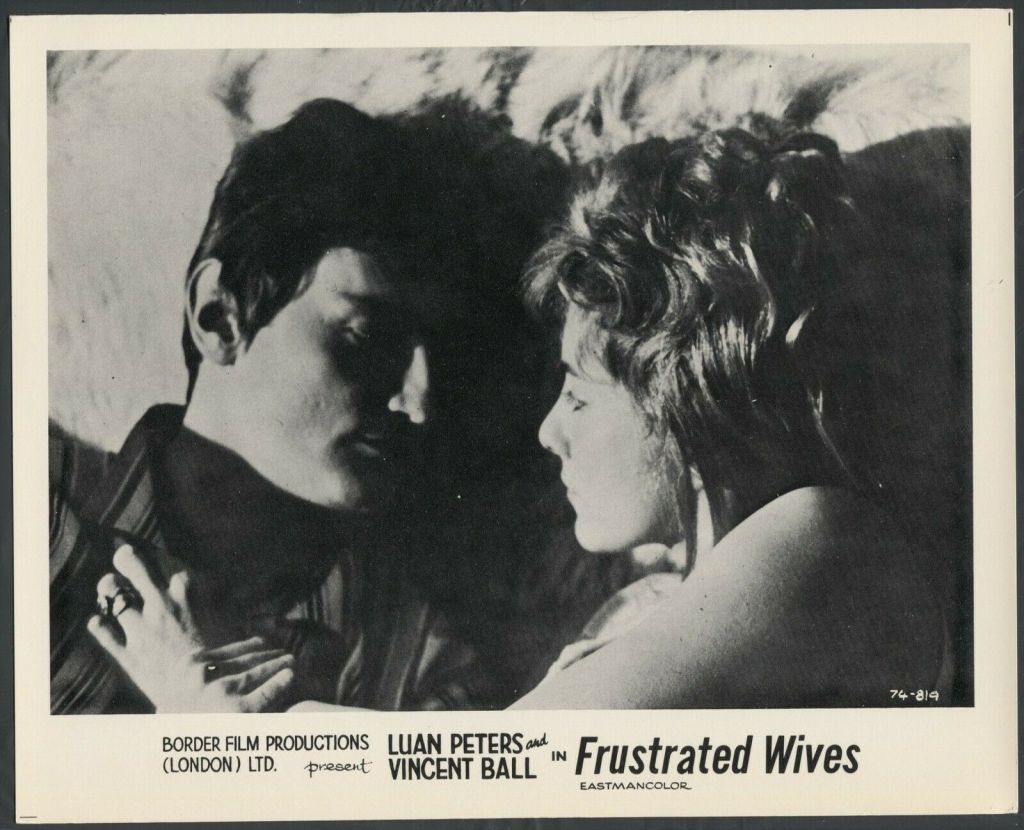
His second directorial effort“Not Tonight Darling” was renamed “Frustrated Wives.”
And he has a fan’s delight at meeting stars in the flesh, walking down the street with a David Niven determined to be swamped by fans, recounting that Maximilian Schell is shorter than expected, James Mason taller. He reveals that Dana Andrews’ favorite of his own films is not a Hollywood classic like Laura (1944) or The Best Years of Our Lives (1946) but the lesser known Three Hours to Kill (1954) because when the producer ran out of cash he paid the actor in Mexican artefacts that came to be worth a quarter of a million dollars. Former silent film star Bessie Love tried to convert him to Christian Science when the author would have rather she reminisced about her days in early Hollywood. Eating in a restaurant in Cannes he watched at another table Federico Fellini and Luchino Visconti share a bowl of bouillabaisse and later bumped (literally) into Graham Greene and encountered in the hills working as barman a former camera operator for Jean Renoir.
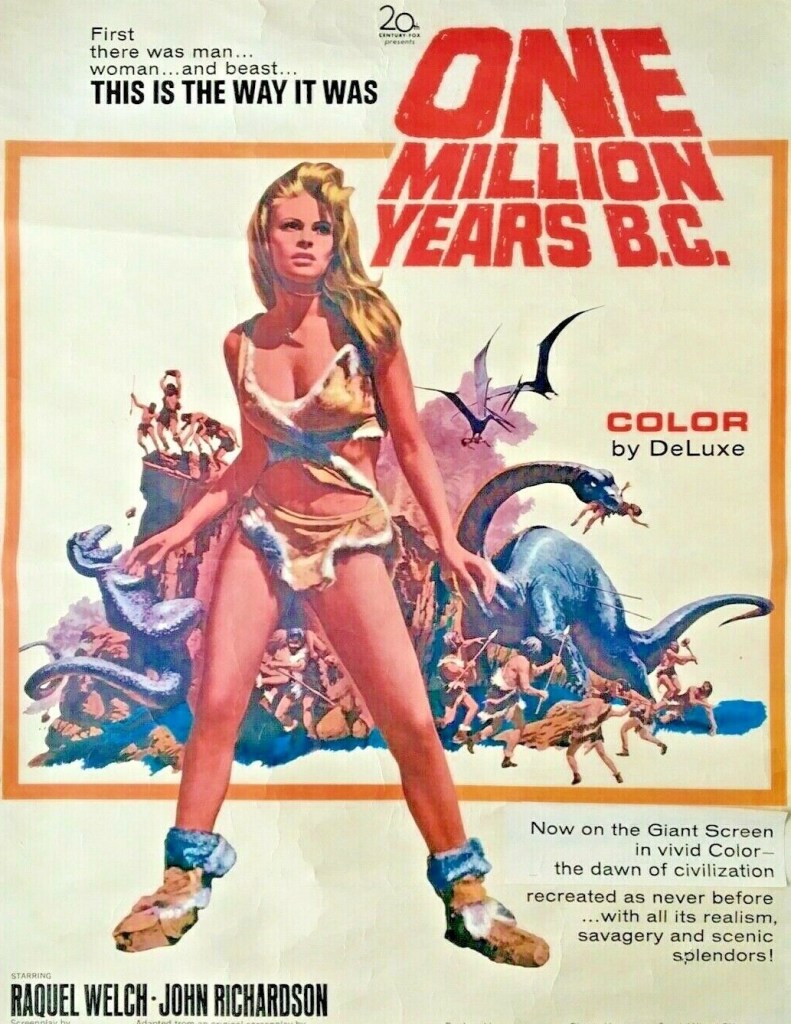
He met the entire Dirty Dozen at lunch in the studio canteen, heard Maggie Smith swear and enjoyed an up-close-and-personal encounter with Raquel Welch over the moviola “pressing closer to me in that tiniest of bikinis.” Working with Ray Harryhausen on One Million Years B.C. (1966) “my main function with him was to be his own personal soundstage at Elstree with the moviola…to see where his newly-shot material would go into the sequence as cut…Ray needed to see them over and over and do frame counts before shooting his effects.” On the same film he was responsible for writing “dialogue” – in other words” a series of grunts and sounds that would match up with the actor’s mouth movement.”
There are other fascinating nuggets. He played an unsung part in the success of The Prisoner, coming up with the ideal piece for the beginning of the Arrival episode – the “Radetzky March.” He had an unusual job title, too, “Film Librarian,” which consisted of getting all the back projections which had already been filmed ready for the actual set. Supplying library material as and when, shooting inserts, and matching new film to location work. “The secret of finding music for mute material was not merely finding music that was appropriate but to find music that would positively enhance the image to which it would be matched.”
There are other fascinating nuggets. Donald Sutherland was revoiced in his role in Oedipus the King (1968) but after the success of Mash (1970) his original voice was put back in. The first screening of Wonderwall (1968) was for the Beatles because George Harrison had expressed an interest in writing the score. In the course of this when his Indian-style slippers were ruined by rain someone on the set whipped up for him a “customized pair of cardboard shoes made from Technicolor delivery boxes.” Composer John Barry was set to co-finance a film called The Jam but the screenplay was shown to Jean-Luc Godard who promptly went out an made Weekend (1967).
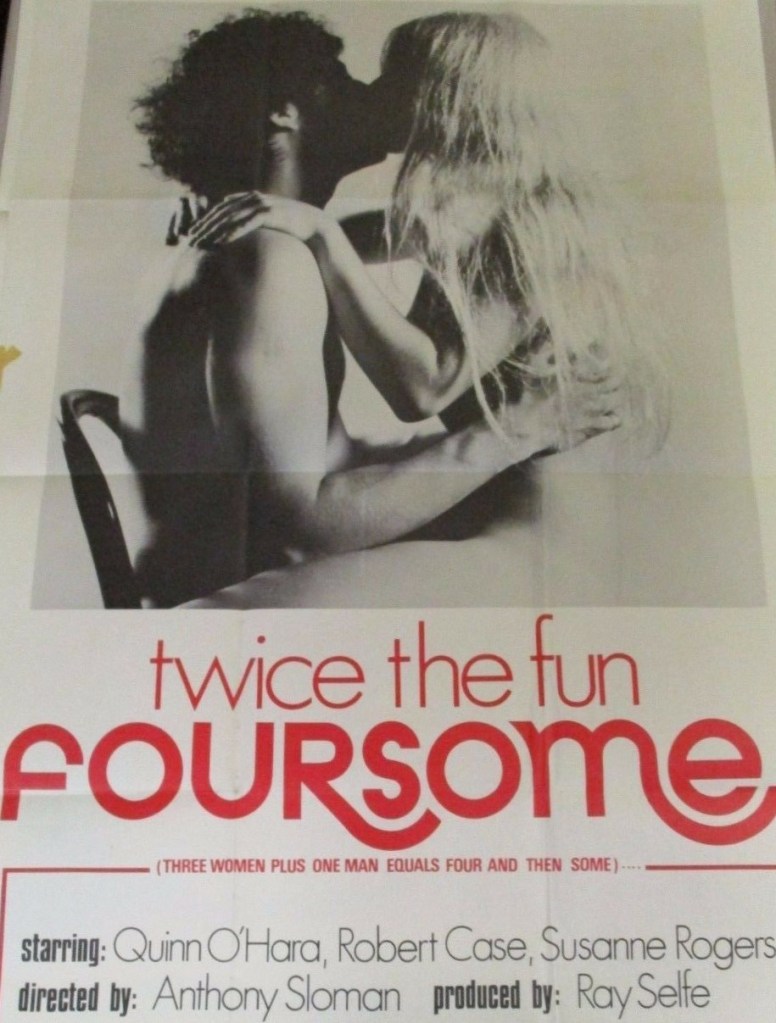
“Sweet and Sexy” was renamed “Foursome” for the U.S. market, even though no such activity takes place. At one point Scottish actress Quinn O’Hara had been engaged to U.S. pop star Fabian.
He shared a flat with Michael Billington (Alfred the Great, 1968) – who holds the record for most auditions for the role of James Bond. Billington was a lover of Liza Minelli, Barbara Broccoli and Quinn O’Hara and was slated to direct Sloman’s first film but when he was offered a starring role in the UFO series (1970-1971), Sloman took over the directorial reins and recruited as leading man Billington’s UFO stand-in Robert Case. Quinn O’Hara (Cry of the Banshee, 1970), Billington’s girlfriend, had the female lead. It began life with the relatively harmless title of City Suite.
But when it was funded by Miracle Films, the title changed to City, Sweet and Sexy and finally plain old Sweet and Sexy (though it goes by the name of Foursome on imdb). What the Americans called “sexploitation.” The initial budget only ran to £15,000 but was increased to £20,000. But when submitted to the British Board of Films Censors in October 1970, it was refused a certificate unless 40 minutes were cut. After nearly 18 months of wrangling it was finally granted an X-certificate – minus 21 offensive minutes – and the 69-minute picture finally opened at the Cameo Royal in London in March 1972.
Sloman had better luck with his second feature, Not Tonight Darling (1971) – also known as Frustrated Wives. Luan Peters (Lust for a Vampire, 1971) came on board as star and Sloman had the good luck to snare pop band Thunderclap Newman, who had enjoyed a big hit with “Something in the Air”, for the score. There were also appearances by Jason Twelvetrees, who had also been in Sweet and Sexy, Fiona Richmond (Let’s Get Laid, 1978) and James Hayter (A Challenge for Robin Hood, 1967).
The book ends in the early 1970s and I can only hope Tony Sloman is hard at work on a second volume as his memoirs are a welcome antidote to the raft of books about big stars which are often far less entertaining. An excellent read, especially if you are interested in the behind-the-scenes aspects of movie making.
EXTRA: This is not in the book but I did a bit of digging on my own account to see if any of his movies were ever screened in the U.S. I found out, as noted in the article above, that “Sweet and Sexy” was released in the U.S. as “Foursome”. Despite the concerns of the British film censor, it was not that out of line otherwise it would not have received an “R” rating when it could easily have been rated “X.” I couldn’t find any sign of a review, either in “Variety” or “Box Office,” the two main trade magazines. But I did find some evidence that it had been screened in some big cities.
It was distributed by AIP in the U.S, and C-P in Canada. “Variety” and “Box Office” had different methods of measuring revenue. The former simply listed the gross. But the latter employed a different approach. It related the receipts for each film according to the average weekly take of a particular cinema. This was in some senses a better idea. Strong figures might not necessarily mean a good result if that cinema was used to movies knocking up big numbers.
In January 1972 “Foursome”, playing solo, had a “sexy” opening week, according to “Variety,” at the 1,200-seat Midtown in Philadelphia (tickets priced at $1.50-$3.00) with $14,000 (equivalent to $96,000 today) followed by s second week of $9,500. The same month, supported by “Freedom to Love” (1969), a documentary about sexual behavior, “Foursome” ran for three weeks at the 609-seat World (tickets $1.25) in Chicago. The first and third weeks both accounted for $3,800 but the second week was tops with $4,000. In April there was a “lusty” (presumably intended ironically) $3,100 at the 2,809-seat Loews Downtown (tickets $2.00-$2.50) in Dayton where it played solo.
In August at the 676-seat Suburban World (tickets $2.25) in Minneapolis it scored a “fair” $4,000, again the only film on the program. In December it turned up at the 250-seat Playhouse (tickets $2.50) in Washington, as the supporting feature this time to “Together” (1971) starring Marilyn Chambers and directed by Sean S. Cunningham, later responsible for the first “Friday the 13th ” (1980). The outcome was a “sharp” $4,500. By comparing seating capacity and ticket prices you can get a better idea of the film performed.
Box Office magazine marked performance on a percentage basis against a basic mark of 100, which represented an average week. According to this magazine, the movie was also to be found in Hartford where it scored 175 (i.e. almost double the average week’s takings), New Haven (175), Boston (150) and Buffalo (100). The takings in Minneapolis were no great shakes according to this method of analyzing results, reaching only 100 on the magazine’s measuring system.
Box Office also noted a couple of outings in Canada, where it played as the supporting feature to “Love Me Like I Do” (1970) starring Dyanne Thorne, later immortalised as “Ilsa”. However, Canada appeared not to subscribe to the percentage system. Instead, in Winnipeg at the Downtown in March 1972 it was judged “very good” while in Toronto at the Coronet in November 1972 it was judged “fair.”
SOURCES: “Variety” – January 12, 1972, p8; January 26, 1972, p10; April 5, 1972, p14; August 30, 1970, p14; December 6, 1972; p14. “Box Office” – September 11, 1972, pB4; “Box Office Barometer,” September 18, 1972 pB4; November 6, 1972, p16; November 13, 1972, pK2; March 5, 1973, pK3.


 The Magnificent 60s