Behind the Scenes: “The Train” (1964)

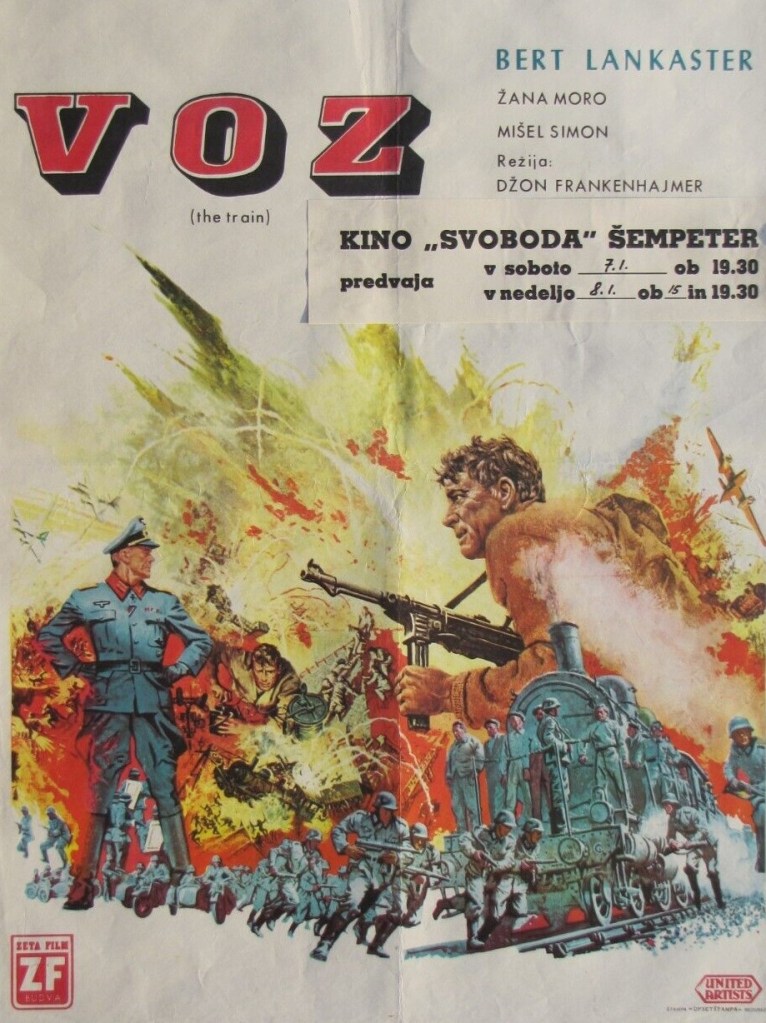
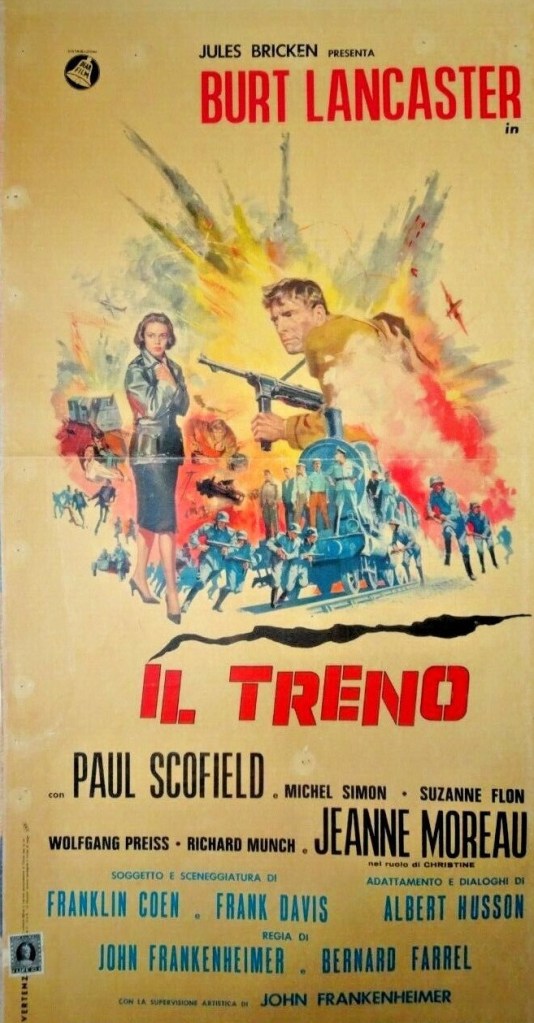
A juggernaut of problems was coming down the track – director sacked, over a year in production, script changing by the minute, way over budget, star Burt Lancaster, his public halo slipping after being caught escorting women who weren’t his wife,  earning only 20 per cent of his normal $750,000 fee in order to pay off his massive debt to United Artists. And yet it set the template for “hi-tech shoot-em-ups” such as First Blood (1982) and Die Hard (1988), action pictures where a lone hero saved the day against overwhelming odds.

Lancaster’s hot critical run, Oscar winner for Elmer Gantry (1960), nominated for The Birdman of Alcatraz (1962), had turned sour with Luchino Visconti’s The Leopard (1963). Financially his career had hit an iceberg.

As part of the producing triumvirate of Hecht, Hill and Lancaster, responsible for pictures like Marty (1955), Trapeze (1956) and The Sweet Smell of Success  (1957), he found himself in a financial hole, only bailed out when United Artists picked up the tab for the company’s accumulated debt, the actor paying it back with a four-movie deal for which he was remunerated to the measly tune of $150,000 each, a contract he described as “slavery.”

The Train was third on that agenda. It was a risk for United Artists, its first venture into the complex world of the European co-production, this time teaming with French outfit Les Films Ariane. At that point, Lancaster was still considered a creative powerhouse, if not the actual producer, then carrying out a great deal of that function.

Walter Bernstein (Fail Safe, 1964), who had worked with Lancaster on Kiss The Blood off My Hands (1948) and  described the actor as “the gorilla on the bus,” was the only one of the original trio of screenwriters – the others being Franklin Coen and Frank Davis – not to receive a screen credit. It was based on a true story, a book Le front de l’art (1961) by Rose Valland. According to that narrative, Germans did try to transport by train a haul of Impressionist paintings. But it was bureaucracy and not the lone hero which prevented it reaching Germany.

But initially, the script had little traction, shelved  by the studio until Arthur Penn (Mickey One, 1965) happened upon it. The director’s curiosity was piqued by what he perceived as the peculiar French trait of being willing to risk their lives for art. Penn targeted Lancaster as capable of generating “a certain kind of French sensitivity to the idea of art needing to be protected.” When Lancaster signed on, it was with the proviso Penn direct.

The movie went into production in August 1963, a 15-week schedule, and cooperation from the Louvre, French National Railways, French Army and with a contingent of 40 rail cars. Shots of Nazis in Paris were shot very early in the morning so as not to upset Parisians. The production was based in a small village close to Paris.

Turned out Lancaster and Penn were at odds from day one. Pestered to show “vulnerability” Lancaster decided to show the director “the grin.” Penn only lasted a day, technically two if you include that the following day was a holiday. By 11pm that night Penn was gone. John Frankenheimer who had directed Lancaster in three previous movies, The Young Savages (1961), The Birdman of Alcatraz and Seven Days in May (1964), was his replacement.

Bernstein quit. Lancaster told the writer, “Frankenheimer is a bit of a whore, but he’ll do what I want.”

Why Lancaster didn’t want to make Penn’s version – a quieter film about art (the train didn’t leave the station till about 90 minutes in) – was down to the commercial and critical failure of The Leopard. He needed a hit. And having gone down the arthouse Visconti route, the actor wanted to return to his action roots.

Lancaster showed where the power truly lay. As part of Frankenheimer’s deal, he received a Ferrari; Lancaster told him to keep UA at bay by complaining about the color. Frankenheimer did better than that. He negotiated a credit that read “John Frankenheimer’s The Train.” He evaded French laws that demanded a co-director on set and he received final cut, not to mention a bigger budget.

Production shut down while Lancaster and Frankenheimer hammered out a new script, one that called for, among other things, a 70-ton locomotive, a complete station, more boxcars, signal tower and switch tower as well as a ton of TNT and 2,000 gallons of gas to create the 140 separate explosions for a one-minute sequence that took four months to plan. One of the most striking shots, where the locomotive smashes free and provides a terrific close-up of the upended train wheels spinning, was achieved by accident. Once all the plans were agreed, production was delayed again because winter conditions meant the ground was too hard to safely detonate explosives. The budget doubled to $6.7 million.

Some goodwill was involved. The French welcomed the idea of UA destroying a marshalling yard because it saved them the cost of doing it.

Shooting restarted in Spring 1964. But the schedule was cut to seven weeks, though that include the strafing sequence. You may remember Lancaster had to lug around a wounded leg. That was a clever accommodation. The actor had incurred a knee injury so wouldn’t it be a good idea to find a reason for him to limp such as being wounded. Circumstances – other movies taking precedence after the long lay-off – resulted in the death of Michel Simon’s character.

Injury didn’t tend to hamper Lancaster’s physicality. He runs, jumps, climbs, falls downhill. Said Frankenheimer, “Burt Lancaster (aged 50 mind you) was the strongest man physically I’ve ever seen. He was one of the best stuntmen who ever lived.”

The ending was conceived late in the day. Originally, it was going to be a proper shoot-out. But the idea of Paul Schofield with a gun going up against Lancaster was deemed “ridiculous” so, in effect, the snob German “talked himself to death.”

Reviews were mixed and many found the film too long, one critic complaining, the train “pretends it’s going somewhere and…isn’t.” But somewhere along the way, Lancaster invented the modern action hero.

It didn’t do him much good. The film failed at the U.S. box office but (as Roy Stafford has reminded me) it was in Top 13 in the UK and top 5 in France so there’s a fair chance it at least broke even and may well have gone into profit. Lancaster, forced by UA into making The Hallelujah Trail (1965), another box office calamity, lost out on The Spy Who Came In from the Cold (1965) and Khartoum (1967)

SOURCES: Kate Buford, Burt Lancaster, An American Life, (Aurum paperback, 2008) p230, 234-240; John Frankenheimer, A Conversation with Charles Champlin (Riverwood Press, 1995); Charlton Heston, In the Arena (Simon and Schuster, 1995), p315; Tino Balio, United Artists, The Company That Changed the Film Industry, (University of Wisconsin Press, 1979)  p279; Arthur Penn Interviews (University Press of Mississippi, 2008) p15, p45; Matt Zoller Seitz, “Those Hi-Tech Shoot-‘Em-Ups Got the Template from The Train,” New York Times, Apr 30, 1995;  Lancaster interview, New York Post, Mar 22, 1965; Jean-Pierre Lenoir, “Stalling a Great Train Robbery,” New York Times, November 3, 1963.

The Train (1964) ***

Director John Frankenheimer (The Gypsy Moths, 1969) tackles the movie’s off-putting central issue straight on. At various points, characters argue whether it’s worth risking lives to save a bunch of paintings, even if they are by masters like Cezanne, Matisse and Manet and even if they do constitute the “pride of France.”

Had this been an ordinary heist, some master criminal conspiring to steal a trainload of paintings, the loot would not have been so contentious, as there was little chance of lives being lost. And in any case, thieves, in the act of stealing, do have to accept that they might fall prey to the cops or, as commonly, fellow members of the gang.

There was another point. Art, then and now, was commonly perceived as a high-class aspect of life, especially once it diverted away from easily understood portraits and still lifes into the specific styles of a Monet or Picasso. Working-class people had little interest in it and felt excluded from it.

So, from the French perspective, coming towards the end of World War Two, post-D-Day and Paris close to being liberated, upper-class German Col von Waldheim (Paul Schofield) decides to hijack the contents of a museum and take hundreds of masterpieces to Germany, ostensibly to fund the fightback against the invaders, but more likely just a final act of a conqueror who has enjoyed, rather than destroyed, the captured French capital.

At first, station master Labiche (Burt Lancaster), while complicit in minor sabotage, has no interest in becoming personally involved, especially with liberation so close and the threat of death lifting by the hour. Others take a much more patriotic stand over the paintings and endeavor in small ways to prevent the trainload’s departure and slow down its progress to Germany.

A whole battalion of German soldiers, including Von Waldheim, who has commandeered a train in the first place, and railway workers, are aboard. But not all are in agreement with their commander’s aims, his deputy Major Herren (Wolfgang Preiss) outspoken in his opposition to this waste of manpower and diversion of energy.

Von Waldheim blames Labiche for the minor sabotage and forces him to take personal control of the train. And it turns out Labiche is much more than a bureaucrat, and knows everything there is to know about driving a train and how the tracks operate. And eventually it becomes a game of cat-and-mouse between Labiche and Von Waldheim.

But before that occurs and the movie really takes off, there’s tons of stuff that come into the sub-genre of a sub-genre category, to the delight of a railway-spotter but the irritation of the general audience as we are treated to endless scenes of the train running through the country or stopping and starting and points being switched. All very fascinating in its own way, but tending to the tedious.

I’m a bit pernickety when it comes to the heist picture and I’m just wondering how the Resistance, in what appears to be very short notice (in real time the movie only lasts a few days) to arrange for railway stations and towns along the route to manage to make massive signs, some I would guess 30-40ft long, to convince Von Waldheim he is taking the route he expects rather than being diverted along a different track. And then to get word to the Allied forces not to bomb a train that had a whitewashed roof. Try explaining the contents to an Army that is trying to get on with winning the war and couldn’t be less concerned about what might be interpreted as misplaced pride.

You would imagine that if those actions could be so easily carried out that there might have been a proper Resistance troupe ready to assist in blowing up the engine, but safeguarding the coaches, along the way. As the toll of ordinary Resistance members mounts, it’s left to Labiche, decidedly not an art lover, to save the day.

And that’s when the film does take off. He’s the most enterprising of individuals, managing, despite being wounded, to single-handedly derail the train twice, even with soldiers hounding him over the hills and patrolling the track.

Burt Lancaster (The Gypsy Moths, 1969) is superb as the doubter who becomes committed to the cause. It’s easy to forget just what a range Lancaster has. There’s not every actor you would believe when he’s twisting wires in the complicated business of setting an explosion or hammering loose sections of track. To slip effortlessly from the nuance and privilege of Luchino Visconti’s  The Leopard (1963) to the hard muscular graft of this is quite an achievement.  

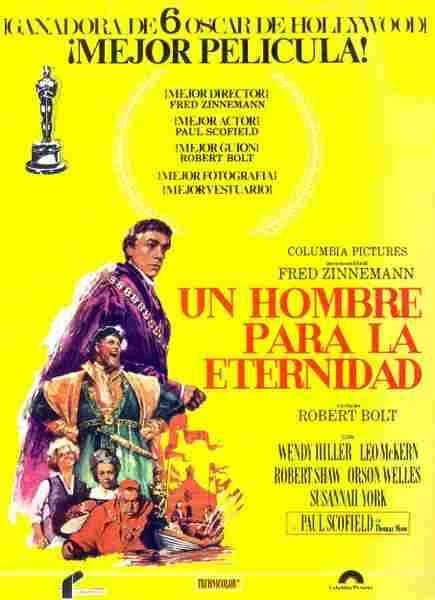
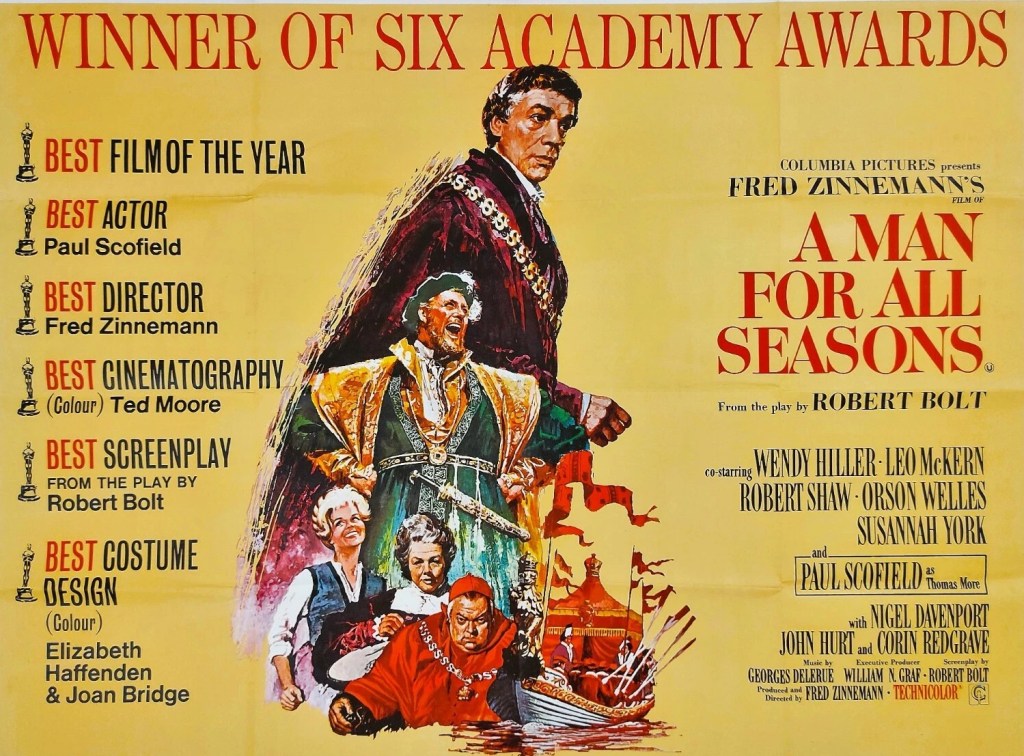
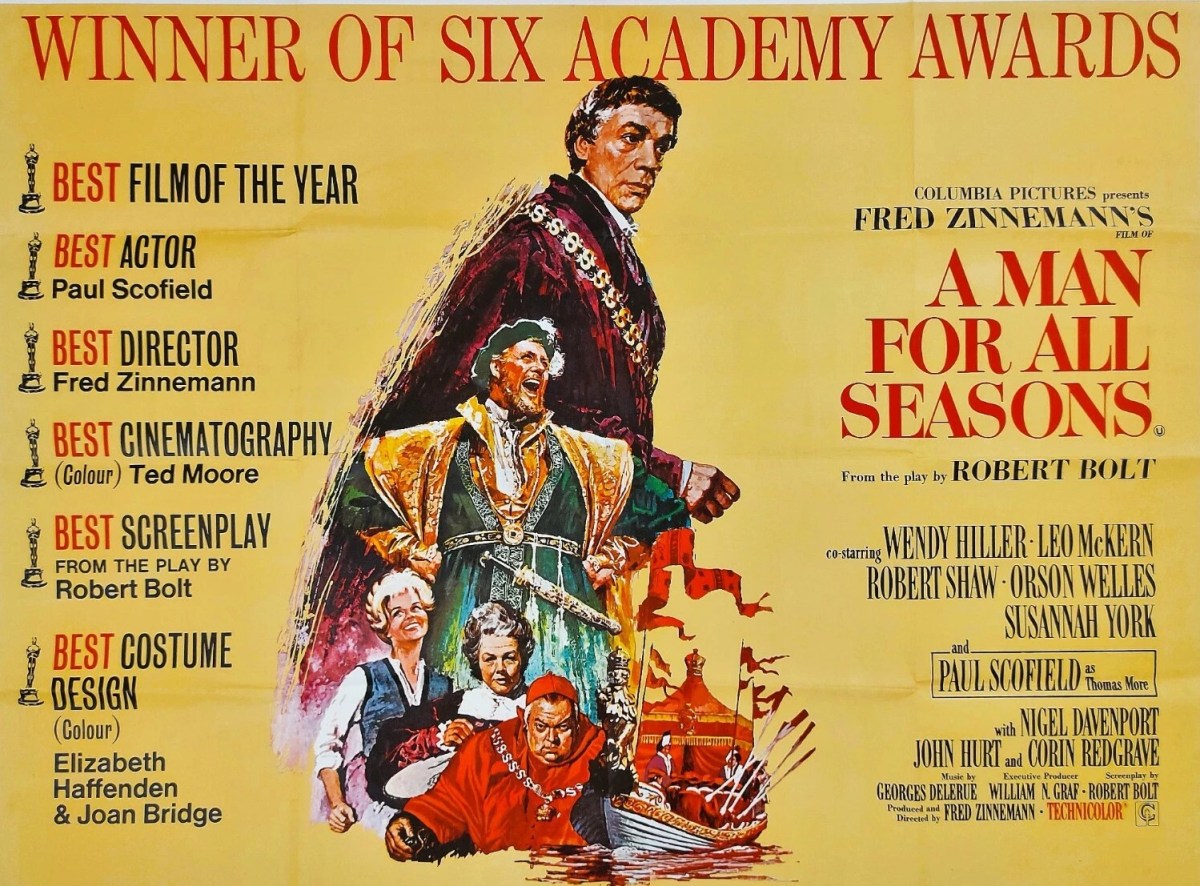
Paul Schofield (A Man for All Seasons, 1966) was far more virile than his later screen persona suggested. He was a classic example of why Hollywood raided Britain, especially for villains. Outside of the stage, he was virtually unknown, only two previous films in the 1950s, so he was a fresh face. He didn’t quite master the art of cinema, a bit prone to shouting and facial expressions verging on the combustible. But he proves an excellent and inventive adversary.

It’s another for the futility of war department and it’s ironic that it’s the mutinous Maj Herren rather than the French who decides lives are not worth losing over a bunch of paintings.  

The action, when it finally emerges from the trainspotting, is excellent. But a bit of judicious pruning in the earlier stages would have worked wonders.

Discover WordPress

A daily selection of the best content published on WordPress, collected for you by humans who love to read.

The Atavist Magazine

by Brian Hannan

WordPress.com News

The latest news on WordPress.com and the WordPress community.