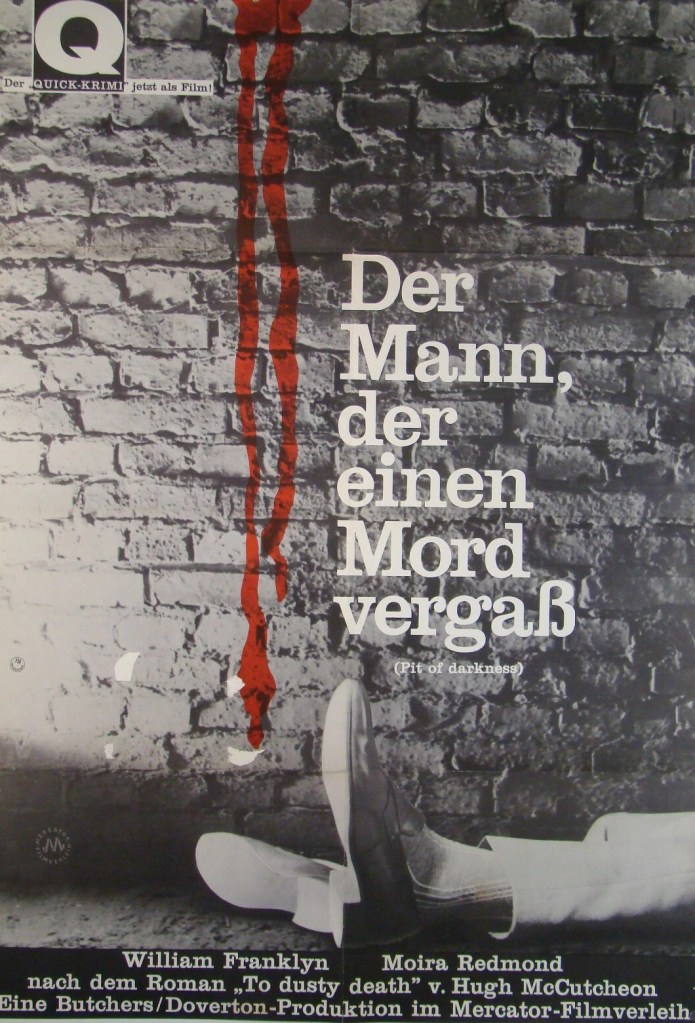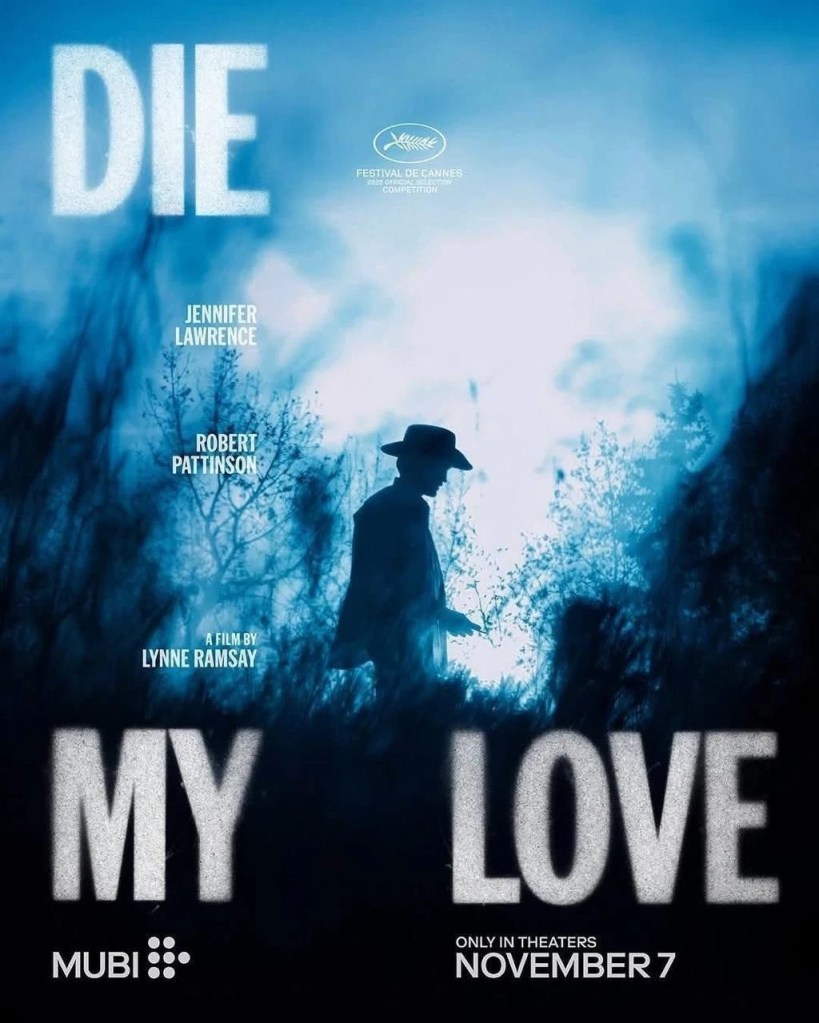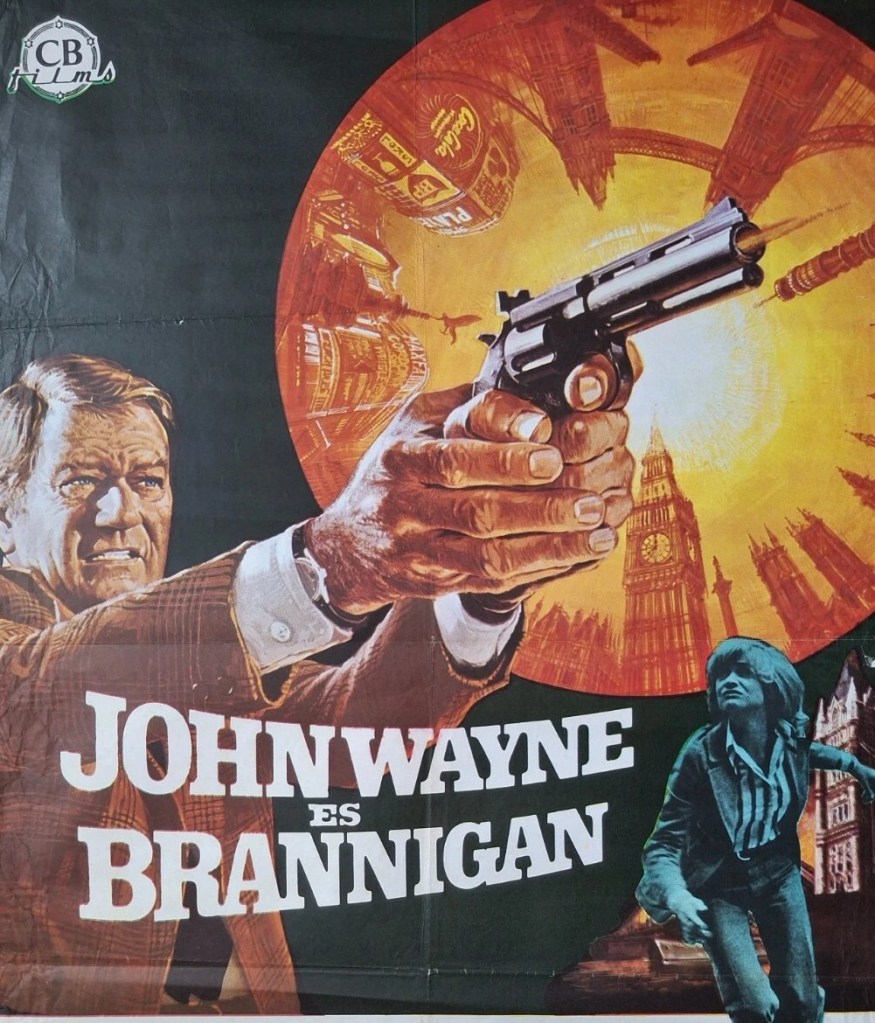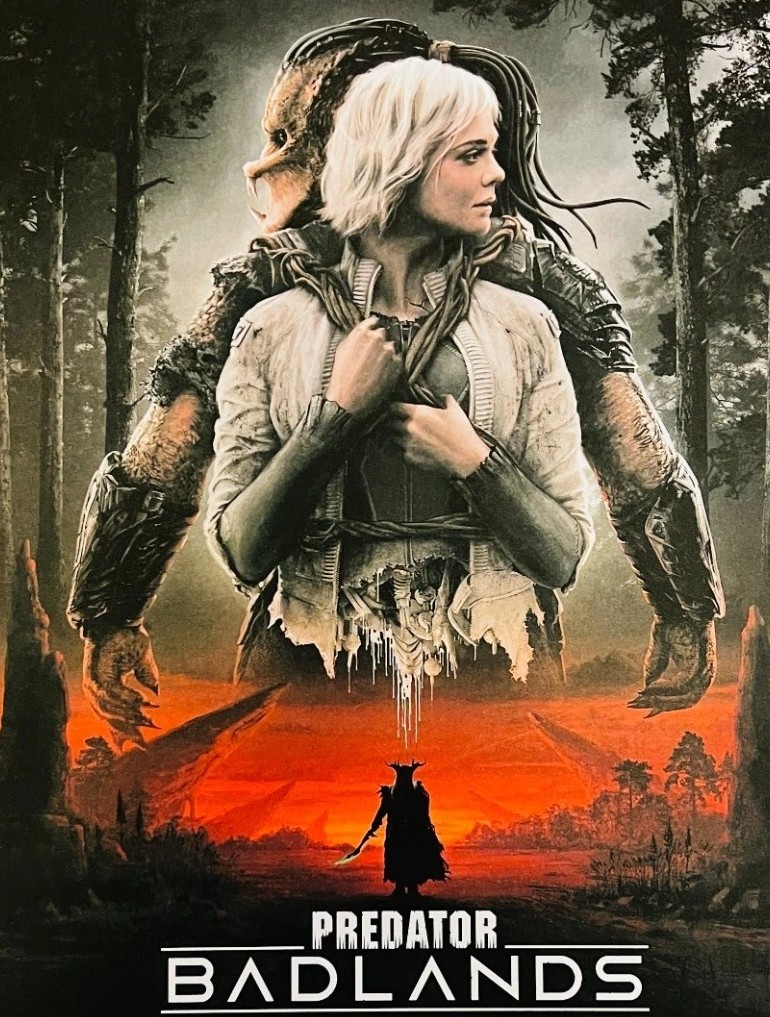
Dead Heat on a Merry Go Round (1966) ****

Highly entertaining woefully underrated heist picture with an impish James Coburn (Hard Contract, 1967), Swedish Camilla Sparv (Downhill Racer, 1969) in a sparkling debut and at the end an outrageous twist you won’t see coming in a million years. This is the antithesis of capers of the Topkapi (1964) variety. Not only is it an all-professional job, it takes a good while before you even realise the final focus is robbery or even the actual location. There are hints about the that event and glimpses in passing of material that may be used, and although the theft is planned to intricate detail, none of that planning is revealed to the audience.

The paroled Eli Kotch (James Coburn), who has seduced the prison psychiatrist, immediately skips town and starts fleecing any woman who falls for his charms. He changes personality at the drop of a hat, fitting into the likes of the mark, and in turn is burglar, art thief, car hijacker, in order to raise the loot required to buy a set of bank plans, and yet not above taking on ordinary jobs like shoe salesman to meet the ladies and coffin escort to get free travel across the country. So adept at the minutiae of the con he even manages to impersonate a hotel guest in order to get free phone calls.

He enrols girlfriend Inger (Camilla Sparv) to act as an amateur photographer working on a “poetic essay on transient populations” to get an idea of sites he means to access. He manages to have the head of a Secret Service detail blamed for a leak. Everything is micro-managed and his final masquerade is an Australian cop with a prisoner to extradite which provides him with an excuse to linger in a police station, privy to what is going on at crucial points.

If I tell you any more I’m going to give away too much of the plot and deprive you of delight at its cleverness. The original posters did their best not to give away too much but you can rely on critics on Imdb to spoil everything.

This is just so much fun, with the slick confident Eli as a very engaging con man, the supreme manipulator, and almost in cahoots with writer-director Bernard Girardin (The Mad Room, 1969) in manipulating the audience. There are plenty films full of obfuscation just for the hell of it, or because plots are so complex there’s no room for simplification, or simply at directorial whim. But this has so much going on and Kotch so entertaining to watch that you hardly realize the tension that has been building up, not just looking forward to what exactly is the heist but also how are they going to pull it off, what other clever tricks does Kotch have up his sleeve for any eventuality, and of course, for the denouement, are they going to get away with it, or fall at the last hurdle. There is a great twist before the brilliant twist but I’m not going to tell you about that either.

There’s plenty Swinging Sixties in the background, the permissive society that Kotch is able to exploit, and yet the film has some unexpected depths. You wonder if the memories Kotch draws upon to win the sympathy of his female admirers have their basis in his own life. You are tempted to think not since he is after all a con man, but the detail is so specific it has you thinking maybe this is where his inability to trust anyone originates.

Bernard Giradin was not a name known to me I have to confess, since he was more of a television director than a big screen purveyor – prior to this he had made A Public Affair (1962) with the unheard-off Myron McCormick – and Coburn was the only big star he ever had the privilege to direct. But there are some nice directorial touches. The movie opens with a wall of shadows, there are some striking images of winter, a twist on bedroom footsie, and jabbering translators. But most of all he has the courage to stick to his guns, not feeling obliged to have Kotch spill out everything to a colleague or girl, either to boast of his brilliance, or to reveal innermost nerves, or, worse, to fulfil audience need. There’s an almost documentary feel to the whole enterprise.

James Coburn is superb. Sure, we get the teeth, the wide grin, but I sometimes felt all the smiling was unnecessary, almost a short cut to winning audience favour, and this portrayal, with the smile less in evidence, feels more intimate, more seductive. This may well be his best, most winning, performance. Camilla Sparv is something of a surprise, nothing like the ice queen of future movies, very much an ordinary girl delighted to be falling in love, and with a writer of all the things, the man of her dreams.

The excellent supporting cast includes Marian McCargo (The Undefeated, 1969), Aldo Ray (The Power, 1968), Robert Webber (The Dirty Dozen, 1967), Todd Armstrong (Jason and the Argonauts, 1963) and of course a blink-and-you-miss-it appearance of Harrison Ford as the only bellboy (that’s a clue) in the picture. You might also spot showbiz legend Rose Marie (The Jazz Singer, 1927).

Regretting You (2025) ****

It’s my own fault, I suppose. There’s probably no need to try and cram in as many movies as possible on my weekly visit to the cinema. I generally aim to catch two but, more usually, if the timings of showings align, I can see three. But, honestly, I’m fed up of posting two-star reviews of movies that have come garlanded with critical praise and some prize from a film festival.

So, let me get the duds out of the way first. I hadn’t expected a great deal from Good Fortune (2025) and that was just as well because it was awful, nary a laff, and some pious virtue-signaling sermon about the wealthy vs the workers.

I had expected much more from Springsteen: Deliver Me from Nowhere (2025). I’m a big fan of movies (and books) about creative endeavor, be they concerning painters, sculptors, writers and rock stars. But I have to confess I’ve never seen Brucie in concert and I’ve probably owned only ever owned a couple of albums, and one of those would probably be a greatest hits compendium.

And I’ve never seen The Bear so Jeremy Allen White is new to me. But this was just so boring, an angst-ageddon, consisting mostly of the character looking mournful. It was more like an extended Classic Albums documentary and although it followed the same trajectory as the Bob Dylan picture of a singer changing his career path, it was still just dull. Yes, it’s a shout-out for people with mental health problems, but, hey, that’s still a documentary and forgive me for going against the grain here but White hasn’t an ounce of the charisma of Timothy Chamalet, who, when the camera bores into his soulful face, you want to know what he’s thinking. So another virtue-signaling effort that I doubt will connect with anyone but the Brucies.

So that brings me to Regretting You, the picture of which I had least expectations on my weekly Monday outing to the multiplex. And it was, as it happened, last on the agenda, so I came at it not at all anticipating that it would save the day.

And it’s not, thank goodness, what used to be called a “woman’s picture” because the two male leads are giving plenty rope and, in some regard, actually have the stronger emotional scenes. But all the characters come across as real and there’s none of the jazzing up of narrative by someone opening a flower shop or a café.  And there’s a very reflective attitude to sex, which may be woke-inspired, but certainly leans more into character than I would have expected.

The story is quite simple. Opposites attract and find that actually they’re not as attracted as all that in the lifetime sense and then swing back to people with the same attitudes to life and chaos ensues.

Outgoing uninhibited muscular jock Chris (Scott Eastwood) marries quiet reflective Morgan (Allison Williams) rather than the equally fun-loving  Jenny (Willa Fitgerald). Way down the marital line after Jenny has had a baby with their college pal Jonah (Dave Franco), Chris and Jenny have an affair that only comes to light when they die together in a car crash.

Dependable Morgan doesn’t want to detract from her 17-year-old daughter Clara’s (Mackenna Grace)  adoration of her beloved father so keeps this aspect from her. In her grief, though possibly just as a normal rebellious teen, Clara starts acting up, cue endless rows, and getting too chummy with Miller (Mason Thames) who comes from the wrong side of the tracks and complicated by the fact that he’s got a girlfriend to dump first before he can get it on with Clara.

Surprisingly, this is a lot more about grief than romance. The Clara-Miller entanglement is very chaste and even more slowburn is widow and widower discovering they have feelings for each other.

But romance definitely takes second place to grief.  Clara can’t face attending her father’s funeral and skips it, much to her mother’s fury. Morgan can’t face sleeping in the same bed as her deceitful husband and spends nights on the sofa sipping wine. Jonah begins to believe that his son is the result of the affair and pushes the child away, unable to bear the baby’s smile that he believes is the spitting image of Chris. And everyone has to work out their grief.

The Clara-Miller romance is idiosyncratically, and therefore believably, done. Even more believable is his reaction when he realizes Clara wants sex in revenge against her mother.

The acting is a bit too television, overmuch dependance on gesticulation and face contortion, but otherwise solid enough.

Allison Williams (Megan, 2002) holds it all together as the dependable mother who only breaks out to refurbish the house. Dave Franco (Love Lies Bleeding, 2024) reveals a gentler, aspect to his work. Mackenna Grace (Ghostbusters: Frozen Empire, 2024) has the showiest part, but doesn’t revel in it. Mason Thames (How to Train Your Dragon, 2025) is also good value.

In fact, what comes over best is restraint, the widow and young lover holding onto the realities of the characters they play, rather than over-acting.

Directed with some skill by Josh Boone (The Fault in Our Stars, 2014). Written by Susan McMartin (After, 2019) from the Colleen Hoover bestseller.

While this doesn’t pack the dramatic intensity of the previous Hoover adaptation It Ends With Us (2024), it deals with the subject of grief in a sensitive manner.

I might be marking this up a tad in reaction to the pair of duds I saw first, but I think not too much. It delivers a solid enjoyable experience, and isn’t preaching, which, in itself, is rare these days.

Eden (2025) ****

By all accounts this should be a stinker. Colossal box office flop without little potential redemption in the form of critical accolades. Mis-sold as a horror survival thriller with too upscale a cast for that strategy to work. And yet it gives the likes of After the Hunt and Roofman an object lesson is how to make unlikeable characters appealing.

There’s no great secret. Just don’t hide anything. Make your characters upfront from the outset and let them roll the dice without artifice. Solve any puzzles. Set out your stall fairly and go with it. And you know what, put any random characters anywhere and you’ll trigger a battle for power.

This would be in the vein of Lord of the Flies (1963), Robinson Crusoe (1997 the most recent version) and Cast Away (2000), except the characters here are on a remote island by choice, sold on the notion of getting away from a civilization which is in a bad way, this being 1932 and the world in a spiral of financial depression and rising fascism.

Wannabe philosopher Ritter (Jude Law), determined to change the world, is narked when, three years into his sojourn on Galapagos, his hardly idyllic isolation with partner Dore (Vanessa Kirby) is interrupted by the arrival of fanboy Heinz (Daniel Bruhl), wife Margret (Sydney Sweeney) and ill son Harry (Jonathan Tittel).

Somewhat surprised at the unfriendly welcome, Heinz would be astonished to learn that Ritter suggests they go live in, unknown to them, one of the worst spots on the island, assuming they won’t survive and he can go back to peace and quiet. But the newcomers have come prepared for hardship and build a home and convert a spring into a home-made pool.

A grudging truce is shattered by the arrival of the Baroness (Ana de Armas), her two lovers Rudolph (Felix Kammerer) and Robert (Toby Wallace), and her wildly ambitious plans to build a luxury hotel. Worse, she’s determined to seize power, forcing those further down the society tree to bend the knee, and if her sex appeal doesn’t achieve that purpose, then she’ll take the old-fashioned route. Heinz kisses her outstretched hand but Ritter refuses. She’s a particularly ruthless specimen and when her supply of food runs out just steals from Heinz’s horde then has the audacity to invite him to a meal featuring the stolen food.

Her plan to set Ritter and Heinz against each other, her barbed tongue a singular weapon, only results in them forming an alliance. While it’s obvious it’s not going to end well, three sequences in particular are distinctly brutal.

Along the way, facades are broken. The Baroness has invented her title. Hunger is all it takes for Ritter to shift from his avowed vegetarianism leaving Dore is appalled. Her beloved donkey is killed. Heinz has to face up to the fact that Margret only married him to get away from home. After Heinz and Ritter conspire against the Baroness, Margret and Dore conspire against Ritter.

It’s about 15 minutes too long, the seeming need to wrap up the tale unnecessary, but the rest of it is a joy to watch. There’s one absolute cracker of a sequence. While Margret is giving birth alone and threatened by feral wild dogs, the Baroness pointedly ignores her plight, not surprising since she has more important matters on her mind, namely her lovers looting of Heinz’s stores.

I had not expected much in the way of performances. Daniel Bruhl (Rush, 2013) would at least be solid, but after Black Rabbit (2025) I thought Jude Law would be way over the top and the two actresses, struggling for critical acceptance,  way out of their depth. I couldn’t have been more wrong.

Jude Law goes back to the quiet brooding intensity that made him a star in the first place. Ana de Armas (Ballerina, 2025) steals the show as the arch manipulator, her mind quick enough to rescue any dire situation. Sydney Sweeney (Anyone But You, 2023) turns her screen persona on its head, famed cleavage kept under cover, as the stalwart, almost puritanical, wife.

While this might seem a bit of a come-down for Oscar-winning director Ron Howard after box office and critical hits like The Da Vinci Code (2006) and A Beautiful Mind (2002) and making do with stars of a lower marquee class than Tom Cruise, Tom Hanks and in their day Russell Crowe, Mel Gibson and Jim Carrey, he’s tackled similar obsession before with In the Heart of the Sea (2015).

And he’s great with the cast, knocks over-acting on the head, so that every performance looks perfectly pitched and in keeping with the characters. The directing, too, is spot-on. Powerful scenes, such as the Baroness’s failed seduction of a millionaire explorer and a poisoning, are played in a low key. Written by Howard and Noah Pink (Tetris, 2023)

A shade too long, as I said, but several cuts above the likes of After the Hunt, Roofman and One Battle after Another.

What used to be called a sleeper.

Catch it on Amazon.

The Power (1968) ***

Low budget sci-fi effort that had little chance in the box office stakes that year up against the big budget psychedelic 2001: A Space Odyssey and the visceral Planet of the Apes. Producer George Pal and director Byron Haskin, the key figures behind War of the Worlds (1953), would later become among the most exalted in the sci-fi genre, but the cult of the 1950s sci-fi movies did not exist yet. Yet if made today, we would be treating this as an origin story with a sequel already in the works and creation of its own universe on the cards.

As the budget can only accommodate a few explosions and a derisory number of tiny special effects, emphasis is placed on imagination as the source of tension. The uncanny remaining unexplained helps ensure mystery remains character-driven. Wisely, the film makers steer clear of providing any detail on the strange force.

It begins with the neat title “Tomorrow.” As part of a planned space program, a team of scientists  experimenting on the limits of human endurance discover that one of them has unusual powers. As a group they are able to make revolve a piece of paper attached to a vertical pencil without establishing who is the driving force. When Professor Hallson (Arthur O’Connell) is found dead in a centrifuge, the only clue being a scrap of paper bearing the name Adam Hart, suspicion falls on the other members. Professor Tanner (George Hamilton) is dismissed when the investigation discovers his credentials are fraudulent.   

Seeking to prove his innocence, Tanner goes on the run before establishing that the main suspects are the mysterious Adam Hart and three of the original team – military chief Nordlund (Michael Rennie), Professor Scott (Earl Holliman) and Tanner’s girlfriend Professor Lansing (Suzanne Pleshette). But he is mostly baffled by the goings-on which include being dumped in an air force target range. He could be the culprit but again so many odd occurrences take place when others are present that it would be hard to pin the blame on Tanner. As the corpses begin to pile up, the list of potential suspects naturally decreases.

A toy winks at Tanner, walls appear were there were none before, a man is convinced Tanner is someone else (not Hart), a high-flying professor’s wife lives in a trailer, characters collapse under psychic assault, a young woman trying to seduce an old man discovers she is kissing a corpse, the imagery appears inspired by Salvador Dali and Hieronymus Bosch,  and you could easily argue that Tanner’s academic records have been deliberately erased. On the more prosaic side, the cops are next to useless, there’s a car chase and a sequence in a lift shaft, but the bulging eyeballs suggested in the posters are a marketeer’s invention. There’s even a clever joke, Tanner  misreading a newspaper headline “Don’t Run” as being a message to him.

The oddities are sufficiently off-beam to appear as figments of the imagination and it certainly seems Tanner suffers from hallucinations.  And there are some deliciously off-key characters, an old woman obsessed with fly-swatting, a sultry waitress. If Hart is the superhuman then experiments may have taken place long before now. In his hometown, people still act on instructions Hart handed out a decade before and accomplices are in place such as Professor Van Zandt (Richard Carlson).

Adding to the mood are philosophic discussions about the existence (as already a fait accompli) of a superhuman: some want to clone him, others would happily submit to him.

Byron Haskin (Conquest of Space, 1955) and George Pal ( The Time Machine, 1960) have marshalled their puny resources with exceptional skill, down to hiring as leading man George Hamilton (Your Cheatin’ Heart, 1964), so far from being a big star at the time that audiences would not automatically assume he had to be the good guy, and peopling the production with names from 1950s sci-fi like Michael Rennie (The Day the Earth Stood Still, 1951) and Richard Carlson (Creature from the Black Lagoon, 1954).

George Hamilton, in the days before the perma-tan became his calling card, is surprisingly good and the supporting cast does what a good supporting cast should do. Suzanne Pleshette (Nevada Smith, 1966) convinces as the lover who could be the cool killer. Also look out for 1940s glamor puss Yvonne De Carlo and a staple of The Munsters television series (1964-1966), Aldo Ray (Johnny Nobody, 1960) and Miko Taka (Walk, Don’t Run, 1966).

Perhaps the biggest coup was the recruitment of triple Oscar-winner Miklos Rosza (Ben-Hur, 1959) who provided a memorable score.

In most sci-fi films, the danger is readily identified. Here, you might hazard a guess but whenever you come close some clever sleight-of-hand misdirects. For most of the time I was happily intrigued, enough coming out of left field to provide distraction. This is a masterclass in how extract the most from very little.

After The Hunt (2025) *

Don’t you hate it when directors want to have their cake and eat it? Effectively, this is a fairly humdrum MeToo thriller but looks like it’s written by a dozen op-ed columnists taking aim at half a dozen targets, populated by little more than cliche characters, wrapped up in a fog of pretension, and spectacularly sabotaged by a deus ex machina ending that no amount of Oscar-baiting can salvage.

Large gobbets of narrative are missed out, theoretically so we make up our minds about the characters but in reality because the director can’t make up his mind where he wants to go. When the director can’t make up his mind how to frame a scene he resorts to showing us hands.

So here’s the myriad scenarios at play. Married alpha female Alma (Julia Roberts), pushing 60, a philosophy professor, adored by her students, with whom she flirts at will, is battling a pushing-40s singleton rival Hank (Andrew Garfield), adored by his students, with whom he flirts at will, for a coveted tenure at Yale. Quite why Alma, at her age, hasn’t achieved tenure before is never explained. To help heat things up, Hank has the hots for the older woman.

Wealthy gay student Maggie (Ayo Edebiri) claims Hank raped her and he’s fired. Pressure is brought to bear on Alma to back Maggie. But there’s a twist. Or theoretically, there’s a twist. Hank is about to expose Maggie as a plagiarist so she’d use any excuse to get rid of him. Theoretically. And this is one of the many ways in which the picture ties itself up in knots because Maggie doesn’t know about Hank’s suspicions.

Maggie also knows Alma’s big secret because hunting in a toilet cabinet for toilet roll she finds taped to the underside of a shelf an envelope containing stuff that might (it later transpires)  allow Maggie to happily set Hank up on the assumption Alma would take her side.

This he said/she said plays out to a mess of philosophy. The screenplay takes potshots at each generation in turn, the older one represented by Alma, the next one represented by Hank and the entitled younger contemporary one represented by Maggie who take up vicious arms against anyone who oppose their limited point-of-view, i.e. the cancel culture generation.

But there’s something wrong with Alma. She takes a couple of pills first thing in the morning and is prone to collapsing in pain. But being the philosophic sort, she’s a stoic and doesn’t tell faithful husband Frederik (Michael Stulbarg) and is popping other pills at other times. But she’s committed the grievous sin of not fully endorsing Maggie and the pupil has stirred up her friends to arms.

Given Alma’s been caught stealing a prescription and is hauled before the departmental authorities, it seems she’s for the high jump. But, lo, suddenly she’s handed a miraculous get-out-of-jail-free guard. Surrounded by baying students, she collapses. Naturally, this being the social media generation, this encounter is filmed. Turns out Alma has perforated ulcers. And the outcome is that the students end their opposition to her (in case, presumably, they are blamed for causing said collapse), and the department decides that stealing prescriptions can be swept under the carpet, so she gains tenure, Hank is cast out into the wilderness and Maggie transforms herself into a MeToo poster girl for Yale.

But that’s not even the barmiest part. Alma’s big secret is that, as an underage teenager, she was seduced by an older man. She only exposed him when he dropped her for another woman and he  committed suicide. Despite common sense telling her that she was not to blame, she persists in wallowing in guilt, viewing the man who abused her as the victim of her wiles. Which just goes to show you can study Kierkagaard and philosophers till the cows come home but if it suits a barmy director’s narrative purpose you will end up being presented as dumb as all get-out.

So this all plays out against a backdrop of philosophical gibberish and Frederik’s jealousy of the attention lavished, by males and females alike, on his charismatic wife.

When a marketing team goes down the Oscar-bait route – see Dwayne Johnson and The Smashing Machine – and claims stunning acting is the reason for seeing a movie devoid of the  more essential audience engagement you know you’re in for a rough ride.

Sure, both Julia Roberts (Ticket to Paradise, 2022) and Andrew Garfield (We Live in Time, 2024) have dumped their usual cuteness but it’s not enough to save the picture. Ayo Edebiri (Omni Loop, 2024) is left with no choice but to over-act. Directed by Luca Guadagnini (Challengers, 2024), written by Nora Garrett in her debut.

I saw four movies in two days and in all honesty Gabby’s Dollhouse best fulfilled audience expectation.

This is not just a complete dud but way past its meager theatrical run is going to annoy the hell out of everyone as marketeers and critics try to position Roberts as an Oscar contender.

The worst kind of lazy filmmaking.

Roofman (2025) **

This sounds like one of those scams you’re always reading about. Too-good-to-be-true handsome hunk Jeffrey Manchester (Channing Tatum) arrives in the life of struggling single mom Leigh (Kirsten Dunst). Only difference is he’s not ripping her off for cash, but demolishing her emotions and the faith in goodness of her two innocent kids, Jade (Kirana Kulic) and Joselyn (Gabriella Cila).

Another movie glorifying some dude you’ve never heard of, just because, at least in the movie version, he’s cute to the point of goofyness and for some reason has been left behind by society. And like Smashing Machine (2025), there’s virtually no narrative to hang onto or even that makes sense, beyond the delusion inflicted on the God-fearing family who can’t see past the armloads of gifts and fall too easily for the notion that’s he’s some kind of undercover government agent.

Maybe you can live for six months on peanut M&Ms, great piece of promotion for M&Ms should that be the case, and maybe the manager, Mitch (Peter Dinklage),  of the Toys’R’Us store you’re hiding out in is so dumb he doesn’t realize boxes and boxes of the stuff is leaving the store without registering on his till. Or that his store is also being looted of all its computer game inventory.

And it’s true that Jeffrey has an unusual set of skills, and that if he stopped stealing for a moment and found an ordinary job anywhere someone would soon cotton on the fact that he’s a walking encyclopedia of observation and surely it wouldn’t be long before he could bring added-value to any business simply by pointing out such facts.

You could start off with the fact that he’s found a weak spot in the security of most businesses. Most stores have ample security at the front, but nobody’s given a thought to how accessible they might be from the roof for a guy armed with little more than a hammer.

But, wait, Jeffrey isn’t a bad guy’s bad guy, he’d be rejected by the likes of Martin Scorsese, he’s only turning to crime because he can’t afford to buy a bike for his kid. So bringing those observation skills to the fore, he works out that McDonalds is relatively easy prey and before he’s caught he’s collected tens of thousands of dollars in his own version of Happy Meals.

In prison he turns once more to his specific set of skills and in the only interesting scene in the entire picture escapes through an ingenious method, then holes up in a Toys’R’Us where he constructs a little hidey-hole, switches off the security alarms (another set of skills), and comes out to play every night when the store is closed.

Mitch is a hardass and makes life hard for that nice single mom Leigh so Jeffrey intervenes and amends her work schedule to better suit her domestic life. And when Mitch refuses to pony up with a donation for the toy charity event she’s hosting at the local church, Jeffrey steps in.

You wouldn’t know it but these little churches are packed full of single moms just gagging for it. No sooner has Leigh coaxed our hero out on a date than she’s having first-date sex and then, armed with armfuls of gifts, he’s pretty much invading the home, younger daughter delighted with his attention, older daughter a tougher nut to crack.

Are you still interested? I wasn’t. I sat there like a member of the famed Disgruntled Audience, wondering what made anyone imagine this no-story story was worth a good two hours of my time.

So criminals are actually ordinary guys at heart, wanting a home life like the rest of us, and not all going around abusing their wives or beating up on their kids of sitting home stoned?

That’s about as much insight as we’re going to get as long as we (the audience) go in for the delusion that it’s somehow going to have a happy ending.

I’m reminded of the Richard Pryor character in one of the Superman pictures who, despite some genius, was so dumb he was always going to get caught and couldn’t think of a single way outside of criminality to find a home for his set of special skills.

Sure, Channing Tatum (Blink Twice, 2024) is watchable but soon wears out his welcome in  a tale that doesn’t go anywhere fast and Kirsten Dunst’s (Civil War, 2024) character has some surprising aspects. But really?

Derek Cianfrance has a decent track record for interesting drama – Blue Valentine (2010), The Place Beyond the Pines (2012) and The Light Between Oceans (2026) – but this is a serious miscalculation of audience endurance. Kirt Gunn (Lovely By Surprise, 2007) wrote it.

Dud.

Sands of the Kalahari (1965) ****

You know the score: plane crashes in inhospitable territory (in this case a desert), personalities clash as food/water is rationed, tempers run high and/or depression sets in as attempts to attract attention fail, someone goes for help, someone else has an ingenious idea and eventually everyone rallies round in common cause. That template worked fine in The Flight of the Phoenix (1965).

It doesn’t here. This is not quite as inhospitable. There is water. Caves offer shelter from the blazing sun. There is food – lizards trapped, game hunted with telescopic rifle. But the food is lean, not fattened through farming for human consumption.  And you have to watch out for marauding baboons not to mention scorpions. And this group is split, two alpha males intent on exerting dominance with little interest in common cause.

Producer Joseph E. Levine came up with the poster
without close examination of the picture’s content.

Of the six survivors of this crash, Sturdevan (Nigel Davenport) decides his leadership status entitles him to sole claim over the only woman, Grace (Susannah York). But when he accepts the genuine responsibilities of leadership, he sets off across the desert to get help. That leaves Grace to fall into the hands of O’Brien (Stuart Whitman), so alpha he could be auditioning for Tarzan, shirt off all the time.

It soon transpires O’Brien has a rather unusual idea of survival – getting rid of his companions so that he will have no shortage of food until rescue arrives. It takes a while for the others to catch on to his plan. And then rather than common cause and camaraderie, it becomes every man/woman for himself, a battle for individual survival, a return to the primeval.

The most likely challenger to O’Brien’s authority is Bain (Stanley Baker), but he has been badly injured in the crash and no match for the other man’s brawn or his weapon. So it becomes a game of cat and mouse. Except it’s in the desert, it’s the law of the jungle and the rule of autocracy brought home with sudden force to people accustomed to the comforts of civilization and democracy.  

The movie’s structure initially takes us down the obvious route of common purpose – Grimmelman (Harry Andrews) knows enough survival lore to devise a method of water transportation that would permit the group to escape the desert, Dr Bondrachai (Theodore Bikel) formulates  a method of trapping lizards, and O’Brien, at least at first, appears willing to take on the role of protector, warding off baboons with his gun.

The change into something different is subtle. While the others are desperate to escape, it becomes apparent that O’Brien has found his metier. We discover little about the lives of each individual prior to being stranded. Whatever O’Brien’s standing in society, it would not have been as high as here, where his superior skills stand out. Reveling in his supremacy, he doesn’t particularly want to go home.

Like any psychopath Bain knows how to manipulate so at first it seems his decisions are for the greater good. And only gradually does it emerge that he blames others for his own mistakes and intends to eliminate his rivals for the food supply one by one. Because he is so handsome, it is impossible to believe he could be so devious or so evil.

The three principals all play against type. Stanley Baker (Zulu, 1963) and Stuart Whitman (Murder Inc., 1960) made their names playing heroic types. Here Baker is too ill for most of the picture to do any good and Whitman plays a ruthless killer. But Susannah York (Sebastian, 1968) is the big revelation. Audiences accustomed to her playing glamorous, perhaps occasionally feisty, gals will hardly recognize this portrayal of a coward, not just abjectly surrendering to the alpha male but seeking him out for protection and guilty of betrayal.

Even though this picture is set in the days before gender equality and the independent woman was a rarity, Grace’s acquiescence to the powerful male is disturbing, in part because it takes us back to the days when a woman was impotent in the face of male dominance. Such is York’s acting skill that rather than despise this woman, she earns our sympathy.

While for the most part Harry Andrews (Danger Route, 1967) and Nigel Davenport  (Sebastian, 1968) appear in their usual screen personas of strong males, here their characters both are changed by the circumstances. Theodore Bikel (A Dog of Flanders, 1960) has the most interesting supporting role, the only one who takes delight in the adventure.

Director Cy Endfield (Zulu) – who also wrote the screenplay based on the William Mulvehill novel – delivers a spare picture. There is virtually no music, just image. Aerial shots show tiny figures in a landscape. The absence of character background frames the story in the present. As a reflection on the animal instinct, how close to the primordial a human being still operates, no matter how enlightened, this works exceptionally well, and melds allegory with thriller.

Man in the Dark / Blind Corner (1964) ***

Hammer Scream Queens rarely make an impact outside the genre, so it comes as something of a surprise to find Barbara Shelley effortlessly making the transition from The Gorgon (1964) to a slinky femme fatale spinning a deadly web around three men. While British femme fatales tend not to go all-out full throttle in terms of seduction and revenge, that suits the set-up here which is distinctly slow-burn. In fact, you might be persuaded to accuse the production of time-wasting or padding-out the story with its occasional diversions into song numbers (though that is a trope of these B-features) until you discover later on that there’s a very good reason for listening to the dulcet tones of pop singer Ronnie Carroll.

While there are echoes of Faces in the Dark (1960), blind composer Paul (William Sylvester) here is a far more sympathetic character especially once audiences latch on to what he as to put up with. And where Wait until Dark (1967) majors on terror, here the approach is much more subtle. And while audiences might wince at Audrey Hepburn’s predicament, here they will be appalled to see Paul’s wife Anne (Barbara Shelley) virtually taunt him by not just parading her secret lover Ricky (Alexander Davion), a penniless artist, but caressing him and pecking his cheek with kisses as if to test her husband’s radar.

Not only is Paul the forgiving type – turning a blind eye to his wife’s regular late nights – but he is devoted to Anne and considers himself lucky that she has stuck by him and it never occurs to him that his wealth plays a significant part in that bargain, Anne, a little-known former actress, unlikely to enjoy such bounty any other way. He’s so in love with his wife that he knocks back his secretary Joan (Elizabeth Shepherd) who has a good idea her employer is being played for a fool.

Under the guise of Ricky painting her portrait, Anne manages to legitimately spend a considerable amount of time with her lover and fine-tune her plans to rid herself of Paul. There’s a fairly easy option. Paul is an alcoholic and given to standing in an open balcony. He could easily lose his footing and topple over should there be someone around to give him the initial nudge.

Ricky is pencilled in as the murderer. And though he initially baulks at the idea, the prospect of both losing Anne and resolving at the same time his financial problems is too tempting. By now, Paul is aware of the tryst, having been alerted to the couple smooching in a restaurant, by his best pal and manager Mike (Mark Eden). Once we realize that Paul has been taping his wife’s telephone conversations, you are misdirected into thinking he will be better prepared. But this isn’t America or even sleazy Soho and there’s not a gun to hand or even a knife so Paul is vulnerable to an assailant and even as weak-minded an individual as Ricky seems to grow in confidence the minute the tussling begins.

Even then Ricky is so incompetent Paul needs to coach him into how to get away with the perfect murder and once we get to this stage it’s clear there’s something else going on and we’re in for a torrent of twists, delectably delivered. Ricky is informed that he’s a patsy, that Anne is in love with Mike and that in a courtroom she will act her socks off as the innocent victim of an overzealous lover – “a choked sob will escape her –  she did that in The Act of Cain” or “she might fall into a crumpled but not unattractive faint” as she did in Murder Undaunted.”

When Anne arrives, accompanied by Mike, to check on Ricky’s handiwork, the game is clearly up. But Paul has police hidden in the bedroom to hear what amounts to Anne’s confession. All three are locked up and Paul heads off into the sunset with his secretary.

Barbara Shelley creates a sizzling tension of her own and is a superb femme fatale, dangling three men on a string. Alexander Davion (Paranoiac, 1963) and Mark Eden (Curse of the Crimson Altar, 1968) don’t get a look-in though simply by being stoic and then clever William Sylvester (Devils of Darkness, 1965) manages to hold his own.

Quite a different proposition to Tomorrow at Ten (1963), also helmed by Lance Comfort, where the tension is upfront. You’d say this was a weighted piece of direction, with much of the pressure in the early stages reliant on whether Paul will see through his wife. Those scenes where she toys as much with her lover as her husband are unique. Written by the team of James Kelly and Peter Miller (Tomorrow at Ten) plus Vivian Kemble (Olympus Force, 1988).

Takes a while to come to the boil but well worth the wait.

Catch it on Talking Pictures TV under the title Blind Corner.

Birdman of Alcatraz (1962) ****

It always helps a prison picture if your character has been wrongfully convicted (The Shawshank Redemption, 1994) or is incarcerated through an unfortunately set of circumstances including self-destructive tendencies (Cool Hand Luke, 1967). Whatever the case, the malevolence of the wardens or the emergence of his own engaging personality will ensure that your character is sprinkled with enough sympathy to transform into our hero.

But that’s not the case here and it takes a strong chunk of bravura acting from Burt Lancaster (Elmer Gantry, 1960) to pull this off.

Oddly, this works in the main not because it’s your typical prison picture with endless confrontations with guards and preventing your dignity being sliced and diced by a ton of humiliating actions. Walt Disney couldn’t have done a better job of hooking the audience with its nature true-life approach. I guarantee you will be chuckling to watch a newborn chick trying to shuck off the top half of its egg.

Robert Stroud (Burt Lancaster), a pimp, was certainly no innocent, a two-time killer, who only escapes execution through the efforts of his mother (Thelma Ritter) in persuading U.S. President Woodrow Wilson to commute his sentence. However, there is an evil Catch-22 which infuriated prison governor Harvey Shoemaker (Karl Malden) invokes. While awaiting sentence, and assuming execution is inevitable because he murdered a prison guard in front of hundreds of witnesses, the local judge has decreed that Stroud should be kept in solitary confinement.

Shoemaker, nettled by Stroud’s defiance, interprets that as being able to keep the prisoner in solitary confinement for the rest of his term – which amounts, as it happens, to 40 years. None of this bugs Stroud that much. He’s averse to human companionship, as likely to bully a cellmate and cause ructions elsewhere, and certainly not ever going to give in to the prison system with its endless rules.

The marketeers have taken some liberties with the title. But Alcatraz is certainly a bigger lure to moviegoers than Leavenworth. By the time Stroud reaches Alcatraz he’s devoid of birds. All the breeding activity takes place in Leavenworth.

And while there are aspects of Stroud’s character you will never warm to, he’s got us hooked the minute he embarks on the bird breeding, in part because it’s the antithesis of his character to be so humane, and in part because the dedication involved in painstakingly building cages or other toys (a little wooden chariot a bird is taught to drive) from nothing but wooden boxes with rudimentary tools he has fashioned himself is wondrous to behold. That section of the movie is just enthralling.

Although he’s rescued a chick from a broken nest that lands in the prisoner courtyard during a storm, it takes him a while to cotton on that the bird needs fed, which he does with his version of a toothpick. He coaxes the frightened bird to fly and eventually starts breeding the damn things, persuading a new governor to allow him to buy birdseed and encourages his hobby, so much so that after extensive study Stroud becomes a noted ornithologist with a couple of publications to his name. His case became widely known after a bird researcher Stella Johnson (Betty Field) publicizes his activities and eventually marries him.

But when he’s shifted to Alcatraz, he encounters Shoemaker who forbids the birds. So Stroud starts to write a history of the U.S. penal system. Despite being prone to violence, he is instrumental in ending a prisoner uprising. He is never released, despite various petitions.

So while there’s no happy ending it’s an absorbing picture. Burt Lancaster is at the top of his form, winning another Oscar nomination. Telly Savalas (Crooks and Coronets, 1969), playing another prisoner, was also nominated. Karl Malden (One Eyed Jacks, 1961) is an excellent foil and any time Thelma Ritter (A New Kind of Love, 1963) pops up she steals the show.

While it’s on the long side for a prison picture and lacks the epic quality that the 150-minute running time would suggest, director John Frankenheimer (The Manchurian Candidate, 1962) takes an almost documentary approach to his subject. You might call it an intimate epic. Screenplay by Guy Trosper (The Spy Who Came in from the Cold, 1965) from the book by Thomas E. Gaddis.

Standout show from Lancaster.

The Executioner (1970) ****

Minor gem. One of the espionage films of the era ignored by audiences because it lacked the verve of James Bond, no car chases or bedhopping hero to maintain interest when the narrative stretched credulity. Ignored by critics because it starred the vastly underrated George Peppard. Yet if you wanted an actor to show pain, to suffer from humiliations to his dignity, there was no one better, in part because on screen (and apparently in real life) arrogance was key to his persona. Here, you can add confusion to that mix of unwelcome emotions.

Beginning a scene with the aftermath of slaughter has become a modern thriller trope – see The Equalizer 3 (2023),  The Accountant 2 (2025) for the most recent examples –  but this is where the idea began and it’s how this picture opens, the only survivor of the massacre being the wife Sarah Booth (Joan Collins) whom our hero John Shay (George Peppard) covets. An immediate flashback shows them consummating their love. So you’re guessing there’s something of the James Bond in Shay, carrying on an illicit love affair.

But in fact that’s just one of the clever titbits of misdirection director Sam Wanamaker (The File of the Golden Goose, 1969) throws our way. And, gradually, we realize this is not so much about dirty dealings in the espionage business, the usual hunting down of a double agent, our hero clashing with disbelieving and frosty upper class bosses, but more about how the flaws in human nature turn characters inside out.

It’s no surprise that Shay is an outsider, not with that American accent standing out a mile in the British secret service run by the cut-glass accents of the likes of Col Scott (Nigel Patrick) and Vaughn Jones (Charles Gray). He’s not a member of the club, old boy. He bristles at not belonging – “belong to me!” wails girlfriend Polly (Judy Geeson). And he’s been passed over  by love of his life Sarah for another agent Adam Booth (Keith Michell) not because the latter has wealth and status but because Shay’s mind is too often elsewhere.

Though you are initially led to believe that Shay is having an affair with Sarah, that turns out to be far from true, although the glances he casts at her are enough to make Polly think they still are. And part of the reason his superiors distrust his assertion that Adam is a double agent is because they think he just wants rid of his rival so he can make another play for his former lover.   

Shay is so convinced that he is right that he gets Polly, who also works in the secret service but in the backroom department, to sneak out top secret files. When he stitches up enough information to make the case against Adam, it backfires and he’s suspended. But then, egged on by a discovery by top boffin Crawford (George Baker) working on some top secret stuff,  he decides to kill Adam and chuck the body out of a plane into the English Channel – hence becoming the executioner of the title.

Then the twist is truly in when Shay takes Adam’s place on a mission to Greece, which has also been planned as a second honeymoon for Adam and Sarah. This latter fact doesn’t dissuade Shay from making a romantic play for Sarah. However, there are nefarious dealings afoot espionage-wise but in what proves the first of many miscalculations Shay comes unstuck and is beaten up by the opposition and Sarah kidnapped. The ransom the Soviets demand is Crawford.

The massacre that we saw at the start solves that problem.

But it turns out Shay has let desire for Sarah muddle his brain for Adam was not a secret agent. Shay has been further duped into that belief by Crawford who also has romantic designs on Sarah, though it has to be said in her defense that Sarah has encouraged neither of these potential suitors.

There is one final twist but that’s just another nail in the coffin.

So what sets out to be a different kind of spy thriller turns into the polar opposite of what audiences might have expected, playing more on the human frailty of the hero than hitherto in the genre.

George Peppard is excellent, especially when expressing emotional pain and confusion, continuing a superb run of acting roles – ignored by the critics of course but tossing his screen persona away – that ran from Rough Night in Jericho (1967) and P.J. (1967) to Pendulum (1969). Judy Geeson (Brannigan, 1975) has the better female role as the disgruntled but faithful girlfriend. Aside from the occasional acidic remark, Joan Collins (Subterfuge, 1968)  is strictly there for the glamor.  Written by Jack Pulman (Best of Enemies, 1961) from a story by Gordon McDonnell (Shadow of a Doubt, 1943).  

Well worth a look.

Discover WordPress

A daily selection of the best content published on WordPress, collected for you by humans who love to read.

The Atavist Magazine

by Brian Hannan

WordPress.com News

The latest news on WordPress.com and the WordPress community.