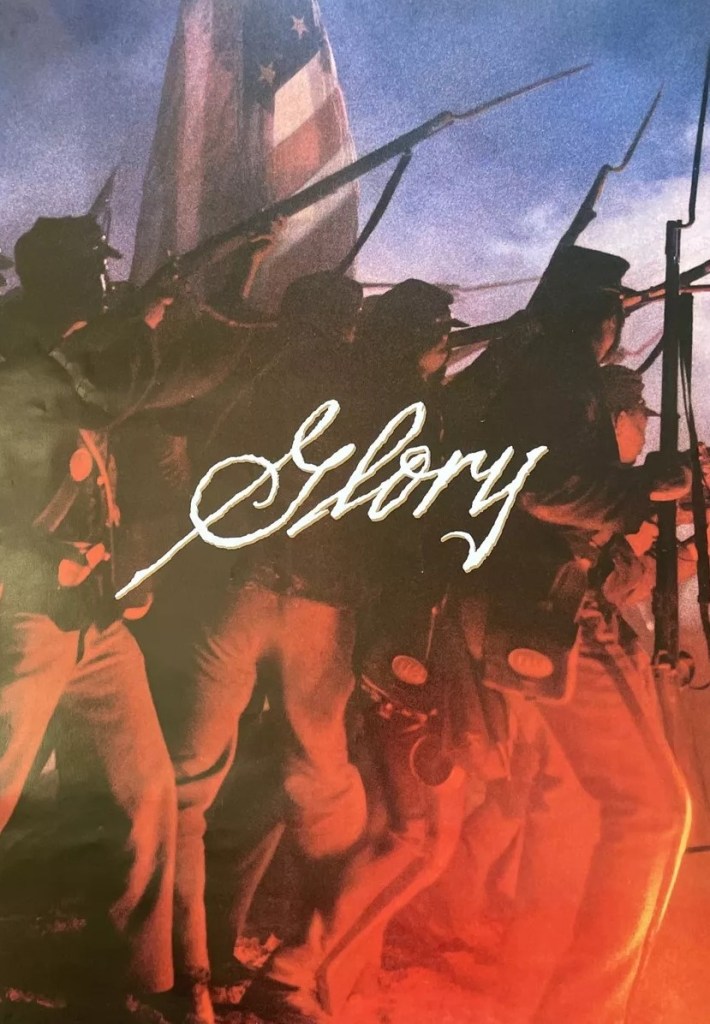
Behind the Scenes: “Glory” (1989)

Want to hire Matthew Broderick? Then you better be prepared for his mother. Worse, there was no get-out clause. Tri-Star Pictures, an offshoot of Columbia, was only making the movie because of Broderick, whose marquee value was based solely on a completely different type of picture, namely Ferris Bueller’s Day Off (1986). Yes, he had won a Tony aged 21, and this was his sixth picture, of which only War Games (1983) hit the box office mark.

But the actor had a great deal to contend with in his personal life, grief and guilt as a result of driving his car into the wrong lane, crashing into an oncoming vehicle, killing two and seriously injuring himself and his passenger Jennifer Grey. His mother had been seriously ill, also. Glory proved another ordeal. “Nothing I might have done could possibly rival Matthew’s role in the theater of cruelty that was about to begin,” wrote director Ed Zwick in his memoir, Hits, Flops and Other Illusions (2024).

The same accusation of being a lightweight could as easily been levelled at Zwick, his only movie being About Last Night (1986), which though with serious undertones, was basically a modernized rom-com. He was best known for television, as writer-producer on thirtysomething (1987-1991), that “despite its success was an intimate, whiny talkfest.”

Broderick’s mother, Patsy, made her presence felt almost immediately. Before shooting commenced, the actor quit. Patsy didn’t like the script. By this point, Zwick hadn’t even met Broderick. Zwick received the news while on holiday in a cabin in the mountains. Communication was primitive, virtually walkie-talkie style. Eventually, Zwick agreed to look at the actor’s notes on the screenplay.

The script issues should have warned Zwick what he was taking on. At that time the film was called Lay This Laurel, the title of a monograph by Lincoln Kirstein, about the assault on Morris Island by the 54th Massachusetts Regiment, the project initially on the slate of Bruce Beresford, Oscar nominated director of Tender Mercies (1983). Kevin Jarre, with just a ‘story by’ screen credit, for Rambo: First Blood Part II (1985), to his name, had written the screenplay. “The script is perfect,” averred Jarre when Zwick demanded a rewrite. Beyond a slight polish and a shifting around of some scenes, Jarre wouldn’t budge. So Zwick took on the rewrite.

Broderick’s notes were within the realm of expectation, mostly to do with his character. But then he sent the script to Horton Foote (To Kill a Mockingbird, 1962), whose daughter he was dating. Then to Bo Goldman (One Flew over the Cuckoo’s Nest, 1975). Neither writer took on the script and Goldman assured Zwick the script was fine. Then, the final bombshell. At her son’s insistence, Patsy was to work on the script. “I’m sure she was capable of warmth,” noted Zwick, “but I was never treated to that side of her, from the moment we met,” going through the script page by page, “she was contemptuous, demeaning and volatile,” her son sitting in silence. Amendments suggested by Patsy were readings from Ralph Waldo Emerson and Harriet Beecher Stowe, and a scene where Broderick’s character was persuaded to take command of the regiment by his screen mother, to be played by his real mother.
As it happened, long before Broderick turned up, Zwick had been shooting footage from the 125th anniversary of the Battle of Gettysburg where 20,000 men in full uniform and weapons re-enacted the conflict. On a $25,000 budget, Zwick shot 30,000 feet including a cavalry charge, and created what was known in Hollywood parlance as a “sizzle reel.” Many of the re-enactors turned up as extras.

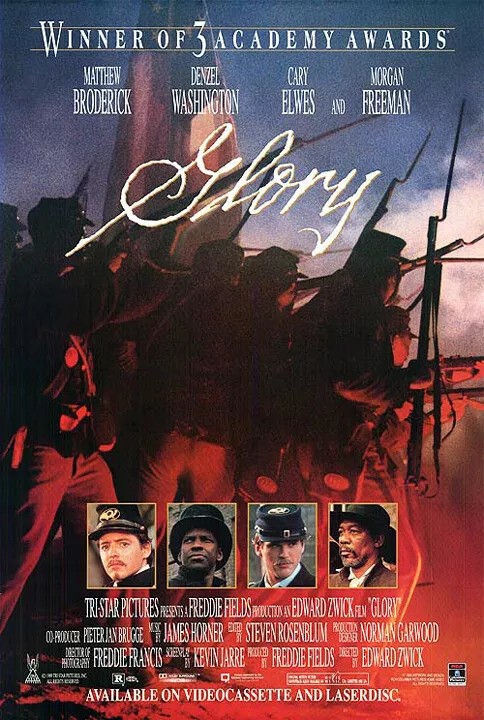
Cary Elwes (The Princess Bride, 1987) took a salary cut for his role. Zwick had been impressed by Denzel Washington in A Soldier’s Story (1984) and Cry Freedom (1987) but couldn’t afford him until producer Freddie Fields chipped in some of his fee. Morgan Freeman’s career was on an upward turn after an Oscar nomination for Street Smart (1987). Zwick found acting chemistry between this pair and Jihmi Kennedy and Andre Braugher. The actors “were hearing music I couldn’t even imagine,” wrote Zwick, “yet during each session, a transcendent moment, usually unwritten, could occur.”

Initially, however, Zwick felt he was making a disaster, “the lighting was too bright, the costumes were too new, and Matthew (Broderick) seemed uncomfortable in his role.” Luckily, a storm intervened. Not to provide rest or for Zwick to regroup. A mere storm wasn’t sufficient cause to postpone the scene of the regiment’s arrival in Readville. In the attendant fog, they were bedraggled, ankle-deep in mud, shoulders hunched against the lashing rain. Zwick realized that was the look he was after. He approached cinematographer Freddie Francis to shoot “without lights” in order to capture a similar mood. “Why didn’t you say so, dear boy?” was Francis’s encouraging response.

The next day, the first tent scene, provided another surprise. “I stared open-mouthed at the utter transformation that had taken place. Overnight he (Denzel Washington) has become Trip. Volatile. Funny. Mesmeric…it was impossible to take your eyes off Denzel…I had been in the presence of greatness. I’d never seen an actor command the focus by doing so little.”

Andre Braugher, in his debut, was also a revelation, after he’d mastered the art of hitting his marks. Once, during rehearsal for a scene, Zwick noticed that Morgan Freeman never looked Broderick in the eye. “Just as I was just about to move the camera to catch his look, I realized he was making a point of not looking at him…as a black man who had lived a lifetime wary of being punished.” Despite the traumas over the script, Broderick’s performance was “pitch perfect.”

The most emotionally powerful scene is the whipping. Twice, Zwick filmed Washington receiving three lashes. “But there was something more to be mined.” Making an excuse, Zwick asked Washington to re-do the scene, but then told John Finn, applying the whip, not to stop until Zwick called “cut.” Finn had delivered eight strokes before Zwick found what he was looking for. “The shame and mortification were real now… and in the magic of movies…a single tear appeared, catching the light at the perfect moment.”

Directorial sleight of hand in the battle scene compensated for limited budget and insufficient extras. Taking note of Kurosawa’s Ran (1985), Zwick filmed one “big image of each significant moment of the battle using the entire contingent.” The trick was to go back and shoot it all over again with a smaller group but each time filling the frame top to bottom with soldiers fighting. “When it’s cut together, the larger image stays in the audience’s mind as long as they’re never allowed to see blank space at the peripheries of the frame.”

To add to the battle, they let loose rockets and explosions on the night sky, almost losing a $300,000 camera car in the process. Much of the exposition, including the Patsy Broderick scenes, ended up on the cutting room floor. While Kevin Jarre had become a “cheerleader” for the film, Broderick and his mother walked out of a preview with the actor demanding to do his own cut of the movie. Zwick refused.

Released in December 1985, Glory was nominated for four Oscars including best director. Washington won Best Supporting Actor, Freddie Francis for Cinematography and Donald O. Mitchell, Greg Rudloff, Elliot Tyson and Russell Williams II for sound. Tri-Star refused to advertize in Black media. Zwick considered any “pushback” of Broderick’s character being perceived as a “white-savior narrative” as a “left-wing canard.”

SOURCE: Ed Zwick, Hits, Flops and Other Illusions, My Fortysomething Years in Hollywood (Gallery Books) 2024, pp69-105.

Glory (1989) ****

The mania for anniversary reissue seems to have passed this one by and, in the light of other campaigns such as Black Lives Matter, seems odd that nobody could take advantage of the 35th anni opportunity, not least Columbia, on a revival bandwagon, under whose aegis it was made. Equally, nor does it appear to have struck a chord among those studio executives keen on remakes.

Certainly, if re-done it would rectify the nagging flaw of a picture about the black experience  viewed primarily through the white prism. The passing of years would have made Denzel Washington ideal for the part of the older man while his son John David Washington might have collected sufficient marquee approval to qualify for the showier part of the younger man. Remade from the perspective of the freed black slaves, with the white contingent as subsidiary, surely it would carry even more power than the original especially over the issues raised, not just slavery but, as important, the institutional racism that saw the black man, even when freed, as inferior.

The initial crux of this tale of the 54th Massachusetts Infantry Regiment formed in the American Civil War comprising freed slaves was that it was originally little more than a PR exercise, the black soldiers kept destitute of footwear, uniforms and weaponry on the assumption that they would make poor soldiers. The other important factor was whether  freedom would make any difference post-war if the black soldiers, having risked their lives, did not return to an improved situation in society.

This isn’t the kind of army picture where the raw recruits  come to greatly admire, however grudgingly, their superiors along the lines of Sands of Iwo Jima (1949) and The Dirty Dozen (1967). It is much more complex than that. The white man (in this case Matthew Broderick) remains top-billed over Denzel Washington (then a rising star) and Morgan Freeman (whose career zoomed thereafter). And promotion, as with every Army of the period, was synonymous with wealth and/or status.

So relatively inexperienced Capt. Shaw (Matthew Broderick) is promoted to Colonel and given command of the black regiment, aided by the more obviously self-serving Major Forbes (Cary Elwes). Much of the early sections revolve around Shaw establishing his credentials, stamping his authority on his own officers, in particular Forbes who treats him as a buddy rather than a superior, and later having the confidence to challenge (and blackmail) the corrupt vested interests denying his troops the equipment they need and insisting they receive the same wage as their white compatriots.

Tucked in around that narrative are the freed slaves, the younger Pvt Trip (Denzel Washington), who refuses to kowtow and rejects the offer of carrying the regimental flag into battle, and the older grizzled Rawlins (Morgan Freeman) who is promoted to Sgt Major, gaining respect and revelling, eventually, in his authority. But there’s also the already free Searles (Andre Braugher), educated and literate, who joins up out of solidarity only to discover he has little aptitude for soldiering and no amount of appeal to former pal Shaw can spare him from the attentions of the brutal white Sgt Maj Mulcahy.

The training stretches Shaw’s innate benevolence to the extreme, having experienced battle himself, aware of how tough his men need to become to endure warfare.  

The battle scenes are tremendous, the scenes of desperate hand-to-hand fighting, the slaughter from cannons and serried musketry, highlighting the courage it takes to stand and not turn and run. The first battle brings victory but the second is infinitely more dangerous, an assault doomed to result in mass casualties and little glory.

Although Matthew Broderick is certainly overshadowed by Denzel Washington and Morgan Freeman, I don’t fall into the camp that’s critical of his performance. In a sense it’s obvious he’s trying to shy away from the bravado exuded in Ferris Bueller’s Day Off (1986) but my guess is that his character’s diffidence, fear of command, awareness that he lacks the personal authority were true of a man raised way above his station for all the wrong reasons. Denzel Washington (Cry Freedom, 1987) won the Best Supporting Actor Oscar, but, surprisingly, Morgan Freeman wasn’t nominated.

Director Ed Zwick (About Last Night, 1986) had to content himself with a Golden Globe nomination, though he’d reunite with Washington twice more and his handling of the battle scenes was recommendation enough for later big-budget pictures like The Last Samurai (2003). Screenplay by Kevin Jarre (Tombstone, 1993).

Despite my reservations, brutally authentic.

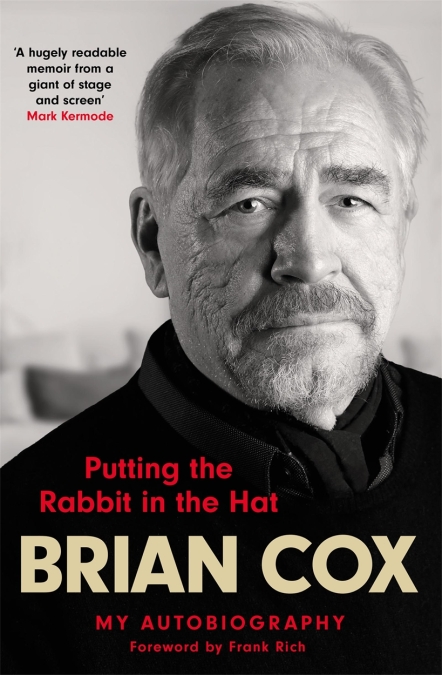
The “Succession” Man – Brian Cox

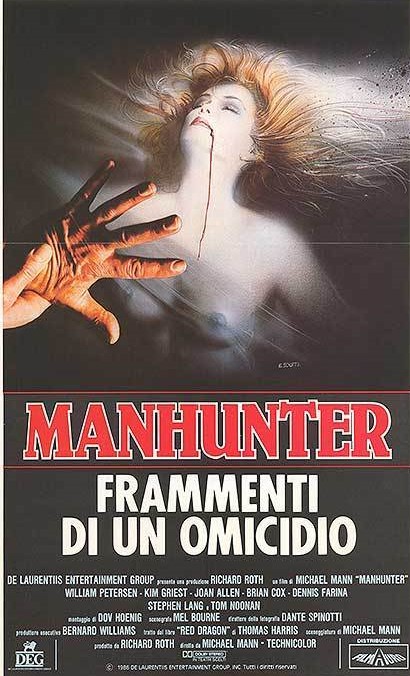
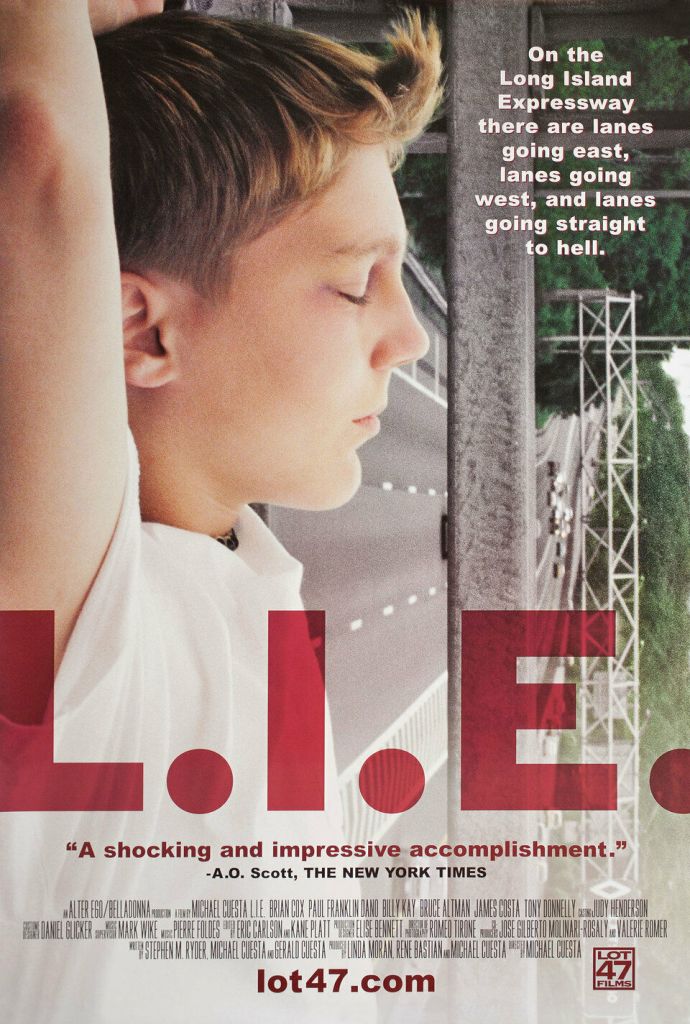
If you find that most movie star biographies concentrate on gossip at the expense of genuine insight to the craft of acting, then this one is for you. For the bulk of his film career, Cox, outside of such films as Manhunter (1986), L.I.E (2001) and Churchill (2017), has been in the main a supporting player and not even the kind of supporting actor regularly commended by Oscar voters, rather the type of artist whose face you recognize and welcome in small but important parts. Probably you will be unaware that he was more of a titan on stage, winning two Olivier awards – the British equivalent of the Tonys – and nominated another twice as well as wins and nominations for theatrical productions in America.

So he makes no distinction between the various mediums – film, television, stage – in detailing the development of his craft.  His first seminal moment came from the David Storey play In Celebration when director Lindsay Anderson having spent 90 minutes trying to slow the actor down for one segment eventually in frustration explained to the actor the reason for takings things slowly: his character returning home for the first time in years would spend time reacquainting himself with the house, taking in what had changed and what was familiar. In other words, “I learned to be a character rather than describing or acting it.”

When he moved into films, he had enough self-awareness to realize he was never going to be the leading man (even in the cult Manhunter, he was billed third or fourth in the credits) and determined he was “going to earn my wage as a character actor and that what I really wanted to do was create characters similar to those I loved from the old films… (where) characters just zing at you, no matter how small the part.”

He also appreciates his co-stars, especially the superstars. Of Keanu Reeves, he pointed out: “Despite choosing interesting work and being an interesting guy, he still had a reputation as a bit wooden…He took himself off to a small theatre in Canada and played Hamlet. He stuck at it and he’s actually become quite good over the years. He’s become rather good because he’s learned his job.” He has similar praise for Brad Pitt. “Like Keanu the initial appeal is all about the heartthrob looks, so he’s had to learn on the job; he’s had to dedicate himself to his craft…I love that ambition, that dedication, not to be better looking or more famous or have a sexier partner, but to be a better actor.”

When an actor has 234 credits in film and television you can tell instantly he’s a character actor. While occasionally Cox has appeared in high profile ventures – Braveheart (1995), X2 (2003), Troy (2004), and Rise of the Planet of the Apes (2011) – more often you would find him turning in bit parts in smaller pictures that you have possibly never heard of like The Water Horse (2007), Citizen Gangster (2011) and Morgan (2016).  Sometimes he pulled out a television plum, Nuremberg (2000) for which he won an Emmy or British comedy Bob Servant Independent (2013).   

With such a variety of movies, he has a wealth of anecdotes. He took over the role intended for Dustin Hoffman in The Long Kiss Goodnight (1996) and replaced Tommy Lee Jones in Chain Reaction (1996). He has stories to tell about Sir Laurence Olivier, Kevin Costner, Morgan Freeman, Samuel L. Jackson, Harvey Weinstein, Steven Seagal. Woody Allen, Scarlett Johansson, Mia Farrow, John Schlesinger and a dozen others.  

But he doesn’t like Quentin Tarantino or the acting of Sir Ian McKellen. “I really don’t have much time for Quentin Tarantino. I find his work meretricious. It’s all surface. Plot mechanics in place of depth. Style where there should be substance. I walked out of Pulp Fiction.’ Of McKellen he observes: “He is a master of what I’d call front-foot acting. It’s very effective…but it doesn’t quite fulfil what I believe is one of the key functions of acting.”

He was paid $10,000 for Manhunter while Anthony Hopkins walked away with a million for Silence of the Lambs (1991). He turned down Pirates of the Caribbean (2003) and Game of Thrones. Terrorists nearly boarded his plane during 9/11. His  mother suffered from mental illness. His father died when he was young.

After a half century of as many downs as ups and little likelihood that publishers would be knocking on his door for his autobiography, he suddenly became a massive star thanks to Succession. Supreme acting skills that had been ignored by the Hollywood cognoscenti were crucial to Logan Roy becoming one of television’s most popular – and hated – characters. His great talent is stillness, to be able to convey myriad emotion without speaking a word.  

But publishing an autobiography is not the true mark of success. Being in demand is. As well as future series of Succcession, he already has in the can the following films – The Jesuit, Skelly, Prisoner’s Daughter and Mending the Line and is currently shooting The Independent, in all of which he is either top-billed or second-billed, a far cry from sixth or seventh billing in supporting roles.

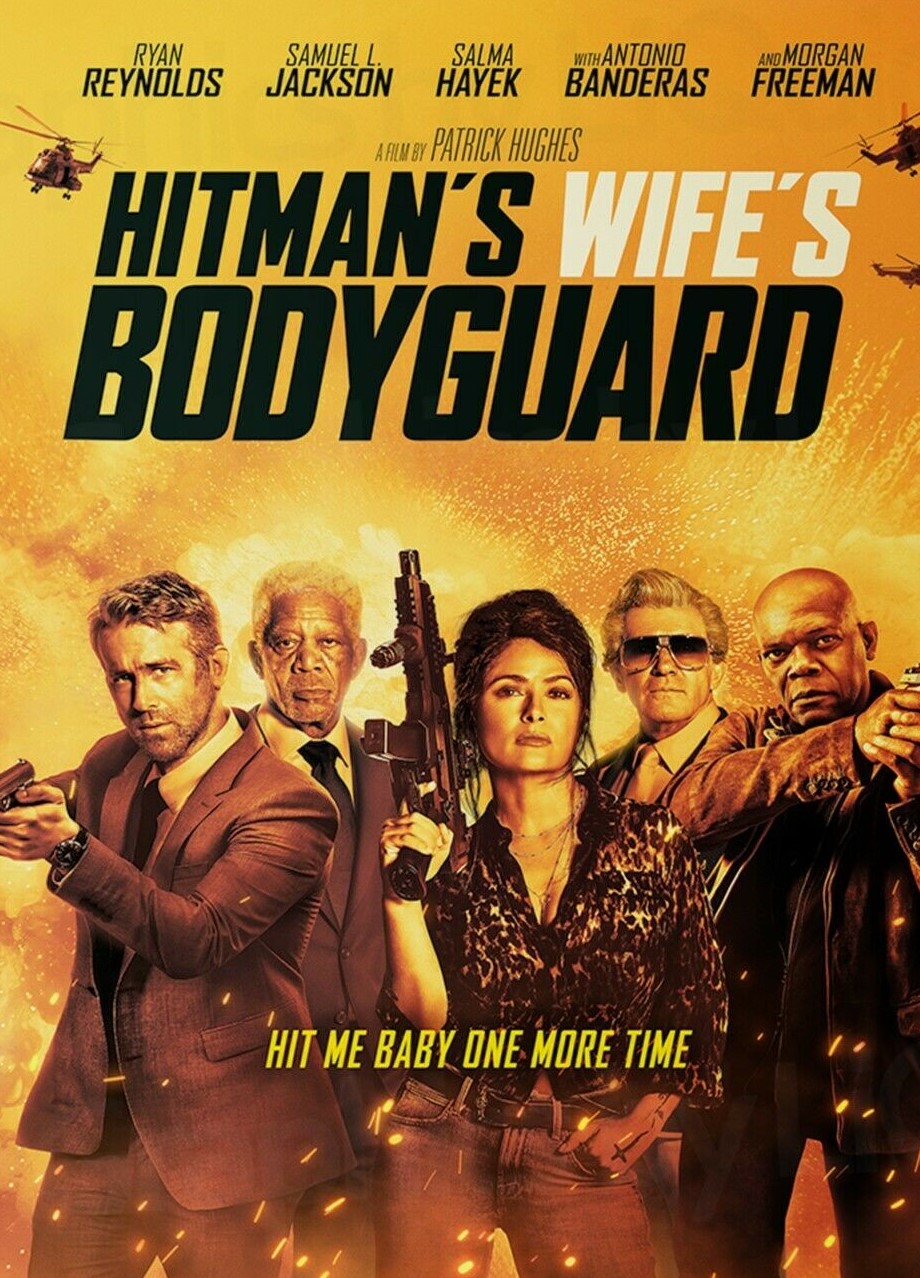
The Hitman’s Wife’s Bodyguard (2021) ****

Contrary to all my expectations – and the opinions of the Rotten Tomatoes critical aggregate – this was a blast. The over-the-top tongue-in-cheek action thriller is dominated by Salma Hayek who acts as a glorious foil to the bickering bad boys. Had she not been so well established, this would have been a career-making turn. It might yet give her a fresh burst of cinematic life away from the serious stuff to which she has previously devoted her screen life.

This movie follows the new rule for sequels, in that often these days they are better than the original. I had not been so taken with The Hitman’s Bodyguard (2017), which basically turned on the old idea of a mismatched duo with a more straightforward storyline.

This time round, disgraced bodyguard Michael Bryce (Ryan Reynolds) is forced out of a very brief self-imposed retirement by Sonia Kincaid (Salma Hayek), who had small role in the original, to rescue husband Darius (Samuel L. Jackson) from gangsters. The main plot is straightforward enough – Greek shipping tycoon Aristotle Papadopolous (Antonio Banderas) plans to hold Europe to ransom after the EU imposes financial sanction on his native country by knocking out all digital communication throughout the continent. Interpol agent Bobby O’Neill (Frank Grillo) forces the trio to work together to foil the plot.

But there are a host of wonderful, and occasionally surprisingly emotional, subplots. For a Start Sonia is desperate to become a mother with question-marks about Darius’s ability or wish to make her pregnant. Bryce has vowed to give up violence and we get to meet his father, a legendary hitman (Morgan Freeman) who adds surprising complications to the story. Bobby O’Neill is constantly at odds with boss Crowley (Caroline Goodall) and can barely understand a word spoken by Scottish interpreter Ailso (a very dry Alice McMillan). Aristotle once had a thing for Sonia and his chief bodyguard Magnusson (Tom Hopper) is by far the coolest bodyguard on show.

The action just batters along, fueled by various plot twists, and there is hardly a pause for breath as the hitmen and their adversaries destroy a ton of Europe’s most attractive cities. There are also plenty of laugh-out-loud moments. There’s nothing remotely serious about the plot beyond personal issues facing the trio and that the preposterousness reaches high-octane levels only adds to the fun. If it’s not a shoot-out, it’s a chase. If the trio are not killing each other, they are trying to save each other. And there is a surprise ending which may trigger another sequel.

Salma Hayek (Oscar-nominated for Frida, 2002) at full throttle both emotionally, vocally and in murderous mode steals the picture. She delivers some hilariously salty dialogue in amongst the profanity and proves no slouch in the cunning department. All guns blazing is her default. Ryan Reynolds (Deadpool, 2016) I found to be surprisingly good, too, a long way from the cocky screen persona he has inhabited of late, most of the time here emotionally vulnerable, in part due to his current antipathy towards violence but also from childhood demons, and spending most of the time taking one beating after another, once so convincingly dead that hitman and wife callously dump his overboard.

Samuel L. Jackson (Glass, 2019) could play this kind of role in his sleep but he, too, is given some emotional depth. Only Antonio Banderas (The Mask of Zorro, 1998) overplays his role. Caroline Goodall (Hunter Killer, 2018) is great as the crisp authority figure and Frank Grillo (Point Blank, 2019) as the eternal underling. It’s great to see Oscar-winner Morgan Freeman (The Shawshank Redemption, 1994) back in action – and more action than you might initially expect – and there is a cameo from Richard E. Grant (Withnail and I, 1987).

Patrick Hughes reprises his directorial duties, respectively, from the original and turns in a fresh take.

I caught this on my weekly Monday Night at the Cinema outing, catching films on the big screen before they are belittled on the small screen.

Discover WordPress

A daily selection of the best content published on WordPress, collected for you by humans who love to read.

The Atavist Magazine

by Brian Hannan

WordPress.com News

The latest news on WordPress.com and the WordPress community.