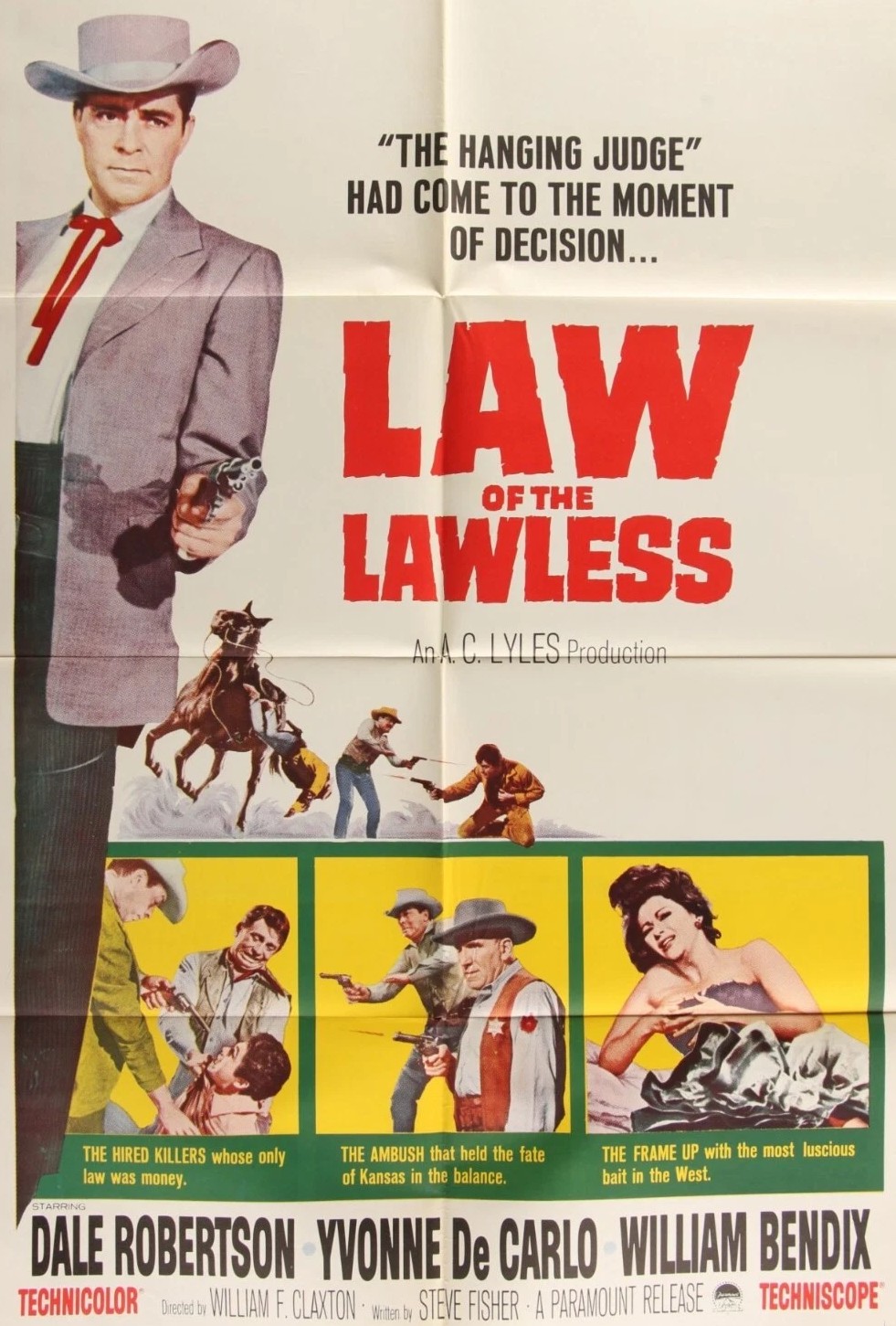
I’m rescuing another low-budget western from critical oblivion. While this can’t boast existentialism to boost its credentials or claim to belong to the cult fraternity and, technically, doesn’t belong to the revisionist sub-genre which was beginning to gather pace, and while you won’t go to this for visual style or striking composition, there is more than enough going on for it to be worthy of reassessment.
For a start it majors on remorse. You might come across a western hero who bitterly regrets the woman cast aside or the family abandoned (though more likely such actions will sit lightly), but you’ll virtually never find anyone who regrets using the gun, whether for righteous reasons or not. But here you’ve got the two main characters, one on the side of the law and the other of a criminal disposition, who both show remorse for their actions. And had the director been more disposed to the visual he would have made a great deal more of the scene where the black-garbed widows arrive in town, victims of both gunslingers who killed their husbands and of the judges who pronounced the death sentence on their gunslinging husbands.
And there’s considerable pause to imagine what happens to such widows. Unless they can find a benefactor, perhaps an older unmarried rancher or a widower, they are going to end up working in saloons and selling their bodies. On top of that we have a cracker of a courtroom drama where the exceptionally clever lawyer can twist the facts to suit his client.
This could also have been another kind of western altogether, the one where the hero is constantly beset by a variety of enemies, and the narrative therefore one of tension. But Judge Clem Rogers (Dale Robertson) has four separate outfits baying for his blood and still director William F. Claxton manages to also fit in all these ideas about remorse, the law, widows, conniving lawyers, the entitled of that era, and failed romance.
Rogers is in town for the trial of former friend Pete (John Agar), son of Tom (Barton McClane) the biggest rancher around, for killing someone in cold blood. Tom, a piece of work, has various plans to tilt the odds in his favor, first planning to blackmail Rogers over being caught in a honeytrap with Pete’s fiancée Ellie Irish (Yvonne DeCarlo) and whichever way the trial goes he has hired gunslinger Joe Rile (Bruce Cabot) at a fee of $10,000 to kill the judge. Rile and Clem have history, the gunslinger killed the judge’s father. And it’s Tom who hits on the scheme of embarrassing the judge by flooding the town with widows, many of whom are widows thanks to Rogers.
And there are four other dudes, three brothers and an outsider, also intent on killing Rogers. While Sheriff Ed Tanner (Wiliam Bendix) isn’t inept he lacks the force of personality to keep the bad guys in check and when he’s wounded his inexperienced deputy Tim (Rod Lauren) foolishly steps up to the plate.
You can’t help but feel sorry for Ellie, forced to play the part of the lure to dupe Rogers, especially when it’s clear she has more feelings for him than she does for Pete, whom she admits she doesn’t love but needs his security. There’s an interesting power struggle between Tom and Rile with the gunslinger refusing to kowtow to his employer. The court case is riveting because it turns on various twists. And climax is a knockout that you won’t see coming.
This isn’t one like The Shooting (1966), rescued from oblivion by critics and cultists – Paramount issued it as a second feature so it’s not unseen – and it’s not trying to rewrite the Hollywood history of Native Americans, and as I said it’s not distinguished visually, but it does pack an awfully thoughtful punch, tackling areas that the bulk of western film directors have ignored.
Dale Robertson (Coast of Skeletons, 1965) heads a good B-picture cast with veterans William Bendix (Oscar-nominated for Wake Island, 1943), Yvonne De Carlo (career revived by The Munsters, 1964-1966), Lon Chaney Jr (The Wolf Man, 1941) and Bruce Cabot (King Kong, 1933).
William F. Claxton (Desire in the Dust, 1960) is to be commended for cramming in so much interest. Script by Steve Fisher (Rogue’s Gallery, 1968).
An unexpected treat.
 The Magnificent 60s