
You could hardly get a more prescient movie, almost in the 1984 class in depicting the future. Not dystopian, but the contemporary obsession with filming every inch of a child’s life. You do wonder what kind of reaction this will generate further down the line when Generation ZZZ realizes how little privacy it has been afforded.
Director Michael Powell – thrice Oscar-nominated and at the time after such hits as The Red Shoes (1948) regarded as on a par with the likes of David Lean (Oscar-winner of Bridge on the River Kwai, 1957) and Carol Reed (The Third Man, 1949) – lost his shirt and his reputation on this, and it took decades before Peeping Tom was accepted as nothing short of a masterpiece.

The narrative cleverly links up several strands. With a portable movie camera landlord Mark (Carl Boehm) obsessively records everything in the vicinity, including posing as a journalist to join a police murder investigation and rigging his apartments to check out the goings-on. He’s also, it transpires, a serial killer, the terror registered on corpses’ faces not aligning with the knife wounds that killed them. Into his world comes a young woman Helen (Anna Massey) who is attracted to this intriguing shy figure. Her mother (Maxine Audley) is less accepting.
In the background are the visual memories of Mark’s childhood, perhaps explaining his current compulsions, the films his psychiatrist father made of how his son reacted to fear, most of which episodes are triggered by the father. And the whole movie takes place in another world of make-believe, that of movie making, where directors are driven to distraction by incompetence and Mark can play on ambition by luring wannabe actress Vivian (Moira Shearer) into making an after-hours movie with him, which ends in her death. Even Helen, a children’s writer, has taken as her subject a magic camera.

Although Mark is interviewed by the police and, in a very modern trope, films himself being interviewed, he is not considered a major suspect. He screens his snuff movies for the blind mother. Murder is perceived as an almost erotic act, correlating with the very modern idea of violence as pornography. Clearly, it’s the progenitor of the slasher film. And Helen would be viewed as the first “final girl.”
But it’s also beautifully made, the color palette, use of light and shadow, the mise en scene, all speak to a master at work, and the delving into the mind of a killer is shown, unusually, in visual rather than verbal terms in the dry tones of a psychiatrist such as parlayed by Alfred Hitchcock at the end of Psycho the same year. Quite why only Hitchcock’s film was acclaimed, given they cover similar personality defects, you would have to go ask the critics.
And the big reveal – why the victims died in such fright – would surely be noted by today’s moviegoer as inspired genius. Carl films his victims dying and he has attached a mirror above the camera so the victims can see themselves die in horrific fashion.
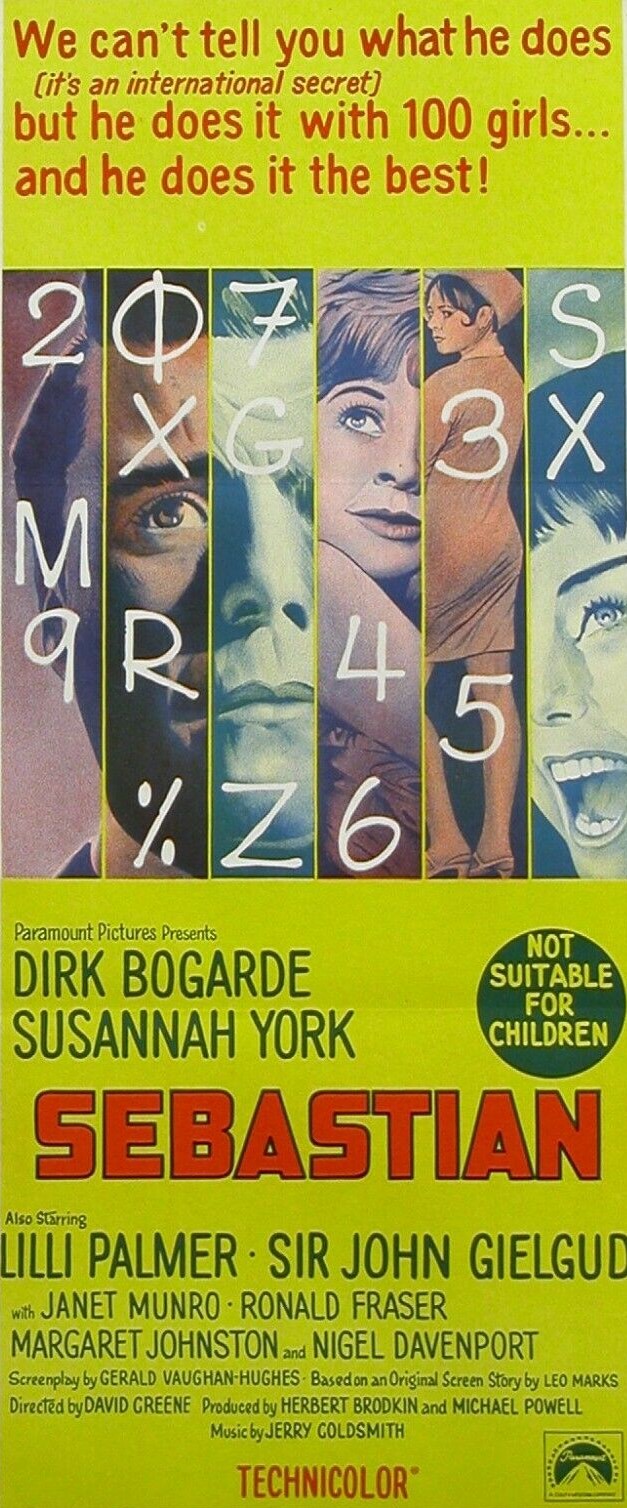
Audience and critical revulsion was as possibly triggered by the scenes of the young Carl being tortured by his father, such aspects of society treated in far more discreet fashion, if at all, in those times. The voyeuristic aspects of the murders are only sexual on the surface, and really harbor back to the tormented childhood where a young boy grows up believing all acts of violence are not only permissible but must be recorded. Written by Leo Marks (Sebastian, 1968).
The raw power must be seen to be believed. Martin Scorsese has promoted many movies he believes under-rated but in this one he gets it right.


 The Magnificent 60s