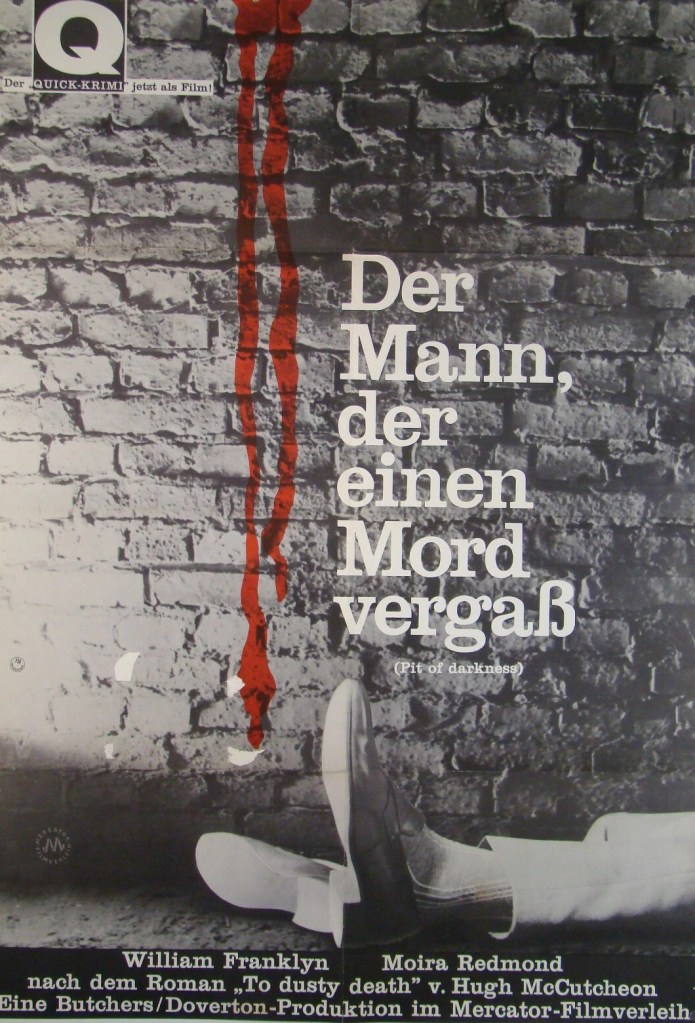
Pit of Darkness (1961) ****

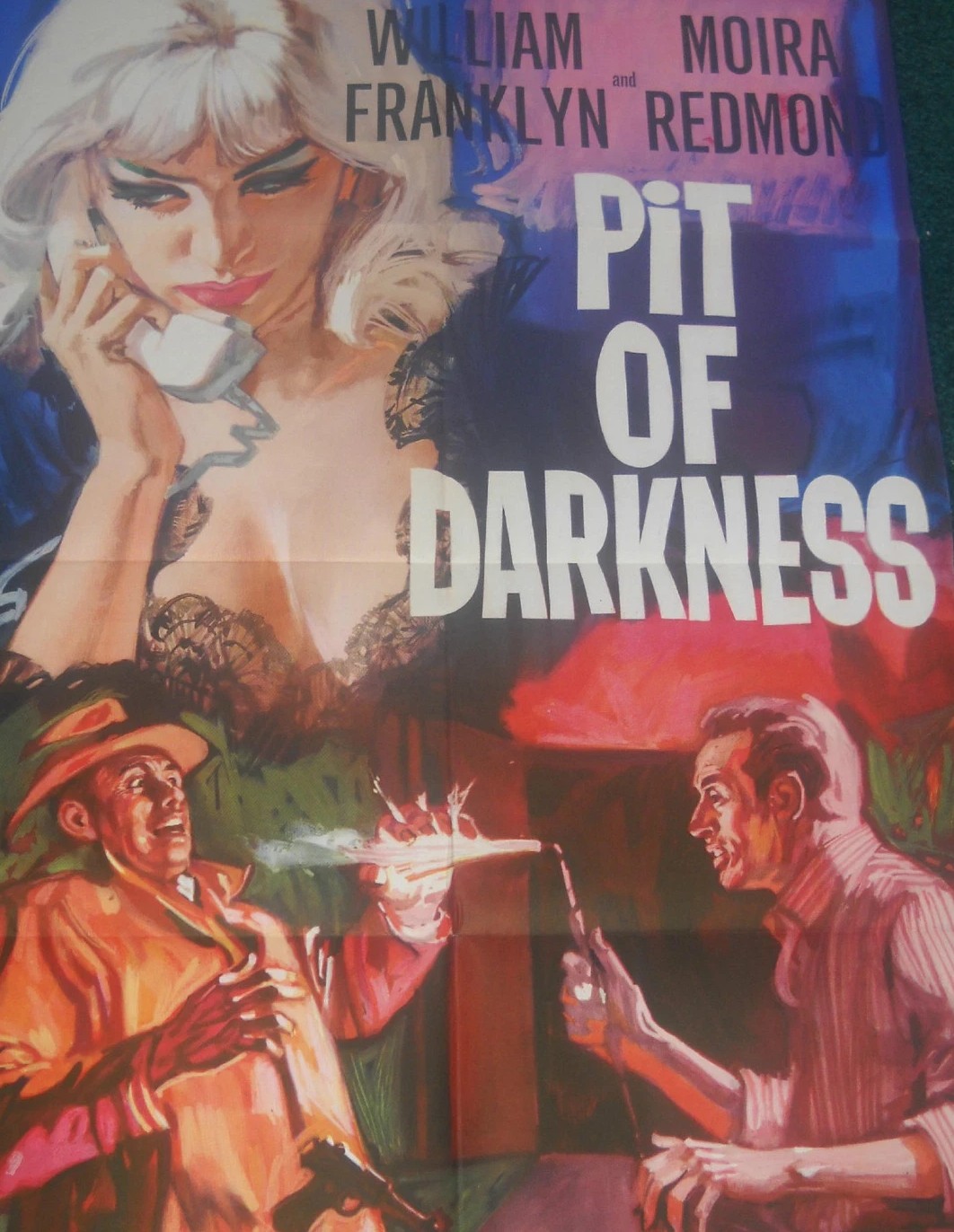
Occasionally I get to wondering when one of these British crime B-pictures is exceptionally well-plotted, refreshing and above all logical, whether it might have benefitted from grander treatment Hollywood-style. You could easily see Cary Grant or Gregory Peck wriggling around in this one and with a Grant or Peck involved they’d be accompanied by a glamor puss of the Sophia Loren, Deborah Kerr vintage. And that would put the whole movie in an entirely different light and ensure it wasn’t lost for decades, as was the fate of this one.

What struck me most about the opening section here, an attitude maintained for about half the picture, was that the actress wife Julie (Moira Redmond) of amnesiac Richard (William Franklyn) didn’t believe for a minute his story that he couldn’t remember where he’d been for the last three weeks. There wasn’t an ounce of sympathy. That struck me as an entirely believable reaction. Rather than going all soppy at his return, she reckoned he’d run off with another woman and only came back because the affair had gone sour.  

And it doesn’t help his case that he was found unconscious on a piece of London waste ground where four days before the private detective she had hired to find him was discovered murdered. Then there are the suspicious phone calls, leaving him to deny the existence of anyone called Mavis.

But just when we start to believe him, suddenly we don’t. He seems to be too familiar with the Mavis who calls him and agrees to meet her at a remote cottage. And then we’re back on his side, as he just avoids being blown up in the cottage. But he leaves his hat behind.

And he doesn’t own up to Mavis about being nearly killed and gives a spurious reason for buying a new hat and not keeping the old one. So we’re on her side, something is going on for sure. And then back on his, when someone tries to sideline him in a hit-and-run accident.
In turn, he’s suspicious of everyone, including his wife, and his colleagues at work, especially Ted (Anthony Booth) who seems an unlikely candidate to have won the heart of his delectable secretary Mary (Nanette Newman).

He works for a firm that makes safes and whatever’s going on appears to be linked to a burglary that occurred in his absence involving one of the safes the company made. Eventually, Julie comes round to his way of thinking. Clues lead him to a nightclub, whose mysterious owner Conrad (Leonard Sachs) somehow seems familiar. He encounters Mavis, a dance hostess, and she agrees to help him but when he goes round to her apartment finds a corpse. There’s something distinctly odd going on in the building across the street from his office. On further investigation, he uncovers an assassin. Luckily, our man is armed with the office pistol and the villain is chucked from the roof.

But, still, nothing makes much sense, even though bit by bit memory is returning. He realizes he shouldn’t have been found unconscious on the waste ground, but dead, murder only interrupted by the sudden arrival of a gang of boys.

But in retracing his steps in order to unlock the lost memories he finds himself undergoing a perilous process a second time. He works out that he was kidnapped and locked in a cellar in the club. When he confronts Conrad, that instigates a repeat.

Conrad locked him away and when bribery and the seductive wiles of Mavis didn’t work, Conrad convinced Richard that his wife was in danger if he didn’t go along with the burglary. And Conrad isn’t one to let a good opportunity go to waste, so second time around, using the same threat that worked the last time, he forces Richard to commit another burglary. But this time there’s a catch and one that Richard’s secretary hasn’t known about to pass on to Ted.

So the bad guys are caught, and in the way of the obligatory happy ending the audience is left to assume that the police will ignore his part in the robbery and the death of the man on the roof.

Not just exceptionally well-plotted, but the addition of the marital strife, the suspicious wife, adds not just to the tension but makes it all the more believable and turns the amnesia trope on its head.

Having wished for a Cary Grant or a Gregory Peck, I have to confess I was more than satisfied with William Franklyn (The Big Day, 1960) who managed to look innocent and guilty at the same time. Certainly Deborah Kerr would have managed more in the acerbic look department than Moira Redmond (The Limbo Line, 1968) but I have no complaints.

Interesting support cast at the start of their careers, so Anthony Booth (Corruption, 1968) displays just a hint of his later trademark sarcastic snarl and there’s no chance for Nigel Green (The Ipcress File, 1965)  to put his steely stare into action or effect his drawl. Nanette Newman (Deadfall, 1968) has little to do except look fetching. Leonard Sachs was taking time off from presenting TV variety show The Good Old Days (1953-1983).

More kudos for the script than the direction this time for Lance Comfort (Blind Corner, 1964).

Given it’s from the Renown stable. I would normally have expected to come upon this picture on Talking Pictures TV, so I was surprised to find it as one of the latest additions to Amazon Prime.

First class.
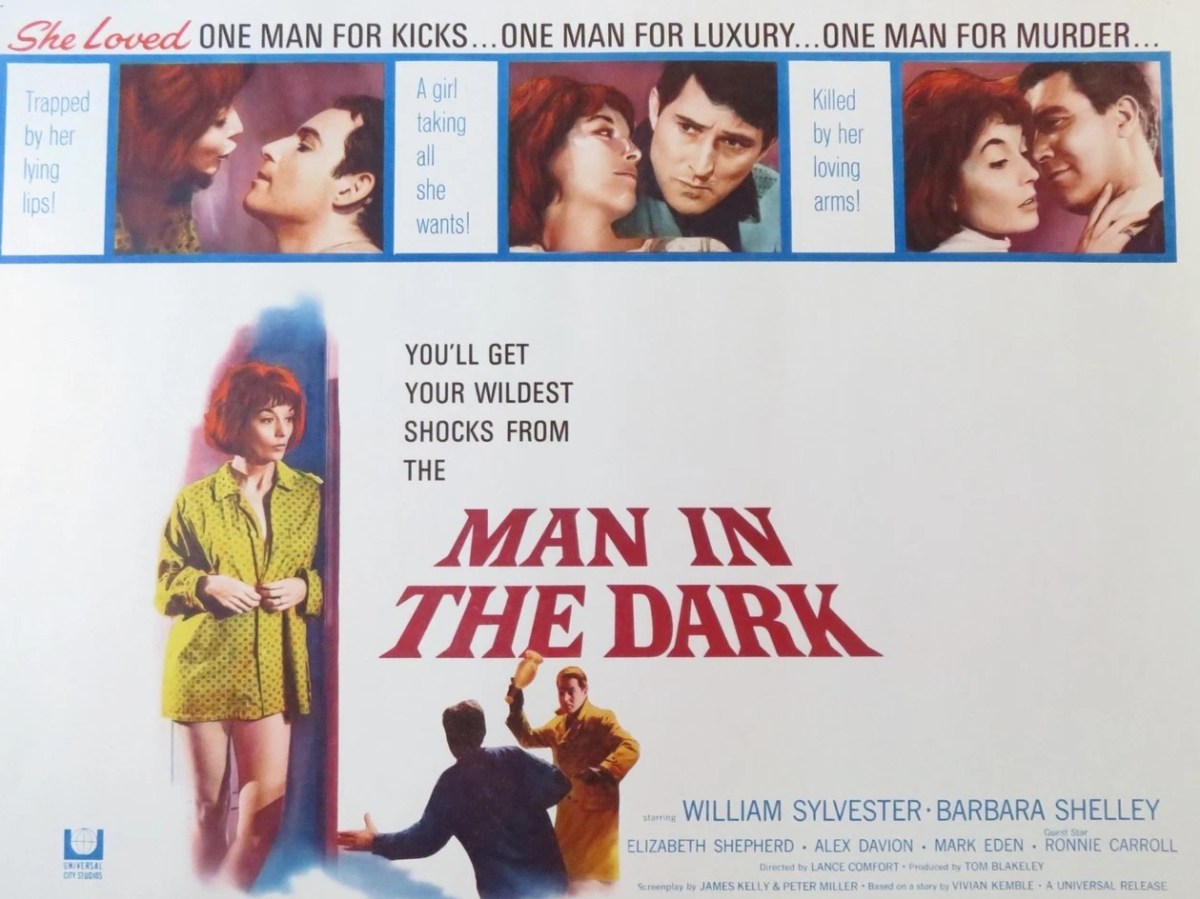
Man in the Dark / Blind Corner (1964) ***

Hammer Scream Queens rarely make an impact outside the genre, so it comes as something of a surprise to find Barbara Shelley effortlessly making the transition from The Gorgon (1964) to a slinky femme fatale spinning a deadly web around three men. While British femme fatales tend not to go all-out full throttle in terms of seduction and revenge, that suits the set-up here which is distinctly slow-burn. In fact, you might be persuaded to accuse the production of time-wasting or padding-out the story with its occasional diversions into song numbers (though that is a trope of these B-features) until you discover later on that there’s a very good reason for listening to the dulcet tones of pop singer Ronnie Carroll.

While there are echoes of Faces in the Dark (1960), blind composer Paul (William Sylvester) here is a far more sympathetic character especially once audiences latch on to what he as to put up with. And where Wait until Dark (1967) majors on terror, here the approach is much more subtle. And while audiences might wince at Audrey Hepburn’s predicament, here they will be appalled to see Paul’s wife Anne (Barbara Shelley) virtually taunt him by not just parading her secret lover Ricky (Alexander Davion), a penniless artist, but caressing him and pecking his cheek with kisses as if to test her husband’s radar.

Not only is Paul the forgiving type – turning a blind eye to his wife’s regular late nights – but he is devoted to Anne and considers himself lucky that she has stuck by him and it never occurs to him that his wealth plays a significant part in that bargain, Anne, a little-known former actress, unlikely to enjoy such bounty any other way. He’s so in love with his wife that he knocks back his secretary Joan (Elizabeth Shepherd) who has a good idea her employer is being played for a fool.

Under the guise of Ricky painting her portrait, Anne manages to legitimately spend a considerable amount of time with her lover and fine-tune her plans to rid herself of Paul. There’s a fairly easy option. Paul is an alcoholic and given to standing in an open balcony. He could easily lose his footing and topple over should there be someone around to give him the initial nudge.

Ricky is pencilled in as the murderer. And though he initially baulks at the idea, the prospect of both losing Anne and resolving at the same time his financial problems is too tempting. By now, Paul is aware of the tryst, having been alerted to the couple smooching in a restaurant, by his best pal and manager Mike (Mark Eden). Once we realize that Paul has been taping his wife’s telephone conversations, you are misdirected into thinking he will be better prepared. But this isn’t America or even sleazy Soho and there’s not a gun to hand or even a knife so Paul is vulnerable to an assailant and even as weak-minded an individual as Ricky seems to grow in confidence the minute the tussling begins.

Even then Ricky is so incompetent Paul needs to coach him into how to get away with the perfect murder and once we get to this stage it’s clear there’s something else going on and we’re in for a torrent of twists, delectably delivered. Ricky is informed that he’s a patsy, that Anne is in love with Mike and that in a courtroom she will act her socks off as the innocent victim of an overzealous lover – “a choked sob will escape her –  she did that in The Act of Cain” or “she might fall into a crumpled but not unattractive faint” as she did in Murder Undaunted.”

When Anne arrives, accompanied by Mike, to check on Ricky’s handiwork, the game is clearly up. But Paul has police hidden in the bedroom to hear what amounts to Anne’s confession. All three are locked up and Paul heads off into the sunset with his secretary.

Barbara Shelley creates a sizzling tension of her own and is a superb femme fatale, dangling three men on a string. Alexander Davion (Paranoiac, 1963) and Mark Eden (Curse of the Crimson Altar, 1968) don’t get a look-in though simply by being stoic and then clever William Sylvester (Devils of Darkness, 1965) manages to hold his own.

Quite a different proposition to Tomorrow at Ten (1963), also helmed by Lance Comfort, where the tension is upfront. You’d say this was a weighted piece of direction, with much of the pressure in the early stages reliant on whether Paul will see through his wife. Those scenes where she toys as much with her lover as her husband are unique. Written by the team of James Kelly and Peter Miller (Tomorrow at Ten) plus Vivian Kemble (Olympus Force, 1988).

Takes a while to come to the boil but well worth the wait.

Catch it on Talking Pictures TV under the title Blind Corner.

Tomorrow at Ten (1962) ****

Surprisingly hardnosed for a British crime thriller. Surprisingly stylish and when the sting in the tail comes, it’s an emotional one, adding a deeper level to one of the main characters. In most crime picture – wherever they originate, Britain, Hollywood, France, Italy – the detectives may well complain to their colleagues about their superiors but they never take them on head-to-head and again and again. For that element alone, this is well worth watching.

The opening has you hooked, way head of its time, you would be more likely to see this type of approach in a picture from a top-name director, Alfred Hitchcock for example. A man, Marlowe (Robert Shaw) enters a derelict detached house carrying three parcels. He climbs a flight of stairs. With a key he opens a locked door. It might be a bedsit it’s so scarcely furnished except for the child’s bed. He sits down at the table, empties out two bottles of milk and some food. He opens a long parcel wrapped in paper and takes out a stuffed toy. He flips it over on its stomach, cuts open its back, pulls out the stuffing and from his last parcel removes a small bomb which he places in the empty space.

(At this point I have to explain that the toy is a gollywog, an innocent enough toy at the time but which has different connotations now, so is rarely mentioned, but this particular type of toy has a bearing on the plot, so forgive me if I make further mention of it.)

Next time we see him he’s wearing a chauffer’s uniform, picking up a small boy, Jonathan, (Piers Bishop) to take to school. Only, as you’ll have gathered, he has another destination in mind, but takes care not to frighten the child, to keep him distracted to the extent of the child thinking there’s nothing untoward as he is taken upstairs. He’s delighted with the toy, and not, at this point, too worried to be left alone.

Meanwhile, at the boy’s house, nanny Mrs Robinson (Helen Cherry) receives a telephone call from the school asking where the boy is. Just as the perplexed widowed father Anthony Chester (Alec Clunes) is given the news, Marlowe, now dressed in a suit, and carrying a Gladstone bag, appears at the door. Anthony greets him by name.

In the study Marlowe explains he has kidnapped the son, requires £50,000 in ransom, has planted a bomb set to go off the next morning at ten o’clock (hence the title), but will only release details of the child’s whereabouts once he is out of the country. Chester, a millionaire, has no qualms about paying up. Marlow is as cool as a cucumber. He has come up with the perfect crime. He will get off scot-free, become instantly rich and no one will come to any harm.

Except the nanny is listening at the door and dials 999. The local cops call in Scotland Yard. Assistant Commissioner Bewley (Alan Wheatley) assigns the case to Detective Inspector Parnell (John Gregson) quickly revealed as a tough nut, threatening to turn a suspect in a jewel robbery loose so that his pals will think he’s squealed and exact vengeance.

By the time, he reaches the house, Chester has gone off to withdraw the cash from the bank.  Inside, Parnell confronts Marlowe. And so begins a game of cat-and-mouse. Marlowe holds firm, believing that the cop will give in to save the child, Parnell searches for a psychological weakness in the criminal’s makeup that he can use to crack him. Each convinced of their own mental strength in a battle with an innocent life at stake.

Chester returns with the money and is furious to discover the cop. When Parnell refuses to play along with handing over the cash to the kidnapper, Chester pulls out his ace, the old boys network, calling up Bewley, asking for Parnell to be removed from the case. Bewley, happy to do a favor for a wealthy pal, agrees. But Parnell refuses to go.

Bewley goes in person to confront his insubordinate officer. Still, Parnell refuses to budge, verbally attacking his smug superior, threatening to go to the newspapers.

While the pair are arguing, Chester loses his rag, physically attacking Marlowe. In the struggle, Marlowe falls  back, hits his head and falls unconscious. Bewley, who has reluctantly agreed to let Parnell continue, now responds with spiteful glee. The cop will carry the can if the child dies.

Chester, meanwhile, is calling in the top medical experts to save Marlowe, money no object. But Parnell can’t afford to wait and enlarges the inquiry, putting out a public appeal, Marlowe’s face on the front page of the evening newspaper. But every other investigation can’t be halted just for this case, so Parnell is frustrated when various beat cops, originally going door-to-door, are pulled off onto other case.

Meanwhile, we already know Jonathan has worked out something is wrong, But the window is sealed with steel mesh and the door is locked and eventually he goes to sleep cuddling the deadly toy.

Marlowe shows no sign of recovery and dies. Bewley ups the stakes against Parnell. A beat cop looks at the outside of the house in question but walks away. Parnell gets a tip-off that leads him to a nightclub called the Gollywog Club and encounters Marlowe’s parents who run the place. Their name is Maddow. They haven’t seen their son in several months and while they accept he’s a criminal, the mother reminisces about what a loving boy he was.

Eventually, Parnell finds the estate agent who rented the property to Marlowe. By now they have just five minutes to get to the property.

They arrive a few minutes after the deadline.

But Jonathan has inadvertently saved his own skin, and ironically the plan has backfired because of Marlowe’s insistence on hiding the bomb in a stuffed toy of sentimental value rather than secreting it in a cupboard or somewhere the child would not have looked, and even if he found it wouldn’t know what it was.

After waking up Jonathan has washed his face and hands and decides the toy could do with a bit of tidying up the same so dunks it in a sink full of water, thus nullifying the bomb.

Parnell goes home, welcomed by wife and – child the same age as Jonathan.

So, yes, much of the tale is par for the course, several twists to up the tension, but Parnell’s duels with his boss put this on a different level, and the realisation at the end that he has managed to set aside the feelings for his own child. And it’s also elevated by the direction of veteran Lance Comfort (Devils of Darkness, 1965) who takes time out – in an era when such features were usually cut to the bone – to add atmosphere. The first and last scenes are outstanding for different reasons and the two verbal duels make for a fascinating movie.

Stronger cast than most in this budget category – John Gregson (Faces in the Dark, 1960) and Robert Shaw (Jaws, 1975) bring cool steel to the affair.

Though little-know, Tomorrow at Ten has been acclaimed as one of the top 15 British crime pictures made between 1945 and 1970 and I wholeheartedly agree.

Another welcome revival from Talking Pictures TV.

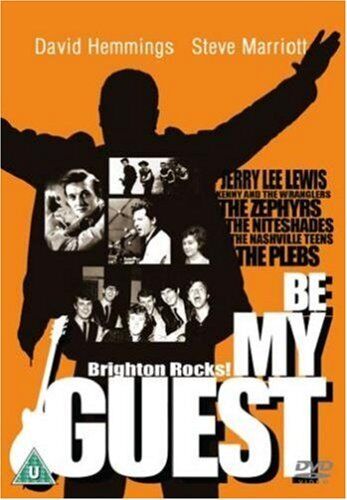
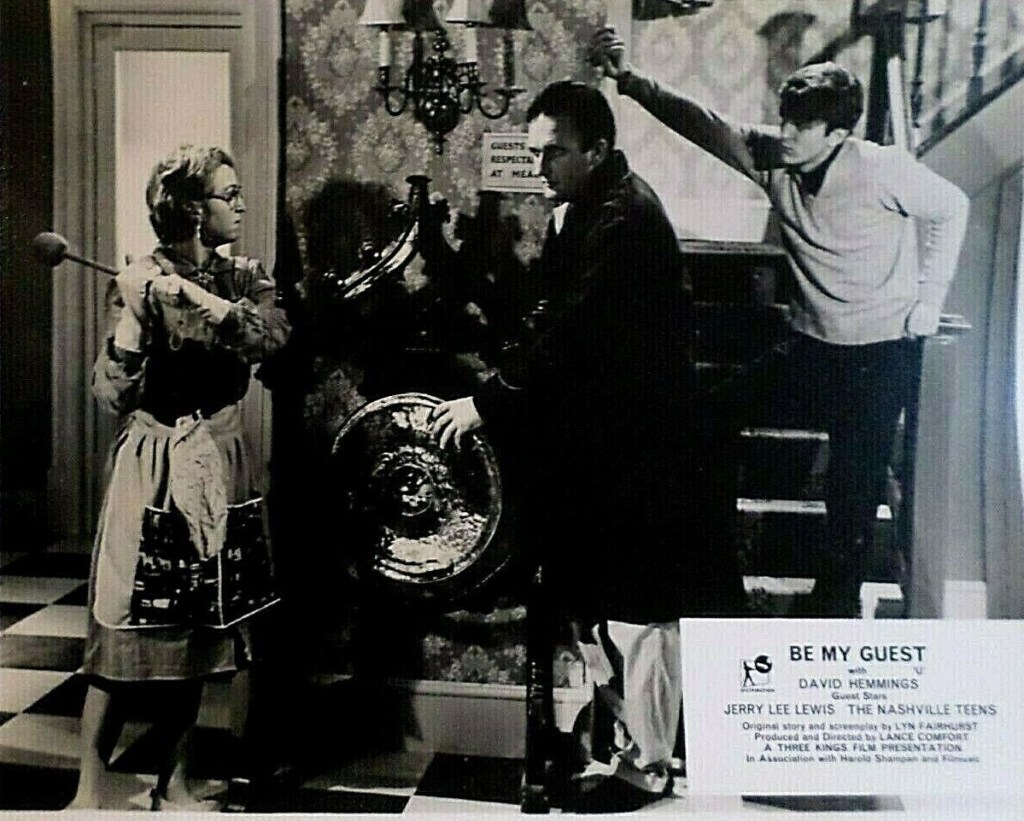
Be My Guest (1965) ***

Every genre produced a B-movie spin-off and the pop music sub-genre, revitalized by the appearance of The Beatles, was soon submerged in quick knock-off numbers that acted primarily as a showcase for various, hopefully, up-and-coming bands and, alternatively, whoever was to hand at the time. They were not viewed as star-making vehicles and the chances of, for example, a debuting player like Raquel Welch in A Swingin’ Summer (1965) hitting the big time was remote.

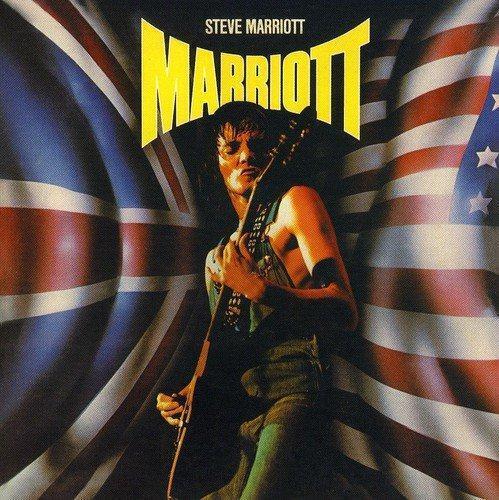
So nobody was counting on floppy-haired youngster David Hemmings (Blow-Up, 1966) making a breakthrough in this ho-hum-plotted let’s-put-on-a-show hardly-slick production set in the musical netherworld of Brighton, England. Had he not surfaced as a potential future star it would remain better known for the appearances of Jerry Lee Lewis and Steve Marriott, predating his fame as guitarist with The Small Faces and Humble Pie.

Astonishingly, this was actually a sequel, Hemmings reprising the character Dave from Live It Up (1964) in which he played a band member. Here, relocated to Brighton where his parents have taken on a hotel, Dave, now an ex-musician, tries his hand at journalism and in due course re-forms his group to participate in a talent contest. 

There’s the requisite American lass, Erica (Andrea Monet), a dancer, and the usual baloney reason for her ending shacked up (though not with Dave – too early in the decade for such blatant permissiveness) in the parental hotel. Most of the running time is taken up with Dave and his band getting into scrapes such as falling out with the local planning officers and blameless ideas misconstrued by those with more lascivious minds.

There’s a marvellous almost 1940s Hollywood innocence about the entire endeavour coupled with a brave, though failed, attempt to inject Beatles-style humor into the proceedings. And if you had any doubt, Hemmings has definite screen appeal. The hair became a trademark, almost a sign of inherent rebelliousness, which suited many of the characters he played. He had a very open face and eyes that, more than revealing internal conflict, were better for reflecting what he saw.

Interesting, too, the difference the camera makes of a persona when an actor is the lead rather than a support. There’s time to play on the features, to let the actor relax, rather than pushing himself forward to steal what few scenes he is in. Previously, he had always been noticeable. Now he acquires an aura and even in a bauble like this he shines. Andrea Monet, in her only movie role, is certainly no rival in the star-building stakes.

And since the movie is not filled with the usual run – or quality – of British character actors there’s no one trying to steal scenes from him, though you might look out for veteran Avril Angers (The Family Way, 1966).

Of course, there’s only so long you can admire an actor when there’s not much genuine acting to do, and this script does him no favors drama-wise. But luckily the music covers up most of the other deficiencies. Apart from Jerry Lee Lewis and Steve Marriott, there’s a chance to gawp at The Zephyrs, The Nashville Teens, Joyce Blair and Kenny and the Wranglers.

Director Lance Comfort (Devils of Darkness, 1965) does his best.

Discover WordPress

A daily selection of the best content published on WordPress, collected for you by humans who love to read.

The Atavist Magazine

by Brian Hannan

WordPress.com News

The latest news on WordPress.com and the WordPress community.