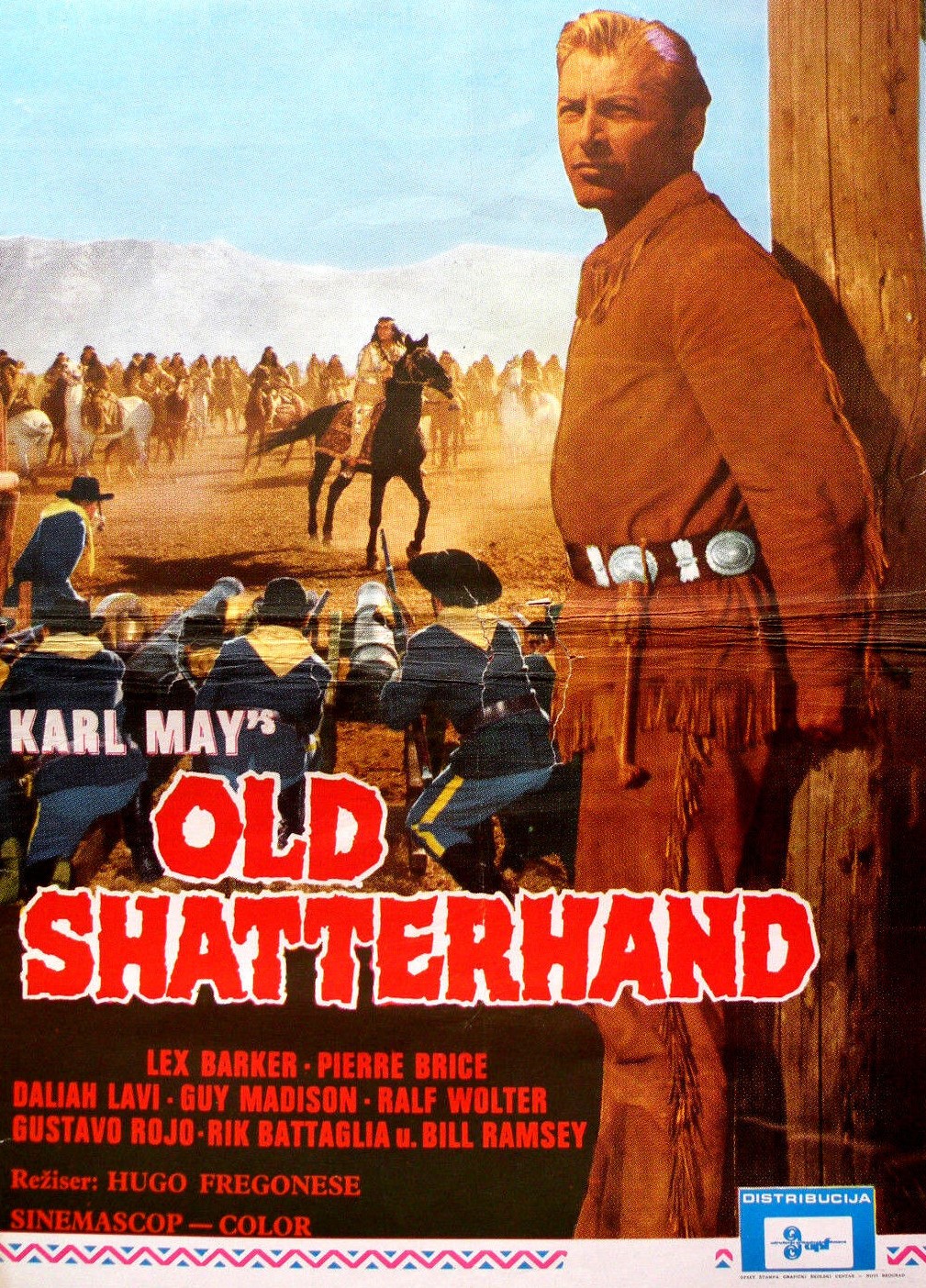
Blame Lex Barker (Pirates of the Coast, 1963) and Daliah Lavi (The Demon, 1963) for my interest in this German-made western. In the aftermath of the spaghetti western and the messianic writings of Christopher Frayling I’d been aware of the Karl May western boom in the early 1960s and a series revolving around cowboy Old Shatterhand and his buddy Apache chief Winnetou, based on the novels of May who died in 1912. Quite why it took the 50th anniversary of his death to make the Germans wake up to his potential is anybody’s guess.
Theoretically, he was the German equivalent of Zane Grey, but unlike the American author whose novels were filmed over 100 times before the 1960s, only six movies were made from May westerns up to that point compared to over 20 and umpteen small-screen features and series since. Treasure of the Silver Lake (1962), the number one film at the German box office that year, was credited with starting the boom.
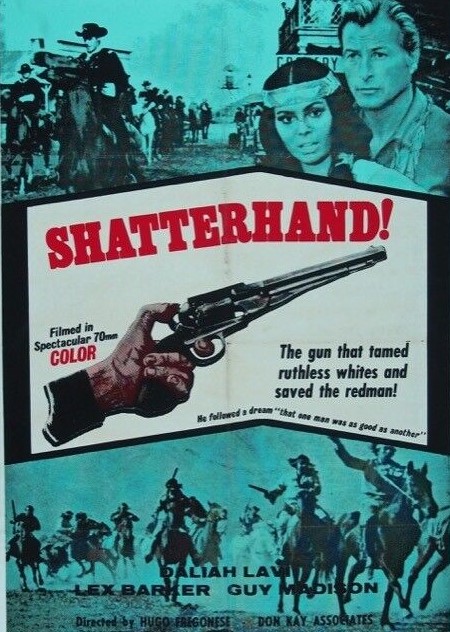
Story here is quite simple but the cinematography, filmed in 70mm, is breath-taking, even if it’s primarily of Yugoslavia. And there’s an iconic score. Hugo Fregonese (Marco Polo, 1962) isn’t in the Sergio Leone league – he doesn’t come close – but the picture is held together by Lex Barker (Pirates of the Coast, 1963) as Shatterhand and Frenchman Pierre Brice (Samson and the Slave Queen, 1963) as Winnetou with Daliah Lavi popping up as half-breed Paloma, not, interestingly enough, romancing either of the principals, and actually exploring her maternal instinct, looking after the orphaned Tom (Leonardo Putzgruber), more central to the narrative.
Guy Madison (Tobruk, 1967) used his matinee idol looks in kind of a role reversal, the idea of a handsome villain being anathema to audiences of the period, more accustomed to bad guys in the Jack Palance-Lee Marvin vein.
U.S. Cavalry Capt. Bradley (Guy Madison) teams up with the Commanche to frame Winnetou for the murder of settlers in order to disrupt peace negotiations between the Native Americans and the Government. Tom, the only survivor of a massacre, is later brutally murdered by the soldiers. Not quite lingering on the baby blues of ruthless killer Henry Fonda in Once Upon a Time in the West (1969) but still breaking a big taboo.
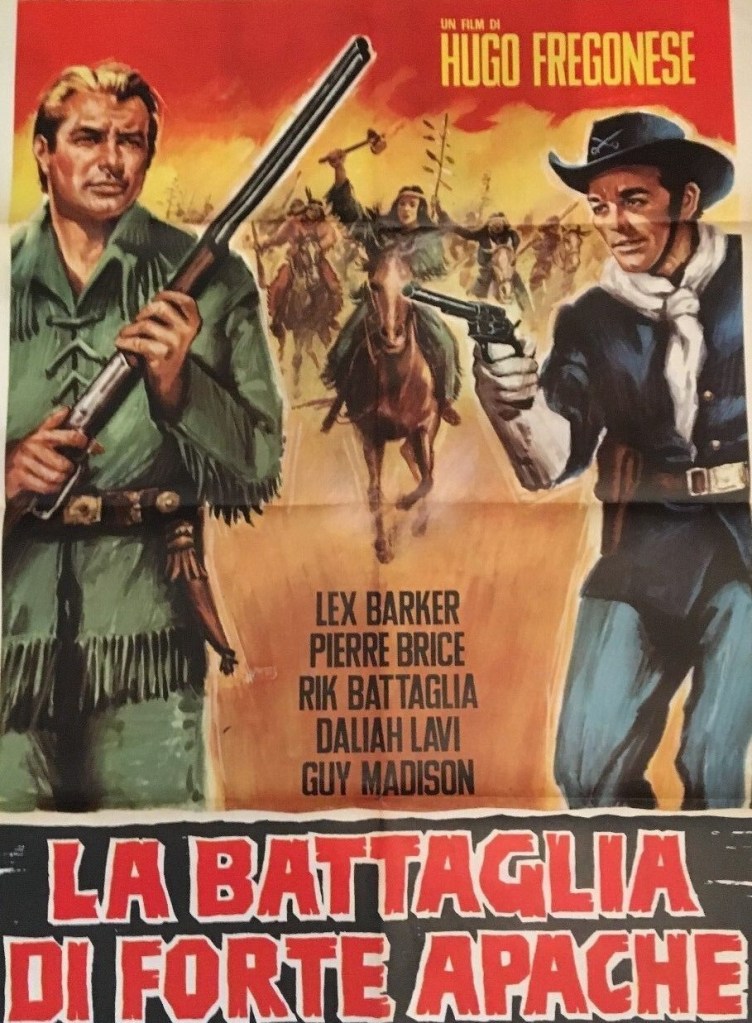
As you might expect there’s an attempted lynching but you’d be surprised to see this amount of nudity for the time, though, of course, a nice peaceful river always proves too much of a temptation for skinny dipping. There’s some pretty decent action, and the Native Americans get to show off their marksmanship with a bow-and-arrow, and there’s an axe duel instead of the usual fisticuffs. Shatterhand doesn’t always come to the rescue, for the finale he’s tied up. But there’s some interesting authentic detail, a male saloon keeper, for example, hanging out towels to dry, and when Native Americans ambush a wagon train with boulders it is logically achieved – and the boulders look dangerous enough. There’s a pretty big reversal when you’re cheering on a Native American attack on a fort.
Although the American western was about to enter a revisionist period, there was no equivalent to the ongoing friendship between Shatterhand and Winnetou or the idea that the Native American was a regular guy.
There’s not enough story to support a two-hour movie but the scenery is stunning and you can see why Lex Barker was invited back to the well several times. Daliah Lavi’s talent was often overlooked in favor of her beauty but here, at least, she has a part with some meat.
Interesting.
 The Magnificent 60s