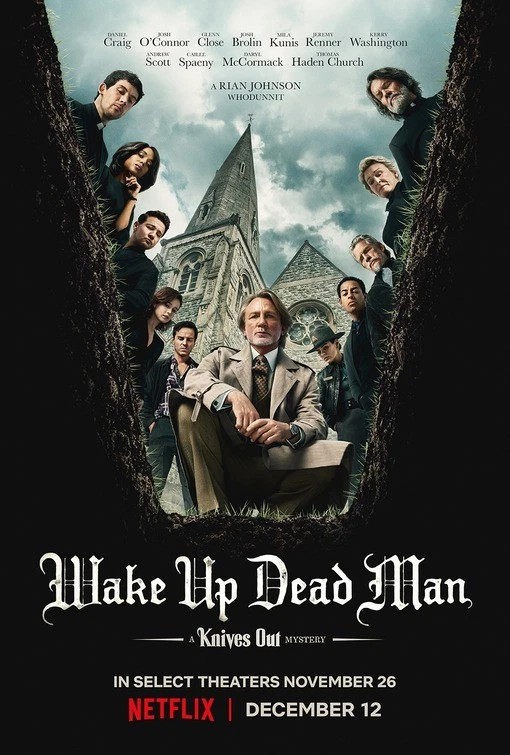
An unholy mess. Serve Netflix right for once again indulging one of their “visionary” directors. I’m assuming either director Rian Johnson is a true believer or he’s embarked on a spoof that doesn’t work. Either way it’s a bone-headed venture filled with the dullest characters you would ever come across and testing audience patience to the limit by keeping the star of the show, private detective Benoit Blanc (Daniel Craig), out of the picture for the first 30 minutes, dumping all the exposition on Fr Jud Duplenticy (Josh O’Connor), the most cliched priest this side of Bing Crosby and relying on the “locked room” conceit, handled with some deadly ham-fistedness, to see the audience through an extremely trying time.
Once you work out that the title relates to the Resurrection of Jesus Christ and that we’re entombed in a flummery of Christian jargon, you start hoping this is going to head down the satirical route and that at least you’ll get a few laughs for your hard-earned bucks. But, no, it’s so straitlaced it might as well have called on a corset to design the narrative. In order to help the director out of a whole series of cinematic cul de sacs everyone overacts and we skip over inconvenient plotholes.
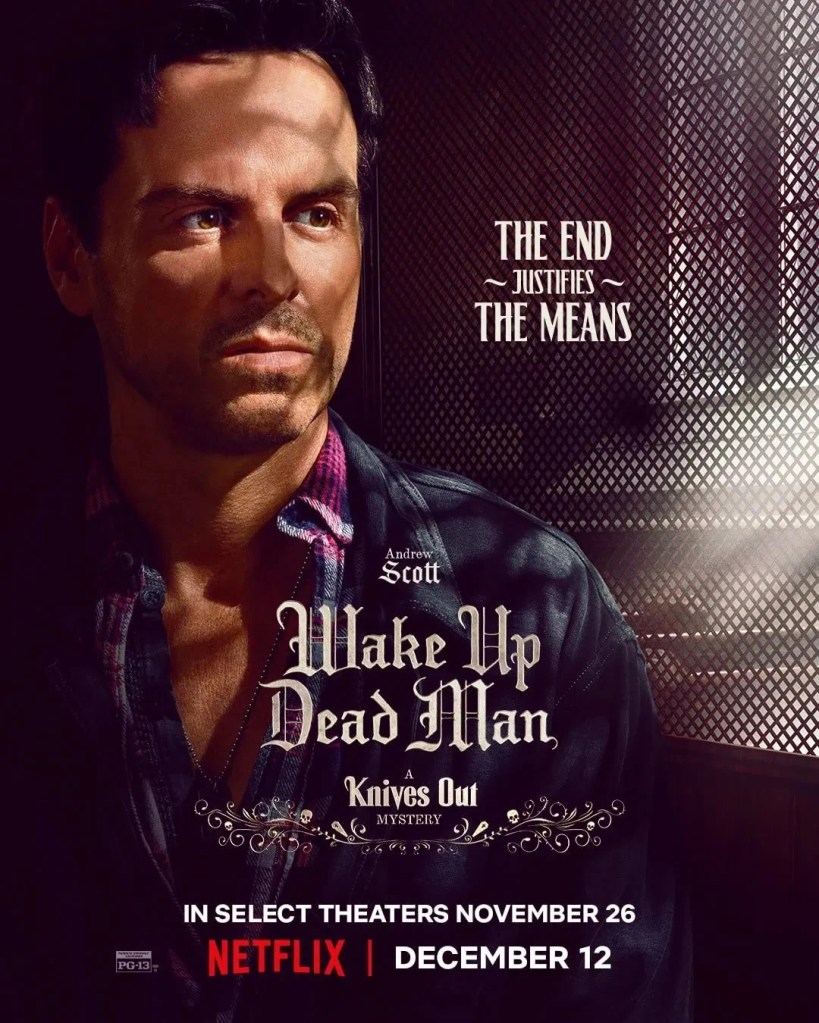
The priest is sent to help out in a rundown parish run by nutcase Monsignor Jefferson Wilks (Josh Brolin) whose idea of fun is to relate in detail, under the guise of confession, how many times, and how, he has masturbated that week. There’s a godforsaken subplot about lost treasure and a mysterious child who you’ve guessed from the off is the son of Wilks.
When Wilks is done to death in church in a small room off the altar, then we get the standard roll-call of suspects. These include church manager Martha (Glenn Close), who specializes in letting out blood-curdling screams, alcoholic doctor Nat (Jeremy Renner), barmy novelist Lee (Andrew Scott), suffering from the opposite of writer’s block who can’t stop spewing out an interminable book, Vera (Kerry Washington) who’s been put in charge of bringing up mysterious boy Cy (Daryl McCormack), now a failed influencer, and crippled Simone (Caillee Spainey) who Wilks has bled dry. Every now and then local cop Geraldine (Mila Kunis) turns up to listen in awe to Blanc.
Fr Jud is the main suspect for no apparent reason that I could see except the writer says so and he’s the most handsome guy around and wouldn’t it be great if Blanc could recruit a priest sidekick in the way of the television series of yore.
So first of all we get a lecture on the “locked room” thesis with reference to Golden Age of Crime novelist John Dickson Carr who invented the term and then to the likes of Agatha Christie and others who took up the challenge. A variety of theories are presented by Blanc with the sole purpose of showing everyone how clever he is by knocking them all down.
Once we enter Resurrection territory it gets downright stupid, the dead man rising again on the third day in the manner of a certain religion, and then there’s another murder and because we’ve run out of things with which to add genuine tension a lot of the action now takes place in pouring rain and Fr Jud who looks like he is in the clear gets once again targeted as the main suspect.
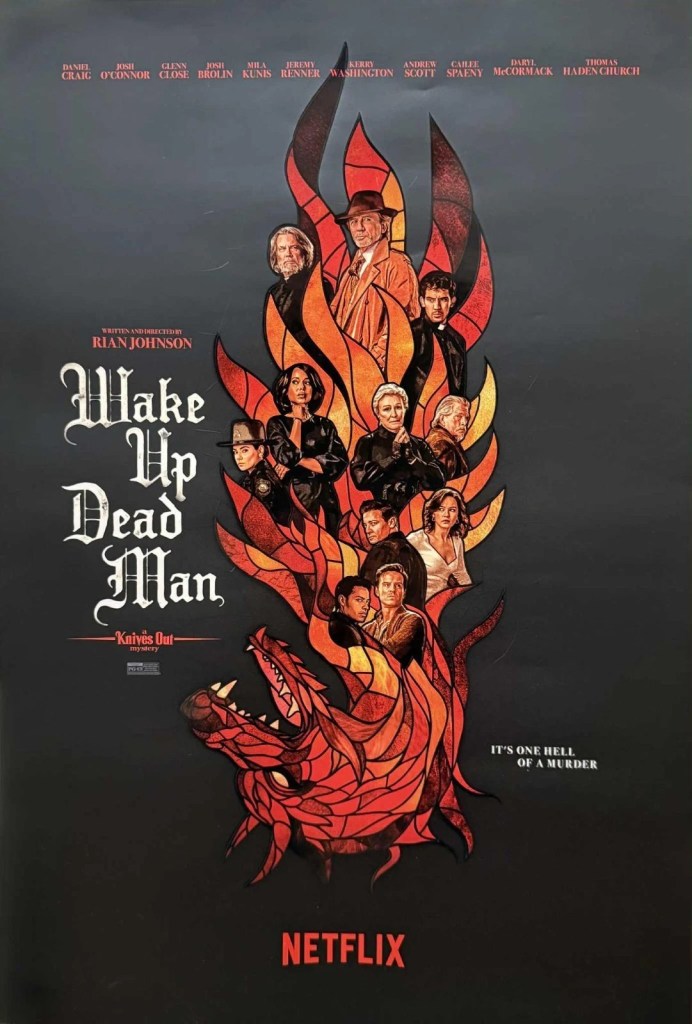
And then we’re into scene after scene after scene of exposition and a ton of talk about “free will” and “grace” – religious terms you understand. Confession, you might not be surprised to learn, plays a key role.
This might have been more acceptable with a better cast. This is nothing like an all-star cast such as used to decorate Hercule Poirot epics and helped out with keeping an audience engrossed in the first two in the series. This is populated by over-the-hill stars like Glenn Close (Hillbilly Elegy, 2020), Mila Kunis (Bad Moms, 2016) and Jeremy Renner (Avengers: Endgame, 2019) and actors who wouldn’t be considered stars except in television like Andrew Scott (Blue Moon, 2025). Josh O’Connor (Challengers, 2024) is out of his depth. Josh Brolin (Weapons, 2025) would be closest we’ve got to what might constitute a genuine star but he was second-billed in that and only then because everyone else was a nobody.
The role of the star is to enliven a picture and those with an undiluted screen presence give audiences something to hang their hat on or direct their sympathies to. But none of this bedraggled lot, every character underwritten, would you care a fig for.
Rian Johnson ruins his own creation.


 The Magnificent 60s