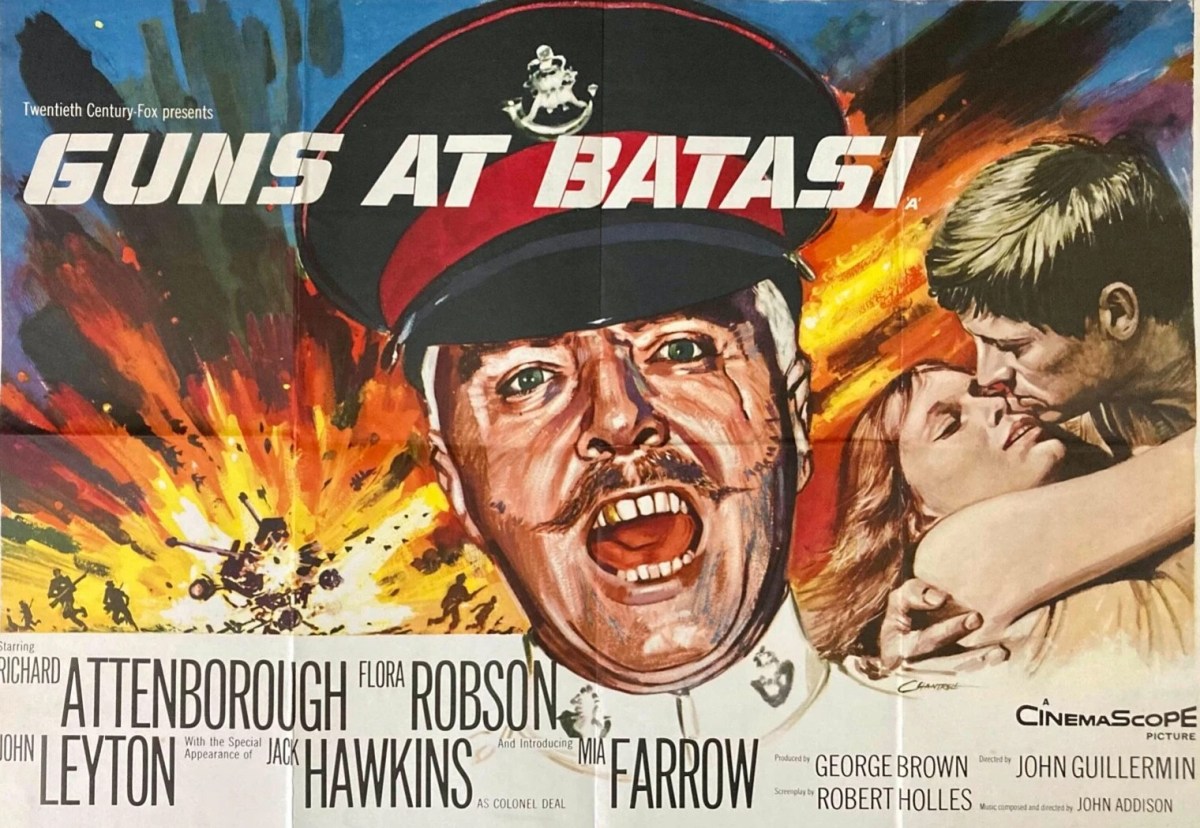
In the same year as the Brits were turning whopping defeat into marginal victory in Zulu (1964) a more complex version of imperialism reflecting modern times (i.e. the 1960s) was being spelled out here and magnified by the performance of Richard Attenborough’s career. The British, as has been their wont, while no longer in complete control of this anonymous African country, have left behind a military operation in theory to support whoever is in power but in reality to safeguard their own commercial interests.
Every side of the coin is shown, from the old school soldiers to raw recruits scarcely able to work a rifle, to the pragmatic politicians and Africans with loyalties split between the mother country and the new regime. There’s a feisty British MP Miss Barker-Wise (Flora Robson) on the side of equality who is given a rude awakening on realpolitik and the well-spoken African, educated in Britain, exalting in throwing off decades of being patronized.
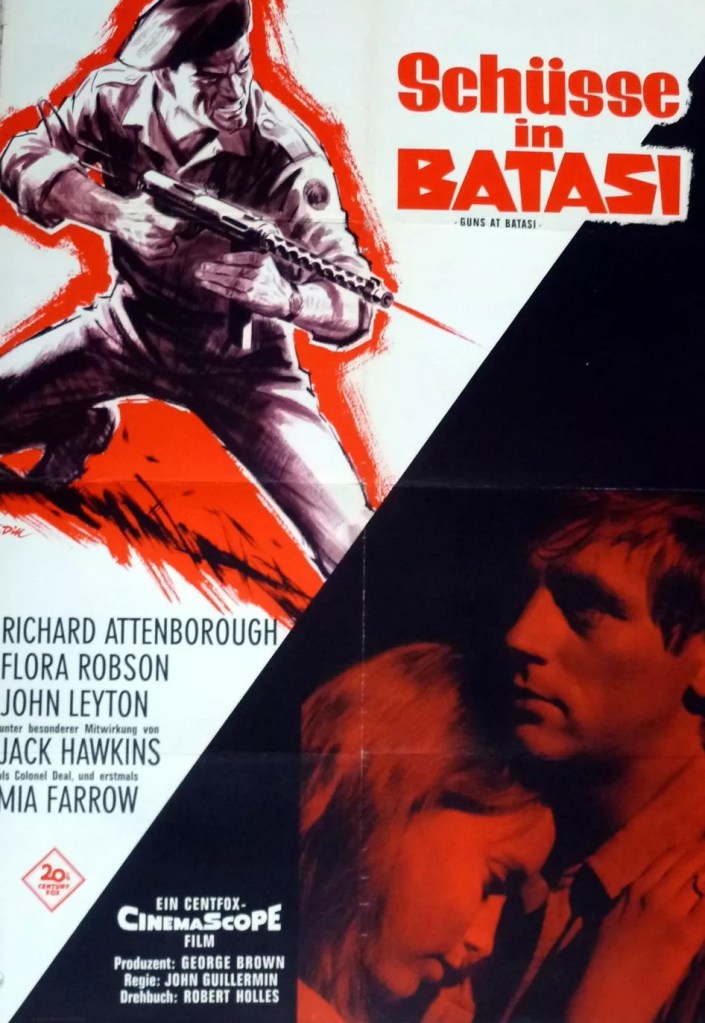
Just as the Africans are in revolt against the existing corrupt regime, so, in his own way, is Regimental Sergeant-Major Lauderdale (Richard Attenborough) who, secretly, refuses to obey the orders of his superior, Lt Boniface (John Errol). Most of the confrontation is distinctly old school, depending on the power of personality, in the best scene in the movie Lauderdale forcing his superior to accept the inferior’s authority. In another scene, the ambushed Col Deal (Jack Hawkins), with considerable British sang-froid, talks his way out of trouble.
The British are caught out by the sudden insurgency and almost certainly would not have become actively involved on the losing side had it not been for trying to save the life of wounded African Capt. Abraham (Earl Cameron) condemned by Boniface as a traitor. It should have been a Mexican stand-off until rebel ire was tamped down and a new kind of status quo – either the Brits tossed out or kept on supporting the new regime – was constituted. No need for violence or action, just keeping your nerve, a quality which Lauderdale has in spades.
Except that the sergeant-major has lied to the African commander, pretending Abraham is dead and not merely being hidden. When the Africans literally bring up the big guns, prepared to blast out the Brits, Lauderdale determines to spike the guns.
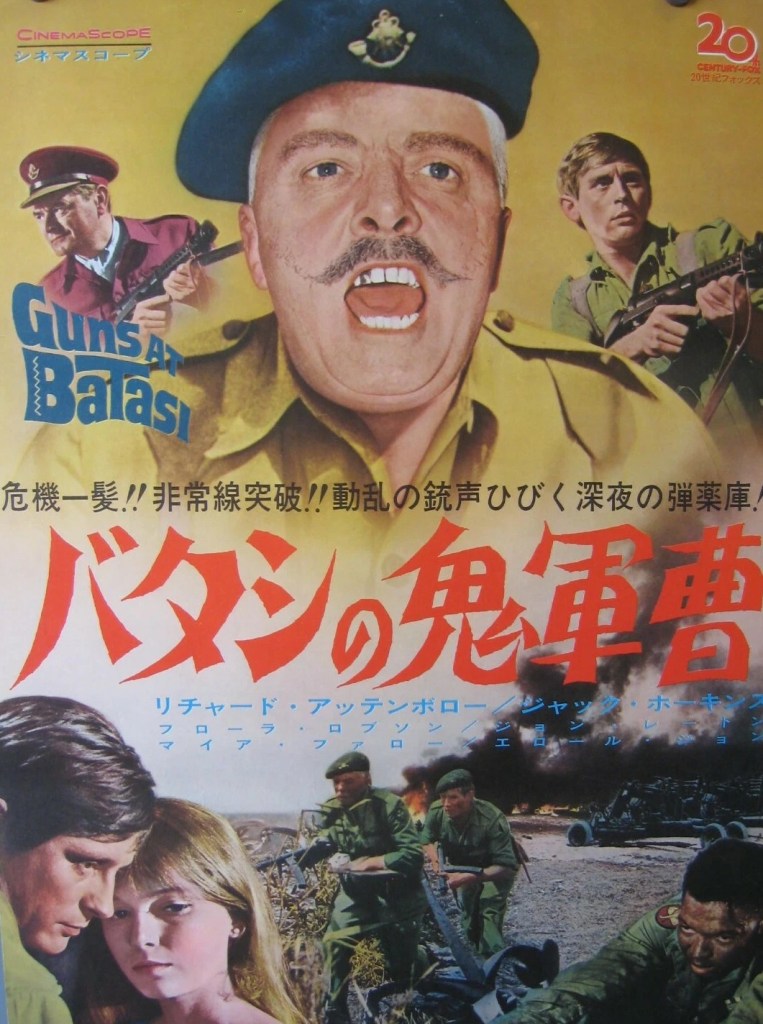
Except for the spit-and-polish, in military terms this is a very rusty British unit. You expect that Lauderdale will turn out to be all bluster. But he switches into commander instantly, holds (verbally) the enemy at bay, rallies the troops, leads by example and carries out a clever attack. But it’s a hollow victory. Politics works against him and he is humiliated at the end.
A good chunk of time is spent putting the British in their place.
Although the narrative appears to take time out to indulge the visiting MP and to tee up a piece of romance between raw recruit Pvt Wilkes (John Leyton) and stranded tourist Karen (Mia Farrow), both tales are soon subsumed into the action, the soldier forced into action, the politician forced to confront how little her principles count and how ineffective her authority in a war zone. There is some decent humor, the snarkiness between the soldiers, and Wilkes romantic clumsiness.
Richard Attenborough (Only When I Larf, 1968) is easily the pick as he presents various elements of a complicated character, the dedicated career soldier at the mercy of an inexperienced superior, questioning just what he has devoted his life to, straining to hold up his stiff upper lip, the butt of jokes, boring all with tales of long vanished glory, eventually revealing that he is much more than bluster, taking effective command, but then paying the price as the political scapegoat. Jack Hawkins (Zulu, 1964) has a smaller role than you’d expect from the billing and Flora Robson (7 Women, 1965) weighs in with another battleaxe. In her debut Mia Farrow (Secret Ceremony, 1968) demonstrates ample promise and Errol John (Man in the Middle, 1964) has a peach of a role.
Directed with some distinction by John Guillermin (The Bridge at Remagen, 1968), demonstrating a gift for both action and emotion, from a screenplay by Robert Holles based on his novel.
Although ignored by the Oscars, Attenborough won the Bafta Best Actor Award.
Thoroughly involving.



 The Magnificent 60s