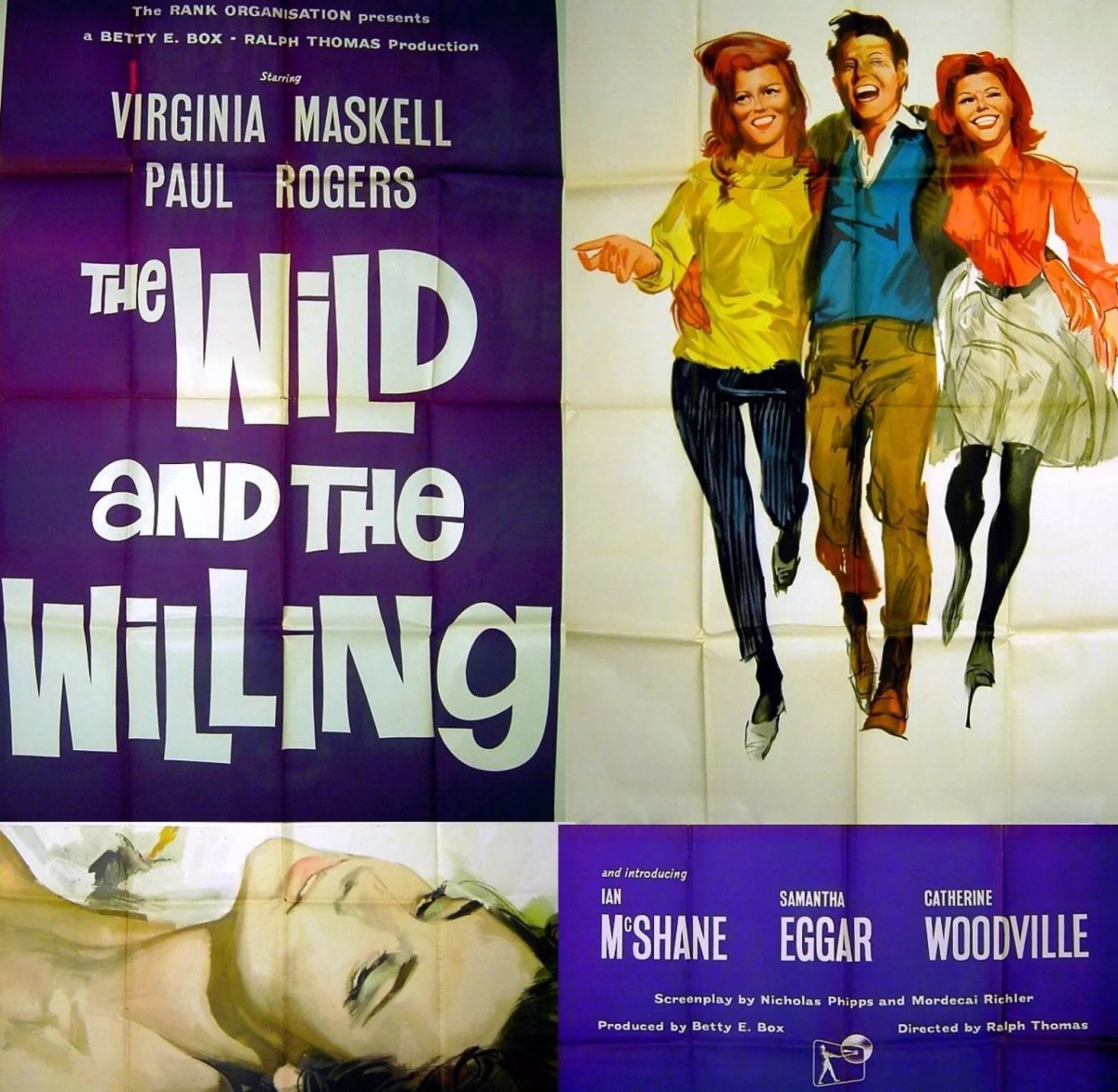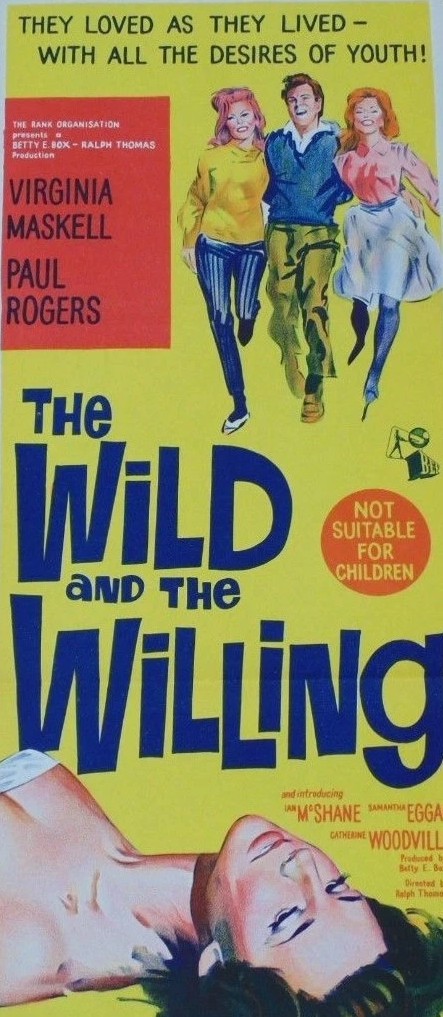
The Wild and the Willing (1962) ***

The problem with showcasing new talent is that it’s a pretty difficult sell given that all audiences have to go on is a studio’s faith in these newcomers. You can’t actually justify which of these will succeed until long after their initial forays.

In fact, this was a pretty good indicator one way or another of the talent the Brits had at their disposal, although some only became major players via television and others like Ian McShane, making his debut, as durable as he was as occasional leading and staunch support and television work (Lovejoy, 1986-1994), really only achieved substantial fame around four decades later via Deadwood (2004-2006) and the John Wick series.

For others, this proved an ideal calling card, Samantha Eggar, another debutante, was the biggest immediate beneficiary, female lead in big-budgeters The Collector (1965) and Walk, Don’t Run (1966). But virtually everyone in the cast had a whiff of stardom at one time or another. John Hurt’s stint as Sinful Davey (1969) didn’t do him much good but his career revived through the likes of television movie The Naked Civil Servant (1975), Midnight Express (1978) and Alien (1979).

This is stuffed with names you might remember one way or another. Jeremy Brett became a television Sherlock Holmes, Johnny Briggs enjoyed one of the longest-running roles in British soap Coronation St. Paul Rogers made headway in Stolen Hours (1963) and was a solid supporting actor. Johnny Sekka made a splash in Woman of Straw (1964) and The Southern Star (1969). Some careers were short-lived, the slightly more established Virginia Maskell’s last picture was Interlude (1968).

The story itself – I’m sure you couldn’t wait till I come to that – is slight, but with sufficient complication for a narrative to flourish. Activity takes place on a university campus. Harry (Ian McShane) and Josie (Samantha Eggar) are an item, at least until his eye wanders to Virginia (Virginia Maskell), the unhappy wife of Professor Chown (Paul Rogers).

Harry’s nerdy pal Phil (John Hurt) has been knocked back by Virginia’s classy pal Sarah (Katherine Woodville) and in trying to become as popular as Harry embarks in a daft adventure that ends in disaster.

As far removed from the kitchen sink drama popular at the time, this is a well-observed piece about the young and ambitious without ever descending into the intensity that other pictures wallowed in. You can forget about the suggestiveness of the title, by today’s standards this is very tame and skirts issues of sexuality that were becoming more predominant.

Ralph Thomas (Deadlier than the Male, 1967) directs from a script by Mordecai Richler and Nicholas Phipps adapting a play The Tinker by Laurence Doble and Robert Sloman, effortlessly seguing away from the stage origins and deftly putting every aspect of the narrative jigsaw in its place.

So, part of the fun here is seeing how well actors established a screen persona, or how they moved on. Ian McShane certainly had the cocky walk, but was still too much of the ingénue, even while playing a bad boy. Samantha Eggar was more instantly recognizable for the charisma she threw off. You would see John Hurt’s nerd again and again.

Interesting for more than archival purposes.

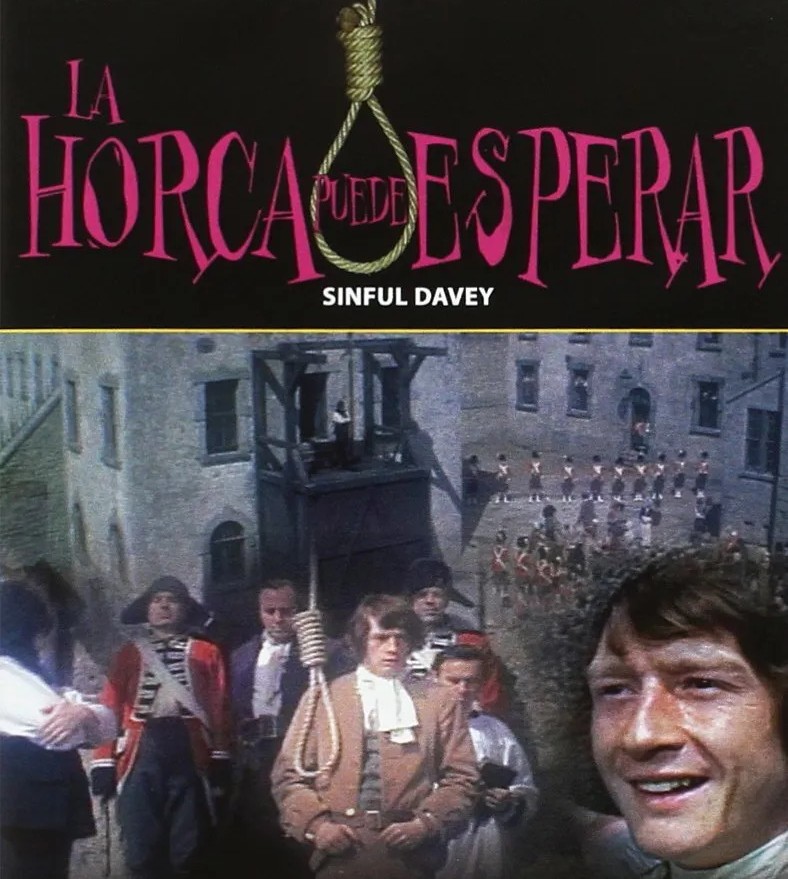
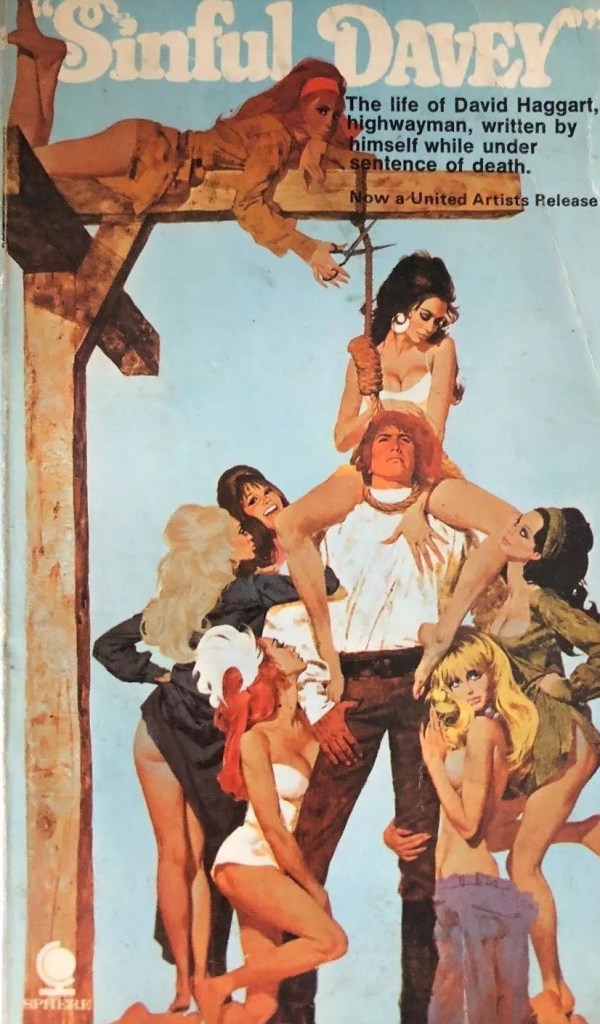
Sinful Davey (1969) **

Major disappointment from a director of the caliber of John Huston. Granted, the quality of his output during the decade had been variable but this marked a new low and the suspicion lingers that he only took on the gig to spend time in Ireland – the movie was filmed there – where he had set up a home in the grand manner of a country squire. Equally odd is James Webb as screenwriter. Having chronicled  the American West via How the West Was Won (1962) and Cheyenne Autumn (1964), Webb had turned his attention to British history, beginning with Alfred the Great (1968).

But where that had at least historical reality to guide the narrative, here Webb relies on the dubious autobiography of the titular subject, resulting in an episodic, picaresque, sub-Tom Jones (1963) and even sub-Where’s Jack? (1969) tale set in the Scottish Highlands.   And much as John Hurt later achieved considerable recognition for his acting, the role, as played, could have been handled just as easily by any number of rising male stars, since, beyond being able to affect two accents – broad Scots and upper-class English – little is required.

In fact, the director clearly couldn’t distinguish between the Irish and the Scottish accent as among the  joblot of accents, none more than serviceable, there is many an Irish lilt.  As if to make the point that he couldn’t care less, you will also discern on the soundtrack a refrain from “Danny Boy.”

Beyond that it made a good scene, quite why Davey Haggart (John Hurt) decided to announce his desertion from the British Army in such ostentatious manner is difficult to understand. He’s a drummer, marching along, banging said drum, when he takes it into his head to jump off the nearest bridge into the nearest river, complete with drum, only to find himself headed for a mill. In possibly the best line in the script, seeing the mill wheel blocking his escape, he mutters, “Who put that there?”

From here on it’s a tale of pursuit – two actually. Lawman Richardson (Nigel Davenport) leads the merry chase but he’s also got childhood sweetheart Annie (Pamela Franklin) on his tail to ease him out of scrapes in the hope that he’ll reform. Beginning as a pickpocket, he  switches to highway robbery and piracy, rarely with particular success. Loaded down with booty on the carriage he has stolen, for example, he loses control of the horses and is left at the side of the road, as poor as when he started. 

He’s certainly inventive but contemporary audiences will recoil from the notion of using the head a height-challenged man aloft another’s shoulders to test the rotting rafters inside a jail, leading not to escape but to a home-made pleasure parlor, since it provides entry to the female jail above where our hero establishes himself as a pimp.

But that’s as inventive as this picture gets and in the manner of Cat Ballou and Where’s Jack? you know that whenever a hero heads towards the gallows you can be sure the hanging will be thwarted. The period setting – the 1820s – offers little assistance, as the picture could be set any time before the invention of steam, and could as easily have taken place in a galaxy far far away long long ago called Brigadoon for all the period authenticity shown.

This didn’t lead to instant stardom for John Hurt and possibly just as well as he’d have been wasted in a series of ingenue roles. Pamela Franklin (And Soon the Darkness, 1970) doesn’t have much to do beyond trying to master a Scottish accent. Nigel Davenport (Play Dirty, 1968) was in his element playing yet another frosty authoritarian figure.

John Huston (Night of the Iguana, 1964) did prove one thing – that he lacked the knack for comedy.

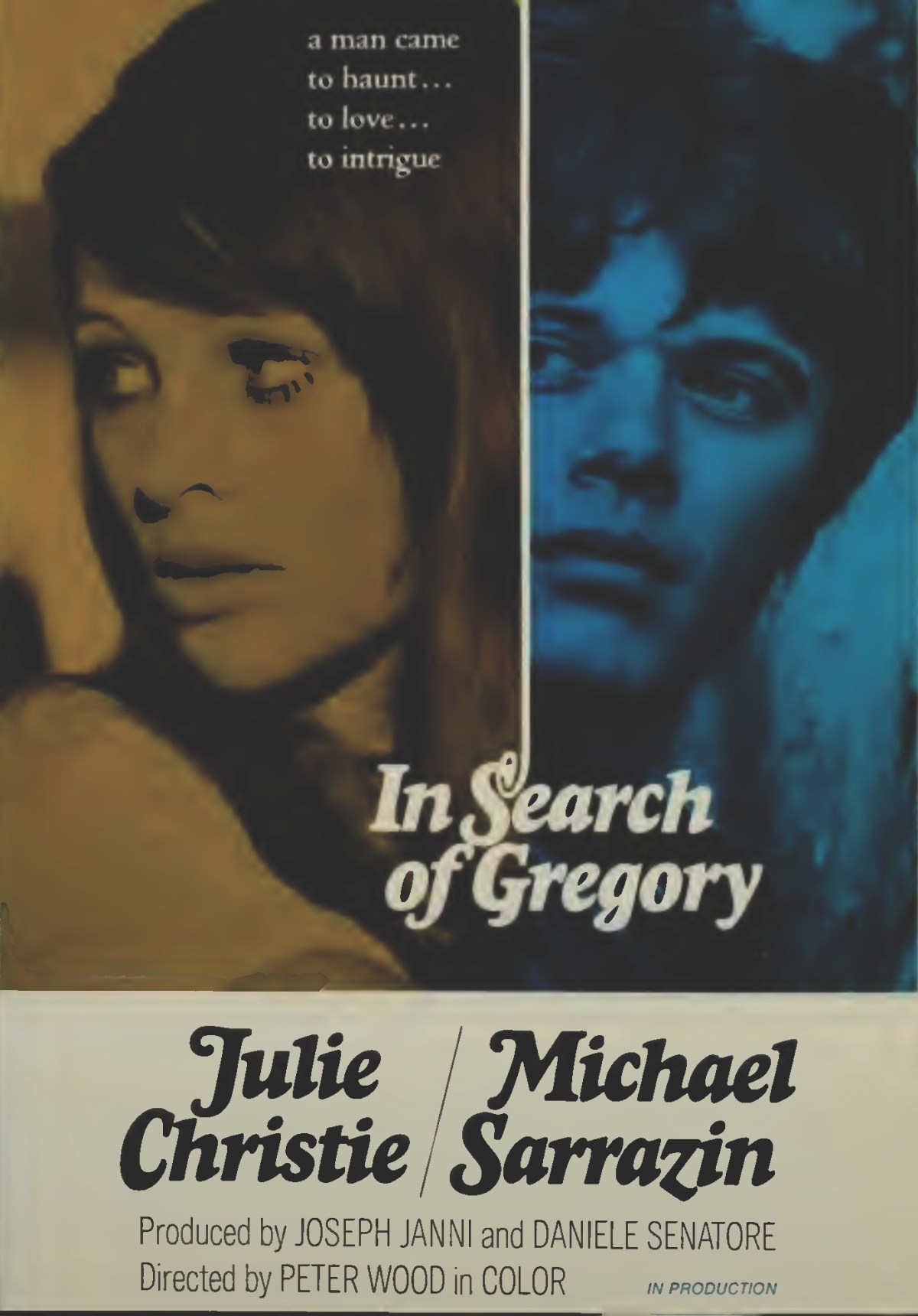
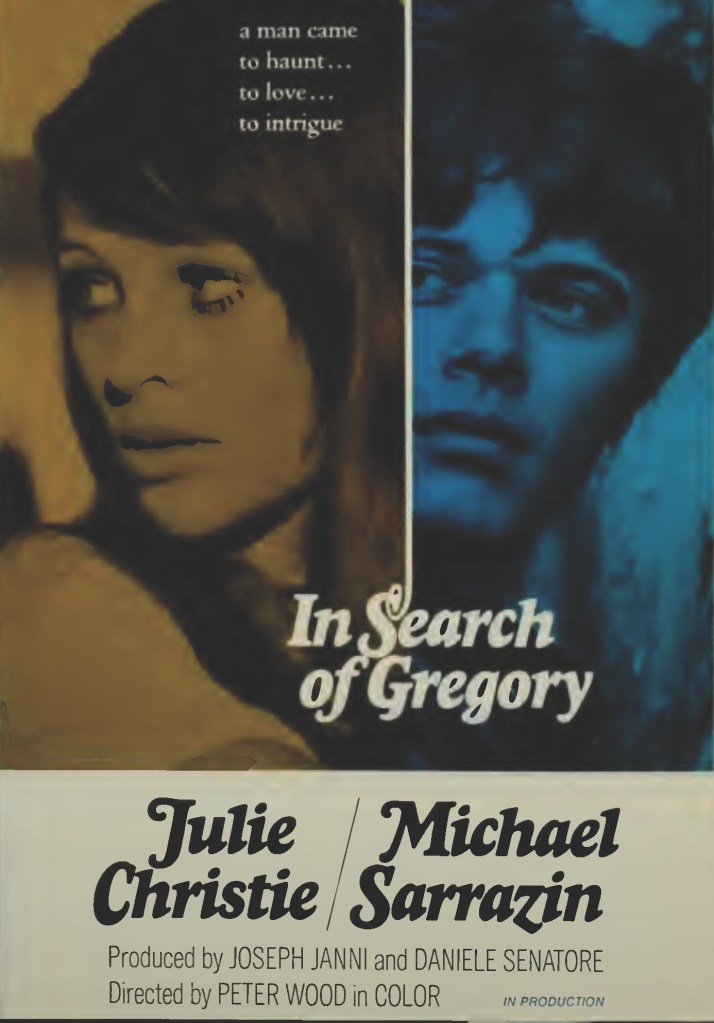
In Search of Gregory (1969) ***

Off-beat examination of the fantasy vs. reality conundrum with an ever-watchable Julie Christie as the woman on the titular hunt. The only film of acclaimed British theater director Peter Wood is a more whimsical cousin to the more deliberately obscure works of Alain Resnais (Last Year at Marienbad, 1961) and Michelangelo Antonioni (Blow-Up, 1966) which pivoted upon the question of whether events presented actually occur or exist only in the head of the leading character.    

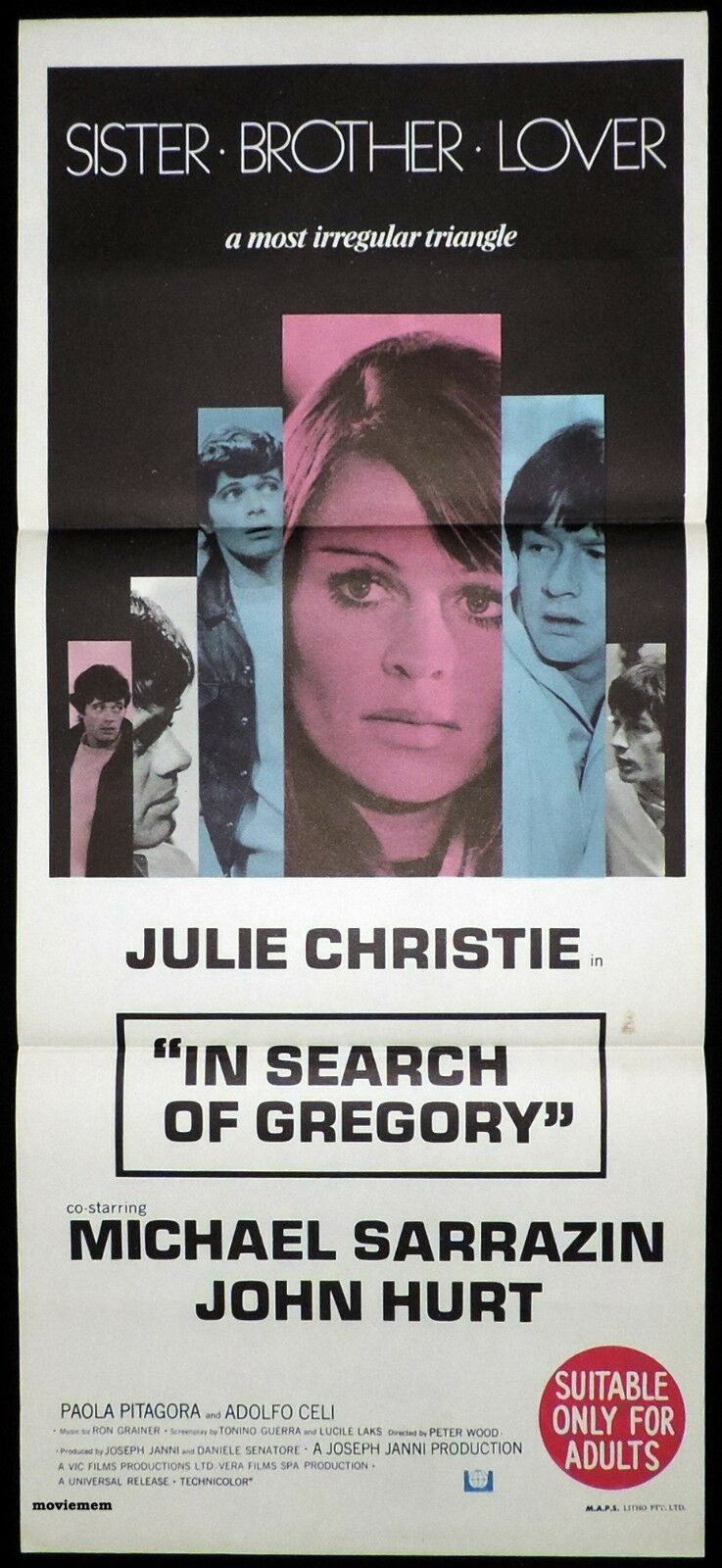
Catherine (Julie Christie) is enticed to Geneva by her father (Adolfo Celi) for his latest wedding on the basis that she will meet the impossibly handsome Gregory (Michael Sarrazin). On arrival she discovers the agoraphobia of younger brother Daniel (John Hurt) has been temporarily lifted by Gregory. Catherine appears set to meet Gregory on a number of occasions, but either he does not turn up (the wedding) or somehow, they miss each other, even at one point occupying adjoining phone booths. And it would have been a pretty dull picture if that was all that was going on. But whether the result of reality or Catherine’s imagination, the Gregory we see is a vivid screen presence. The world the characters inhabit is unusual to say the least, so unique that it is either obviously real or fake, but virtually impossible to determine which.

The best Gregory sequence, of which Steve McQueen would be proud, involves the character moving by means of the windscreen from one side to the other of a car driven at high speed. In another scene Gregory plays the equally perilous game of Autoball, a kind of polo with stock cars. As convincing is Gregory’s avant-garde orchestra consisting of two guitars, bottles, a bicycle wheel, a waste bin and coins in a glass. 

The detail is so extraordinary that it must be real. The brother seems real enough, too real if anything, close to enjoying (or pining for) an incestuous relationship with his sister. But for every moment that appears questionable – did she really witness Gregory making love to her future mother-in-law – there are others where doubts are immediately quelled (an address which appears non-existent is not). And long before anybody came up with the idea of selling bottled water, Gregory is apparently in the business of selling tinned Alpine air. Other moments she does not witness – Daniel riding a Lambretta/Vespa with feet on the handlebars – add to the prospect of genuine reality.

Catherine might even have met Gregory except that in going to bed with the man who looks very much like what we believe Gregory to look like she determines that he shall remain anonymous. So it’s anybody’s guess whether Gregory is a figment or phantom of her imagination. And why, of course, should such invention be necessary? Does it mean that her father and brother do not exist either?

It’s an entertaining mystery. There’s no great angst. Antonioni had the sense or cunning to ensure that consequence mattered in Blow-Up – a murderer escaping justice. But there’s no such tension here. While Catherine is tabbed a nympho by her brother (who never questions her father’s predilection for multiple marriages), the suggestion that she’d fly from Rome (where she lives with her boyfriend) to Geneva is the hope of a hook-up seems too far-fetched.

Despite the presence of Julie Christie – who can certainly carry even as slight a picture as this – and a quixotic turn from John Hurt (Sinful Davy, 1969) it’s neither obscure enough to be arthouse nor sufficiently plot-driven to be mainstream and remains an oddity. If you are going to be irritated beyond belief that will occur in the first fifteen minutes or so, but if you stay the course, you may find it a worthwhile watch rather than a cinematic car crash. Written by Bonnie Golightly (her only screenplay), Oscar-nominated Tonino Guerra (Blow-Up, 1966), and  Lucile Laks (The Black Belly of the Tarantula, 1971).

In Search of Gregory (1969) ****

Off-beat examination of the fantasy vs. reality conundrum with an ever-watchable Julie Christie as the woman on the titular hunt. One of the great lost pictures – the only film of acclaimed British theater director Peter Wood is a more whimsical cousin to the more deliberately obscure works of Alain Resnais (Last Year at Marienbad, 1961) and Michelangelo Antonioni (Blow-Up, 1966) which pivoted upon the question of whether events presented actually occur or exist only in the head of the leading character.    

Catherine (Julie Christie) is enticed to Geneva by her father (Adolfo Celi) for his latest wedding on the basis that she will meet the impossibly handsome Gregory (Michael Sarrazin). On arrival she discovers the agoraphobia of younger brother Daniel (John Hurt) has been temporarily lifted by Gregory. Catherine appears set to meet Gregory on a number of occasions, but either he does not turn up (the wedding) or somehow they miss each other, even at one point occupying adjoining phone booths. And it would have been a pretty dull picture if that was all that was going on. But whether the result of reality or Catherine’s imagination, the Gregory we see is a vivid screen presence. The world the character inhabits is unusual to say the least, so unique that it is either obviously real or fake, but virtually impossible to determine which.

The best Gregory sequence, of which Steve McQueen would be proud, involves the character moving by means of the windscreen from one side to the other of a car driven at high speed. In another scene Gregory plays the equally perilous game of Autoball, a kind of polo with stock cars. As convincing is Gregory’s avant-garde orchestra consisting of two guitars, bottles, a bicycle wheel, a waste bin and coins in a glass. 

The detail is so extraordinary that it must be real. The brother seems real enough, too real if anything, close to enjoying (or pining for – the poster promises more than the picture delivers) an incestuous relationship with his sister. But for every moment that appears questionable – did she really witness Gregory making love to her future mother-in-law – there are others where doubts are immediately quelled (an address which appears non-existent is not). And long before anybody came up with the idea of selling bottled water, Gregory is apparently in the business of selling tinned Alpine air. Other moments she does not witness – Daniel riding a Lambretta/Vespa with feet on the handlebars – add to the prospect of genuine reality.

Catherine might even have met Gregory except that in going to bed with the man who looks very much like what we believe Gregory to look like she determines that he shall remain anonymous. So it’s anybody’s guess whether Gregory is a figment or phantom of her imagination. And why, of course, should such invention be necessary? Does it mean that her father and brother do not exist either? These days the unreliable narrator is a common literary device but that was not the case at the tail end of the 1960s, so in some senses this was way ahead of its time.

It’s interesting, of course, to attach logic to the idea that it all takes place in Catherine’s imagination. You can kind of understand that maybe she thinks her father’s latest bride is going to betray him at the slightest opportunity. But it’s some imagination that sends Gregory into devilry in the car with Daniel. And it begs the question if none of it is real why does she keep on missing Gregory all the time? Does that relate to an even deeper psychological feeling that she is always going to miss out?

It’s an entertaining mystery. There’s no great angst. Antonioni had the sense or cunning to ensure that consequence mattered in Blow-Up – a murderer escaping justice. But there’s no such tension here. While Catherine is tabbed a nympho by her brother (who never questions her father’s predilection for multiple marriages), the suggestion that she’d fly from Rome (where she lives with her boyfriend) to Geneva is the hope of a hook-up seems too far-fetched. Despite the presence of Julie Christie – who can certainly carry even as slight a picture as this – and a quixotic turn from John Hurt (Sinful Davy, 1969) it’s neither obscure enough to be arthouse nor sufficiently plot-driven to be mainstream and remains an oddity.

If you are going to be irritated beyond belief that will occur in the first fifteen minutes or so, but if you stay the course, you will find it a highly rewarding watch rather than a cinematic car crash.

Your best bet to catch this film is Ebay or other secondhand routes.

Discover WordPress

A daily selection of the best content published on WordPress, collected for you by humans who love to read.

The Atavist Magazine

by Brian Hannan

WordPress.com News

The latest news on WordPress.com and the WordPress community.