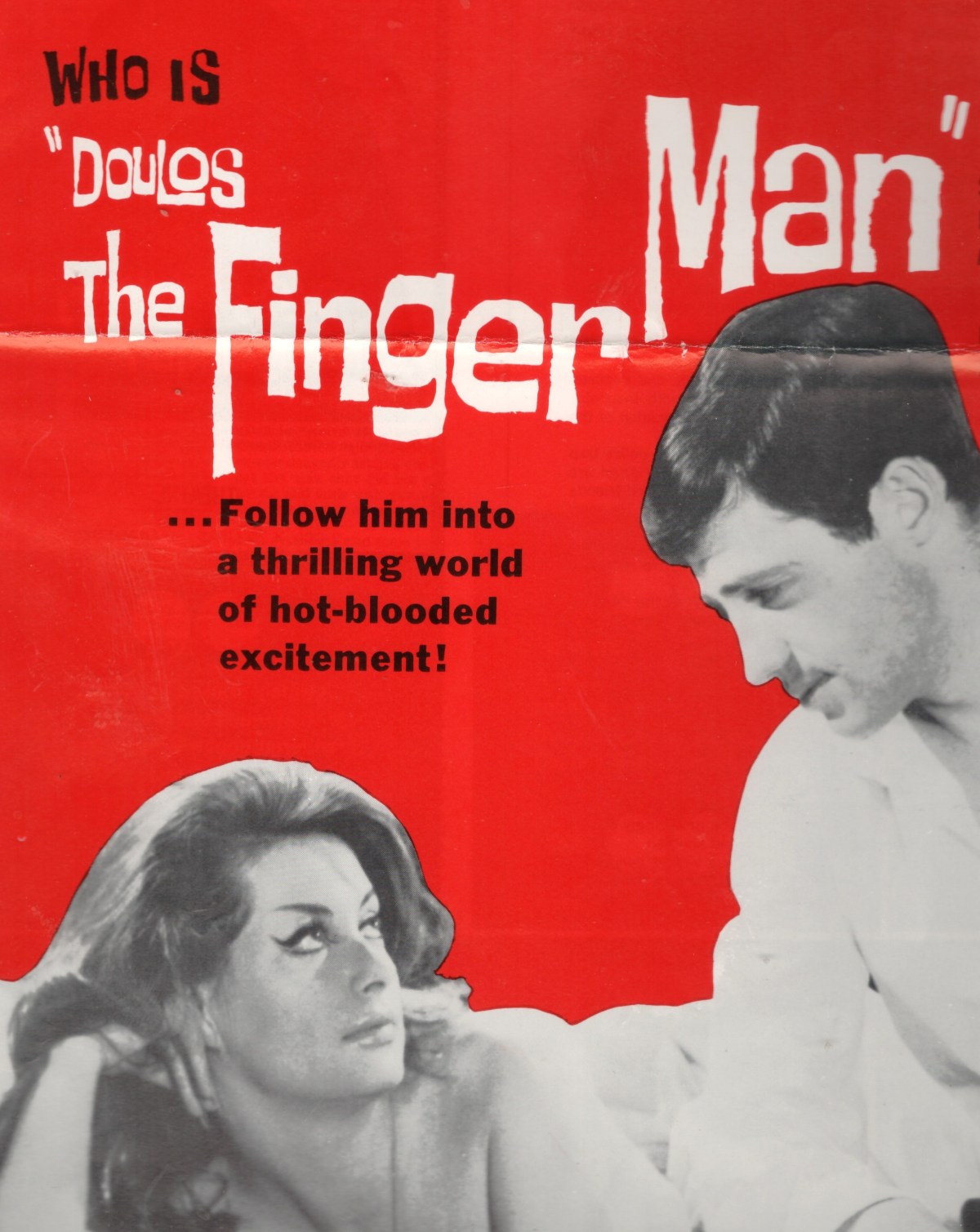
The Finger Man / Le Doulos (1962) *****

Stunning tour de force combining narrative complexity with technical audacity. Set up the template for later crime epics like Reservoir Dogs (1992) and The Usual Suspects (1995) and influenced Scorsese and Coppola. For the likes of me who revels in technical achievement, a delight, long tracking shots, two scenes over five minutes long shot in single takes, and rare use of the wipe. But technique is nothing without story. Luckily, here we are offered a  riveting tale of double crossing, honor, revenge and that rare beast, irony. There’s a veritable tsunami of twists at the end but all the way through there’s the kind of sleight-of-hand that deserves a round of applause.

Jean-Pierre Melville hadn’t named his picture The Informer for the obvious reason of it being considered, erroneously, a remake of the John Ford 1935 Oscar-winning classic or just the danger of being unfavorably compared with it. But the pre-credit titles tell us that Le Doulos is underworld slang for an informer so we’re prepared for that element of the story. What we’re not prepared for is what comes next.
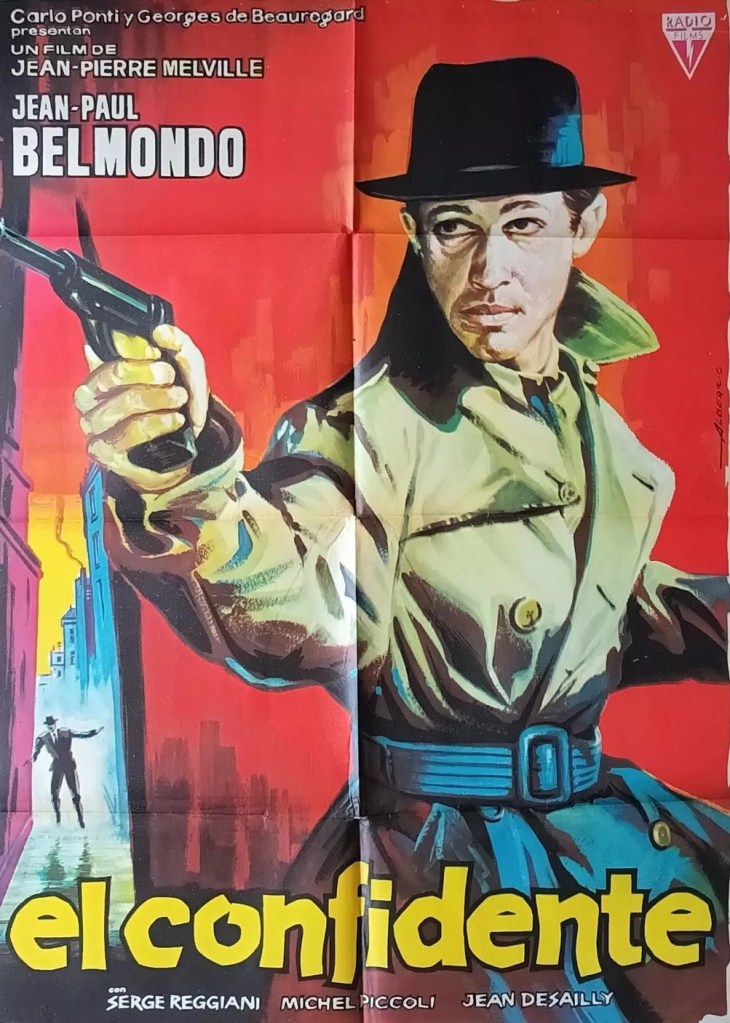
Maurice (Serge Reggiani), just out of prison after serving a six-year sentence, turns up at the house of fence Gilbert (Rene Lefevre) who’s helped him get back on his feet by setting him up with a safe-cracking job. Gilbert is appraising a cache of stolen jewels. Maurice shoots him, steals the jewels and a bundle of cash, burying the loot under a lamppost.

Maurice meets up with his partner Remy (Philippe Nahon) and another gangster Silien (Jean-Paul Belmondo), previously considered untrustworthy, who supplies the tools for the planned heist. While Maurice and Remy set off to burgle a house, Silien phones a cop, Inspector Salignari (Daniel Crohem). Silien viciously beats up Maurice’s girlfriend Therese (Monique Hennessey) and kills her.

The robbery doesn’t go according to plan, the cops turning up unexpectedly. In the shoot-out, Salignari and Remy are killed, Maurice wounded. Maurice passes on details of where he buried the loot to another buddy Jean (Philippe Marche).

Silien is picked up by the police as a known associate of Maurice. The interrogation scene, which lasts five or six minutes, is a piece of cinematic bravura. Shot in a single take the camera follows chief interrogator Clain (Jean Desailly) as he paces round the room, Silien only coming into view when the cop stops in front of him and asks him a question. While refusing to rat on Maurice, Silien agrees, under pressure from the cops who threaten to expose his drug racket, to phone around the various bars where Maurice might be holing up. This triggers another virtuoso piece of filmmaking as Melville employs the wipe. Maurice is located, reading a newspaper report on Therese’s death.
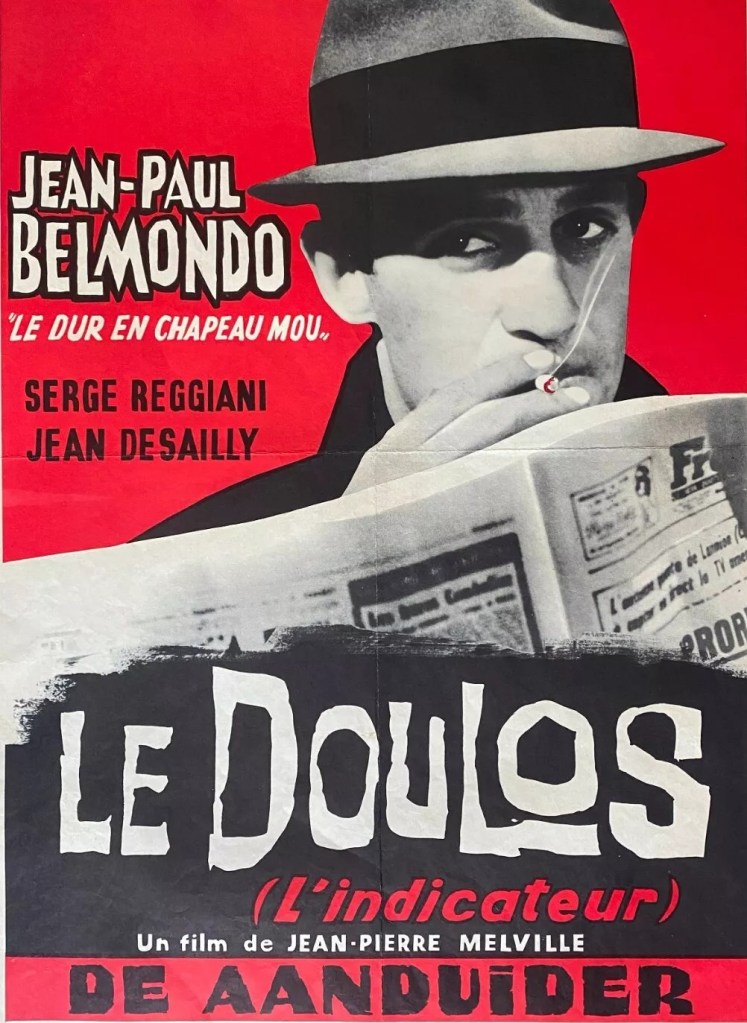
There follows another colossal technical achievement, Maurice interviewed in another long single take, this time the interrogator pacing in front of the prisoner. Maurice is jailed, where he shares a cell with an assassin.

Meanwhile, Silien gets hold of the jewels and cash. He enrols old girlfriend Fabienne (Fabienne Dali), currently the unhappy squeeze of top gangster and club owner Nuttheccio (Michel Piccoli), and hatches a scheme that makes little sense to the audience. So we just have to watch. Silien breaks into Nutthecio’s club and in the guise of selling the gangster the jewels gets him to hold some of the items, thus, we quickly realize, covering them with his fingerprints.

Silien kills Nuttheccio then waits for the club-owner’s partner Armand (Jacques de Leon) to arrive, kills him and stages the scene to look like they killed each other over the jewels which he deposits in the safe. One of the jewels was found at the failed robbery so that’s enough to free Maurice.

Then we play out the revelation, the same kind of scenario repeated in The Usual Suspects, where the audience learns the truth. Therese was the snitch. That’s why she was killed. Gilbert was shot by Maurice because the dealer in stolen goods had drowned Maurice’s previous girlfriend Arletty. Even though you could argue that was justified, Maurice not being a good judge of character and not aware, as Gilbert was, that Arletty was also a police informer.

It was pure coincidence that Silien phoned Salignari on the night of the burglary. Despite being on opposite sides of the law, they were friends and the gangster was merely inviting the cop to dinner.

Silien proves to be such a straight-up guy that he hands all the stolen cash to Maurice. Silien plans to get out of the business and retire with Fabienne to a house in the country. Then we learn that Maurice has distrusted Silien after all and arranged for the assassin he met in jail to kill Silien. To try and prevent that, he races to the country house, fortuitously arriving before Silien and is, ironically, shot by the assassin. When Silien arrives shortly afterwards he, with more savage irony, is also despatched.

I watched this initially thinking what a huge risk Jean-Paul Belmondo (Borsalino, 1970) was taking in playing, as I initially believed, not just a police informer, but stealing from Maurice the buried loot and leading the police to him. It would have been a hell of a note if the narrative had continued in the same hard-nosed vein especially after Silien’s absolutely brutal treatment of Therese. The slap he administered came out of nowhere and resounded like a gunshot. He then tied her up, again venomously, and poured a bottle of whisky over her head. 

That it turned out to be a story of honor among thieves was perhaps the biggest twist of all.

Jean-Paul Belmondo is outstanding in an underplayed role, Serge Reggiani (The Leopard, 1963)  convincing as the two-timing crook.  

Deservedly recognized as one of the most influential crime pictures of all time, this is nothing short of a masterpiece by Jean-Pierre Melville (Army of Shadows, 1969). Written by the director from the novel by Pierre Lesou.

Beg, borrow or steal this one.
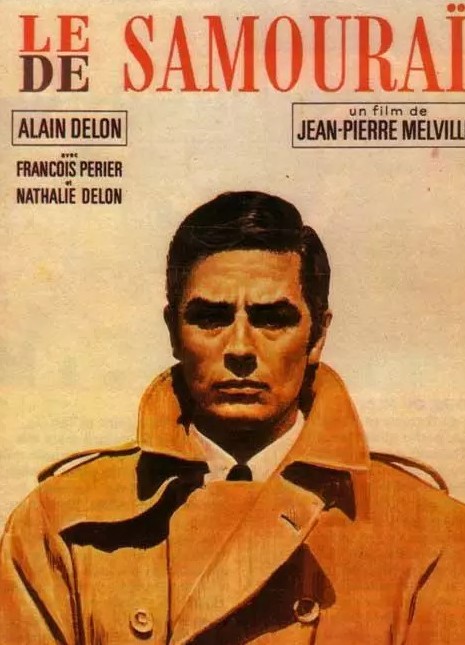
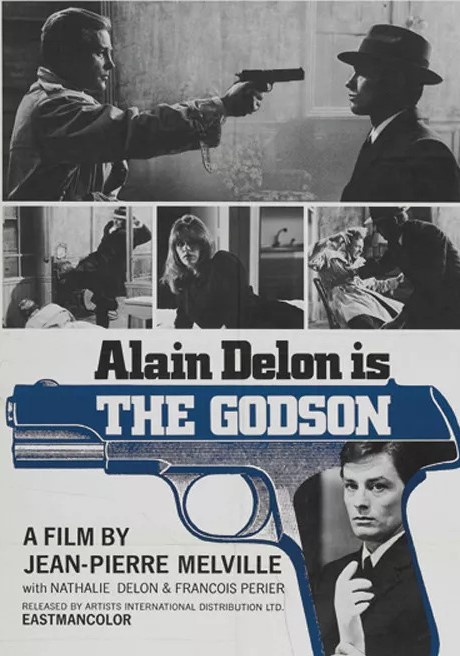
Le Samourai / The Godson (1967) ****

The current trope for giving assassins nicknames – viz Day of the Jackal (2024) – doesn’t stem from Jean-Pierre Melville’s spare picture, the title here more suggestive of the idea of killing as an honorable profession. One of the most influential crime movies of all time, it resonates through Michael Winner’s The Mechanic (1972) – though few critics would give that the time of day -Walter Hill’s The Driver (1978), John Woo’s The Killer (1989), Anton Corbijn’s The American (2010), Nicolas Winding Refn’s Drive (2011) and David Fincher’s The Killer (2023). Even so, few acolytes can match the opening scene of a room empty except for a whiff of smoke in a corner that indicates the presence of recumbent killer Jef (Alain Delon).

There’s none of the false identity malarkey of Day of the Jackal and no high-echelon ultra-secret secret service figures involved in tracking him down. In fact, one of the delights of the movie is the police procedural aspect, with the top cop, here known only as the Commissaire (Francois Perier), insisting on dragging in at least 20 “usual suspects” from each district. Though living a Spartan existence, Jef at least has the sense to acquire an alibi from the lover Jane (Nathalie) he shares with a wealthier man. Nor is he killing public figures. Instead, more like someone from Murder Inc., rubbing out other gangsters.

Shameless attempt to cash in on “The Godfather” after U.S. distributors held off for five years from releasing it.

The witnesses provide conflicting information on the man they saw, but the Commissaire does not entirely trust Jef’s alibi, putting pressure on Jane to recant. Her paying lover Weiner (Michel Boisrond) provides a pretty accurate description of Jef. While the cops bug his apartment and  start to shadow him, Jef falls foul of his anonymous employer who is alarmed at the attention the assassin has attracted and to avoid the possibility of being implicated sets an assassin onto the assassin.

Wounded, refusing to accede to Jane’s demand that he acknowledge he “needs” her, he tracks down the assassin’s boss, Oliver Rey (Jean-Pierre Posier), who happens to be the lover of Valerie, a nighgclub singer Jef takes a shine to. It’s worth noting that there’s an innocence – or perhaps an honor matching that of the samurai – in the police behavior. The Commissaire exists in a world where rules are not bent or broken, where suspects are not beaten up, and where often the cops are hamstrung by procedure and must take special care in arriving at a conclusion. To convince himself that Jef is indeed the correct suspect, the Commissaire makes him swap hat and coat with others in a line-up, only for the witness to identify the coat, hat and face that he believes he saw. It’s only Jane’s unbreakable alibi that keeps Jef safe.

Most of the picture is pure bleak style. You never enter the assassin’s head. There’s no background or backstory to shed any light on action. Even the most appealing characters, Jane and Valerie, occupy moral twilight. I’m not sure Melville’s in a mood for homage, though Robert Aldrich was in the Cahiers du Cinema hall of fame, but the ending comes close to replicating that of Aldrich’s The Last Sunset (1961), not just for the climactic action but for the inherent self-realization of unavoidable consequence.

Despite sparseness of the style, there’s enough going on emotionally and action-wise to keep an audience enthralled. While his outfit echoes the Humphrey Bogart private eye of the 1940s, and while walking the same mean streets, Jef is the antithesis of that untarnished hero.

Melville belonged to the hard-boiled school of cinematic crime, summoning up the gods of noir, and providing a new breed of French star with tough guys to kill for.  He died young, just 55, and left behind 14 pictures, at least three or four considered masterpieces including Army of Shadows (1969) and The Red Circle (1970). You might have thought his minimalist style would appeal more to critics than moviegoers but in his native France, in part because stars queued up to be in his movies,  he was highly popular.

When you compare the Delon of this to Once a Thief (1965) or Texas Across the River (1966) you can see how much acting goes into the restraint of the character here, producing one of Delon’s best performances. His wife of the time, Nathalie Delon (The Sisters, 1969) shines but briefly.

Recommended.

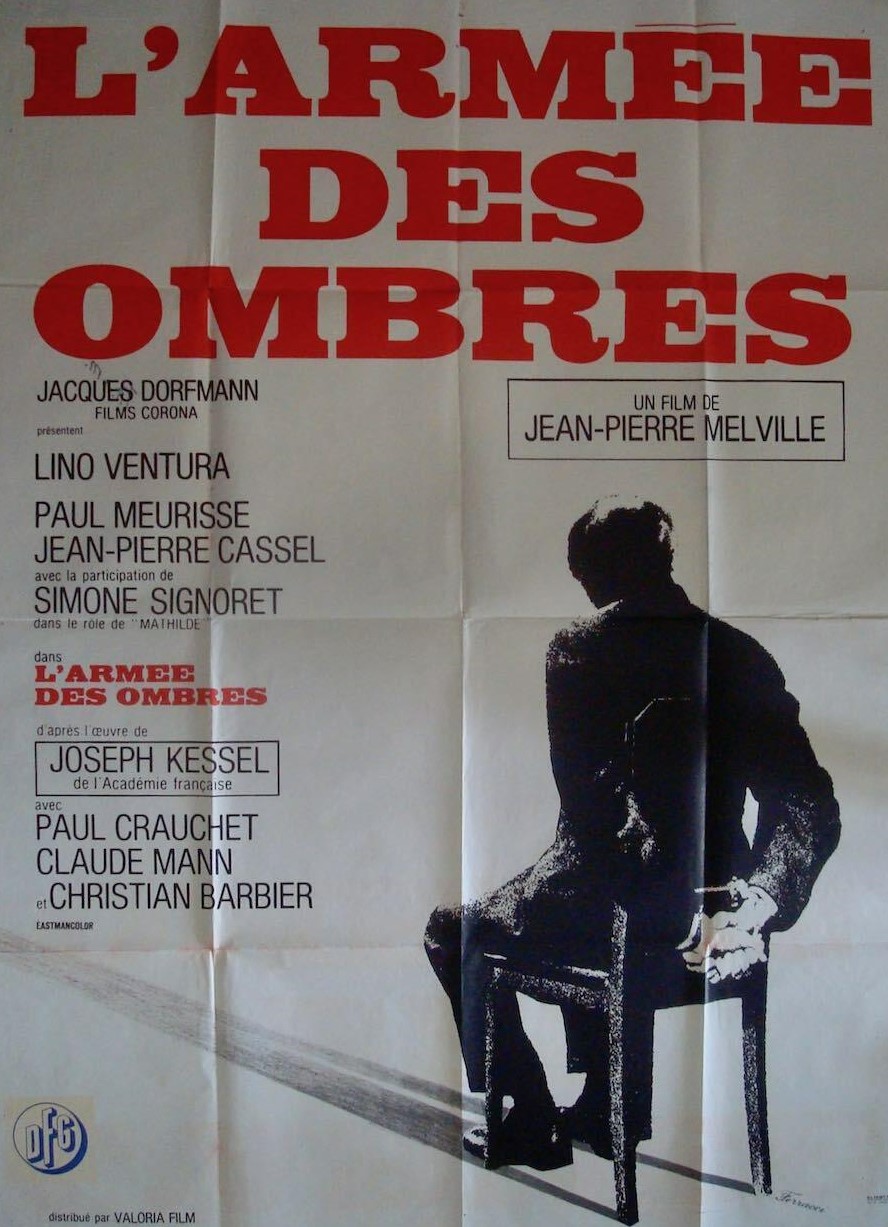
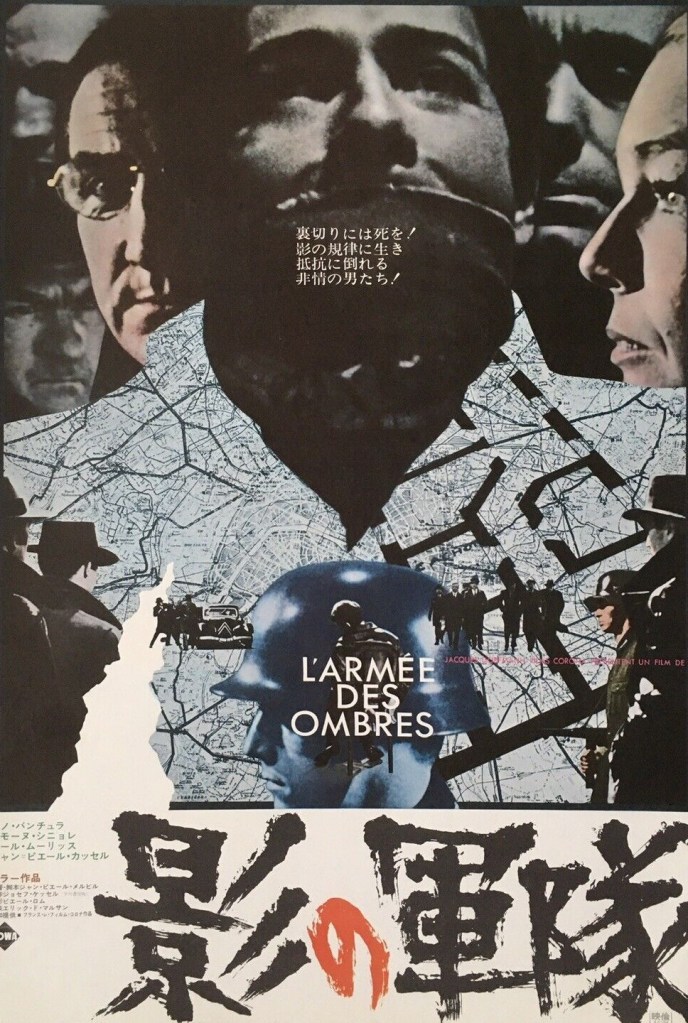
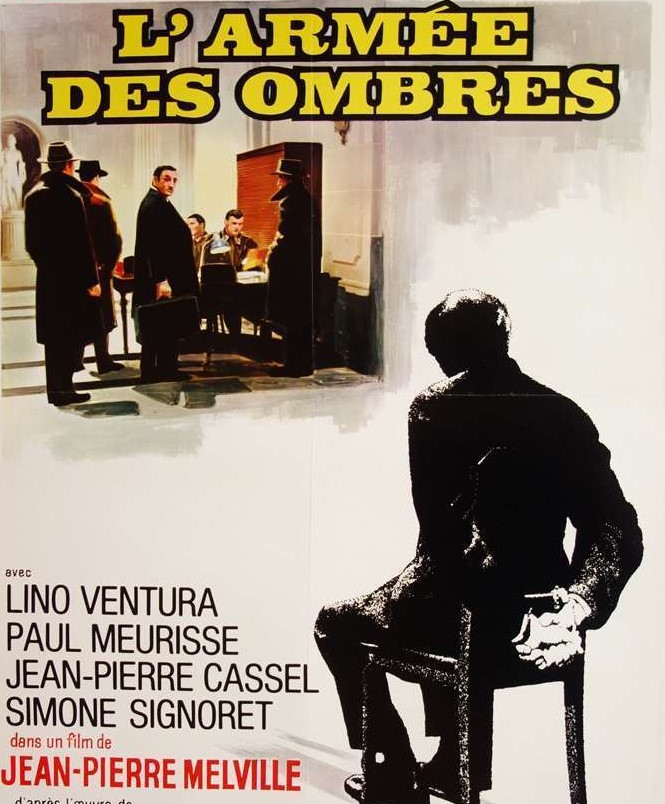
Army of Shadows/ Les Armees des Ombres (1969) ****

The antidote to the gung-ho World War Two picture. Scarcely any action and certainly none of the French Resistance swagger of The Train (1964) or the popular uprising of Is Paris Burning? (1965). Instead, sombre realism as Resistance leader Gerbier (Lino Ventura) dodges capture in a country pitted with collaborators. Nor is the underground portrayed in heroic fashion, their methods of revenge every bit as pitiless as the occupying forces.

Told in documentary style and based on the real-life exploits of characters taking the battle to the enemy, it’s backroom stuff, Gerbier organising his Resistance cell, meeting with other leaders. But his life is fraught with tension, as he attempts to dodge capture, with little success, it has to be said.

The film opens with Gerbier in captivity, an internment camp, where he is betrayed by an informer. While being transported to Paris, he escapes. His first action, revenge. With three colleagues, in an ordinary Marseille house where use of a gun will give them away, they strangle to death an informer. It’s not pretty.

Some join up for the risk like Jardie (Jean-Pierre Cassel), others maintain a more orderly, outwardly uninvolved, almost philosophic, lifestyle, like his older brother Luc (Paul Meurisse) who turns out to be the “Big Boss” of the Resistance, prominent enough to be transported by submarine to London to meet French leader-in-exile De Gaulle.   

Little of what they organise works out. Betrayal a constant, not just from collaborators, but from a fellow member who could be compromised by having a vulnerable child or parent. When one of the Marseille stranglers, Felix (Paul Crauchet) is captured, and likely to crack under torture, Mathilde (Simone Signoret), Gerbier’s assistant, comes up with a daring plan involving Jardie giving himself up so he will be imprisoned with Felix and, at the pessimistic end of expectations, can provide him with a cyanide pill, while the most optimistic outcome is three members disguised as Germans infiltrating the jail and sneaking him away.

The plan fails and Gerbier is subsequently arrested, imprisoned, his execution only denied by a daring rescue attempt – the only kind of typical war picture action. But then Mathilde becomes a liability and is executed.

It’s a cold-blooded kind of film and depicts with far greater realism the endeavors – failure outweighing success  of an underground operation during the Occupation. They don’t have the training for the job and their effectiveness is always open to question. Although British and American films might be filled with characters volunteering for dangerous missions, those are activities in isolation, not a commitment to a lifestyle that most likely would end in torture and death, endanger family and friends and leave you living in a sewer of suspicion. This presents an unvarnished truth. Not only are you expecting at any moment the Germans will pounce, there is a constant dread that the Resistance will be undone by their own actions, a plan too ambitious, someone cracking up, firing squad the most likely result. There’s nary a sniff of glory.

The big budget roadshow – The Longest Day (1962), Battle of the Bulge (1965), The Battle of Britain (1969) et al – while covering in some aspects the dangers of war were for the most part fist-pumping patriotic achievements, not this sneaking around, undercover stuff where missions were low-key, and the protagonists rarely in charge of their own destinies.

As far as French critics were concerned, the release timing was off, the film arriving in the wake of the 1968 riots and with De Gaulle in political trouble due to the Algerian situation. So it flopped with critics and audiences alike, and although it found a receptive audience in the U.K. in the late 1970s, it was denied release in the U.S. until 2006, by which point politics could not cloud opinion, and it earned rave reviews.

Lino Ventura (The Sicilian Clan, 1969) on top form is run close by Simone Signoret (The Deadly Affair, 1967). Jean-Pierre Cassell (Is Paris Burning?) comes closest to comic book heroics but even that is eventually reined in.

Everyone is helped by a screenplay by Joseph Kessel (The Night of the Generals, 1967), himself a member of the Resistance,  that is light on melodrama and overwrought dialog and concentrates on getting done the job in hand, no matter how unsavory. Equally notable is the lack of grandstanding, of glorious finish, of the Hollywood convention of redemption.

Director Jean-Pierre Melville (Le Samourai, 1967) , also a Resistance fighter and with a hand in the screenplay, brings to bear film noir sensibilities and the cold-bloodedness that informed a previous oeuvre tending towards gangster pictures.

A very bold undertaking of the most dour kind that deserves appreciation.

Discover WordPress

A daily selection of the best content published on WordPress, collected for you by humans who love to read.

The Atavist Magazine

by Brian Hannan

WordPress.com News

The latest news on WordPress.com and the WordPress community.