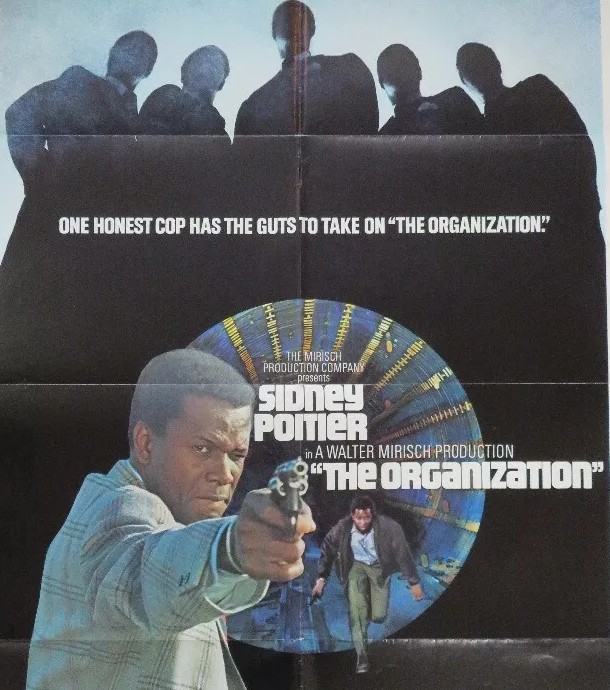
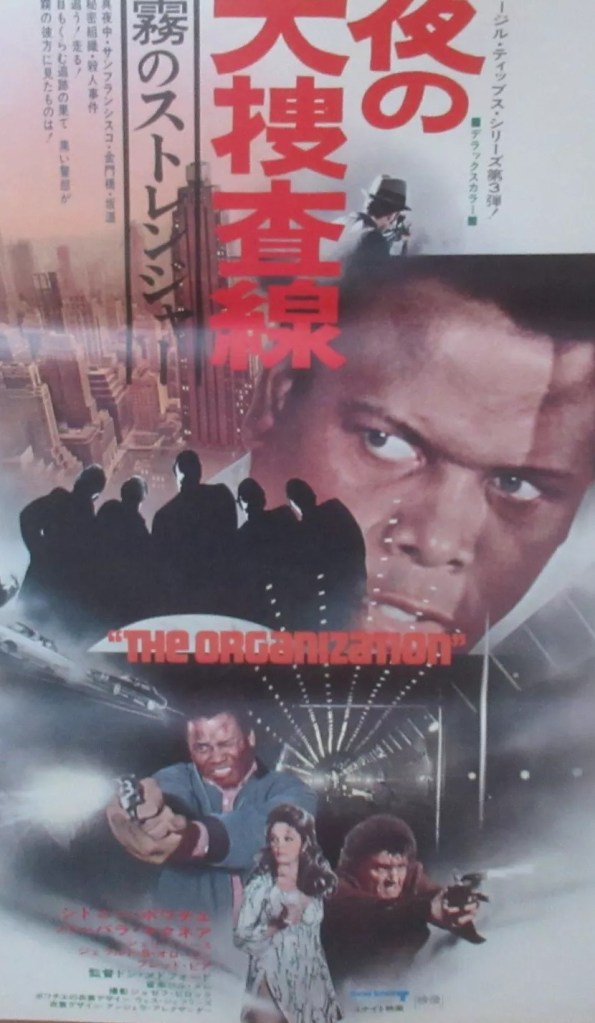
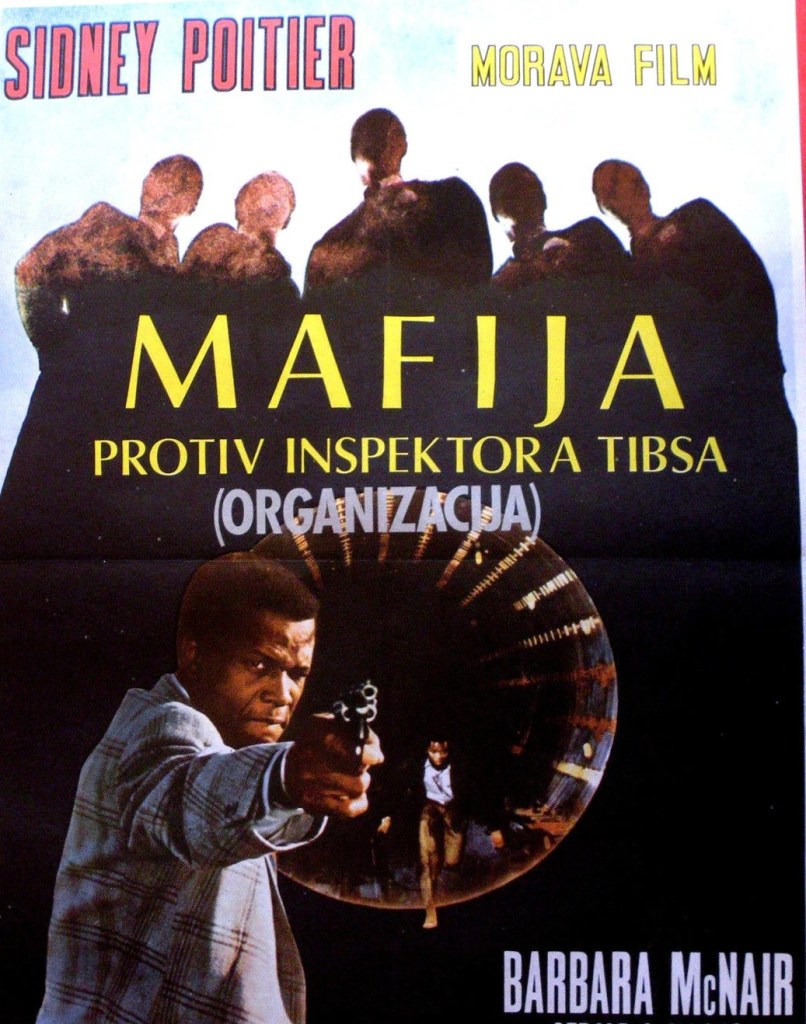
Just Stop Drugs would have been the title had the movie come out today. A bunch of urban guerillas, each scarred by personal or family-related experience with drugs, on the basis that the authorities are doing too little and cops in any case too open to corruption, decide to take the battle to “the man.”
Starts with an excellent heist opening, conducted for the most part in silence, and pretty inventive at that. One guy pole-vaults over the gate of a factory. The rest of the gang turn up with what these days is called an aerial work platform but is most recognizable to the rest of us as a version of a fireman’s turntable ladder. So they hoof it up the ladder to the fourth or fifth floor, bringing with them a captive who’s got the keys to a safe. When he refuses to cooperate, they dangle him out the window.
Every now and then we cut to a woman in the street. At first she looks like a witness, but when she doesn’t go racing to call the police, it’s clear she’s either a fascinated observer or a lookout. From what’s otherwise a very ordinary factory, the gang remove millions of dollars worth of heroin and blow up the gates.
When eventually Det Lt Virgil Tibbs (Sidney Poitier) appears on the scene, it’s not to investigate a robbery but a homicide. The captive is dead. It looks like suicide until they discover he’s been shot by two different guns. Tibbs is also puzzled by the timescale. There were also 20 minutes between the gates being blasted open and the cops arriving. It takes longer to run up and down the stairs.
But then Tibbs gets a break. The gang calls him in, want him to work with them to bring down “the organization.” Which puts the detective in a tricky spot. He’d be conniving with known thieves, possibly murderers.
After this excellent and intriguing start, the movie doesn’t so much go downhill but tie itself up in knots. In the first place Tibbs doesn’t do much actual detection. Pretty much all the legwork is done by the gang who put themselves out there as bait to try and snag the Mr Bigs of the drug world.
The gang are a do-gooder version of The Magnificent Seven. Tibbs ends up doing little more than following their leads. Most of the time the movie focuses on the various members of the gang, who are variously beaten up, tortured or killed. Just to keep us on edge and promote the notion that the force is riddled with corruption a police captain commits suicide.
Tibbs is more interesting when he’s being outsmarted by his son who’s on the verge of learning the facts of life. The child’s got the best line in the picture. We are introduced to him coming out of a lecture at school on sex in which he declares no interest. Dad and Mum (Barbara McNair) get into a minor tizz over who’s best suited to fill him in on the realities of life. Later, Tibbs discovers an erotic magazine in the boy’s belongings. When confronted, the boy explains he isn’t bored by sex just by a lecture on it.
Anyways, the gang proves more successful in luring out the mobsters, Juan (Raul Julia) especially adept at coming up with the game plan. Naturally, the bad guys don’t play by the rules he’s set down and Annie (Lani Miyazaki), the only female member of the gang, ends up in the drink. The nightwatchman (Charles H. Gray) is the victim of a drive-by shooting.
When Tibbs does get down to working things out on his own, his investigation leads him to the alcoholic wife (Sheree North) of the nightwatchman who is independently wealthy of her husband.
When, finally, Tibbs gets his hands on two of the Mr Bigs this being the Cynical 1970s there’s no happy ending, the pair when arrested rubbed out by a sniper.
So interesting stuff, but, unfortunately, most of the interest doesn’t lie with Tibbs. He’s pretty much an onlooker. As a story, the movie would have done better to leave him out altogether and set up the narrative as the urban revolutionaries trying to take down the drug dealers.
But you’ll enjoy some talent spotting. Raul Julia (Kiss of the Spider Woman, 1985) and Ron O’Neal (Super Fly, 1972) lead the pack ahead of Daniel J. Travanti (Hill St Blues, 1981-1987) and Bernie Hamilton (Starsky and Hutch, 1975-1979).
Sidney Poitier, in his final outing as Tibbs, is fine with not much to do and Barbara McNair, (Stiletto, 1969) as usual is underused.
Directed by Don Medford (The Hunting Party, 1971) from a screenplay by James R Webb (Alfred the Great, 1969) based on the John Ball bestseller.
An oddity in the genre and more enjoyable if you ignore the central character.
United Artists had reinvented the sequel business, shifting it away from the low-burn low-budget Tarzan adventure or Gene Autry western or any inexpensive picture movie capable of maintaining a series character, to bigger-budgeted numbers like James Bond (four sequels so far), The Magnificent Seven (two), The Beatles (four) and The Pink Panther (two). Even Hawaii (1966) spawned The Hawaiians (1970). So when the company hit commercial and critical gold – five Oscars including Best Picture and Best Actor – with In the Heat of the Night (1967) it seemed too good an opportunity to miss not to try for a repeat.
You might have expected UA to continue with the pairing of Sidney Poitier and Oscar-winner Rod Steiger and locate a sequel again in the Deep South. Instead, Steiger was junked and the Poitier character Virgil Tibbs relocated from his Philadelphia hometown to the more snazzy environs of San Francisco, recently popularized by such items as Bullitt (1968).
But minus the racism element what you’re left with is pretty much a standard detective tale with domestic issues thrown in. Tibbs isn’t the kind of cop we’ve come to expect, sinking into alcoholic oblivion or having thrown away a marriage. Instead, and this would strike a contemporary chord, he’s struggling with fatherhood. His son comes off best in arguments and at one point Tibbs resorts to giving the child a few slaps. That looks initially as if emotions will quickly heal and the repentant dad quickly administers a comforting hug, but any bonding is blown apart when the resentful boy complains, as if this represents betrayal, that his father made him cry.
Tibbs is also the old-fashioned kind of male who believes the only way to teach his son not to fall into bad ways like smoking and drinking is to force him to puff on a big cigar and knock back a stiff one until the child throws up.
But Tibbs does do a diligent enough job of detection, evidence relating to the murder of a high-priced sex worker hinging upon whether the killer had long fingernails. The most obvious suspect is street preacher Rev Logan Sharpe (Martin Landau), who visited the prostitute in his capacity as spiritual adviser and who’s heading up a campaign to clean up the streets. But his alibi holds up.
Next in line is building owner Woody Garfield (Ed Asner), exposed, to the shame of wife Marge (Norma Crane) as being a client of the prostitute, and then a janitor of low intelligence called Mealie (Juano Hernandez) and pimp Weedon (Anthony Zerbe), the kind of hood who enjoys taunting cops.
While Tibbs doesn’t indulge in the blatant maverick approach to the job of the earlier Madigan (1968) or the later Dirty Harry (1971) he’s not above putting the squeeze on witnesses.
Rather foolishly, but perhaps feeling this has now become de rigeur, there’s a car chase which hardly compares to Bullitt. In fact, we’re stuck in an automobile rather too often but these only result in desultory conversations between Tibbs and his sidekick. While in some respects it’s refreshing that Tibbs isn’t subject to any racism, and the picture doesn’t head down the blaxploitation route, the result lacks edge.
Tibbs’ reactions to his child bring him down sharply from the ivory tower of sainthood from the previous picture, and the family stuff, while building up his character, doesn’t make up for what the story lacks.
Gordon Douglas, who had previously excelled in this genre via Tony Rome (1967), The Detective (1968) and Lady in Cement (1968), found out the hard way that Frank Sinatra was more appealing as an investigator and cop than Sidney Poitier and, without steaminess or wise-cracking to fall back on, the sequel quietly runs out of steam.
Screenplay by Alan Trustman (The Thomas Crown Affair, 1968) and James Webb (Alfred the Great, 1969) from the bestseller by John Ball. Not a patch on the original
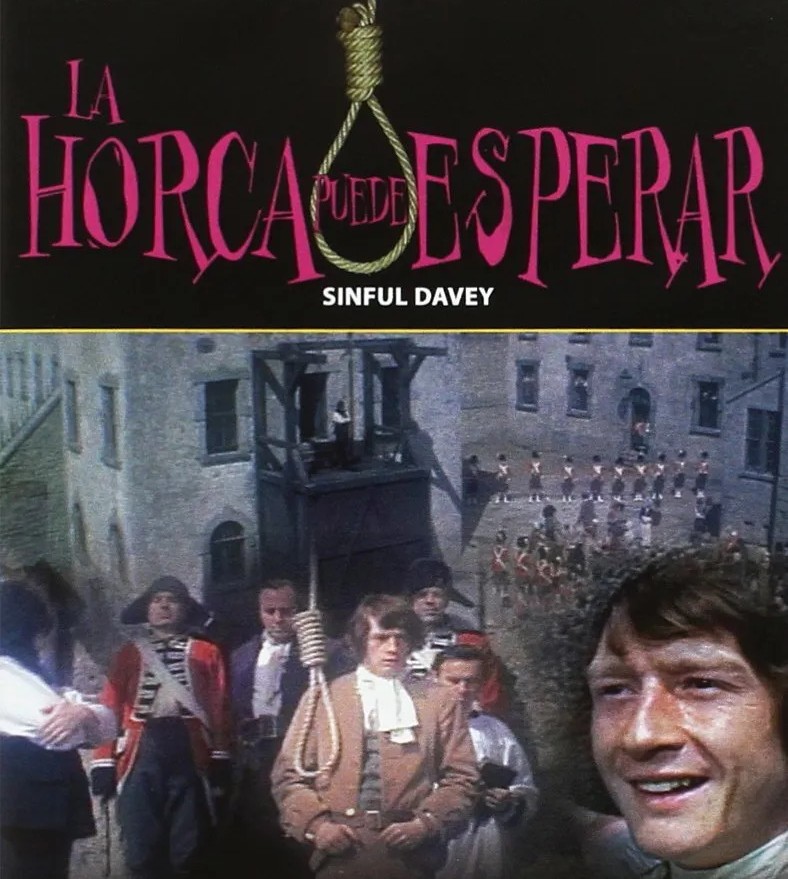
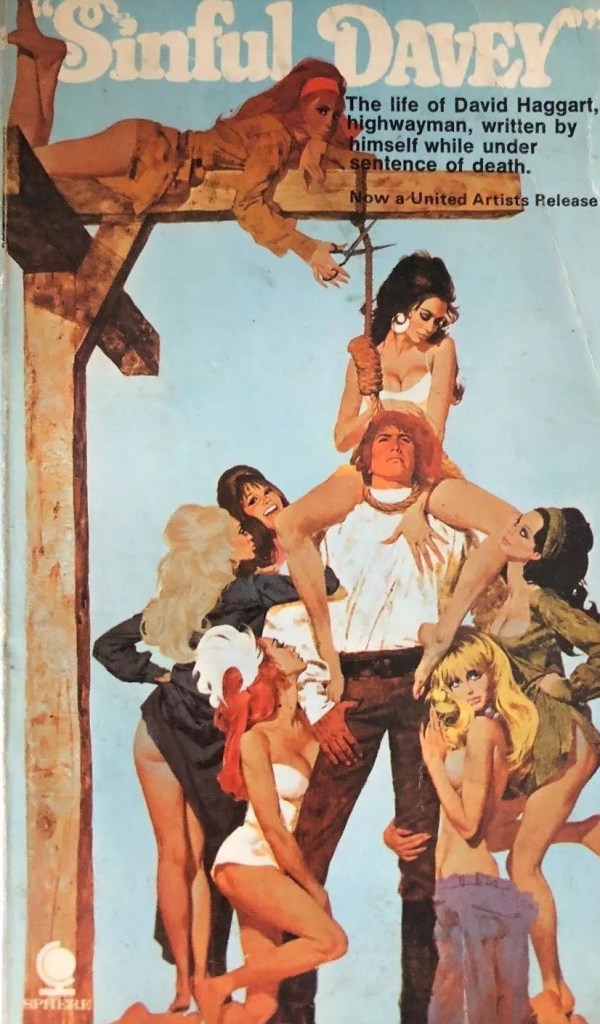
Major disappointment from a director of the caliber of John Huston. Granted, the quality of his output during the decade had been variable but this marked a new low and the suspicion lingers that he only took on the gig to spend time in Ireland – the movie was filmed there – where he had set up a home in the grand manner of a country squire. Equally odd is James Webb as screenwriter. Having chronicled the American West via How the West Was Won (1962) and Cheyenne Autumn (1964), Webb had turned his attention to British history, beginning with Alfred theGreat (1968).
But where that had at least historical reality to guide the narrative, here Webb relies on the dubious autobiography of the titular subject, resulting in an episodic, picaresque, sub-Tom Jones (1963) and even sub-Where’s Jack? (1969) tale set in the Scottish Highlands. And much as John Hurt later achieved considerable recognition for his acting, the role, as played, could have been handled just as easily by any number of rising male stars, since, beyond being able to affect two accents – broad Scots and upper-class English – little is required.
In fact, the director clearly couldn’t distinguish between the Irish and the Scottish accent as among the joblot of accents, none more than serviceable, there is many an Irish lilt. As if to make the point that he couldn’t care less, you will also discern on the soundtrack a refrain from “Danny Boy.”
Beyond that it made a good scene, quite why Davey Haggart (John Hurt) decided to announce his desertion from the British Army in such ostentatious manner is difficult to understand. He’s a drummer, marching along, banging said drum, when he takes it into his head to jump off the nearest bridge into the nearest river, complete with drum, only to find himself headed for a mill. In possibly the best line in the script, seeing the mill wheel blocking his escape, he mutters, “Who put that there?”
From here on it’s a tale of pursuit – two actually. Lawman Richardson (Nigel Davenport) leads the merry chase but he’s also got childhood sweetheart Annie (Pamela Franklin) on his tail to ease him out of scrapes in the hope that he’ll reform. Beginning as a pickpocket, he switches to highway robbery and piracy, rarely with particular success. Loaded down with booty on the carriage he has stolen, for example, he loses control of the horses and is left at the side of the road, as poor as when he started.
He’s certainly inventive but contemporary audiences will recoil from the notion of using the head a height-challenged man aloft another’s shoulders to test the rotting rafters inside a jail, leading not to escape but to a home-made pleasure parlor, since it provides entry to the female jail above where our hero establishes himself as a pimp.
But that’s as inventive as this picture gets and in the manner of Cat Ballou and Where’s Jack? you know that whenever a hero heads towards the gallows you can be sure the hanging will be thwarted. The period setting – the 1820s – offers little assistance, as the picture could be set any time before the invention of steam, and could as easily have taken place in a galaxy far far away long long ago called Brigadoon for all the period authenticity shown.
This didn’t lead to instant stardom for John Hurt and possibly just as well as he’d have been wasted in a series of ingenue roles. Pamela Franklin (And Soon the Darkness, 1970) doesn’t have much to do beyond trying to master a Scottish accent. Nigel Davenport (Play Dirty, 1968) was in his element playing yet another frosty authoritarian figure.
John Huston (Night of the Iguana, 1964) did prove one thing – that he lacked the knack for comedy.
With the current Conclave bringing the subject of organized religion to the fore, no better time to examine a religion that Christianity put to the sword back in the day. While Christianity centers on unwelcome crucifixion transformed into willing sacrifice, in other cultures sacrifice was viewed as the highpoint of a life. And as demonstrated here, not a cruel expression of power, but a person executed in order to carry a message to the gods.
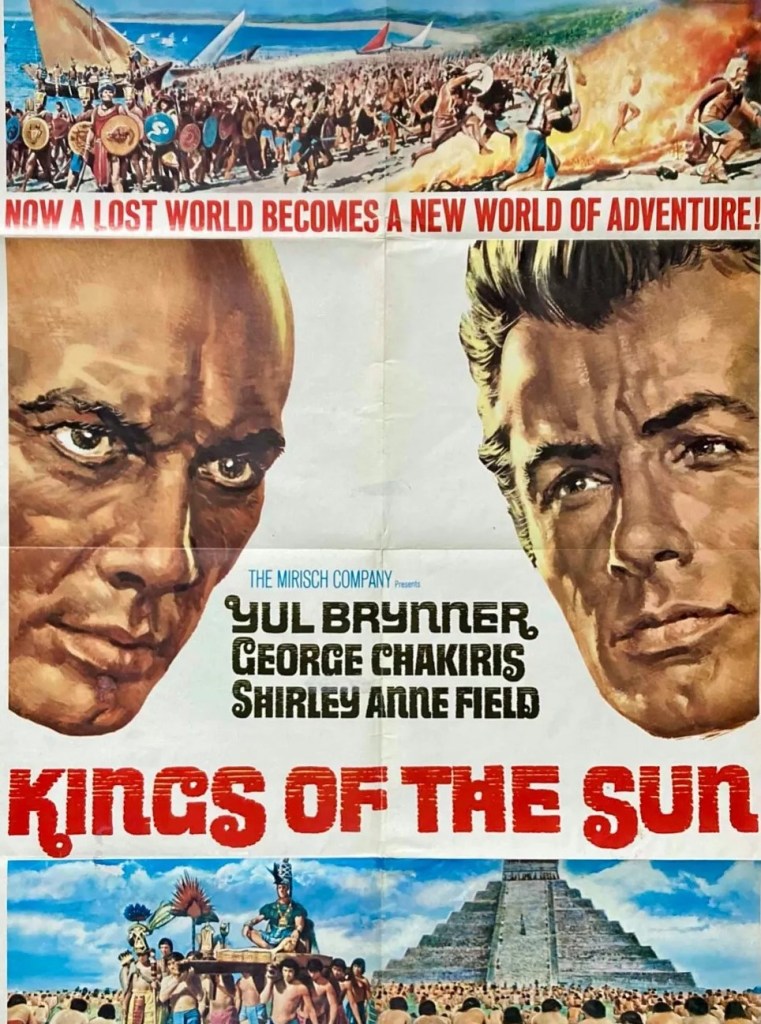
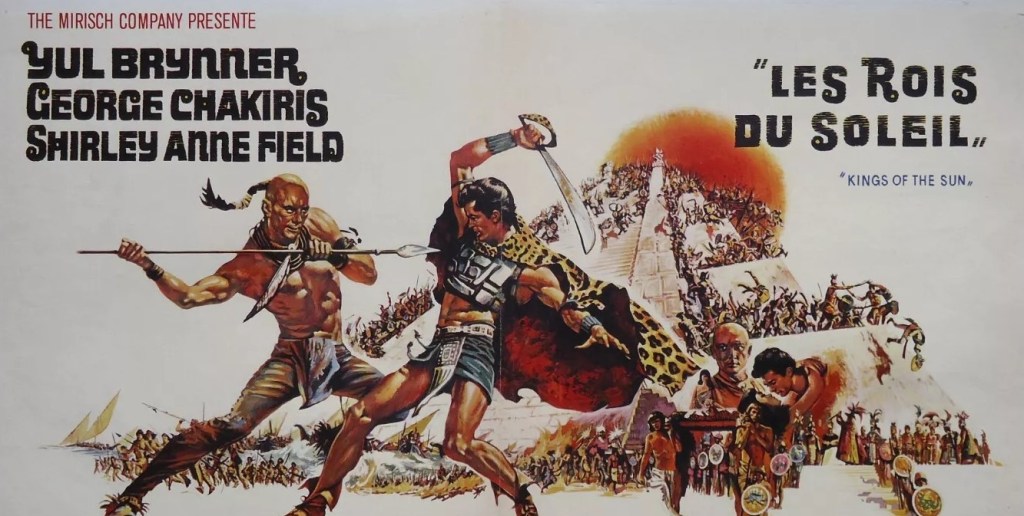
Of course, that could still be interpreted as barbarity and state vs religion is one of several themes here. Sold as an action picture but actually a thoughtful discussion of contemporary issues and worth viewing alone for an extraordinary performance by Yul Brynner, whose screen persona is turned completely upside down. As epitomized by The Magnificent Seven (1960), Brynner was Mr Cool. He was rarely beaten, and if he couldn’t talk his way out of trouble then guns or fists would do the job for him. For the most part here, he’s a prisoner, setting up the kind of template that Clint Eastwood would later inherit, of the brutally battered hero, except in this case there’s no murderous revenge.
And the movie cleverly switches perspective, so we move from sympathy with a defeated fleeing Mayan tribe and their efforts to rebuild their lives in a foreign land to the problems their unexpected incursion creates among the inhabitants of the new country.
Forced out of his homeland by invaders, King Balam (George Chakiris) leads his tribe across the seas of the Gulf of Mexico, trying to prevent high priest Ah Min (Richard Basehart) giving in to a predilection for sacrifice every few minutes. In order to keep the peace between two warring elements of the tribe, an unwilling Ixchel (Shirley Anne Field) has been promised in marriage to the king.
The Mayans adapt quickly to their new circumstances, fishing, building houses, diverting rivers to grow crops and building a pyramid. When they capture Black Eagle (Yul Brynner), a local Native American chief, they plan to sacrifice him to the gods.
Complicating matters is that Ixchel has taken a shine to the prisoner. As a potential sacrificial victim, living like a king for a day, the prisoner is entitled to impregnate any woman he pleases. Although Black Eagle has also taken a shine to Ixchel, he rejects her when she doesn’t come to him with open arms. She, equally, takes against Balam because, while he can’t prevent such congress (to use a Biblical expression), he doesn’t express his dissatisfaction in the process.
While a prisoner, Brynner has been impressed with the Mayan diligence, their ability to extract a living from what appeared harsh soil, and Balam, for his part, was hoping the two tribes could work out a way of co-existence. Where Black Eagle is voluble, Balam suppresses his emotions. It turns out that Ixchel, while responding to Black Eagle’s ardent wooing, would rather it was the more monosyllabic king uttering such words.
The action is kept to the minimum, probably accounting for initial audience disinterest. And the fact that it seems to be hewing towards peaceful co-existence rather than open warfare ensured that the expected battle took a long time coming. Sure, there’s a duel of sorts between the two leaders, but the more important battle of wits concerns who wins the woman.
In the end, Balam turns against this religion and sets Black Eagle free which is convenient because the armies which have chucked Balam out of his native land have pursued him across the seas and now attempt an invasion. Balam and Black Eagle unite to drive back the invaders. However, Black Eagle dies in the conflict, removing the love triangle.
From the moment Black Eagle was captured, I was expecting a different outcome. There’s some allegorical mischief at play here, with the prisoner splayed out in crucificial fashion, arms and legs tethered by rope. But I was expecting such an obvious muscle-bound angry hero to escape and wreak revenge. However, that scenario avoided, it permits considerable discussion on co-existence as well as the nature of marriage, the old-fashioned manner (to prevent war or build a dynasty) vs the more liberated version (for true love).
Brynner is easily the standout, provided with far more opportunity for emotion than usual. George Chakiris (Diamond Head, 1962), range of expressions limited through both emotional incontinence and immaturity, appears sulky rather than majestic. Shirley Anne Field (Saturday Night and Sunday Morning, 1960) would appear miscast except she can convey so well inner feelings through her eyes.
No idea why anyone thought a disquisition on ancient religion and morality, with an anti-war sub-theme, would play with audiences of the period brought up on blood and thunder, and even when presented with notions of peaceful co-existence, as with any number of westerns featuring stand-offs between settlers and Native Americans, could rely on gun-runners to kickstart the shooting.
The action scenes, when they come, are good but it’s what happens in between that makes this perhaps more worthy of comment now than on initial release. Directed by J. Lee Thompson (The Guns of Navarone, 1961) with a screenplay by James Webb (How the West Was Won, 1962) and Elliott Arnold (Flight from Ashiya, 1964)
Carries surprising contemporary heft and Yul Brynner as you’ve never seen him before.
Pre-Stagecoach (1939) Hollywood used to differentiate between historical adventure pictures and westerns. Given it’s set in 1746, before there was such a thing as a revolver or repeater rifle, so a complete absence of gunslingers, this falls squarely into the former camp though its format displays western credentials. A tad top-heavy with religious allegory, “miracles,” peasant piety and an Ennio Morricone score mainlining on the celestial, nonetheless it manages to achieve a character-driven narrative and some powerful action sequences.
However, it’s a lengthy set-up. Outlaw Leon (Anthony Quinn), on the run from Mexican troops, takes refuge in a church. As punishment for giving him sanctuary Fr Joseph (Sam Jaffe) is expelled to the abandoned church of San Sebastian in an equally abandoned village. Ringing the bell to attract parishioners only alerts bandits who kill him. Donning his garb, Leon is mistaken for a priest by Yaqui leader Teclo (Charles Bronson) and strung up crucifixion style. But he’s rescued by villagers who almost elevate him to sainthood courtesy of a couple of accidental “miracles.”
Enjoying his newfound status, but still attracted to peasant Kinita (Anjanette Comer), he directs the parishioners to build a dam to flood the fields to assist in corn-growing. Teclo objects to challenges to his authority and burns down the village. The villagers turn against Leon, and although initially intending to vanish, he decides instead to blackmail his mistress, the wife of the local governor (Fernard Gravey) who agrees to supply him with weapons. Leon builds a fortress to withstand the expected attack setting up a very engaging climax in which the dam plays a critical role.
A modern audience might expect a sturdier narrative rather than one that seems to shift at whim, not helped by Leon’s indecision. And it’s too slight a vehicle to carry the political points, the state of Mexico at the time, the settlers vs. original occupants (i.e. Native Indians) scenario, the problems facing half-breeds (Leon and Teclo both), but it’s better at exploring the power of the church, the worship bestowed on any priest who turns up, regardless of how ill-suited he appears. The occasional comic sequence, banter with an architect, negotiation with a Mexican colonel, seems out of place.
On the other hand there is a truly mesmerizing performance from Anthony Quinn (Lost Command, 1966) as a womanizing low-life who happens upon redemption, so deep does his impersonation of a priest go that he can’t bring himself to touch the compliant Kinita, who is aware of his true identity. Switching between shiftiness and godliness at the drop of a hat and deriding villagers for their lack of character his turning point comes when he realizes he has fallen into the same trap. That he emerges as a wily man of conscience is no mean feat.
The other big bonus is to see someone at last recognize Charles Bronson (Once upon a Time in the West, 1969). Here he is given cinematic status, camera pitched up at his face, and allowed to eliminate the growl and monosyllabic delivery that has been his wont in lesser roles. He’s a rather decent villain at the end.
There are a couple of inconsistencies. Teclo wants villagers to take to the hills but on the other hand somehow to spend enough time tending the corn that come harvest time he can steal. And it’s a bit too neat how he falls into the dam trap.
All in all, enjoyable and very under-rated primarily, i suspect, because people come at it expecting a western rather than a historical film in the adventure vein. But it’s elevated by the intriguing narrative, the questionable hero, Quinn’s performance and the introduction to a new-look Bronson.
Frenchman Henri Verneuil (The Sicilian Clan, 1969) does well to probe so many issues for an audience probably expecting something more straightforward. James Webb (Alfred the Great, 1969) wrote the screenplay based on novel by a William Faherty, a Jesuit priest. In the book, the hero was a soldier who became a priest rather than an atheist opportunistic outlaw.
Novelizations were the hidden secret of 1960s Hollywood. While the decade is better known for widescreen 70mm roadshows, James Bond and the spy deluge, the musical and western revival and the start of the American New Wave, the novelization revolutionized the way films were marketed. By the end of the decade virtually every film released was accompanied by a book tie-in, either a bestseller sold to Hollywood, or a film script turned into a paperback / soft cover book.
At the start of this boom, around 1960, studios virtually gave away screenplays to publishers and allowed them to turn them into novels in return for the marketing angle they could provide. “Producers looked at tie-in books primarily as an exploitation aid not a source of income,” explained Patricia Johnson of paperback specialist Gold Medal Books in 1962. “Motion picture companies with no more – and often much less – than a rough script are being besieged by droves of publishers vying for the right to novelize original scenarios.”
The novelizations were usually short – about 60,000 words – and therefore attractively priced for the reading public but they could sell as many as half a million copies. But except in particular circumstances, studios allowed the rights to go to publishers for minute amounts of money. And for one simple reason – marketing. Half a century before social media, there was little advance promotion of movies. The week they were about to be released would see a flurry of advertising, but in general little promotion before that. Even journalists who had attended the press junkets I mentioned in a previous Blog would concentrate their articles into the week of release.
“What a publisher does for a film concern,” said Johnson, “is it creates a nationwide market, a popular anticipation of a film before it would ordinarily be more than a vague glimmer in the public consciousness.” The 125,000 outlets for books included not just bookstores but locations that targeted passing trade with extensive foot traffic. Newsstands in the street, hotel lobbies, railroad stations, department stores, airports and drugstores all boasted racks of paperback books with glossy covers, informing potential moviegoers of forthcoming films. Studios wanted to take advantage of the promotional device that bestsellers turned into movies could generate. For studios they represented an early marketing tool. Incorporating the movie advert or photos of the stars raised awareness of a forthcoming picture long before the first advert had appeared in a newspaper or billboard.
Robert Bloch cashed in on his “Psycho” fame to turn his original screenplay for The Couch into a novel.
One of the earliest novelizations was for Rat Pack heist picture Ocean’s 11 (1960) – pictured at the top of this page – and it showed the format to which publishers readily adhered. As you might expect, the cover featured a still from the movie incorporating the main stars, but there was also, by dictat of the Writers Guild of America (the screenwriters union), mention of the original scriptwriters in the same size of typeface as the authors who had carried out the novelisation.
Very rarely did the original screenwriter undertake this task. For a start, most considered it beneath their dignity. But, secondly, they got paid anyway. The screenwriter automatically received one-third of the fee a publisher paid the studio and the same share of royalties. By the mid-1960s the WGA was negotiating for a set fee of $6,000 (about $50,000 equivalent now) so a nice amount for no work but less appetising for a full-time screenwriter to do the whole job.
Bellah’s novel “The Valiant Virginian” was the inspiration for the TV series “The Virginian.”
But there were exceptions. Robert Bloch decided to turn his original screenplay The Couch (1961) into a novel. But then he had the experience of Psycho (1960) behind him. Prior to the 1960 Hitchcock film, his novel had only sold only 4,000 copies in hardback. The success of the film shifted 500,000 copies in paperback. Bloch must have reckoned his name emblazoned on the cover – and gaining sole credit, fee and royalties – would be more financially beneficial. Western author James Warner Bellah undertook the novelizations of his screenplays for Sergeant Rutledge (1960), A Thunder of Drums (1961) and The Man Who Shot Liberty Valance (1962).
But neither would have been as assiduously wooed by publishers as the team of Arthur C. Clarke and Stanley Kubrick who were jointly credited for the novelization of 2001: A Space Odyssey. An extremely unusual aspect of this deal was that the novelization appeared first as a hardback. Although based on a Clarke short story, and despite the fact that Clarke was considered one of the greatest names in science fiction, on the writing side movie and book were promoted as joint efforts. Delacorte-Dell forked out a $150,000 advance for the hardback with a 15% royalty rate. Clarke/Kubrick refused to allow the hardback publisher a share of the paperback spoils for which they negotiated a 12-15% royalty, way above the norm.
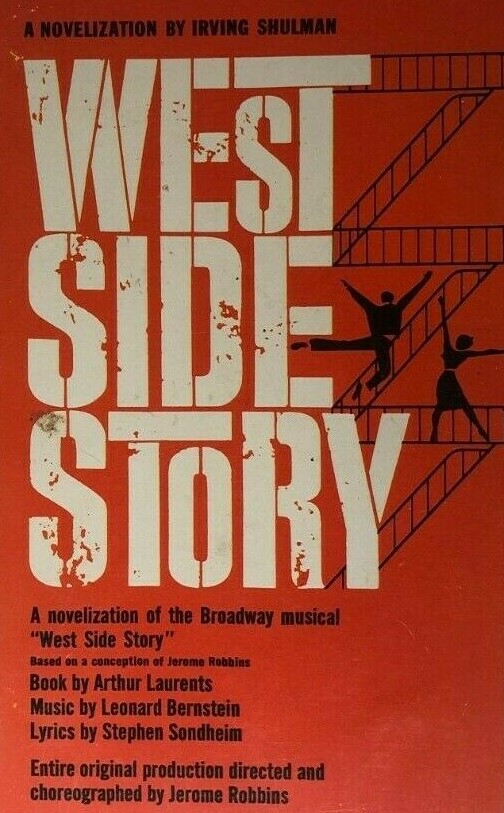
Note how many credits for the original musical were carried on the cover.
Occasionally the novelization would be undertaken by an author famous in their own right, such as when another sci fi giant Isaac Asimov took on the task of writing the book based on the script of Fantastic Voyage (1966). Famed western writer Louis L’Amour was handed the novelization of James Webb’s script for How the West Was Won (1963). Irving Shulman was a well-known novelist when called upon to turn West Side Story (1961) and The Notorious Landlady (1962) into novels. Screenwriter Adela Rogers St John (The Girl Who Had Everything, 1953) novelized King of Kings (1961). Sci fi writer Robert W. Krepps churned out novelizations for historical epics El Cid (1961) and Taras Bulba (1963), comedy Boys Night Out (1962) and westerns Stagecoach (1966) and Hour of the Gun (1967). Crime writer Jim Thompson novelized James Lee Barrett’s script of western The Undefeated (1969).
Some who took the novelization coin later made their name as bestselling authors in the own right. Marvin H. Albert – later known for the “Tony Rome” private eye novels that were filmed starring Frank Sinatra – was a relatively unknown journeyman writer when he became the go-to author for comedy novelizations, lending his name to the books of Come September (1961), Lover Come Back (1962), Move Over Darling (1963), The Pink Panther (1963), The Great Race (1965) and Strange Bedfellows (1965). Similarly, David Westheimer, a year before he published the bestselling Von Ryan’s Express, knocked out the book of Days of Wine and Roses (1962) from the J P Miller screenplay.
But mostly the novelizations were produced by journeymen such as Richard Wormer (Operation Crossbow, 1965), Alan Caillou (Khartoum, 1966), Ed Friend (Alvarez Kelly, 1966), John Burke (Privilege, 1967), Richard Meade (Rough Night in Jericho, 1967), Ray Gaulden (Five Card Stud, 1967), Jackson Donahue (Divorce American Style, 1967), Michael Avallone (Krakatoa-East of Java, 1968) and Joseph Landon (Stagecoach, 1966).
Publishers were not above picking over the spoils of decades-old scripts. Borden Deal was hired to novelize an un-made 1933 script written by Theodore Dreiser, author of An American Tragedy; Johnny Belinda (1948) was novelized in 1961. There were other departures. When writer-director S.Lee Pogostin received a $10,000 advance to novelize his own Hard Contract (1969) the book that appeared comprised the original script with stage directions and filmic addenda, in part due to the success of Butch Cassidy and the Sundance (1969) which was published as a screenplay rather than being novelized.
No genre was safe. Even musicals were plundered for their appeal to the book-reading public or for moviegoers wanting another way of reliving the film they had seen or getting a flavor of a picture they might consider seeing. As well as West Side Story and The Music Man (1962), there were novelizations of My Fair Lady (1964), Funny Girl (1968) and Paint Your Wagon (1969), an unexpected bestseller thanks to Clint Eastwood and Lee Marvin on the cover.
It wasn’t all plain sailing. Hollywood was notoriously lax when it came to release dates, the opposite of the publishing industry for whom such dates were sacrosanct. So a publisher could have put a great deal into organizing the delivery of hundreds of thousands of copies of a novelized title into over a hundred thousand outlets only for the book to molder away on the shelves waiting for a movie which arrived months late – or never at all. Or the movie might undergo a last-minute title change leaving publishers trying to flog a picture nobody had heard of.
SOURCES: “3-Yr Advance Campaign for King of Kings,” Hollywood Reporter, July 5,1961, p2; “Book Notes,” Hollywood Reporter, October 27, 1961, p9; “Book Notes,” Hollywood Reporter, December 5, 1961, p11; Patricia Johnson, “Ego, Yes, Indecision Often, But Love That Hollywood,” Variety, January 10, 1962, p42; “How the West Was Won with L’Amour,” Hollywood Reporter, January 26, 1962, p10; “Book Notes,” Hollywood Reporter, December 5, 1961, p11 “Book Notes,” Hollywood Reporter, January 17, 1962, p7; ; “Willson Novelizing Script,” Hollywood Reporter, February 5, 1962, p3; “Book Notes,” Hollywood Reporter, April 3, 1962, p8; “Book Notes,” Hollywood Reporter, August 15, 1962, p7; “Roger Lewis, Phil Langner and Corp Ready Garrick Production Slate,” Variety, November 13, 1963, p19; “Crossbow Books Tie In with Picture Release,” Box Office, May 31, 1965, pA2; “Stagecoach Screenplay To Become Paperback,” Box Office, March 14, 1966, pA1; “Signet Print Paperback of Cinerama Khartoum,” Box Office, June 13, 1966, pA1; “Divorce American Style Film and Book Tie-Up,” Box Office, June 20, 1966, p12; “Inside Stuff – Pictures,” Variety, August 10, 1966, p24; “Anti-Brush-Off of Writers,” Variety, November 16, 1966, p11; “Gold Medal Books to Print Alvarez Kelly Paperback,” Box Office, September 12, 1966, pA1; “Four Paperbacks Are Set On New Universal Films,” Box Office, September 19, 1967, pA2; “Sci Fi Award Goes To 20th-Fox for Voyage,” Box Office, September 26, 1966, pSW2; “Paint Your Wagon Set for Novelization,” Box Office, October 6, 1969, pA2; “The Undefeated Is Now Available in Paperback,” Box Office, November 3, 1969, pA2; “Inside Stuff – Pictures,” Variety, January 1, 1969, p23; “Advertisement, Krakatoa East of Java,” Box Office, November 17, 1969, p13-18; “Wagon Tie-In into Second Printing,” Box Office, December 1, 1969, pA2; “Marooned Printed in Paperback,” Box Office, December 15, 1969, pA1.






 The Magnificent 60s