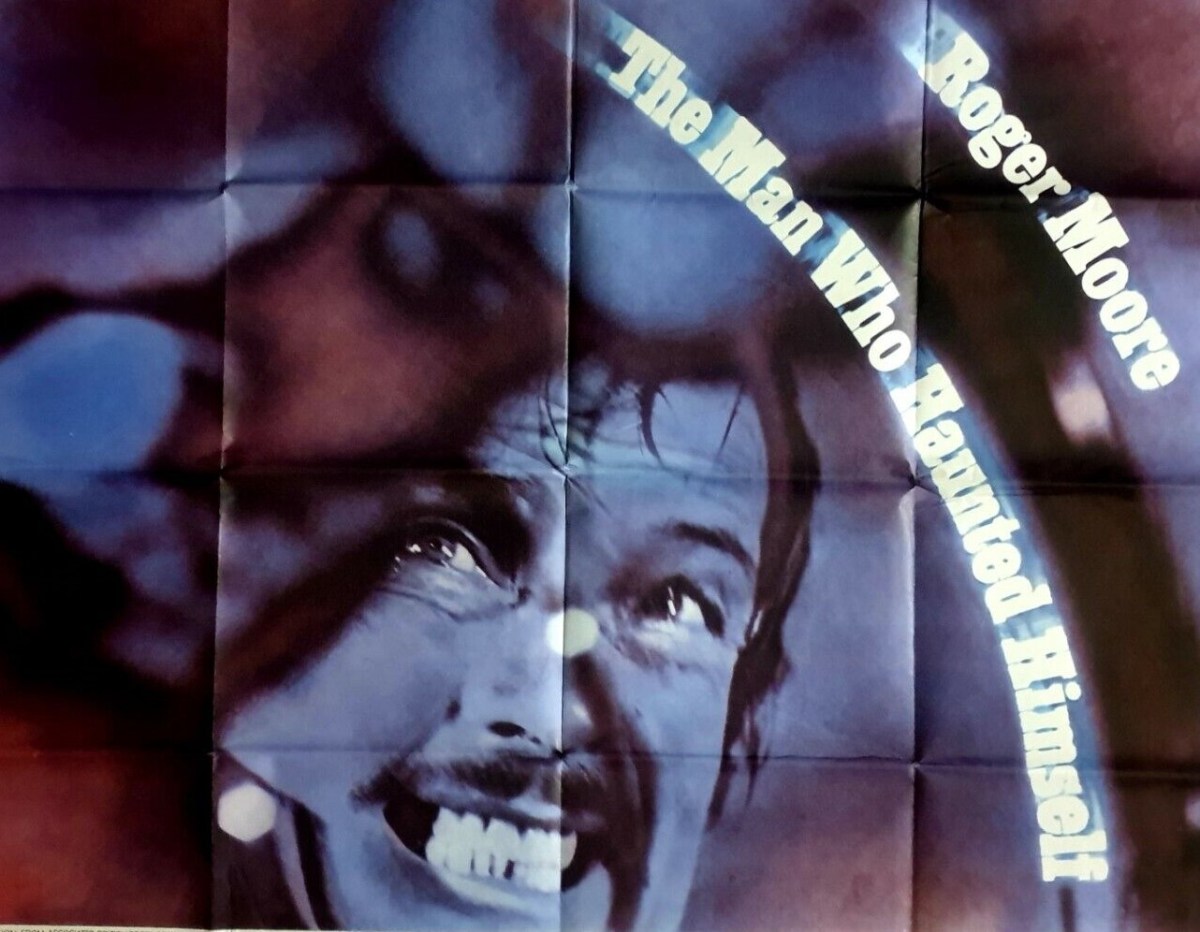
I grant you, not many movies pivot on a broken matchstick. Nor, for that matter, play around with the screen persona of the imperturbable Roger Moore (Vendetta for the Saint, 1968) or call upon him to do more than raise an occasional eyebrow. No doubt I’m committing heresy in comparing this to The Wicker Man (1973) but there’s a certain similarity in the innocent being dragged into deep waters and, as in that picture, instead of our hero triumphing against sinister forces, ending up a victim.
While the main narrative thrust is a doppelganger, the initial plot concerns murky business dealings, boardroom betrayal, and corporate espionage set against the backdrop of high living, upscale car, trophy wife, a spot of fun in a casino. The final film of Basil Dearden (The Assassination Bureau, 1969), who died prematurely aged 60, deals with the shattering of the life of strait-laced Pelham (Roger Moore).

He is fastening his car seat-belt a full decade before that was mandatory in Britain, punctuality his mantra, keeps to the speed limit, an immaculate dresser, and while hard work has taken its toll on his marriage he’s not the kind to have a mistress stashed away. But he crashes his car when, against all odds, he seems possessed by the desire to race along at 100mph, overtaking like crazy. For a moment, in surgery, his body registers two heartbeats.
Then people start reminding him of out-of-character activities, thrashing everyone at the club at snooker (and for money stakes), hitting the casino, receiving a nod-and-wink for under-the-table business dealings, while fashion photographer Julie (Olga Georges-Picot) makes sexual demands.
And outside his house his wife Eve (Hildegard Neil) spies a very swanky sports car and begins to suspect her husband is having an affair. Naturally, the upstanding Pelham tries to track down this imposter who has the habit of marking his territory with a broken matchstick. Some occurrences are downright weird. On meeting colleague Alexander (Anton Rogers) for a drink, he discovers he’s already had a drink. There’s the question of a piece of jewellery for Julie that he doesn’t recall buying. An astonished barber wonders why his client would need his hair cut two days in a row. And is someone stealing his shirts and ties?

This is the kind of picture where the normal resolution would be some kind of gas lighting, or tip into film noir with wife and/or the femme fatale involved in conspiracy, or at least some reasonable explanation for the dodgy goings-on.
Britain was going through a doppelganger mini-epidemic, Doppleganger/ Journey to the Far Side of the Sun appearing the year before, but that was a more straightforward sci-fi, being set in the future. And, of course, sci-fi was going through a new cycle what with 2001: A Space Odyssey (1968), Barbarella (1968) and Planet of the Apes (1968).
But it would be a tough call to place this in the same straightforward sci-fi category. The better fit, as I suggested, is The Wicker Man, the background one of a character upset by a different version of normality rather than inhabiting another world or discovering things have changed in the future. And there’s a psychological twist too, the sense of man losing grip on reality, battling a madness he cannot escape, and while it could have done with dwelling on that aspect a while longer, nonetheless Dearden still achieves his result.
Roger Moore is excellent in twin roles, Hildegard Neil makes an interesting debut and Olga-Georges Picot (Farewell, Friend / Adieu L’Ami, 1968) brings surprising depth to her limited role.
The twisty stuff was written by Michael Relph (The Assassination Bureau) and Dearden based on the bestseller The Strange Case of Mr Pelham by Anthony Armstrong.
 The Magnificent 60s