Behind the Scenes: United Artists’ Mea Culpa: Why Flops Flopped, 1969-1971, Part Three

Box office hits like Never on Sunday (1960), La Dolce Vita (1960), Zorba the Greek (1964), A Man and a Woman (1966) and Z (1969) gave Hollywood the wrong idea. Studios believed they could take advantage of the cheaper costs of shooting in Europe, set up alliances with critically acclaimed French, Italian, Greek, German and Swedish directors as well as several top overseas marquee names, and create a pipeline of product to fill out release schedules with pictures that were as acceptable to neighborhood cinemas as to arthouses.

The reliance of United Artists on this source was as much to blame for the box office crisis it endured as the other films covered in the first two articles in this series. In many cases, the studio gave directors their head, not reining them in on budgets, allowing several final cut, and assuming that critics and awards at festivals like Cannes, Berlin and Venice would do the job of selling the product to the domestic market.
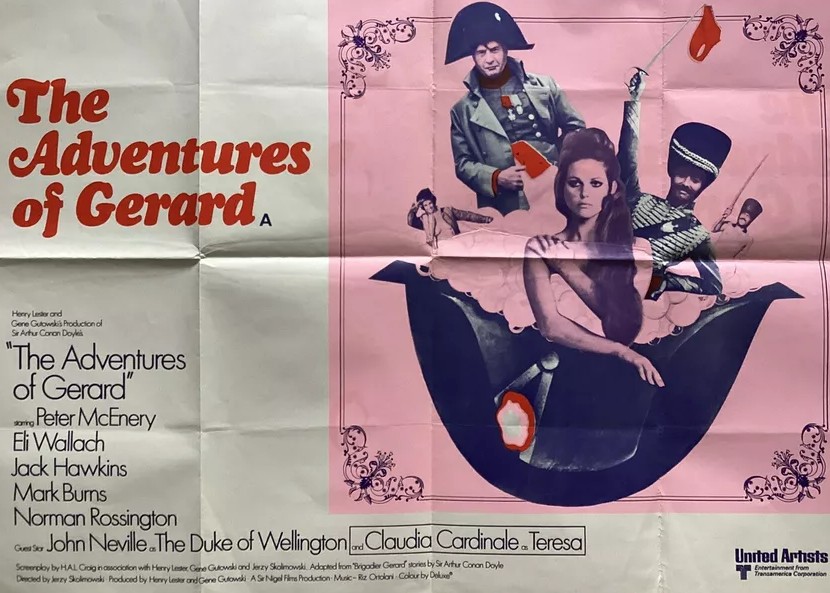
On the basis of Polish director Jerzy Skolimowski winning the Golden Bear at Berlin for Le Depart / The Departure (1967) starring Jean-Luc Godard protege Jean-Pierre Leaud – and its subsequent arthouse success – UA bequeathed him big-budget The Adventures of Gerard (1970), set during the Napoleonic War, based on a book by Sherlock Holmes creator Arthur Conan Doyle, and headlined by rising British star Peter McEnery (Negatives, 1968) and established Italian import Claudia Cardinale (The Professionals, 1966) and a supporting cast including Jack Hawkins and Eli Wallach.

“The picture turned out to be one of the worst disasters in the history of the company,” the company directors told the shareholders. “It was the result of reliance on one of the new fashionable foreign film directors. The picture was beset by problems due to the unprofessional excesses…indulged in by the director.” The outcome was a movie that could not be reshaped into a “more acceptable form” and that ending up occupying “a limbo area between adventure and farce.” Prospects were so poor, the studio doubted if it would even recoup marketing and advertising costs never mind any of the production costs.

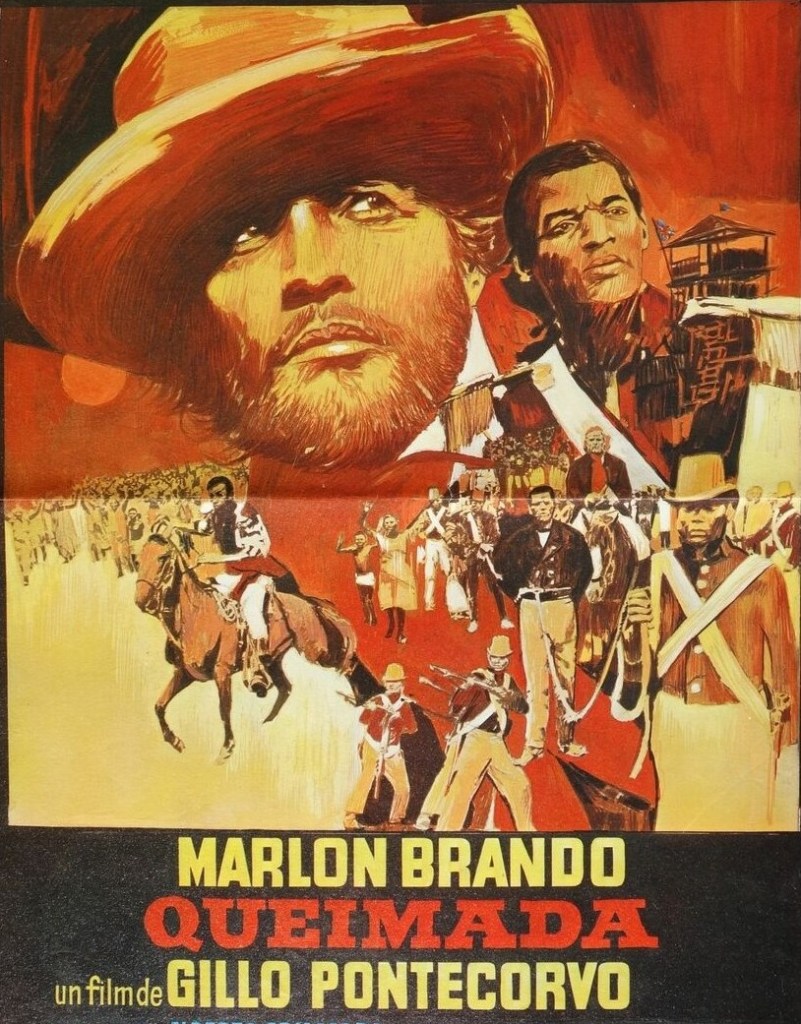
Theoretically, Burn! / Quiemada (1969) should have fared better. At least it had a proper star in Marlon Brando, even though his marquee value was being questioned. This had been placed in the hands of Italian director Gillo Pontecorvo whose The Battle of Algiers (1966) had been nominated for the Best Foreign Language Film Oscar. The studio had hoped to “combine interesting message with entertainment values.” However, personality conflict between director and star saw the picture to go “way over budget.” Prospects remained dim because “despite all efforts to persuade the director to reduce it to realistic length,” it was deemed overlong and “badly cut.” It fell between the stools of the arthouse audience who would have appreciated the message and the action audience who would have welcomed the more commercial elements. It was marked down for “a substantial loss.”

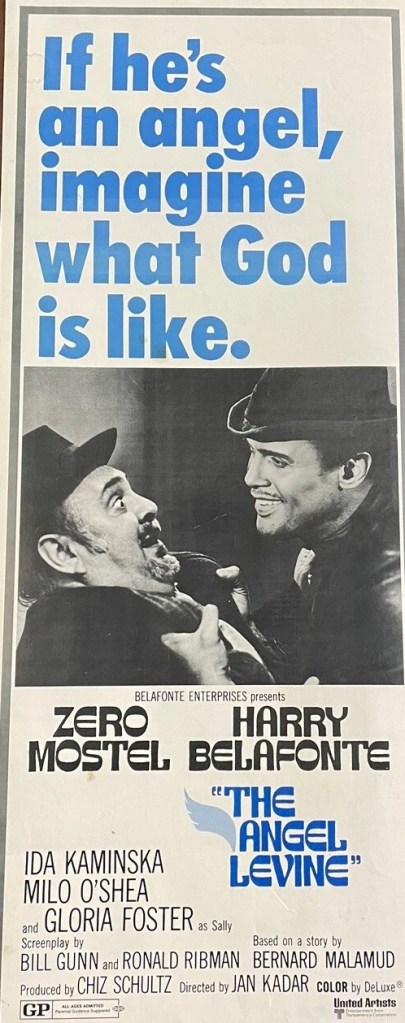
On the strength of a nomination for the Palme D’Or at Cannes for The Shop on Main Street (1965), the studio backed a project by its Hungarian director Jan Kadar.  The Angel Levine (1970) attracted investment because the director had achieved “a certain cult,” the recording career of star Harry Belafonte had reached new heights, and the story was supposed to have a special appeal to ethnic groups. “Everything went wrong. The direction and performance came out slow and leaden. The story…didn’t work.” The picture was over budget and overlong. “The director could not be persuaded to make the necessary cuts” resulting in expectation of another “substantial loss.”
Italian director Elio Petri had enjoyed cult success with the offbeat sci fi The 10th Victim (1965) starring Marcello Mastroianni and Ursula Andress. For A Quiet Place in the Country (1968) he had lined up top British Oscar-nominated actress Vanessa Redgrave and rising Italian star Franco Nero who had played lovers in Camelot (1967). It was greenlit at a time when the studio believed there was a wider market among discriminating audiences for foreign films previously restricted to arthouses. But it had become clear that films in this category faced “inevitable loss.”

You probably haven’t heard of That Splendid November (1969), greenlit to “fulfill a pay-or-play commitment to Italian star Gina Lollobrigida” (Strange Bedfellows, 1965). While targeting the European market, it was hoped it would do additional business in America. It didn’t. Once again, the director (Mauro Bolognini) was allowed too much leeway. He had not been “persuaded to make the changes that would improve its chances” while the studio discovered that La Lollo had lost her marquee luster.

However, United Artists had also committed to potential “breakout” pictures, foreign movies aimed at American arthouses. The bulk of the overseas pictures that had thrived in the U.S. had done so via the arthouse circuit after being favorably reviewed by critics. These were considered relatively low-cost and low-risk investments. But, as events proved, these were as big a gamble as more high-budget projects.

Red, White and Zero / The White Bus (1967) proved “an utter failure” despite the presence of three top British directors, Lindsay Anderson (This Sporting Life, 1963), Oscar-winner Tony Richardson (Tom Jones, 1963) and Peter Brook. Although made for the arthouse market, these proved fewer in number than anticipated when the film was greenlit.

A French heist film entitled Score “would not be made today,” admitted the UA executives. Hoping to capitalize on the caper genre, the studio discovered no one was interested. Three French pictures, Philippe de Broca’s Give Her the Moon (1970) starring Philippe Noiret, The American and Lent in the Month of March (1968), were written off due to the softening of the arthouse market, as was Yugoslavian number It Rains in My village (1968) starring Annie Girardot. French/Brazilian Pour Un Amour Lointain (1968), “one of the poorer foreign pictures,” had such dismal prospects it was denied U.S. distribution. German picture Gentlemen in White Vests (1970) lacked appeal even its home market.

SOURCE: “Comments supplementing notes to Balance Sheet and Statement of Operations of United Artists Corporation for 1970,” United Artists Archive, Box 1 Folder 12 (Wisconsin Center for Theater and Film Research).

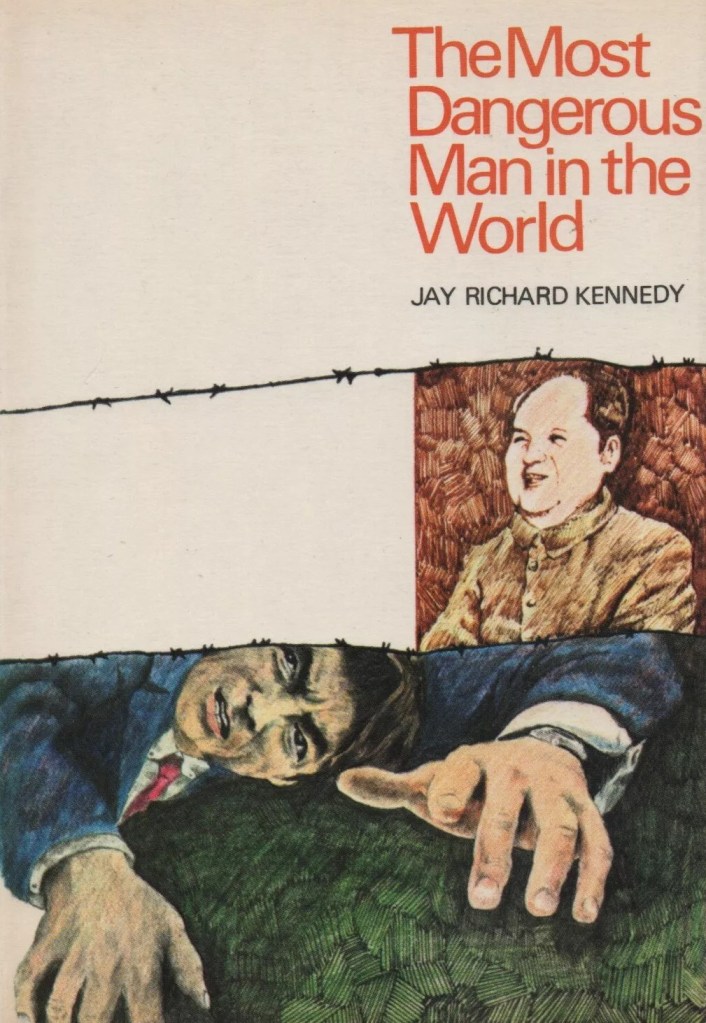
Behind the Scenes: “The Chairman / The Most Dangerous Man in the World” (1969)

Had things run according to the original plan, we could have seen Frank Sinatra return to a Communist country for the first time since The Manchurian Candidate (1962). But if you had wanted to write a script about the guy who wrote The Chairman, you couldn’t have invented a more interesting character than Samuel Richard Solomonick. He was one of those guy who held every job under the sun before reinventing himself as an anticommunist going by the name of Jay Richard Kennedy and subsequently entering the fields of real estate, radio and brokerage, then landing a gig managing Harry Belafonte and writing the screenplay for I’ll Cry Tomorrow (1955).

By the time he ended up as an executive at Sinatra Enterprises he had a couple of ideas to sell. Forming Jade Productions in 1966 with director Richard Quine (How To Murder Your Wife, 1965), the pair hooked Sinatra’s interest in two projects, Follow the Runner (which would have co-starred Sammy Davis Jr) and The Chairman plus William Holden eyeing the lead in The Wordlings about the population explosion.

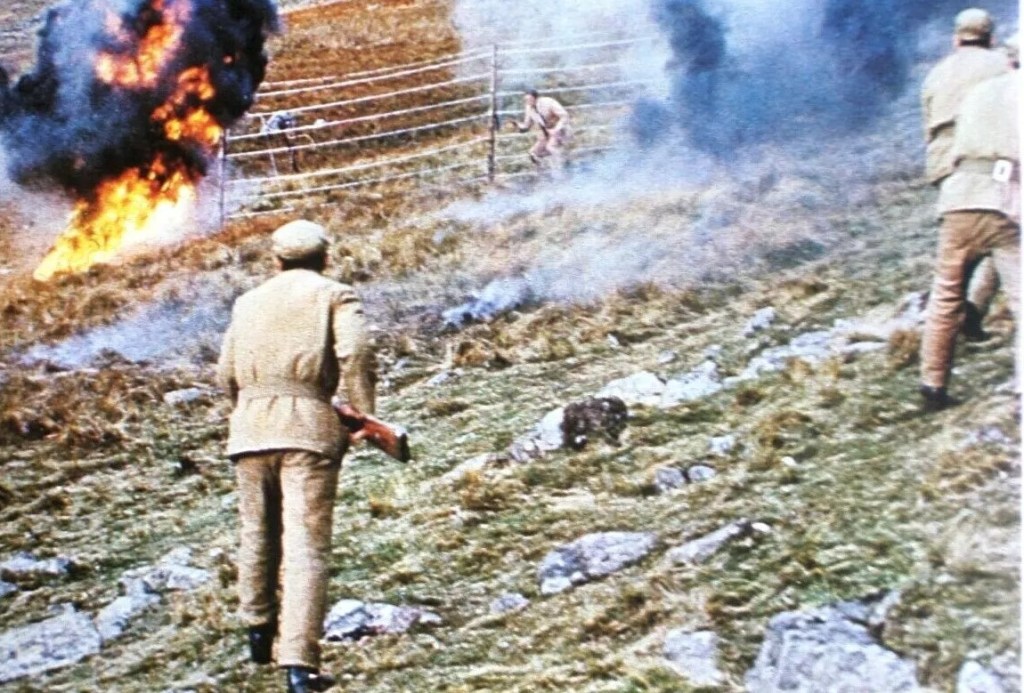
That’s Gregory Peck trapped on the wrong side of the Russian border with Chinese soldiers closing in.

Sinatra was known for falling out with directors, shunting Mark Robson off The Detective (1968), so whether Quine would have lasted the pace is anybody’s guess. After success with Tony Rome (1967), Twentieth Century Fox briefly toyed with the prospect of pairing Sinatra and new wife Mia Farrow in The Chairman. Originally scheduled to begin shooting on January 1967, that later shifted to early 1968. The notion that the movie also had parts for Spencer Tracy and Yul Brynner was one of those puff pieces that some journalists swallowed.

Despite some enticing projects – he was first name down to direct Catch 22, after Columbia had spent $150,000 buying the novel, and to helm the screen translation of Broadway hit The Owl and the Pussycat – Richard Quine’s career teetered after the flop of Hotel (1967). Making no headway with Sinatra he made instead another flop, Oh Dad Poor Dad (1967) and was effectively put on furlough for three years after failing to finance a movie to star Alex Guinness and Lee Radziwill.

Quine exited The Chairman in May 1967 when former PR bigwig Arthur P. Jacobs took over the production and with Sinatra in absentia turned to British director  J. Lee Thompson who had helmed the producer’s debut picture What a Way to Go (1964).  And that proved a lucky break for Thompson who had yet to match the success of The Guns of Navarone (1961).  

The book cover.

After successive flops – Return from the Ashes (1965) and Eye of the Devil (1966) – Thompson had plenty projects on the boil including a musical remake of Alexander Korda’s The Private Life of Henry VIII (1933) with a score by Richard Rodgers and Peter Ustinov playing the lead. Also on his slate was High Citadel based on the Desmond Bagley bestseller; The Harp That Once for Columbia; an adaptation of James Clavell bestseller Tai Pan; a sequel to The Guns of Navarone called After Navarone that would reunite the director with star Gregory Peck and writer-producer Carl Foreman; and Planet of the Apes (1968) to which he and Jacobs held the rights.

While none of these projects – except Planet of the Apes and minus Thompson – came to fruition, the Navarone connection would lead to Mackenna’s Gold for Foreman. In the meantime he had helmed a modest drama, Before Winter Comes (1968) starring Broadway star Topol. When Arthur P. Jacobs greenlit The Chairman, he hired Thompson who looked no further than Peck, connection re-established via the Navarone sequel.  They were a four-time pairing – Cape Fear (1962) and Mackenna’s Gold and The Guns of Navarone. Peck was a controversial choice from the Twentieth Century Fox perpsective given he had broken a contract with the studio in 1960 to star in Let’s Make Love. But Jacobs smoothed ruffled studio feathers and paid his star $500,000 plus a percentage. With Jacobs on hands-on duty with Planet of the Apes (1968) –  Mort Abrahams oversaw the production of The Chairman  and immediately engaged in a budget dispute with the director. Jacobs had initially stipulated $4 million, Thompson believed he required another million. They didn’t quite split the difference, Fox had the film come in at $4.9 million.

Thompson recognized the problems of the script, pointing out that “the hardest thing for Americans about the film’s concept is accepting that China has some competent scientists.” Rather ingenuously, he averred that the movie would have “no political overtones,” while Abrahams retorted that it might have “some political overtones.” It would been obvious to anyone that a picture featuring Mao was bound to have political repercussions, his Little Red Book a massive bestseller on the campus, an album cut of recitations from the book and Edward Albee in 1968 premiering a play called Quotations from Chairman Mao Tse-Tung.

Denied access to China, the production team spent four months “reading everything we could get our hands on.” At one point they considered dropping the scene featuring Chairman Mao and lengthening the sequence relating to Peck’s arrival in Hong Kong. In any case, different versions of the Hong Kong environs were shot, some with nude shots of girls in a house of pleasure.

The British Colonial Office in Hong Kong blocked filming there after fears of riots due to the production daring to portray Mao Tse-Tung on screen. Taiwan substituted for China although the locals there were also incensed, so much so they burned an effigy of Peck. Wales, funnily enough, was another location as was London University. Filming began on August 28 and finished on December 3.

Although it might appear that Ben Maddow (The Way West, 1967) wrote his script based on Jay Richard Kennedy’s novel, in fact the novel appeared after the screenplay with Kennedy writing the novelizaton, and it’s more likely that what Maddow adapted was the original Kennedy screenplay. Interestingly enough, around this time Maddow had first crack at the Edward Naughton western novel that became McCabe and Mrs Miller (1971).

It wasn’t the first time Variety got a prediction wrong: “powerful box office attaction” fell far short of the actual results. This proved an annus miserabilis for Gregory Peck. In fact, he had four films, not three, released in 1969. By release date The Stalking Moon technically belonged to the previous year, but it only played a handful of cinemas in 1968, its general release taking place in 1969.

Despite pocketing a total of over $2 million, Peck’s marquee value was in clear decline. Of the Peck quartet, Marooned did best, placing 33rd on the annual box office chart, with $4.1 million. Mackenna’s Gold (31st) took $3.1 million in rentals (the amount returned from the gross once a cinema has taken its cut), The Stalking Moon (38th) on $2.6 million, and The Chairman (41st) with $2.5 million.

SOURCES: Gary Fishgall, Gregory Peck (Scribners, 2002) p267; James Caplan, Sinatra: The Chairman, (Doubleday, 2015), p724;  “7 from 7 Arts,” Variety, March 3, 1965, p4; “Richard Quine,” Variety, July 7, 1965, p20; “Return of Advances,” Variety, October 6, 1965, p7; “Form Jade Prods,” Variety, December 15, 1965, p4; “J Lee Thompson Nearly Finished on 13,” Variety, February 2, 1966, p28; “Catch As Catch 22 Can,” Variety, February 23, 1966, p4; “Rodgers and Hammerstein’s Musical Henry VIII,” Variety, Mar 16, 1966, p1; “Inside Stuff – Pictures,” Variety, March 30, 1966, p22; “Lee Thompson Busily Blueprints His Musical Version of Henry VIII,” Variety, April 27, 1966, p17; “Jay Kennedy Script,” Variety, July 6, 1966, p5; “After Navarone,” Variety, April 19, 1967, p14; “Scripting Red Chinese,” Variety, May 21, 1967, p4; “”Personality Chemistry,” Variety, May 24, 1967, p4; New York Soundtrack,” Variety, Sep 20, 1967, p27; “Pat Hall Noel to Col,” Variety, December 27, 1967, p5; “N.Y. Indie Label Grooves Chairman Mao’s Thoughts,” Variety, April 10, 1968, p56; “Man About Town,” Variety, July 17, 1968, p68; “Jas Clavell to Roll Siege,” Variety, August 21, 1968, p7; “Thompson Wraps Up,” Variety, August 28, 1968, p29; “New York Soundtrack,” Variety, October 23, 1968, p18; “British Bar Fox’s Chairman,” Variety, December 4, 1968, p17; Big Rental Films of 1969,” Variety, January 7, 1970, p15; “Big Rental Films of 1970,” Variety, January 6, 1971, p11.

Pressbook: Sing, Jimmy, Sing – Shenandoah (1965)

Pressbooks (also known as Campaign Manuals) were notorious for coming up with all sorts of insane and inane devices in an attempt to entice the moviegoer. The extremely handsome 20-page A3 pressbook for Andrew V. McLaglen’s Civil War western Shenandoah (1965) was no different in that respect – “racetrack in your area – hold a Shenandoah handicap.”  Or how about this classic: “In Shenandoah the war stops for a cow that wanders between the fighting…a local dairy might be interested: Everything Stops While The Public Drinks Our Milk etc.”

Luckily, the marketeers had some better ideas, mostly based on the traditional folk song of the title which has a hymnal quality. So star James Stewart was roped in to cut a record, released on the Decca label, with special lyrics of that famous song.  For a start the idea of Stewart singing was a clever stunt in itself, but the main aim was not to garner some newspaper coverage but to attract the attention of radio stations and use the record’s cover as a means of encouraging music stores to set up window displays.

And never mind Stewart’s contribution to the canon of singers of the song, the marketing team identified more than 30 other versions of the song by the likes of Harry Belafonte (four versions), Jimmie Rodgers (three) and Guy Lombardo and instrumentals by British jazzman Acker Bilk of “Strangers on the Shore” fame and guitarist Duane Eddy. Decca was putting further promotional push behind an album entitled “The Blue and the Grey, Songs of the American Civil War.”

Theater managers were urged to suggest to radio stations they group some of these tunes together “for an interesting period of broadcast listening, perhaps in a musical segment of Civil War songs or a radio contest to identify the vocalist.”

In addition, the marketing team sought coverage in the television pages of newspapers since many of the supporting cast were small screen regulars – Doug McClure star of The Virginian, Glenn Corbett star of Route 66 and James McMullen a regular on Ben Casey – and newcomer Katharine Ross had been featured in a few shows. “You should take advantage of this away-from-the-amusement-section opportunity to pick up extra publicity space directed to the TV page reader!”  

Of course, the main purpose of a Pressbook was to provide the theater owner with the actual advertisements for the movie. He or she would cut these out and drop them off at the local newspaper which would use them to make up the ads that ran in the newspaper. These came in a variety of sizes from small single column black-and-white efforts to larger five-column full-color ads.

And they also came with an avalanche of taglines (note the varying use of capital letters) and images. The key tagline was “Two Mighty Armies Trampled Its Valley…A Fighting Family Challenged Them Both.”

Or you might have come across these alternatives –“Like giants they stood in the path of two might armies…and with their fighting spirit challenged them both” or “James Stewart, A Giant Of A Man Who Fought For Shenandoah” and “When History Called for Men and Women Larger than Life…Charlie Anderson and his proud family answered the challenge – with courage mightier than guns – and with love that no cannot could ever shatter.”

And there were more: “They reached for their rifles in the name of love…not hate…to challenge two mighty armies” down to the simpler “Shakes The Screen Like Cannon Thunder” and “Where A Mighty Adventure Was Born.”  You might be led to believe from this fusillade of taglines that the marketing department could not make up its minds about which tagline was best and just chucked them all at the theater manager, leaving them to choose.

But that was not the case. The reason behind the disparate taglines was precisely to provide choice, to allow the theater manager to decide how best to market the picture to suit the audience he or she knew best.

Discover WordPress

A daily selection of the best content published on WordPress, collected for you by humans who love to read.

The Atavist Magazine

by Brian Hannan

WordPress.com News

The latest news on WordPress.com and the WordPress community.