Rocket to the Moon / Those Fantastic Flying Fools (1967) ***

The Jules Verne express grinds to a halt in part because the promise of outer space adventure fails to materialize and in part because the treatment is comedic in the manner of  The Great Race (1965). A series of sketches with a shifting array of characters rarely works. Occasionally it hits the mark in a laugh out loud fashion but too often the jokes are labored  although as a tribute to a maze of inventive invention it’s a treat.

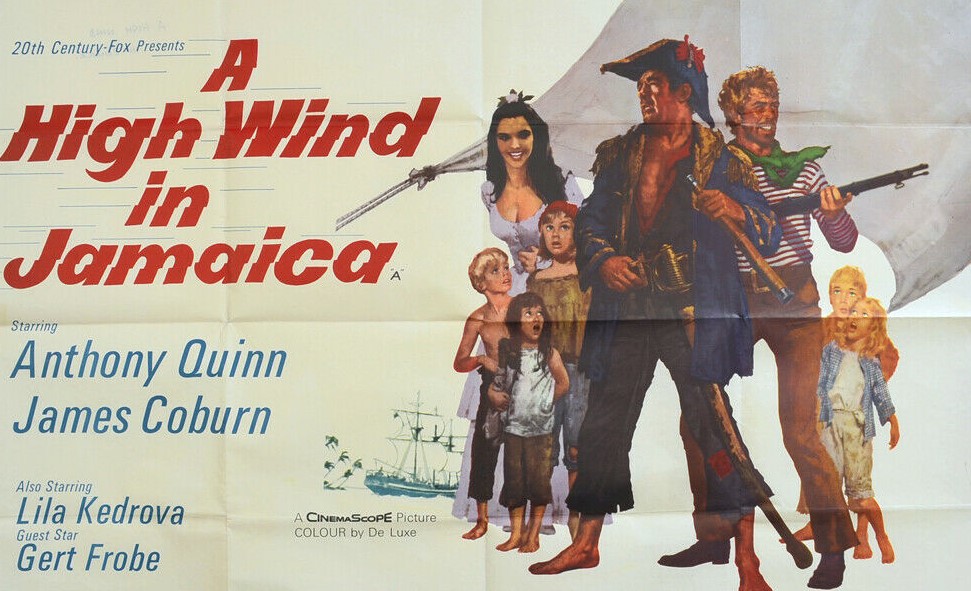
Unusually for such an all-star cast venture, we are, long before the titular action  and a race (of sorts) commences, treated to the greatest hits from the book of all-time failures. So we have electricity setting on fire the first country house, belonging to the Duke of Barset (Dennis Price), to be so illuminated; a new-fangled suspension bridge, courtesy of Sir Charles Dillworthy (Lionel Jeffries), that collapses when Queen Victoria cuts the ribbon; and a new type of explosive invented by German von Bulow (Gert Frobe) that proves a tad overpowering. Meanwhile, making possible the idea of sending a man to the moon is the arrival in Britain of the diminutive General Tom Thumb (Jimmy Clitheroe) accompanied by the bombastic and greedy Phineas T. Barnum (Burl Ives).

Combining the various scientific advances of propulsion and engineering have the flaw of not being able to bring a manned rocket back home. And sinister forces are at work, spies and fraudsters.

As with all these all-star comedies you spend half the time wondering how your favorite star is going to be worked into the equation and, having been squeezed into the narrative, justify their ongoing involvement. Daliah Lavi (Old Shatterhand, 1964), not particulary known for her comic gifts, is a case in point. On her wedding day she (as Madelaine) jilts French groom Henri (Edward de Souza) in favor of balloonist Gaylord (Troy Donohue) who has, literally, appeared on the horizon. Henri trying to down said balloon triggers an awful joke about a shotgun wedding.

To gain revenge, Henri funds the project on the basis of Gaylord being the moon pilot, and, in anticipation of the craft’s failure, that he will regain his bride. Madelaine, having been sidelined by all the developments, suddenly rushes back to center stage when she uncovers the devious plot and is shipped off to a home for wayward girls, run by the very wayward Angelica (Hermione Gingold). But that requires she escape and find her way back to her beloved, that aspect complicated because she loves both men (it transpires).

As the script is in the invidious position of having to place the participants into similar frying pans in order to effect similar rescues it’s as much a game of ping-pong as a movie. But there are some nice gags, a rocket attached to a helmet, the ruination of a teleprinter and the criminally-inclined Washington-Smythe (Terry-Thomas) who rooks billiard players with a magnet. And there’s a very contemporary financial element in that large wagers are placed on failure rather than success, the equivalent of betting on stocks going down rather than up  (short selling in the modern idiom)

The rocket is launched, with rather a different crew than originally anticipated following further skullduggery, and although it’s something of a cosmic joke that it only gets as far as Russia it’s rather a disappointing ending for fans of Verne who anticipated a more rigorous approach. Verne’s novel From the Earth to the Moon was surprisingly accurate in imagining how a projectile would achieve its aims. The novel had even more of a contemporary feel since it left the crew floating in space, a daringly artistically inconclusive climax, leaving the way open – again the contemporary flair – for sequel Around the Moon that explained their fate.

Oddly enough, Daliah Lavi, as the bride who can’t make up her mind, has one of the better parts, more fleshed out than most of the other flimsy characterizations. The likes of Troy Donohue, caught between heroism and doing nothing much at all, often looks flummoxed. Terry-Thomas (How To Murder Your Wife, 1965) in wily mode is the pick of the rest.

Director Don Sharp (The Brides of Fu Manchu, 1966) proves that comedy is not his metier. Screenplay by Dave Freeman (British TV sitcom writer making his movie debut) after Harry Alan Towers (Five Golden Dragons, 1967) altered the author’s original premise. While it could be skewered for taking such liberties with the august author, it is far better than you might expect, but not as good as it could, or should, be.

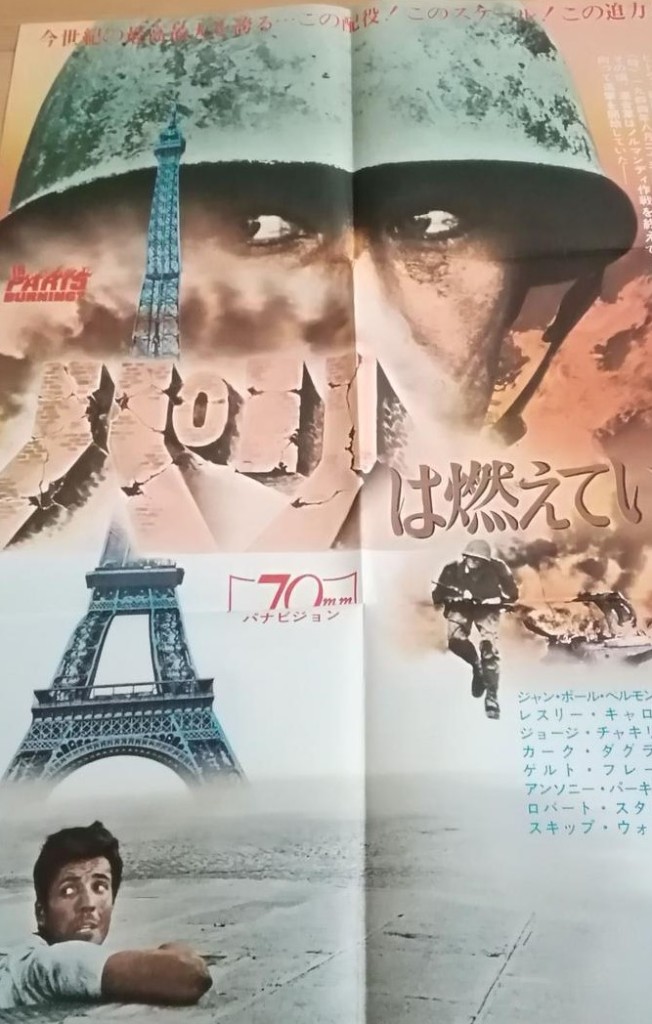
Is Paris Burning (1965) ****

Politics don’t usually play a part in war films of the 1960s but’s it’s an essential ingredient to Rene Clement’s underrated documentary-style picture. Paris has no strategic importance and after the Normandy landings in 1944 the Allies intend to bypass the German-occupied French capital and head straight for Berlin.

Meanwhile, Hitler, in particular vengeful mood after an attempt on his life, orders the city destroyed. Resistance groups are splintered, outnumbered and lacking the weaponry to achieve an uprising. Followers of General De Gaulle, the French leader in exile, want to wait until the Allies send in the troops while the Communists plan to seize control before British and American soldiers can arrive. 

When the Communists begin the fight by seizing public buildings, the Germans retaliate by planting explosives on the Eiffel Tower, the Louvre, and other famous buildings and all the bridges across the River Seine. German commandant Von Choltitz (Gert Frobe), no stranger to slaughter having overseen the destruction of Rotterdam, holds off obeying his orders because he believes Hitler is insane and the war already lost.

The Gaullists dispatch a messenger to persuade General Omar Bradley to change his mind and send troops to relieve the city. Director Clement, aware how little tension he can extract from the question of whether von Clowitz will press the destruct button (history tells us he did not) so he takes another route and documents in meticulous detail the political in-fighting and the actual street battles that ensued, German tanks and artillery against Molotov cocktails and mostly old-fashioned weaponry.

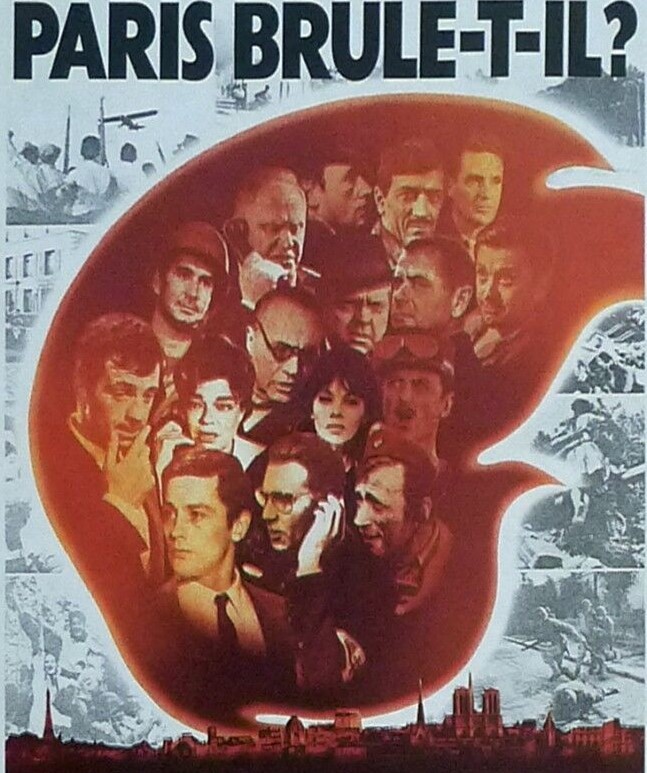
The wide Parisian boulevards provide a fabulous backdrop for the fighting. Shooting much of the action from above allows Clement to capture the action in vivid cinematic strokes. Like The Longest Day (1962) the film does not follow one individual but is in essence a vast tapestry. Scenes of the utmost brutality – resistance fighters thrown out of a lorry to be machine-gunned, the public strafed when they venture out to welcome the Americans – contrast with moments of such gentleness they could almost be parody: a shepherd taking his flock  through the fighting, an old lady covered in falling plaster watching as soldiers drop home-made bombs on tanks.

This is not a film about heroism but the sheer raw energy required to carry out dangerous duty and many times a character we just saw winning one sally against the enemy is shot the next. The French have to fight street-by-street,  corner-by-corner, bridge-by-bridge,   enemy-emplacement-by-enemy-emplacement, tank-by-tank.

And Clement allows as much time for humanity. Francophile Sgt Warren (Anthony Perkins), an American grunt, spends all his time in the middle of the battle trying to determine the location of the sights he longs to see. Bar owner Simone Signoret helps soldiers phone their loved ones.

Like The Longest Day and In Harm’s Way (1965), the film was shot in black-and-white, but not, as with those movies for the simple reason of incorporating newsreel footage, but because De Gaulle, now the French president, objected to the sight of a red swastika.

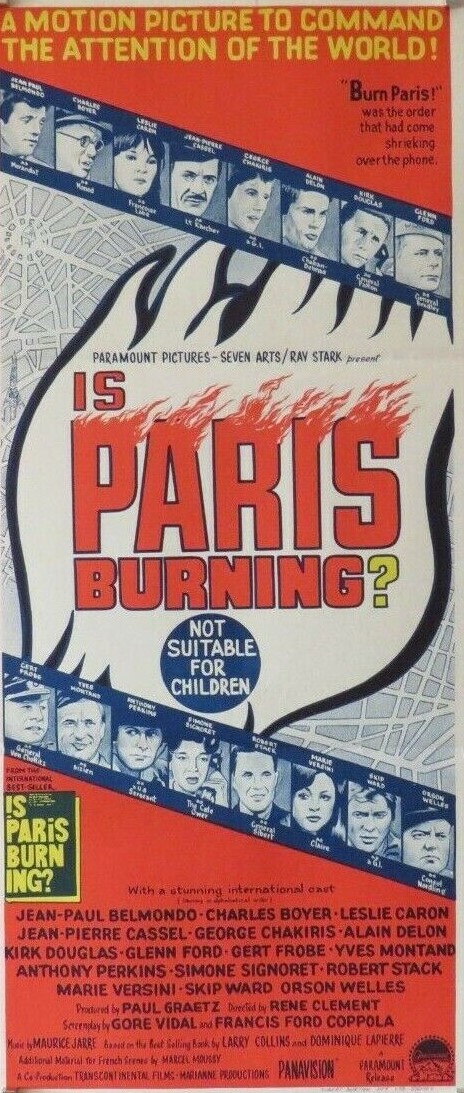
Even so, it permitted the inclusion of newsreel footage, which on the small screen (where most people these days will watch it) appears seamless. By Hollywood standards this was not an all-star cast, only fleeting glimpses of Glenn Ford (Fate Is the Hunter, 1964), Kirk Douglas (A Lovely Way To Die, 1968), Robert Stack (The Corrupt Ones / The Peking Medallion, 1967), Orson Welles (House of Cards, 1968) and George Chakiris (West Side Story, 1961).

But by French standards it was the all-star cast to beat all-star casts – Jean-Paul Belmondo (Breathless, 1960), Alain Delon (Lost Command, 1966), Yves Montand (Grand Prix, 1966), Charles Boyer (Gaslight, 1944), Leslie Caron (Gigi, 1958), Michel Piccoli (Masquerade, 1965), Simone Signoret (Room at the Top, 1959) and Jean-Louis Trintignant (A Man and a Woman, 1966).  Director Rene Clement was best known for Purple Noon (1960), an adaptation of Patricia Highsmith’s The Talented Mr Ripley starring Alain Delon

At $6 million, it was the most expensive French film ever made, a six-month shooting schedule, shot on the streets of the city including famous locations like Etoile, Madeleine and the Louvre. Big hit in France, it flopped in the United States, its box office so poor that Paramount refused to disclose it.

Discover WordPress

A daily selection of the best content published on WordPress, collected for you by humans who love to read.

The Atavist Magazine

by Brian Hannan

WordPress.com News

The latest news on WordPress.com and the WordPress community.