You might think director George Seaton wearing his screenwriter’s hat had his work cut out adapting Arthur Hailey’s 500-page tome for a lean two-hour picture. But Hailey’s book was anything but lean and the fat was easily trimmed away. The author had little idea of dramatic tension and there’s a clear example here that what plays in a novel won’t at all work on screen.
Had Seaton slavishly followed the Hailey template the tension-filled climax of the bomb exploding on the plane and the pilot having to land the stricken plane on an icebound runway would have been interrupted by numb-boring back-and-forth between airport executives and people complaining about planes flying overhead disrupting their lives and the author holding forth on the future of air travel.
A huge chunk of the book is politics one way or another and with the exception of a brief tussle between airport boss Burt Lancaster and his bosses that focuses, unlike the book, on Lancaster’s attempts to keep the runway open, Seaton chucks out all that stuff about townspeople, literally, on the march. Audiences won’t be much interested either in much of what Hailey, in investigative fashion, turns up about cargo loading and the problems facing shoe-shiners and skims over the question of why airports permit insurance agents to so freely operate in an airport, making a healthy living (from which the airport takes a cut) from selling fear to travelers.
It’s interesting, as always, to see what, apart from the obvious as I’ve outlined, a screenwriter doesn’t believe essential. So in the movie Dean Martin’s beef with Burt Lancaster is over the airport’s supposed inefficiency in keeping the runways clear in the face of a snowstorm. But in the book that’s the least of Martin’s concerns, since he’s taken umbrage at this dialing up of the fear factor by selling insurance policies to people about to board a plane.
When you see all those guys and all that heavy-duty equipment trying to clear a path for the airplane grounded in the snow, you think what the heck’s the problem, it’s only a big mound of snow. In the book, the real problem is explained. The plane isn’t stuck in the snow – it’s stuck in the mud underneath the snow, so actually the ground staff have to dig it out of a pretty big hole.
Hailey also takes a detour with the George Kennedy troubleshooter. Instead of getting a police escort to the airport he takes time out to sort out a traffic tangle, demonstrating, for the reader, his unique set of skills, which, sensibly, Seaton reckons will be amply shown when he is doing his job on the runway.
Fourth time unlucky – the series runs out of runway.
There’s a subplot that Seaton eliminates. As well as having a troublesome brother-in-law in Dean Martin, Burt Lancaster has a troublesome brother, so burned out by his job as an air traffic controller that he’s on the verge of committing suicide. But again, Seaton reckons there’s enough going on without over-egging the pudding.
Seaton really comes into his own on the emotional front, having a better notion than Hailey of how to heighten emotion. So there’s no mention that the apparently childless Dean Martin had a previous child from a previous affair – the baby was adopted (a policy airlines encouraged to get stewardesses back to the front line as soon as possible) so the question remains – does he want to be a father? Seaton also brings forward his idea about an abortion. In the book, Burt Lancaster and Jean Seberg have not consummated their affair, but Seaton makes it implicit in the film that they have. Also Hailey reveals from the start that Lancaster’s wife is already playing away from home but Seaton holds that knowledge back so there’s an emotional twist in the film.
What Seaton adds is just as demonstrative of the screenwriter’s skill. Not in the book: the nun, the priest, the bolshie passenger and the know-it-all teenager. These are Seaton inventions. Seaton also builds up Lancaster’s wife as coming from a wealthy family rather than being a failed actress. And he brings to the fore the women who are the casualties of male weakness, Dean Martin’s wife discovering his girlfriend is pregnant, the bomber’s wife realizing what he has done, Lancaster’s wife confronting him.
Although Hailey spends acres of print going on about the problems low-flying planes cause he doesn’t actually show their impact. Seaton cuts right to the chase, opening with a scene of plates and stuff crashing to the floor in a house as a plane flies overhead. And in scenes of the snowplows sending snow wafting through the air the director in Seaton turns what Hailey described as a “conga line” into a ballet
One other element – in the book the Burt Lancaster character has a limp. Movie heroes don’t limp.
Ross Hunter had been a big wheel in the production business for the best part of two decades, shepherding home hits like Midnight Lace (1960), remakes of universal weepies like Back St (1961) and Madame X (1966), play adaptations such as The Chalk Garden (1964), the Tammy movie series and Julie Andrews musical Thoroughly Modern Millie (1967). He was as close to a sure thing as you could get. Even so, Airport, with a $10 million budget, was the biggest gamble of his career.
He paid $350,000 upfront plus another $100,000 in add-ons for the rights to the runaway Arthur Hailey bestseller. Initially, Hunter was targeting the roadshow audience, filming in 70mm, the first time Universal had employed Todd-AO.
Dean Martin, who had made Texas Across the River (1966) and Rough Night in Jericho (1968) for Universal, was first to sign up for his usual fee plus a percentage. Martin was at a career peak, carried along effortlessly at the box office by the Matt Helm quartet and targeted for westerns.
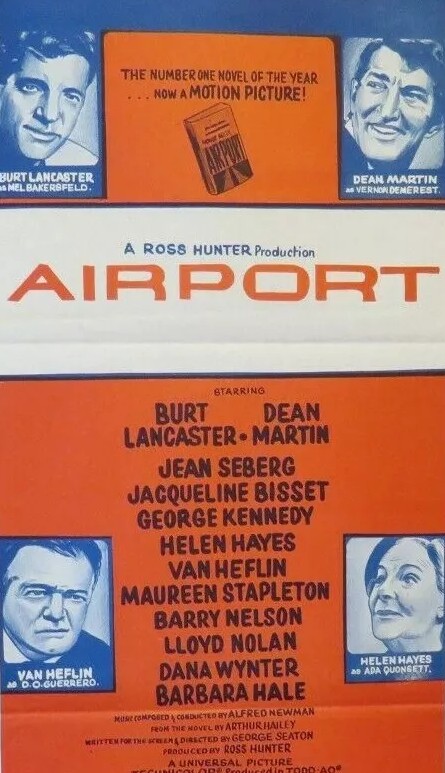
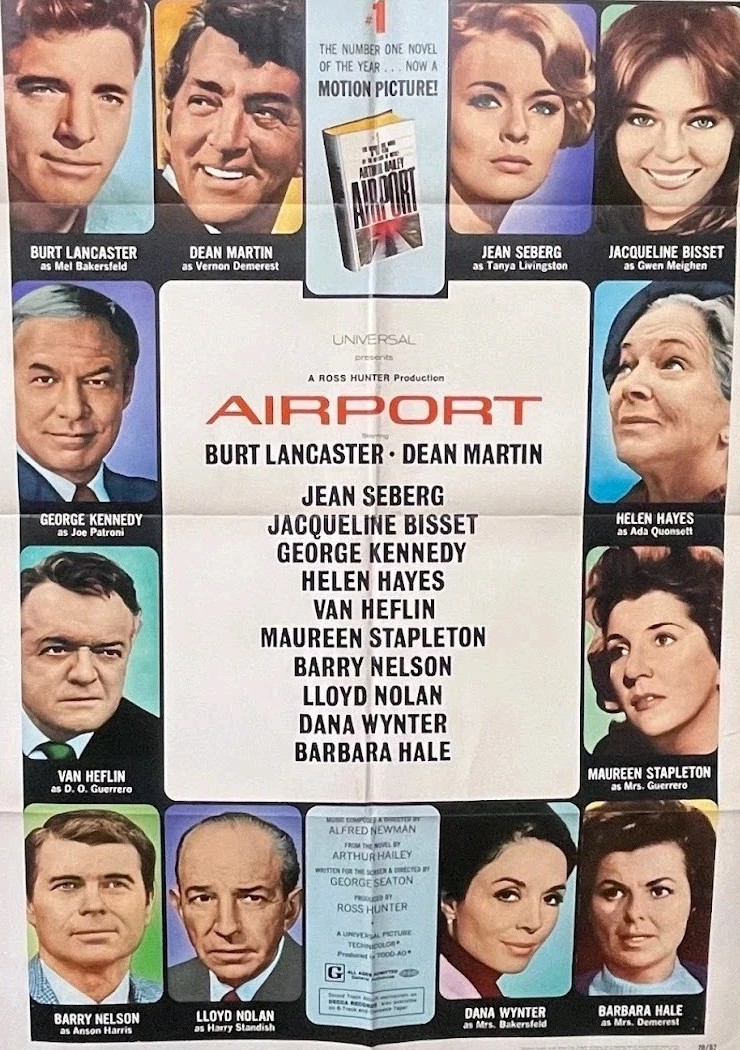
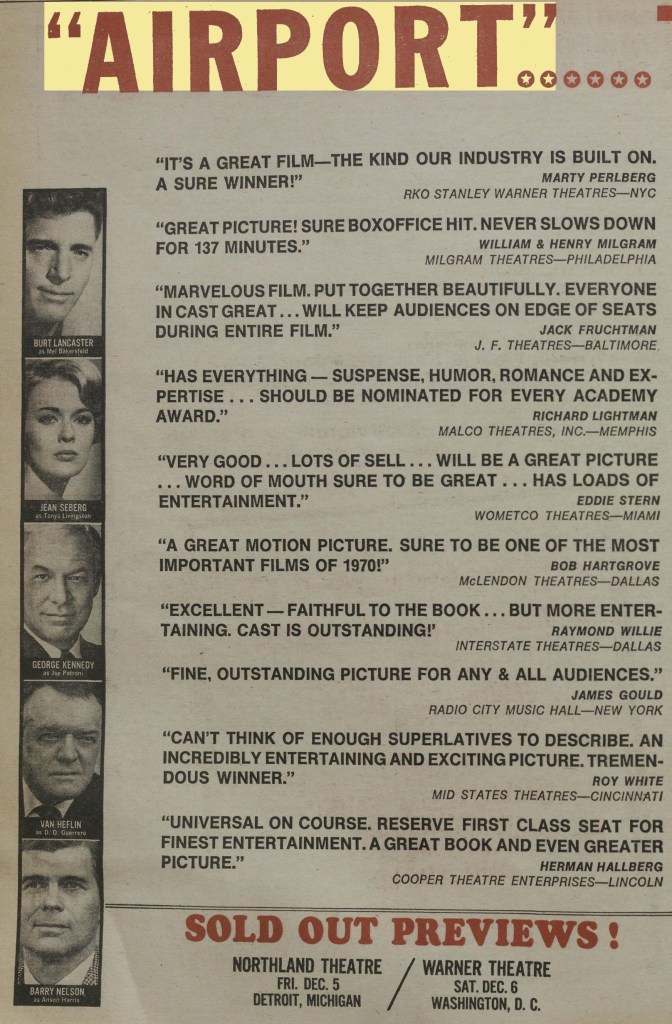
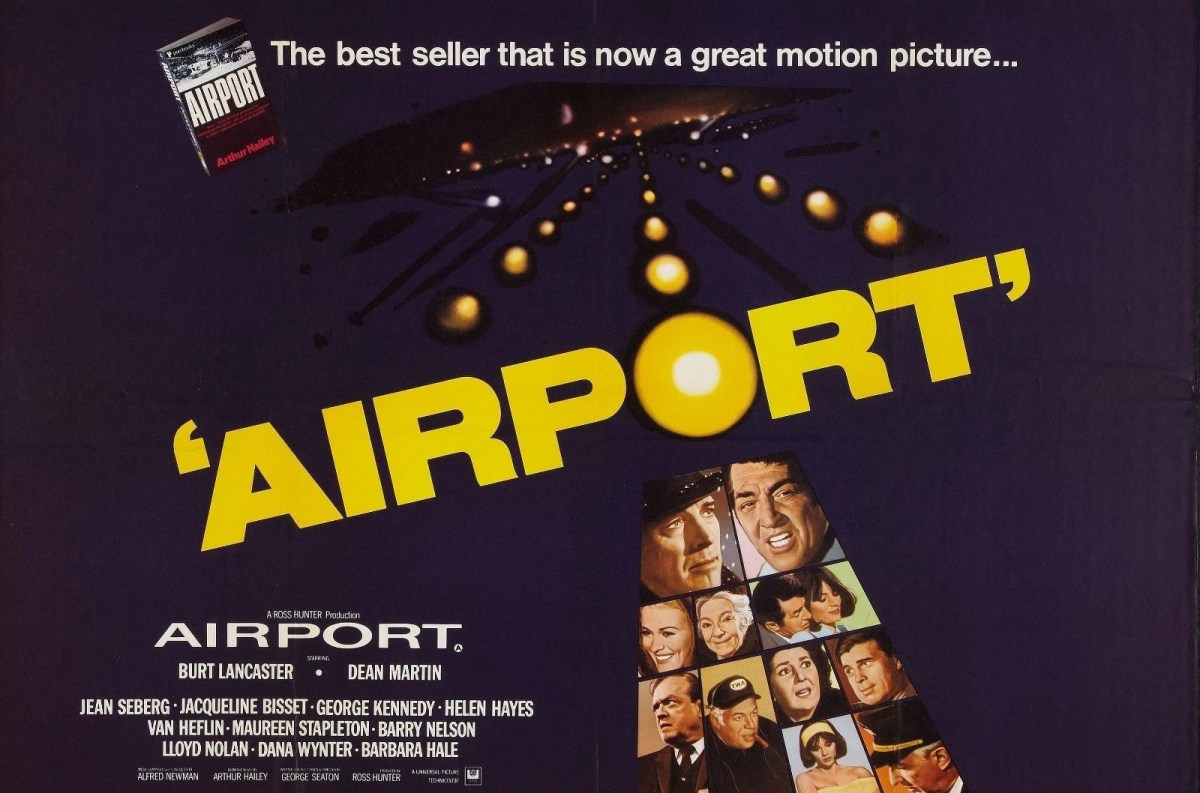
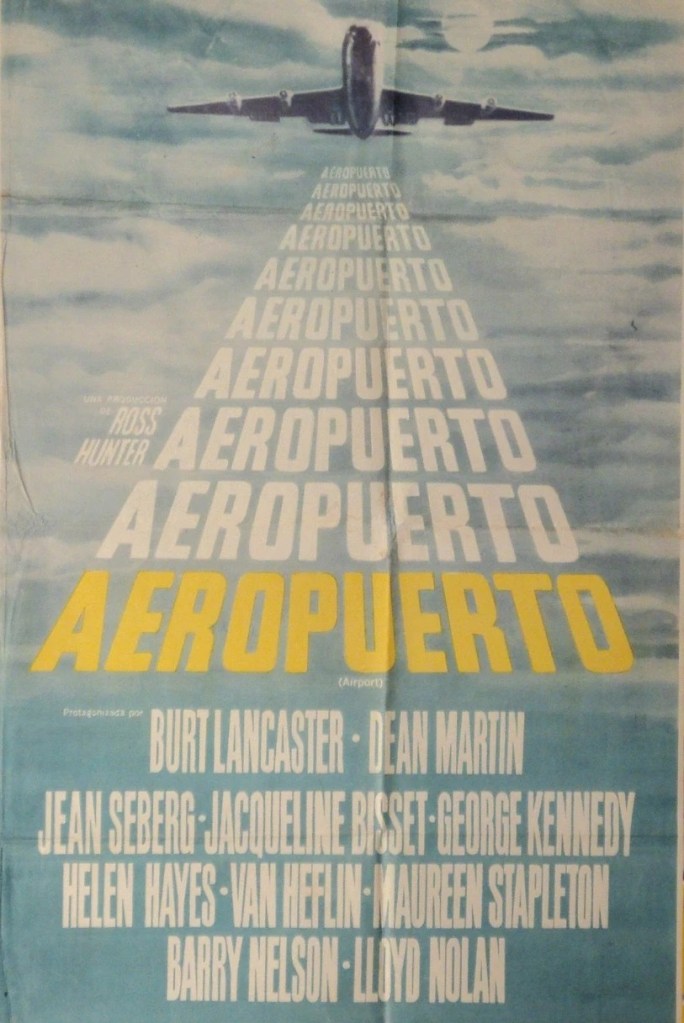
Hunter was pitching a movie with four major stars in Oscar-winner Burt Lancaster (Elmer Gantry, 1960), Dean Martin, Jean Seberg (Paint Your Wagon, 1969) and Oscar-winner George Kennedy (Guns of The Magnificent Seven, a1969) and another half-dozen names of varying marquee appeal that included British actress Jacqueline Bisset (Bullitt, 1968), and mature stars in Van Heflin (Once a Thief, 1965), Lloyd Nolan (The Double Man, 1967), Barry Nelson (The Borgia Stick, 1967), TV Perry Mason’s Barbara Hale and Oscar-winner Helen Hayes (Anastasia, 1956).
The picture came at a fortuitous time for Burt Lancaster. A trio of more challenging movies – The Swimmer (1968), Castle Keep (1969) and The Gypsy Moths (1969) – had flopped, so his marquee value was in question, especially at his going rate of £750,000 (plus a percentage). Doubts had set in with The Gypsy Moths, with MGM dithering over the opening date, switching it originally from summer to Xmas and then back again but happy to censor the picture to meet the approval of the Radio City Music Hall where it premiered.
And while he was still clearly in demand in 1968-1969, he had lost out the starring role in Patton (1970) with James Stewart in the Karl Malden role, which would have coupled commercial success with critical approbation. The shooting of Valdez Is Coming (1971) was postponed for a year. Originally it had been set for a January 1969 start date with Sydney Pollack directing. Face in the Dust, a Dino De Laurentiis production, never saw the light of day.
And although Lancaster later described Airport as “the biggest piece of junk ever made” (luckily he didn’t live to see Anora or Mercy), the disaster blockbuster put his career back on track. It was quite a change of pace for him, too. He wasn’t in every scene and at times he had to take whatever Dean Martin’s character threw at him. But what he brought to the picture was his natural electricity, the tension of never knowing what he was going to do. But Airport barely merits a page in Kate Buford’s biography.
Double Oscar-winner George Seaton was set the dual task of condensing Arthur Hailey’s 500-page novel into a lean two-hour movie which he would direct. In a directing career spanning a quarter of a century, Seaton was well-used to handling big stars of the caliber of William Holden (three pictures including The Counterfeit Traitor, 1962), Bing Crosby and Grace Kelly (The Country Girl, 1953) Kirk Douglas (The Hook, 1962), Montgomery Clift (The Big Lift, 1950) and Clark Gable and Doris Day (Teacher’s Pet, 1958),
Jean Seberg, under investigation by the FBI, had revived an ailing career with Paint Your Wagon (1969). Producer Ross Hunter initially preferred Angie Dickinson (Jessica, 1962) or Stella Stevens (Rage, 1966) for the role of Lancaster’s screen lover, but had to go along with Universal with whom Seberg had a two-picture “pay-or-play” deal (she got paid whether she made a picture or not). However, she was considered a marquee name in the international market, especially France where she had remained a cult figure after Breathless (1960).
Disconcerted by being considered unwanted, her natural nervousness increased until Hunter made a point of convincing her that he was “genuinely happy” at her involvement.
She wasn’t the only person to be considered second best. For the part of the elderly stowaway, six-time Oscar nominee Thelma Ritter (Boeing, Boeing, 1965) and Jean Arthur, who hadn’t appeared in a movie since Shane (1953), had been wooed before Hunter settled on Helen Hayes.
For Seberg, it was the biggest pay cheque of her career – $150,000 plus use of a studio car and $1,000 a week expenses for the 16-week schedule, but she lost out on a percentage. She was billed third. High-flying her career might be, but personally she was struggling, her marriage to Romain Gary in trouble and under pressure to help raise funding for the Black Panther movement. She was receiving calls in the middle of the night. “Many nights she’d be so frightened, she’d come and sleep on the couch at my home,” recalled Hunter, “there’s no doubt it was an extremely difficult period for her.”
Helen Hayes reminded Seberg of her grandmother, to whom the stowaway’s exploits would have appealed. As a teenager, Seberg had idolized Hayes. Dean Martin pushed for Petula Clark (Goodbye, Mr Chips, 1969) for the Jacqueline Bisset role and Stella Stevens (Rage, 1966), as well as being considered for the Seberg part, was also in the frame.
Virtually all the bit parts were played by Universal’s contract players. For Airport, the studio rounded up thirty-two of them. Patty Paulsen, who played stewardess Joan, was a genuine stewardess for American Airlines before she won the role on the strength of winning a beauty contest. It was veteran Van Heflin’s final picture, and also for composer Alfred Newman. George Kennedy would reprise his role through three other pictures in the series – though he turned down Airplane! (1980).
Location filming at Minneapolis-St Paul International Airport began in January minus director George Seaton who had come down with pneumonia. Henry Hathaway stepped in, at no cost, to cover. The producer had headed to Minnesota for the snow, but there was none around, and the production team had to import tons of fake stuff made out of whitened sawdust. Filming took place at night in plunging temperatures. Despite wearing face masks, cast and crew suffered and the freezing conditions slowed down the shoot.
Hunter hired a $7.5 million Boeing 707 for $18,000 a day. For studio work in Los Angeles Hunter brought in a damaged Boeing. Ironically, Dean Martin had a fear of flying and travelled to the location by railway. Ditto Maureen Stapleton.
Seberg’s outfits, including calfskin sable-lined coats designed by Edith Head, cost $2,000 apiece, though Seberg was less keen on the airport uniform. With Seberg’s hometown less than a five-hour drive away she was able to head home during breaks in filming.
John Findlater, who played a ticket checker in the film, remembered Seberg as “frail and lonely…very shy…she had a very hard time of it.” It took four days to film the scene where Helen Hayes explains the art of the stowaway and feels the brunt of the wrath of Burt Lancaster and Seberg. Delays always niggled Lancaster, for whom they smacked of unprofessionalism. To raise her spirits, Seaton improvised little comedy skits.
Seberg befriended Maureen Stapleton, playing the bomber’s wife. Seberg was “impressed” that Stapleton could cry on cue and the minute the scene was over be laughing.
In the end Hunter gave up the idea of a prestigious roadshow run, settling instead for a premiere opening at the Radio City Music Hall and first run houses across the country. There had been no shortage of pre-publicity. Any time an airplane hijack hit the headlines or a snowstorm shut down airports or an airplane skidded off the runway, editors were happy to insert a mention of the picture.
And there was an abundance of airports and travel companies willing to sign up for cooperative promotions, helped along by the fact that Edith Head had designed the “Airport Look” launched not just with male and female fashions but a range of travel accessories. A beauty queen competition “International Air Girl” managed to hook a 45-minute television slot in Britain.
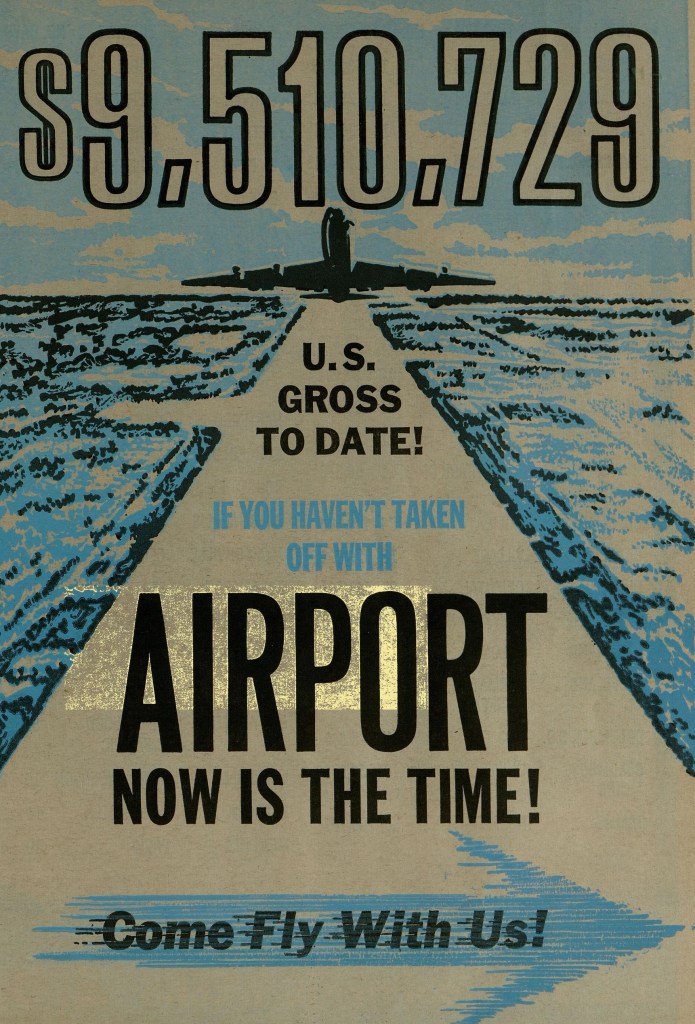
Opening at the Radio City Music Hall in New York, a couple of weeks in advance of the national roll-out, Airport plundered a record $235,000, topping that in its second week, and scooping up $1 million before the end of the month. It was gangbusters everywhere, opening in prestigious first run locations, with nary a showcase/multiple run in sight. “Wham” was the description beloved of the Variety box office headline writers, the word preceding its $80,000 opening week tally in Chicago, $28,000 in San Francisco, and $25,000 in Louisville. “Smash” was also brought into play for its $40,000 in Baltimore and $33,000 in Philadelphia. The subject matter allowed the sub-editors who wrote the headlines some license, so it was a “sonic” $40,000 in Boston and a “stratospheric” $45,000 in Detroit. And it had legs. Week-by-week fall-offs were slight. It was still taking in $25,000 in the 24th week in Detroit, for example.
By year’s end it was easily the top film of the year with $37 million in rentals, way ahead of Mash on $22 million and Patton $1 million further back. And it kept going, adding another $8 million the following year as it was dragged back into the major cities for multiple showings (seven in New York) in multiple engagements.
Business was not so robust abroad. Though Airport managed a six-week run at the Odeon Leicester Square, where it received a Royal Premiere on April 22, 1970, its opening week’s figures were down on both the final week of its predecessor at the London West End cinema, Anne of the Thousand Days, and its successor Cromwell and the film didn’t make the Annual British Top Ten. But in Australia it led the field, though its returns were one-third down on the previous year’s Paint You Wagon and Butch Cassidy and the Sundance Kid.
For its television premiere on ABC in 1973, the network demanded a record $140,000 per minute for advertising. Outside of Gone with the Wind, it earned the highest rating of any movie from 1961 to 1977.
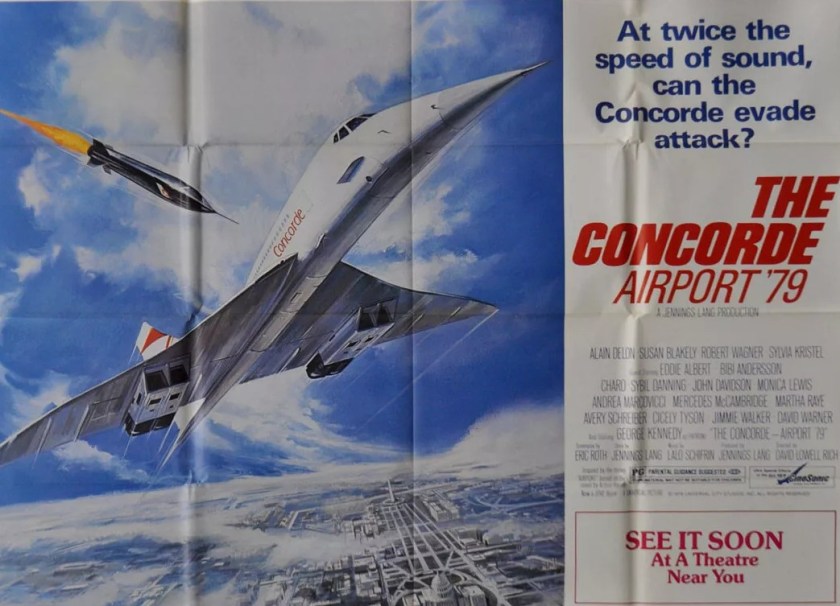
But it also set up an industry. Sequels were the name of the game. And though Airport ’75 (1974) headlining Charlton Heston and Airport ’77 (1977) starring Jack Lemmon were cut-price operations, they were huge successes at the box office, the former hauling in $25.8 million in rentals, the latter $16.2 million. A fourth venture, The Concorde…Airport ’79 (1979) with Alain Delon, flopped and put an end to the series.
SOURCES: Garry McGee, Jean Seberg, Breathless, 2018, p167-171; Kate Buford, Burt Lancaster, An American Life (Aurum Press, 2008) p264-265; “Cast Patton & Bradley,” Variety, September 20, 1967, p13; “Airport Film Deal,” Variety, May 29, 1968, p60; “Steiner at Goldwyn Plant,” Variety, July 24, 1968, p7; “Dean Martin First to Sign for U’s Airport,” Box Office, August 5, 1968, pK4; “Hollywood Happenings,” Box Office, January 6, 1969, pW2; “Airport Will Be U’s First Feature in Todd-AO,” Box Office, January 13, 1969, p12; “Seaton’s Temp Sub at U: H. Hathaway,” Variety, January 22, 1969, p7; “Airport Sequence Follows Real Event,” Box Office, January 27, 1969, pNC3; “17 Inches Snow Brings North East Business To Complete Standstill,” Box Office, February 17, 1969, pE1;“Ross Hunter’s Roadshow,” Box Office, April 28, 1969, pK2; “De Laurentiis Slates 3 Aussie Locationers,” Variety, September 24, 1969, p18; “Put Back Moths Scenes Cut Solely for Radio City,” Variety, October 22, 1969, p5; “Airport Smacks $1-Mil,” Variety, April 1, 1970, p4; “Airport Contest on TV,” Kine Weekly, April 18, 1970, p18; “Big Rental Films of 1970,” Variety, January 6, 1971, p11; “Encore Hits,” Variety, June 16, 1970, p5; “ABC Flying 140G Per Minute for Airport,” Variety, June 27, 1973, p14; “Hit Movies on TV Since ’61,” Variety, Sep 21, 1977, p70; “All-Time Film Rental Champs,” Variety, May 12, 1982, p5. U.S. weekly box office figures – Variety, March-April 1970; U.K. weekly box office figures, Kine Weekly, April-July 1970.
Thundering entertainment from an era when they made movies to appeal to audiences and not to placate the overweening ego of over-entitled directors. I first saw this in 1970 when it was selected as one of three films (the others being Cromwell and The Virgin and the Gypsy) to open the new Odeon triplex in Glasgow, and, thanks to my own in-built movie snobbery, haven’t seen it since. So this was a revelation.
Let’s start with the running time. Made now this would be an overblown 150 minutes (at least) stuffed full of extraneous scenes. But let’s start with the opening. The screen is dark. Yes, absolutely dark. What? Is this some kind of arthouse venture? And it remains dark for about 20 seconds though by now sound has been added, a general hubbub of commotion. Are you sure this isn’t arthouse? Had this been directed by Scorsese or Coppola (who, in fact, used a similar device to open The Godfather, 1972) critics would have picked it up.
John Frankenheimer for Grand Prix (1966) and Norman Jewison for The Thomas Crown Affair (1968) were praised for their use of the split screen, another aspect ignored here by critics. Yet split screen is not only impressively utilized, but, on occasion, it has a humorous quality, as the screen not only splits in two but accommodates other shapes in between or round about. Did anyone mention the use of the wipe? A cinematic technique scarcely employed in the mainstream since Seven Samurai (1954).
Several narrative plates regarding relationships spin in the air while the movie sharpens focus to concentrate on resolving three major incidents involving airplanes. The first is shifting a jet stuck in the snow during a huge snowstorm and blocking off one entire runway. The airport is already under pressure, what with the storm curtailing other flights and forcing others to dive for cover. Then we have a bomber, planning to wreck the plane mid-ocean to claim on the insurance, but when his plan goes awry and he blows out the toilet of the plane, the crew have to bring it down, safety jeopardized by the jet stuck on the ground.
You always know how disaster pictures are going to end, maybe the only guesswork concerns who will actually survive, and it’s an incredible credit to this movie that I felt the tension constantly rippling through me as we hit the various climactic episodes.
On the ground airport manager Mel (Burt Lancaster) is trying to shift the stuck aircraft while dealing with irate wife Cindy (Dana Wynter) and keeping on track his illicit relationship with PR manager Tanya (Jean Seberg). This is on top of a) wrangling with an airport executive who refuses to expand the airport to meet overwhelming demand and whose only reaction to impending crisis is to close the airport down, b) dealing with local citizens furious that plans are rattling their houses, and c) taking flak from brother-in-law and ace pilot Vernon (Dean Martin).
Up in the air Vernon has his work cut out coming to terms with the pregnancy of girlfriend Gwen (Jacqueline Bisset) – always having used his marriage as an excuse not to get emotionally involved with his string of girlfriends – and with a 70-year-old stowaway Ada (Helen Hayes) and bomber D.O. Guerrero (Van Heflin) and then bringing in the stricken plane.
We’re tossed a few red herrings on the passenger manifest. Spot a nun and a priest in a disaster picture and you’re generally in for cliché overload. Here, instead, they are used for humor, the nun taking a swig of whisky under pressure and the priest whacking a belligerent passenger. And the charming Ada is on land given very sympathetic treatment given the thousands of dollars she’s conned out of airlines over the years, but that’s only to set her up for some harsh treatment on board.
There’s an unexpected twist with the bomber. For a few minutes it looks like the crew are going to win the day but then calamity strikes. Meanwhile, on the ground troubleshooter Joe (George Kennedy), huge cigar constantly in place in the mouth, has taken charge of shifting the stuck plane and in the end has to take drastic action.
And in little telling snippets director George Seaton plays fair with the wives who lose out, Mrs Guerrero (Maureen Stapleton) and Mrs Demerest (Barbara Hale) while allowing Mrs Bakersfield to deliver a come-uppance to her errant husband – she’s been playing away too.
The decision to pack this full of more genuine stars than you ever got in a roadshow – mostly the cast list was padded out with newcomers or stars past their best (Lawrence of Arabia, 1962) – reversed this with genuine stars in supporting roles and newcomers in the leading roles) Both Oscar-winning Burt Lancaster (The Professionals, 1966) and Dean Martin after the Matt Helm series and a bunch of westerns were genuine top-notch marquee names. Jean Seberg had just hit a career box office high with Paint your Wagon (1969). After Bullitt (1968) Jacqueline Bisset’s star was on the rise. Oscar-winner George Kennedy (Cool Hand Luke, 1967) was top-billed in Guns of The Magnificent Seven (1969).
And there was a heck of a strong supporting cast: Van Heflin (Once a Thief, 1965), Dana Wynter (Sink the Bismarck!, 1960), Barbara Hale (Perry Mason series, 1957-1966). Oscar-winner Helen Hayes (she won in 1932) and Maureen Stapleton (Bye, Bye, Birdie, 1963) proved the pick, the former here winning a second Oscar, the latter nominated. Apart from Van Heflin, Seaton had gone for character actors rather than stars – Wynter hadn’t made a movie in a decade, for Stapleton it was seven years, for Hayes 14 years and Hale one film in over a decade.
You’d be laughed out of town these days if (outside of sci-fi) you tried to saddle a star with chunks of exposition or technical detail, but here the force of the screen personalities of Lancaster, Martin and Kennedy makes you hang on their every word.
They didn’t have prizes in those days for ensemble acting, but if they had this would surely be in contention, as director George Seaton, in his capacity as screenwriter, ensures that no one is left out and even if it’s only with a look we learn everything we need to know about a character’s emotional life.
Given this was – to use Christopher Nolan’s favorite phrase – “shot in camera” this is a terrific technical achievement in terms of the airplane action especially the stuck plane trying to hirple it way out of trouble.
Director George Seaton (36 Hours, 1964) took ill during production and exterior sequences were filmed by Henry Hathaway (True Grit, 1969). A mention, too, for the driving score by Alfred Newman, in his last screen assignment. It was nominated for 10 Oscars including Best Picture.
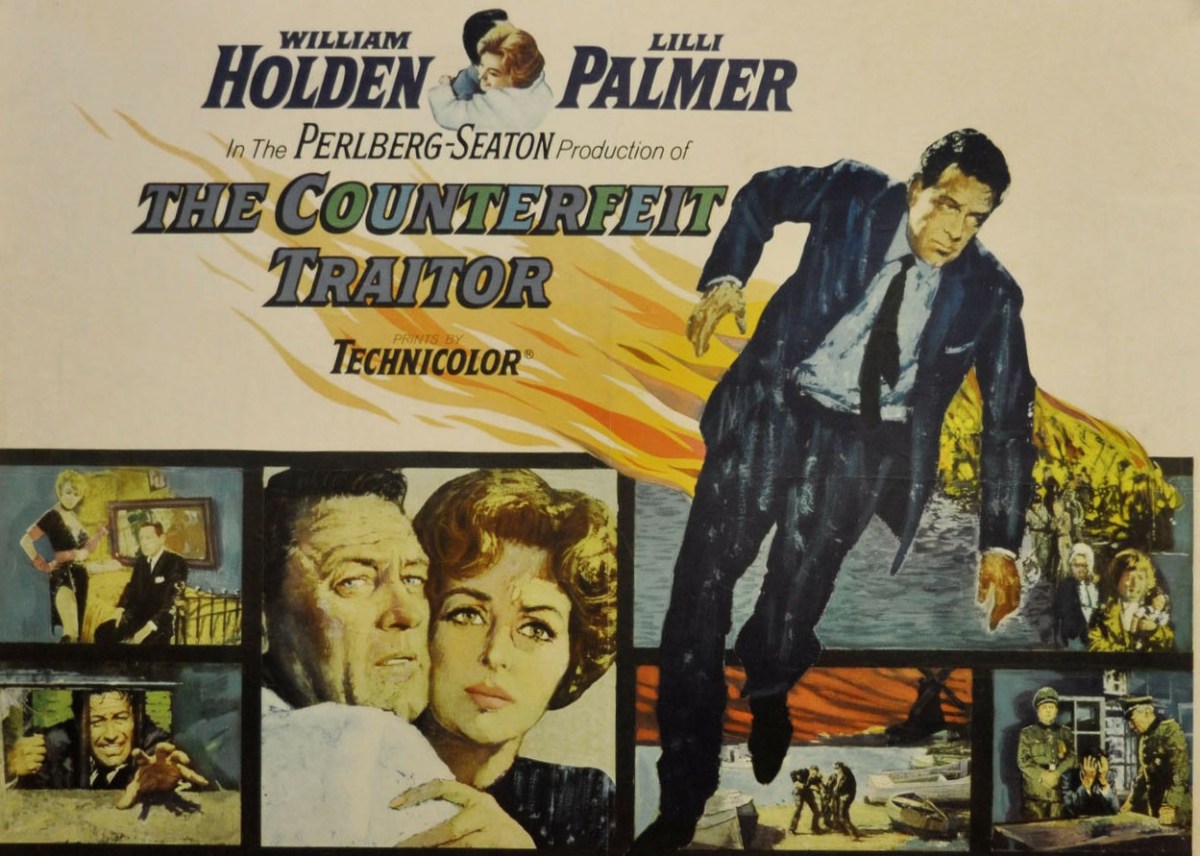
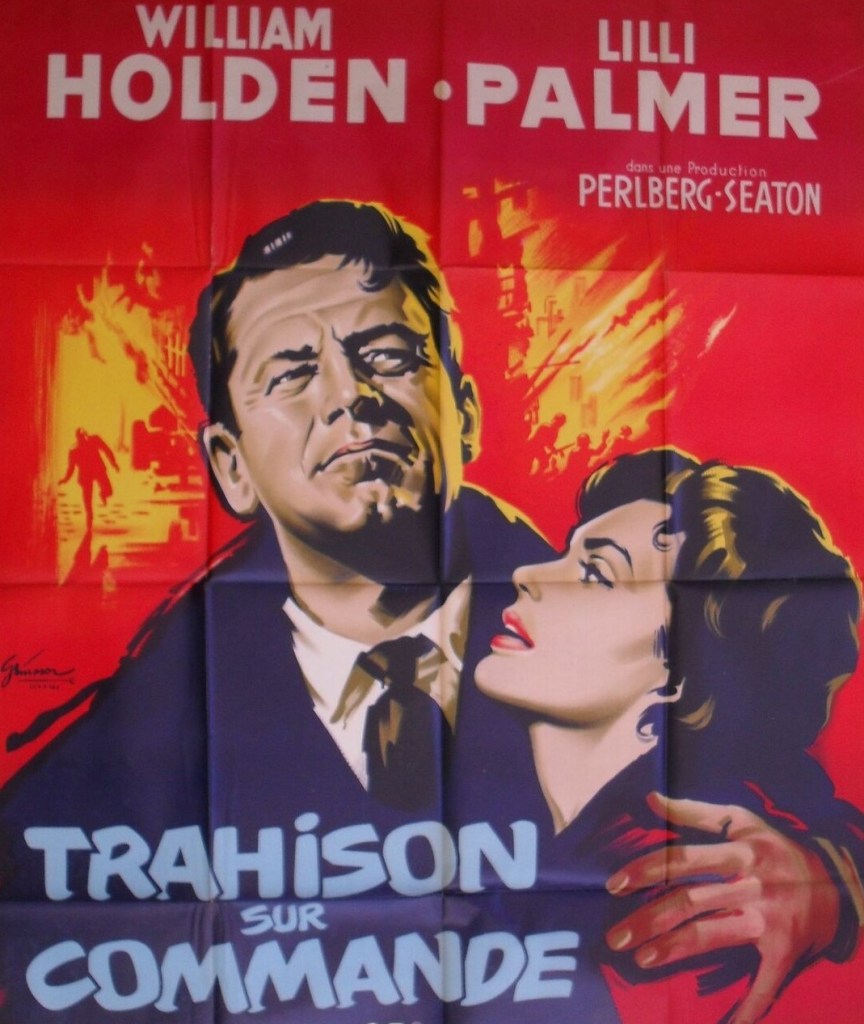
Cynical and opportunistic Swedish oil executive Eric Erickson (William Holden) blackmailed into World War Two espionage finds redemption after witnessing first-hand the horrors of Nazi Germany. Two extraordinary scenes lift this out of the mainstream biopic league, the first Erickson witnessing an execution, the second a betrayal. While some participants in the espionage game pay a terrible price, others like spy chief Collins (Hugh Griffiths) manage to maintain a champagne lifestyle.
Structurally, this is something of a curiosity. The first section, with over-emphasis on voice-over, concerns Holden’s recruitment and initial attempts at spying on German oil installations on the pretext of building a refinery in Sweden. Although resenting the manner in which he was recruited, Erickson had no qualms about resorting to blackmail himself to enlarge his espionage ring.
But it’s only when Marianne Mollendorf (Lili Palmer) enters the frame as his contact in Germany that the movie picks up dramatic heft. As cover for frequent meetings, they pretend to be lovers, that charade soon deepening into the real thing. While abhorring Hitler, she suffers a crisis of conscience after realizing that the information she is passing on to the Allies results in innocent deaths. The final segment involves Erickson’s thrilling escape back home.
The picture is at its best when contrasting the unscrupulous Erickson with the principled Marianne. Virtually every character is trying to hold on to way of life endangered by the war or created by the conflict and there are some interesting observations on the way Erickson manages to harness foreign dignitaries while being held to hostage in his home country. Loyalties are sparing and even families come under internal threat.
Sweden was neutral during the Second World War so in assisting the Allied cause Erickson was effectively betraying his country and once, in order to keep proposed German investors sweet, he begins to spout Nazi propaganda at home finds himself deserted by friends and, eventually, wife.
In some respects, William Holden (The Devil’s Brigade, 1968) plays one his typical flawed personalities, easy on the charm, fluid with convention, but once he learns the true cost of his espionage a much deeper character emerges. The actor’s insistence, for tax reasons, on working abroad – this was filmed on location in Europe – would hamper his box office credibility and although not all his movie choices proved sound this was a welcome diversion. Whether American audiences were that interested in what a Swede did in the war was a moot point, as poor box office testified. And the title might have proved too sophisticated for some audiences, given there was no counterfeiting of money involved.
Lili Palmer (Sebastian, 1968) is excellent as the manipulative Marianne, betraying her country in order to save it from the depredations of Hitler, not above using her body to win favor, but paralyzed by consequence. Hugh Griffith (Exodus, 1960) provides another larger-than-life portrayal, disguising his venal core.
Werner Peters (Istanbul Express, 1968) puts in an appearance and Klaus Kinski (Five Golden Dragons, 1967) has a bit part.
Double Oscar-winner George Seaton (Airport, 1970) makes a bold attempt to embrace a wider coverage of the war than the film requires and could have done with concentrating more on the central Erickson-Mollendorf drama, especially the German woman’s dilemma, but it remains an interesting examination of duplicity in wartime. Written by the director based on the novel by Alexander Klein.
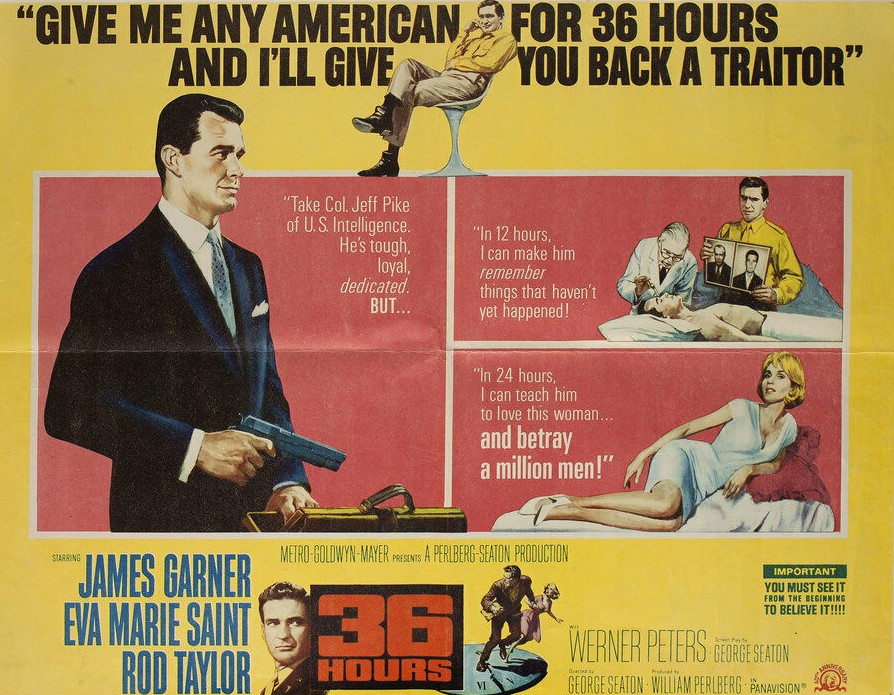
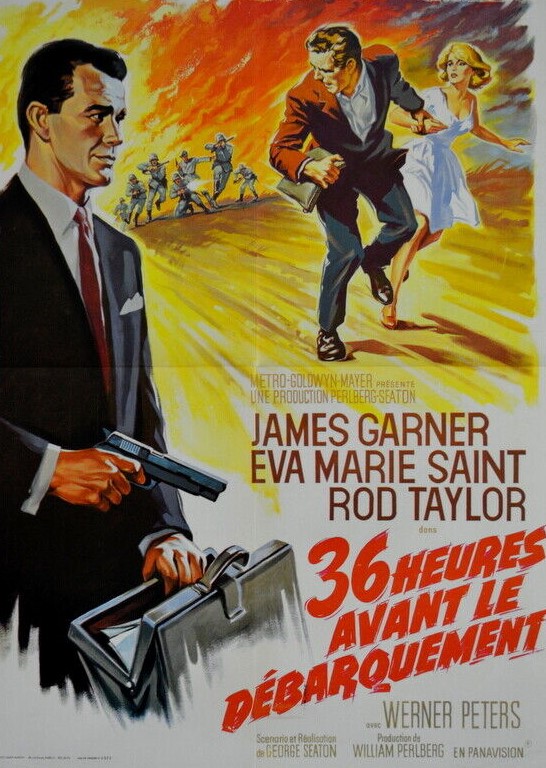
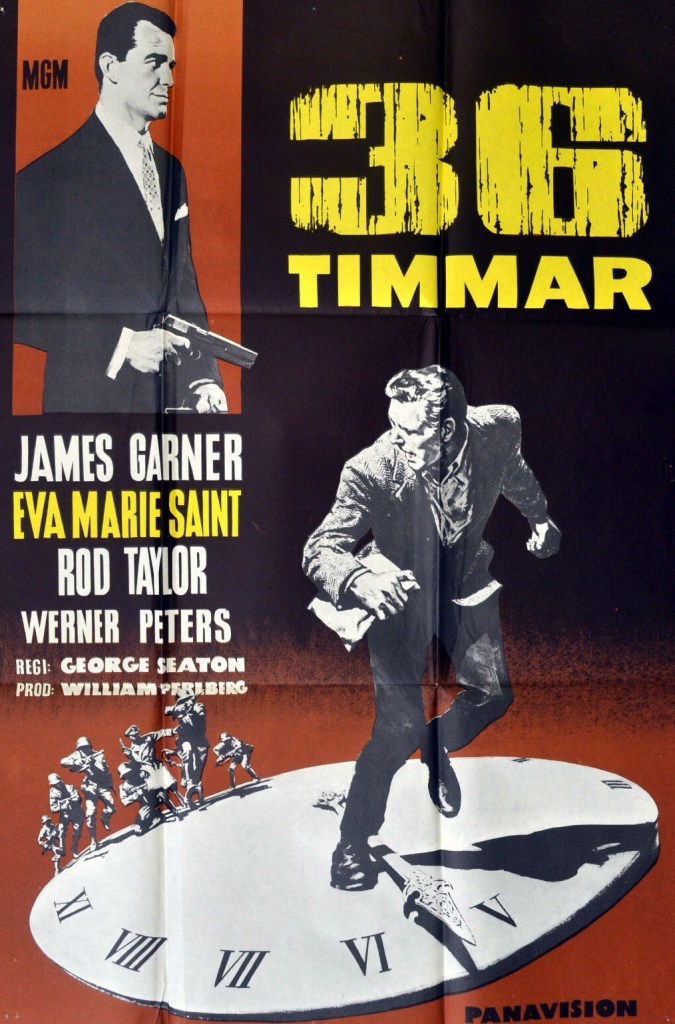
High concept thrillers that derails two-thirds of the way through. While it’s a battle of wits between German psychiatrist Major Gerber (Rod Taylor) and kidnapped spy Major Pike (James Garner), and between the German and his cynical superior, S.S. chief Schack (Werner Peters), it’s a fascinating insight into the power of mind games, almost slipping into the sci fi genre. Pike has intimate knowledge of the Allied D-Day plans but instead of submitting him to routine torture, he is handed over to Gerber who convinces him he has been suffering from amnesia for six years.
Pike finds himself in what he perceives to be an Allied hospital where everyone wears Yank uniforms, speaks English and listens to baseball scores on the radio. Pike has aged, thanks to greying hair and vision blurred so badly he requires spectacles. There’s even a wife, Anna (Eva Marie Saint), he doesn’t remember marrying. On the eve of D-Day the Germans expect the main invasion thrust to target Calais, the shortest crossing from England, not the Normandy beaches further to the south. Someone who knows the truth might well be willing to suffer extreme torture to keep the secret out or enemy hands, therefore justifying this approach.
While the idea of a prefabricated existence would not be foreign to today’s audience, it was an unusual idea at the time, although films as diverse as The Wizard of Oz (1939) and 1984 (1956) revolved around alternative reality. That the whole scheme is entirely plausible is down to Gerber. Rather than the one-dimensional villain, he’s an early version of the “good German,” whose scientific breakthroughs have alleviated suffering. Yes, he’s charming and suave and clever enough to hurry Pike along, but also very humane.
As you might expect, the best part is the constructed universe, Pike’s understandable disbelief at suffering from amnesia, and for so long, the shock to his vanity that his hair and eyes show signs of ageing. Just like Battle of the Bulge (out the next year) where American-born Germans were dropped behind enemy lines as saboteurs, Gerber’s ease with American idiom and culture is key to making the enterprise work. An easy-on-the-ear scientist, he employs a cupboard as a prop to explain the differences in the various types of amnesia. Pike is fooled and does inadvertently betray his country and the twist is that Schack, with so much invested in the notion of the invasion at Calais, refuses to believe it.
As ever in this kind of semi-sci-fi film it’s something incredibly simple (along the lines of the aliens susceptible to water in Signs or the common cold in War of the Worlds) that makes the clever construct unravel. In this case it’s Pike finding a paper cut on his finger and working out it should not be so sore after six years. So, thereafter, the film shifts into escape mode, which is considerably less thrilling compared to the sci-fi hi-jinks. A sub-plot involving Anna, a Jew willing to do anything to avoid the concentration camp, adds some depth to the proceedings.
Oddly enough, despite the title there’s no real sense of a deadline, nor does it come close to achieving the tension racked up in Day of the Jackal (1973) for an event the audience knew never took place, since 36 Hours fails to convince us the D-Day landings were ever in jeopardy.
It’s much more involving, not to mention highly successful, in the middle section where Pike is being duped, the lengths to which Gerber has gone to create the perfect fiction under audience scrutiny, while we watch Pike twist and turn as he comes to terms with what in those days would be perceived as serious mental illness, and from which there is no defined cure. That the escape is triggered by Gerber’s ego adds another element.
The picture did not hit the box office target on release in part I guess because by that time no enemy had to kidnap anyone to fill in the blanks in their scientific knowledge since there was such a plethora of defectors and in part because it seems insane that anyone would go to such excesses when less costly and proven torture implements were to hand.
That it works at all is down to the acting. James Garner (Hour of the Gun, 1967) straddles a number of his screen personas, from his instantly recognisable cocky character of The Great Escape (1963) to the befuddled double-takes of A Man Could Get Killed (1966) and tougher incarnation of Grand Prix (1966). Rod Taylor (Dark of the Sun, 1968) is his match with one of his best performances, infusing the mad scientist with surprising humanity at the same time as wriggling out from under the maw of the inhuman Schack, and, despite clearly being desperate to see his plan work, managing to keep his character on an even, chatty, keel. Eva Marie Saint (The Stalking Moon, 1968), the go-to choice for a vulnerable woman, brings an edge to her role.
Audiences glimpsing the name Roald Dahl in the credits in those days would not have been expecting an imaginative confection in the Willie Wonka and the ChocolateFactory (1971) vein but something much more adult given the twist-ridden short stories which had made his name. This was based on his Beware of the Dog (1946) tale, the first of his pieces to be made into a film although some of the best of Alfred Hitchcock Presents (1958-1961) had lent heavily on his work.
Writer-director George Seaton put the project together, with occasionally some elan, but as with The Counterfeit Traitor (1962) it’s a film of two distinct parts, but whereas with that film the latter stage was the more interesting here it is the first section. This is best approached as an offshoot of the kind of sci fi themes that inform the work of Philip K. Dick.
Catch-Up: Rod Taylor’s acting development can be traced through films already reviewed in the Blog – Seven Seas to Calais (1962), Fate Is the Hunter (1964), The Liquidator (1965), The Glass Bottom Boat (1966), Hotel (1967), Dark of the Sun (1968) and The High Commissioner (1968). James Garner pictures previously reviewed are: Doris Day comedy Move Over, Darling (1963), spy spoof A Man Could Get Killed (1966) and the westerns Duel at Diablo (1966) and Hour of the Gun (1967).
Authenticity came at a cost. In electing to film in Europe veteran producer-director team of William Perlberg and George Seaton, their partnership stretching back two decades, incurred the ire of U.S. movie unions campaigning against “runaway” productions and tax-avoiding stars like William Holden. Feelings ran so high the movie was picketed on release, even though it had received a Presidential seal of approval after John F. Kennedy requested a screening.
Perlberg and Seaton were lucky not to be indicted for a further act of anti-Hollywood behavior, the hiring of so many European actors and actresses in favor of the home-grown variety, but with the incursion of Sophia Loren, Brigitte Bardot and Gina Lollobrigida into the U.S. box office introducing another big female star into the Hollywood firmament would likely have been welcomed.
Producer Perlberg bluntly defended the decision to film abroad a movie set in war-torn Europe (where much of the damage caused by the war had not been rectified). “Where would you find three solid blocks of rubble but Berlin?” he demanded. “Or a prison like Moabit? Our company was yesterday filming in a partially bombed out section of the Altona railway station, six stories high. Action involved a 14-car German train (which Union Pacific can’t reproduce). How can we build Stockholm in Hollywood.” More to the point, he added, “Of course where in the world can you get weather like this? It’s been raining every day.”
Perlberg and two-time Oscar winner Seaton (Airport, 1970), separately and together, had considerable experience of war pictures, having between them made The Proud and the Profane (1956) and The Bridges at Toko-Ri (1954), both pictures, incidentally, starring Holden. The Alexander Klein bestseller The Counterfeit Traitor, purchased in 1957 for a modest $75,000, appeared to follow a similar trajectory. “Competition for the entertainment dollar has wedded us to big films and global stories,” maintained Perlberg despite complaint by Hollywood unions that such films, in the face of shrinking U.S. production, denied their members work.
Although the European locations would shave $500,000 from the budget of The Counterfeit Traitor, still coming in at a hefty $3.4 million and originally to be filmed under the title Man in the Middle, Perlberg was adamant that “the picture could never be made in Hollywood with justice to the subject and story… We are shooting this picture where it happened. On the streets that Eric Erickson (the character William Holden plays) walked; in the houses that were his hideouts.”
Perhaps key to this philosophy was the ability to shoot inside the notorious and still-active Moabit Prison, housing 1,300 prisoners and located close to Berlin’s famous Tiergarten. Amazingly, the prison warden granted permission not just to shoot in the courtyard but also inside the actual building. The prison officials initially denied that anyone was shot in the courtyard (a key scene in the film) until Erickson turned up and testified to the contrary, standing in the cell through whose bars he had witnessed the execution. You could not buy such authenticity and certainly not recreate it in a Hollywood back lot.
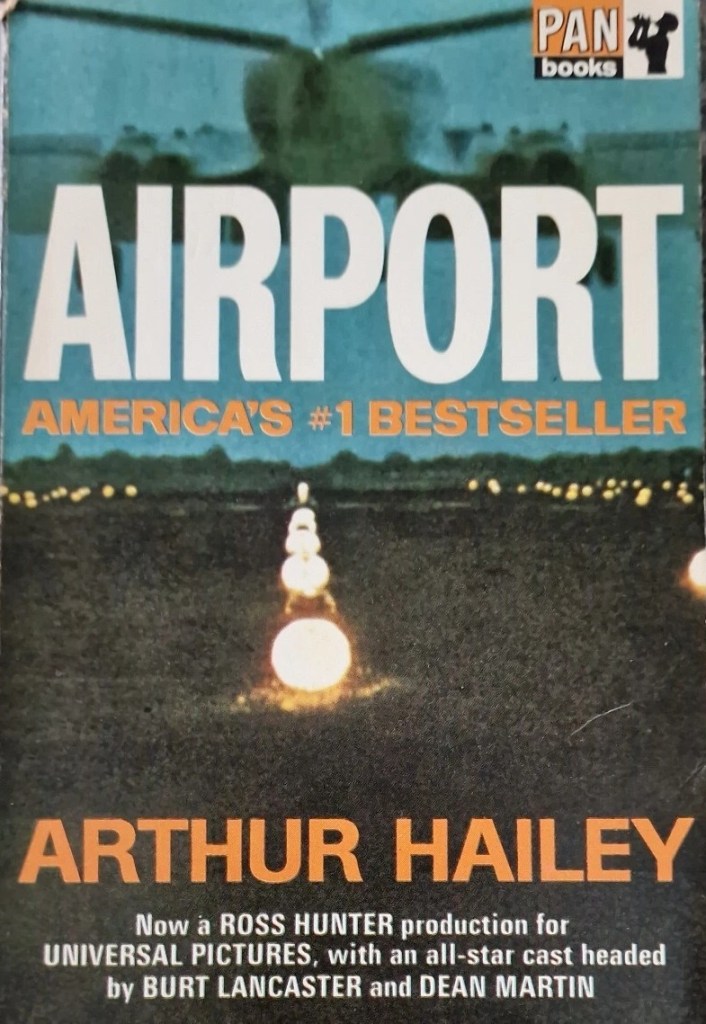
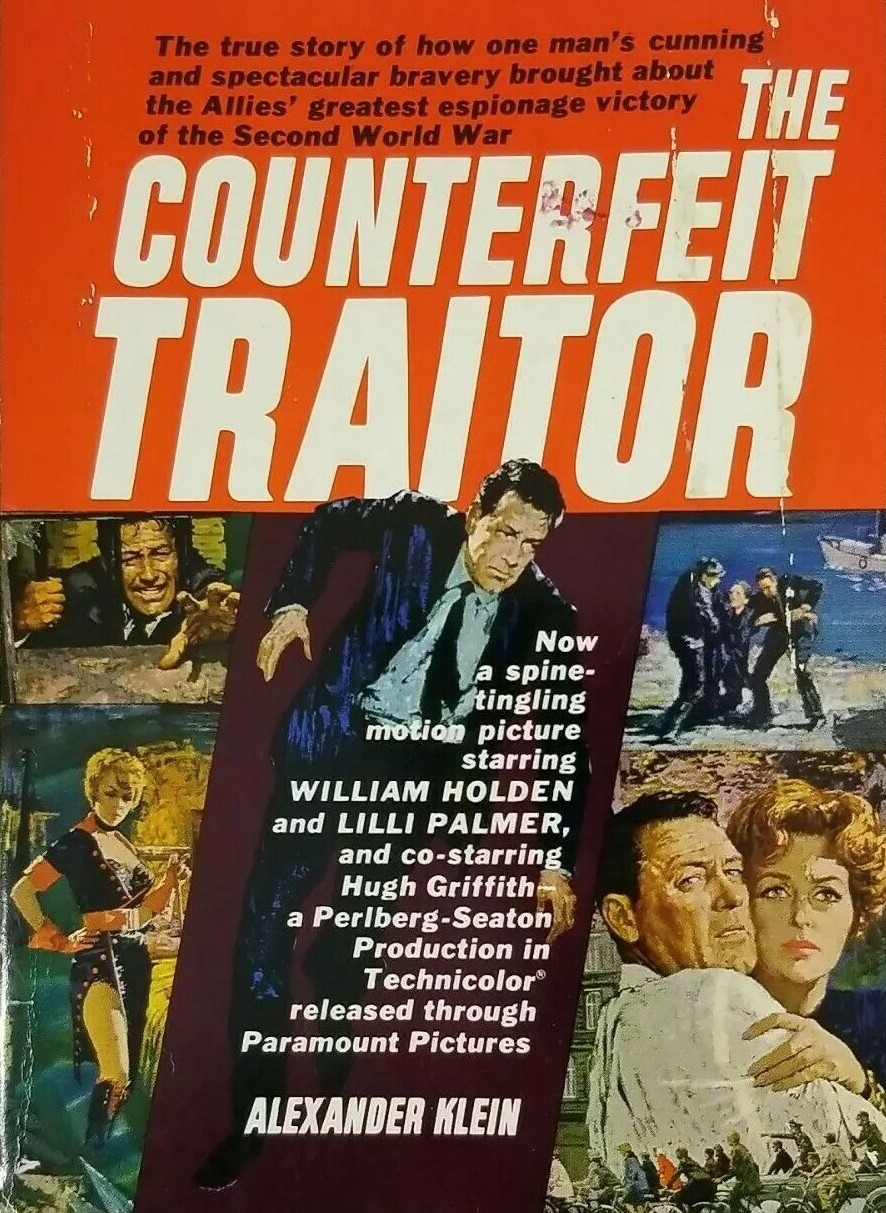
Paperback movie tie-in.
The 100-day shooting schedule included a month in Berlin, two months in Hamburg and scenes set in Copenhagen and Stockholm. It was the epitome of a multi-country adventure – the cameraman French (Jean Bourgoin who shot Tati’s Mon Oncle), wardrobe coordinator Italian, sound mixer German and assistant director British. But in Denmark, they worked with a Danish crew, in Sweden a Swedish crew. “I doubt that any other picture has been made with this type of operation – changing crews with each country involved. It has certain pitfalls but we’ve found in Germany alone that it would have been foolish to do it any other way,” added Perlberg.
“Hollywood set dressers, for instance, are great but no amount of research can match actual experience. Our interior decorators lived in the environment, witnessed the events and dressed the sets accordingly.” Apart from language problems, in Germany, where the bulk of filming took place, the lack of a centrally located “movie town” like Hollywood caused issues. Actors and crew were drawn from Berlin, Munich and Hamburg, with all the cast put up in first class hotels and paid a per diem of $15. With over 70 speaking roles, the movie also called on 2,000 extras. The producers also worked in the oldest film studio in the world, Nordish Film in Copenhagen built in 1906, and the rebuilt Palladium, which had been blown up by the Germans during World War Two.
Actors and directors worked abroad to limit their U.S. tax exposure. Anyone taking advantage of foreign income was viewed as a tax cheat. William Holden, who would only make one movie in Hollywood in seven years, epitomized the wealthy tax dodger. Living abroad also cut down on paying U.S. tax. Switzerland, for example, where Holden took up residence, calculated tax on the amount you spent on the annual rental of your home, resulting in huge savings – Yul Brunner claimed this legitimate move alone had saved him $2 million.
Holden complained that he was unfairly being singled out. “How about Clark Gable in Naples, Tony Quinn, Charlton Heston in Ben- Hur? Why do they pick on me? I pay U.S. taxes in the highest brackets and will continue doing so for years.” He was a prime target not just because he was outspoken about living and working abroad but because he was, along with John Wayne, the highest-earning male actor, on $750,00 per picture plus percentage. He had the pick of the projects, linked with The Guns of Navarone (1961), The Alamo (1961), The Americanization of Emily with William Wyler in the director’s chair, The Visit with Ingrid Bergman and Melody for Sex where he would be paired with both Sophia Loren and Gina Lollobrigida. He had followed up The World of Suzie Wong (1961) filmed in Hong Kong, with Satan Never Sleeps (1961) filmed in Britain, and then was lining up The Lion in Kenya, Together in Paris (aka Paris When It Sizzles) in France and The 7th Dawn in Malaya.
Although Prussian-born Lili Palmer (Sebastian, 1968) was an established Hollywood import, the movie offered a wide range of parts to fast-rising European talent. Most major studios had already invested in “new faces from abroad” so Perlberg-Seaton were not going against the grain on this one. Paramount, for example, had hired the German Hardy Kruger and the French Gerald Blain and Michele Girardon for Hatari! (1962). Columbia lined up Frenchman Alain Delon for Lawrence of Arabia (1962) and Greek actress Irene Papas in the female lead in The Guns of Navarone (1961). MGM chose Ingrid Thulin for The Four Horsemen of the Apocalypse (1962) and United Artists set Maximilian Schell in Judgement at Nuremberg (1961). Claudia Cardinale was intended to make her Hollywood debut opposite Sidney Poitier in Iron Men – never made.
Heading the list of potential break-out stars were Ingmar Bergman protegees Sweden’s Eva Dahlbeck (Smiles of a Summer Night, 1955) and Ulf Palme (Dreams, 1955). They had appeared in two films together, Dreams and Meeting in the Twilight (1946). German Wolfgang Preiss would later appear in The Train (1965) and Von Ryan’s Express (1965). But the biggest casting coup was Klaus Kinski. “No German producer lightly engages him because most of his engagements in German theaters have ended with a resounding quarrel or scandal,” explained journalist Peter Baker, “(but he is) nevertheless regarded with awe and respect as one of the greatest actors to merge from post-war Germany.” His three days in The Counterfeit Traitor won him a role in Perlberg-Seaton’s next picture The Hook (1963).
SOURCES: William Perlberg, “Searching Europe for Authenticity,” Films and Filming, February 1961, p9; Peter Baker, “The Tour of Babel,” Films and Filming, February 1961, p10-11, 41; “Lazar Percenting Ericson Spy Tome,” Variety, October 16, 1957, p3; “Lament for B.O. Stars,” Variety, January 29, 1958, p14; “Holding Money via Residence in Switzerland,” Variety, August 5, 1959, p12;“Par’s Sex Stars,” Variety, September 2, 1959, p3; “Holden, Seaton Invade Berlin for War Film,” Variety, October 28, 1959, p7; “H’wood – O’Seas Row Boils Up,” Variety, August 24, 1960, p7; “Bill Perlberg’s Back and Loves Hollywood,” Variety, November 2, 1960, p7; “New Faces from Abroad To Make Debuts in U.S. Films During 1961–62 Season,” Box Office, September 4, 1961, p12-13; “President Kennedy Sees Counterfeit Traitor,” Box Office, May 7, 1962, pW8; “Warm-Up for Picketing Strategy,” Variety, June 6, 1962, p4.



 The Magnificent 60s