Hombre (1967) ****

Shock beginning, shock ending. In between, while a rift on Stagecoach (1939/1966) – disparate bunch of passengers threatened by renegades – takes a revisionist slant on the western, with a tougher look at the corruption and flaws of the American Government’s policy to Native Americans. Helps, of course, if you have an actor as sensitive as Paul Newman making all your points.

The theme of the adopted or indigenous child raised by Native Americans peaked early on with John Ford’s The Searchers (1956) but John Huston made a play for similar territory in The Unforgiven (1960) and, somewhat unexpectedly, Andrew V. McLaglen makes it an  important element of The Undefeated (1969).
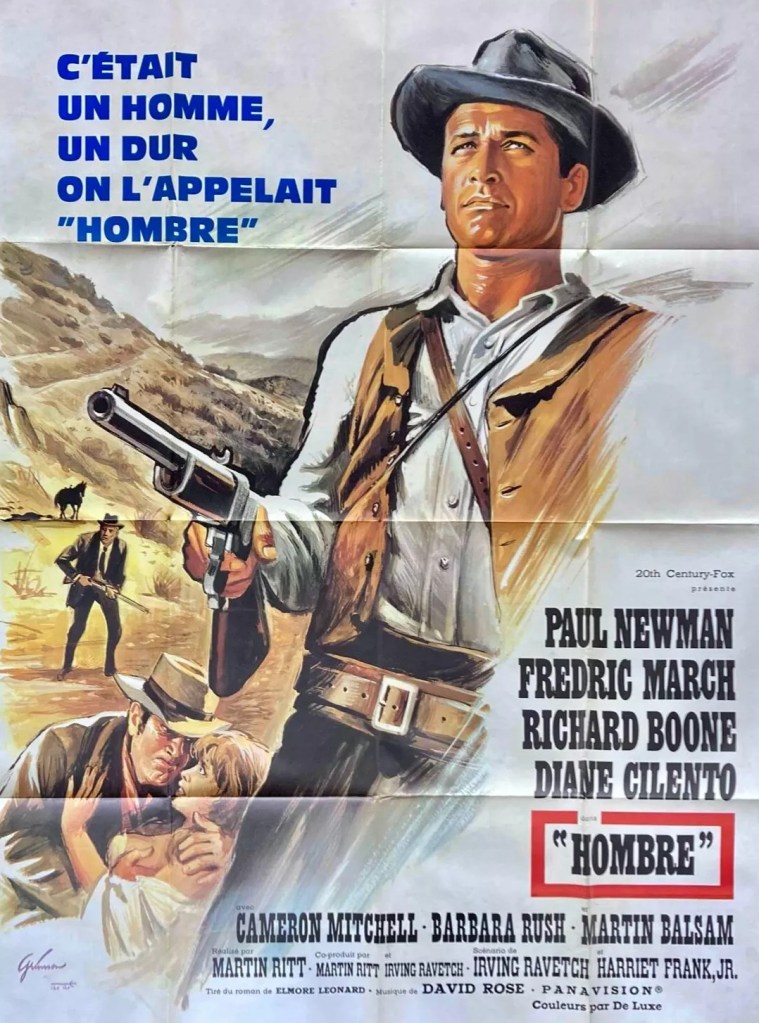
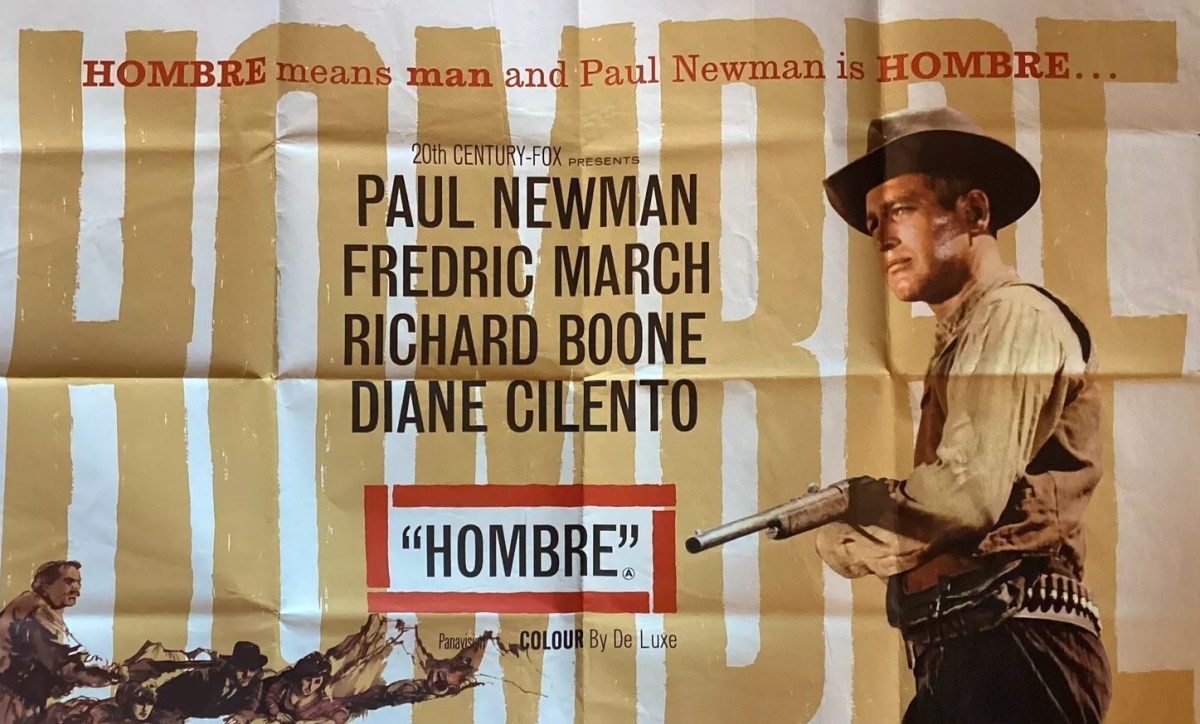
This begins with a close-up of a very tanned (think George Hamilton) Paul Newman complete with long hair and bedecked in Native American costume. Apache-raised John Russell (Paul Newman) returns to his roots to claim an inheritance – a boarding house –  after the death of his white father. That Russell is a pretty smart dude is shown in the opening sequence where he traps a herd of wild horses after tempting them to drink at a pool. He decides to sell the boarding house to buy more wild horses.

That puts him on a stagecoach with six other passengers – Jessie (Diane Cilento), the now out-of-work manager of the boarding house, retired Indian Agent Professor Favor (Fredric March) and haughty wife Audra (Barbara Rush), unhappily married youngsters Billy Lee (Peter Lazer) and Doris (Margaret Blye), and loud-mouthed cowboy Cicero (Richard Boone). Driving the coach is Mexican Henry (Martin Balsam).

Getting wind that outlaws might be on their trail, Henry takes a different route. But the cowboys still catch up and turns out Cicero is their leader. He takes Audra hostage, though she appears quite willing having tired of her much older husband, steals the thousands of dollars that the corrupt Favor has stolen from the Native Americans, and, also taking much of the available water, leaves the stranded passengers to die in the wilderness.
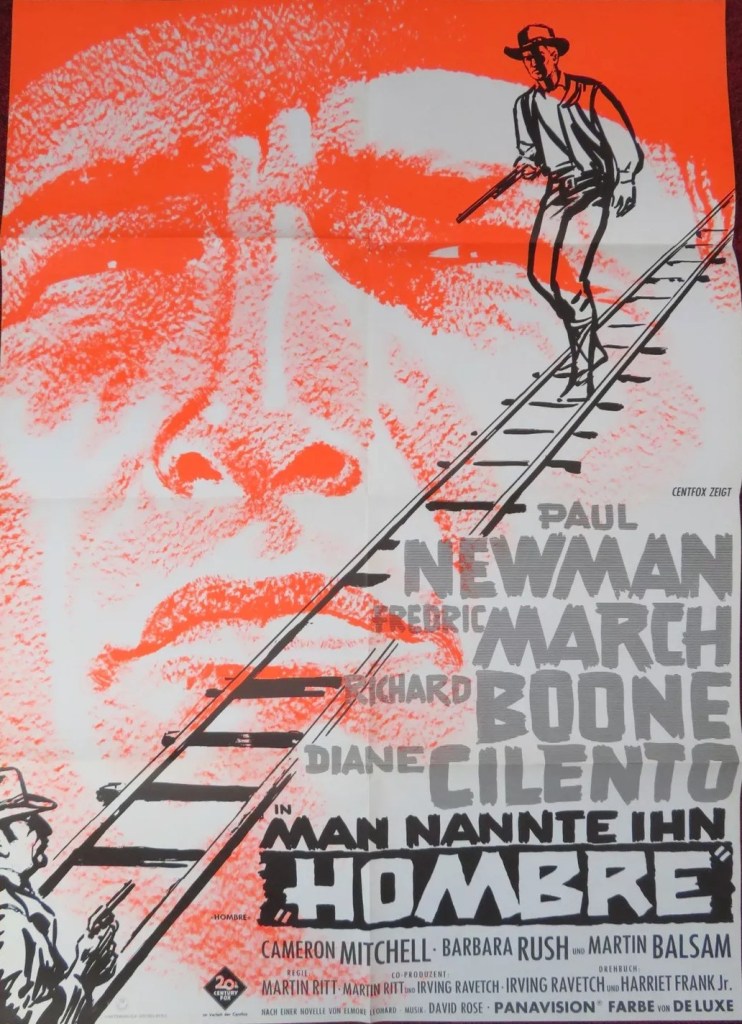
The passengers might have lucked out given Russell is acquainted with the terrain but they’ve upset the Apache by their overt racism, insisting he ride up with the driver rather than contaminate the coach interior. And the outlaws, having snatched the loot, and Cicero his female prize, should have galloped off into the distance and left it to lawmen to chase after them.

But Russell, faster on the uptake than anyone expects, manages to separate the gangsters from the money, forcing them to come after it. Russell wants the cash to alleviate the plight of starving Native Americans as was originally intended, but he has little interest in doing the “decent thing” and shepherding the others to safety. Ruthless to the point of callous, he nonetheless takes time out from surviving to educate the entitled passengers to the plight of his adopted people.

A fair chunk of the dialog is devoted to Russell explaining why he’s not going to do the decent thing and giving chapter and verse on the indignities inflicted on his people, and that alone would have given the picture narrative heft, especially as the corrupt Favor is more interesting in retrieving the money than his wife.

But in true western fashion, Russell is also a natural tactician and manages to pick off the outlaws when they come calling, impervious to the cries of Audra staked out in the blazing sun as bait. Eventually, against his better judgement, Russell gives in to the entreaties of Jessie and attempts to rescue the stricken women only to be cut down by the gunmen. I certainly didn’t expect that.

So, it’s both action and character-led drama. Paul Newman (The Prize, 1963) is superb (though not favored by an Oscar nod), especially his clipped diction, and oozing contempt with every glance, and the whiplash of his actions which is countered by shrewd judgement of circumstances. But Diane Cilento (Negatives, 1968) is also better than I’ve seen her, playing the foil to Newman, sassy enough to deal with him on a male-female level, but with sufficient depth to challenge his philosophy. Strike one, too, for Martin Balsam (Tora! Tora! Tora!, 1970) in a lower-keyed performance than was his norm. Richard Boone (Rio Conchos, 1964) and the oily Fredric March (Inherit the Wind, 1960) are too obvious as the bad guys. Representing the more calculating side of the female are Barbara Rush (The Bramble Bush, 1960) and movie debutant Margaret Blye.

The solid acting is matched by the direction of Martin Ritt (The Spy Who Came in from the Cold, 1965). Prone to preferring to make picture that make a point, he has his hands full here. But the intelligent screenplay by Irving Ravetch and Harriet Frank Jr. (Hud, 1963), adapting the Elmore Leonard novel, make the task easier, offsetting the potentially heavy tone with some salty dialog about sex and married life.

Thought-provoking without skimping on the action.    

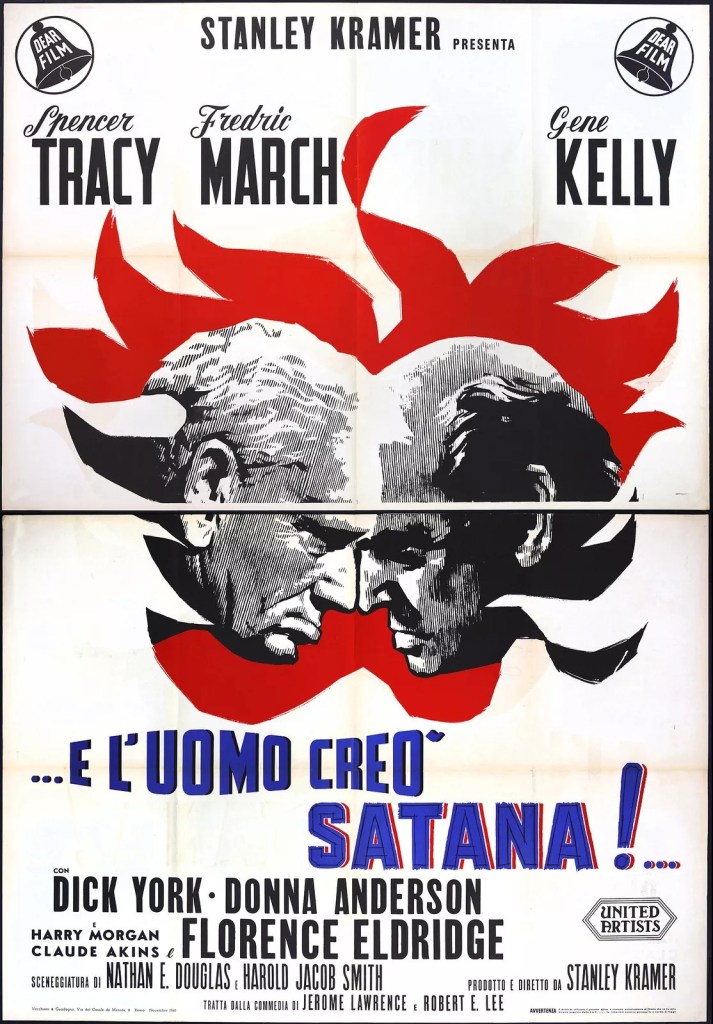
Inherit the Wind (1961) ****

As timely as ever with America seemingly always on the brink of dictating what freedoms people can enjoy. At the time the target was the oppression engndered by McCarthysim, rather than the more basic tale of whether State law could forbid its citizens to talk about evolution. It was set almost a century ago, based on a real-life case, and even now fundamentalists reject Darwin’s theories. Setting aside the context, the principle contested is still the same – not just free speech but the right to be different. You could even argue that scientists and fundamentalists are all agreed these days, that out of nothing came the universe, whether created by a Deity or someone operating a contraption called the Big Bang.

Setting aside the various arguments for and against Darwin’s theory, what we have, nonetheless, is an acting highpoint, a fabulous courtroom battle, of the kind adored by audiences, full of objections sustained, attorneys being warned by the judge, inadmissible evidence, smart remarks and witty rejoinders. This all takes place in a sweltering courtroom, temperature so high that the judge agrees to depart from court procedure and permit the verbal duellists to shed their jackets.

Given further depth because the antagonists, Henry Drummond (Spencer Tracy) and Matthew Harrison Brady (Fredric March), were once the best of pals, political allies, on the same side in the latter’s failed bid for the Presidency, and willing to accept the other’s personal foibles. Probably the first legal drama to accept that outside the courtroom the participants could be friends.

Luckily, most of it isn’t long speeches, but sharp comebacks, plus the detours, twists and turns that come about from concentrating more on the court than on any surrounding action, though there is forbidden romance, pastor’s daughter Rachel (Donna Anderson) defying her father over her love for the accused, schoolteacher Bertram (Dick York) whose teaching is in conflict with the Bible.

The most outraged denizens of the town get into a right tizzy, marches, religious songs, protest, but that’s leavened by commercial interests, a bank manager worrying that the town being ridiculed by those cleverer folks back east will harm his business, hoteliers, sideshow operators licking their lips at the financial bounty of reporters and gawkers descending on the town.

This is as you’d like to see Spencer Tracy, not the silent judge of Judgement at Nuremberg (1961), personality reined in by the weight of his decisions and the need to do right by those accused of even the most heinous of crimes, but the exuberant character, confident, up for battle, able to fend off any criticism and come back to any witticism at his expense with stinging repartee.

Fredric March, too, has a ball with a loudmouth character, convinced of his infallibility (except of course in terms of the Presidential Race), apt to stuff his face at dinner, but still with an intellectual thrust capable of parrying anything Tracy can throw at him. Tucked somewhere in between is weaselly reporter E.K. Hornbeck (Gene Kelly) whose newspaper has hired Drummond to defend Bertram in the hope of filling the front pages for days with the Trial of the Century (taking the prize from Leopold and Loeb the year before – both cases in real-life handled by Clarence Darrow).

Harry Morgan (The Flim-Flam Man/One Born Every Minute, 1967) plays the snipppy judge trying to maintain order while Claude Akins (Claudelle Inglish, 1961) the hellfire preacher. With so many interesting characters on parade, there’s never a dull moment, especially with each actor trying to wring every ounce of drama and/or pathos from their part.

Director Stanley Kramer (Judgment at Nuremberg) looks as if early on he made up his mind to give the actors their sway. There’s no reining in, even in the early scenes, with the populace up in arms and carrying very professionally-made signs and banners (no handwritten scrawls here, no sirree). And once Tracy and March hit their stride, it’s all an audience can do to sit back and admire. Sentiments expressed will still strike a chord, but, mostly it’s a testament to two great actors at the top of their game.

If you only remember March from the likes of The Condemned of Altona (1962) or Seven Days in May (1964) you should know he was a huge marquee attaction in his day, double Oscar-winner (and three nominations besides), as at home in swashbucklers like The Buccaneer (1938) as drama and comedies, leading man who could more than hold his own against top female stars – Greta Garbo (Anna Karenina, 1935), Katharine Hepburn (Mary of Scotland, 1936), Merle Oberon (Dark Angel, 1935) and Janet Gaynor (A Star Is Born, 1937).

Written by Nedrick Young (The Train, 1964) and Harold Jacob Smith (The McMasters, 1970) from the play by Jerome Lawrence and Robert E. Lee.

A terrific watch.

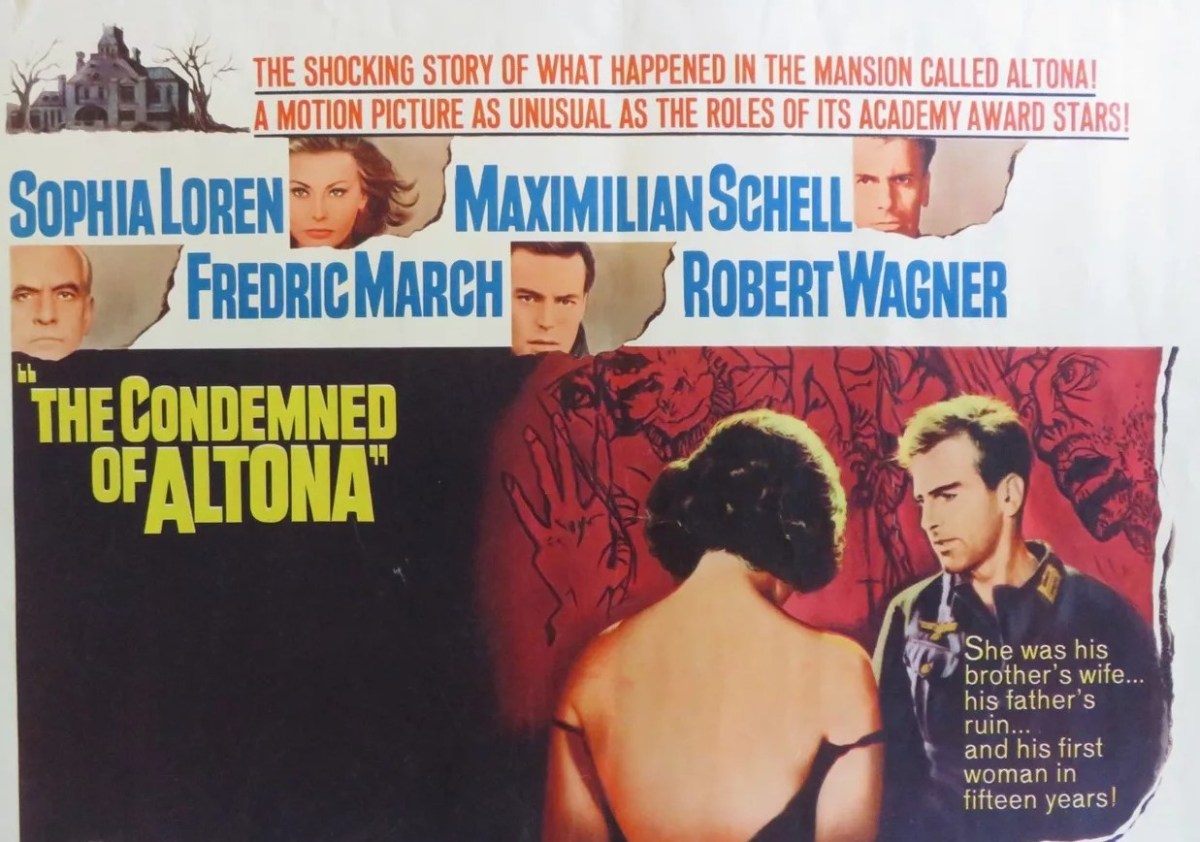
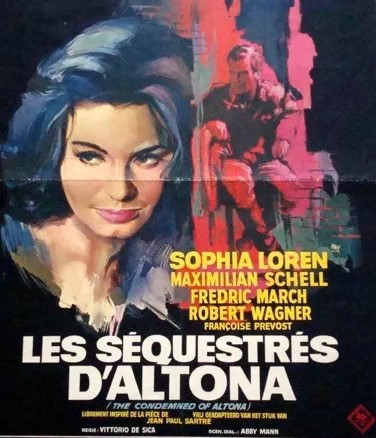
The Condemned of Altona (1962) ****

Shades of last year’s Oscar-winning Zone of Interest but with more guilt, some characters dodging it, others driven mad by remembrance of what they did or didn’t do during the Holocaust of World War Two. But mostly, an object lesson in how to expland a play (written by French philosopher Jean-Paul Sartre). Despite top class performances from Sophia Loren (Arabesque, 1966), Maximilian Schell (Counterpoint, 1967), Fredric March (Seven Days in May, 1964) and even, astonishingly, from Robert Wagner (Banning, 1967) it’s director Vitttorio De Sica (A Place for Lovers, 1968), with stunning images and clever camerawork, who steals the show.

You won’t forget in a hurry the outstretched hand of a prisoner in a blizzard condemned to die, nor the skeletal jaw seen through an x-ray machine. The backward crab crawl will remind you of a later movie. De Sica moves the camera every whichway. Aerial and overhead shots are mixed in with the camera swivelling from character to character or suddenly pulling back from a scene and then suddenly he stops you his restraint. But that doesn’t prevent him getting to the heart of the narrative matter and adding in some frisson of accuser attracted to accused.  

Set at the end of the 1950s, we begin on a Succession note, but without the contemporary angst and back-stapping. German shipping entrepreneur Albrecht (Fredrich March), a war profiteer turned post-war profiteer having taken advantage of demand in the Germany industrial boom, and now with only months to live, wants to pass on his business to son Werner (Robert Wagner). But Werner shies away, disgusted by his father’s unspoken collaboration with the Nazis during the war, ignoring the argument that the businessman was simply dealing with whatever party was in power. And this would be the narrative, father explaining actions, hoping for expiation, planning for the business to pass down the family line rather than be sold off.

Except that Werner’s left-winger actress wife Johanna (Sophia Loren) discovers there is another contender, the supposedly dead older son Franz (Maximilian Schell) who, instead of being sentenced to death for war crimes and fleeing to Argentina, where he purportedly died, as was the story given out, is actually hiding in the family mansion. He’s pretty much been driven mad, the walls of his substantial hidey-hole daubed with disconcerting images. Windows blocked-up and no knowledge of the outside, wearing his Nazi uniform he envisages a Germany languishing in decay, poverty and hunger. He lives on champagne, oysters and chocolate (so not quite the tough prison regime), and, as discreetly portrayed as was possible at the time, has an incestuous relationship with doting sister Leni (Francoise Prevost), the only human being with whom he is in contact. The inmate, knocking back handfuls of Benzedrine, occupies his time by recording messages to be delivered, he hopes, to Germans many centuries ahead.

Johanna wonders how this mentally-ill man came to be obsessed with guilt and we discover that when he was growing up his father rented out spare land around the mansion to the Nazis for a concentration camp where 30,000 people died. But Franz hid a Jew in the house, was reported to the S.S. by his father, and witnessed the man’s execution, then was punished by being forced to join the Army where he was known as a torturer. Finally, he emerges from isolation and sees a different Germany and confronts his father in a shock ending.

Both Loren and Schell had just won Oscars, for Two Women (1960) – incidentally directed by De Sica – and Judgement at Nuremberg (1961), respectively, so their confrontation, where his initial male dominance (the poster image reflects this scene) settles into a more equal power dynamic. Frederic March is good as the father convinced he has done no wrong and I had to check that this was the same Robert Wagner who had often been indifferent in pictures. De Sica draws great performances from all and layers the whole movie in a doom-laden atmosphere. Written by Abby Mann (Judgement at Nuremberg) and Cesare Zavattini (Woman Times Seven, 1967)

Remains surprisingly potent.

Seven Days in May (1964) ****

Democracy is a dangerous weapon in the hands of the people. Can they be trusted to make the correct decision? That’s in part the thematic thrust of this high-octane political thriller that pits two of the greatest actors of their generation in a battle to decide the fate of the world. This was the era of the nuke picture – Dr Strangelove (1962), Fail Safe (1964), The Bedford Incident (1965) – all primed by the real-life Cuban Missile Crisis and the growing threat of the Cold War.

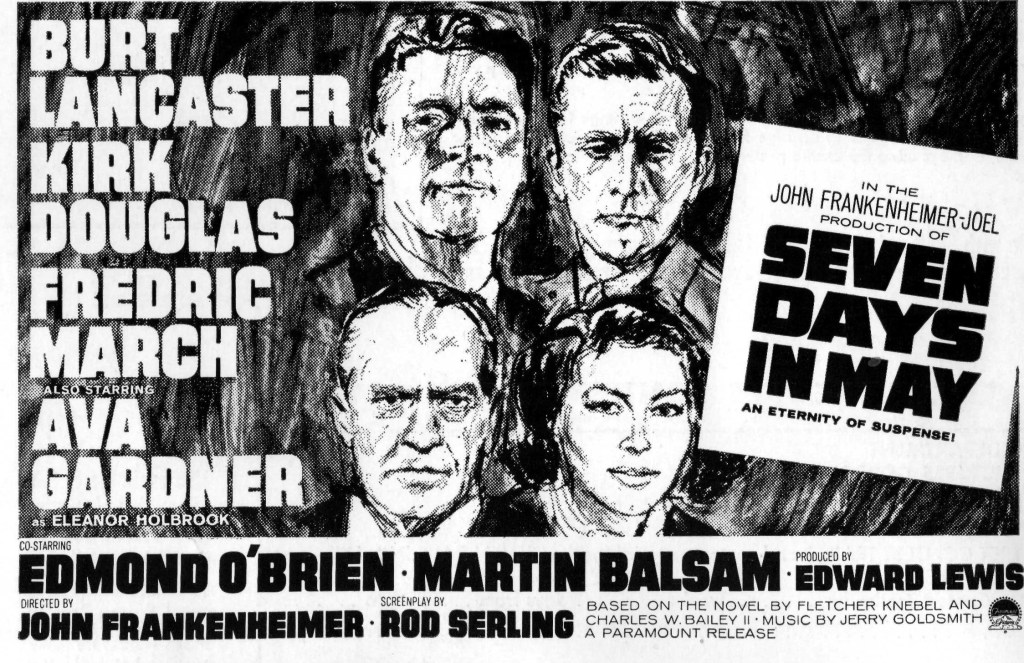
Just as the President (Fredric March) is about to sign a nuclear treaty with the USSR, much to the fury of the majority of Americans judging by opinion polls, Colonel Jiggs Casey (Kirk Douglas) uncovers signs of a military coup headed by hawk General James Mattoon Scott (Burt Lancaster). The movie divides into the classic three acts. In the first, Casey investigates the existence of a secret army unit in El Paso comprising 3,600 men trained to overthrow the government and needs to persuade the President the country is in danger. The second act sees the president hunting for find proof of the imminent coup and identifying the conspirators. The third act witnesses showdowns between the President and Scott and Scott and Casey.

At the heart of the story is betrayal – Scott of his country’s constitution, Casey of his friend when he takes on the “thankless job of informer.” Casey proves rather too ruthless, willing to seduce and then betray Eleanor Holbrook (Ava Gardner), Scott’s one-time mistress. Both Holbrook and the President prove to have higher principles than Casey.

For both Kirk Douglas and Burt Lancaster who operate at a high threshold of intensity and could easily have turned in high-octane performances the tension is even better maintained by their apparently initial low-key confrontations. Douglas has a trick here of standing ramrod straight and then turning his head but not his body towards the camera.  

As a pure thriller, it works a treat, investigation to prove there is a conspiracy followed by the deaths and disappearances of vital people and finally the need to resolve the crisis without creating public outcry. The only flaw in the movie’s structure is that Casey cannot carry out all the investigations and when presidential sidekicks Paul Girard (Martin Balsam) and Senator Clark (Edmond O’Brien) are dispatched, respectively, to Gibraltar and El Paso the movie loses some of its intensity. But the third act is a stunner as the President refuses to take the easy way out by blackmailing Scott over his previous relationship with Holbrook.  

Of course, there is a ton of political infighting and philosophizing in equal measure and speeches about democracy (“ask for a mandate at the ballot box, don’t steal it”) and the constitution and the impact of nuclear weapons on humanity. But these verbal volleys are far from long-winded and pack a surefire punch. The coup has been set up with military precision and must be dismantled by political precision.

The film was awash with Oscar talent – Burt Lancaster, Best Actor for Elmer Gantry (1960) and, at that point, twice nominated; thrice-nominated Kirk Douglas; Fredric March, twice Best Actor for Dr Jekyll and Mr Hyde (1931) and The Best Years of Our Lives (1946) plus  three other nominations besides; Ava Gardner nominated for Best Actress (Mogambo, 1953); and Edmond O’Brien named Best Supporting Actor for The Barefoot Contessa (1954).

None disappoint. March is especially impressive as a weak president tumbling in the polls who has to reach deep to fight a heavyweight adversary. Lancaster and Douglas both bristle with authority. Although Lancaster’s delusional self-belief appears to give him the edge in the acting stakes, Douglas’s ruthless manipulation of a vulnerable Ava Gardner provides him with the better material. Edmond O’Brien as an old soak whose alcoholism marks him out as an easy target is also memorable and Ava Gardner in recognizing her frailties delivers a sympathetic performance.

Rod Serling (The Twilight Zone) does a terrific job of distilling a door-stopper of a book by Fletcher Knebel and Charles W. Bailey II.  But the greatest kudos must go to director John Frankenheimer – acquainted with political opportunism through The Manchurian Candidate (1962) and with Burt Lancaster (The Birdman of Alcatraz, 1962) – for keeping tension to the forefront and resisting the temptation to slide into political ideology.

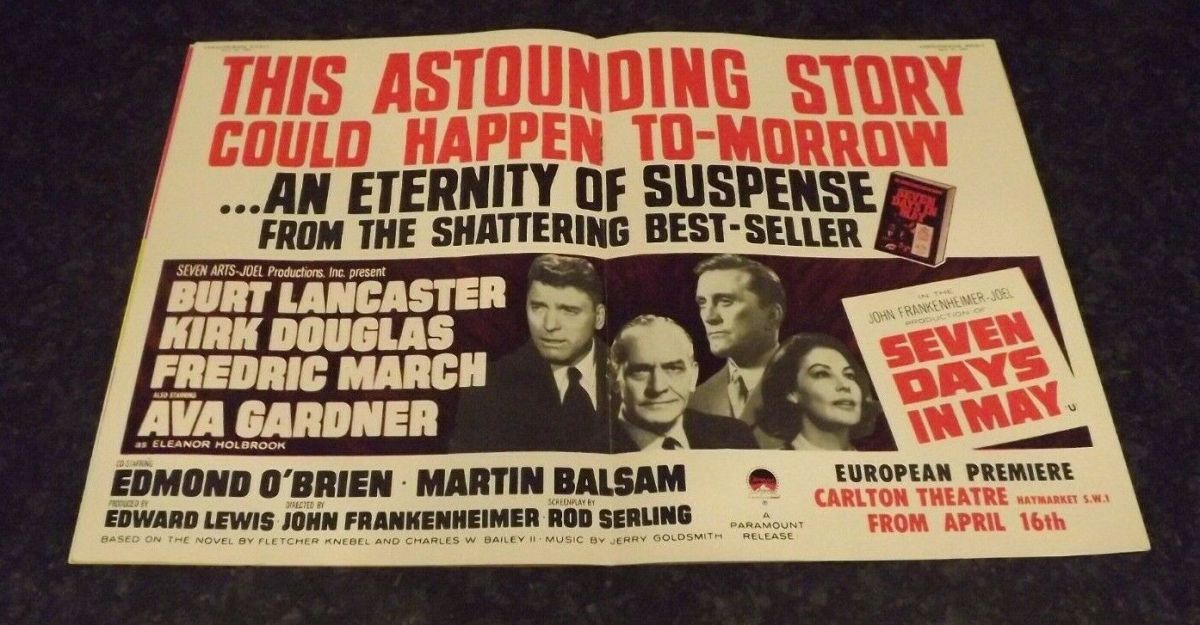
Seven Days in May (1964) ****

Donald Trump and the recent insurrection bring this picture bang up to date. Democracy is a dangerous weapon in the hands of the people. Can they be trusted to make the correct decision? That’s in part the thematic thrust of this high-octane political thriller that pits two of the greatest actors of their generation in a battle to decide the fate of the world. This was the era of the nuke picture – Dr Strangelove (1962), Fail Safe (1964), The Bedford Incident (1965) – all primed by the real-life Cuban Missile Crisis and the growing threat of the Cold War. But since that threat has never gone away – if anything it has worsened – the movie is as relevant today.

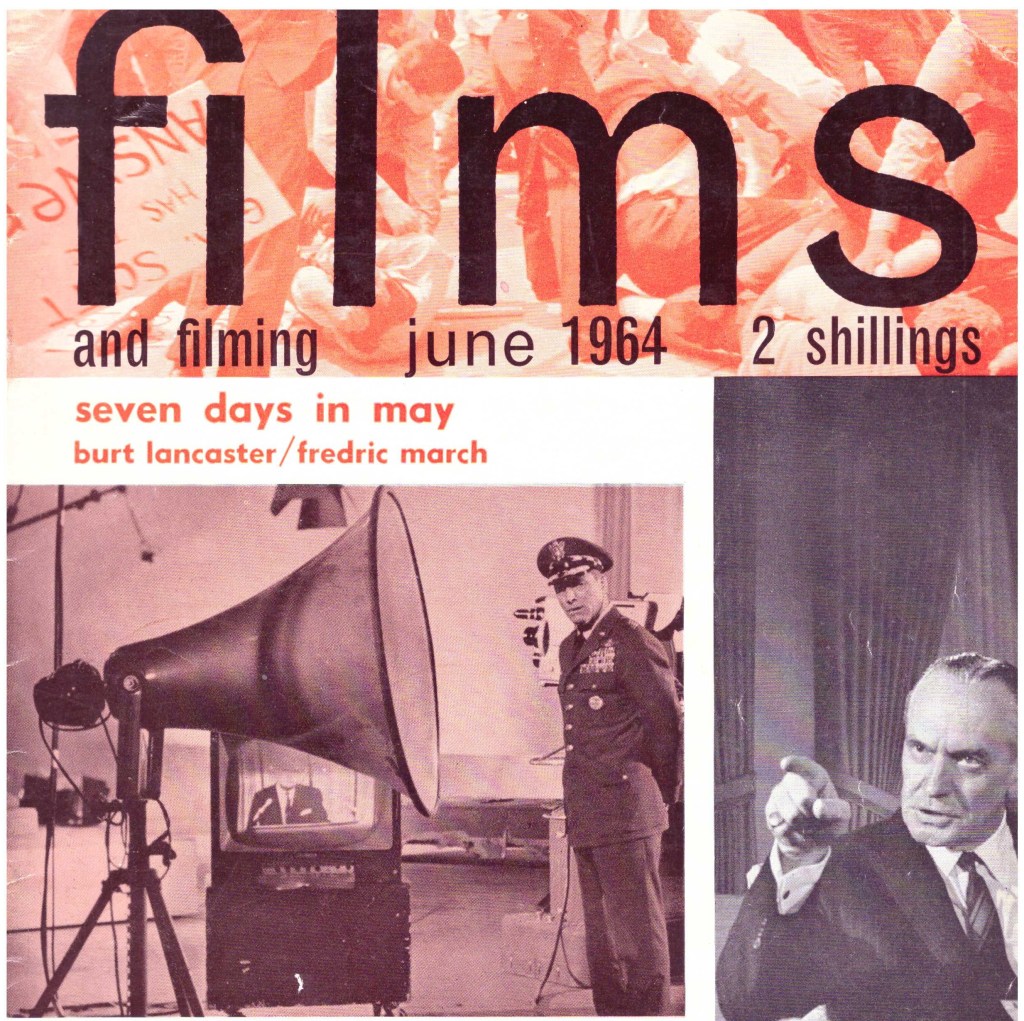
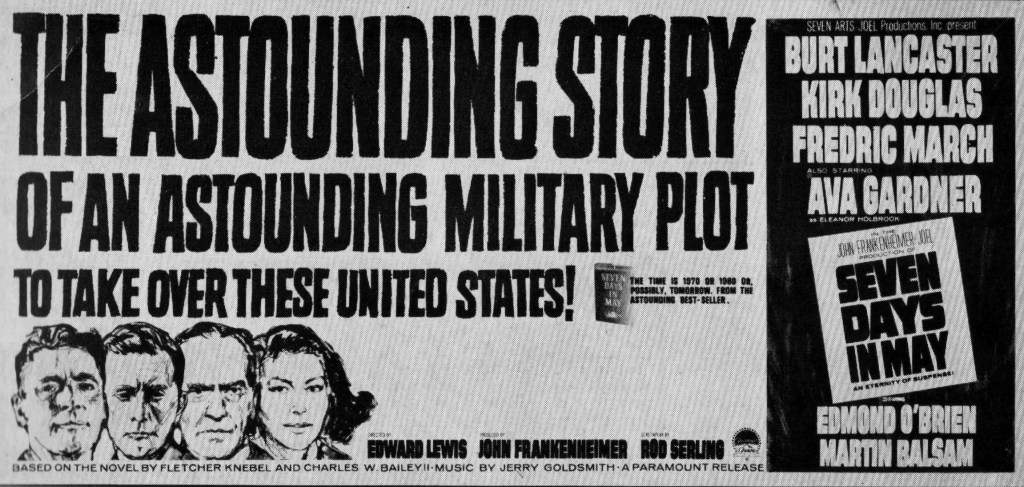
Promoting a male-oriented film about politics was always going to be a hard sell despite the distinguished cast. One route Paramount marketeers went down was a massive tie-in with publisher Bantam’s bestseller paperback . Over 1.5 million copies of the book had been rolled out and Bantam had arranged cross-over publicity in supermarkets, five-and-dime stores, booksellers and wholesalers stocking the book. “Look” magazine ran a six-page article by one of the book’s authors Fletcher Knebel.

Just as the President (Fredric March) is about to sign a nuclear treaty with the USSR, much to the fury of the majority of Americans judging by opinion polls, Colonel Jiggs Casey (Kirk Douglas) uncovers signs of a military coup headed by hawk General James Mattoon Scott (Burt Lancaster).

The movie divides into the classic three acts. In the first, Douglas investigates the existence of a secret army unit in El Paso comprising 3,600 men trained to overthrow the government and needs to persuade the President the country is in danger. The second act sees the President hunting for proof of the imminent coup and identifying the conspirators. The third act witnesses showdowns between March and Lancaster and Lancaster and Douglas.

About $65 million out of the U.S. national budget of $90 million was allocated to the military, according to director John Frankenheimer writing in the above magazine. Frankenheimer combined with Kirk Douglas’s company to purchase the book and hire writer Rod Serling. The original script was too long so, without losing a scene, the director went through it cutting phrases and sentences here and there till it was down to the required two-hour length. Paramount put up extra money to get Ava Gardner join the cast.

At the heart of the story is betrayal – Lancaster of his country’s constitution, Douglas of his friend when he takes on the “thankless job of informer.” Douglas proves rather too ruthless, willing to seduce and then betray Ava Gardner, Lancaster’s one-time mistress. Both Gardner and March prove to have higher principles than Douglas. For both Douglas and Lancaster who operate at a high threshold of intensity and could easily have turned in high-octane performances the tension is even better maintained by their apparently initial low-key confrontations. Douglas has a trick here of standing ramrod straight and then turning his head but not his body towards the camera.   

As a pure thriller, it works a treat, investigation to prove there is a conspiracy followed by the the vital element to conspiracy theory – the deaths and disappearances of vital people – and finally the need to resolve the crisis without creating public outcry. The only flaw in the movie’s structure is that Douglas cannot carry out all the investigations and when presidential sidekicks Martin Balsam and Edmond O’Brien are dispatched, respectively, to Gibralter and El Paso the movie loses some of its intensity. But the third act is a stunner as March refuses to take the easy way out by blackmailing Lancaster over his previous relationship with Gardner.   

Of course, there is a ton of political infighting and philosophizing in equal measure and speeches about democracy (“ask for a mandate at the ballot box, don’t steal it”), the American Constitution and the impact of nuclear weapons on humanity. But these verbal volleys are far from long-winded and pack a surefire punch. The coup has been set up with military precision and must be dismantled by political precision.

A hint of the future: one unusual aspect of the picture was the use of closed-circuit television which was seen as being used as method of general communication between politicians and the Pentagon.

The film is awash with Oscar talent – Burt Lancaster, Best Actor for Elmer Gantry (1960) and, at that point, twice nominated; thrice-nominated Kirk Douglas; Fredric March, twice Best Actor for Dr Jekyll and Mr Hyde (1931) and The Best Years of Our Lives (1946) plus  three other nominations besides; Ava Gardner nominated for Best Actress (Mogambo, 1953); and Edmond O’Brien named Best Supporting Actor for The Barefoot Contessa (1954).

None disappoint. March is especially impressive as a weak President tumbling in the polls who has to reach deep to fight a heavyweight adversary. Lancaster and Douglas both bristle with authority. Although Lancaster’s delusional self-belief appears to give him the edge in the acting stakes, Douglas’s ruthless manipulation of a vulnerable Ava Gardner provides him with the better material. Edmond O’Brien as an old soak whose alcoholism marks him out as an easy target is also memorable and Ava Gardner in recognizing her frailties delivers a sympathetic performance.

Fashion might have seemed to offer limited marketing opportunities for such a picture but that did not stop Paramount’s publicists. On the back of one of the subsidiary characters being seen combing her hair with an Ajax comb the manufacturer was inveigled into a nationwide campaign. Director John Frankenheimer was pictured wearing a custom-made Cardinal suit in an advert in “Gentlemen’s Quarterly” and designer Mollie Parnis created a suit for women which could be simply altered every day to provide enough outfits for seven days.

Rod Serling (The Twilight Zone) does a terrific job of distilling a door-stopper of a book by Fletcher Knebel and Charles W. Bailey II.  But the greatest kudos must go to director John Frankenheimer – acquainted with political opportunism through The Manchurian Candidate (1962) and with Burt Lancaster through The Birdman of Alcatraz (1962) – for keeping tension to the forefront and resisting the temptation to slide into political ideology.

Many of the films from the 1960s are to be found free of charge on TCM and Sony Movies and the British Talking Pictures as well as mainstream television channels. But if this film is not available through these routes, then here is the link to the DVD and/or streaming service.

Discover WordPress

A daily selection of the best content published on WordPress, collected for you by humans who love to read.

The Atavist Magazine

by Brian Hannan

WordPress.com News

The latest news on WordPress.com and the WordPress community.