The Young Girls of Rocheforte / Les Damoiselles de Rochefort (1967) **** – Seen at the Cinema at Bradford Widescreen Weekend

In effervescence and color palette a close cousin to Barbie (2023) with the bonus of being able to call on one of Hollywood’s greatest hoofers, Gene Kelly, in a surprise cameo. He swoops and sways like he was Singin’ in the Sun. And he’s just the icing on the cake in this exuberant throwback to 1950s Cinemascope but with the sensibility of a 1940s musical in which dreams are delivered after a few minor setbacks.

Throw in a long-lost love, an affair that literally went south, an artist who has painted his ideal woman, a couple of literal-minded running French jokes – a woman called Madame Dame and a young sailor whose departure is immi-Nantes – and given the overall light-hearted treatment you would have to treat the presence of a sadistic murderer as being in the comedy vein.

Twins blonde Delphine (Catherine Deneuve) and brunette Solange (Francoise Dorleac) make a living running a music class. Delphine dreams of meeting the ideal man, having already rejected gallery owner Guillaume (Jacques Riberolles) and not too keen on itinerant carney (George Chakiris), while Solange wants a career as a composer, befriending music shop owner Simon (Michel Piccoli) who can put her in touch with old buddy and now renowned pianist Andy (Gene Kelly).

As you might expect the narrative is driven by misunderstandings and meetings choreographed by the minute to fail. This is the kind of film where an actor playing the role of a piano player is not expected to learn to play the piano, just stare into space as though channeling an internal muse or glancing at the sheet music.

There are songs by the dozen – possibly too many (27 singing or dancing sequences), more like a continuous ballet than a traditional musical – but none we’re still humming today, not like tunes from West Side Story (1961), The Sound of Music (1968) or Funny Girl (1968) – though “The Twins Song” probably comes closest. That’s not to put down Michel Legrand’s inventive score, but perhaps to suggest a cultural/language divide. Outside of Danielle Darrieux (Loss of Innocence / The Greengage Summer, 1961) , the singing voices were dubbed, even that of Gene Kelly who lacked the range for the material.

And probably you don’t need to worry about the quality of individual songs as you’ll be swept along by Jacques Demy’s infectious direction. Most of the dancing style reflects West Side Story but with a lighter edge. And it takes little or nothing for characters to burst into song or dance, sometimes that activity going on spontaneously in the background of another scene.

Set in the real seaside town of Rochefort in France and making use of genuine locations, the action kicks off on an unique type of bridge as the carnival comes to town. While not strictly a feminist endeavour, men are mostly put in their place, overtures rejected, marriage offers turned down and bad employers shown the door.

The appearance of Gene Kelly, who hadn’t worn his dancing shoes in more than a decade, gives this an enormous fillip as his classic style shows the others just how it’s done. But it’s the lightness of touch, as well as being able to plumb a well of emotion, that gives this film its grounding, Deneuve and Dorleac as well as Darrieux carrying the movie. George Chakiris (Diamond Head, 1962) looks more at home here than in any film other than West Side Story.

Jacques Demy and Michel Legrand had teamed up previously for The Umbrellas of Cherbourg / Les Parapluies de Cherbourg (1964). Catherine Deneuve (Mayerling, 1969) and Francoise Dorleac (Genghis Khan, 1965) were sisters. Tragically, Dorleac was killed in a road accident prior to the film opening.  

But the whole enterprise is so effortless and appealing you can’t help being drawn in.

Genghis Khan (1965) ****

Hollywood was never reined in by the strictures of history, much preferring fiction to fact for dramatic effect, and that’s largely the case here, although the titular hero’s real life remains shrouded in myth.

If you do catch this surprisingly good feature, make sure it’s not one of the many pan-and-scan atrocities on the market. I watched this in the proper Panavision ratio which meant it occupied only one-third of my television screen, but in that format it’s terrific. It’s a bit of an anomaly for a decade that churned out high-class historical epics like El Cid (1961) because this clocks in about a hour short of other films in the genre and there’s no star actor or director to speak of and no Yakima Canutt to handle the second unit action scenes.

Omar Sharif’s marquee value at this point was so low that if you check out any of the original posters you’ll note that his name hardly rates a mention and he also comes at the very end of the opening screen credits. Although this is post-Lawrence of Arabia (1962), it’s pre-Doctor Zhivago (1965), suggesting nobody had a clue how to market his talents.

Director Henry Levin was a journeyman, fifty films under his belt, best known for not a great deal except for, following this, the second and third in the Matt Helm spy series. Given this film was critically ignored on release and since, and a flop to boot, it definitely falls into the “Worth a Look” category. Although there are few stand-out scenes of the artistic variety such as pepper Lawrence of Arabia or El Cid, this is still well put together and Levin shows an aptness for the widescreen.

The narrative breaks down into three parts – the first section describing enslavement of Genghis Khan (Omar Sharif) by nemesis Jamuga (Stephen Boyd – the picture’s star according to poster and screen credits) – before banding together rival tribes in revolt; the second part a long trek to China; and the third encompassing a final battle and hand-to-hand combat with Jamuga. For a two-hour picture it has tremendous sweep, not just the scenery and the battle scenes, but political intrigue, romance, a rape scene and even clever comedy. Genghis Khan  believes his glory is predestined, but he has very modern ideas about the role of women.

The best section, oddly enough, is set in China where Genghis engages in a duel of wits with the distinctively contradictory Emperor (Robert Morley), but that’s not to detract from the film’s other qualities, the action brilliantly handled, especially the chaos of battle, the romance touching, and the dialog intelligent and often epigrammatic.

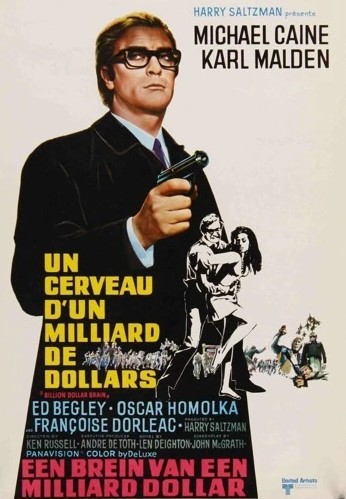
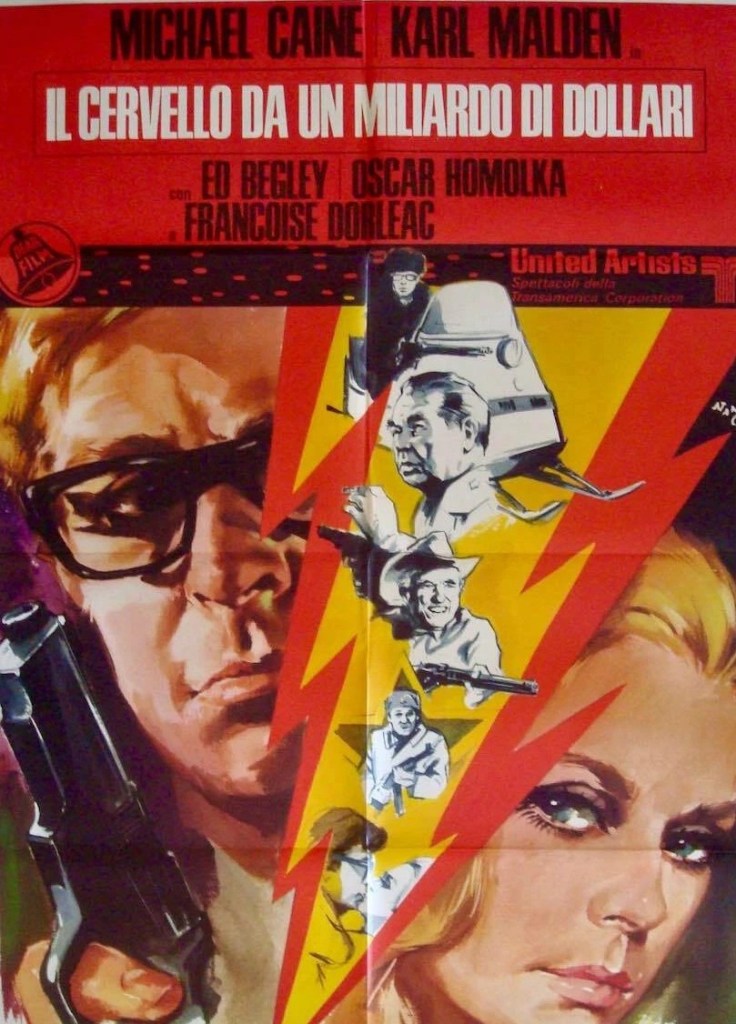
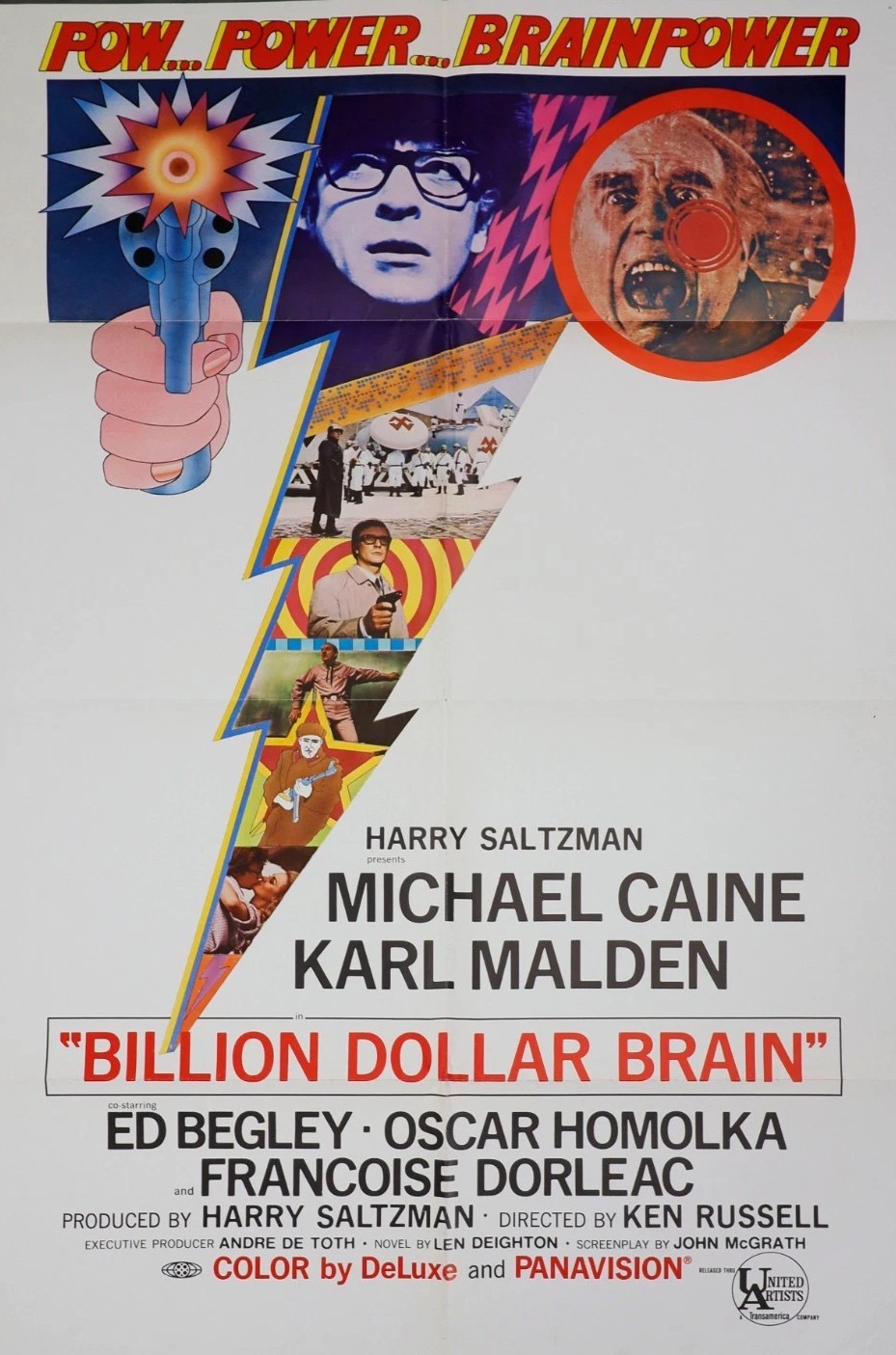
Unlike James Mason (Age of Consent, 1969) who makes a calamitous attempt at a Chinese accent, Robert Morley (Some Girls Do, 1969), costume apart and looking as if he has just walked out of an English country house, but his plummy tones belie a very believable character. Stephen Boyd (Assignment K, 1968) shines as the villain of the piece. Telly Savalas (Battle of the Bulge, 1965) and Woody Strode (The Professionals, 1966) have decent parts as Khan’s s sidekicks, the former unexpectedly bearing the brunt of the film’s comedy. French actress Francoise Dorleac (Billion Dollar Brain, 1967) is effective as Sharif’s wife.

Hitchcock stole one of his most famous ideas from Genghis Khan. About the only scene in Torn Curtain (1966) to receive universal praise was a killing carried out to a soundtrack of nothing more than the grunts of assailant and victim. But, here, where the score by Yugoslavian composer Dusan Radic was extensively employed, the rape scene is silent and just as stunning. If the only prints widely available are of the pan-and-scan variety I’m not surprised the film has been for so long overlooked, but if you can get hold of one in the preferred format you will be in for a surprise.      

Genghis Khan (1965) ****

Hollywood was never reined in by the strictures of history, much preferring fiction to fact for dramatic effect, and that’s largely the case here, although the titular hero’s real life remains shrouded in myth.

If you do catch this surprisingly good feature, make sure it’s not one of the many pan-and-scan atrocities on the market. I watched this in the proper Panavision ratio which meant it occupied only one-third of my television screen, but in that format it’s terrific. It’s a bit of an anomaly for a decade that churned out high-class historical epics like El Cid (1961) because this clocks in about a hour short of other films in the genre and there’s no star actor or director to speak of and no Yakima Canutt to handle the second unit action scenes.

Omar Sharif’s marquee value at this point was so low that if you check out any of the original posters you’ll note that his name hardly rates a mention and he also comes at the very end of the opening screen credits. Although this is post-Lawrence of Arabia (1962), it’s pre-Doctor Zhivago (1965), suggesting nobody had a clue how to market his talents.

Director Henry Levin was a journeyman, fifty films under his belt, best known for not a great deal except for, following this, the second and third in the Matt Helm spy series. Given this film was critically ignored on release and since, and a flop to boot, it definitely falls into the “Worth a Look” category. Although there are few stand-out scenes of the artistic variety such as pepper Lawrence of Arabia or El Cid, this is still well put together and Levin shows an aptitude for the widescreen.

The narrative breaks down into three parts – the first section describing Sharif’s enslavement by nemesis Stephen Boyd (the picture’s star according to poster and screen credits) before banding together rival tribes in revolt, the second part a long trek to China, and the third encompassing a final battle and hand-to-hand combat with Boyd. For a two-hour picture it has tremendous sweep, not just the scenery and the battle scenes, but political intrigue, romance, a rape scene and even clever comedy. Sharif is excellent as a leader who believes his glory is predestined, but who has very modern ideas about the role of women.

The best section, oddly enough, is set in China where Sharif engages in a duel of wits with Robert Morley’s distinctively contradictory emperor, but that’s not to detract from the film’s other qualities, the action brilliantly handled, especially the chaos of battle, the romance touching, and the dialogue intelligent and often epigrammatic. Unlike James Mason who makes a calamitous attempt at a Chinese accent, Morley, costume apart, looks as if he has just walked out of an English country house, but his plummy tones belie a very believable character. Telly Savalas and Woody Strode have decent parts as Sharif’s sidekicks, the former unexpectedly bearing the brunt of the film’s comedy. French actress Francoise Dorleac is effective as Sharif’s wife.

Hitchcock stole one of his most famous ideas from Genghis Khan. About the only scene in Torn Curtain (1966) to receive universal praise was a killing carried out to a soundtrack of nothing more than the grunts of assailant and victim. But, here, where the score by Yugoslavian composer Dusan Radic was extensively employed, the rape scene is silent and just as stunning. If the only prints widely available are of the pan-and-scan variety I’m not surprised the film has been for so long overlooked, but if you can get hold of one in the preferred format you will be in for a surprise.      

Discover WordPress

A daily selection of the best content published on WordPress, collected for you by humans who love to read.

The Atavist Magazine

by Brian Hannan

WordPress.com News

The latest news on WordPress.com and the WordPress community.