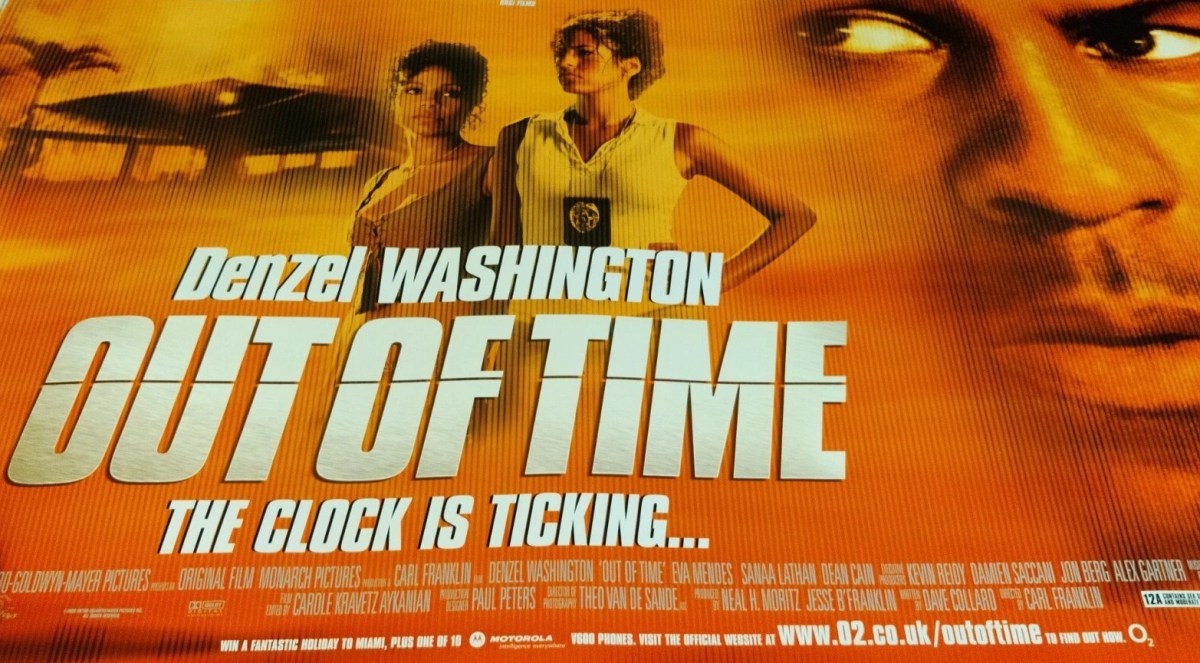
Out of Time (2003) *****

The most tension-filled thriller this side of The Day of the Jackal (1973). Stone-cold classic in my book. Admittedly not a big box office success in its day nor critically acclaimed, but this nod to film noir with cop taking a stroll for his own convenience down the wrong mean streets and an old-fashioned femme-fatale male-dupe scenario coupled with witty dialog and terrific set pieces suggests to me this is long overdue for reappraisal.

This was really the start of Denzel Washington as action hero – Crimson Tide (1995) was more a straightforward drama albeit with characters facing the ultimate consequence – and it probably helps that I’m looking back at this through the prism of more than two decades of the actor whizzing along in the derring-do department especially in his turn as The Equalizer (2014) – and sequels – where he demolishes opponents in seconds. Apart from the occasional side hustle as a bad guy, he’s generally been a good guy, the sort of dependable hunk that Tom Hanks would aspire to if he wanted to add brawn to his guy-next-door persona.

Matt Whitlock is the top law enforcement officer in a Florida slumber town (pop 1300) but he’s not as clean-cut as he looks given his affair with married Ann Harrison (Sanaa Latham) who bursts his romantic bubble by announcing she has just six months to live thanks to a cancer so advanced that only some new-fangled treatment could save her. I smelled a rat, I have to confess, the minute she decided she was going to make him the beneficiary of her million-dollar insurance policy.

So what’s a decent guy to do but steal the $500,000 drugs money he’s holding in his police safe, that’s liable to sit untouched for years to come, in order to fund her treatment on the assumption that the insurance policy acts as his insurance. How dumb can you be?

So when Ann and husband Chris (Dean Cain) die in a horrific fire, his world unravels, especially as detective soon-to-be-ex-wife Alex (Eva Mendes) is in charge of the murder investigation and the Feds arrive out of the blue looking for the drugs cash. So basically he’s an old-fashioned “running man”, diving from one hole to the next, barely keeping ahead of the cops and the FBI, fingered twice by witnesses, discovering that the specialist who diagnosed the cancer is an imposter, and not just being made to look the biggest fool who ever fell in love with the wrong woman but liable to pay for his error with a lengthy jail sentence.
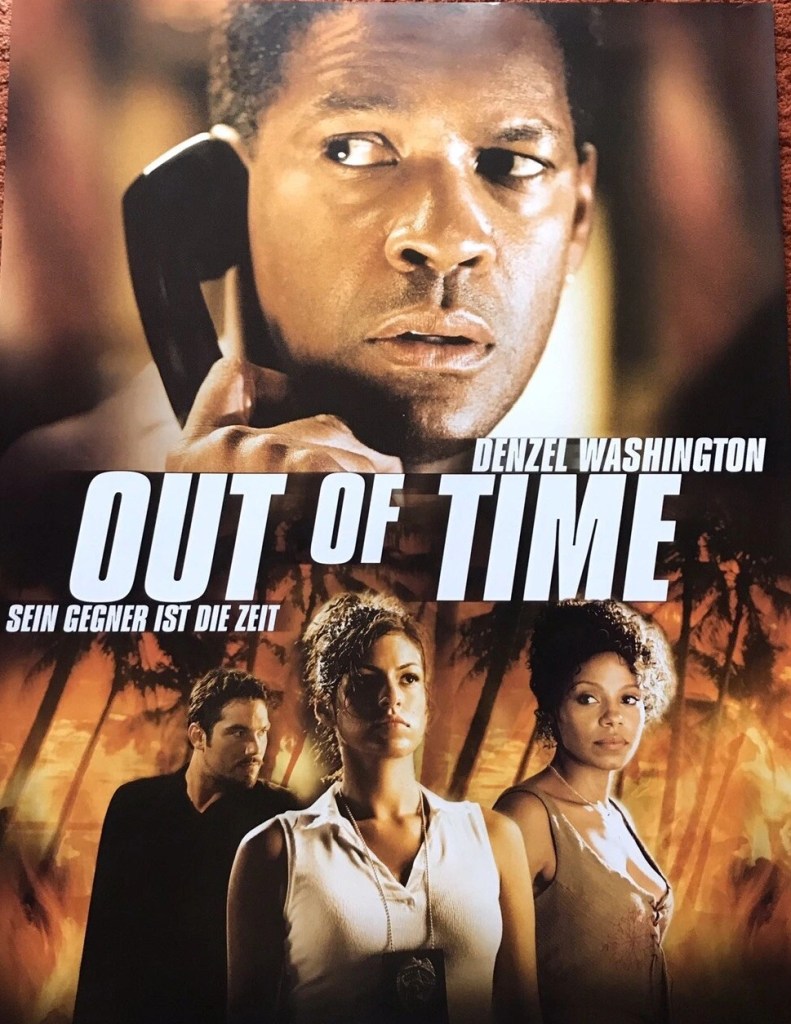
Alex begins to suspect he knows more than he’s letting on, he’s desperate to trace the bogus doctor, all the while, in a nod to No Way Out (1987), desperately trying to stop a tsunami of telephone evidence – arriving via fax and computer – that links him to the supposed dead woman.

There are verbal confrontations galore and a couple of physical ones, a chase through a hotel culminating in a brawl on a balcony, and possibly a second murder charge.

It’s not just a terrific tale, mostly consisting of twists and narrow escapes, I counted half a dozen twists in the last ten minutes alone, but offers some terrific dialog. In a diner, the relationship between Matt and Chris is spelled out in style: Matt recommends the crab, Chris points out he’s allergic to crab. “I know,” retorts Matt. The movie opens with some decidedly salty goings-on between Matt and his lover and the verbal duel between Matt and Alex has the underlying Tracy-Hepburn classic squabbling.

For all that Matt is smart enough to chase down the missing cash and hold the Feds at arm’s length long enough, he’s still, when you come down to it, only going from dumb to dumber and the shock when he realizes just how well he’s been duped is a cracker.

So, obviously, the key is that the audience wants him, guilty though he is of theft and stupidity, to get away with it or at least be thrown a get-out-of-jail-free card and that’s part of the hook, and that element is brilliantly done. I had no idea how he was going to get off with it, as one avenue of escape after another was rigorously shut down, until the very end.

There’s a whole stew of those reversals that screenwriters throw at audiences who think they are one step ahead of the game.

It’s a great cast. Denzel Washington is superb, Eva Mendes (Training Day, 2001) is an excellent sparring partner, Sanaa Latham (AVP: Alien vs Predator, 2004) as slinky as femme fatale as you’ll find. Look out for television’s Superman Dean Cain and especially character actor John Billingsley.

Director Carl Franklin (Devil in a Blue Dress, 1995) piles on the tension and kudos to screenwriter Dave Collard (Annapolis, 2006) for creating the blueprint.   

I caught this on Amazon Prime but be quick about it because it’s in the section that the streamer calls “leaving in 30 days.”

An absolute classic.
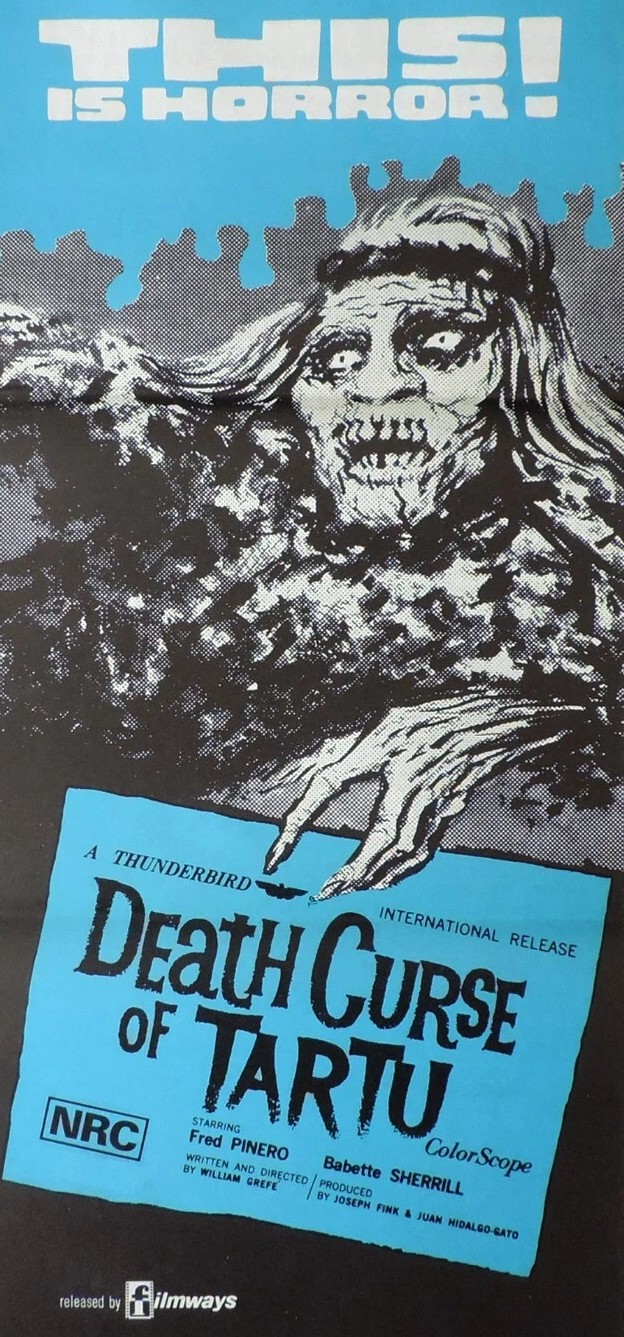
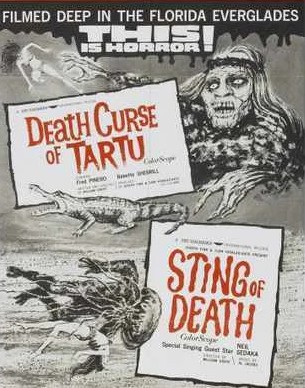
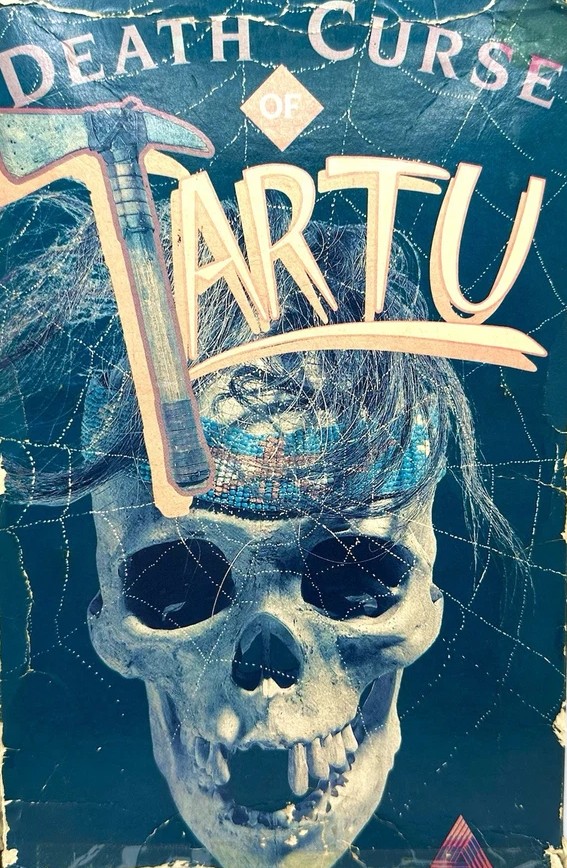
Death Curse of Tartu (1966) **

Absolute hoot. I often think it’s a shame we can’t admit to enjoying a really good bad picture and here we have a gem in the So Bad It’s Good category.

If you have a notion for the kind of movie where actors have to wrap rubber snakes around their necks and pretend to strangle themselves, or do a passable imitation of being eaten alive by a non-existent shark, manage to position themselves in a tree so they can fall into the open mouth of a stationary model alligator, or foolishly go where even devils fear to tread, this one is for you.

This wasn’t even the kind of schlocky picture that scraped out onto the release circuit in flea-ridden cinemas – it had a one-week engagement at the ABC Regal in Glasgow city centre, Scotland, one of the city’s two main first run venues.

It’s the Florida Everglades version of the Old Dark House and comes replete with umpteen warnings. Already people have gone missing in this particular area of interest, reputedly an ancient Native American burial ground. But that doesn’t stop explorer Sam Gunter (Frank Weed) continuing his solo expedition against the advice of local guide (Bill Marcus) who warns of ghostly chants and drums and of finding the imprint of tiger feet.

Sam’s pretty chuffed with himself to uncover an archaeological find, a stone whose significance is unclear. Anyways, poor Sam has not taken into account the presence of deadly snakes that can slither through the undergrowth and (holy moly!) overturn a kettle and then climb a tree and ambush him and suffocate him to death – though who wouldn’t be suffocated if instead of trying to remove said creature from around your neck your task as an actor was to pull the damn reptile as tight as possible so it looks like it’s impossible to escape. This is a mighty predatory creature and must just be protecting its territory because it makes no effort to eat its prey.

Sam’s disappearance doesn’t put off archaeology lecturer Ed Tison (Fred Pinero) and wife Julie (Babette Sherrill) who are escorting four students on their first dig. Luckily, the youngsters – Johnny (Sherman Hayes), Tommy (Gary Holtz), Cindy (Mayra Gomez) and Joan (played by Maurice Stewart!! according to imdb) –  are already paired off, so there’s time for a bit of necking and dancing.

But it’s not long before the larking about turns into peril. Frolicking in the water ain’t such a good idea when there’s a stray shark about (presumably culled from stock footage) and the actors, who have presumably taken thrashing-about lessons, manage to churn up the water sufficiently to suggest they have been attacked.

Meanwhile, every now and then, we have been favored with shots of some gruesome creature coming to life. Given that, according to legend, he was capable to turning himself into a tiger, it’s a fair enough conclusion that he was the marauding shark, whose appearance in the Everglades would otherwise be too mysterious this side of chemical pollution or atomic accident.

The monster takes human form and begins pursuing the remaining intruders. Although Ed has a bolt-action rifle he’s not much of a marksman so their pursuer is able to happily maraud and his target hasn’t enough wits about her to snatch the knife he has embedded in a tree – and thus defend herself – so naturally enough she ends up in quicksand (or gradually going down on her knees in a patch of sandy water so it looks like she’s sinking). It’s lucky there is quicksand because that provides the narrative solution as to how Ed is going to escape the monster. The girl can be given a helping hand to get out of the quicksand, but the monster, after being thrown in, is denied assistance. But before he can be sucked under, he turns into a skeleton.

This has some historical significance in the horror genre, being at the forefront of what was known as the “regional” subgenre where movies were made in remote spots on miniscule budgets often with amateur actors. Writer-director William Grefe (Sting of Death, 1966) conjured up enough of these pictures to enter the esteemed halls of cult, but he was significant for another reason. At a time when movies were in short supply, the exhibitors had decided to enter the production game and funded The Checkered Flag (1963), directed by Grefe, under the auspices of Motion Picture Investors.

Nothing more was expected of the actors than that they could put on a good show of dying. Fred Pinero, Gary Holtz and Babette Sherrill had appeared in Sting of Death, but that was the extent of their acting careers. Frank Weed made one other movie. It was another decade before Mayra Gomez made another picture but by then she was on her way to a career as a television presenter, for which she received a Spanish lifetime achievement award.

If there was a separate ranking system for So Bad It’s Good films this would be hitting at least the four-star mark. As it is under my current system, it has to be marked down, which is a shame because there’s a heck of a lot of fun to be had here.

Discover WordPress

A daily selection of the best content published on WordPress, collected for you by humans who love to read.

The Atavist Magazine

by Brian Hannan

WordPress.com News

The latest news on WordPress.com and the WordPress community.