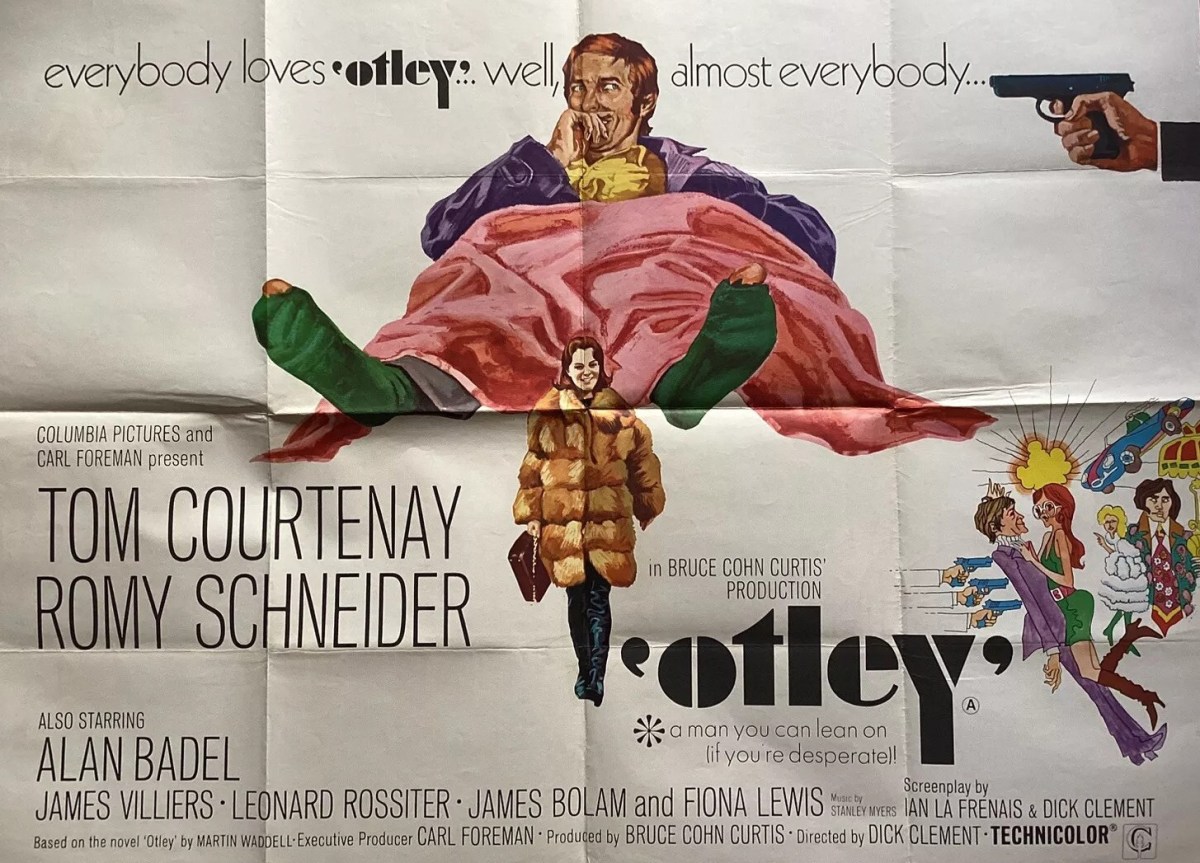
Otley (1969) **

Misguided attempt to play the innocent-caught-up-in-espionage card. And minus the angst on which he had built his screen persona, Tom Courtenay (A Dandy in Aspic, 1968) fails to elicit the spark that would turn himself into a leading man – excepting one other film, this was his last top-billed picture. And anyone hooked by the billing expecting to see a lot of female lead Romy Scheider (The Cardinal, 1963) would equally be in for a surprise.

And that’s a shame because Courtenay can act, not in the Oscar-bait sense, but just in his physical gestures and reactions to whatever else is going on in a scene. Scheider, too, especially in the scene where she more or less laughs in Courtenay’s face when he points a gun at her and in her knowing looks.

But Otley (Tom Courtenay) is such an unappealing character, the movie is on a sticky wicket from the off. Petty thief, largely homeless because of it, his propensity for slipping into his pocket anything that looks valuable in the homes of anyone stupid enough to give him a bed for the night, giving the movie its only sensible piece of narrative drive. Because the rest of the story is a farrago, a series of unconnected episodes dreamed up for their supposed humor, which wants to be pointed and sly but ends up heavy-handed and dreary.

And there’s one of those narrative sleights-of-hand where Otley wakes up on an airport runaway (security impervious to his presence, of course) having misplaced two days of his life. That’s just one of competing narratives – the other being that he’s wanted for the murder of the chap, Lambert (Edward Hardwicke), who was stupid enough to give him a bed for the night. Count in the espionage and there’s a trio of useless narrative hinges that get in each other’s way and largely introduce us to a succession of odd characters.

Pick of these is Johnston (Leonard Rossiter), an assassin who has more lucrative side hustles as a tour coach operator, double-crosser and blackmailer. The only other believable character is the landlady who’s had enough of Otley’s thieving, but only (unbelievable element lurching into view) after she’s bedded him.  

The movie just lurches from one scene to another, a car chase that ends up on a golf course, (“Are they members?” cries one outraged lady), a houseboat, various low-life dives and chunks of tourist tat thrown in, a bustling street market, Carnaby St etc.  I can’t begin to tell you what the espionage element is because that’s so far-fetched and ridiculous you won’t believe me.

This is the kind of low-budget picture that sets scenes, for no particular reason except they’re part of tourist London, in the Underground, but a completely empty Underground, not another person in sight, and not late at night either which would be a saving grace, though clearly it was filmed either late at night or early in the morning when the Underground was closed to ordinary passengers (thus saving on the budget).

Two examples of how heavy-handed the humor is: on a farm having been doused in water by Johnston, Otley remarks that he’s now deep in the proverbial only for the camera to cut to his foot sinking into a cowpat. At the airport, a couple of staff get lovey-dovey behind a counter, the male sneaking a grope, and we cut to a sign “ground handling”. Ouch and urgh!

If you manage to keep going the only reward is to see a handful of familiar names popping up: Alan Badel (Arabesque, 1966), James Villiers (Some Girls Do, 1969), Fiona Lewis (Where’s Jack?, 1969) and British sitcom legends James Bolam (The Likely Lads and sequel) and Leonard Rossiter (The Fall and Rise of Reginal Perrin, 1976-1979).

And where’s Romy Scheider in all this? Looking decidedly classy, but clearly wondering how the hell she got mixed up in it.

Screenwriter Dick Clement (Hannibal Brooks, 1969) made his movie debut on this clunker. He co-wrote the picture with regular writing chum Ian La Fresnais from the novel by Martin Waddell.

What happens when a genre cycle – in this case the espionage boom – gets out of control.

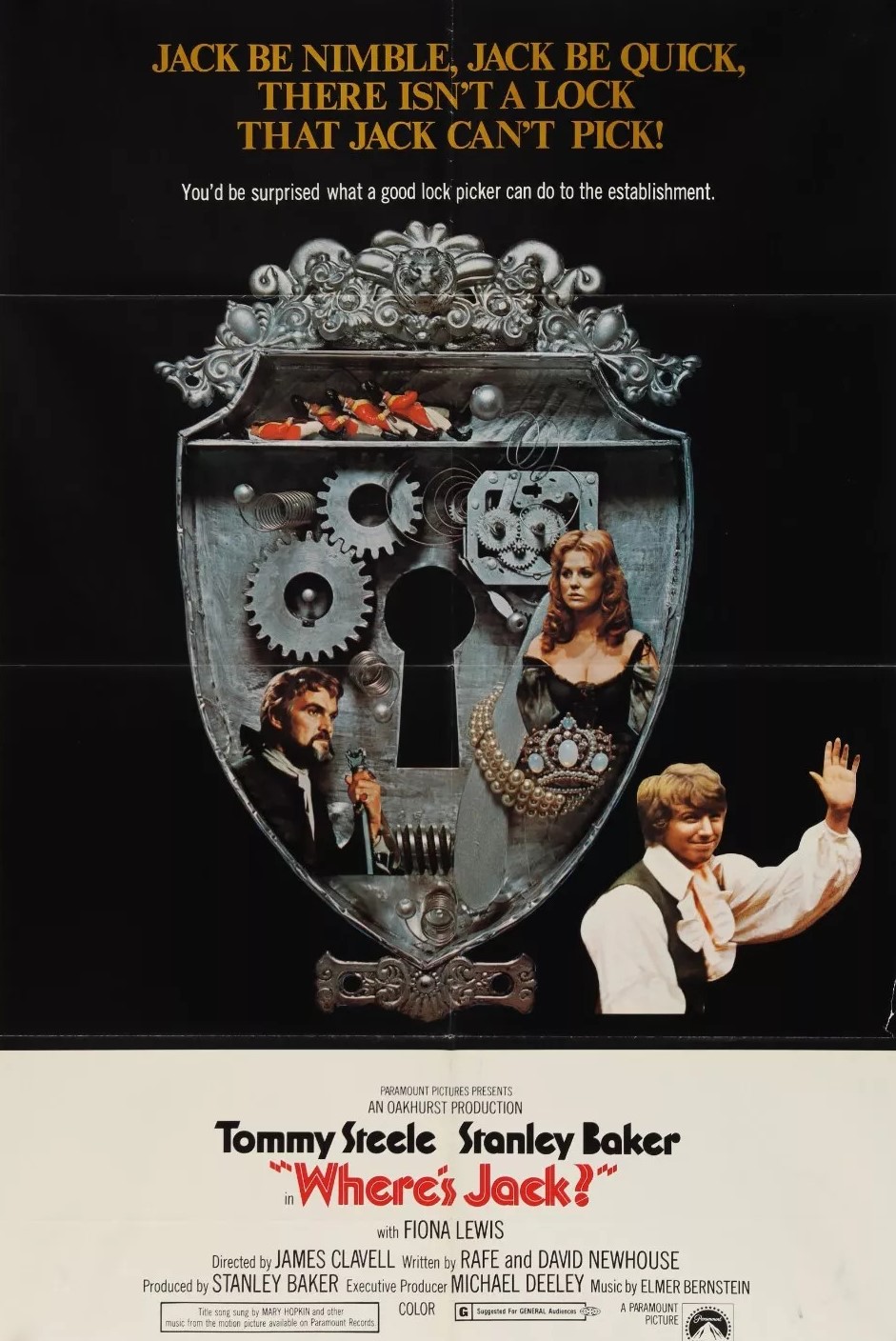
Where’s Jack (1969) ***

Prison escapees tend to conform to a certain type. Think Charles Bronson and Steve McQueen (The Great Escape, 1969), Paul Newman (Cool Hand Luke, 1967) and Clint Eastwood (Escape from Alcatraz, 1979). Admittedly, Tim Robbins (The Shawshank Redemption, 1994) doesn’t fit the bill, but he’s got brains instead of brawn. But he’s not twinkle-eyed or twinkle-toed or diminutive like British hoofer Tommy Steele (Half a Sixpence, 1967) who’s not helped here by being up against a distinctively tough screen character in the shape of Stanley Baker (Zulu, 1964).

Served up as an antidote to the tomfoolery and sexuality of Tom Jones (1963), more interested in the seamier side of Ye Olde England, it ignores the more interesting tale of criminal corruption and hypocrisy of Jonathan Wild (Stanley Baker), the Thief-Taker, in favor of young thief Jack Sheppard (Tommy Steele) who proves his nemesis.

Wild was the ultimate hypocrite, not just stewed in the corruption of the times but taking advantage of it, and not so much poacher-turned-gamekeeper but gamekeeper who had not entirely abandoned his previous profession. Wild, a notorious thief, managed to set himself up as London’s top lawman, keeping other thieves in line and handing over a certain number to the hangman. He had another sideline. He sold back stolen goods to burglarized owners. Most of this was condoned by the authorities who believed that it took a thief to catch a thief.

Wild enrages Sheppard, apprentice locksmith to trade, by reneging on a deal to free Sheppard’s criminal brother. Sheppard sets out to teach the antique godfather a lesson, breaking into his warehouse and stealing the contents.

Wild has him arrested on a variety of occasions, but each time Sheppard breaks out from prisons that had the reputation of the later Alcatraz, in one instance through a sewer, in another via a chimney, turning himself into a local hero in the process. Sheppard’s main trade is not so much burglary as highwayman and further annoying Wild by bringing such criminal solicitation to the streets of posh London, from which it had, by decree of Wild, been outlawed.

In so doing, Sheppard encounters Lady Darlington (Sue Lloyd), so taken with our scamp that had this been Tom Jones there would have been some rollicking in the hay (or the Mayfair equivalent). Instead, she bets her Scottish estate that he will escape from his latest incarceration.

Sheppard has the hots for barmaid Bess (Fiona Lewis) but this not being Tom Jones we don’t go much beyond cleavage. The sub-plot involving Lady Darlington, which I’m guessing forms part of the Jack Sheppard legend (since he was a real-life character), takes up valuable time which could have been spent either developing the romance or on the escapes, which don’t generate the necessary tension, or filling out the crook’s character.

Narrative-wise there’s more at stake for Wild, not just being led a merry dance by Sheppard and losing respect (the crime of crimes against a criminal mastermind) but also by potentially damaging his cosy relationship with the authorities, led by snippy Lord Chancellor (Alan Badel) who is on the other side of the Lady Darlington wager.

Fair amount of rubbish being tossed out of windows, unruly tavern occupants, poverty and homelessness abounding, and general but unspecified bawdiness, in fact a truer perspective of the times, doesn’t compensate for the lack of compelling narrative.

On paper, this should have amounted to a lot more. Mostly, it goes askew from miscasting. Tommy Steele is outshone without much difficulty by Stanley Baker and it’s asking a lot of an audience to accept that a cheeky chappie can outwit the exceptionally clever tough guy. It’s Baker who makes the most of his scenes, either lording it over his gangs, using cruelty to keep them in line, or fearing that he might be toppled from his lofty position and end up either back in the gutter or at the end of a noose.

There’s a bit of complicated jiggery-pokery relating to the effect your weight has on how long you can dangle on the end of a rope. Hangmen in those days did not follow scientific principles and provide some kind of weighting handicap as occurred later to prevent unnecessary suffering and make death as swift as possible.

Anyway, our Jack, being a skinny little runt (and this plot-point key to the climax ensuring the part required a skinny little runt rather than someone hewn from the normal tough guy runt) doesn’t die from the hanging, escaping the fury of Wild and (so legend has it) managing to escape to the colonies.

Put a Michael Caine (The Ipcress File, 1965) in the leading role or Richard Harris (Major Dundee, 1965) or even a Nicol Williamson (The Reckoning, 1970) and you would have quite a different movie, a more believable protagonist. Even Peter O’Toole (Night of the Generals, 1966), while devoid of muscle, would suggest the brains to outwit his opponent.

In the face of the mop-haired pop singers and raucous rock stars, Tommy Steele had reinvented himself from 1950s teen idol into Broadway musical star with Half a Sixpence and then viewed as a squeaky-clean alternative to the more louche movie star turned up in harmless offerings like Disney’s The Happiest Millionaire (1967) and Francis Ford Coppola’s non-grandiose Finian’s Rainbow (1968).

Oddly enough, it was to escape such typecasting that he took on what was perceived as a much tougher role only to discover he lacked the acting cojones to pull it off. Baker, Badel (Bitter Harvest, 1963) and Lloyd (Corruption, 1968) beat him hands down.

Director James Clavell was riding high after To Sir, with Love (1967) as was producer-star Stanley Baker after Robbery (1967) and screenwriters David and Rafe Newhouse following Point Blank (1967). This brought them down to earth.

More Artful Dodger than Get Carter.

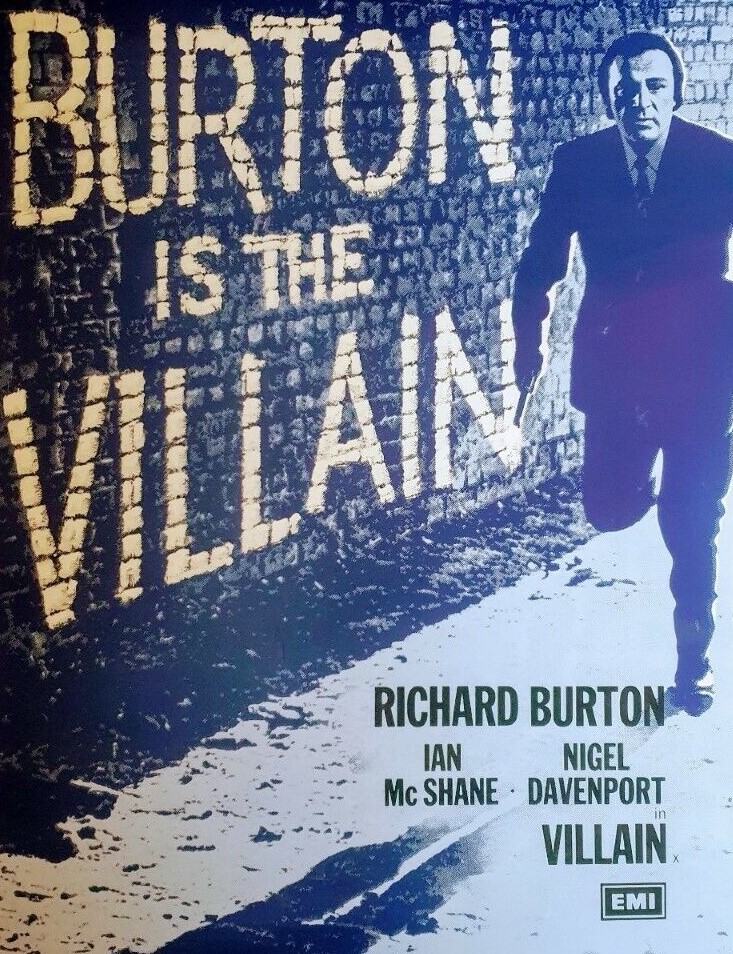
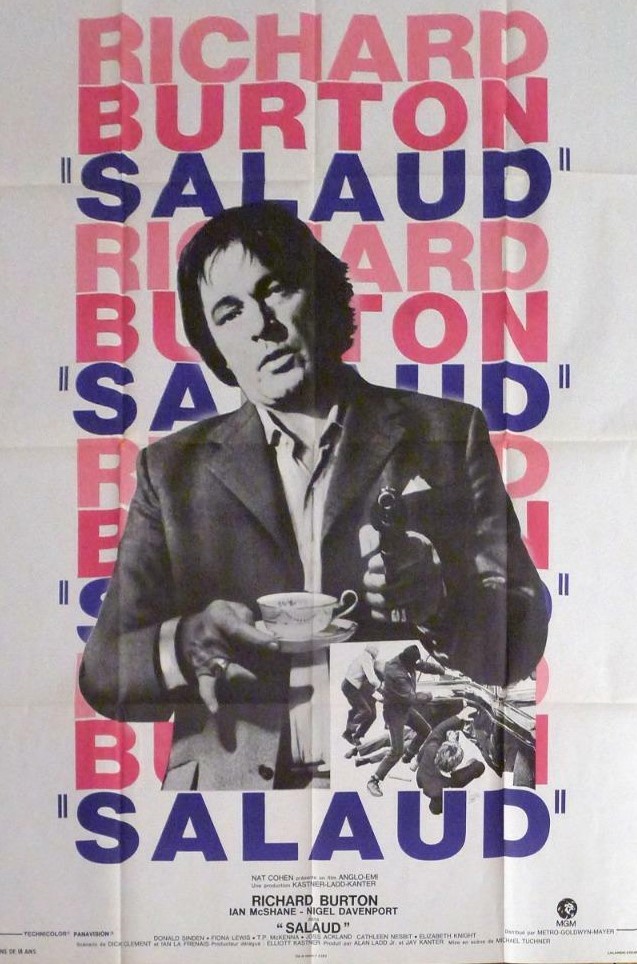
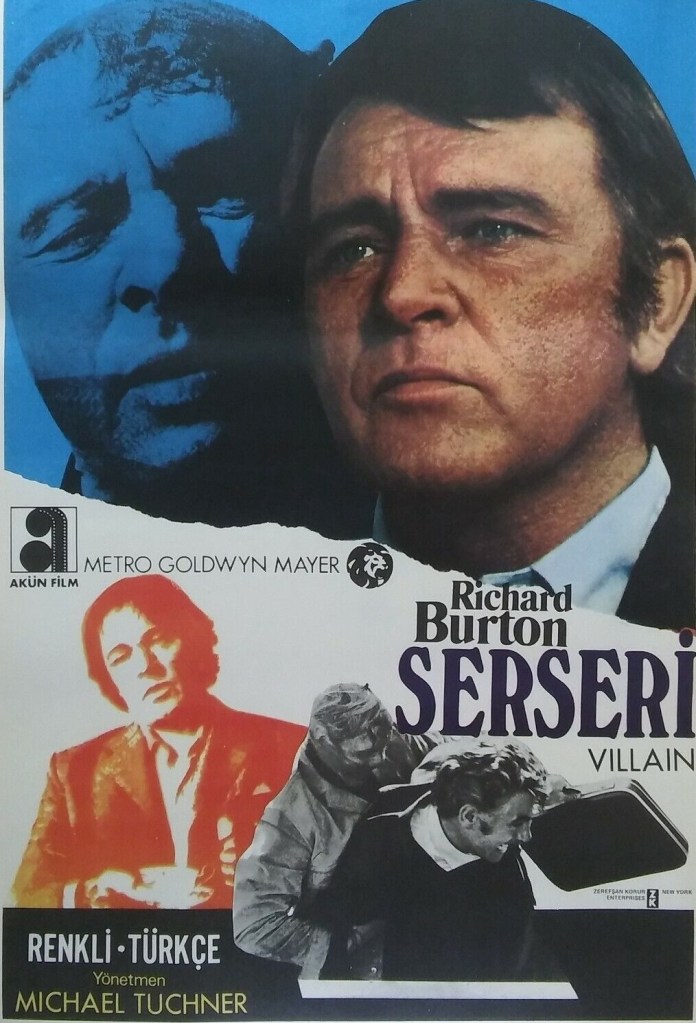
Villain (1971) *****

Get Carter, out the same year, tends to get the critical nod over Villain, but I beg to differ. Not only do we have the most realistic robbery yet depicted on screen, but Richard Burton (Becket, 1964), delivering one of his greatest performances, is nearly matched by Ian McShane, flexing acting muscles that would come to fruition in Deadwood (2004-2006) and John Wick: Chapter 4 (2023), and Nigel Davenport’s cop, as cool under pressure as Frank Bullitt.

Where Michael Caine in Get Carter is primarily the avenging angel, Burton’s Vic Dakin is every bit as complex as Michael Corleone. Way ahead of its time in portraying Dakin as a gay gangster in sympathetic fashion, he also has a moral code akin to that of Don Corleone. While the Mafia chieftain drew the line at selling drugs, Dakin despises MP Draycott (Donald Sinden) for his corruption and views with contempt sometime boyfriend Wolfe (Ian McShane) for small-time drugs and girl peddling.

He reveres (as did Don Corleone) family values, bringing his aging mother tea in bed, kissing her affectionately on the forehead, treating her to a day out at the Brighton. But he also rejoices in violence as much as any of Scorsese’s gallery of thugs.

Complexity is the order of the day. Every dominant character, whether operating on the legal or illegal side of the street, receives a come-uppance verging on humiliation. Dakin himself is arrested in full view of his mother. The bisexual Wolfe, who otherwise dances unscathed through the mire, is beaten up by Dakin and humiliated when his male lover shows his female lover, the upmarket Venetia (Fiona Lewis), the door. Top gangster Frank (T.P. McKenna), who attempts to lord it over Dakin, ends up whimpering in agony in the back seat of a car.

Maverick cop Mathews (Nigel Davenport) is brought to heel by internal politics and frustrated at home when his wife is indifferent to the late night shenanigans of his son. Even cocky thug Duncan (Tony Selby), with a quip to terrify victims, is reduced to a quivering wreck under the relentless stare of Dakin.

Unlike The Godfather, mothers excepted, wives and girlfriends are complicit. Little chance of a shred of feminism here. Women are chattels, Venetia is traded out as a “favor” to Draycott, terrified gangster’s moll Patti (Elizabeth Knight) also used in that capacity by Wolfe. Draycott professes little interest in whether the women, procured in this fashion, enjoy sex with him.

So, to the story. Tempted by a tasty payroll robbery, Dakin steps out of his usual line of work, a protection racket, and joins up with two other leading hoods, Frank (T.P. McKenna) and his brother-in-law, the belching Edgar (Joss Ackland). But the robbery goes wrong. The tail is spotted by the payroll car and the victims almost evade capture. But stopping the payroll car renders the getaway vehicle virtually useless, a flat tyre soon flies off and they drive for miles on a wheel rim.

The payroll is well-guarded and several of the villains emerge badly scathed. Worse, the cases containing the cash have anti-theft devices, equipped with legs that spring out and red clouds of smoke. And there are ample witnesses. Edgar is quickly apprehended, and the movie enters a vicious endgame.

Contemporary audiences were put off by the obvious references to the Kray Twins and the Profumo Affair and American audiences had long shown an aversion to Cockneys (though that is not so apparent here) and critics gave it a mauling, the general feeling being that after Performance (1970) and Get Carter, the British public was entitled to the more genial criminal as exemplified by The Italian Job (1969), incidentally another U.S. flop.

There are many superb moments: Dakin’s affectionate stroke of Wolfe’s shoulder, Dakin and his sidekick’s nonchalant stroll over a footbridge as they make their escape, Dakin pushing Draycott into a urinal, Wolfe abandoning Venetia at a country house party so that Draycott can avail himself of the “favor,” Dakin’s love for his mother. Throwaways point to deeper issues, a country stricken by strikes and political corruption.

Dakin, unaware he has made a target for his own back by the unnecessary brutal treatment of an associate, comes up against a cool implacable cop, as confident as Dakin without the arrogance or recourse to brutality, easy with the quip.

A modern audience might appreciate the violence more than the acting, given that a la Scorsese we are supposed to revel in criminal behavior, but it’s the performances that lift the film. Burton had entered a career trough, sacked from Laughter in the Dark (1969), involved in a quartet of financial and critical turkeys – Boom! (1968), Candy (1968), Staircase (1969) and Raid on Rommel (1971) – with only another Oscar nomination for Anne of the Thousand Days (1970) to alleviate the gathering gloom that would see him strike out in his next nine pictures before another nomination for Equus (1977) restored some stability.

So this is a superb character, suited and booted he might be, doting on his mother, but underneath stung by insecurity and unable to rein in his sadistic streak. A marvellous addition to the canon of great gangster portrayals.

Ian McShane, too, provides a performance of great depth, in his element when skirting around the small-time world, out of his depth with the big time, the charm that can hook a vulnerable upper-class lass like Venetia as likely to attract a malevolent mobster, the former under his thumb, the latter controlling. To see him go from cheeky chappie with a winning grin to penitent lover forced to dismiss Venetia is quite an achievement.

Nigel Davenport (Sands of the Kalahari, 1965) is on top form and the supporting cast could hardly have been better – T.P. McKenna (Young Cassidy, 1965), plummy-voiced Donald Sinden (Father, Dear Father TV series, 1969-1972) playing against type, Joss Ackland (Rasputin: The Mad Monk, 1966). Throw in a bit of over-acting from Colin Welland (Kes, 1969) plus Fiona Lewis (Where’s Jack?, 1969) at her most accomplished.

Michael Tuchner (Fear Is the Key, 1972) directs with some style from a screenplay by Dick Clement and Ian La Fresnais (Hannibal Brooks, 1969) working from the novel by al Lettieri.

Ripe for reassessment.

https://amzn.to/3GQS6Uo

Discover WordPress

A daily selection of the best content published on WordPress, collected for you by humans who love to read.

The Atavist Magazine

by Brian Hannan

WordPress.com News

The latest news on WordPress.com and the WordPress community.