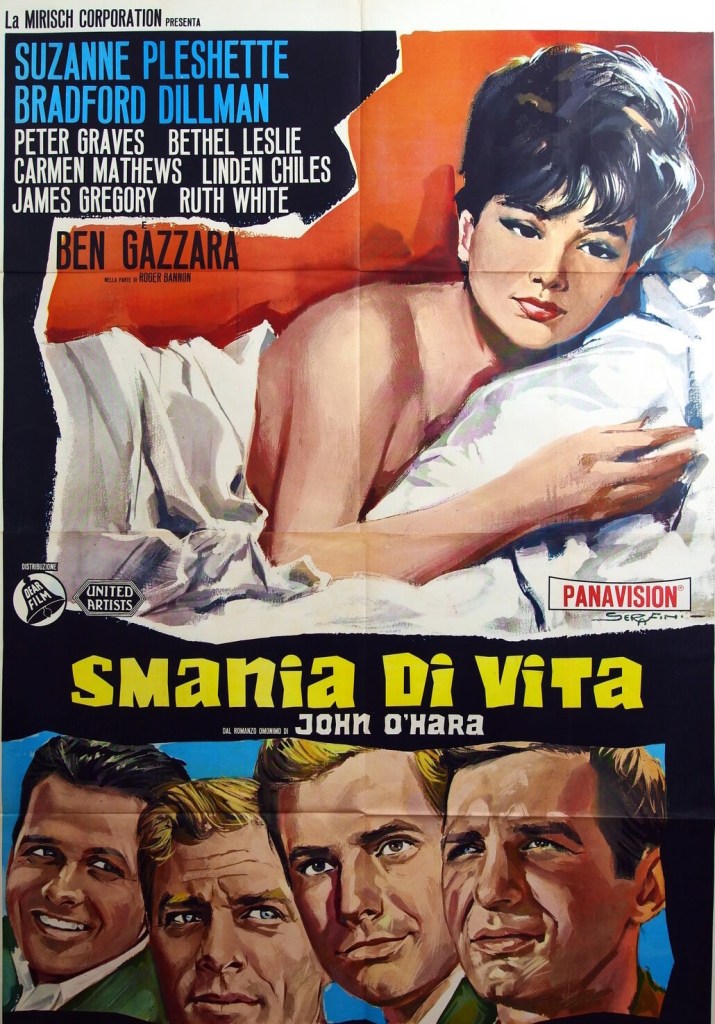
A Rage To Live (1965) ***

There was one in every town: a woman, rich (Sanctuary, 1961) or poor (Claudelle Inglish, 1961) or in between (Butterfield 8, 1960), with a predilection for sex. There were several men in every town, queuing up to take advantage. The woman was inevitably a shameful creature, the men the envy of their peers. You don’t have to look further than Frank Sinatra’s tom-catting in Come Blow Your Horn (1963) or Omar Sharif as the romantic star of the decade with two women in tow in Doctor Zhivago (1965) for an idea of the double standards in play. Welcome to hypocritical Hollywood.

Grace (Suzanne Pleshette), father dead and stuck with a domineering mother, finds escape and fulfilment in sex, and just to give hypocrisy a final tug discovers that while boyfriends are keen to help her explore such physical needs, they take the hump when they discover they might not be the first – or the only. Parents, naturally, are appalled, and discovery of Grace’s antics – and she’s not particularly particular, a passing waiter will do – leads her mother to collapse.

Having confessed to potential husband Sidney (Bradford Dillman) that he will not be marrying a virgin and almost bursting with gratitude that he is willing to overlook her behavior, Grace becomes a farmer’s wife and then a happy mother, until construction owner Roger (Ben Gazzara) comes on strong. She might well have been able to have her cake and eat it but Roger, having fallen in love,  reacts badly to being dumped and it’s only a matter of time before her world implodes.

Made a couple of years later, when the independent woman was being exalted, this would have been a different kettle of fish. Here, the boot on the other foot, the woman who picks and chooses her lovers seemed a step too far for that generation.

Before the big trouble begins, the movie does explore, though somewhat discreetly, the almost taboo notion that a woman might just enjoy sex for the sake of it. Sure, Grace likes being wanted and likes being held, but if she was around today, nobody would bat an eyelid if she just came out and expressed her preference.

Less discreetly, the subject of consensual sex comes up, but not as a question of debate, more as a matter of fact, that when Grace says no she actually means yes. There’s a very uncomfortable moment at the beginning when in a Straw Dogs-scene, though nothing like as violent, Grace appears to welcome a rape. Whether this is as bad as it sounds, or is just Hollywood hiding the blush that a woman would not seek out sex but could only discover its pleasures when forced upon her, is hard to say.
Nor is Grace a walking sex machine. She knows enough about men that she only has to put out feelers and any susceptible male will take the bait. And given the restrained times, she’s got no female pal with whom she can discuss her unseemly desires.

Of course, if this was a man, nobody would be batting an eyelid. Sure, once caught, he’d come up with all sorts of excuses, denials, begging for forgiveness, but an audience would give him a free pass. It’s only because this is a woman that it causes ructions. The movie just about gets close to what does make Grace happy and why she needs the thrill of extra marital sex but by that point the melodrama has taken over and there’s little time left for discussion, what with Roger intent on revenge and another lovelorn wife, mistakenly imagining her husband has fallen victim to Grace’s charms, also on the warpath.

Small town constraints play their part, too. Washing your dirty linen in public the worst of all offences. Author John O’Hara, on whose bestseller this is based – and whose other works Butterfield 8, Ten North Frederick (1958) and From the Terrace (1960) explored similar worlds  – knows only too well that while wealth brings freedom and privilege it comes with chains attached.

And there’s some interesting role reversal, an illicit lover falling in love with a married person normally a starting point for a movie to explore happiness and its opposite rather than being the one act Grace will not tolerate in a lover, she wants strings-free sex, not anything with encumbrance. While Grace would like to act like a man, and has the wealth to shield herself from the worst of the fall-out, as a mother she is extremely vulnerable, and in this particular era could risk losing her child if seen as maternally unfit.

While lacking the sexual combustibility of Elizabeth Taylor or Lana Turner or other Hollywood heartbreakers, Suzanne Pleshette (Nevada Smith, 1966) gives a decent enough performance especially when it comes to her straightforward attitude to sex, aware she might be causing upheaval, but finding it impossible to ignore desire, or imagine a life in which that does not play an impulsive part.

Bradford Dillman (Sanctuary) has less room for character maneuver and is mostly called upon to suck it up. He comes into his own in the movie’s latter stages when bewilderment at betrayal and public humiliation clashes with continued love for his wife. Ben Gazzara (The Bridge at Remagen, 1969), trademark leer and smug face kept in check, has a showier role especially when the violent aspects of his character explode.

Director Walter Grauman, while better known for war picture 633 Squadron (1963), had just come off another picture dealing with female trauma (Lady in a Cage, 1964) and does quite a decent job here, the camera intensely focusing on the leading actress and then as the tragic outcome unfolds drawing away from her. There’s one great piece of composition. He had used tree branches and the countryside to frame Grace and Sidney at the height of their love. And he does the same again when Grace is abandoned.

Asks some difficult questions without quite getting to grip with the real subject of female sexuality. There was a sense that Hollywood was just on the cusp of accepting the independence of women, but didn’t want to go the whole hog just yet, because, apart from anything else, where would it leave the guys?
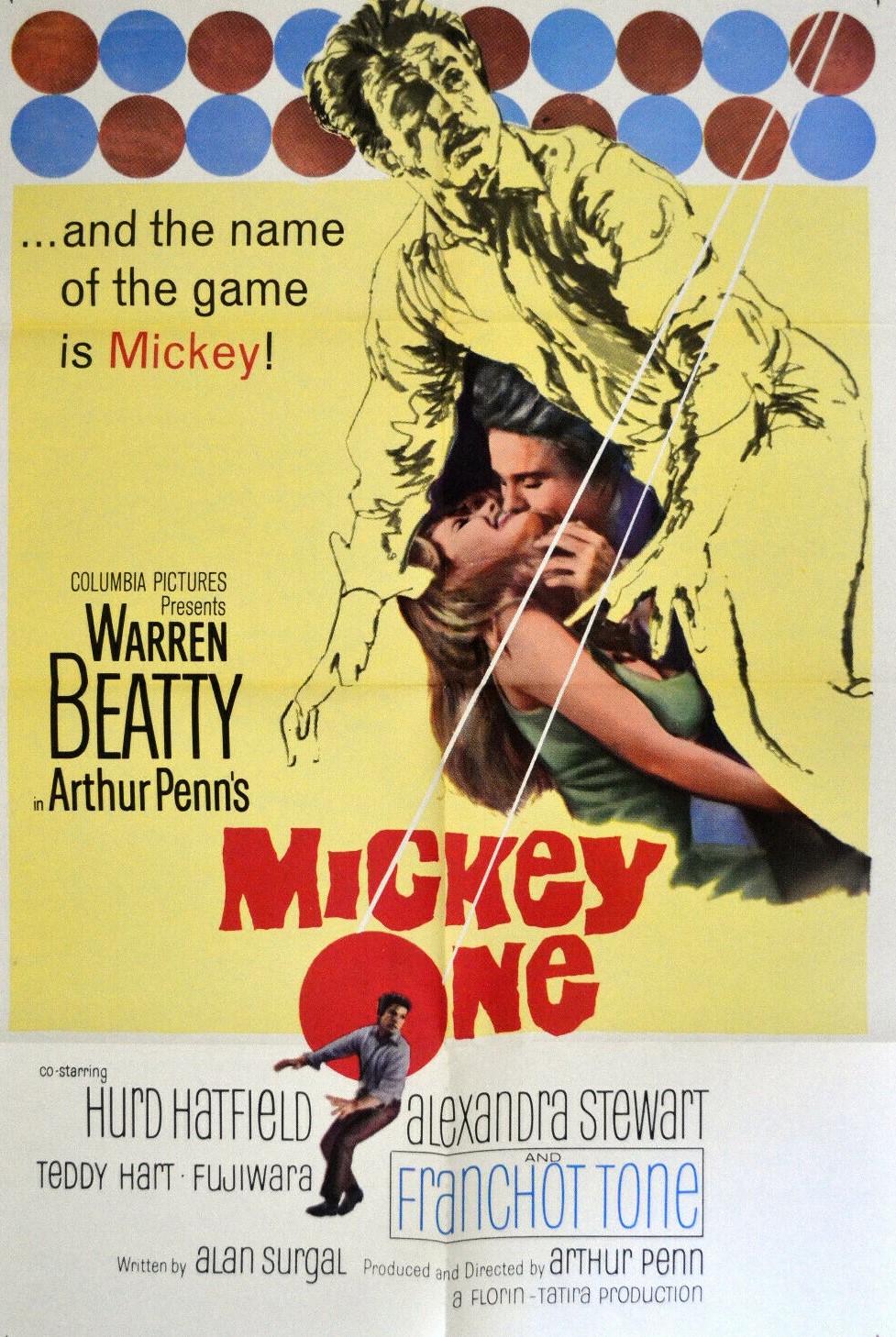
Mickey One (1965) ***

Smorgasbord of paranoia, Kafka and the surreal, set in an American netherworld. Cue trampolines, a mime, what these days we’d call installations, a comic without a decent joke, a wrecker’s yard, organic food, catering kitchens. You could call Arthur Penn (Bonnie and Clyde, 1967) a visionary director just for including some of these aspects. Or you could go for another contemporary word: “random.”

We are pretty used to people being on the run be they innocent of the crime of which they are accused or small-time hoods trying to evade punishment. The notion here is of small-time hood Mickey One (Warren Beatty) fleeing Detroit for Chicago but with no idea for what crime, though the list could include gambling debts and stealing a bigger gangster’s moll.   

A misleading tagline if ever.

His situation is spelled out often enough in case you’ve not got the picture. “Hiding from you don’t know who for a crime you don’t know you committed,”  remarks girlfriend Jenny (Alexandra Hay). In a particularly Kafkaesque moment, Mickey espouses: “The only thing I know is I’m guilty – of not being innocent.”

Smart with the words but not so smart with the actions. Even though he can just about get by  as a kitchen wash-up, he gets sucked back into his former profession of stand-up comedian, hardly the most anonymous of jobs. So he is all angst-on-fire when success in some low dive, keeping clients entertained between strippers, attracts interest from a classier joint which naturally sees marketing the new prospect as part of the deal.

Some of this paranoia might just be in his head were it not for being stalked by car-crunching cranes in the wrecker’s yard, spotlights on stage (though you could point out that’s an occupational hazard) and a silent rag-and-bone man.

It says something for the acting of Warren Beatty (Kaleidoscope, 1966) that this is in any way believable. The fast-living lothario of the opening sequence, with gals and booze aplenty, segues into a bum without missing a beat. His paranoia is consistent and he makes some attempt to find out what the heck he has done to end up this way, though it has to be said there’s no actual evidence of pursuit, just the fear of it, and the notion that he owes somebody maybe twenty grand or that the lass tempted into stripping for him was stepping out of line.

Pretty good plug from a top critic and an arthouse opening – what else could you ask for?

His breadline living is realistic, too, hitching a ride on a train, bumming food from a mission, sleeping among bags of rubbish, a world where down-and-outs steal the clothes from the back of other vagrants and his job is scraping leftover food from plates in a cafeteria. And there’s always someone at the scam, his landlady dumping another tenant (Jenny) in his tiny apartment.

Maybe less realistic that club owners are lining up to hire him when there’s nary a laugh in his schtick. The biggest joke is in the casting, some kind of infernal joke on audiences to put the likes of the uber-handsome Beatty through mental and physical torture, albeit that he’s perceived as man of abundant talent and collects with ease women willing to put up with the depressive side of his nature.  

The movie doesn’t quite fit the Kafka mold because being on stage represents freedom and nobody in Franz’s world ever had a sniff of that. And you wouldn’t call it a thriller either. And if it’s a homage to the French New Wave you’d have to watch a stack of French pictures from this decade to work out what it’s mimicking.

And it’s not like Penn’s work is always on this kind of edge, he’s not the David Lynch of his generation. Every top director is permitted at least one turkey, and this would have been Penn’s except critics in the 1990s started to give it the old reassessment treatment, Penn being a big enough name from his other works to have a stab at how this fits into his repertoire/oeuvre.

So, far from being an intolerable mess. Doesn’t quite ask the big questions Penn hopes it does. More of a curate’s egg of a picture, some interesting ideas, and an excellent performance from Beatty. Alexandra Hay (Only When I Larf, 1968) was part of the French connection, a Canadian model who had hit it big in Paris, with roles in French pictures and an affair with director Louis Malle. But actually she’s good, not the kind of submissive woman Mickey has perhaps been used to, but thoughtful and capable of challenging his illusions.

Screenwriter Alan Surgal was not prolific, this being his only movie.

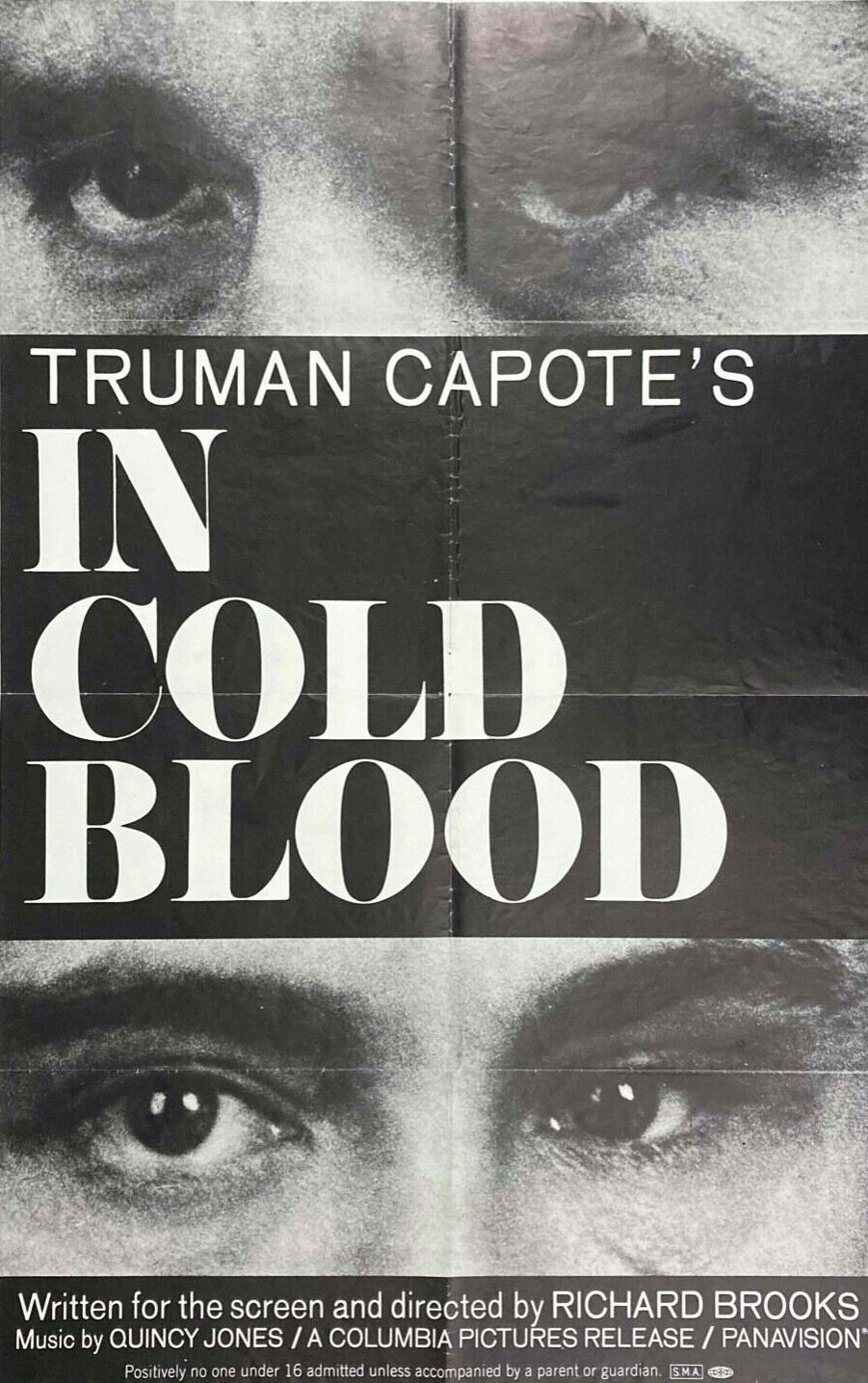
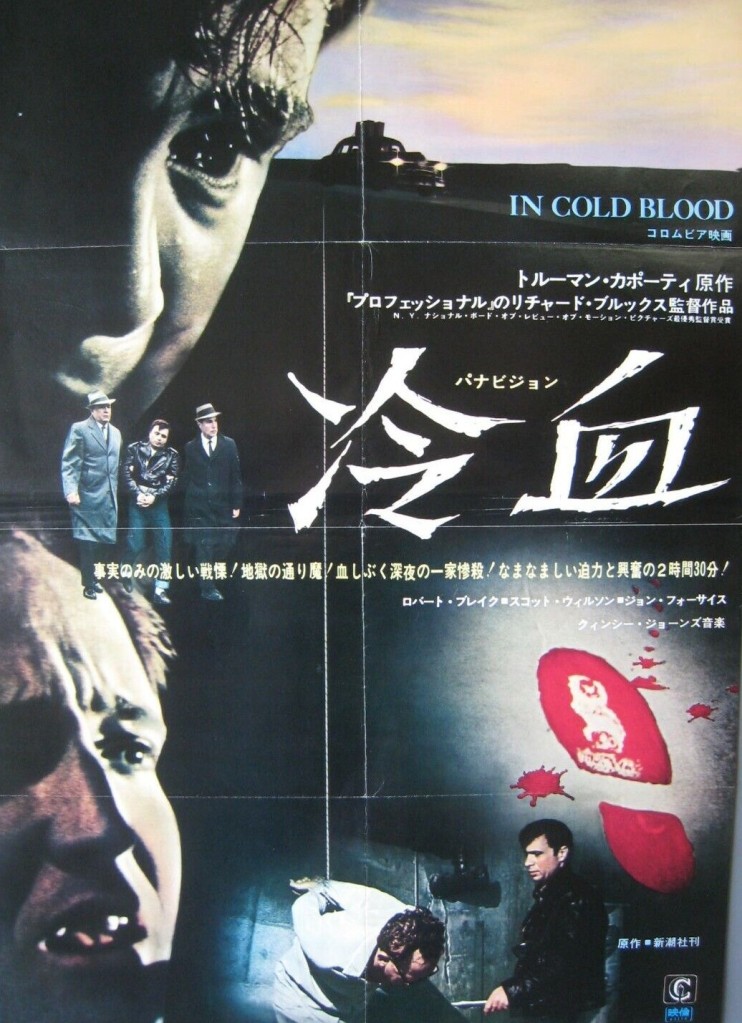
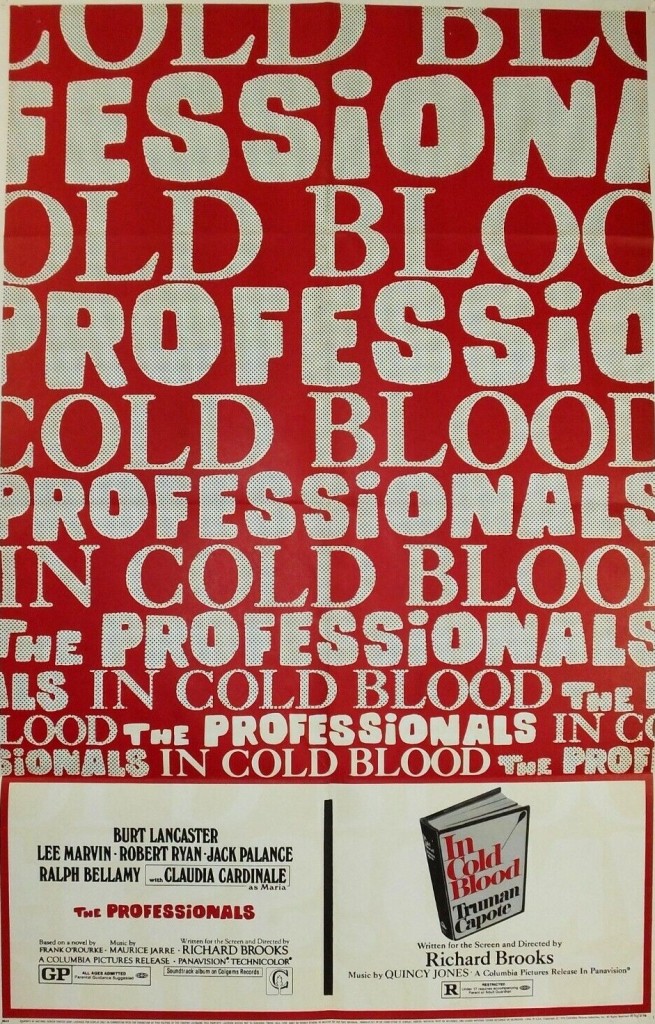
In Cold Blood (1967) *****

Unfairly overlooked in favor of the Coppola/Scorsese grandiose perspective on gangsters, this changed the shape of the crime picture as much as the best-selling book altered the way readers regarded murderers. Neither whodunit, whydunit nor film noir, nonetheless it invites us into the world of the senseless crime, providing an extremely human portrayal of two men if not natural born killers then their pitiful lives always going to lead them in the wrong direction.

Although Perry Smith (Robert Blake) is a fantasist, dreaming of becoming a singing star in Las Vegas, determined to find the lost treasure of Cortez, and convinced a giant bird protected him from vicious nuns in an orphanage, his life did already verge on the fantastical. His mother, a Cherokee, was a star rodeo performer, his father a gold prospector in Alaska, but the mother, an alcoholic, choked to death on her own vomit and the father (Charles McGraw), a hobo in all but name, is astonished that the child he brought up, so he believes, to recognise right from wrong, would stoop to crime. As a child Perry and siblings watched his mother have sex with clients and his father viciously beat her with a belt. Perry is addicted to aspirin to minimize pain from a leg injury, and you can’t help but feel sorry for this otherwise fit young man massaging the massive disfiguring scar, the result of a motorbike accident.

Dick Hickock (Scott Wilson) is a very charming cocky personable con man, leaving a trail of bad checks behind him as he masquerades as a best man who has come out without enough cash to buy a wedding outfit for his buddy and, with his convincing patter, hoodwinking store clerks not just into accepting a check for the goods, later to be sold, but also cashing a personal check. His father, too, is stunned to hear his son had criminal tendencies.

Fatherhood is represented as a holy grail. Hickock enjoyed being a parent until he was caught with another girl and had to do “the decent thing” i.e. abandon existing wife and child. The parents of both boys have wonderful, emotion-filled, memories of loving and being loved by their children.

From another prisoner, Hickock has been told of the “perfect score,” a rich farmer called Clutter in Kansas with $10,000 in his safe. The plan, to which Smith has only momentary objection, is to leave no witnesses. Even muttered in grandiose manner, this phrase surely, in anybody’s mind, conjures up slaughter, Smith’s only saving grace that he prevents Hickock raping the daughter Nancy (Benda C. Currin). Their haul amounting to $43 and a radio, you could imagine the thieves wiping out the family in a fit of fury. But that’s not the case, it’s just cold-blooded thinking, an element of leaving no trace behind.

And that’s just what they do, committing an almost perfect crime, no fingerprints, just the mark of the sole of a shoe imprinted in blood. There’s a red herring – old man Clutter had just signed off on an insurance policy worth $80,000. But detective Alvin Dewey (John Forsythe) has to solve the crime the old-fashioned way, with inter-state cooperation and months (years in reality) of footslogging. Dewey could have been straight out of film noir with his nippy one-liners and epigrams.

Other than Alfred Hitchcock, it was unusual for a reissue double bill to comprise
two films by the same director.

Unlike the novel which concentrated as much on the aftermath among the shocked townspeople, the film focuses on the manhunt and Dewey’s deft way with newspapermen and colleagues. The four murders occur off-camera, but by that point we already know the outcome. There’s a virtue-signalling coda that shows the inhumane conditions in which murders were kept on Death Row, but that is countered by a marvellous speech by Dewey on the inequities of being a cop: hounded by media and public for letting someone get away with heinous crime, generally getting a tough time over police methods, lambasted after catching them for not doing it quickly enough, and then having to stand by while media and public launch an outcry to prevent the killers being executed.

All shade, the documentary style achieves the contradiction of appearing sparingly told yet with a wealth of character detail (location and time are ignored) and none of the grandeur and faux community spirit invested in gangsterdom by the likes of Coppola and Scorsese. Smith and Hickock would never pass the entry test for the Mafia given that at least required discipline and the ability to follow orders. Minus the killing spree, these characters might have survived a little longer in the underclass before ending up inside again.

All three principals are brilliant in the understated manner demanded. Robert Blake (Tell Them Willie Boy Is Here, 1969) is the pick, tormented by future dreams and past nightmares, but Scott Wilson (In the Heat of the Night, 1967) has the stand-out scene, gulling store salesmen with his finely worked con, and there is a sense of the big brother in the way he looks after his friend. This might well be the best work by John Forsythe (Topaz, 1969).

And it certainly is one of the finest movies made by writer-director Richard Brooks (The Professionals, 1966) who handles a very difficult subject with at times such delicacy it is almost a complete departure in style.

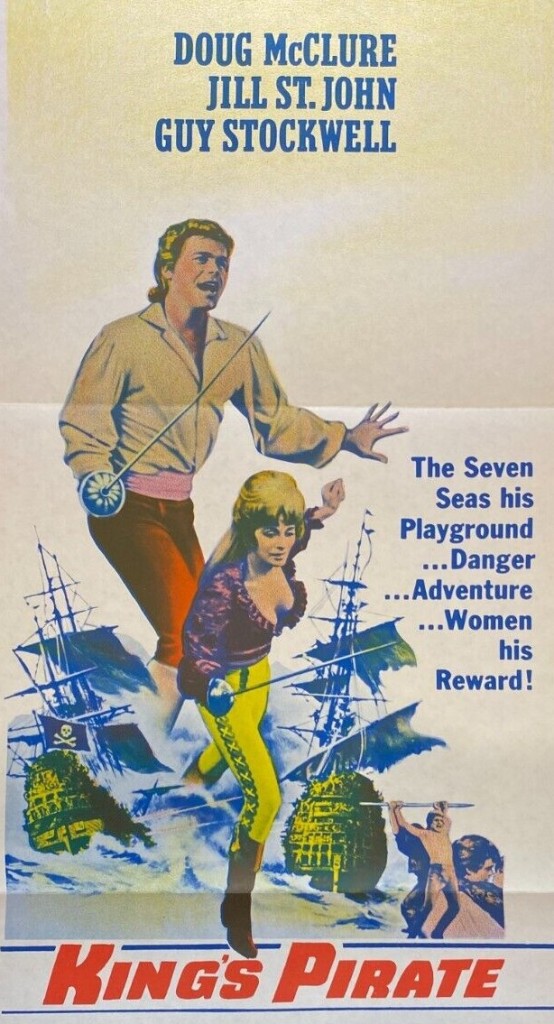
King’s Pirate (1967) ****

Swell show. Virtually every movie Doug McClure (Beau Geste, 1966) made was under-rated, mostly due to his presence, but here he is at his impish cavalier best in a swashbuckler that rather than offering a re-tread goes in for clever reversals, running jokes and a healthy dose of the flashing blade. While McClure is no Errol Flynn (Against All Flags, 1952) he would be a safe match for Tyrone Power and Jill St John (Come Blow Your Horn, 1963) as his nemesis/lover could give the pirate picture’s most reliable spitfire, Maureen O’Hara (Against All Flags), a run for her money.

Well, actually, it is a bit of a re-tread, a spirited good-humored remake of Against All Flags, and  follows the same story as Pirates of Tortuga (1961) of good guy infiltrating a pirate stronghold by pretending to be a buccaneer. But the locale has shifted a good three thousand miles to Madagascar, ideally placed to plunder cargo ships en route to India, and it would be hard to argue that Lt Brian Fleming’s (Doug McClure) motivation is pure, given he is expecting major financial reward for risking his life. 

Still, to complete his disguise, he submits to a flogging. His task is to incapacitate the cannons that protect the island from Royal Navy invasion. But his team is somewhat unusual, a bunch of acrobats headed by Zucco (Kurt Kasznar) which ensures he can avoid the wall/cliff-climbing normally associated with such endeavors. Having just about convinced pirate king John Avery (Guy Stockwell), Fleming’s mission runs into trouble when Mogul’s daughter Princess Patna (Mary Ann Mobley) falls in love with him after he saves her from a burning ship, though admittedly one he had helped set on fire. He falls foul, too, of “Mistress” Jessica (Jill St John), the island’s de facto ruler and accomplished femme fatale, expert swordswoman, but a la Pirates of Tortuga with a yen to be a “lady.”

So, basically, he has to dodge the suspicious Avery, and put off the princess while trying to woo Jessica in order to find a secret map of the cannon locations.

The island’s preferred style of execution is staking men at the water’s edge and letting the rising tide do the rest. When Fleming, on initial arrival on the island, gulps at this demonstration of barbarity, you probably don’t guess this will happen to him. It’s just one a litany of reversals that make this a delight.

Talking of reversals and delights, how about the Indian princess speaking in a Scottish accent, courtesy of her governess, the fearsome Miss MacGregor (Diana Chesney)?

Not to mention Jessica’s habit of making her romantic inclinations known at gunpoint. Unusually lacking in the female ability of expressing her emotions, Jessica’s actions tend to be the opposite of her stated intention, resulting in, having given Fleming the brush-off, bidding against him in the slave market for Princess Patna to avoid the Indian lass getting her romantic claws into him. But not only is Jessica expert with the sword she is a crack shot and can shoot the end off a rapier.

Of course, when his sword can’t do the talking. Fleming has to weasel his way out of many a dicey situation with an inventiveness that would do Scheherazade proud.

All in all the best pirate film of the decade – though there wasn’t much competition. Competently made with McClure and St John striking cinematic sparks with former Miss America Mary Ann Mobley (Istanbul Express, 1968) happily cooperating in turning her character into a comedic gem.

While there’s certainly a touch of the Tony Curtis in McClure’s portrayal it is also his stab at carving out a position as a jaunty leading man. Jill St John, given a lot more to do than in most of her pictures, takes the opportunity to shine. Guy Stockwell (Beau Geste) delivers another villain.

Don Weiss (Billie, 1965) directed and does exceptionally well steering audiences away from unfulfillable expectation, given the low budget, by focusing on the qualities of the stars and a ripping tale knocked out by television comedy writer Paul Wayne, who rewrote or incorporated material from Aeneas MacKenzie and Joseph Hoffman responsible for the original.

Catch it on YouTube.

M3GAN (2022) ****

Sharp psychological drama about attachment, abandonment and loss masquerading as sci fi/horror. Plays off riffs old – Ripley in Aliens and the elevator scene in The Shining – and new, the “Final Girl” trope aka last person standing of the horror film becomes “Final Child.” While not a slaughter-fest in the Halloween/Friday the 13th vein demonstrates ingenious methods of bumping people off.

The starting point is not, as the trailers and adverts might suggest, the invention of a toy robot companion that evolves beyond initial conception, but a young girl, Cady (Violet McGraw) orphaned in a snow plough accident, who is sent to live with workaholic robotics engineer Gemma (Allison Williams), the least maternal woman on the planet.

Knives out and not an onion in sight.

In her own mind Gemma has good excuse not to prepare for this sudden onset of parenting by buying some new toys or child-friendly food or creating a playroom. She is on a deadline having spent $100,000 inventing a new doll called M3GAN that, unfortunately, doesn’t work. So tough luck for the poor little orphan until Gemma can enrol the little girl as the test pilot for the Megan experience.

And that’s a hell of a boon for Cady since the cutely dressed doll, about the child’s size, empathizes with her human companion, actually listens to her, can record and store the child’s memories and seems like it’s about to kickstart a toy revolution. That is, until it develops an exceptionally high protectionist tendency.

When its charge is whacked by an unruly boy or menaced by the dog next door, Megan steps in to deal out fitting punishment. Except the doll has no “stop” button and is inclined to go on meting out punishment until there’s no life left in the victim.

It’s not long before Gemma twigs that the doll is turning into one of those mad parents you find in thrillers, or even like Celia (Lori Dungey), the annoying woman next door who cares more for her dog than her neighbors. The signs are there when Cady starts to run amok. Well, not quite amok, but handing out slaps to adults, and reacting badly when deprived, like a child of its computer game, of the companion.

Gemma, whose idea of commitment is Tinder, takes a very long time before she can put the needs of the child ahead of her career, and when it comes to a showdown finds she is not the match she thought she was for her invention, which, like HAL from 2001: A Space Odyssey (1968) or any other man-made monster since time immemorial, objects to being ended.

The grown-ups don’t come off well here, either idiotically bickering so much they cause the accident that renders the child parentless, or obsessed with dogs or work, and even social worker Lydia (Amy Usherwood) assigned to find out if Gemma is a fit mother seems unsuited for the work, inclined to take a rather robotic view herself of child engagement and certainly playing power politics.

Gemma’s boss David (Ronny Chieng) is a mean-minded insecure obsessive unaware an  underling is quietly harvesting his ideas for sale to a rival. All the adults view the child as a doll, a necessary adjunct to show how well the robot works.

Gemma fails to understand, as spelled out by the snotty social worker, that a child who has lost parents will attach herself to the nearest sympathetic person. But Cady, dealing with abandonment and loss, is not the only one with attachment issues. The robot has them in spades, chucked aside on a whim when her creator takes against her or when all attention is transferred to the child.

This all builds up to a tremendous climax when Megan cuts loose in the toy factory, slicing and dicing, and providing the kind of example of her prowess that would have sequel-makers salivating as they detect robot soldier opportunities. And when Gemma tries to bring her to heel finds that (to hell with the obvious pun) the boot is on the other foot.

You can see why this – and other horror thrillers like Barbarian (2022) or Black Phone (2022) that eschewed a conveyor belt of bloody thrills in favor of something deeper – has struck such a chord with the younger audience that makes up the bulk of the audience for Hollywood pictures. This is intelligent. Who hasn’t as a child dreamt of, or even invented, the ideal companion? Who as a child has not thought there must be a better way of being brought up than being left in the hands of parents with little aptitude or interest in the job.

None of these horror pictures has got the slightest chance of being nominated for Oscars while pictures with far bigger budgets, which have not the slightest chance of attracting an audience or are boring them to death, get all the critical hype.

I couldn’t make up my mind whether the doll, being so lifelike, was CGI or human and it turns out she was played by newcomer Amie Donald, though presumably either with a stunt double or a computer doing the crazy dancing. Whatever, the doll is very convincing. As it has to be said, are Allison Williams (Get Out, 2017) and Violet McGraw in her movie debut.

But the star of the show is undoubtedly director Gerard Johnstone, also a movie newcomer, who had the guts to opt for  slow-burn rather than visceral fright and develop themes that would resonate with any adult. Screenplay honors go to Akela Cooper (Malignant, 2021) while director James Wan (also Malignant) cops the story credit.

Virtuoso thriller. Can’t wait for the sequel.  

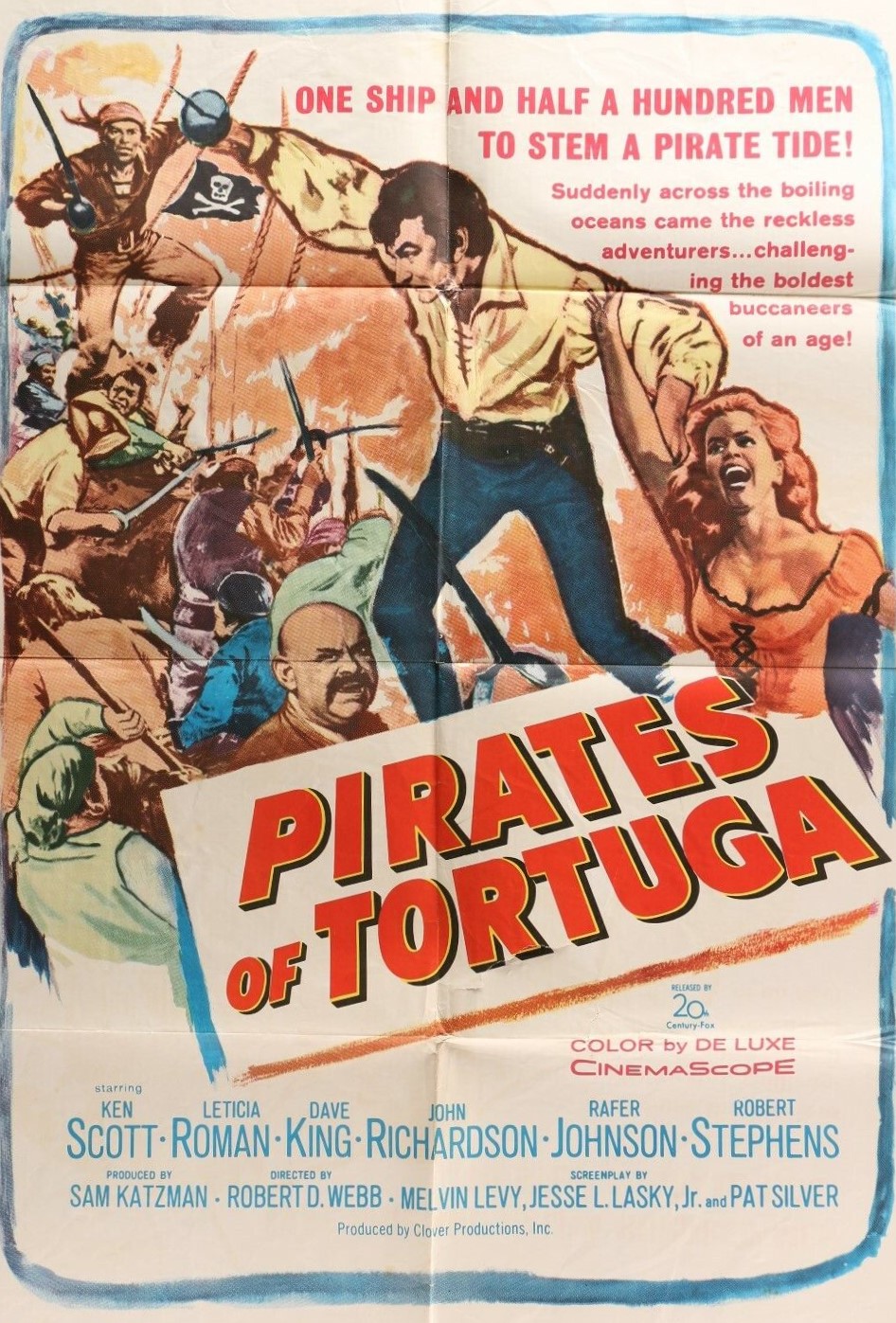
Pirates of Tortuga (1961) ***

In the absence of A-list swashbuckling talent like Errol Flynn (Captain Blood, 1935), Tyrone Power (The Black Swan, 1942) and Burt Lancaster (The Crimson Pirate, 1952) or spitfires in the mold of Maureen O’Hara (The Black Swan) and Jean Peters (Anne of the Indies, 1951) this sidesteps casting issues and in the kind of reversal that sent Pirates of the Caribbean on its merry way for the most part takes the comedic route of putting pirate moll Mg (Leticia Roman) center stage and twisting the usual blockade narrative so that it’s Privateer of the Century Henry Morgan (Robert Stephens) controlling the high seas.

Charge with stopping the pirate is sea captain Bart (Ken Scott). But most of the running in the first half is made by Meg, a thief turned stowaway, whose efforts to acquire the standing of a lady are initially mocked by the crew until they soften towards her, in part with seduction in mind and in part out of pity. But after landing in Jamaica, and mistaken for a Lady, she steps up to the plate, and manages to catch the romantic eye of the Governor before readjusting her sights and snaring Bart.

Bart and his crew infiltrate the buccaneer kingdom and spy out its flaws before arranging for a full-out attack. Boldly rewriting history, something of a surprise since Morgan the Pirate had appeared a year earlier, this Morgan is a shifty alcoholic. Once the action gets going, including a clever ambush of one pirate ship, it has enough swordfights to keep a regular swashbuckling enthusiast happy. There are some nice touches, Pee Wee (Dave King), the de facto fencing instructor, is lefthanded and wears a black glove whose use is historically accurate. The ships in full sail are impressive, the locations work well and it makes good use of Cinemascope color while Meg remains larcenous throughout rather than the good moll of previous entertainments. Though you might not be so impressed by the bear wrestling.

Ken Scott makes the best of a thin script, ignoring Meg’s wiles, and outwitting Morgan. Apart from Roman, who steals the show, British comedian Dave King (Strange Bedfellows, 1965), in his movie debut, is the pick, a jocular personality with lechery a stock-in-trade. I better point out you can spot John Richardson (One Million Years B.C, 1965) otherwise he is so insignificant a performer you would scarcely know he is there.  Robert Stephens (The Prime of Miss Jean Brodie, 1969) turns Morgan into a scallywag rather than a threatening villain.

Worth noting was just how long it took a graduate of the Twentieth Century Fox talent school to graduate – at the end of a five-year contract Ken Scott (Desire in the Dust, 1960) finally achieved leading man status.   Leticia Roman (The Spy in the Green Hat, 1967) was a bit more savvy and turned down a Fox contract in favor of Hal B. Wallis who cast her instead in G.I. Blues (1960). Technically belonging to the European import category of actress so popular during the decade, she never worked in her homeland before being scouted by Wallis. Though she was born in Italy her father, a costume designer, had moved to the U.S. in the late 1950s.  

Producer Sam Katzman, who had just signed a four-picture deal with Fox, made 239 films in every genre,  including Tim McCoy westerns, the Leo Gorcey Bowery Boys series,  Bela Lugosi as The Ape Man (1943), Jungle Jim (1948), Paul Henreid in Last of the Buccaneers (1950),  Mysterious Island (1951), 3D Fort Ti (1953) and Rock Around the Clock (1956) as well as a slew of 1960s Presley musicals.  

On a miserly budget of just $675,000, the sea scenes were shot in the Fox water tank. Robert D. Webb (The Cape Town Affair, 1967) directed.

A harmless trifle with decent action and Leticia Roman turning upside-down the genre female lead.

No need to fork out on a DVD. You can catch this on YouTube.

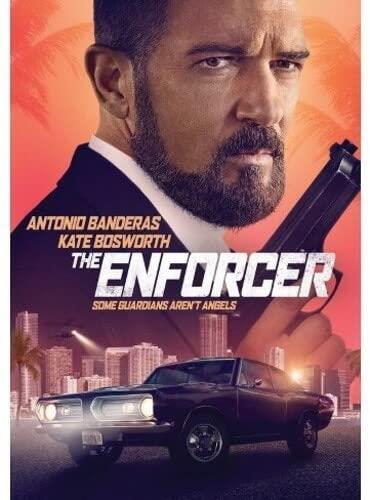
The Enforcer (2022) *** – Seen at the Cinema

After pulling double worthy duty with Empire of Light and Till as the starting points for my Monday multiplex triple bill it was something of a welcome relief to finish with an unpretentious pretty serviceable actioner that traded on Taken, The Equalizer and The Mechanic.

Ex-con Cuda (Antonio Banderas) has taken up his old job of debt collector/enforcer for bisexual mob boss Estelle (Kate Bosworth). Through happenstance he acquires streetfighter  protégé Stray (Mojean Aria). Cuda’s daughter won’t speak to him so he’s partial to coming to the aid of homeless 15-year-old Billie (Zolee Griggs). To get her off the streets he puts her up in a motel. But, of course, no good deed goes un-punished and the motel manager arranges for her kidnap by Freddie (2 Chainz), a rising gangster who threatens Estelle’s dominance.

Meanwhile, Stray falls for dancer/hooker Lexus (Alexis Ren) who works for Estelle and may well be her main squeeze, though the consensuality of that relationship may be in question.

There’s none of the pavement-pounding hard-core detective work or even nascent skill undertaken by the likes of Taken’s Bryan Mills before Cuda tracks down Billie’s whereabouts and it doesn’t take long for the various strands to coalesce, resulting in a variety of fights and shootings.  Given it’s a perky 90-minutes long, there’s very little time for subplots anyway or to find deeper meaning. That’s not to say there aren’t patches of clever dialog – Estelle compares the blood in her veins to that of the marauders in ocean depths whose blood has evolved to be extremely able to withstand parts of the sea where the sun never shines. (She says it a bit neater than that).

And there’s no time wasted on sentimentality either. Neither Cuda’s ex-wife or daughter want anything to do with him and thank goodness we’re spared a scene of him emerging from jail with nobody to greet him. The movie touches on the most venal aspects of modern crime, paedophilia, webcam pornography, kidnap, sexual violence, and of course Freddie bemoans the fact that Estelle is so old-fashioned she wants her tribute paid in cash not cryptocurrency.

It’s straight down to brass tacks, Cuda not seeing the betrayal coming. Thanks for bringing me fresh blood, Cuda, says Estelle, would you like one bullet or two with your retiral package. The only element that seems contrived at the time, that the battered and bloodied Stray can fix Cuda’s broken down car, actually turns into a decent plot point. And where Bryan Mills seems to be living on Lazarus-time, here it’s clear that the ageing Cuda is not going survive these endless beatings and shootings, so if there’s going to be a sequel it will be on the head of Stray.

I had half-expected Antonio Banderas (Uncharted, 2022) to sleepwalk through this kind of good guy-tough guy role but in fact his mostly soft-voiced portrayal is very effective, and his occasional stupidity lends considerable depth to the character.  Kate Bosworth (Barbarian, 2022) has been undergoing a transition of late and is very convincing as a smooth, if distinctly evil, bisexual gangster.

I’ve never heard of Mojean Aria though if I’d kept my ear closer to the ground I might have ascertained he was a Heath Ledger Scholarship recipient. He had a small role in the misconceived Reminiscence (2021) and took the lead in the arthouse Kapo (2022). Judging on his performance here, I’d say he is one to look out for. He has definite screen presence, action smarts and can act a bit too.

And just to show my ignorance I was unaware that Alexis Ren is one of the biggest influencers in the world. This is her second movie and she doesn’t really have much of a part beyond compromised girlfriend. Zolee Griggs (Archenemy, 2020) is another newcomer. But you remember that old Raymond Chandler saying that when the plot sags have a man come through the door with a gun. Well, here, there’s a different twist – it’s a woman, in fact both these women turn up trumps when it comes to rescuing the guys.

This is the directing debut of Aussie commercials wiz Richard Hughes and, thankfully, there’s none of the flashiness than would have drowned a tight picture like this. He keeps to the script by W. Peter Iliff who’s been out of the game for some time but who you may remember for Point Break (both versions), Patriot Games (1992), Varsity Blues (movie and TV series) and Under Suspicion (2000).

Undemanding action fare, for sure, but still it delivers on what it promises. It doesn’t have a wide enough release or a big enough marketing budget to even qualify as a sleeper but I reckon it will keep most people satisfied. I had thought this might be DTV but that’s not so. Although it’s not been released in the States it’s had a wide cinema release in Europe. However, this looks like it’s already on DVD but been thrown into cinemas to coincide with the launch of Puss in Boots.

The Borgia Stick / F.B.I vs Gangsters (1967) ****

Happily married after five years Tom Harrison (Don Murray) turns to wife Eve (Inger Stevens) and asks: “Who are you?” No, we’re not tumbling down some existential rabbit hole. Reiterating his love for her, he continues, “Don’t you want to know who I am?”

They’re living an effective lie, nice house in the suburbs, Tom catching the train every morning with neighbor Hal (Barry Nelson), joshing with Hal’s youngest son about the giraffe that took the elephant’s seat one morning, Eve a contented housewife, cocktails and sex at the ready, charity work to occupy her idle day.

Since nobody knew what money-laundering was in the 1960s and any mention of Borgia took audience minds in a historical direction it was best to play safe in the title department.

They work for The Company aka The Mob. Nothing nasty though. He’s not in the drugs/enforcement/prostitution departments. He’s a money launderer. He goes round the country opening accounts in obscure banks and helping deposit Mafia cash as a means of buying other companies. “It’s not illegitimate, but it’s legal,” he’s informed.

This isn’t the Mafia that Coppola and Scorsese would later invest with grandeur, it’s closer to the faceless corporation of Point Blank (1967) but taking the business aspect to a higher level. There’s computerisation for a start, personnel files appear as a printout, and some hefty degree of organisation required to keep tabs of the $100 million-plus that enters legitimate business each year. And you would think they were spies, everyone uses code names, “Borgia Stick” being Tom’s, telephones have particular numbers, even conversation is some kind of code.

Trouble is, what was supposed to be an arrangement with benefits has turned into true love, and Tom wants to find a way out, live a different life, have kids. Eve backs off from that kind of commitment. But eventually the decision is taken out of their hands. A guy called Prentice (Ralph Waite) comes snooping around, claiming he knew Tom as Andy Mitchell from Toledo.

“Murder Syndicate” in one country translated into “Gangster Syndicate” in another, no mention of the FBI.

Cover potentially blown, Tom’s boss Anderson (Fritz Weaver) plans to give him a new life – his employers are not “unfeeling monsters” after all – pack him off to Rio with $83,000 to get him started. But only Tom. Eve is sent back to her old life, to prove she can be trusted, the life she was trying to keep from her husband. She is put to work in a clip joint.

Of course, it doesn’t work out that way and there are about a dozen twists before we reach an unexpected climax, especially given the opening scene which I won’t disclose.

Although The Godfather is seen as the high point of humanising the Mafia, in that picture Michael’s constant concealment from his wife of his true life means it avoids the real drama of the situation. Here, that drama is the crux. A clever big boss would try to avoid a marital mismatch. The wrong kind of love match can endanger the Family – just look at Meghan and Harry – and it’s a pretty clever device to splice two souls rescued from potential prison and a more sordid life, give them life’s trappings, assured that a woman who has sold herself to so many different men might be grateful just to be assigned a single one, and that a man who otherwise might have been a dull banker could receive, almost as an “extra,” a glamorous wife.

That they might have feelings for each other may well have been calculated into the equation. What would that matter? Surely, it would only benefit the relationship. Every manager knows that an employee with a happy home life is one less problem to worry about.

As long as company loyalty remained uppermost. Eve reminds Tom he’s no less guilty in helping the company get rid of tainted money than the guys on the ground who made it in the first place. Quite why Tom has a stab of conscience and hasn’t the smarts to work out that gangsters can be happily married is never made clear. However, once he sets rolling the particular ball of quitting the Mafia, it can only end in trouble.

Director David Lowell Rich (A Lovely Way To Die, 1968) does an exemplary job, spinning emotion and angst, humanising a couple we should really despise, and every now and then throwing in a corker of a twist. Unlike the experience of Lee Marvin in Point Blank, the employers are shown to be far from rigid, with an apparent touching regard for their employees.

Rich even manages to slip in a couple of scenes that provide greater insight. One of Tom’s co-workers  talks like any successful salesman about the pressure of hitting his targets. And he fears the effect of computerisation, that it could make the Mafia vulnerable to Government investigation (rather than, as would later transpire, harnessing it to massive financial effect). And there’s a little nugget about how 200 businesses who controlled the entire U.S. economy in 1932 held the country to ransom for a year by refusing to accede to the wishes of President Roosevelt.

Inger Stevens (Firecreek, 1968) is the pick here, by turn confident, vulnerable, loving, hating, and with a terrific scene as she tries to control her emotions when tossed back into bargain basement of prostitution. Don Murray (The Viking Queen, 1967) spent his entire career trying to live up to the promise shown in Bus Stop (1956), for which he was Oscar-nominated, without quite getting the roles consistently enough that he deserved. But he is pretty convincing here.

This was television regular Barry Nelson’s first movie role in a decade. Fritz Weaver (The Maltese Bippy, 1969) is good as the boss whose game face is “understanding” and you might spot John Randolph (Seconds, 1966). George Benson wrote the songs for the nightclub sequence.

If you’ve never heard of this, it’ll be because David Lowell Rich is a very under-rated director and because it started life as a made-for-television movie in the heyday of that particular notion, but, as was often the norm with such projects, was released as a movie abroad under the alternative title.

Terrific little film, well worth a look. Way ahead of its time regarding money-laundering, sexual business arrangements (Homeland, 2011-2020), the pressures of working for the Mafia (The Sopranos, 1999-2007) and quitting that organization (Stiletto, 1969). You can catch it on YouTube but be warned this was filmed on video so the quality ain’t great.

Discover WordPress

A daily selection of the best content published on WordPress, collected for you by humans who love to read.

The Atavist Magazine

by Brian Hannan

WordPress.com News

The latest news on WordPress.com and the WordPress community.