
What a potential cinematic coup. Upstanding Gary Cooper (High Noon, 1952) a villain? That’s the entire premise and a bold one at that.
Businessman George (Gary Cooper) is the key witness in the trial of alcoholic colleague Donald Heath (Ray McAnally) on charges of murder and theft of £60,000. But after Heath is convicted, George’s wife Martha (Deborah Kerr) begins to suspect the wrong man has been found guilty. Her husband has suddenly come into a large sum of money from, he claims, playing the stock market and at the trial’s conclusion is accosted by a stranger, Jeremy Clay (Eric Portman).
Several years a later blackmail letter comes to light, increasing Martha’s doubts. After all this time, George can’t quite lay his hands on the documents regarding his stock market claims. He is spotted in London when he should be abroad.
Martha is so convinced something is wrong that she writes a cheque to Heath’s wife (Diane Cilento) not realizing how shady this would look if the case was revisited. Alarming incidents mount up – her husband’s razor, an invitation to walk along a clifftop. Much of the pressure is self-generated. She has put so much faith in her husband that she would be destroyed if he was guilty, so he must be innocent. Except she can’t quite get rid of the nagging voice.
For his part, George behaves so oddly, being caught out in lies about his whereabouts, and except, conversely, on his insistence that for the sake of their love she must trust him, he does little to shake the doubts especially when Clay pops up again reasserting his misgivings. Since there is no sign of a police investigation, Martha is solely responsible for creating the tension. And, with her out of the way, life might be a lot easier all-round.
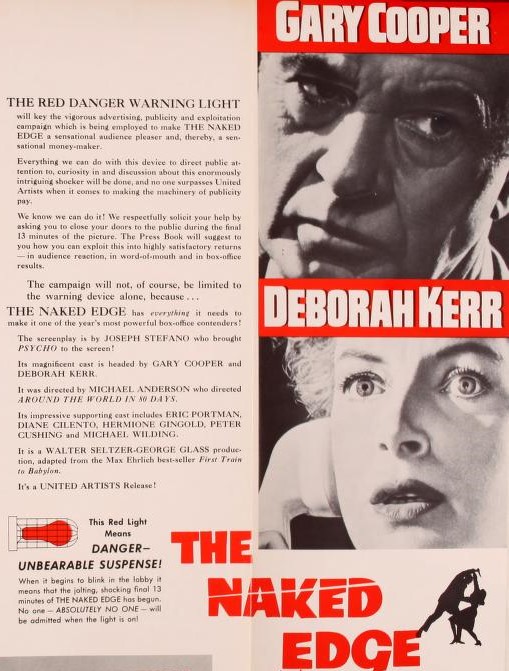
The much-vaunted “final 13 minutes” – as promoted in the poster – certainly justifies the tension but outside of whatever’s going on in Martha’s head much of that has been created by bursts of melodramatic music, sudden close-ups and continued emphasis on her point-of-view.
This was Gary Cooper’s final film and it wasn’t the kind of triumphant send-off achieved by Clark Gable (The Misfits, 1961) or Spencer Tracy (Guess Who’s Coming to Dinner, 1967). It might even have been a surprise choice, audiences more accustomed to find him in westerns – add Vera Cruz (1954) and Friendly Persuasion (1957) to his star turns in that genre. But although he had made nine westerns in the previous decade, he also starred in six non-westerns, including a politician-businessman in Ten North Frederick (1958), and wasn’t averse to playing less than straitlaced characters.
That grim determination that become a hallmark when upholding law and order easily transitioned into just grim determination against whatever threatened his well-being. Of course, the whole enterprise relies on sleight-of-hand but that’s par for the course.
Deborah Kerr had ended the 1950s as a strong-minded female but now seemed to be hell-bent on exploring her fragility and this role seems a direct line to characters played in The Innocents (1961), The Chalk Garden (1964) and The Night of the Iguana (1965).
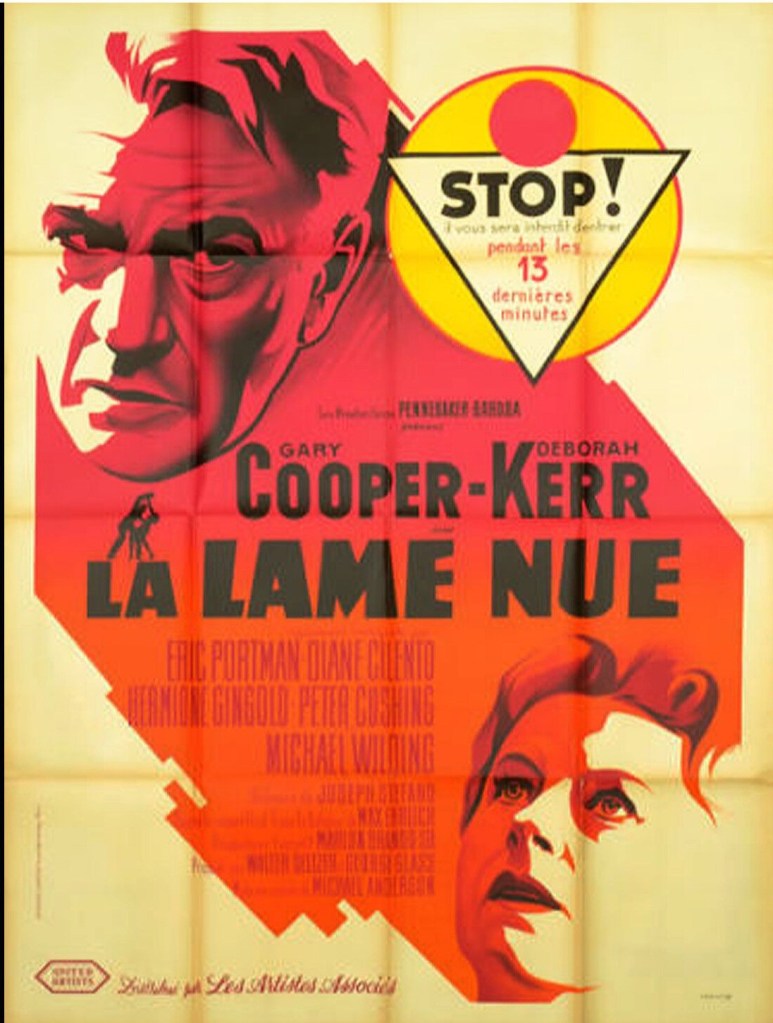
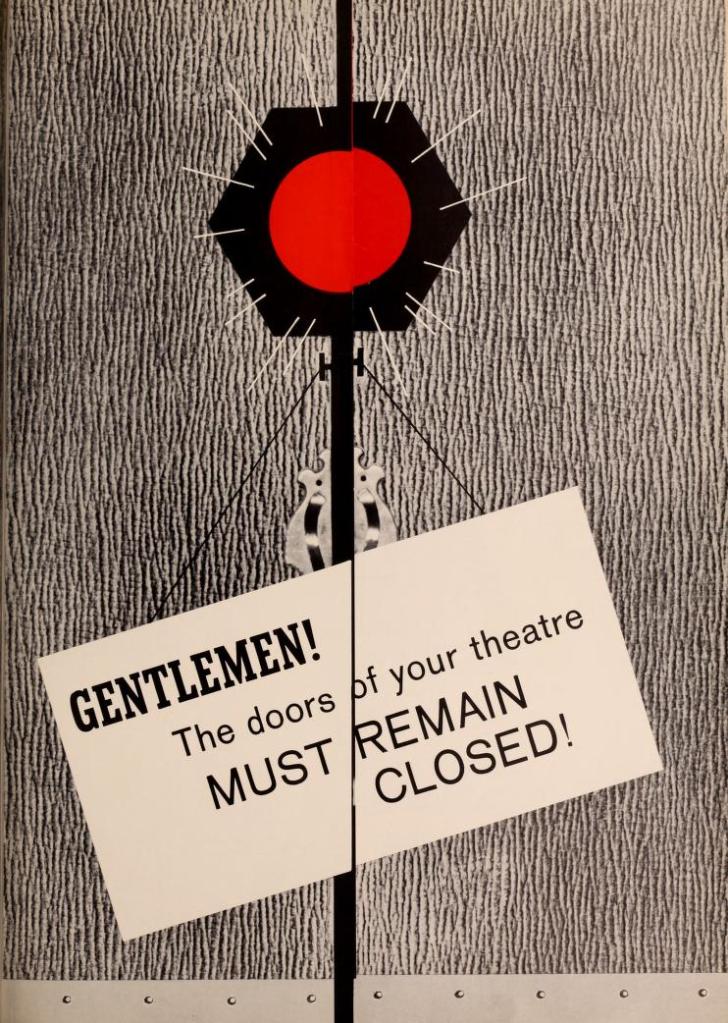
Audiences were used, by now, to being told when they could enter a theatre. Remember, this was in the glory days of the continuous performance when customers could take their seats at any time during a screening not, as now, before the picture started. You might think it odd that people were barred from entry during the final 13 minutes, as if anyone would consider this a good time to enter, but it was very common for people to take their seats at any odd time. Just in case people didn’t have watches to hand, cinemas were instructed to install a red light and have it flashing in the lobby to prevent interlopers entering. Alfred Hitchcock, of course, invented this clever marketing ploy of annoying the customers for Psycho (1960) but it was still going on as late as Return from the Ashes (1965).
Not Cooper’s greatest film but a decent two-hander that might have worked better if there had been more of a sense of gaslighting Kerr. That it works at all is down to the actors, not a bad achievement when you consider the director was asking the audience to go completely against type in accepting Cooper as a potential killer.
British director Michael Anderson (The Quiller Memorandum, 1966) had the sense to ignore the attractions of tourist London and concentrate on suspense. Joseph Stefano (Psycho) based the screenplay on a novel by Max Ehrlich.
 The Magnificent 60s