Wait Until Dark (1967) ****

You wouldn’t have figured Audrey Hepburn – she of the model looks (Breakfast at Tiffany’s, 1961)  and upmarket twang and belonging to the highest echelons of the movie business – for a Scream Queen. But there were precedents – Doris Day had at times been screaming fit to burst in Midnight Lace (1960) and Lee Remick, though not in either’s marquee league, had been terrified to bits in Experiment in Terror / The Grip of Fear (1962). By this point in pictures, the screen was awash with Scream Queens, courtesy of lower-budgeted efforts from Hammer, AIP and Amicus, so asking a top star to exercise her lungs in similar fashion might have been career suicide.

As it was, which would have come as a surprise to her legion of fans, this turned out to be pretty much the star’s swansong. She wouldn’t make another movie in nearly a decade and only another three after that. But here she certainly hits a dramatic peak.

The story’s a bit muddled and initially requires unraveling. Drug mule Lisa (Samantha Jones) passes a doll packed with heroin to fellow passenger Sam (Efrem Zimbalist Jr.) on a plane. She had been planning to steal the dope and set up on her own with Mike (Richard Crenna) and former cop Carlino (Jack Weston). There’s a bit missing from the tale but you have to assume that somehow Lisa got talking to Sam and he gave her his address and that she has turned up at his apartment looking for the doll, which wasn’t there.

Mike and Carlino turn up and have no luck searching the apartment. They don’t look hard enough because if they’d looked in the closet they’d have found the corpse of Lisa, killed by her employer Roat (Alan Arkin) who arrives to confront the pair and then hire them to help him find the heroin and dispose of the body.

So with all that out of the way we come to the meat of the story. And it follows the same premise as Man in the Dark / Blind Corner (1964) –  though, luckily, so few people saw that it wouldn’t be at the forefront of the audience mind at the time – of not so much a blind person being terrorized in their home but being largely played for a fool. The audience knows more than the blind person does and much of the story is not their vulnerability but just how long it will take for them to twig what’s going on.
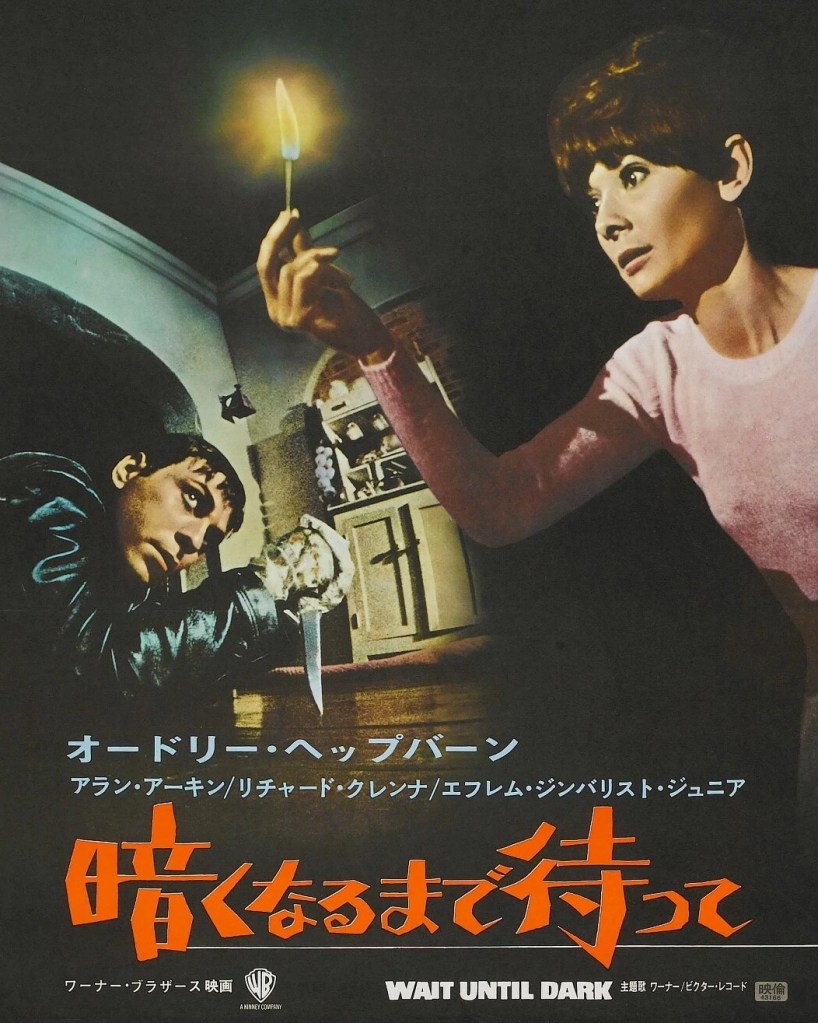
In the case of Susy (Audrey Hepburn), as with the composer in Man in the Dark, her ears are her radar. She is on the alert after hearing the same pair of squeaky shoes on different people and wondering why people are opening and closing her blinds so often. Mike and Carlino masquerade as good guys, cops investigating the murder of Lisa for which her husband Sam is a suspect. She helps them tear apart the apartment looking for the doll.

She trusts Mike implicitly, less so Carlino, and when she starts to put two and two together she has an ally, teenager Gloria (Julie Herrod) who lives upstairs – they communicate like jailbirds by banging on the pipes. Although her eyes are denied sight, they still express her emotions – trust, relief, gratitude, fear.

But there’s not just one game of cat-and-mouse. There’s three. You know damn well that Mike and Carlino plan to squeeze Roat out of the equation just as you know damn well that he is planning to play them for patsies, apt to take revenge when double-crossed.   

Gradually, her suspicions ramp up. She’s pretty smart working out the various clues. And then we hit two dramatic peaks. Firstly, when she discovers Mike is a bad guy. Secondly, when Roat kills Mike and turns on her, splashing petrol about the place, exploiting her terror of fire. She’s still got a couple of moves to turn the tables, at least temporarily but when absolute darkness does descend – she’s smashed all the lights out – and theoretically they are both in the same boat, and advantage her because of her keener hearing, it doesn’t quite work out the way she’s expected because he knows how to exploit sound.

I won’t tell you where the doll is hidden because that’s a very clever twist in itself, but apart from the few plotholes at the outset (how did Lisa manage to break into Susy’s apartment for a start and leave no trace, for example) once the narrative takes hold it exerts a very strong bite.

Audrey Hepburn is on top form. Alan Arkin (The Russians Are Coming, The Russians Are Coming, 1966) and Jack Weston (Mirage, 1965) are a bit too obvious for me, but the smoother Richard Crenna (Marooned, 1969) is excellent.

Directed with both an eye to character and tension by Terence Young (Dr No, 1962) and adapted by Robert and Jane-Howard Carrington (Kaleidoscope, 1966) from the Broadway play by Frederick Knott (Dial M for Murder, 1954).

Top notch.

The Chapman Report (1962) ***

In the 1950s new talent was largely bloodied via small parts in big movies. In the 1960s, the easier route was to first build them up as television stars. This picture represents the nadir of that plan – female roles filled with established talent, males roles with actors who had made their names in television. And, boy, does it show, to the overall detriment of the picture.

Warner Bros even had the temerity to top-bill Efrem Zimbalist Jr (hauled in from 77 Sunset Strip, 1958-1964) over more famous actresses. Zimbalist Jr at least had some marquee value after starring in low-budget A Fever in the Blood (1961) and second male lead in the classier By Love Possessed (1961) and Ray Danton (The Alaskans, 1959-1960) had played the title role in B-picture The George Raft Story (1961), but Ty Hardin was unknown beyond Bronco (1958-1962) and Chad Everett drafted in from The Dakotas (1962-1963).

Little surprise, therefore, that director George Cukor (Justine, 1969) concentrated his efforts on the females in the cast. But it was curious to find Cukor taking on this sensationalist project based on the surveys of sexuality that had taken the country by storm. Had it been made by a less important studio than Warner Bros it would have been classed as exploitation.

The bestseller by Irving Wallace on which it was based was a take on the Kinsey Report a decade before and others of the species and, theoretically at least, opened up the dry material of the more scientific reports into how men and women behaved behind closed doors.

Amazing that this was passed by the Production Code since dialog and action are pretty ripe. Interviewed women are asked about “heavy petting” and how often they have sex and if they find the act gratifying. One interviewer crosses the line and has an affair; these days that would be viewed as taking advantage of a vulnerable woman. And there’s a gang rape.

Given the movie’s source Cukor takes the portmanteau approach, four women undergoing different experiences. The problem with this picture is that there’s little psychological exploration. Women are presented by their actions not by their thought patterns or by their treatment by their husband.

In what, in movie terms, is the standout section, Naomi (Claire Bloom), an alcoholic nymphomaniac, is so desperate for attention she throws herself at the delivery boy (Chad Everett), then at a married jazz musician (Corey Allen), with devastating effect, as he hands her over to his buddies, causing sufficient degradation that she commits suicide. Since we first come across her crying in bed, sure signs of depression, these days you would expect more exploration of her psychiatric state.

Similarly, the widowed Kathleen (Jane Fonda) has been tabbed frigid by her husband and nobody thinks to call into question his inadequacies as a sex partner rather than hers. Here it’s put down to daddy issues and growing up in a household heavy with morality.

Kathleen is taken aback by the researcher even asking her about sex, “physical love” the technical term, rather than a purer kind but her consternation at the questions being posed in very cold-hearted manner by an anonymous voice – researcher hidden behind a wall – does reveal how ill-equipped some people are to even talk about sex. Her story develops into some kind of happy ending, despite the fact that her interviewer Radford (Efrem Zimblist Jr) would be busted these days for taking advantage.

Teresa (Glynis Johns) is convinced by the interviewer’s tone that the simple normality of her own marriage must be abnormal and so, determined to fit in, embarks on a clumsy attempt to  seduce footballer Ed (Ty Hardin), coming to her senses when it comes to the clinch.

The interview also has a major impact on the adulteress Sarah (Shelley Winters). After confessing her affair to husband Frank (Harold J. Stone) she rushes off to lover, theater director Fred (Ray Danton), only to find, to her astonishment, that he’s a married man. Her husband accepts her back.

To keep you straight, the “good” women are dressed in white, the “bad” ones in black. The filming is distinctly odd. The man behind the wall is filmed with no ostentation, but the style completely changes when the director turns to the women who often end up in floods of tears.

Claire Bloom (Two into Three Won’t Go, 1969) and Jane Fonda (Barbarella, 1968) are the standouts because they have the most emotion to play around with. Oscar-nominated Glynis Johns (The Cabinet of Caligari, 1962) is the comic turn. Over-eager over-confident Oscar-winner Shelley Winters (A House Is Not a Home, 1964) gets her come-uppance. None of the men make any impact.

The book took some knocking into shape. Perhaps because, of the four names on the credits only one had signal screenwriting experience, Don Mankiewicz (I Want to Live, 1958). For the others, better known for different occupations in the business, this was their only screenwriting credit. Wyatt Cooper was an actor married to Gloria Vanderbilt, Gene Allen art director on many Cukor pictures and production designer on this, and Grant Stuart was a boom operator though not on this picture.

Best viewed through a time capsule.

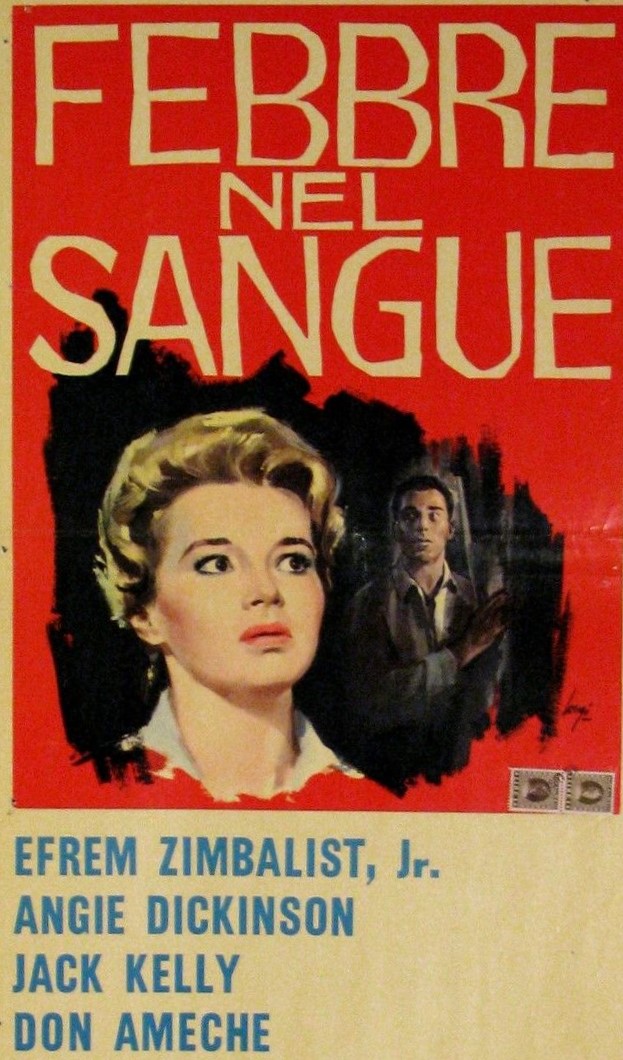
A Fever in the Blood (1961) ****

Blistering B-film from writer Roy Huggins (TV’s The Fugitive) that marries political chicanery to legal jiggery-pokery in a movie that races from one twist to another. In his role as producer Huggins calls upon actors he made stars from the television series he created – Efrem Zimbalist Jr. (77 Sunset Strip), Jack Kelly (Maverick) – and gives Angie Dickinson (Oceans 11) the female lead.

Huggins’ brilliant premise is to ignore the dilemma of the man, Walter Thornwall (Rhoses Reason), nephew of a former Governor, wrongly accused of the murder of his wife, and instead to concentrate on accuser District Attorney Dan Callahan (Jack Kelly) and Judge Lee Hoffman (Efrem Zimbalist Jr), both of whom, running for the vacant Governor post, stand to make massive political capital from the publicity surrounding a sensational trial.

Former buddies Callahan and Hoffman are now bitter rivals after the former had reneged on a promise to support the latter’s bid for the political post. Also throwing his hat into the ring is Senator Alex Simon (Don Ameche) whose wife Cathy (Angie Dickinson) once had romantic yearnings for Hoffman. The only one of the trio who has anything approaching a conscience is Hoffman and that is immediately tested when the Senator offers him a bribe to stand down from the race, which the Judge, after an appeal from Cathy, does not report to the authorities. There is another ploy open to Hoffman. Should he find reason to declare a mistrial that would sabotage Callahan’s bid since he would not be riding high in the media after convicting a celebrity killer.

The picture jumps from intense politics, the wheeling-dealing and wrapping up votes, to a  trial in a packed courtroom very much in the Perry Mason vein with surprise witnesses, shocks, objections sustained or overruled, clever arguments, dueling attorneys, and last-minute evidence.

A witness has Thornwall running away from the scene of the crime and when his wife is painted as a nymphomaniac that provides ample motive.  Further evidence pushes the defendant into a worse corner. But all the while over the trial hangs the stink of political machination.

There are another half-dozen brilliant twists, not least of which is Judge Hoffman letting conscience go hang and embarking on a couple of dodgy endeavors himself including what amounts to sheer blackmail. The District Attorney, one of the sharpest tools in the box, reacts to every setback with a cunning that would have been criminal had it not been legal. Also hanging there is potential adultery between Cathy and the widowed Hoffman.

The writer in Huggins is a past master at shifting the cards in the deck and this has so many twists and turns it feels like a whole series of The Fugitive crammed into one episode. There is as much self-awareness of the underbelly of politics as in Advise and Consent (1962), as much deceit and corruption, as much principle disguised as honor.

But the plot here is so tight, the characters dealing with twists and turns that the movie has no requirement for the depth of characterization that would have been brought to the picture by a Henry Fonda or Charles Laughton. Huggins proves you can have just as much fun without the big boys. None of the stars with the exception of Angie Dickinson made a dent on the Hollywood A-list but they are all perfectly acceptable, and once Huggins tightens the screws plot-wise the last thing on your mind is wishing for a better cast.   

A cracker.

Behind the Scenes: “By Love Possessed” (1961)

Call it friendly persuasion. After The Magnificent Seven (1960), producer Walter Mirisch wanted to keep director John Sturges on-side. Other potential projects were falling by the wayside and Sturges needed, for financial reasons, to keep working while Mirisch wanted to ensure that when they finally licked the script for The Great Escape, still three years off as it happened, they would have a grateful director all set.

Especially, they did not want him to fall into the hands of rival producer Hal Wallis who was making a second attempt to set up The Sons of Katie Elder. Sturges had been the original director in 1955 with Alan Ladd in the leading role but a dodgy script. Although the script was in better shape, Wallis couldn’t get Paramount to bite (and wouldn’t until 1965). Another Sturges prospect was a remake of Vivacious Lady (1938) teaming Steve McQueen and Lee Remick in the Ginger Rogers-James Stewart roles, but that also fell through.

“I didn’t want John to go elsewhere and get tied up in another film,” admitted Mirisch. Partly as a means of finding a vehicle for Lana Turner, Mirisch had struck a deal with Seven Arts to make By Love Possessed by James Gould Cozzens, a 1957 bestseller for which producer Ray Stark had forked out $100,000 as a means of finessing his television-dependent company into the movies.  

Essentially, Mirisch picked up the picture on the rebound. Seven Arts had fallen out with United Artists which had financed the acquisition of three expensive properties: Broadway hits West Side Story and Two for the Seesaw and the novel By Love Possessed, all of which fell into the Mirisch lap. Mirisch enthused about the two stage productions, interesting Robert Wise in the musical and Billy Wilder, at least initially, in the romantic drama. Prior to The Magnificent Seven, Mirisch had tied Sturges down to a long-term deal and now handed him the script for By Love Possessed. “He read it and said he would like to do it.”

Lana Turner had revived her career with an Oscar-nominated turn in Peyton Place (1957), a huge hit, and had hit gold with remake Imitiation of Life (1959). She seemed the ideal candidate for another adaptation of a seamy besteller. At this point the Mirisch company was still trying to make it way in Hollywood. Its prime method of getting its foot in the door was to pay stars over the odds and allow them greater say in their movies, sometimes backing pet projects. The price of working with big marquee names was often a lot of grief.  

Like any other major producer, Walter Mirisch saw himself as a star-maker. Hiring talent on a long-term contract for a low fee was one way of ensuring he could ride on their inexpensive coat-tails in the future. Efrem Zimbalist Jr was the star of hit television series 77 Sunset Strip and the producer “hoped that casting him with Lana in our picture would make him a motion picture star.” He viewed the likes of Jason Robards and George Hamilton as merely supporting actors and not potential stars in their own right, although both would go on to have more stellar careers than Zimbalist.

Ketti Frings, Oscar-nominated for Come Back, Little Sheba (1952), had been paid $100,000 plus a percentage to write the screenplay of what was perceived as a difficult novel to adapt, given it was riddled with flashbacks and introspection. “If we told the book on the screen, we would be making an 18-hour picture,” said Sturges, derisively, as if blockbuster novels (From Here to Eternity etc) were not filetted all the time. Oscar-winner Charles Schnee (Red River, 1948) was drafted in for a rewrite – he had worked on Jeopardy (1953), though uncredited, a Sturges thriller starring Barbara Stanwyck.

Now the screenwriter was dogged with script changes demanded by Lana Turner. According to Mirisch, the actress “never let up” wanting script alterations. But Schnee’s work didn’t meet the director’s expectations and was doctored to such an extent the screenwriter removed his own name from the credits and substituted the pseudonym John Dennis. Mirisch initially brought in Isobel Lennart, who was adapting Two for the Seesaw, for a polish but eventually her version departed significantly from the Schnee original.

Novels could get away with a lot more blatant sexuality than books, though Peyton Place (1957) had made a very good stab at scorching the screen. But the finished script didn’t manage to match the novel’s carnality except in the character of Veronica (Yvonne Craig), the one-night stand who triggers the family downfall. Whatever the problems the script couldn’t nail, Sturges was clearly not the director to get round them with hot onscreen love scenes. Much as he admired strong women, couples getting it on were not his speciality.

The movie was filmed on the Columbia lot with a week on location.

“You get talked into it…or you need the money,” said Sturges. “I knew I had no business making that picture. Sure it was well-acted and staged …but I couldn’t care less about these people. I didn’t like ‘em, didn’t understand ‘em. And if you don’t understand people in a given situation, and you don’t like what’s happening, you shouldn’t try to make a movie out of it.”

Mirisch was as philosophical. “John Sturges was more at home with male-oriented, action pictures than soap opera. I was well aware of that, but I was guilty of ignoring my own misgivings and of wanting to keep him involved in one of our projects while we were doing the script preparation for The Great Escape.” The failure of the movie was, for Mirisch, “a psychological and emotional blow,” one that wasn’t softened by success at the box office.

SOURCES: Glenn Lovell, Escape Artist, The Life and Films of John Sturges (The University of Wisconsin Press, 2008) p218-220; Walter Mirisch, I Thought We Were Making Movies, Not History (The University of Wisconsin Press, 2008) p99, 114-116, 119-120;  

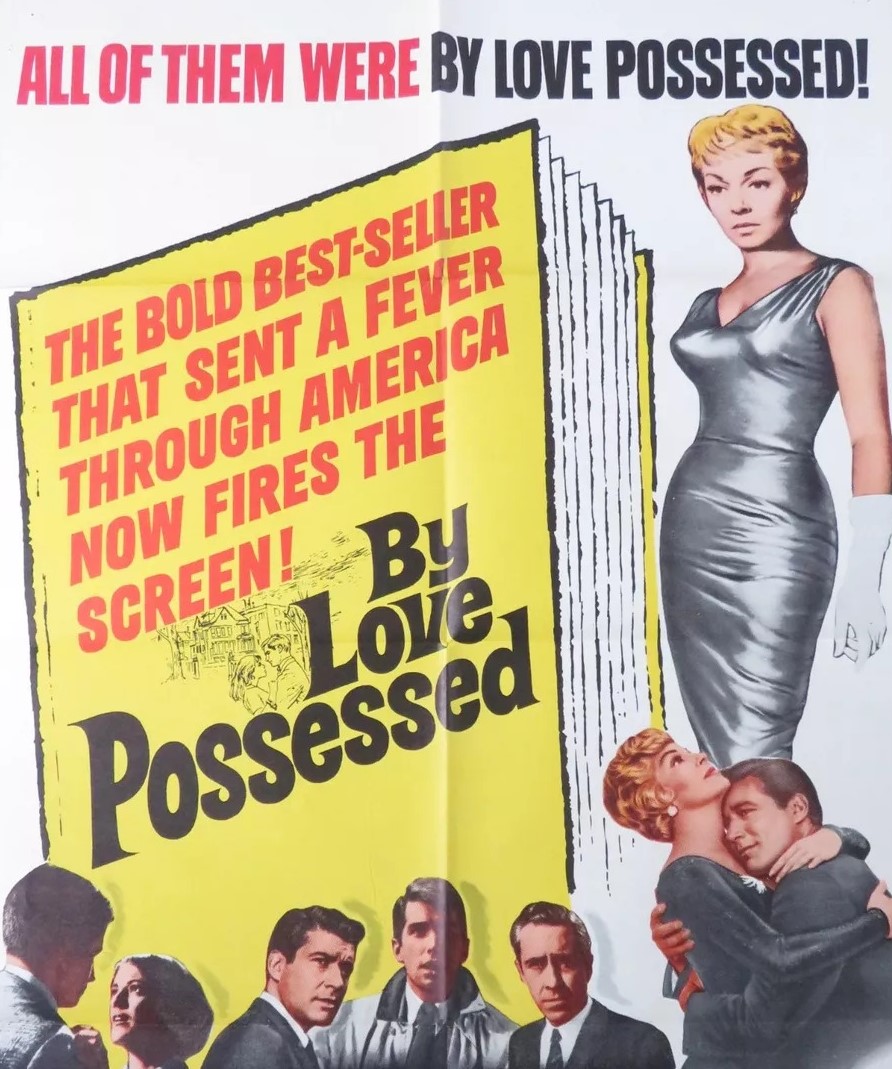
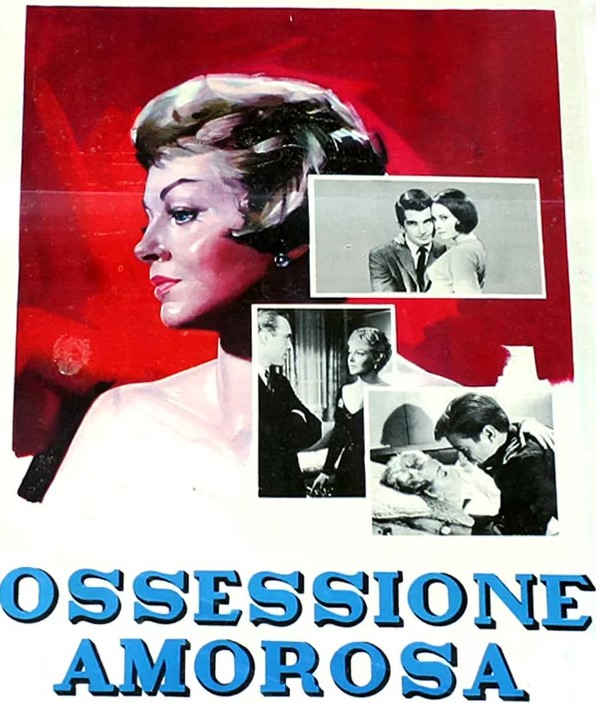
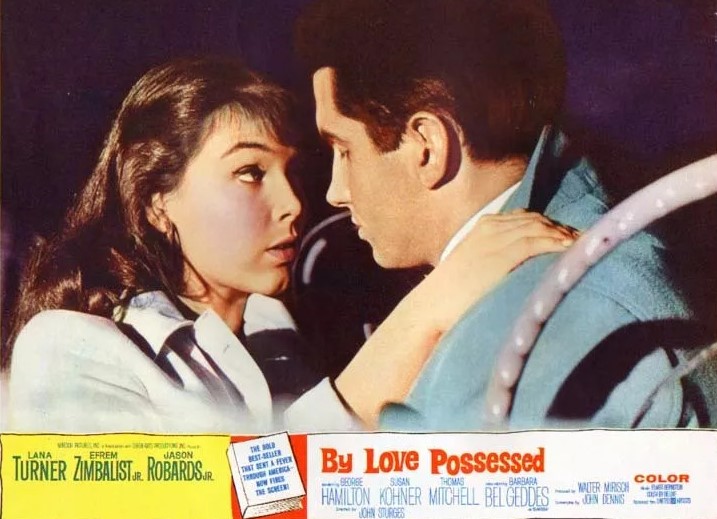
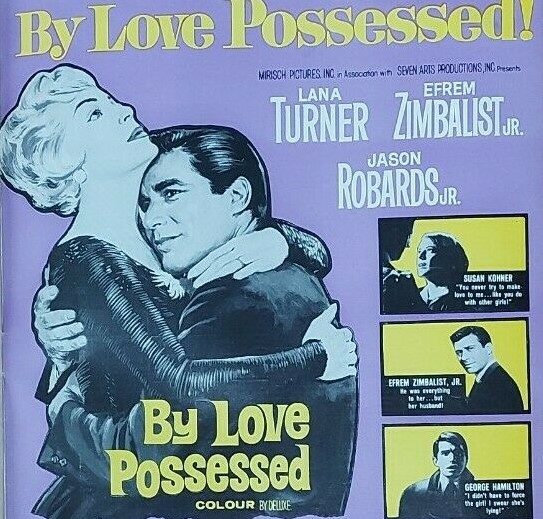
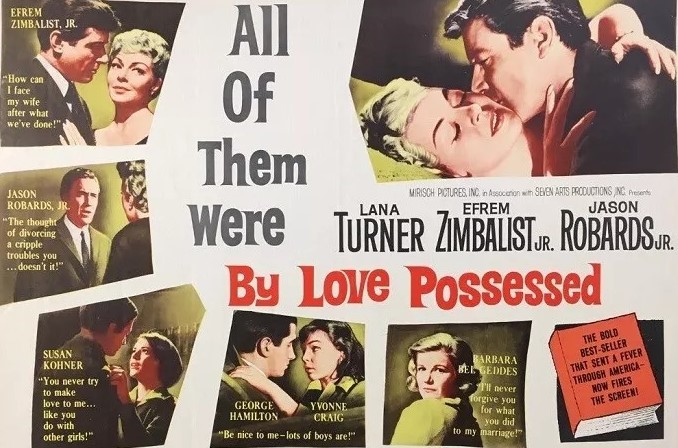
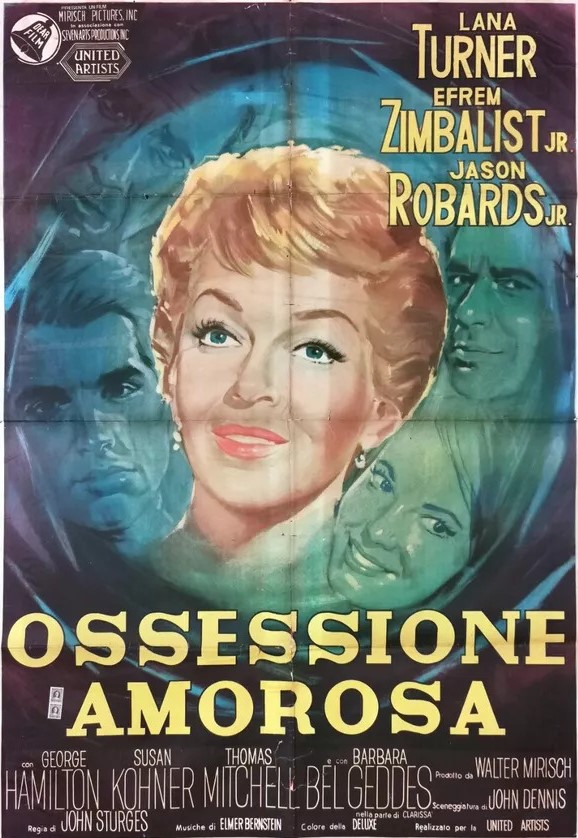
By Love Possessed (1961) ***

You couldn’t get further away from The Magnificent Seven (1960) than this buttoned-up –Peyton Place melodrama but director John Sturges, struggling to put together a more favored project, ended up here. It’s not that he didn’t have experience in this genre, having helmed Spencer Tracy legal drama The People Against O’Hara (1952) and June Allyson in The Girl in White (1952) but it was only when you turned to this field that you realized how much more freedom there was in a western.

There’s no shortage of pithy dialog courtesy of Charles Schnee (Butterfield 8, 1960). The marriage of Arthur Winner (Efrez Zimbalist Jr) and wife Clarissa (Barbara Bel Geddes) is more “merger” than romance. Opposing lawyers are “friendly enemies.” Arthur’s son Warren (George Hamilton) balks at a “smug career.”

There a couple of marvellous scenes and the characters are well-drawn, too well-drawn perhaps, audience constantly being reminded of personality defects, and it reeks of the formulaic, wealthy lives coming apart in Mansionworld. The biggest problem is there’s way too many characters that suffocate the life out of the picture. The heat the director clearly expected to generate is missing, hardly surprising in a world where duty dominates.

We’re pretty much nearly halfway through the picture before adultery crops up, bitter alcoholic wife Marjorie (Lana Turner) falling for Arthur, the business partner of her husband Julius (Jason Robards). Just around the same time Warren avails himself of a one-night stand with local “tramp” Veronica (Yvonne Craig) because he wouldn’t dare lay a hand on fiancee Helen (Susan Kohner), the town’s richest gal.

Simmering in the background is what today we might recognize as early onset dementia, which in those days was just treated as the frailties of old age, when Arthur discovers his boss  Noah (Thomas Mitchell) has been stealing from a client. So, as you can imagine, the whole set-up is all set to explode as characters rebel against self-imposed restraint.

First to crack in the bigger sense is Helen who commits suicide when a spurned Veronica accuses Warren of rape. Then you can take your pick of various other outcomes. And that’s a shame because there’s interesting material here, mostly left unexplored because we’re wrapped up in a game of consequences.

Ace Harvard law student Warren falls out with his father over the case, just discussed but never played out, of a young mother who has killed her baby. The woman, with a mental age of eight, believed her newborn was dead and so buried it. Warren argues his father should offer a plea of insanity, which Arthur rejects as a legal dodge. The question of how the pregnancy occurred is never discussed, but you can guess it could as easily be incest or at the very least someone taking advantage of an incapacitated youngster.

There’s a great scene – the Majorie A and Marjorie B sequence – where Julius explains how on the one hand his wife runs a great house and is a terrific social adjunct and on the other hand is wild, impulsive, demanding and it’s the second one he fell in love with and, although currently rejected, refuses to give a divorce. And it’s Julius again who has the best character defining scene, when he acknowledges that pity is “a dirty word.”

Some surprisingly raw language is used when it comes to the question of rape. “The law assumes a common tramp like Veronica can still be raped” and the question of consent carries a contemporary sting.

Perhaps the biggest issue is the unspoken. It’s not love the main characters are after, it’s sex. Julius is lame after an auto accident and that appears to hinder his activities in the marital bed.  Warren is too scared of Helen’s reaction to engage in the normal fumblings of youth.

The top-billed Lana Turner (who headlined the original Peyton Place, 1957) is kept at bay for too long as the other factors are brought into play and to be honest she is way out of the league of the likes of Efrem Zimbalist Jr (A Fever in the Blood, 1961). He would scarcely come up to scratch for a woman like her unless she was desperate. And perhaps she is. Turner steals every scene she’s in. The only character who shows screen spark is the vengeful Veronica who refers to herself in the third person – “nobody treats Veronica like a tramp but Veronica.”

George Hamilton (A Time for Killing, 1967) has some moments, but not enough. The same goes for Yvonne Craig (Batgirl in the Batman TV series 1966-1968). Jason Robards (A Big Hand for the Little Lady / Big Deal in Dodge City, 1966) takes an early stab at the simmering tense persona he would make his screen template. Charles Schnee was so annoyed with what happened to his original script, adapted from the James Gould Cozzens bestseller, that he insisted on using the pseudonym John Dennis.

A well turned-out potboiler.

A Fever in the Blood (1961) ****

Blistering B-film from writer Roy Huggins (TV’s The Fugitive) that marries political chicanery to legal jiggery-pokery in a movie that races from one twist to another. In his role as producer Huggins calls upon actors he made stars from the television series he created – Efrem Zimbalist Jr. (77 Sunset Strip), Jack Kelly (Maverick) – and gives Angie Dickinson (Oceans 11) the female lead. Huggins’ brilliant premise is to ignore the dilemma of the man, Walter Thornwall (Rhodes Reason), nephew of a former Governor, wrongly accused of the murder of his wife. Instead the film concentrates on accuser District Attorney Dan Callahan (Kelly) and Judge Lee Hoffman (Zimbalist Jr), both of whom, running for the vacant Governor post, stand to make massive political capital from the publicity surrounding a sensational trial.

Former buddies, Callahan and Hoffman are now bitter rivals after the former had reneged on a promise to support the latter’s bid for the political post. Also throwing his hat into the ring is Senator Alex Simon (Don Ameche) whose wife Cathy (Dickinson) once had romantic yearnings for Hoffman. The only one of the trio who had anything approaching a conscience is Hoffman and that is immediately tested when the Senator offers him a bribe to stand down from the race, which the Judge, after an appeal from Cathy, does not report to the authorities. There is another ploy open to Hoffman. Should he find reason to declare a mistrial, that would sabotage Callahan’s bid since he would not be riding high in the media after convicting a celebrity killer.

The picture jumps from intense politics, the wheeling-dealing and the wrapping up of votes, to a  trial in a packed courtroom very much in the Perry Mason vein with surprise witnesses, shocks, objections sustained or overruled, clever arguments, dueling attorneys, and last-minute evidence. A witness has Thornwall running away from the scene of the crime and when his wife is painted as a nymphomaniac that provides ample motive.  Further evidence pushes the defendant into a worse corner. But all the while over the trial hangs the stink of political machination.

There are another half-dozen brilliant twists not least of which is Judge Hoffman letting conscience go hang and embarking on a couple of dodgy endeavors himself including what amounts to sheer blackmail. The District Attorney, one of the sharpest tools in the box, reacts to every setback with a cunning that would have been criminal had it not been legal. Also hanging there is potential adultery between Cathy and the widowed Hoffman.

The writer in Huggins is a past master at shifting the cards in the deck and this has so many twists and turns it feels like a whole series of The Fugitive crammed into one episode. There is as much self-awareness of the underbelly of politics as in Advise and Consent (1962), as much deceit and corruption, as much principle disguised as honor. But the plot here is so tight, the characters dealing with twists and turns that the movie has no requirement for the depth of characterization that would have been brought to the picture by a Henry Fonda or Charles Laughton. Huggins proves you can have just as much fun without the big boys. None of the stars with the exception of Angie Dickinson made a dent on the Hollywood A-list but they are all perfectly acceptable, and once Huggins tightens the screws plot-wise the last thing on your mind is wishing for a better cast.   

Discover WordPress

A daily selection of the best content published on WordPress, collected for you by humans who love to read.

The Atavist Magazine

by Brian Hannan

WordPress.com News

The latest news on WordPress.com and the WordPress community.