Sweet Bird of Youth (1962) ***

Tennessee Williams wrote better parts for women than he did for men. You can start with Vivien Leigh, Oscar-winner for A Streetcar Named Desire (1951) – Marlon Brando only nominated – and Anna Magnani Oscar-winner for The Rose Tattoo (1955) with Maria Pavan nominated and star Burt Lancaster left out of gong consideration. Carroll Baker and Mildred Dunnock were nominated for Baby Doll (1956) with star Karl Malden ignored. Paul Newman did receive an Oscar nomination for Cat on a Hot Tin Roof (1958) as did Elizabeth Taylor.

Montgomery Clift was frozen out of Oscar consideration for Suddenly, Last Summer (1959) while both Elizabeth Taylor and Katharine Hepburn scored nominations.  Marlon Brando received no Oscar recognition for The Fugitive Kind (1960). Ditto Laurence Harvey for Summer and Smoke (1961) though Geraldine Page and Una Merkel received nominations. Lotte Lenya was recognised with a nomination for The Roman Spring of Mrs Stone (1961).

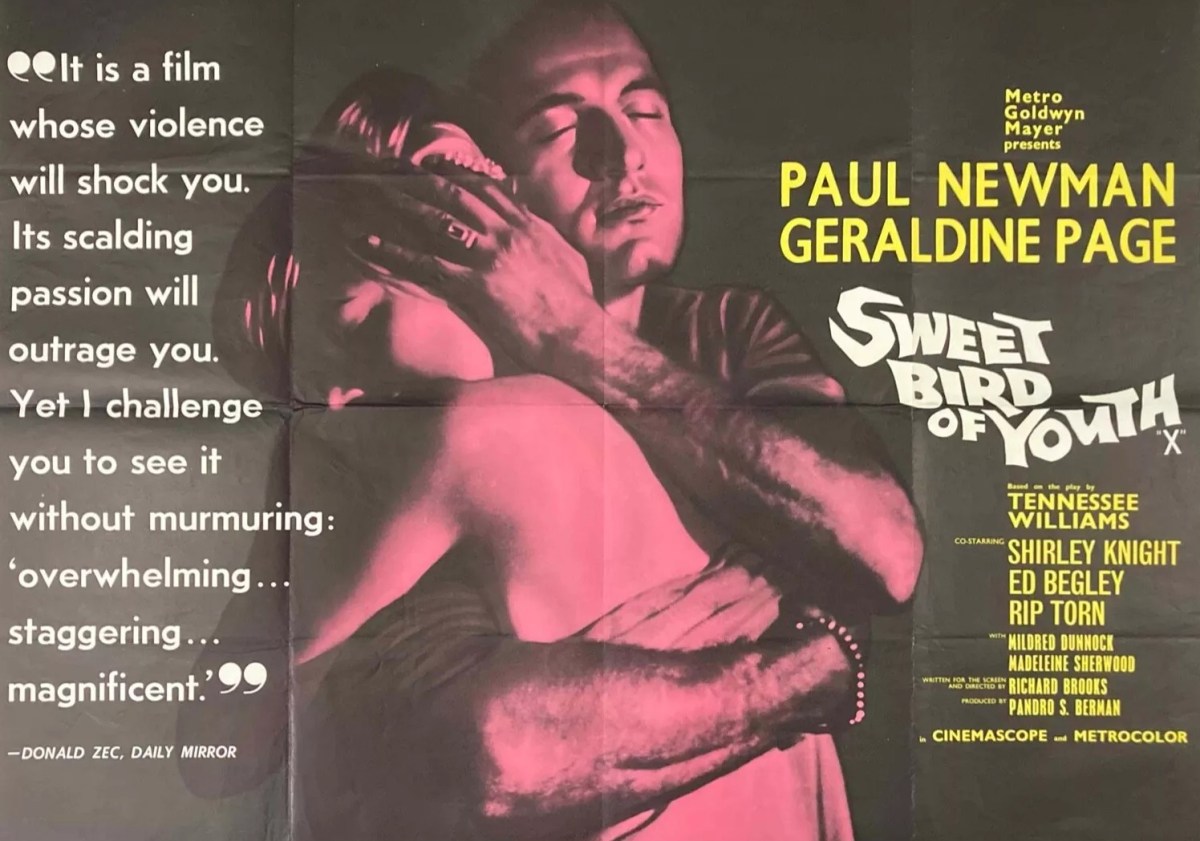
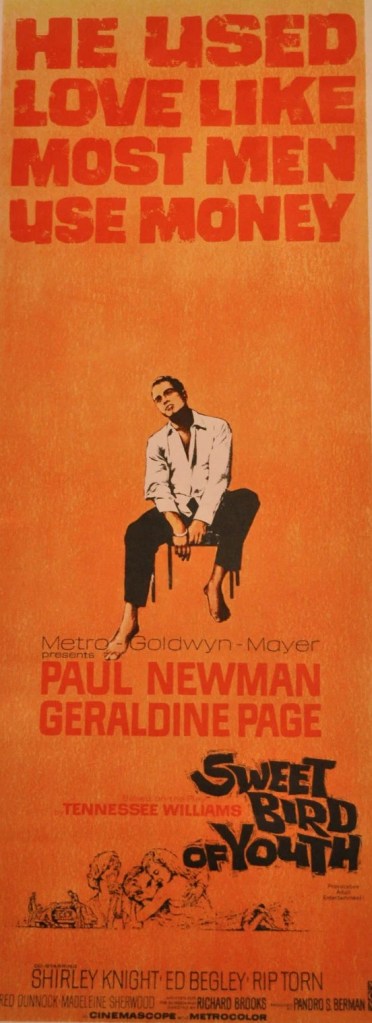
So the omens were not particularly good for Paul Newman when he repeated the role he had essayed on Broadway of Chance Wayne in Sweet Bird of Youth. In the stage version, while he received respectable notices, it was Geraldine Page who picked up the glory, winning the New York Drama Critics Award and nominated for a Tony.

So it was going to be a long shot that Newman could outshine her in the film version, even though he received considerably more screen time – Page and Shirley Knight were nominated, Newman was not.

The flaws in the tale are more obvious in the screen version. On stage, sheer force of personality can win over an audience, on screen that’s more difficult. And in truth Chance was another of Williams’ male losers. The main difference between Williams’ male and female characters is that not only are the women more reflective and aware of their shortcomings while the men simply bulldoze ahead but they are more able to express their feelings without dialog.

Chance is a failed actor turned gigolo taking advantage of alcoholic over-the-hill movie actress Alexandra Del Lago (Geraldine Page), running away from what she believes will be her final and calamitous movie, who half the time doesn’t know where she is or who he is. Chance has dreams of using her to hustle his way into the movie business, blackmailing Del Lago over her drugs abuse to front a new picture, and begins knocking on doors, but long-distance, since he’s returned to his home town in the hope of winning back his childhood sweetheart Heavenly Finley (Shirley Knight), planning to set her up as a movie star.

Expectations that there might be a welcome for a young man made good are dashed when everybody continues to treat him as the waitperson he once was or wants to run him out of town. To protect his daughter from such an unworthy suitor, the town’s most prominent citizen and political heavyweight Tom Finley (Ed Begley) had previously managed to pay Chance to leave town. His son Tom Jr (Rip Torn)  shares his father’s aspirations.

Despite the odds Chance determines to woo Heavenly but his Hollywood dream is scuppered when Del Lago realizes that her last picture looks like becoming an unexpected success and she can once again write her own ticket rather than rely on a con man like Chance.

It doesn’t end well though, for reasons best known to him, writer-director Richard Brooks tacked on a happy ending – the play had an unhappy ending – that doesn’t ring true.

There’s nothing wrong with Paul Newman’s acting even if it didn’t attract the attention of the Oscar voters, but there’s not enough meat on the character. On the other hand, Geraldine Page and Shirley Knight (The Group, 1966) in part excel because their characters are better written. Rip Torn (Beach Red, 1967) develops his screen menace. Ed Begley’s (Warning Shot, 1966) over-the-top performance snagged him an Oscar.

The story’s just too thin and the hard edges of the play have been trimmed back so it was less appealing to an audience.

Lacks the usual Tennessee Williams bite but the female performances are well worth a watch.

I’m doing a Behind the Scenes article tomorrow so look out for that.

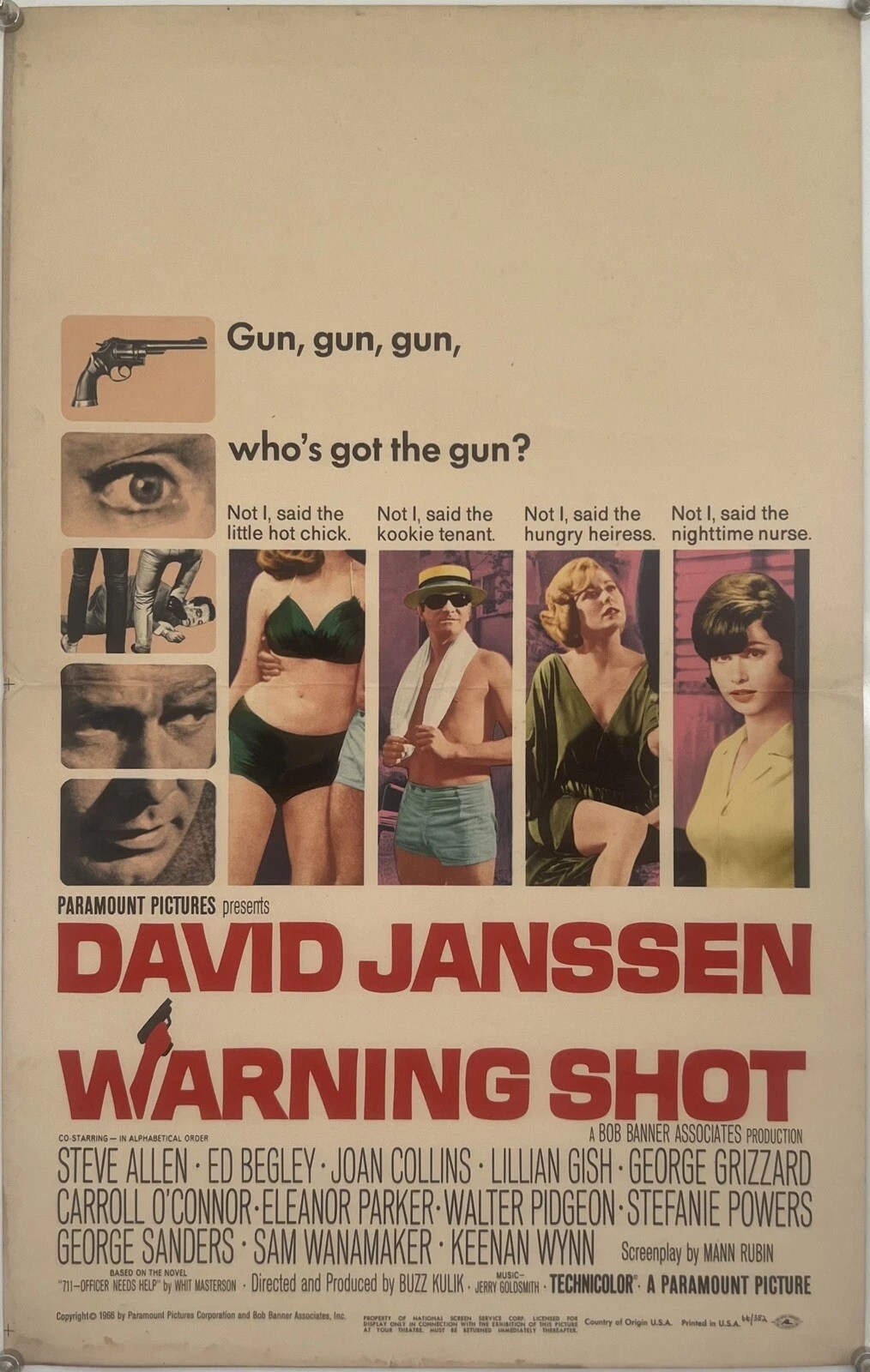
Warning Shot (1967) ****

So underrated it doesn’t even feature on Wikipedia’s chart of 1960s crime pictures, this tight little gem, with an early reflection on police brutality, dream cast, violence in slow motion  (prior to The Wild Bunch, 1969, mind you)  and stunning score from Jerry Goldsmith is definitely in need of resurrection.  Astonishing to realize that cop pictures had fallen so out of fashion, that this was the first Hollywood cop film of the decade – outside of a drama like The Chase (1966) – the entire previous output focusing on gangsters with a rare private eye (Harper, 1966) thrown in. With none of the vicious snarl of Madigan (1968) or the brutality of Coogan’s Bluff (1968), this was more in keeping with the later In the Heat of the Night (1967) in terms of the mental and physical barrage endured by the cop.

In thick fog on a stakeout for a serial killer at an apartment block Sgt Tom Valens (David Janssen) kills a potential suspect, wealthy Dr Ruston. Valens claims the suspect was reaching for his gun. Only problem – nobody can find the gun. Up on a potential manslaughter charge, Valens is pressured by boss (Ed Begley), lawyer (Walter Pidgeon) and wife (Joan Collins) to take the rap and plead guilty.  The public and media rage about police brutality. Putting Valens’ testimony in doubt is a recent shooting incident, which left Valens with a stomach wound, and which may have clouded his judgement.

Although suspended, Valens has no alternative but to investigate, interviewing elderly patient Alice (Lillian Gish) whom the doctor was visiting, patient’s neighbour playboy pilot Walt (George Grizzard), doctor’s assistant Liz (Stefanie Powers), doctor’s wife   Doris (Eleanor Parker), doctor’s stockbroker (George Sanders) with nothing to show for his efforts but a savage beating, filmed in slow motion, inflicted by the doctor’s son and pals, and an attempt on his life. He gets into further trouble for attempting to smear the doctor as an abortionist (a crime at the time).

The missing gun remains elusive though the direction at times suggests its existence is fiction. The detection is superb, red herrings aplenty, as Valens, the odds against him cheating conviction lengthening by the day, a trial deadline to beat, everyone turning against him, openly castigated as the killer cop, struggles to uncover the truth. And it’s clear he questions reality himself. He has none of the brittle snap of the standard cop and it’s almost as if he expects to be found guilty, that he has stepped over the line.

Along the way is some brilliant dialogue – the seductive drunk wife, “mourning with martinis” suggesting they “rub two losers together” and complaining she has to “lead him by the hand like every other man.”  Cinematography and music combine for a brilliant mournful scene of worn-down cop struggling home with a couple of pints of milk. The after-effects of the stomach injury present him as physically wounded, neither the tough physical specimen of later cop pictures nor the grizzled veteran of previous ones.

David Janssen (King of the Roaring 20s, 1960) had not made a picture in four years, his time consumed by the ultra-successful television show The Fugitive, but his quiet, brooding, internalized style and soft spoken manner is ideal for the tormented cop. This is also Joan Collins (Esther and the King, 1960) first Hollywood outing in half a decade.

Pick of the supporting cast is former Hollywood top star Eleanor Parker (Detective Story, 1951) more recently exposed to the wider public as the Baroness in The Sound of Music (1965) whose slinky demeanor almost turns the cop’s head. The cast is loaded with simialr sterling actors.

In the veteran department are aforementioned famed silent star Lillian Gish (The Birth of a Nation, 1915), veteran Brit  George Sanders (The Falcon series in the 1940s), Walter Pidgeon (Mrs Miniver, 1942) also in his first film in four years,  Ed Begley in only his second picture since Sweet Bird of Youth (1962) and Keenan Wynn (Stagecoach, 1966). Noted up-and-coming players include Stefanie Powers (also Stagecoach), Sam Wanamaker (The Spy Who Came in from the Cold, 1965), George Grizzard (Advise and Consent, 1962) and  Carroll O’Connor (A Fever in the Blood, 1961). American television star Steve Allen (College Confidential, 1960) plays a hypocritical pundit.

A sophomore movie for noted television director Buzz Kulik (Villa Rides, 1968), this is easily his best picture, concentrating on character with a great eye for mood. Screenwriter Mann Rubin (Brainstorm, 1965) adapted the Whit Masterson novel 711  – Officer Needs Help. The score is one of the best from Jerry Goldsmith (Seconds, 1966).

Has this emanated from France it would have been covered in critical glory, from the overall unfussy direction, from the presentation of the main character and so many memorable performances and from, to bring it up once again, the awesome music.

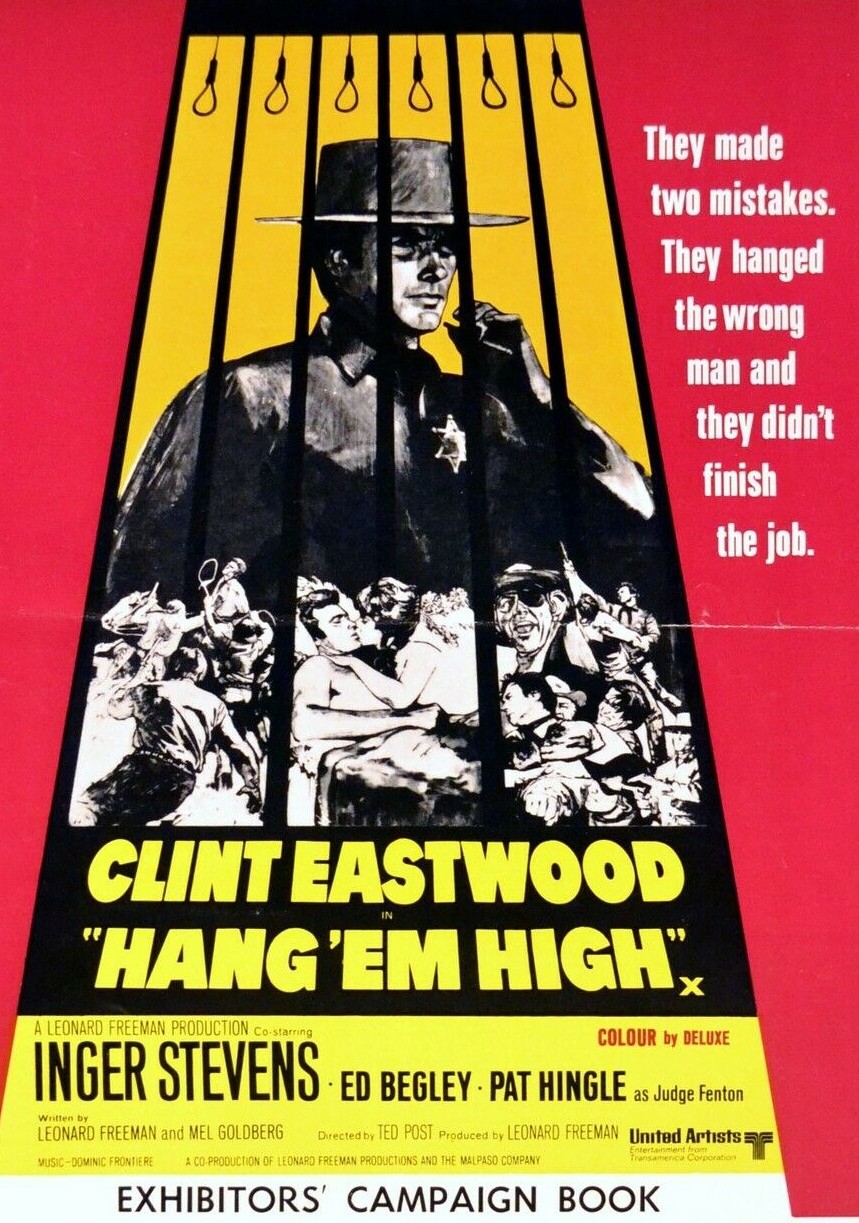
Hang ‘Em High (1968) ****

Clint Eastwood didn’t waste much time capitalizing on the unexpected success of the Dollars Trilogy. But the first was not released in the United States till 1967 and despite the success of the series across Europe was generally dismissed as a fluke, until American audiences suggested otherwise. The following year Eastwood appeared in three pictures, Hang ‘Em High, Coogan’s Bluff and Where Eagles Dare, which solidified his screen persona as portraying more with a twitch or a raised eyebrow than digging deep into the dialog.

Contrary to my expectations, Hang ‘Em High doesn’t quite fall into the trademark revenge mode of later westerns. It’s somewhat episodic, Jed (Clint Eastwood) often sent off on a tangent by Judge Fenton (Pat Hingle), allowing the lynch mob who failed to hang him in the first place a second chance at completing the job.

Following the success of the James Bond double bills,
United Artists spun out its Clint Eastwood portfolio at every opportunity.

And while the presence of the second-billed Inger Stevens (Firecreek, 1968) suggests heady romance that doesn’t kick in until the third act and it’s more tentative than anything and its purpose is more, in narrative terms, to provide Jed with a correlative with which to compare his own obsession, bringing to justice the nine men who attempted to kill him.

Just to confuse things, the middle section isn’t about revenge or romance, but about justice. Specifically, it’s about showing that justice will be done, that in the unruly West, with insufficient enforcers of law and order, that crimes will not go unpunished, a gallows on constant display to make the point.

Surprisingly, it’s Jed who argues that some of this justice is just too summarily executed. He tries in vain to prevent the execution of two young rustlers who fell in with one of his potential assassins, Miller (Bruce Dern), but who refuse to take advantage of the situation when Miller overpowers Jed while he’s bringing the trio in to face the judge. Admittedly, they don’t go to his aid either, but the fact they resist piling in allows Jed to escape. However, rustling is a hanging offence, so they cannot escape the noose, certainly not in Fenton’s town.

There’s a switch in the mentality of Jed. Before he’s co-opted by Fenton to return to his former profession of lawman, Jed is of the school of thought that decides to take the law into his own hands. Even wearing a badge, you are allowed to shoot a man stone dead if he’s trying to escape, even if such action is severely hampered by him already being badly wounded, as lawman Bliss (Ben Johnson) demonstrates. But Bliss isn’t as callous as he sounds. He’s a contradiction, too, racing to the aid of Jed dangling in a noose in a tree, freeing him so he can face justice, even if that will most likely result in hanging.

So Jed upholds the law, preventing other citizens from taking the law into their own hands, Miller a target of the family of the owners he slaughtered before making off with their cattle.  

We only see shop owner Rachel (Inger Stevens) fleetingly for most of the picture. She appears any time a new wagon load of criminals is jailed, scanning their faces for who knows what, though likely we’ve guessed it’ll be to find the killer of a loved one. Not only has her husband been killed by two strangers but while his corpse is lying on the ground beside her she’s raped. And although she eventually responds to Jed’s gentle moves, she still can’t let go of her “ghosts.”

Jed is put through the wringer. Not only an inch from death following the initial hanging but ambushed again by the same gang and nearly dying of pneumonia after being caught in a storm, the latter incidents permitting the kind of nursing that often fuels romance.

There’s an ironic ending. Captain Wilson (Ed Begley), leader of the gang, hangs himself rather than be shot by Jed.

The score by Dominic Frontiere (Number One, 1969) lurches. We go from heavy-handed villain-on-the-loose music to eminently hummable echoes of Ennio Morricone.

Clint Eastwood reinforces his marquee appeal, Inger Stevens delivers another of her wounded creatures, and Pat Hingle (The Gauntlet, 1977) is an effective foil. Bruce Dern (Castle Keep, 1969) does his best to steal every scene without realizing that over-playing never works in a movie featuring the master of under-playing.

Host of cameos include veterans Ben Johnson (The Undefeated, 1969), Charles McGraw (Pendulum, 1969) and L.Q. Jones (Major Dundee, 1965) plus two who had not lived up to their initial promise in Dennis Hopper (though he would revive his career the following year with Easy Rider) and James MacArthur (Battle of the Bulge, 1965).

Journeyman director Ted Post made a big enough impact for Eastwood to work with him again on Magnum Force (1973). Written by Leonard Freeman (Claudelle Inglish, 1961) and Mel Goldberg (Murder Inc., 1960).

More than satisfactory Hollywood debut for Eastwood and worth checking out to see that even at this early stage he had nailed down his screen persona.

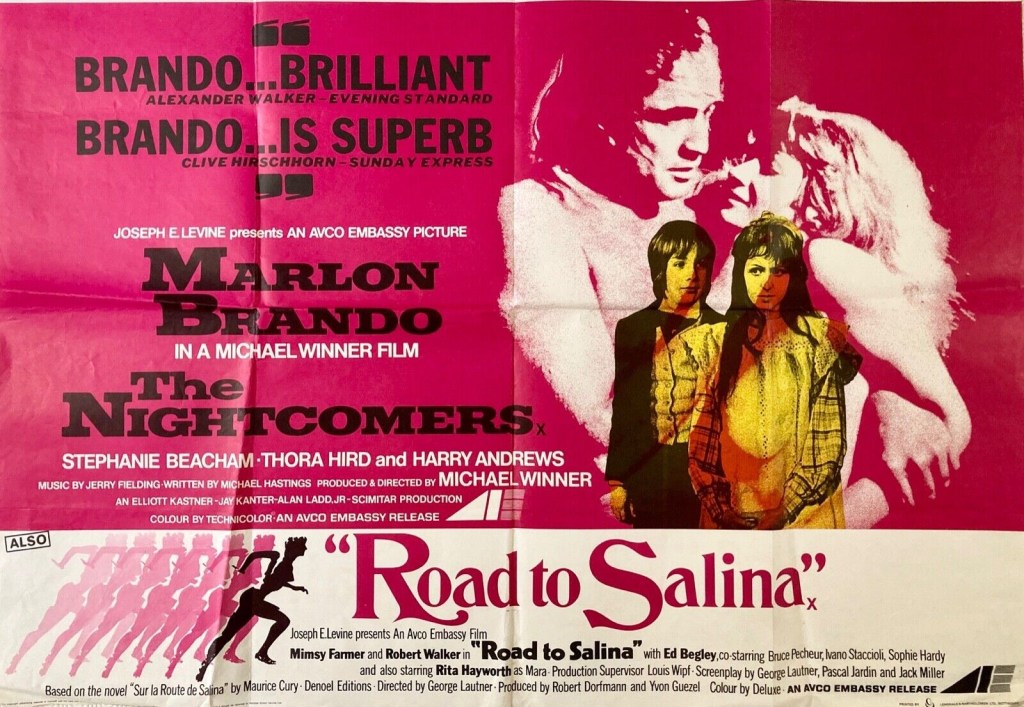
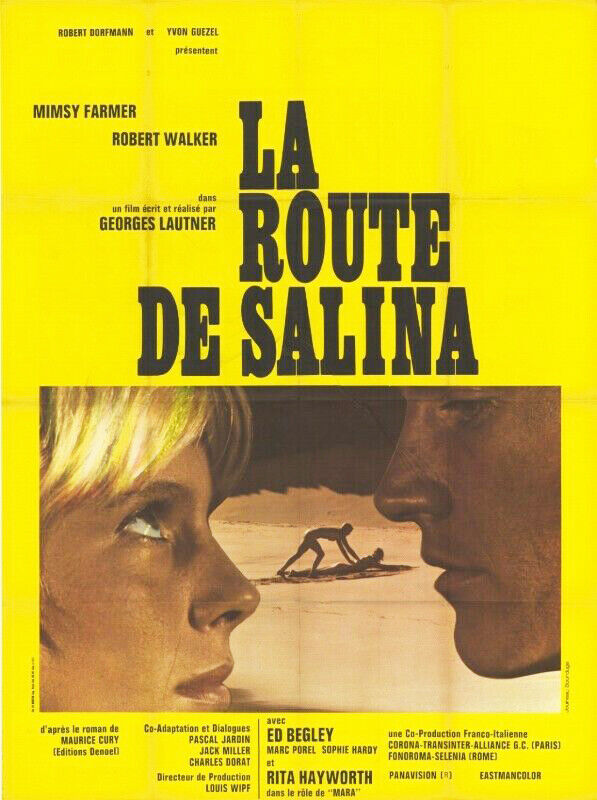
The Road to Salina (1970) ***

I thought I’d taken a stab at finding out what happened to Mimsy Farmer after More (1969) and by chance stumbled upon Rita Hayworth (The Happy Thieves, 1961), also persona non grata in mainstream Hollywood.

Pivots on the tricky trope of mistaken identity. Or, rather, someone who insists on believing that a stranger turning up is actually a long-lost son / lover / whatever. Jodie Foster was the too trusting wife in Sommersby (1993), for example, but it’s hard to pull this off once suspicions are aroused. Unless, of course, the potential dupe is determined to believe because it fills an emotional hole, thus providing sufficient narrative undercurrent.

Double bill of creepiness.

That’s the case here, when drifter Jona (Robert Walker Jr) turns up at the roadside service station run by Mara (Rita Hayworth) his resemblance to her dead son Rocky (Marc Porel) is so uncanny she believes it is the child returned. Just to be clear, Rocky died in mysterious circumstances, corpse never found, so there’s some foundation to her belief beyond maternal madness. Seizing the opportunity for a warm bed and some decent grub and the chance to be spoiled, Jona plays along – especially after Rita’s neighbour Warren (Ed Begley) supports her delusion – and soon he’s invited into another bed, that of Rocky’s sister Billie (Mimsy Farmer). The savvy daughter has her own reasons for going along with it. Then we’re into flashbacks within the flashback as the mystery unfolds and we dip in and out of incidents around the gas station and the somewhat unusual relationship between brother and sister.

As with most slow-burn dramas, you wouldn’t really call it a thriller, it depends on atmosphere, but in the same way as, for example, Don’t Look Now (1973), there’s definitely something insidious here and noir-ish if you don’t mind a story played out away from that genre’s physical darkness. It digs deep into the worst emotion of all, loneliness, and how the hankering after relationship, and an inability to steer clear of the psychosexual, anything to stop you from being alone, can bring torment and tragedy. Dangling fantasy in front of a woman incapable of dealing with reality is a dangerous temptation.

While some of the elements verge on the bizarre, and the narrative threatens to tip into confusion, the viewer is nonetheless kept on pretty much an even keel by the direction, which doesn’t play hard and loose with the facts, but just takes its own slow way heading towards resolution.

The main younger characters aren’t anything we’ve not seen before and the impetuous immoral Billie could easily be a cousin to Estelle in More (1969) while Jona is just every dopehead drifter with an eye on the main chance, except he turns patsy under the femme fatale wiles of Estelle. Rita Hayworth (The Money Trap, 1965), by now a Hollywood back number, brings a healthy dose of reality, and it’s worth the admission just to watch the former sex symbol fry eggs and dance around with the equally middle-aged and frumpy Ed Begley (Hang ‘Em High, 1968) while tacitly acknowledging the bolder elements of the counter culture.

Robert Walker Jr (The Happening, 1967) doesn’t bring much to the party but Mimsy Farmer sizzles. The movie trips easily through the decades, contemporary 1970s buzz undercut by old-fashioned  1940s sensibilities.

French director George Lautner’s stylish concoction – this begins with a downpour, character trapped in torrential rain, an unusual image for the times, and unwinds in flashback – forces you to suspend disbelief long enough to guide the endeavour to a satisfactory conclusion.

Under-rated, this should appeal beyond the Farmer and Hayworth fan clubs.

Warning Shot (1967) ****

So underrated it doesn’t even feature on Wikipedia’s chart of 1960s crime pictures, this tight little gem, with an early reflection on police brutality, a dream cast, violence in slow motion  (prior to The Wild Bunch, 1969, mind you) and a stunning score from Jerry Goldsmith, is definitely in need of resurrection. Astonishing to realize that cop pictures had fallen so out of fashion, that this was the first Hollywood cop film of the decade – outside of a drama like The Chase (1966) – the entire previous output focusing on gangsters with a rare private eye (Harper, 1966) thrown in. With none of the vicious snarl of Madigan (1968) or the brutality of Coogan’s Bluff (1968), this was more in keeping with the later In the Heat of the Night (1967) in terms of the mental and physical barrage endured by the cop.

In thick fog on a stakeout for a serial killer at an apartment block Sgt Tom Valens (David Janssen) kills a potential suspect, wealthy Dr Ruston. Valens claims the suspect was reaching for his gun. Only problem – nobody can find the gun. Up on a potential manslaughter charge, Valens is pressured by boss (Ed Begley), lawyer (Walter Pidgeon) and wife (Joan Collins) to take the rap and plead guilty.  The public and media rage about police brutality. Putting Valens’ testimony in doubt is a recent shooting incident, which left Valens with a stomach wound, and which may have clouded his judgement.

Although suspended, Valens has no alternative but to investigate, interviewing elderly patient Alice (Lillian Gish) whom the doctor was visiting, patient’s neighbour playboy pilot Walt (George Grizzard), doctor’s assistant Liz (Stefanie Powers), doctor’s wife   Doris (Eleanor Parker) and doctor’s stockbroker (George Sanders) without nothing to show for his efforts but a savage beating, filmed in slow motion, inflicted by the doctor’s son and pals, and a further attempt on his life. He gets into more trouble for attempting to smear the doctor as an abortionist (a crime at the time).

The missing gun remains elusive though the direction at times suggests its existence is fiction. The detection is superb, red herrings aplenty, as Valens, the odds against him cheating conviction lengthening by the day, a trial deadline to beat, everyone turning against him, openly castigated as the killer cop, struggles to uncover the truth. And it’s clear he questions reality himself. He has none of the brittle snap of the standard cop and it’s almost as if he expects to be found guilty, that he has stepped over the line.

Along the way is some brilliant dialogue – the seductive drunk wife, “mourning with martinis” suggesting they “rub two losers together” and complaining she has to “lead him by the hand like every other man.”  Cinematography and music combine for a brilliant mournful scene of worn-down cop struggling home with a couple of pints of milk. The after-effects of the stomach injury present him as physically wounded, neither the tough physical specimen of later cop pictures not the grizzled veteran of previous ones.

David Janssen (King of the Roaring 20s, 1960) had not made a picture in four years, his time consumed by the ultra-successful television show The Fugitive, but his quiet, brooding, internalized style and soft spoken manner is ideal for the tormented cop. This also Joan Collins (Esther and the King, 1960) first Hollywood outing in half a decade.

Pick of the supporting cast is former Hollywood top star Eleanor Parker (Detective Story, 1951) more recently exposed to the wider public as the Baroness in The Sound of Music (1965) whose slinky demeanor almost turns the cop’s head. Loading the cast with such sterling actors means that even the bit parts come fully loaded.

In the veteran department are aforementioned famed silent star Lillian Gish (The Birth of a Nation, 1915), Brit  George Sanders (The Falcon series in the 1940s), Walter Pidgeon (Mrs Miniver, 1942) also in his first film in four years, Ed Begley in only his second picture since Sweet Bird of Youth (1962) and Keenan Wynn (Stagecoach, 1966). Noted up-and-coming players include Stefanie Powers (also Stagecoach), Sam Wanamaker (The Spy Who Came in from the Cold, 1965), George Grizzard (Advise and Consent, 1962) and  Carroll O’Connor (A Fever in the Blood, 1961). American television star Steve Allen (College Confidential, 1960) plays a hypocritical pundit.

A sophomore movie for noted television director Buzz Kulik (Villa Rides, 1968), this is easily his best picture, concentrating on character with a great eye for mood. Screenwriter Mann Rubin (Brainstorm, 1965) adapted the Whit Masterson novel 711  – Officer Needs Help. The score is one of the best from Jerry Goldsmith (Seconds, 1966).

Has this emanated from France it would have been covered in critical glory, from the overall unfussy direction, from the presentation of the main character and so many memorable performances and from, to bring it up once again, the awesome music.

Worth catching on Amazon Prime.

Discover WordPress

A daily selection of the best content published on WordPress, collected for you by humans who love to read.

The Atavist Magazine

by Brian Hannan

WordPress.com News

The latest news on WordPress.com and the WordPress community.