Bob & Carol & Ted & Alice (1969) ****

The one with the wife-swapping. Like Easy Rider released earlier the same year, a hymn to freedom, only this time of the sexual kind. Responsible thirtysomethings, well-to-do, married with children, jealous of the younger generation’s counter culture, seek guilt-free irresponsibility. They feel they’ve missed out, despite knocking back cocktails in their heyday, probably remained virgins until marriage. Like the recently-reviewed The Battle of the Villa Fiorita (1965), the problems incurred in marriage appear eternal, and decades later this holds up superbly, not just for taking a measure of its times, but for a screenplay setting up a bold series of reversals, character reaction you would never expect, that will have you in stitches even as it dissects universal truths.

Documentary film-maker Bob (Robert Culp) and housewife Carol (Natalie Wood) “find” themselves at a weekend retreat espousing naked yoga, primal screams, group therapy and emotional intimacy. Carol admits she finds her husband controlling. They return in evangelistic mode, desperate to pass on their new-found knowledge to their stuffier friends, Ted (Elliott Gould) and Alice (Dyan Cannon).
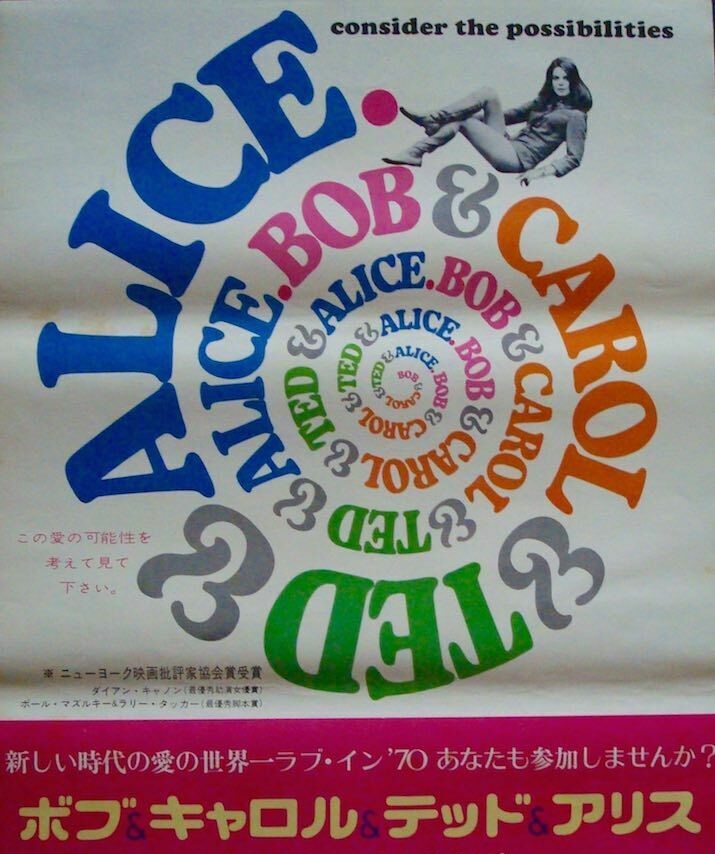
The advertising campaign focused on the tease of wife-swapping.

The film unfolds in a series of long sequences, each sparked by external incident. Bob confesses to his wife that while away on business he had an affair. To his astonishment she forgives him. Expecting this to be a prelude to some new way of tormenting an unfaithful husband, Bob remains skeptical until Carol convinces him that her world-view has changed following the retreat.

But Ted and Alice find it harder to accept. In a brilliant scene that exposes basic gender differences, he sees the problem as his revelation, she as the act of infidelity itself. High after meeting the other couple, Ted wants sex, but Alice, shocked by what she has heard, cannot contemplate it. He exerts so much pressure that she, deeply insecure, is almost on the verge of giving in. The dialogue not just marvelously encapsulates their marriage but sets out opposing views that, I am sorry to say, would probably be as prevalent today.

But the best scene, a superb reversal, occurs when Bob, spurning another night of illicit passion, returns home from a trip early to find his wife in bed with the tennis coach. Gender equality et al. The sequence turns completely on its head when, according to the couple’s new philosophy, Bob should not only accept and forgive, but help the tennis coach out of his predicament, calming his fears of facing an angry husband, in effect consoling his bedroom rival.

Bob and Carol and the Tennis Coach.

What appears to have been just a Ted fantasy, hooking up with a woman he met on an airplane, turns out to be true, creating a crisis in that marriage and when Alice is pacified, acknowledging a new truth, it is she who calls for an orgy. Now this is a revolution for Alice is by far the most repressed, although attractive almost matronly, and still using a childish word to describe her private parts. Her confessions to a psychiatrist reveal a tormented individual.

It’s a stunning debut from Paul Mazursky (An Unmarried Woman, 1978) who also had a hand in the screenplay with Larry Tucker (I Love You, Alice B. Toklas, 1968). He takes a story of endorsed immorality and stamps it as a morality tale. A movie that depended so much on dialogue concludes with a fabulous series of shots where the look on the faces of the characters tells you all you need to know.

Elliott Gould (The Night They Raided Minsky’s, 1968) and Dyan Cannon (The Murder Game, 1965) are the pick of the actors, both stepping up to the plate after less than stand-out performances previously. Both were Oscar-nominated but more importantly here created  screen personas that would define their futures. Natalie Wood (This Property Is Condemned, 1966), in her first picture in three years, revitalized her career after a string of flops. Robert Culp, in a step-up from the I Spy television series (1965-1968), initially takes center stage but cedes ground to the superior acting of the others.  

Where a whole bundle of films by new directors flopped that year and the next by targeting the younger generation, this was a success by painting a wry picture of a slightly older generation, not yet tipping into middle age, but terrified they might be missing out on something.
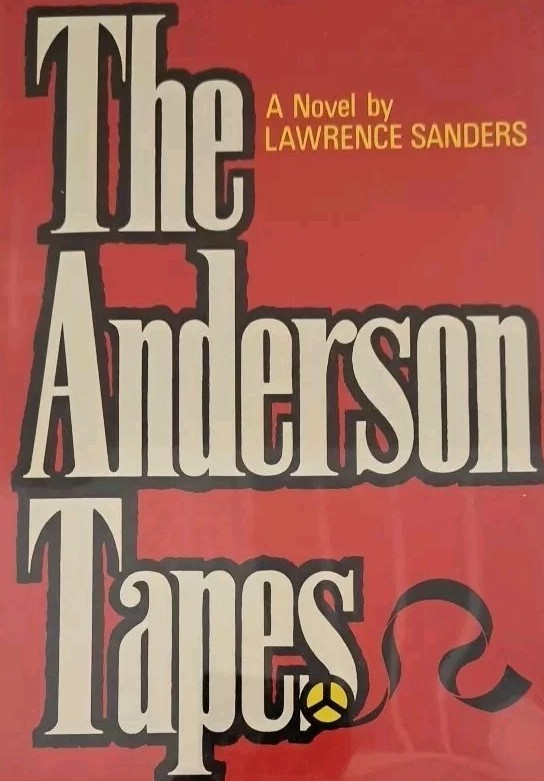
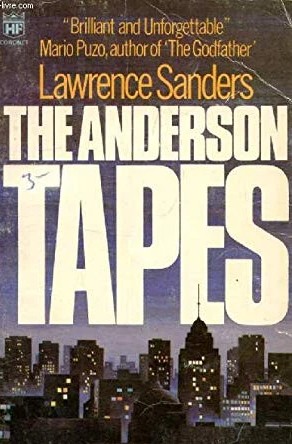
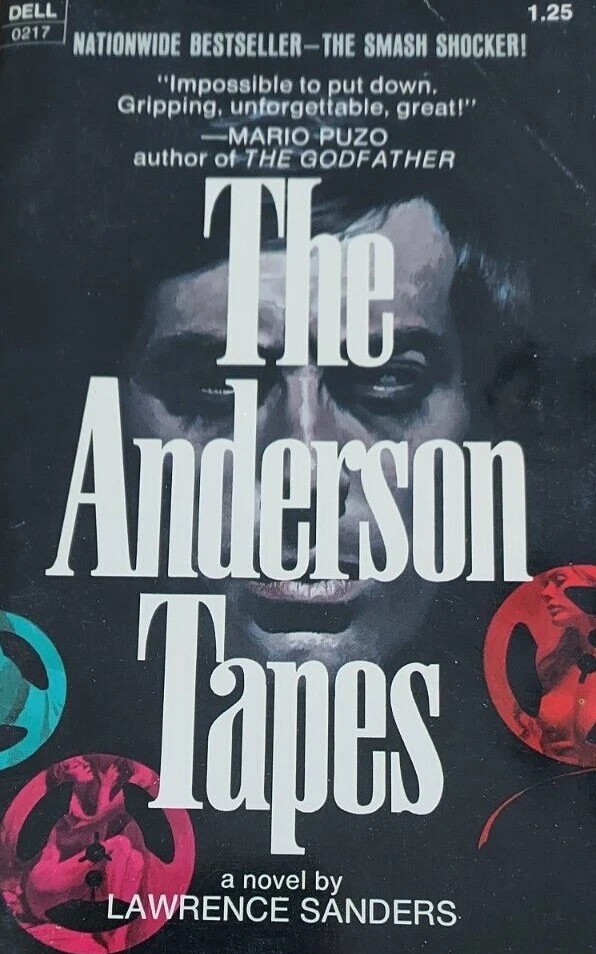
Behind the Scenes: “The Anderson Tapes” (1971) – From Book To Film

Had Sean Connery played the character of Duke Anderson as written, rather than reigniting his career it would have risked killing it off. It was already a significant ask for a star to shift from portraying good guys – even if James Bond had an immoral streak – to essaying a bad guy, though here was precedent – Paul Newman in Cool Hand Luke (1967) and Steve McQueen in some style in The Thomas Crown Affair (1968).

However, it would be difficult enough for audiences to accept a star who is two-timing his girlfriend, never mind one who in turn exhibits sadistic and masochistic streaks.

So that was the first problem for Oscar nominated screenwriter Frank Pierson (Cool Hand Luke) and not surprisingly he settles on the elimination route. The character’s sexual tendences are never mentioned. Theoretically, Pierson gets round the two-timing issue by merging the two girlfriends, Ingrid Macht and Agnes Everleigh, into one, Ingrid Everly (Dyan Cannon).

But Ingrid Everly has little connection to Agnes beyond that she lives in a luxury apartment. In the book, Agnes is a casual pickup,  a woman he meets in a bar. She was separated from her husband and retained possession of the apartment, which was in his name. In order to find the legal grounds on which he could regain the apartment, her husband had bugged the apartment.

In the film, the apartment is still bugged, but by her rich jealous boyfriend Werner (Richard B Shull) so, technically, it’s Ingrid who’s doing the two-timing. Whereas in the book Agnes’s husband is perfectly happy for her to be entertaining other men as he hopes this will enhance his chances in the divorce settlement, in the film Werner is the opposite, and does not embrace the notion of what he views as his “property” being involved with anyone else. Ingrid, who was genuinely Anderson’s ex-girlfriend, in the film comes to realize a sugar daddy is a better bet than a criminal no matter how handsome. The only oddity in the picture that when Anderson is confronted and Werner explains that, via his surveillance, he knows Anderson is planning a robbery, that he doesn’t give two hoots about that.

Other changes are equally sensible. In the book, the robbery is intended to take place in the middle of the night. The ploy the thieves planned to use to get the apartment residents to open their doors was that the building was on fire. This wasn’t by triggering the fire alarm but by running from door to door, shouting “Fire! Fire!”.  Pierson gets rid of that cumbersome device.

He also knocks into touch the notion that Tommy (Martin Balsam) would find supposedly legitimate reason to gain access to apartments to scout the premises in advance by pretending to be doing a survey for a civic group. In the book Tommy is a two-bit low-level hood and not involved in the actual robbery but with some knowledge of art and expensive items.  In the film he transforms into a smooth-talking  antiques dealer and Frank Pierson comes up with the idea that the management of the building is planning a refurbishment and wants to ensure that residents have the opportunity to align their interior décor with what is being planned.

In the book as well as eight luxury apartments, there are, on the ground floor two businesses, a doctor and a psychiatrist, but these are also thrown on the scrap heap, although in the book the doctor turns out to have $10,000 hidden away from the taxman as well as medicines that could be sold on the black market.

The pompous Capt. Delaney (Ralph Meeker) who organizes the offensive on the robbers, is drawn virtually word for word from the book. But there’s not room to incorporate all the criminal slang. I was especially intrigued to discover that what I always believed was called “a big job” was known to the criminal fraternity as “a campaign.” Nor the details of organizing such a robbery.

And there are a couple of interesting snippets in the book that Pierson had no room for in the movie. Firstly, author Lawrence Sanders includes verbatim a newspaper report dated 2nd July, 1968, to the effect that a new electronic communications office has been opened by the police to help cut down, initially, response times. The report included another fascinating fact. Prior to this date to report a crime the American public had to call a seven-digit number. That was reduced to the ”911” emergency number that operates today.

The second element is the call to unite all the different operations running criminal surveillance. Here, including Werner, there were four separate surveillance teams, none in contact with any of the others.

The book is a terrific read. I devoured it in one sitting. It is Sanders who introduces the flash forwards, interviews or somesuch with victims, while in real time the robbery is under way.

But the screenplay is an ideal example of how to trim a book to the bone without removing any of the essentials.

Sanders was also the author of The First Deadly Sin which was filmed with Frank Sinatra in 1980 and reviewed here earlier.

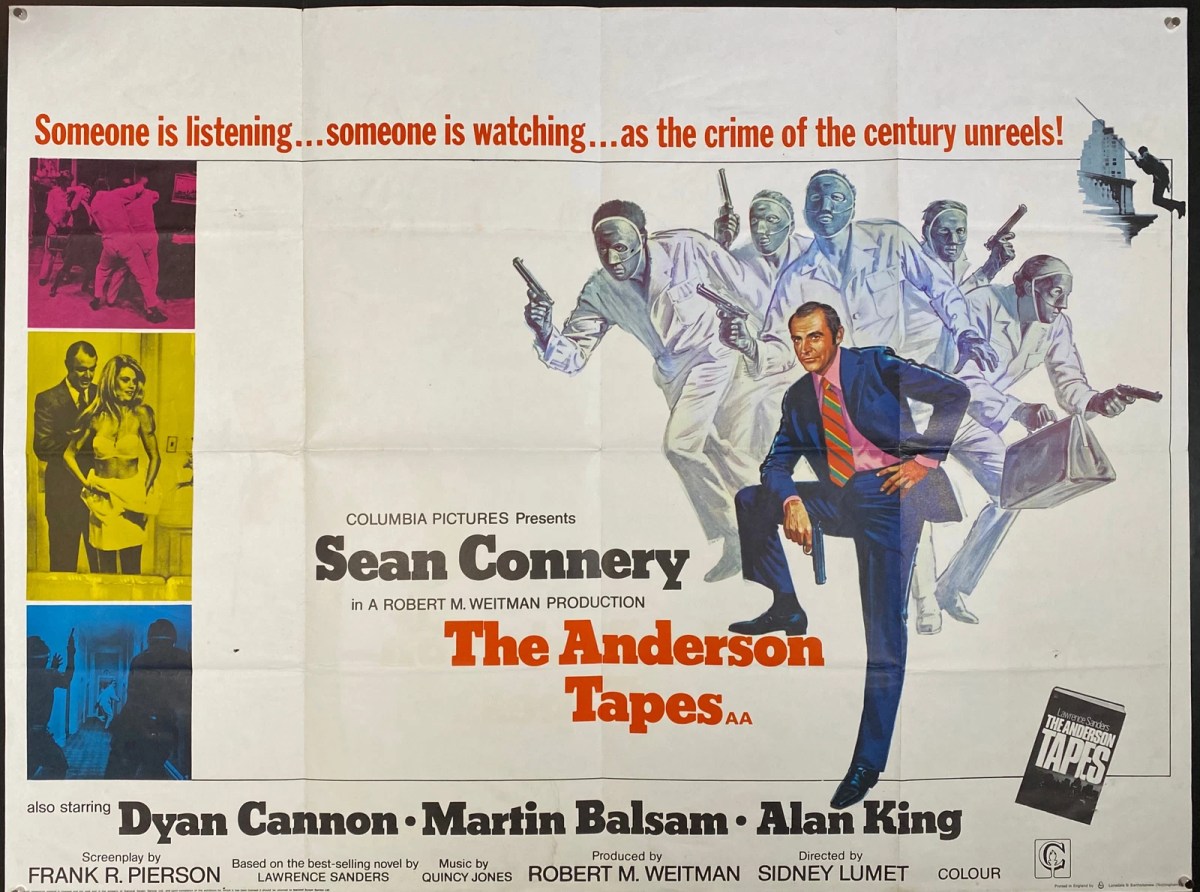
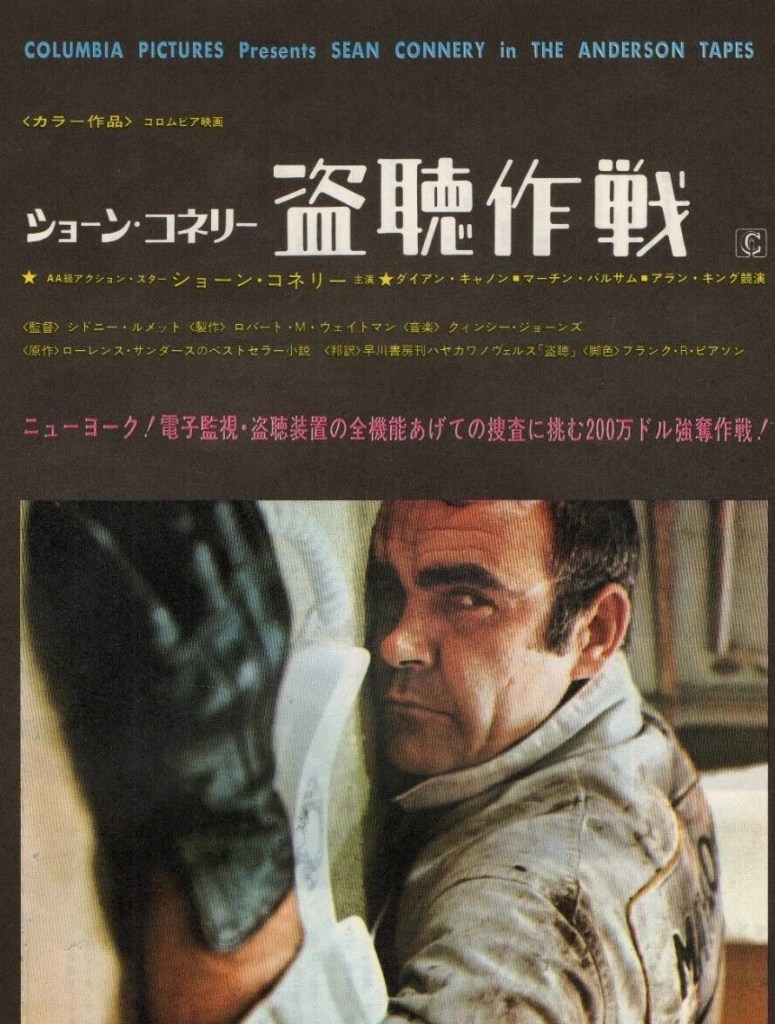
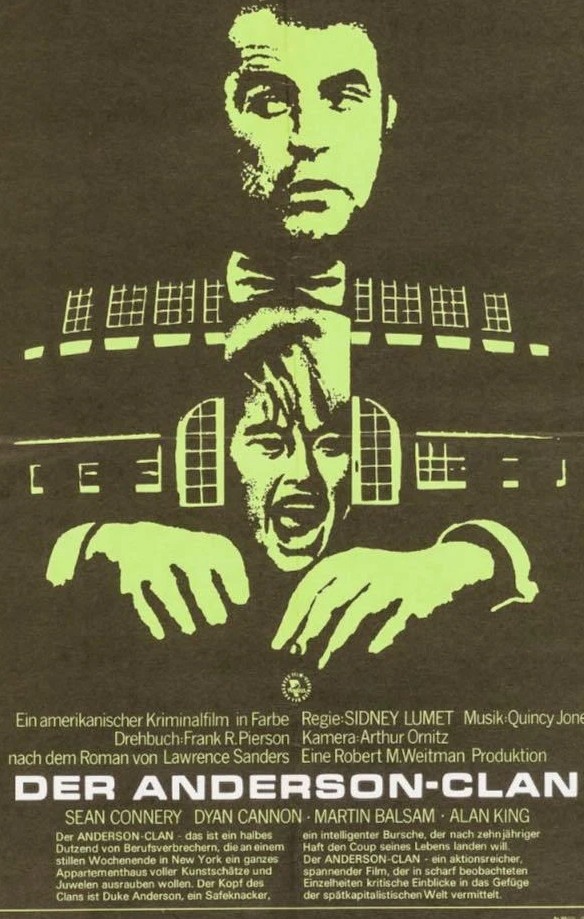
The Anderson Tapes (1971) ****

Director Sidney Lumet has made more critically acclaimed crime pictures – Serpico (1973) and Dog Day Afternoon (1975) earned eight Oscar nominations between them – but none have been as thrillingly entertaining as this mash-up of the heist and surveillance subgenres.  Francis Ford Coppola’s The Conversation (1974) has unfairly dominated the conversation regarding surveillance pictures, in large part down to Gene Hackman’s repressed performance, and because it made the ever-popular suggestion that Big Brother ruled the roost and there was nothing anyone could do about it.

These days The Anderson Tapes would hardly get out of the starting gate before everyone was whimpering about civil liberties and the fact that surveillance did the very job the public wanted it to do, which was to prevent crime and catch wrongdoers, would have been largely overlooked in the welter of lawsuits. A very clever device here prevents anyone getting trapped in that moral maze, so that what we’re left with is the inside gen on a superbly-organized and audacious robbery.

There’s a Thomas Crown Affair (1968) feel to this but where Norman Jewison employed split screen to get his various interlinked narratives across, here Lumet relies on speedy flash forwards intercutting the ongoing story.

The incipient danger of star Sean Connery was kept under wraps in the 007 outings, but here audiences get a blast of the full macho man, the take-charge kind of guy, and no bureaucratic buffoons getting in the way, and with no gadgets to rely upon it comes down to the sheer physicality of a magnetic screen personality.

Duke Anderson (Sean Connery) is no sooner out of prison after serving a ten-year stretch than he’s planning an audacious robbery, cleaning out an entire upmarket apartment block in the Manhattan Upper East Side, in which former girlfriend Ingrid (Dyan Cannon) lives in considerable luxury, over the Labor Day Holiday Weekend. After winning initial funding from the Mafia, he enrols, among others, camp antiques dealer Tommy (Martin Balsam), getaway driver Edward (Dick Williams), and “The Kid” (Christopher Walken), a young expert in alarms and electronics. As part of the deal he agrees to bump off another recruit, Rocco (Val Avery), who has fallen foul of the Mafia.

Everything that occurs is being recorded one way or another. Setting aside the building’s closed circuit television, Ingrid’s sugar daddy Werner (Richard B. Shull) has bugged her apartment and the cops have wiretaps on the Mafia and various others. This being a heist picture headed up by the world’s most popular star, as much as you want the criminals caught you want them to get away with it, Sean Connery having a self-justification scene at the outset to set liberal minds at rest.

So this is part docu-drama and part a whole bunch of cameos from the victims of the robbery as their, often heinous, personalities come into sharp perspective: siblings who rat each other out, the husband willing to allow his wife to be abused rather than give up a single dollar of his vast fortune. Even wealthy Werner couldn’t care less about a robbery as long as Ingrid knows her place, she’s his “property,” and has to choose him rather than Duke Anderson because, as feisty as she is, she relies on his dough for the good things in life.

But it’s driven by the hardnosed Anderson who’s not going to let the fact he’s never killed a man before get in the way of doing so now as the alternative would be the loss of the gig. Despite his macho demeanor and being able to run his gang efficiently, he’s aware he’s a small cog in the organized crime wheel.  

When the cops get wind of the robbery, that triggers some superb stunt work as cops abseil across buildings.

After the disappointing box office of Shalako (1968), The Red Tent (1969) and The Molly Maguires (1970), Sean Connery roared back to form here, as the likeable hood while adding more edge to his screen persona. Martin Balsam (Hombre, 1967) is otherwise the pick of the supporting cast, though Christopher Walken, on his debut, makes his mark and you can’t ignore Dyan Cannon (Bob & Carol & Ted & Alice, 1969).

But this is just terrific stuff from Lumet, who was apt in his more critically-acclaimed pieces to drift into the overly serious, and while he makes a point – at a very early stage, please note – of the ubiquitous power of surveillance, he lets that speak for itself while he concentrates on the more thrilling and more human aspects of the story. Screenplay by Frank Pierson (Cool Hand Luke, 1967) from the best seller by Lawrence Sanders (The First Deadly Sin, 1980). As a bonus, a first class score from Quincy Jones (Bob & Carol & Ted & Alice).

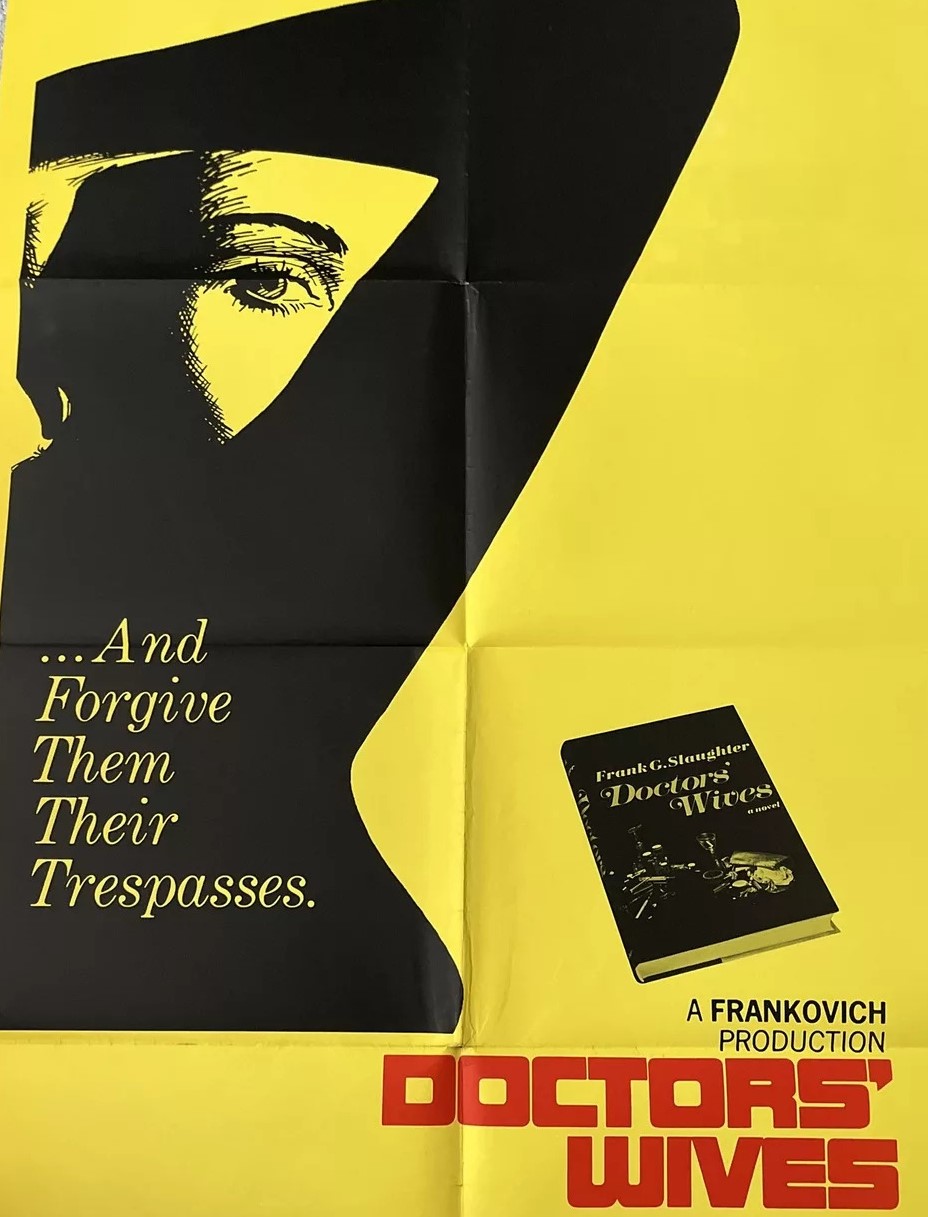
Doctors Wives (1971) ***

Five-star so-bad-it’s-good. Every now and then, especially approaching the annual touting of earnest films for Oscar consideration, we need reminded of just how good Hollywood is at producing hugely enjoyable baloney. Excepting the proliferation of recent MCU disasters, cinematic train wrecks don’t come along nearly often enough. Such botched jobs are always better if they are stuffed full of the worthy – Oscar recipients or nominees. Gene Hackman, Dyan Cannon, Rachel Roberts, Ralph Bellamy and screenwriter Daniel Taradash fulfil that requirement here.

A cross between Sex and the City and ER, with a third act that takes off like a rabbit desperately seizing on any convenient narrative hole. And a first act that pulls the old Psycho number of killing off the star before the picture really gets going. That old murder MacGuffin works every time.

“I’m horny” is about the third line in the movie, announced by sex-mad Lorrie (Dyan Cannon) to a tableful of over-refreshed doctors wives playing sedate poker in a country club at one table while at another table where you would expect the doctor husbands to be telling dirty jokes and whispering inuendoes they are boring each other with shop talk.

Unable to get the others to engage in revealing snippets about their sex lives, Lorrie rounds off the evening by informing the ladies that she plans to have sex with all their husbands to tell them where they are all going wrong, meanwhile gaily proclaiming she’s halfway there already. Which, of course, sets off a round of suspicion and accusations from wives to husbands.

Just to keep you straight on the who’s who: Lorrie is married to Dr Mort Dellman (John Colicos), Dr Peter Brennan (Richard Crenna) to Amy (Janice Rule), Dr Dave Randolph (Gene Hackman) to Della (Rachel Roberts), and Dr Paul McGill (George Gaymes) to Elaine (Marian McCargo) while Dr Joe Gray (Carroll O’Connor) and his ex- Maggie (Cara Williams) still hang around with the group.

As you might expect, every marriage is already in trouble, except, apparently, Lorrie’s because her husband, equally sex-mad Mort, appears to indulge his wife’s whims. Except, he’s not so easy-going, given he puts a bullet in her back when he discovers her making love to one of his colleagues.

Exactly which one remains a mystery for just long enough for the wives to rack up the suspicion level, and all the audience has to go on is the naked arm waving limply trapped under the naked dead weight of the corpse.

You might think, what with Dyan Cannon’s name being top-billed and she quite the rising star after an Oscar nomination for Bob & Carol & Ted & Alice (1969), that we’re going to flip into a series of flashbacks to accord her more screen time. But, no, all we get is that opening risqué scene and her naked corpse.

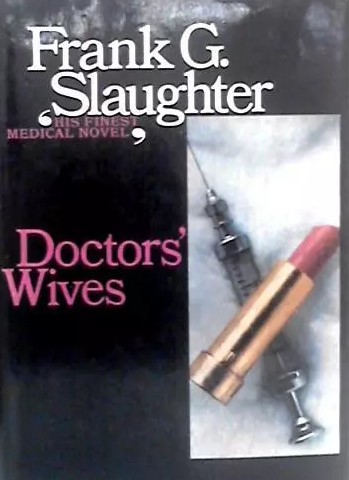
Before ER’s creator Michael Crichton came calling a couple of decades later, the surgical profession was mostly represented in formulaic soap opera of the Dr Kildare small screen or The Interns (1962) big screen variety. But author Frank G. Slaughter, himself a practising physician,  had made his name with a series of bestsellers that went into the intricacies of surgery and involved genuine medical jargon. So, before the identity of the illicit lover can be revealed, his life has got to be saved – after all he’s got a bullet in his heart. Cue even bloodier surgical shenanigans than kept fans of Mash (1970) hooked.  

By the time we discover the victim was Dr McGill any chance of his wife stomping around in a huff at his infidelity is already off the menu because she’s been dallying with an intern.

I won’t go into all the all-round marital strife – triggered by alcoholism, drug addiction, infertility, ambition – that allows Oscar winners and nominees to try and act their way out of trouble because this picture has another absolute zinger to throw at you.

The murderer blackmails all four doctor pals for having a fling with his wife. To that cool $100,000 he adds quarter of a million from Lorrie’s wealthy dad Jake (Ralph Bellamy) for agreeing to make no claim on his wife’s estate. You kind of wonder what the heck use is all this dosh going to be in the slammer or Death Row. But that’s before you consider the zinger.

Mort’s a specialist and there happens to be a young patient desperate for his surgical skills. Young lad is son to head operating nurse Helen (Diana Sands) who is having an affair with Dr Brennan. So, a deal is done – you can’t wait for this humdinger, can you – wherein the D.A. is agreeable to release Mort from custody so he can perform this emergency operation while Dr Brennan and Jake – wait for it – agree to help him escape abroad.

As everyone knows you can’t tell one masked surgeon from another, so the first part of the plans works and while the cops keep a close eye on the fake Mort as he emerges from the operating theater the real Mort escapes in a parked car with the keys in the ignition. Except Jake isn’t quite a dumb or gullible as Dr Brennan and removes the keys so the killer can’t escape. Which was a shame because this picture could have gone on for another bonkers 20 minutes or so watching Mort outwit the cops.

As it is, there’s more than enough to fill in the time. Amy, something of a clothes horse with an extraordinary array of clothes and especially hats, goes all slinky in what looks like day-glo leggings to perform a bizarre seduction on her husband. Which elicits the movie’s best line, Nurse Helen complaining, “I don’t appreciate you sleeping with your wife.”

Unbeknownst to her, Lorrie has a female disciple who seduces every male in sight for research purposes, tape-recording every moment of the activity, so her victims are pretty much always in the coitus interruptus position.

And I can’t let you go without mentioning that Lorrie was also bisexual and counted among her conquests Della.

Except for the unlikely success of The French Connection later in the year which offered a different route in top-billing, Gene Hackman, had he continued taking on roles like this,  might have ended up a perennial third potato. Bear in mind he already had two best supporting actor nominations in the bank when, third-billed, he took this on. Maybe he never read the whole script. Maybe this was the best offer going.

He’s not even the best thing in it. Too earnest for a start. Husband-and-wife murderer-victim tag team John Colicos (Anne of the Thousand Days, 1969) and Dyan Cannon take the honors. Directed by George Schaefer (Pendulum, 1969) and scripted by Daniel Taradash (Castle Keep, 1969). .

An absolute hoot.

The Burglars (1971) ****

First half pure Walter Hill of The Driver vintage – virtually silent heist, blistering car chase – second half rachets up tension with corrupt cop, femme fatale, getaway stymied and a payoff you won’t see coming.

French jewel thieves led by Azad (Jean-Paul Belmondo) using electronic wizardry crack open a safe in Athens full of emeralds while the owner is away. Passing cop Abel (Omar Sharif) happens by but after conversing with Azad, who claims his car has broken down, seems to be satisfied nothing untoward is going on inside the house. But getaway plans are momentarily foiled when the ship they are due to leave on is unexpectedly berthed for repairs, leaving them with five days on their hands.

Azed’s disappointed girlfriend Helene (Nicole Coffen), who acts as watch for the gang, lolling about a swimming pool with too much time on her hands, attracts unwanted male gaze. Azad, followed by the cop, decides to outrun him, fast car style, and soon they are hurtling through the streets of Athens. Thinking that he’s shaken off his pursuer, and seeking a bit of relaxation himself, Azad chats up glamor model and night-club stripper Lena (Dyan Cannon) without realizing she is in cahoots with Abel.  The cop wants in on the action and is willing to trade by letting Azad off scot-free while dumping the crime onto his confederate Ralph (Robert Hosein).

So, mostly, it’s cat-and-mouse stuff between Azad and Abel, as the latter closes the doors, and the former is unaware of just how cunning a corrupt cop can be. There’s some hair-raising action as Azad has to jump between two buses, and a pursuit in a fairground, Abel naturally on horseback, and as if this was one of those cheap films that always had a shoot-out in a quarry, Azad ends up in one, though, thankfully, not for climactic reasons. The climax takes place in a wheat warehouse (I guess the makers of the later Witness, 1985, took a few clues from this.)

Mostly, it’s the character interplay. Two big stars in one film often results in scenes involving  both kept to a minimum – think Paul Newman and Steve McQueen in The Towering Inferno (1974) or Robert De Niro and Al Pacino in Heat (1995) –  but here’s it’s the opposite and watching Belmondo and Sharif dancing around each other, one or other always in the ascendancy or with a neat trick in the back pocket or a get-out-of-jail-free card for later, works a treat.

Sharif, especially, had widened his scope, running away from the matinee idol tag and this came at the end of an impressive stint that included the villain in Mackenna’s Gold (1969), The Appointment (1969), The Last Valley (1971) and The Horsemen (1971). As shabby as Columbo, but with a bit more chic, he knows he’s got to keep one step ahead of Azad, though he could indulge in a few smirks, since he’s so far ahead of the criminal, Abel won’t know what hit him when he realizes he’s been played for a dupe by Lena.

Dyan Cannon (Bob and Carol and Ted and Alice, 1969) plays her role to perfection, hints of sadness that her life is not as glamorous as she might want, possibly considering betraying her real partner, but as seductive as all-get-out. This was a bold career choice, because she had mostly been allotted wife/girlfriend parts rather than, as here, central to the machinations.

Jean-Paul Belmondo (Breathless, 1960) never appealed as much to the American audience as countryman Alain Delon, mostly because he refused to take the Hollywood coin, preferring to do his own thing in France, but he is excellent here and he would have been ideal in plenty mainstream U.S. pictures.

Hats off once again to Henri Verneuil (Guns for San Sebastian, 1968). The heist is deftly done, running a full 24 minutes, give or take a few moments for tense  conversation with the nosey cop. The second unit filmed the chase, of course, but Verneuil is a master at this particular tune. He co-wrote the script with Vahe Katcha (Two Weeks in September, 1967) from the novel by David Goodis (Shoot the Piano Player, 1960). Bonus of an Ennio Morricone score.

Sizzling set pieces, cracking characters.

Discover WordPress

A daily selection of the best content published on WordPress, collected for you by humans who love to read.

The Atavist Magazine

by Brian Hannan

WordPress.com News

The latest news on WordPress.com and the WordPress community.