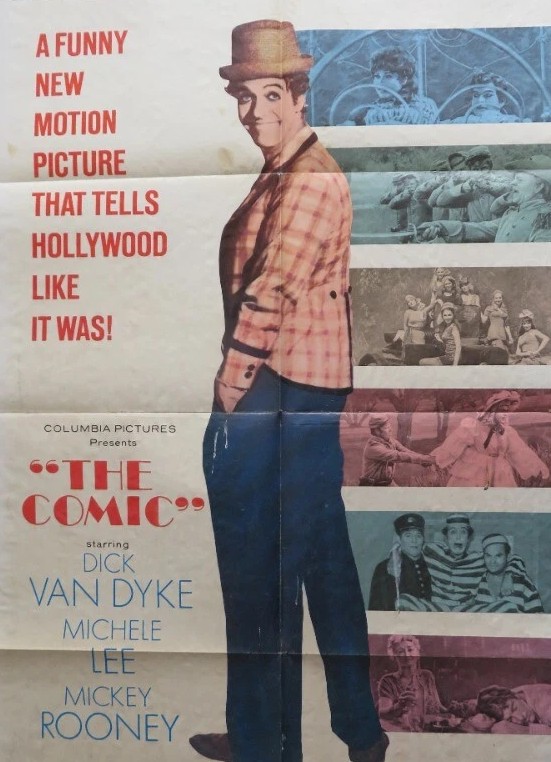
The Comic (1969) ***

It’s a Hollywood trope that successful screen comedians invariably want to test their mettle in more dramatic circumstances. Studios tend to cave in to such self-indulgence, usually with the proviso that the star makes another couple of laff fests with them, but audiences tend to give such enterprises the thumbs down. Dick Van Dyke (Divorce American Style, 1967), on a commercial roll for most of the decade, took the, theoretically at least, easier option of limiting the drama on this one.

Silent films were also on a commercial roll, the oldies having made a comeback via compilation reissues and through slapstick homages such as It’s A Mad, Mad, Mad, Mad World (1963) and The Great Race (1965) so setting the picture in that era in Hollywood’s history seemed a sure thing.

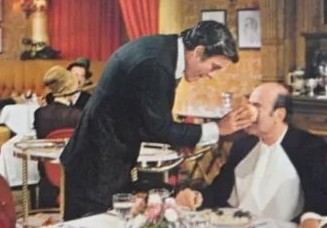
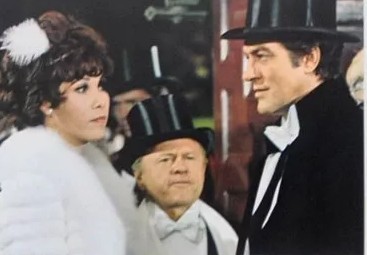
And it starts off bang on the money. A eulogy delivered at a funeral is interrupted by a pie in the face and (as seen above) that device can be utilized at any point.

I’d be telling you to give this complete misfire a miss if it wasn’t for an exceptional final third. The first two-thirds is made up of far too many silent film sequences starring Billy Bright (Dick Van Bright) who goes from vaudeville clown to major star complete with, at the height of his fame, being accorded the honor of a having a clockwork toy made of him.

When it’s not diverted into yet another silent movie sequence, which only serves to show that a modern comedian lacks whatever smarts the silent movie comedians had, the drama takes roughly the same approach, with scenes that could have come from a silent movie if not quite to the utmost.

Thanks to a multitude of affairs Billy burns his way through marriage to Mary (Michele Lee) and thanks to an overfondness for the bottle nearly kills off his career before the arrival of the talkies does that for him.

Eventually, and suddenly, we switch to an entirely different picture, a proper drama, very bold indeed for the time for its portrayal of old age and loneliness – a representation that would chime very much with today’s audiences. You don’t quite warm to this old fella because he wasn’t particularly sympathetic to begin with, but still, in its rawness, this section exerts a very emotional pull.

And, indeed, for Dick Van Dyke it was an incredible piece of acting. He morphs from young, tall, and fit with a head full of hair to an old bloke, bent over, shuffling and with the kind of  comb-over that would put Bobby Charlton to shame. He’s been abandoned by everyone except sidekick Martin (Mickey Rooney) whose career has also gone south. They tell lies to each other to keep up their spirits.

The highlight of Billy’s life is getting a set of false teeth and setting the alarm for 4.30am so he can get up and watch reruns of his old movies on television. He lives on boiled eggs and milk.

And he’s still dumb enough to be rooked by a gold-digger. He’s placed an ad in Variety, drawing attention to the fact that he’s still alive, which wins him a spot on a TV chat show which turns into a gig for a commercial which leads a much younger woman to think he must be loaded. He ends up marrying her while in an oxygen tent, but she vanishes when she discovers his newfound fame has led to nothing.

In theory, this is about the side effects of fame, the temptations which few can avoid, and the sudden collapse in income and public awareness when the well runs dry. But, in reality, setting aside the Hollywood overtones, the last third could have been about any lonely old man.  

A film of three thirds for the star, in the first two there’s nothing much to hold onto, in the last one he excels. Nobody else has much to do. Directed by Carl Reiner (The Jerk, 1979) and written by him and Aaron Ruben. Reiner had been the writer of The Dick Van Dyke Show so presumably that played a part in him getting the gig.

Died an absolute death at the box office. Not released outside America for decades and then only on DVD.

If it hadn’t been for the final third this would have been rated a one-star effort, it’s such an ill-conceived concept, and disastrous in its execution, but that final third makes it very worthwhile indeed if you can stick with it.

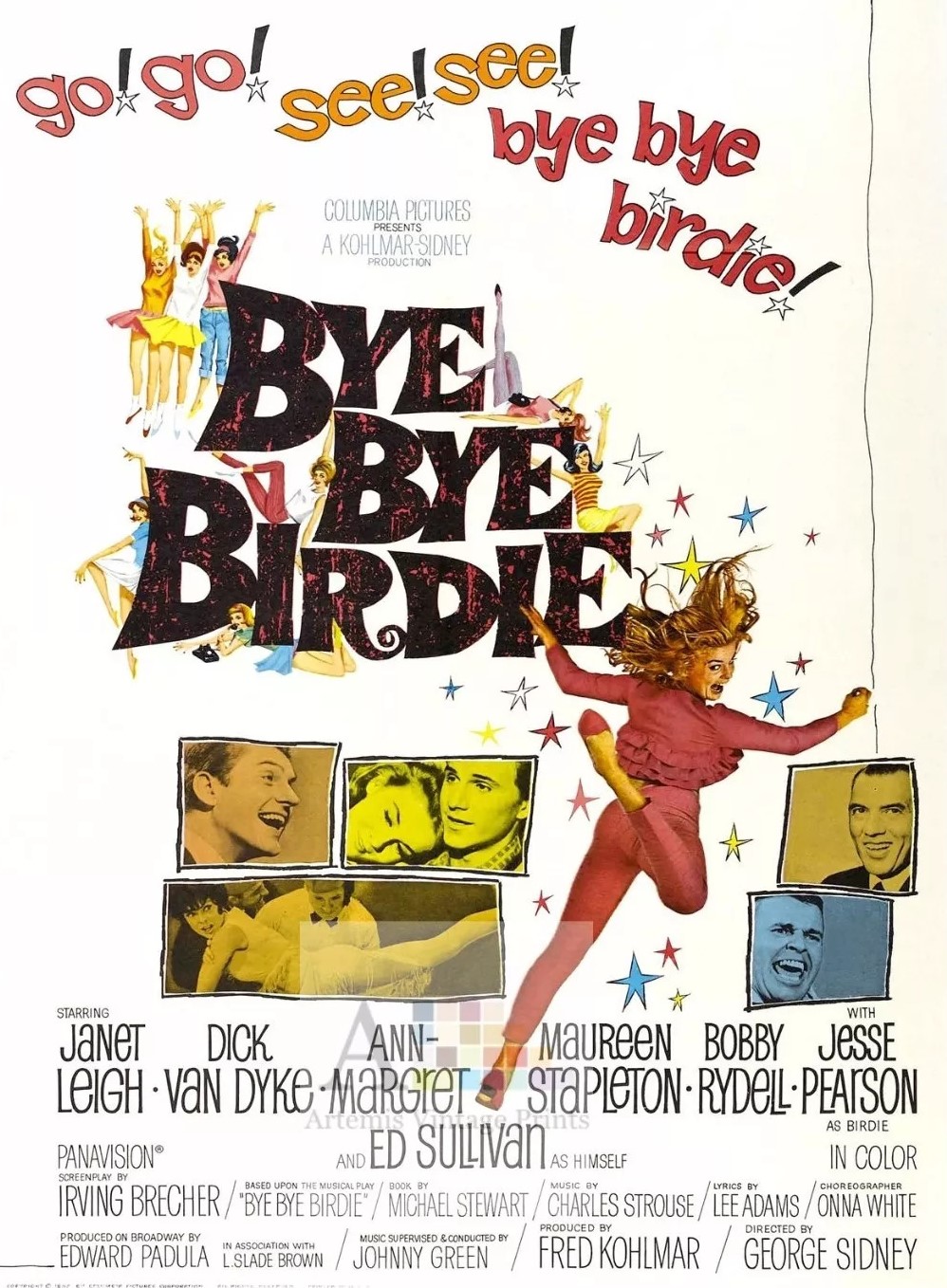
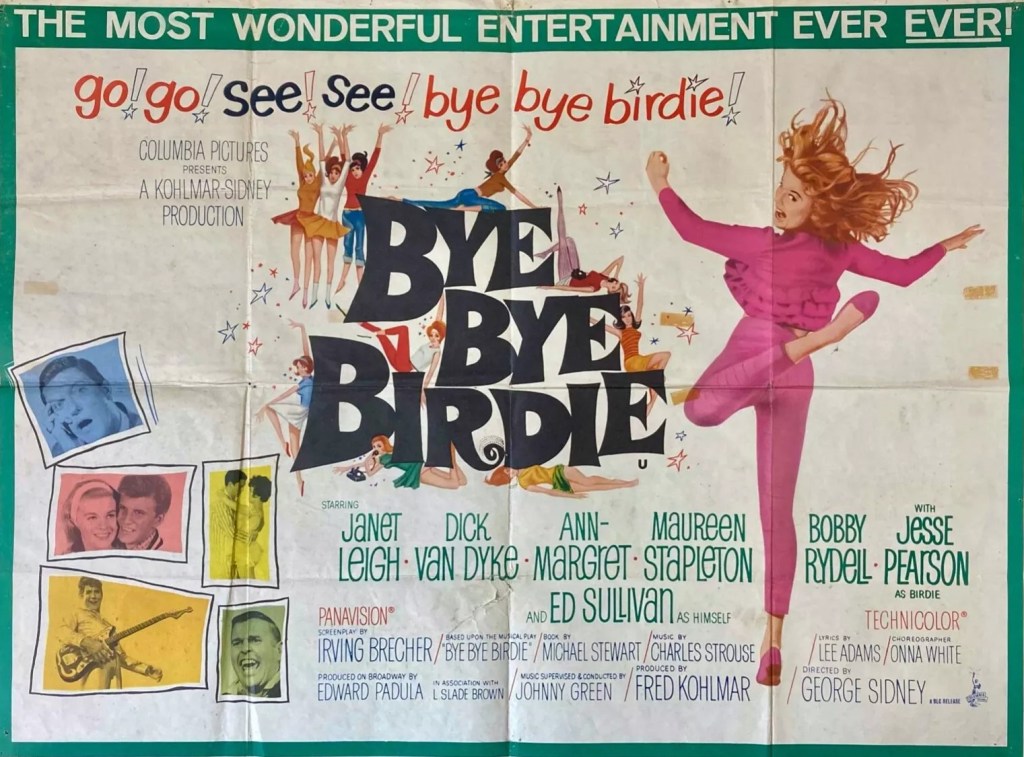
Bye, Bye, Birdie (1963) ***

Marketeers employ a cute trick to get round the contractual billing required on movie posters. The position and size of a star’s name in any movie – even now – is stipulated long before a single camera rolls. This is where all the “name above the title” malarkey stems from comes from, that stipulation setting the reals stars apart from the wannabes.

However, whoever was in charge of drawing up the standard boilerplate template was only concerned with names, not images. That left a loophole to be exploited. Should you have a female rising star, whose face or figure might be a darn sight more attractive than the top-billed male, well, by heck, there was nothing to stop you plugging the contractually-less-dominant person all over the poster at the expense of the top-billed star.

The marketeers did it with Marilyn Monroe, they did it with Audrey Hepburn, and now they’re stooping to the same loophole to promote Ann-Margret as virtually the only star of any importance. Admittedly, this was before top-billed Dick Van Dyke achieved much of a reputation as a hoofer in such spectaculars as Mary Poppins (1964). But his second-billed female lead, Janet Leigh, whose features the camera had very much taken a shine to, was also elbowed out of poster prominence.

And small wonder. Excepting Monroe, no actress ever in the last decade burst onto the screen with such pizzazz. By the time Bye Bye Birdie  – her third movie – opened Ann-Margret’s asking price had zoomed to $250,000 and she had struck a two-picture deal with MGM, was contracted to five for Twentieth Century Fox, three for Columbia and another three for Frank Sinatra’s movie production arm.

So a heck of a lot was in the balance. And, boy, does she deliver. Her energy is untouchable and, excepting again Monroe, there was never a sexier singer.

Shame the musical itself is so trite, at its best in homage to those innocent days of the 1950s, that were a more Technicolor version of those 1940s musicals that invariably were sugary confections. The story rips off the Elvis Presley legend. Conrad Birdie (Jesse Pearson) is a pop singer who has been drafted. Songwriter’s secretary Rosie (Janet Leigh) comes up with a publicity gimmick, Conrad singing a song, “One Last Kiss,” written by Albert (Dick Van Dyke) sung on the Ed Sullivan Show, his last gig before joining the Army, with a specially-chosen gal to be recipient of said smooch.

To fill you in, Rosie has had a tough time getting boyfriend Albert, eight years into their relationship, across the wedding finishing line. Bridie fan Kim (Ann-Margret) also has a boyfriend Hugo (Bobby Rydell) who naturally objects to his beloved kissing the pop singer on air in front of millions even it is a publicity stunt. Meanwhile, Albert’s Mama (Maureen Stapleton) is trying to drive a wedge between Rosie and her son. The out-of-sorts Rosie and Hugo conspire to sabotage the television show.

So pretty much the will-she-won’t-she is delivered in wishy-washy style with the plot (call that a plot!) interrupted every few minutes for a song. The narrative seems out of place for a section involving arrest for statutory rape and racism, but that gives the movie some much-needed muscle.

No question that Ann-Margret (The Swinger, 1966) steals the show. That would hardly be surprising given the lack of competition. But she certainly has the song-and-dance chops, and her energy is second to none. She gets a march on everyone by singing the title number over the credits, the credits themselves very much pushed into the background. The other prospective breakout musical star Dick Van Dyke only has one solo and Janet Leigh (Psycho, 1960) wasn’t going to effect a change of screen persona any time soon.

George Sidney directed from a screenplay by Irving Brecher (Oscar-nominated for Meet Me in St Louis, 1944) and Michael Stewart (Hello, Dolly!, 1969) from the original Broadway hit by Charles Strouse (music), Lee Adams (lyrics) and Stewart (book).

Refreshingly lightweight. Ann-Margret lights up the screen.

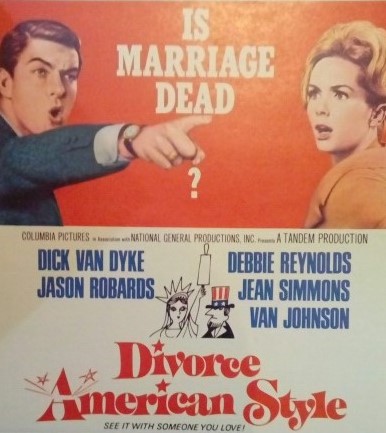
Divorce American Style (1967) ***

Not so much a comedy about a failing marriage as a guide to the American divorce laws,  taking place in a world where the everyman is represented not by the likes of James Stewart or at a stretch Glenn Ford but Dick Van Dyke. It’s possibly only the fact that Van Dyke lacks dramatic chops without the innate vitriol of a Rod Steiger or Lee Marvin that keeps the movie from drifting into black comedy. That, or the filmmakers’ determination to find a happy ending.

When the ever-squabbling Harmons, Richard (Dick Van Dyke) and Barbara (Debbie Reynolds), break up after 17 years and two kids, the chips seem to fall heavily against the husband, the wife walking off with all assets, the husband landed with all the bills and little more than 80 bucks a week to get by on. Such is the supposed injustice of the American divorce laws at a time when most wives did not go out to work and so relied on their husband, married or otherwise, for support.

The only way out of this unhappy financial state for Richard is for his wife to get married again, so a second husband can pick up the tab for her upkeep.  Another divorced couple, the Downes, Nelson (Jason Robards) and Nancy (Jean Simmons), is in the same pickle so Nelson spends his time acting as some kind of pimp for his ex-wife, serving up potential suitors, such as Richard, on a platter. But since Richard is impoverished, a helping hand is needed to even things up, so Nelson arranges for Barbara to fall into the arms of rich and single car dealer Al Yearling (Van Johnson).

There is a big male-female divide, for the most part the guys concentrating on material things like money and what money can buy, the gals leaning more towards emotion, conversation, genuine intimacy.  Richard has given his wife everything she wants, so why can’t he have a few things his own way? Or as Barbara succinctly puts it, it’s a case of supply and demand, the women are in good supply while the men demand. Even after separation, while from the Richard and Nelson perspective the wives are living in the lap of luxury and the men understanding the meaning of penury, female thoughts turn to questions of loneliness, commitment and (not again!) emotion.

While there are moments of observational comedy – an excellent montage of Richard and Barbara opening and closing all sorts of doors while preparing for bed, cleaning out bank accounts before the other can get to them, the problems of accommodating the blended/hybrid family that divorce or multiple divorce can entail – there are not many laugh-out-loud moments.

And probably just as well because without the drama-lite presences of Van Dyke (who still can’t shake off those double takes and involuntary limb functions) and Reynolds, it would have been a much tougher watch. Reynolds is capable of expressing her feelings verbally because, as a female, she is used to expressing feelings verbally, so we know that Al Yearling does not quite hit the spot. But Van Dyke, without resort to the verbal, has his best scenes of emotional loss when he takes his kids to the ball game only to discover that his wife’s new suitor has more treats to offer.

Van Dyke (Lt. Robin Crusoe, U.S.N.) and Reynolds (The Singing Nun, 1966) do a decent job without plumbing any dramatic depths, but Robards (Any Wednesday, 1966) and Simmons (Spartacus, 1960) have more to offer as the conspiring couple, while one-time MGM golden boy Van Johnson (Battleground, 1949) proves that his four-year absence from pictures was premature Hollywood retirement.

More a cautionary tale than an outright laffer, this Norman Lear (Come Blow Your Horn, 1963) screenplay without missing many targets provides a more palatable dissection of modern marriage than something as full-blooded and expletive-ridden as the previous year’s Who’s Afraid of Virginia Woolf.  Director Bud Yorkin (Come Blow Your Horn, also) shows a nice grasp of building up situations until they go out of  control.

While, certainly, many of the attitudes, are out of date, you can be sure that male self-pity is not one of them.

The Art of Love (1965) ****

Priceless. Effortless comedy from the same director, Norman Jewison, as Send Me No Flowers (1964) but minus the box office powerhouses of Doris Day and Rock Hudson and perhaps it’s their absence that makes this work so much better. Or perhaps you get more comedic leeway in Paris. Although the scripts were written by different people, I sense a directorial insistence that the supporting characters are believable, not just there to oil the plot.

The story here is fraud, penniless artist Paul (Dick Van Dyke) faking his own death to give his paintings the necessary burst of publicity to make them hot items. Except he doesn’t fake his death. He dives into the Seine to save a drowning girl Nikki (Elke Sommer) and his buddy Casey (James Garner), a wannabe writer for whom Paul is a meal ticket, and who you would have to say was instrumental in suggesting such a scam, assumes he has committed suicide.

Paul goes along with the scheme for as long as it takes art dealer Zorgus (Roger C. Carmel) to make a killing (no pun intended) from his paintings. Nikki ends up a housemaid at a risqué nightclub (though it being Paris what other kind is there) run by Madame Coco (Ethel Merman) where, coincidentally, heavily disguised, Paul hides out. Meanwhile, in the final piece of the complication jigsaw, Paul’s fiancée Laurie (Angie Dickinson), turns up. A bit like the lecherous friend in Send Me no Flowers, Casey knows how to make the most of the opportunity to give a potential widow a shoulder to cry on. “How can you make a play for this girl?” he asks his reflection, but she’s too gorgeous for qualms.

You can pretty much guess where it will go from here.

It works so well because none of the principals is permitted to milk their roles (though Van Dyke can’t resist making a meal out of a sneeze) and the supporting cast drive it along with selfish action. Dick Van Dyke (Divorce American Style, 1967) has none of his usual zaniness or limbs that refuse to obey orders. James Garner, though in part cloning his character from The Americanization of Emily (1964), plays it as drama. Elke Sommer (The Venetian Affair, 1966) is the best I’ve seen her, no longer the pouting sexpot but a girl-next-door from the suburbs fallen on hard times. Angie Dickinson (Jessica, 1962), further down the billing than I’d expect, has to play it for drama, almost the foil for Casey’s seductive tendencies.

There are some superb running gags. Paul is furious to find a red-headed woman in the bed of flat-mate Casey. But, sight gag number one, it belongs to a mannequin. The wig, sight gag number two, is used to disguise Paul. Casey gets ride of the mannequin by stuffing it into a furnace only it doesn’t fit so he has to saw off its legs and is discovered from above by a waiter, sight gag number three, who naturally thinks he is sawing a woman in half. (I always think the beauty of a good comedy is that you can see the gag coming and you still laugh.) That gag has even more miles to run.

The supporting cast, as I said, are all given just delicious lines. Paul and Nikki, soaking wet, are saved by a passing barge. Paul hangs out her clothes to dry. When the naked woman in the wheelhouse calls for her clothes, the barge skipper, enjoying the prurient scene, implores,  “Don’t give her her clothes back.” And when, after a row, that allows her to leave the barge, the skipper whines, “I told you not to give her her clothes back.”

. “I don’t want you to think I came for the rent you owe,” says Casey’s landlord. “What did you come for,” asks Casey. “The rent you owe, but I didn’t want you to think it.” The landlord’s wife comforts the grieving Casey (at this point he thinks Paul is actually dead) with some chicken soup. Casey admits the suicide was his idea. The woman snatches back her soup.

Having put Nikki on a bus, Paul, handing over few coins, asks the driver to keep an eye on her. Comes the reply, “I would whether you pay me or not.”

Sure, Ethel Merman (There’s No Business Like Show Business, 1954) gets to sing. Audiences expected that. But that’s understandable. What a voice. When you wonder why Ann-Margret wasn’t given more opportunity to sing in proper musicals, this is the answer. She lacks the voice of an Ethel Merman, Julie Andrews or Barbra Streisand.

The sly screenplay was concocted by Richard Alan Simmons (Della, 1965), William Sackheim (First Blood, 1982) and Carl Reiner, who had written for both Dick Van Dyke (his eponymous television show) and James Garner (The Thrill of It All, 1963).

The stars play proper roles, not just one-note characters driven by plot. Doesn’t take much to work out where it’s going all right but that doesn’t lessen the enjoyment of the journey.

I always wondered why, after making his name in comedy, Norman Jewison was selected for more serious works like The Cincinnati Kid (1965) or In the Heat of the Night (1967), but when you see the care he takes with each character, far more than standard directors in the fun genre, how he carefully builds the narrative, you do tend to agree he’s wasted in comedy.

A pure delight.

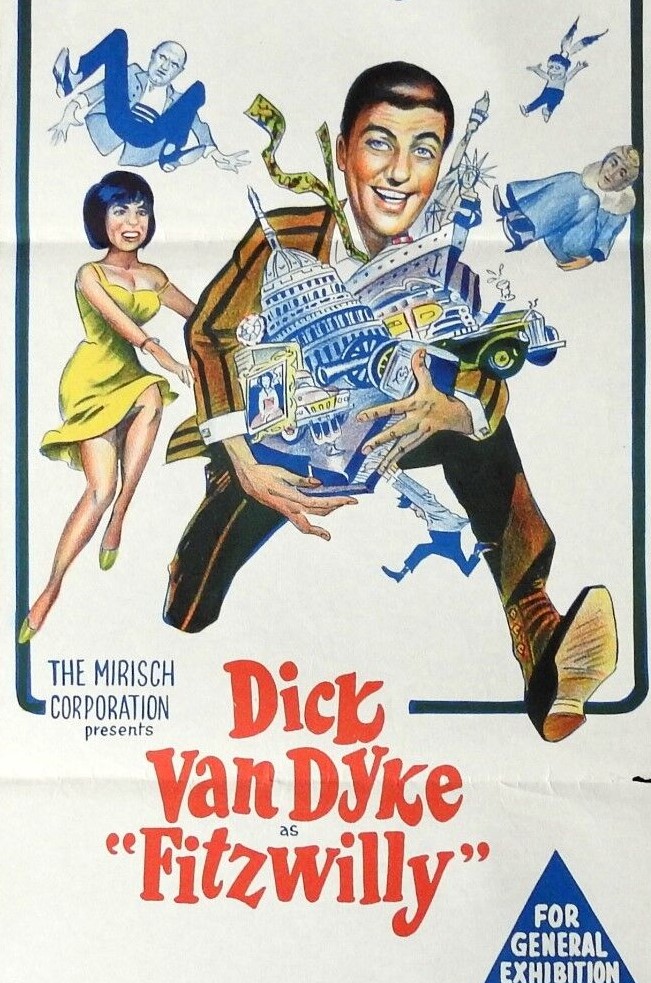
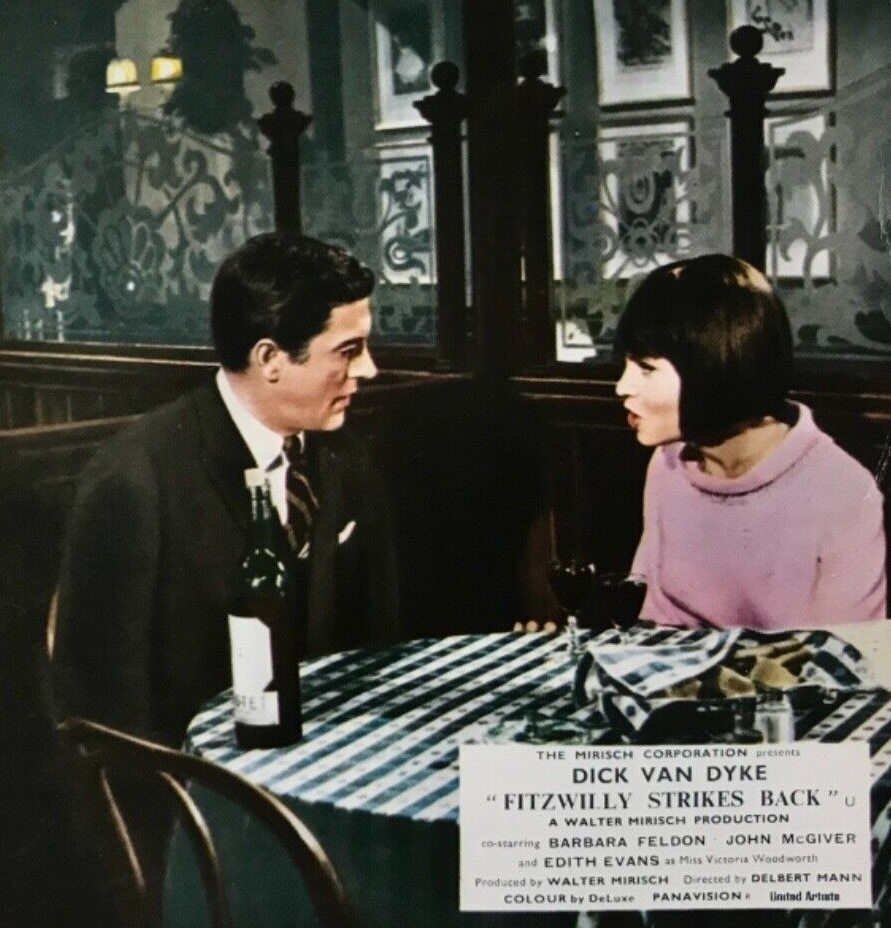
Fitzwilly (1967) ***

Implausibility was not much of a deterrent for the Hollywood screenwriter. It might even prove beneficial when it came to romantic plot ramifications. Suffice to say that this most charming of fey comedies entailing a gang of butlers engaged in a larcenous spree stretches credibility, not least because their intentions are a twist on Robin Hood, stealing from the rich to give to the rich, namely to ensure a dotty old lady maintains her wealthy lifestyle.

The big plus is not the series of heists, which fall into the over-egged pudding category, but the performance of Dick Van Dyke (Chitty Chitty Bang Bang, 1968). It’s somewhat refreshing to see him not falling back on twisting his vowels or his body and looking like an accident waiting to happen. This is Dick Van Dyke – actor.

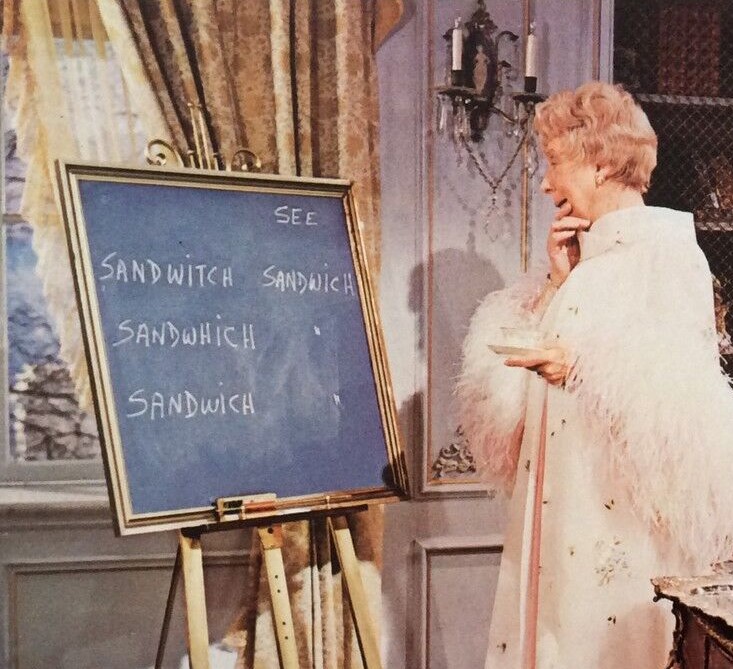
Edith Evans explaining her brilliant concept. although I’m surprised to see her leave in the “D” in Sandwich which is the most common error.

Fitzwilliam – nicknamed Fitzwilly – is the adored and highly-educated head butler in a gigantic New York mansion owned by the eccentric Victoria Woodworth (Edith Evans) who is working on the daftest notion imaginable, writing a dictionary for people who can’t spell. That’s not even the most bizarre element.

While leaving the entire running of the house, and the management of her money, to Fitzwilly, Miss Woodworth goes against this by off her own bat hiring a secretary Juliet (Barbara Feldon) who can’t spell. This is despite Juliet having a degree from a top university and having a professor for a father. But, aha! There’s method in the old bird’s madness. She requires a semi-illiterate to practise her dictionary notions upon.

Having upset Fitzwilly by sneaking in like a cuckoo to his well-oiled nest, Juliet complicates matters firstly by spotting some of the thieving and secondly by falling in love with the butler.  It’s something of a shame, really, that the initial scheme of clever crooks on the make, using wealth as a disguise – who is going to challenge an exceptionally well-spoken butler when he walks off in plain sight with a Steinway piano – is turned on its head when we realise the hoods stand to make no personal benefit. Their largesse merely avoids revealing to Miss Woodworth than she is actually broke.

The two stars getting up close and personal.
There are a ton of under-stated elements of Van Dyke’s performance. In this scene,
he delicately explains to a young, inexperienced waiter how to properly pour wine.

Some of the heists are more of the over-egged con variety, too complicated for their own good, but the final robbery – on Xmas Eve – sits fairly and squarely in Marx Bros territory, providing a host of genuine laffs. Though you might wonder at the susceptibility of big-name department stores to smooth-talking criminals.

The romance is gently old-fashioned, and though Barbara Feldon (Agent 99 from Get Smart!, 1965-1970) does possess comedic timing, in hairstyle and delivery resembles Jane Fonda. It could have done with more time spent on her challenging or outwitting the butler, as she does at the start, to build up her character rather than lamely surrender to the romantic urge

Dick Van Dyke and Edith Evans effortless carry the picture. But while you’d expect nothing less of the renowned British actress, Oscar-nominated the previous year for The Whisperers, the biggest stretch in the entire picture is Van Dyke reversing his screen persona to turn into a believable leading actor not dependent on pratfalls, dodgy accents, singing and those limbs that seem to have a life of their own. He exudes charm and class and his character, without the distraction of being so devoted to his boss, could have pursued a highly profitable life of crime with himself as the sole beneficiary, which might have opened the door for his underwritten confederates – including John McGiver (My Six Loves, 1963), Oscar nominee Cecil Kellaway (Guess Who’s Coming to Dinner, 1967), Norman Fell  (Sgt Ryker, 1968) and in his debut Sam Waterston (Three, 1969) – to play a larger part in the dramatic proceedings.

But hey, if audiences were primed to fall for every Doris Day comedy built on a dumb premise and had lined up in the millions for It’s a Mad, Mad, Mad, Mad World (1963), then it’s kind of hard to question the narrative underpinning this picture. Isobel Lennart (Funny Girl, 1968) whipped up the screenplay from the novel A Garden of Cucumbers by Poyntz Tyler.

Once you get over the initial over-egging it’s soon apparent that Delbert Mann (Buddwing, 1966) has stitched together quite successfully a jigsaw of improbability.

Worth seeing for a Dick Van Dyke you never knew existed and another imperial turn from Edith Evans.

Behind the Scenes: Thumbs Up or Thumbs Down, United Artists 1966 – Part One

Most observers don’t have a clue why some films are made in preference to others, or even of which movies have sat in turnaround hell for years. When I was researching my book The Making of The Magnificent Seven I came across some priceless material that gave some clues regarding the process. An “Inter-Office Memorandum” dated February 3, 1966, provided an insight into how independent producers Mirisch, then allied to studio United Artists, set about giving the thumbs up or thumbs down.

The memo referred to a meeting held at the Beverley Hills Hotel on January 29-30, 1966, attended by the three Mirisch Brothers – Harold, Marvin and the recently-deceased Walter – as well as UA head honcho Arthur Krim, Herb Jaffe and David Picker. On the agenda: Inspector Clouseau, Sherlock Holmes, The Mutiny of Madame Yes, The Egyptologists, Garden of Cucumbers, Wind on Fire, High Citadel, Saddle and Ride, The Narrow Sea, The Great Japanese Train Robbery, Lydia, In the Heat of the Night, The Cruel Eagle, How To Succeed in Business, and Death, Where Is Thy Sting-a-Ling.

Separately, the group examined commitments to various talents including John Sturges, Norman Jewison, Bryan Forbes and Billy Wilder.

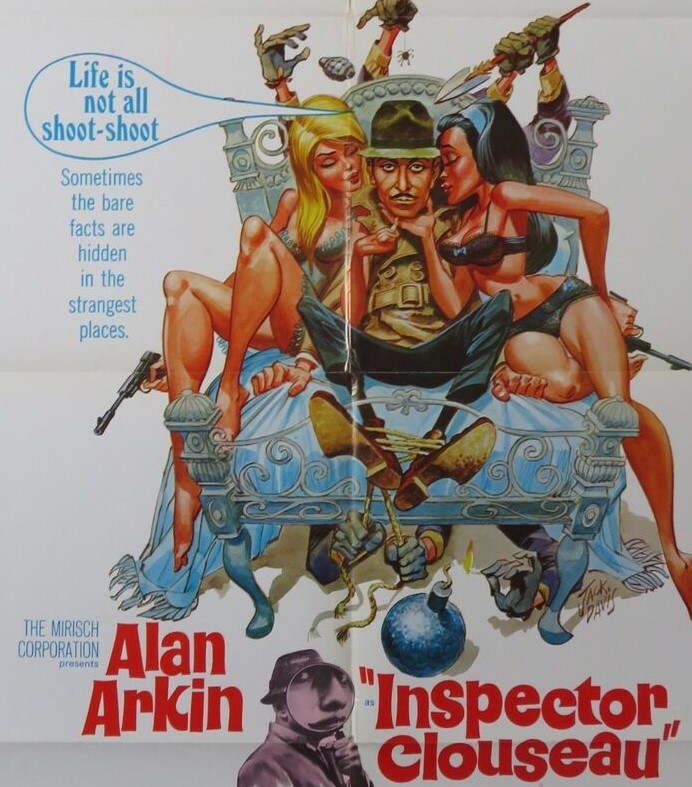
Top of the agenda was Inspector Clouseau, a sequel to the successful Pink Panther series, from which Peter Sellers had withdrawn. The budget was set at $3 million including $466,000 for director and star. Alan Arkin was not yet a lock, UA reserving its opinion on Arkin’s marquee’s credentials until it saw how The Russians Are Coming, The Russians Are Coming (1966), in which he was the star, performed at the box office. Should it bomb, second choice was Zero Mostel. Jonathan Winters, viewed as a “questionable choice,” was also in the running. Clive Donner was the preferred director. If he passed, next up was Guy Hamilton. (In the end both rejected the offer and it was released in 1968 with Bud Yorkin at the helm.)

Two projects on the table were mooted as vehicles for Steve McQueen. The first, Wind of Fire, was intended as “immediately following Sturges’ racing picture.”(This was Day of the Champion but a legal battle with MGM would derail this and McQueen was five years away from releasing Le Mans). Wind of Fire, to be directed by Norman Jewison, suffered from an incomplete script which restricted discussion. John Wayne had shown an interest but UA “was not really interested in Wayne,” possibly as a result of the fall-out from The Alamo (1960). The second McQueen project was the thriller Lydia based on the book by E.V Cunningham (the pseudonym of Howard Fast of Spartacus fame). Here, the script was complete and in the actor’s hands. Doris Day had been touted for female lead but Mirisch had nixed her involvement. When dealing with any major star, greenlighting a picture depended on schedules not clashing. (In the end neither project saw the light of day.)

Mirisch was also juggling two properties to star Dick Van Dyke.  The Great Japanese Train Robbery was due to commence filming in June 1966, although that meant cooperation from Columbia and Disney who had first call at that point on the actor; Disney had excused him, Columbia had not. Virna Lisi, the intended female lead, was dunped for demanding too much money, $300,000 her current asking price. In her place were suggested Claudine Auger, Catherine Deneuve, Stefania Sandrelli or Luciana Paluzzi. Although the budget was approved at around £3.3 million, the movie never went ahead.

Garden of Cucumbers with Van Dyke, though minus a female lead, was already scheduled to start shooting in August-September 1966. Proposed director, in order of preference, was Norman Jewison, Arthur Hiller or Elliott Silverstein. This project did make it over the line though the title, changed to Fitzwilly, was helmed by Delbert Mann and co-starred Barbara Feldon in her biggest role to date.

A budget of $1.89 million had been set for High Citadel, based on the Desmond Bagley thriller. UA was locked into a pay-or-play deal, which meant star James Garner would receive his salary whether or not the picture was made. However, there was a get-out clause. The studio could use Garner for another picture as long as it slotted into the same timeframe. The other options were Saddle and Ride and The Narrow Sea. Of these Mirisch preferred the former, UA the latter. But there was a directorial issue with The Narrow Sea. Mirisch had a moral commitment though not a legal contract with producer Robert Relyea to make this his directorial debut and UA didn’t want him. (In the event neither film was made.)

There were budget issues on How To Succeed in Business. UA had given the go-ahead on the basis that it would cost no more than $3.25 million but the budget had since soared by over half a million. To meet the May 1 start date, the budget had to be trimmed back to the original amout. (This was presumably done, since the movie appeared the following year). In the Heat of the Night was in the early stages of development, the production company still to see the Stirling Silliphant script, but at this stage no objections were raised. Fred Zinnemann was being considered as the director of The Cruel Eagle by Frederick E. Smith, author of 633 Squadron. (It was never greenlit).

Making movies in Britain – in order to take advantage of the tax advantages of the Eady Plan – was central to the Mirisch strategy. While Inspector Clouseau, Death, Where Is Thy Sting-a-Ling,  and The Mutiny of Madame Yes– budgets totalling around the $10 million mark – were already committed to the Eady Scheme, Mirisch was also seeking backing to set up a low-budget unit in Britain to maximize the government’s largesse. Budgets per picture would be limited to $1 million or less. In the memo they were described as “disciplined” or “service” pictures to be “produced in color.” In essence that meant basic programmers that could be sold to drive-ins and cinemas with a high movie turnover, on a rental basis if they topped the bill, for a flat fee if they were supports. This would have the added benefit, for those houses whose customers demanded a double bill, of being able to offer a program where all the revenue would end up in the Mirisch pocket.

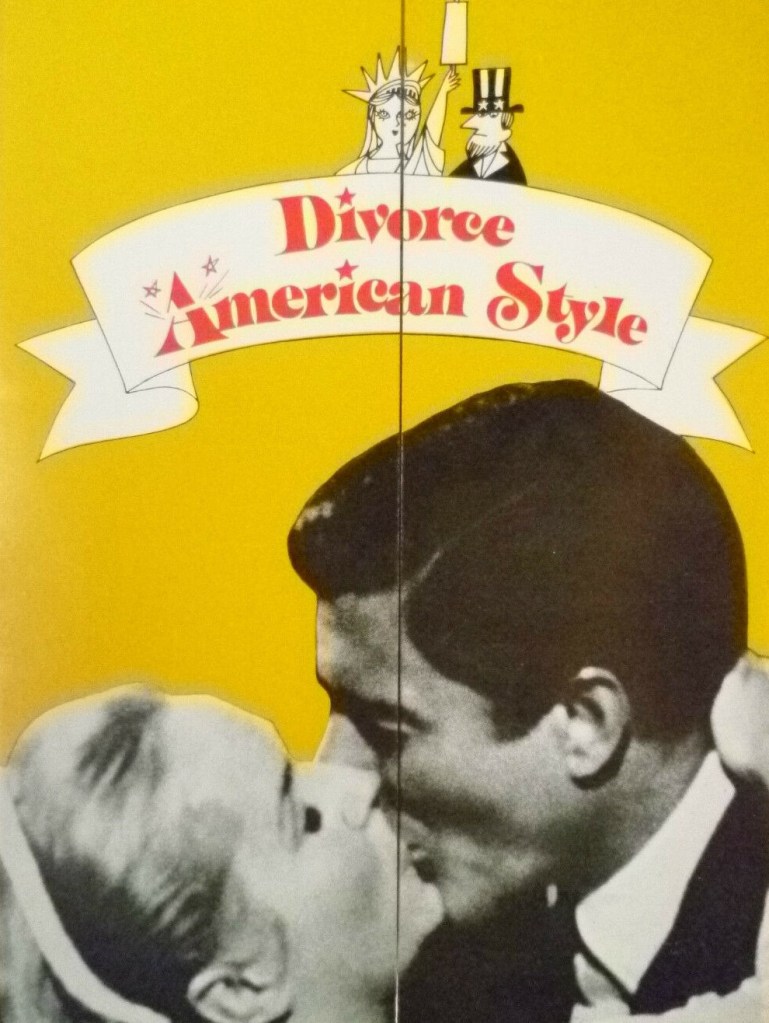
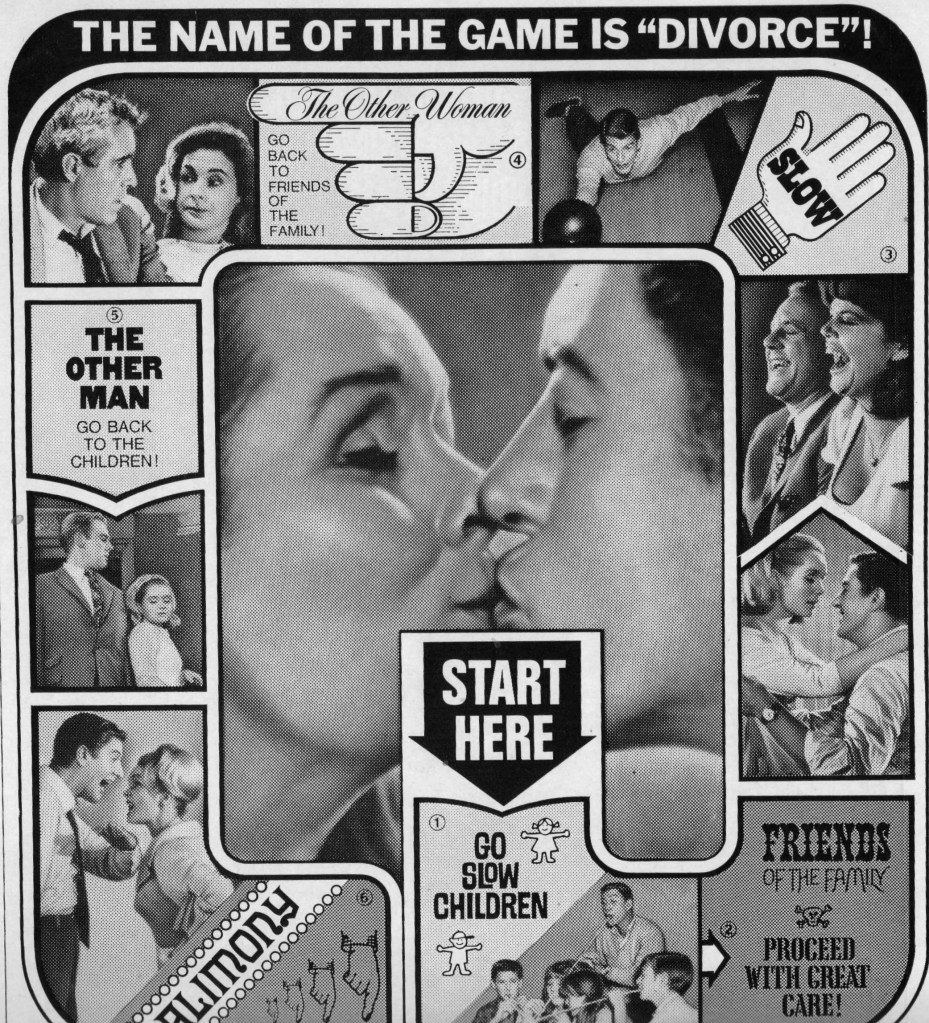
Selling Dick Van Dyke – The Pressbook for “Divorce American Style”

There was a curious dichotomy at the heart of promotional efforts for this picture. On the one hand, theater managers were encouraged to make contact with those affected by divorce, on the other to make a great play of weddings and marriage.

So theater managers were told to contact groups such as Parents without Partners, Children of Divorce, Divorce Reform Groups, Alimony Payers and Family Counsellors. Divorce Parties and Divorce Breakfasts were suggested as other sources of publicity. Free screenings were aimed at couples who could prove they were divorced – presumably, that is, if they could still stand the sight of each other.

“Wedding rings can make a very positive contribution” to a promotional campaign was the other side of efforts to sell the movie. That meant possibly offering a wedding ring as a prize in a competition for divorced couples planning to re-marry…”re-marriage might take place at your theater…but it is not mandatory.” Free tickets could be given to jewelers to hand out to anyone buying an engagement or wedding ring. Another idea was a newspaper article on what divorced women did with their wedding rings after they had split from their partner.

Dick Van Dyke had been named “Screen Father of the Year” by the National Father’s Day committee and he had made a national tour in support of the picture meeting the media in New York, Chicago, Miami, Atlanta, New Orleans. Oklahoma City, Rochester, Washington, Syracuse, Boston and Philadelphia so journalists in those localities were already primed to support the efforts of cinemas. In Dallas, he was met by 1,000 people and later presented with a plaque from the Domestic Relations Court because “the ideals of the film serve as a deterrent to divorce.”

Unusually, the fashion boost this time focused on the male. Jason Robards had turned himself into a male model for Ratner California Clothes with advertisements appearing in Gentlemen’s Quarterly. Equally unusual was a suggestion to tie up with a local hypnotist – a scene in the picture involves Pat Collins’ nightclub act.

Van Johnson played a used car dealer in the film so they were also targeted for joint promotions or car parades. Bowling alleys, too, since that form of leisure activity featured in the film. On a more straightforward note Popular Library had produced a novelization and United Artists the original soundtrack album by Dave Grusin.

Divorce American Style (1967) ***

Not so much a comedy about a failing marriage as a guide to the American divorce laws,  a cynical hard-boiled and frightening shape of things to come in a world where the everyman is represented not by the likes of James Stewart or at a stretch Glenn Ford but Dick Van Dyke. It’s possibly only the fact that Van Dyke lacks dramatic chops without the innate vitriol of a Rod Steiger or Lee Marvin that keeps the movie from drifting into devastating black comedy. That, or the filmmakers’ determination to find a happy ending.

When the ever-squabbling Harmons, Richard (Dick Van Dyke) and Barbara (Debbie Reynolds), break up after 17 years and two kids, the chips seem to fall heavily against the husband, the wife walking off with all assets, the husband landed with all the bills and little more than 80 bucks a week to get by on. Such is the supposed injustice of the American divorce laws at a time when most wives did not go out to work and so relied on their husband, married or otherwise, for support.

The only way out of this unhappy financial state for Richard is for his wife to get married again, so a second husband can pick up the tab for her upkeep.  Another divorced couple, the Downes, Nelson (Jason Robards) and Nancy (Jean Simmons), are in the same pickle so Nelson spends his time acting as some kind of pimp for his ex-wife, serving up potential suitors, such as Richard, on a platter. But since Richard is impoverished a helping hand is needed to even things up, so Nelson arranges for Barbara to fall into the arms of rich and single used car dealer Al Yearling (Van Johnson).

There is a big male-female divide, for the most part the guys concentrating on material things like money and what money can buy, the gals leaning more towards emotion, conversation, genuine intimacy.  Richard has given his wife everything she wants, so why can’t he have a few things his own way. Or as Barbara succinctly puts it, it’s a case of supply and demand, the women are in good supply while the men demand. Even after separation, while from the Richard and Nelson perspective the wives are living in the lap of luxury and the men understanding the meaning of penury, female thoughts turn to questions of loneliness, commitment and (not again!) emotion.

While there are moments of observational comedy – an excellent montage of Richard and Barbara opening and closing all sorts of doors while preparing for bed, cleaning out bank accounts before the other can get to them, the problems of accommodating the blended/hybrid family that divorce or multiple divorce can entail – there are not many laugh-out-loud moments.

And probably just as well because without the drama-lite presences of Van Dyke (who still can’t shake off those double takes and involuntary limb functions) and Reynolds, it would have been a much tougher watch. Reynolds is capable of expressing her feelings verbally because, as a female, she is used to expressing feelings verbally, so we know that Al Yearling does not quite hit the spot. But Van Dyke, without resort to the verbal, has his best scenes of emotional loss when he takes his kids to the ball game only to discover that his wife’s new suitor has more treats to offer.

Van Dyke (Lt. Robin Crusoe, U.S.N.) and Reynolds (The Singing Nun, 1966) do a decent job without plumbing any dramatic depths, but Robards (Any Wednesday, 1966) and Simmons (Spartacus, 1960) have more to offer as the conspiring couple, while one-time MGM golden boy Van Johnson (Battleground, 1949) proves that his four-year absence from pictures was premature Hollywood retirement. More a cautionary tale than an outright laffer, this Norman Lear (Come Blow Your Horn, 1963) screenplay without missing many targets provides a more palatable dissection of modern marriage than something as full-blooded and expletive-ridden as the previous year’s Who’s Afraid of Virginia Woolf.  Director Bud Yorkin (Come Blow Your Horn, also) shows a nice grasp of building up situations until they go out of  control.

While, certainly, many of the attitudes are out of date you can be sure that male self-pity is not one of them.

Discover WordPress

A daily selection of the best content published on WordPress, collected for you by humans who love to read.

The Atavist Magazine

by Brian Hannan

WordPress.com News

The latest news on WordPress.com and the WordPress community.