Barbarella (1968) ****

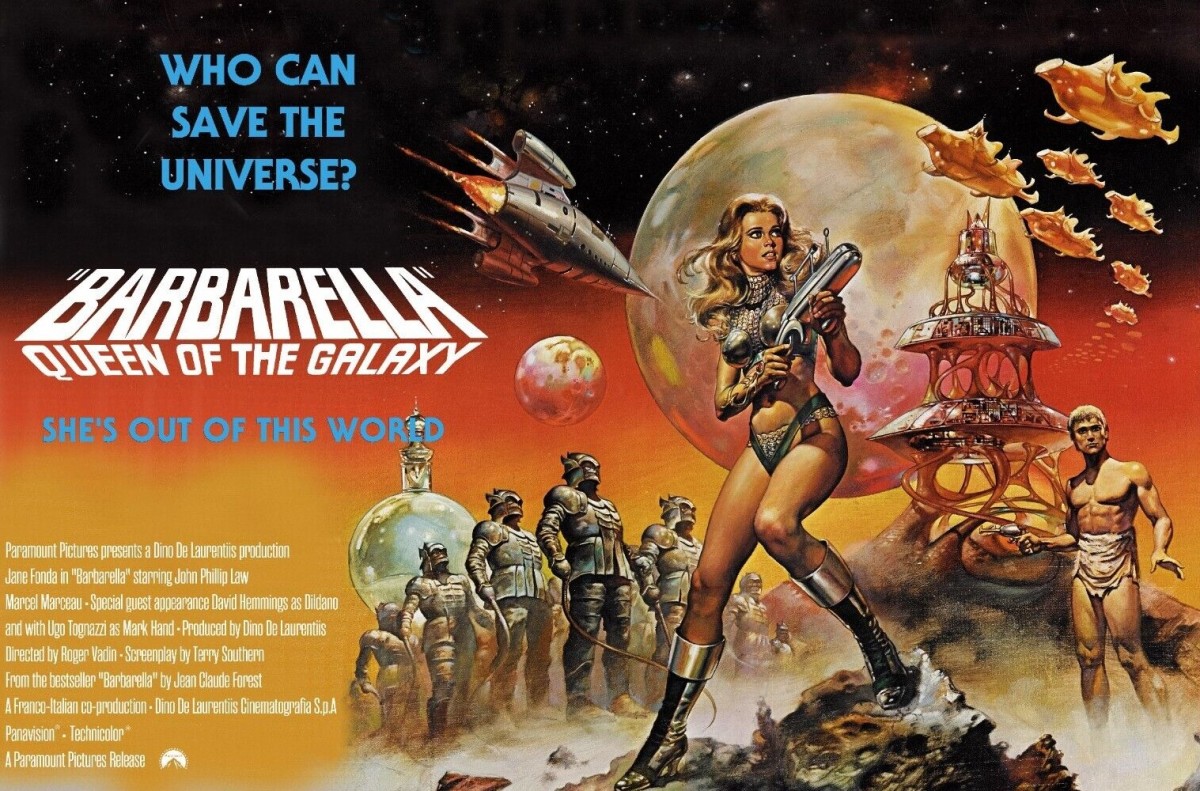
While sci-fi was being viewed through a serious glass darkly what with Fantastic Voyage (1966), 2001: A Space Odyssey (1968) and Planet of the Apes (1968) along came Roger Vadim’s little number to set up an alternative universe of camp fun. Had this been a box office smash in the nature of The Odd Couple ($18.5 million in U.S. rentals) rather than under a third of that there might have been less of the po-faced doomladen sci fi in the following decade.

But if you wonder where Star Wars got its vibe, setting aside the overt sexiness portrayed here, this is as good a place to start. Naïve adventurers, check. Ice planet, check. All sorts of weird creatures in strange otherworldly locales, check. A doomsday weapon, check.

It’s kind of newsworthy to be rewatching this given that star du jour Sydney Sweeney (Anyone But You, 2023) is going to be donning the Barbarella costume for a remake next year. And who knows to what Oscar-winning fare that might lead, if she were to follow the Jane Fonda template, given it was La Fonda’s follow-up that brought her serious attention from the Academy.

But it would be remiss of me if I didn’t bring up the testy matter of director Roger Vadim’s uncanny obsession with getting his myriad girlfriends to shed their clothes for the movies, Fonda being the latest example, and in no uncertain terms, the striptease performed during the opening credits certainly rivaling Kubrick and Spielberg for the most jaw-dropping opening to a sci-fi movie.

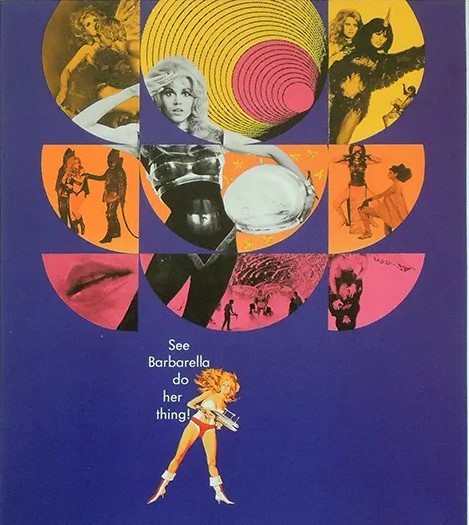
Whether it was Fonda or someone else and whether it was Vadim or someone else you couldn’t get away from the fact that Barbarella as a sci-fi icon was most definitely on the sexy side as determined by her creator Jean-Claude Forest, sharing like British comic strip heroine Jane a predilection for losing her clothes.

Barbarella shares something of the same innocent abroad personality, the kind who gets into one unexpected scrape after another, after being despatched from peace-loving Earth to save the world by finding Durand Durand (the pop band making homage to the movie dropped the final letter of this character’s name) and his doomsday machine.

So mostly, it’s one imaginative character or scene after another, delivered in disconnected episodic manner, and it sometimes has the feel of a jukebox movie, of the greatest hits of the comic strip writer strung together, with an occasional comment on the problems created by sex and a climactic gender-spinning twist. You’d have to remember what Pop Art was to chuck it into that short-lived category but if you think it belongs on the same planet as the more earthbound Modesty Blaise (1966) and Danger: Diabolik (1968), think again.

The best sections are truly terrific. The sharp-teethed menacing robot dolls are exceptionally scary as they nip chunks out of our heroine’s flesh and leave her blood-soaked. There’s a homage to The Birds (1963) where our plucky heroine is trapped in a cage with a flock of sparrows. You’ve also got the The Catchman, performing the same function but considerably scarier than the same year’s Child Catcher from Chitty Chitty Bang Bang. But no wonder the kids need caught because they are full of evil intent.

You’ve got a blind angel (John Phillip Law) who can’t fly, a problem mysteriously solved by sex with the ever-gracious Barbarella who, previously, has discovered, courtesy of The Catchman, the immense pleasure of the art of making love the old-fashioned way rather than just popping a pill. The angel also has no memory, permitting an ironic twist ending. You’ve got an incompetent rebel (David Hemmings). Sex is pretty much top of everyone’s agenda, even the villain (Milo O’Shea) who uses it to kill people via his own invention, which proves not much cop, since rather than murdering Barbarella with excessive pleasure, she makes it blow up.

Along the way there’s any number of interesting inventions: a manta-ray acts as the skis for a futuristic sailing ship, hollow robotic soldiers, a labyrinth.

Some of the special effects wouldn’t pass muster these days, but that’s a minor flaw compared to the rest of what’s on show. It’s not exhilarating in the real sense, but if you’re unfamiliar with the source material, it retains an endless fascination, more like a sexed-up version of the Ray Harryhausen world than anything that would have interested Kubrick. And, heck, just fun. What’s not to like.

Jane Fonda (They Shoot Horses, Don’t They, 1969) holds it all together, innocent rather than naïve, even her sexuality is innocent not exploitative, and possibly for a film deemed sexy makes greater comment on the dangers of lust than many a more self-important movie.

Great supporting cast with David Hemmings (Blow-Up, 1966), John Philip Law (Danger: Diabolik), Anita Pallenberg (Performance, 1970), Milo O’Shea (Ulysses, 1967) and Marcel Marceau.

Roger Vadim’s best film. Written by a huge squad of writers, nine in total, headed up by Vadim and Terry Southern (Candy, 1968).

Will probably be yanked out of circulation at the approach of the remake so now’s your chance to catch up on a fun sci fi.

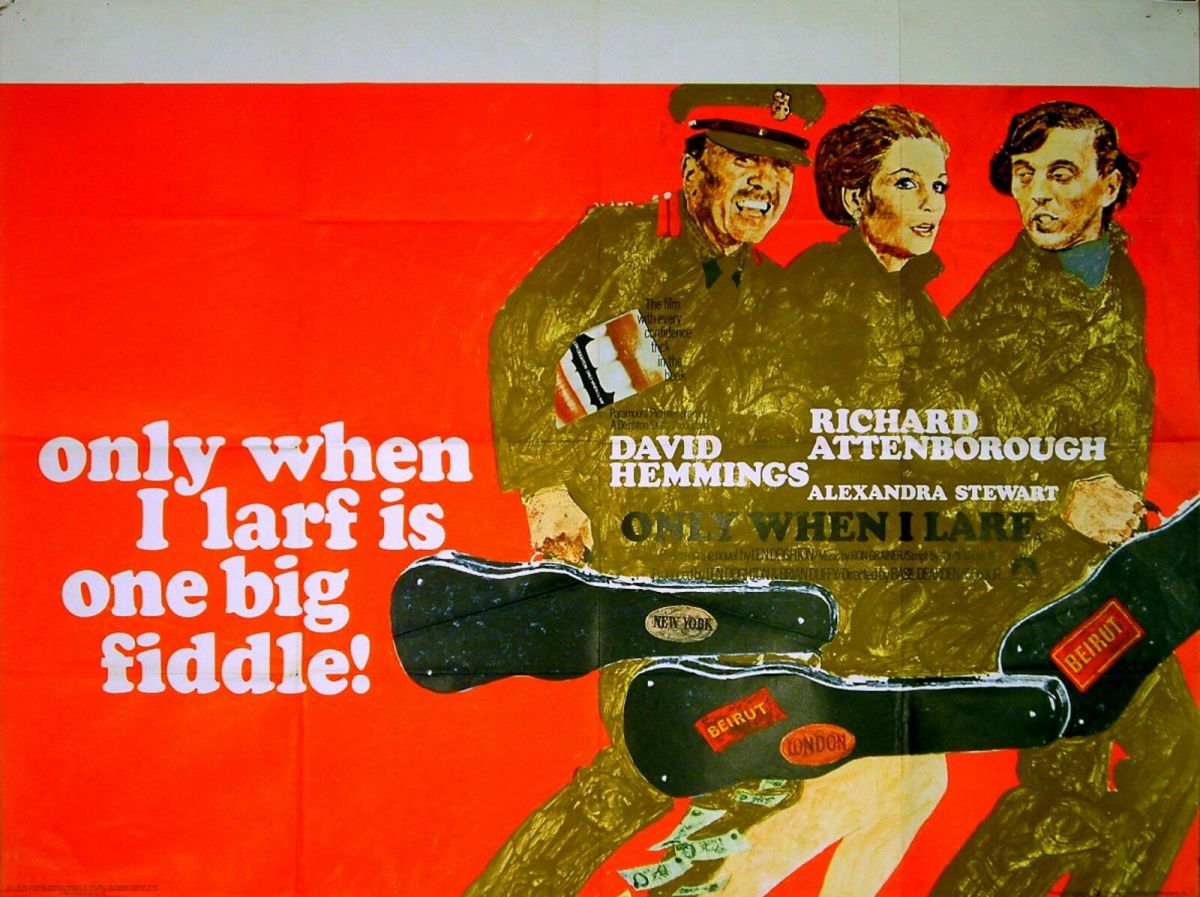
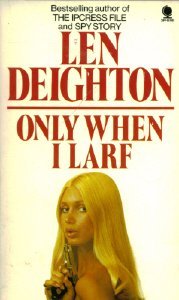
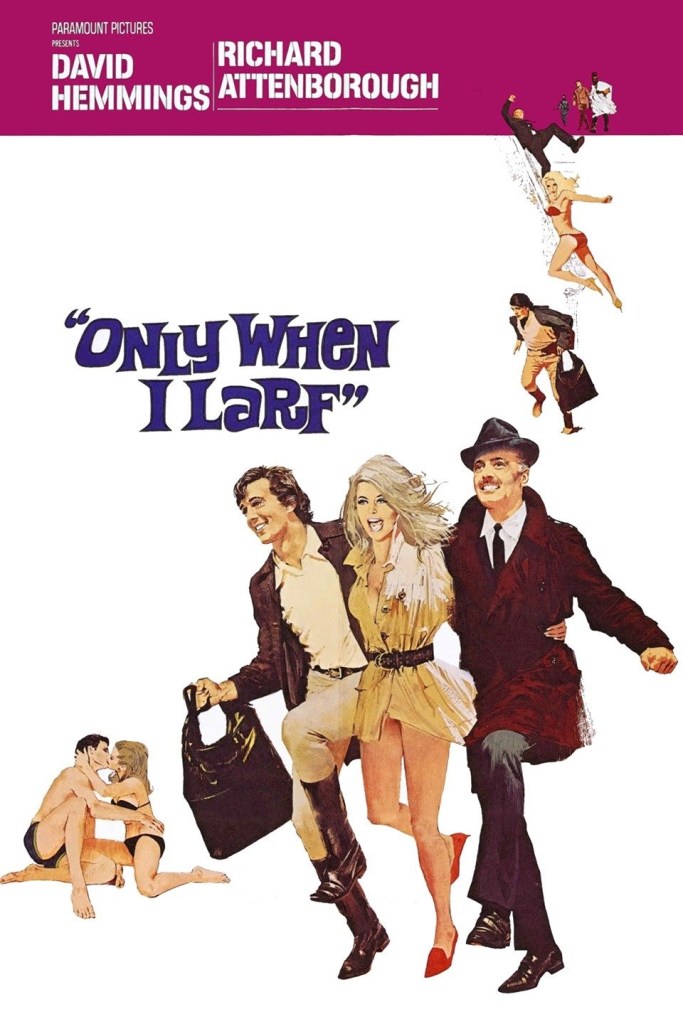
Only When I Larf (1968) ***

Terrific, elongated, 20-minute pre-credit sequence sets up this brisk con-man thriller as the trio of Silas (Richard Attenborough0, his younger lover Liz (Alexandra Stewart) and apprentice Bob (David Hemmings) fleece a couple of greedy businessmen in New York.  The action moves with military precision, the trio so appealing, the scam so well-worked, you want them to escape.

But when their next sting fails to come off, roles are reversed and it is floppy-haired Bob  who takes charge, organizing the scheme, and making moves on Liz. Meanwhile, Silas is planning to double-cross them. The first and last schemes work a treat but the middle one sags, even allowing for cracks to appear in the relationships.

Attenborough is the pick of the bunch, switching accents and personalities, one minute a suave businessman, the next a nervous Lebanon banker, while at other times his stiff upper lip contends with his sergeant-major attitude. Hemmings’ accents are less convincing, all over the place at times, but the switch from junior partner to operation controller is convincing especially as he clearly enjoys putting Attenborough in his place, forcing him to shave off his moustache and giving him the name Longbottom.

And Stewart is never quite what she seems, willing to indulge either man to suit her purpose. Scottish actress Melissa Stribling, wife of director Basil Dearden, is a late addition to the crew and colder-eyed.

This was Attenborough’s first starring role since Guns at Batasi (1964) – Best Actor at the Bafta Awards – and although he had featured roles in Hollywood productions The Flight of the Phoenix (1965) and The Sand Pebbles (1966) – his screen person was quite confined in those pictures. Here, it feels like he has been let free. Hemmings was coming off three heavy roles in Camelot (1967), The Charge of the Light Brigade (1968) and The Long Day’s Dying (1968) so it felt like he, too, had a spring in his step. This was a distinct mainstream jump for Canadian actress Alexandra Stewart, although she had small roles in Maroc 7 (19670 and Truffaut’s The Bride Wore Black (1968),

Basil Dearden slipped this one in between the more lavish Khartoum (1966) and The Assassination Bureau (1969). There is a slapstick chase reminiscent of the latter but, basically, he keeps to the story and allows character to develop. This being a British film, you might find some outdated British attitudes. This was bestselling author Len Deighton’s first stab at production.


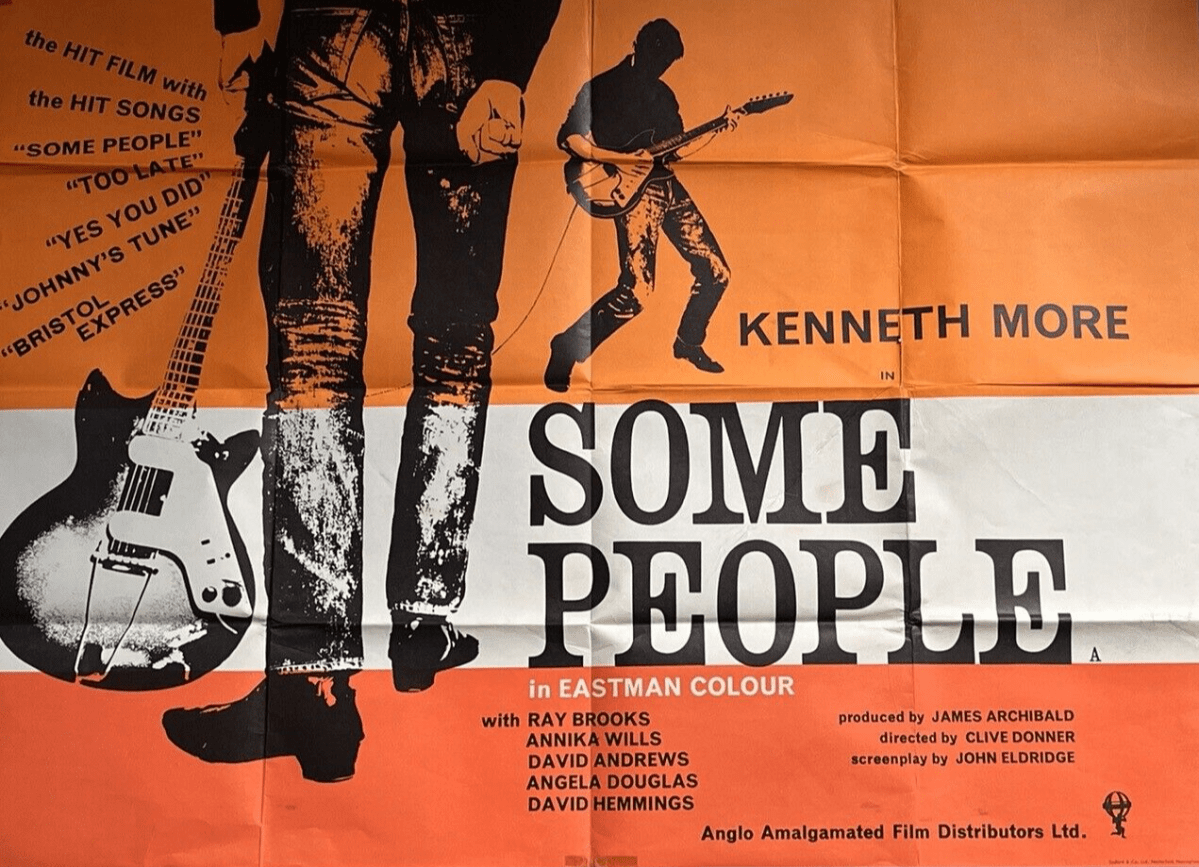
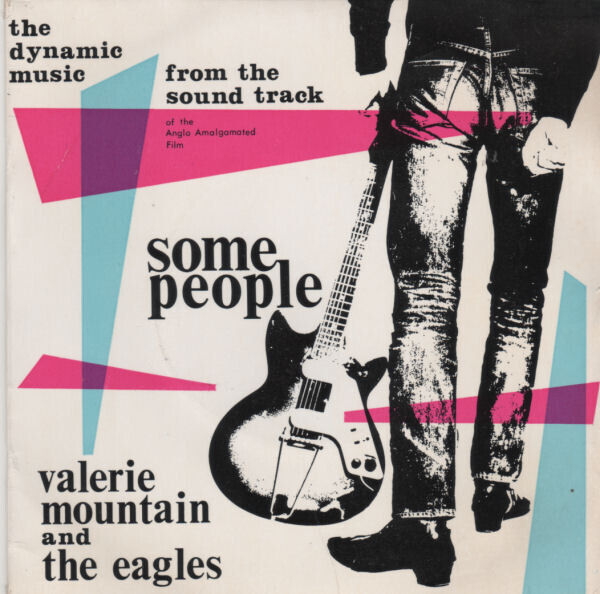
Some People (1962) ***

Bet you didn’t know the Duke of Edinburgh (yep, that one, the recently deceased husband of the recently-deceased Queen Elizabeth II) was involved in the movies. Or that a film set up with the express purpose of promoting his Duke of Edinburgh Award Scheme could actually be any good.

A slice-of-life British picture that steers clear of the “kitchen sink,” so lives not blighted by alcohol, sex, abuse, unemployment which means no single mothers, no out-of-their head drunks, no railing at the government, no bloody violence. Instead, you’ve got kids in dead end jobs, refusing to conform, and then finding responsibility isn’t such a trial after all.

Not sure this notion qualifies as a promo for the Duke’s Scheme, but the movie’s probably best known for showing young women how to shrink their jeans skin-tight and, surprisingly, passing on the notion that your father would happily tolerate such behavior.

Three tearaways involved in an accident with their motorbikes lose their licences and at a loose end stumble across a benevolent choir master Smith (Kenneth More) who lets them use his church hall to rehearse their band. This is pre-Beatles so no mop-tops and screaming, but music with shades of Helen Shapiro and The Shadows, and the fancy footwork that was all the rage at the time.

The line-up is Johnnie (Ray Brooks) on piano and third guitar, Bert (David Hemmings) and bespectacled Tim (Timothy Nightingale) – a replacement for the disgruntled Bill (David Andrews). And they are joined by drummer Jimmy (Frankie Dymon) and singer Terry (Angela Douglas). The Award Scheme – a way of giving young people something to do and encouraging them to try an activity outside their usual sphere – malarkey is eased cleverly into the script, eventually becoming a challenge, though it’s somewhat gender-defined, Terry taking up knitting, while Bert helps make a canoe and plans the kind of outbound expedition with which the scheme was most associated.

There’s a punch-up and (gosh!) tables and tablecloths and crockery are destroyed, but mostly it’s just teenagers getting rid of their angst in ways that don’t define their lives (i.e. pregnant girlfriend or spell in jail.) The bulk of the aggravation comes from Bill, who refuses to join in, gets cross at being called a “teddy boy” and that his girlfriend Terry is making a play for Johnnie.

However, Johnnie is sweet on Smith’s daughter Anne (Anneka Wills), so there’s some sexual tension. Though the sexual element, despite the jeans scene, is conspicuously underplayed. Johnnie doesn’t even get to what was misogynistically referred to as “first base” in those days, restricted to kissing and a gentle hug. His romance is inevitably doomed because Anne wants to go away to college, but, by this time, despite an initial angry response, he’s grown-up enough to accept it and realize how much he’s benefitted from the relationship.

Although the actual music is supplied by The Eagles (no, not those ones), it helps that the actors look as if they know their way around music, although what they play is hardly sophisticated by the later standards of the decade.     

Critics might have preferred the more violent motorbikers of The Damned (1962) or The Leather Boys (1964) and the working class milieu of Saturday Night and Sunday Morning (1960), but this depiction of suburban life (it’s set in Bristol) is more in line with director Clive Donner’s later Here We Go Round the Mulberry Bush (1968).

You could have a high old time arguing which film is the more realistic, the ones over-teeming with violence, disillusionment  and sex, or ones where real ordinary life rarely touches such dramatic heights and relies more on people working their way through real or imagined difficulties. The slice-of-life elements involve a cigarette factory, fish-and-chips, blaring television, a father (Harry H. Corbett) out of touch with this son (one of the best scenes), roller skating, youngsters drinking Coca Cola and not booze (Johnnie has to be introduced, against his wishes, to alcohol by his father), hire purchase and a deluge of advertising promising a better life.

And it’s anchored by Kenneth More (The Comedy Man, 1964), who did this film for nothing with the unexpected bonus of meeting his third wife, Angela Douglas. On the basis of this performance, you wouldn’t be expecting David Hemmings (Blow-Up, 1966) to become the break-out star – he’s billed sixth – rather than young male lead Ray Brooks (The Knack, 1965). Angela Douglas popped up in Maroc 7 (1967) but was better known as a Carry On semi-regular. Anneke Wilks was one of The Pleasure Girls (1965) but more at home in television.

On a side note, I realized that the council-run buses in every big city had their own primary colors. Red, obviously, for London, but Bristol chose a virulent green while I remember the vehicles in my home town of Glasgow being yellow-and-green and I wondered if there was some official body that assigned color in this fashion. An idle thought.

Much better than you might expect from a movie whose main aim was to promote a scheme set up to help teenagers find their feet.  

Top 30 Films for 2023

Ann-Margret is pipped to the post by…Ann-Margret. The Swinger and Stagecoach duked it out at the top of the All-Time Top 40 with the former taking it by a good margin. But it was the reversal in the annual stakes, with the western ahead just by a nose. The films viewed most this year. As ever some surprise picks.  

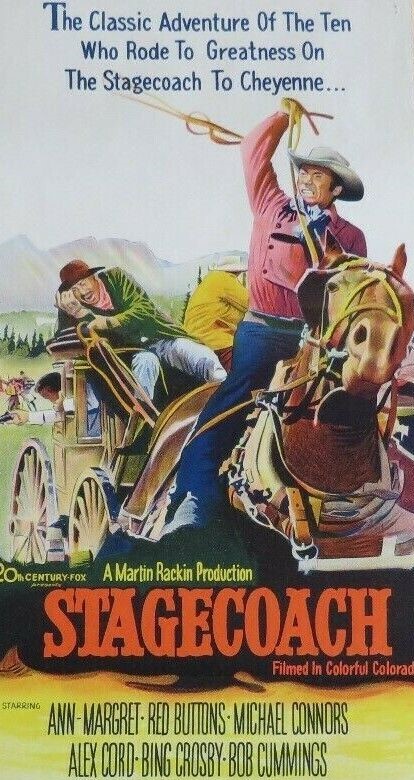
  1. Stagecoach (1966). Ann-Margret and Alex Cord in decent remake of John Ford classic western.
  2. The Swinger (1966). Ann-Margret as novelist who tries to live up to the sexy persona she has invented.    
  3. The Sins of Rachel Cade (1961). Angie Dickinson as African missionary with Peter Finch and Roger Moore in thrall.
  4. Fireball XL5. The famous British television series from Gerry and Sylvia Anderson, now colorized. “My heart will be a fireball…”
  5. Fraulein Doktor (1969). German spy Suzy Kendall out-foxes Kenneth More. Grisly realistic WWI battle scenes and a superb score from Ennio Morricone.
  6. Vendetta for the Saint (1968) Roger Moore vs the Mafia.
  7. Plane (2023). Gerard Butler channels his inner Bruce Willis in Die-Hard-on-a-desert-island adventure.
  8. Baby Love (1969). Orphan Linda Hayden proves too much of a temptation for upper-middle-class London family.
  9. The Best House in London (1969). David Hemmings goes into battle for sex workers.
  10. The Sisters (1969). Nathalie Delon and Susan Strasberg in complicated love triangle of love and betrayal.
  11. Pendulum (1968). Taut thriller with cop George Peppard accused of murdering unfaithful wife Jean Seberg.
  12. Moment to Moment (1966). Jean Seberg investigated for murder in Hitchcockian thriller set in the South of France.
  13. Rage (1966). Glenn Ford and Stella Stevens combat pandemic in Mexican town.
  14. The First Deadly Sin (1980). Frank Sinatra’s cop chases down a serial killer.
  15. Go Naked in the World (1961). Gina Lollobrigida finds that her profession (the oldest) and true love (with rich Anthony Franciosa) don’t mix. Great turn from Ernest Borgnine as a doting father.
  16. Lady in Cement (1969). Sinatra as private eye Tony Rome who takes on gangster’s moll Raquel Welch as a client.
  17. Champions (2023). Woody Harrelson as the basketball coach saddled with a bunch of misfits.
  18. A Dandy in Aspic (1968). Cold War thriller with Laurence Harvey as a double agent who wants out. Mia Farrow co-stars.   
  19. She Died with Her Boots On / Whirlpool (1969). Sleazy British film from cult Spanish director Jose Ramon Larraz sees kinky photographer Karl Lanchbury seduce real-life MTA Vivien Neves.   
  20. Once a Thief (1965). Less glamorous role for Ann-Margret as wife of ex-jailbird thief Alain Delon who is forced into another job.
  21. Diamond Head (1962). Charlton Heston chews the scenery in Hawaiian epic.
  22. Titanic (1997). Reissue in 3D of the James Cameron box office smash.
  23. Can Heironymus Merkin Ever Forget Mercy Humpe and Find True Happiness? (1969) Self-indulgence reaches new heights with writer-director-producer Anthony Newley’s autobiographical tale about stardom. Then-wife Joan Collins co-stars.
  24. Sergeant Ryker (1968). Lee Marvin in Korean War courtroom drama.
  25. The Misfits (1960). Clark Gable goes out on a high, ably supported by Montgomery Clift and Marilyn Monroe in John Huston tale of losers. 
  26. Once Upon a Time in the West (1969). Sergio Leone masterpiece featuring the stunning cast of Claudia Cardinale, Henry Fonda and Charles Bronson and that fabulous Morricone score.
  27. In Harm’s Way (1965). John Wayne and Kirk Douglas in Otto Preminger WW2 epic set in Pearl Harbor and after.
  28. The Invitation (2022). Gothic thriller starring Nathalie Emmanuel.
  29. Beat Girl / Wild for Kicks (1960). Gillian Hills is tempted into joining the striptease game. Christopher Lee puts in an appearance. 
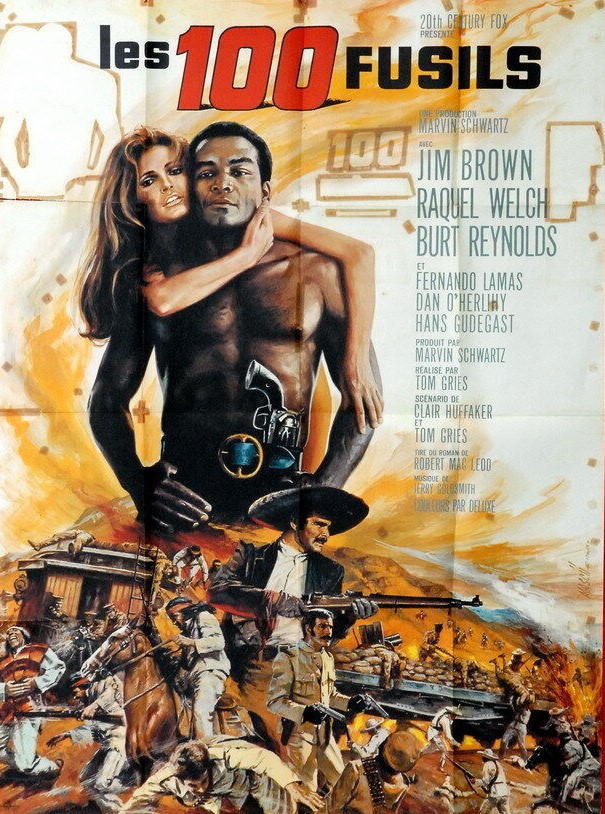
  30. 100 Rifles (1969). Raquel Welch, Jim Brown and Burt Reynolds heat up the screen in Tom Gries western set in Mexico.

Stanley Kubrick’s “Napoleon”: The Greatest Movie Never Made

At the height of his power after the tremendous critical and commercial success of 2001: A Space Odyssey (1968) you wouldn’t have wagered on Stanley Kubrick being outfoxed by Italian uber-producer Dino De Laurentiis. But the latter’s Waterloo (1970) was the prime reason why MGM shuttered Kubrick’s ambitious project. It’s not the reason it was never eventually made – money was.

At one point, it looked as if the movie would shift over to Columbia, which had funded the director’s previous hit, Dr Strangelove (1964), and thence to United Artists – production scheduled to start in September 1970 – before ending up in the lap of Warner Brothers, which would prove Kubrick’s home for the next few decades.

One of the reasons WB was so keen was that it had greenlit a movie by British director Bryan Forbes called Napoleon and Josephine. This was to follow The Madwoman of Chaillot (1970), a project he had taken over at the last minute after John Huston bailed. But it never went ahead because Forbes instead took over as head of production at British studio EMI. To have considered the project in the first place, despite facing competition from Waterloo, would have meant WB viewed the idea as a financailly sound.

The bigger problem, commercially, was that two events coalesced. By the end of the 1960s, the 70mm roadshow was on its last legs. It still continued in haphazard fashion into the early 1970s, but scarcely with the vigor and elan that had produced such different movies as Lawrence of Arabia (1962), It’s A Mad, Mad, Mad, Mad World (1963), Doctor Zhivago (1965) and The Sound of Music (1965) that set fire to the global box office.

As important, studios hit a financial wall at the end of the 1960s as over-investment in all sorts of unlikely roadshow vehicles, often musicals, came back to bite Hollywood. And with Easy Rider (1969) cleaning up, the message to Hollywood was mean and lean.

So a project that could top out at $30 million – even with Jack Nicholson, Audrey Hepburn and David Hemmings involved – and inevitably run over budget, take well over a year to complete and appear when who knew how the movie landscape would have changed, and working with the only director from whom no studio executive in their right mind would dare seize control, this version of Napoleon was put on the back burner, resurrected every time Kubrick had a hit.

As well as the massive book, there were coveted extras, accessed via this card fixed to the inside front cover of the Taschen publication.

When MGM pulled out it was deemed “one too many…ultra-high budget commitments for the studio,” one of the hardest hit by financial turmoil. Columbia, it transpired, had only toyed with the idea. Warner Brothers built up the notion of coming to Kubrick’s rescue with Variety headlines such as  “Costume Epic Due Anew? WB Hunch,” that appeared in Variety in 1972. It was the kind of movie that you almost expected an operation looking to grab Hollywood attention, say new ventures like Cannon or Orion, to pick up.

While Waterloo (1970) was seen as the main obstacle, coupled with the fact that one of the reasons Abel Gance’s Napoleon had stiffed way back in the silent era was American audience indifference to the French Emperor, it has to be said Hollywood would have noticed that Kubrick faced more competition than just De Laurentiis. Wider awareness of subject matter might have come from an unusual source, since Barbra Streisand was contemplating starring in a new Broadway musical about Napoleon and Josephine,

That there was continued interest in Napoleon was proved with the release of Fielder Cook’s Eagle in a Cage (1972), starring Kenneth Haigh (The Deadly Affair, 1965) and Billie Whitelaw (Leo the Last, 1970) and British acting royalty like John Gielgud (Khartoum, 1966) and Ralph Richardson (The 300 Spartans, 1962). This was limited to Napoleon’s exile, and was funded by a newcomer, Group W, its biggest-ever production gamble, albeit with a budget of only $1.25 million. The Brits proved pretty keen on the subject matter, a television mini-series Napoleon and Love (1974) up next starring Ian Holm (Chariots of Fire, 1981).

Interest never dwindled. There was a French musical in 1985 and a French mini-series at the turn of this century with an all-star cast including Christian Clavier (Asterix and Obelisk: Mission Cleopatra, 2002), Gerard Depardieu (Green Card, 1990) Anouk Aimee (A Man and a Woman, 1966) and Isabella Rossellini (Blue Velvet, 1986).

The larger obstacle had always been the budget which the new Ridley Scott picture has overcome thanks to the deep pockets of Apple.

Just how far the ever-obsessive Kubrick got with his project can be seen from the gigantic tome –  Stanley Kubrick’s Napoleon: The Greatest Movie Never Made – running to 1100 pages, published by Taschen and now a collector’s item, copies changing hands for up to $2,000, containing not just the entire script, but all the details he had already filled in of costumes, locations, budget, and even his own thinking, as revealed in a series of interviews with collaborators. The book is crammed full of photographs and it’s a good a testament to a film that never was as you’re likely to find. I have a copy and can attest to that.

Surprisingly, there’s a happy ending. Apparently, Steven Spielberg is taking up the Kubrick mantle. HBO, not shy of spending gazillions as proven by Game of Thrones, has enlisted the director to make an eight-part mini-series based on the Kubrick screenplay. And although officially in retirement, Jack Nicholson is the first big name signed up.

Old legends never die.

SOURCES: Alison Castle, Stanley Kubrick’s Napoleon (Taschen, 2009) ; “Kubrick To Make Napoleon for MGM Next Year, Box Office, July 22, 1968, pE7; “Kubrick’s Napoleon not for MGM May Go Via Columbia,” Variety, January 1, 1969, p5; “Forbes Has Full Reign on Napoleon and Josephine,” Box Office, January 6, 1969, pW3; “Kubrick’s Napoleon to UA,” Variety, January 15, 1969, p21; “Newley-Steisand for Broadway Tuner on Nappy-Josie,” Variety, July 2, 1969, p1; “Group W Biggest Theatrical Feature,” Variety, September 10, 1969, p7; “Gaffney as Kubrick Assisant on Napoleon,” Variety, October 19, 1969, p25; “Costume Epics Due Anew? WB Hunch,” Variety, January 12, 1972, p6; Advert, Napoleon musical,” Variety March 13, 1985, p120; Peter White, “Steven Spielberg Says Stanley Kubrick’s Napoleon 7-Part,” Deadline, Feb 21, 2023.

Behind the Scenes – “Eye of the Devil / 13” (1966)

It would have been a different movie entirely with Kim Novak (The Legend of Lylah Clare, 1968) in the lead and directed by Sidney J. Furie (The Ipcress File, 1965). He was one of three directors – the others being Arthur Hiller (The Americanization of Emily, 1964) and Michael Anderson (Operation Crossbow, 1965) – to pass on the picture (then known as 13) before it ended up in the lap of J. Lee Thompson (Return from the Ashes, 1965). Terry Southern (Dr Strangelove, 1964) also hnded the screenwriting torch over to Robin Estridge (the author under a pseudonym of source novel Day of the Arrow) and Dennis Murphy.

Possibly because of the potential involvement of Hiller, and that Martin Ransohoff, producer of The Americanization of Emily, was funding this film through his Filmways shingle, Julie Andrews was mooted for the lead. Instead, the part went to Kim Novak, who had just finished another British production The Amorous Adventures of Moll Flanders (1964). She had signed a three-picture deal with Ransohoff who was firming up productions with a number of Hollywood studios  

According to co-star David Niven (The Extraordinary Seaman, 1969), Novak was insecure about acting the part. “I don’t think I’m betraying any confidences,” said Niven, betraying her confidence to a reporter, “if I said that Kim often told me ‘I think I’m not right for this part. I think I’m a sex-pot.’ ” Given she was playing a mother-of-two, it’s doubtful that she was intended to be overtly sexy, although that would certainly provide a different reading for the role.

Some of Novak’s concerns could be ascribed to any Hollywood-trained actress. “While highly professional,” observed Niven, “Kim worried about her looks, her scenes, her individual lines, everything.” Novak’s professionalism included arriving at the studio at 4.30am and often doing her own make-up accompanied by an “entourage of dialog coach, press agent and personal secretary, with whom she rehearsed her lines before going on set.” (I’m sure she practiced her lines with her dialog coach rather than secretary.)  

As if British actresses prepared for a movie with ease and turned up on the set without a care in the world. However, that was Niven’s conclusion. As if little preparation was involved, “Deborah Kerr,” said Niven, “just walked before the camera and did them (her lines); stand-in Esmee Smythe would occasionally hear her lines – very occasionally because she always knew them – and once in a while would help out if the dresser was not on the spot.”

Four-fifths of the picture was completed when Novak pulled out. The standard reason given was because of a back injury. Initial filming had taken place in fall 1965 in France at the main location of Chateau de Hautefort in Dordogne before Novak fell from her horse. Production was suspended for two weeks. But the actress proved unfit to rejoin the unit.

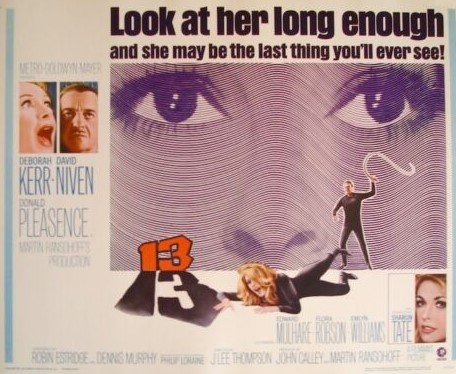
Title changed to “13.” It’s worth noting that the main images of the poster refer to Sharon Tate. It’s her eyes that are hypnotic
and she’s the one being whipped.

Supporting star David Hemmings (The Charge of the Light Brigade, 1968) offered a different reason for her departure. This was the actor’s first big-budget international full-scale picture. His career was in reverse, from starring in Be My Guest (1964) he had tumbled to fourth billing in Two Left Feet (1965). As if forever destined to be the ingenue, here he was billed eighth.

Hemmings knew the director from No Trees in the Street (1959) and had worked with Donald Pleasance in Wind of Change (1961). He recalled “the comparatively unknown but totally ravishing Sharon Tate who was the same age and had done about as much as I did.”

Given his lack of knowledge of American television it was understandable he believed he was in the same bracket as Tate. In fact, she was such a hot prospect, coming off a role in the wildly successful series The Beverly Hillbillies she was given an “introducing” credit and had far the superior part.

“ I loved the setting and my part which demanded skills in riding and toxophily (archery),” said Hmmings. He found all the time wasted in playing darts in pubs assisted him in his archery training. “But I found it quite odd that a young lad of 24, dressed in black leather and riding a white horse, albeit with my toxophilic advantages, should have been thrown together with such a distinguished cast.”

The fact that he presented such a visual treat in his blonde curls and black leathers appeared not to occur to him. “The older actors were astonishingly kind to me. Niven’s charm was profound and genuine.”   

One of the older stars who reached out to him proved to be Kim Novak. Although only eight years older she had been a star for more than a decade, leading lady to William Holden in Picnic (1955), Frank Sinatra in the Man with the Golden Arm (1955) and Pal Joey (1957), James Stewart in Vertigo (1958) and Bell, Book and Candle (1958) and Kirk Douglas in Strangers When We Meet (1960) while in most of her films in the 1960s she had received top billing ahead of the male star.

When Hemmings took to riding his white horse through the French countryside Novak became his companion. “We would stop somewhere to sit and chat. Easily and at great length almost about everything…and to begin with no hint of physicality…after a while I began to detect that strangely attractive wicked look in her eye that an experienced woman gives to an inexperienced man.”

One day, though staying in different hotels, she asked to meet him in a large park in the centre of Brive. “It wasn’t a suggestion, it was a command,” he recollected, “and being the young man it was a command I knew would lead inevitably to possibilities.” The assignment in the park led to a short affair conducted in her hotel room.

Shorty afterwards, at a press conference, “I can’t recall what Marty (Ransohoff) said to upset Kim or if it justified her reaction but I have an indelible vision of her stubbing out a cigarette in his one good eye which led to an ugly scene…and Kim being sacked.”

But it would be hard to convince the completion guarantee bonding companies and the insurance company that a back injury had been faked to cover the embarrassment of the producer. Original budget of £1 million was supplemented by another £600,000 from the insurers to complete the movie. Deborah Kerr had been holidaying at Klosters in Switzerland when she received the call and began work as a replacement at the Borehamwood studio in Britain over Xmas 1965.

Since Novak had not been in every scene, the opening scenes and the beguiling of the children by Sharon Tate, for example, it wasn’t a case of starting completely from scratch. And the director and cinematographer would have the advantage of already having made  decisions regarding camera placement, while the other actors would be well-rehearsed. However, weather for the previous filming had been cold so there would have been a worry about matching exteriors since conditions in France in January-February 1966 were “like summer.”

It was Niven who had suggested Deborah Kerr as the replacement. This was the third of the five pictures they made together, preceded by Bonjour Tristesse (1958) and Separate Tables (1968),  followed by Casino Royale (1967) and Prudence and the Pill (1968). Niven welcomed her presence. “Playing opposite Deborah is as delightful an experience as an actor can have,” he said. “I’ve always felt I won my Academy Award (Best Actor Oscar for Separate Tables) because she made me look so good. That sort of thing makes for a warm and relaxed screen relationship.” Niven was clearly ignoring the fact that, although happily married, the relationship of the couple on Eye of the Devil was tense and strained.  

But the France reshoot took place at a different location, Brives Les Gaillards in Perigord, an overnight train journey from Britain. Perhaps in a bid to save money, Esmee Smythe was eliminated from the personnel intended to be shipped abroad. After a few words from Kerr –  who otherwise would effectively be acting as her own stand-in for scenes involved horse-riding, driving and standing on the parapets – Ransohoff changed his mind. Despite the pressures to complete and ensure that Kerr’s work – a “daunting job of re-shooting” – would fit in with what had come before, shooting was deemed “pleasant.” Kerr again stood up to the producer when informed further work in Borehamwood would begin immediately on the morning of the overnight train journey home.

The original stars were paid twice, for Hemmings “the most lucrative job I’d ever done.” Nonetheless, there was clealry doubt about its box office potential and, unsually for a film with denoted stars, it sat on the shelf for over a year.

Despite MGM’s best marketing efforts the movie fizzled out in the United States where it opened in fall 1967. Prospects proved poor. It waited another  seven months before a British premiere at the Ritz in London’s West End in March 1968, that showing possibly the result of the unexpected success for MGM with David Hemmings’ breakout movie Blow-Up (1966).

But the West End opening counted for nothing when it came to general release it the UK. On the ABC circuit it was only the supporting feature to The Heroin Gang (1968) starring David McCallum and Stella Stevens. It might have done better had it been delayed further and taken advantage of the successful comedy pairing of Kerr and Niven in Prudence and the Pill.

Like many a horror movie, the production was considered jinx. Filming on Prudence and the Pill was delayed when Kerr, who “had never had a day’s illness in her life,” was diagnosed with labyrinthitis, a condition which destroyed her sense of balance. While she recovered, others involved in Eye of the Devil were not so fortunate. Not only was Sharon Tate slaughtered by the Manson gang but a member of the location crew was crushed by a car and the chateau burned down a few years later.

SOURCES: Eric Braun, Deborah Kerr (WH Allan, 1977) p198-202; David Hemmings, Blow-Up and Other Exaggerations (Robson Books, 2004) p123-126.

Eye of the Devil / 13 (1966) ***

Shades of The Innocents (1961), The Wicker Man (1973) and The Omen (1976), but lacking the suspense of any, leading roles woefully miscast, supporting roles, conversely, brimming with inspired casting including the debut of Sharon Tate (Valley of the Dolls, 1967) and a mesmerising role for David Hemmings (Blow-Up, 1967)  Any attempts at subtlety were dumped when the original more intriguing title of 13, which turns out to have more than one meaning, was dumped (except in some foreign markets) in favor of the giveaway designation of Eye of the Devil. Despite embracing a web of sinister legend, it lurches too quickly into full-on demonic horror.

French count Phillippe (David Niven) is called away unexpectedly from the Parisian high life to deal with a crisis in his vineyard. When his son Jacques (Robert Duncan) starts sleepwalking in his absence, his wife Catherine (Deborah Kerr) decamps with daughter Antoinette (Suky Appleby) to the family pile, a huge millennium-old castle. The count’s sister Estell (Flora Robson) fears her arrival. Villagers fear Phillippe, doffing caps when he passes.

Meanwhile, Catherine encounters or witnesses strange goings-on. Archer Christian (David Hemmings) shoots dead a dove which is later offered to unknown gods by his sister Odile (Sharon Tate) in a chamber filled with men in black robes. Later, Odile changes a toad into a dove and hypnotises Catherine into almost falling off a parapet. A quietly spoken priest (Donald Pleasance) offers no succor. The number thirteen could refer to the day of an annual local festival or a ceremony involving thirteen men, twelve of whom dance around the other. In a forest Catherine is trapped by men in black robes, then drugged and imprisoned.

Meanwhile, her husband remains grimly fatalistic, gripped by torpor, except when roused to whip Odile. Generation after generation, going back over a thousand years, the head of the household has come to a sticky end and without explanation it appears Phillipe expects a similar outcome. .

It doesn’t take you long to realise devilry is afoot. It’s a pagan castle, it transpires, a “fortress of heresy.” After three years of poor grape harvest, the earth demands a sacrifice. Where the victim in The Wicker Man is an innocent outsider lured to a remote island, the count accepts his destiny even as his wife struggles to prevent his death. Dramatically, the later film has the edge, the victim struggling against fate rather than a mere observer. That Catherine is powerless somehow doesn’t bring the dramatic fireworks you might expect.

What the posters conceal is that the film was made in black-and-white – the last MGM picture not to be in color – and this is a photo of Sharon Tate as she appeared in magisterial and beguiling form.

There’s a curiosity about the casting of Deborah Kerr (The Gypsy Moths, 1969). This most repressed of actors, as if a veil has been lifted, empowered to scream and batter against doors and race around, seems to drain the movie of energy. She just seems laughably bonkers rather than intense and empathetic. For someone whose performance is generally minimal, who exists in the margins, it seems almost perverse to force her to go so over-the-top.

Perhaps such unusual verbal and physical activity was deemed essential to counter the inactivity, the virtual sleepwalking, of the rest of the cast. While looking pained, David Niven (The Extraordinary Seaman (1969) can’t quite capture the intensity, the personal devastation, the role requires. David Hemmings as the silent archer and especially Sharon Tate as the trance-inducing magician, steal the show, investing their characters with little emotion, and yet, visually, as if mere costumed performers, present the most vivid incarnations.

From an audience perspective, it’s hard to root for Catherine since it’s obvious she is in no mortal danger. Like The Wicker Man, the audience is there in an observatory capacity, but unlike the Scottish policeman the victim attracts little sympathy. There’s not real

It’s a surprising backward step for director J. Lee Thompson after the superb Return of the Ashes (1965) which was chock-full of suspense and interesting characters. After an atmospheric opening, it turns uneven as he falls into the trap of following the wrong character. Screenwriters Dennis Murphy (The Sergeant, 1968) and  Robin Estridge (Escape from Zahrain, 1962) adapted the latter’s acclaimed novel Day of the Arrow, written under the pseudonym Philip Loraine. So perhaps he can be blamed for shifting the investigative focus from Catherine’s ex-lover to Catherine herself.

I was surprised to see Deborah Kerr take on such a role and that is a story in itself which I’ll address tomorrow.

Blow-Up (1966) ****

Movies can break all sorts of rules but they can’t cheat.

A film has to stick to an internal logic. For example, it can’t portray a photographer so obsessed with his calling that he even takes a camera with him to an antique shop and starts shooting off roll and after roll capturing the area’s rundown streets but then the one time he really could do with a camera – to prove there is a corpse at his feet – he is somewhat remiss. Especially when that the movie turns on that plot point.

Setting aside what’s a somewhat contrived snapshot of “Swinging London” there’s a lot to admire here. The absence of music for one thing. Most of the movie runs without musical accompaniment, a bold move since so often we rely on the soundtrack to provide guidance for a scene or an overlay for the entire film. Here, Michelangelo Antonioni (Zabriskie Point, 1970) makes us falls back on our own interpretation.

David Hemmings (The Charge of the Light Brigade, 1968), all mop-top and intense stare, is a high-flying high-living fashion photographer in the David Bailey mold (casual sex with wannabe models a perk) who turns investigator on being confronted in a park by Vanessa Redgrave (Hemmings’ adulterous love interest in The Charge of the Light Brigade) after taking snaps she wants back. Tension is sustained by her sudden appearance at his studio, willing to pay with her body for the return of the photos, and then by Hemmings’ careful, photo-by-photo blow-up-by-blow-up analysis that slowly comes closer to the truth.

Everything in his world is judged through a lens, as if he can capture elusive truths, and he has aspirations to being more than a mere fashion adjunct, having spent time taking portraits of down-and-outs. He judges Redgrave as he would a model, she has a good stance and sitting posture. Even by the standards of the permissive society, he is a bit of sexual predator, taking advantage of two giggly model wannabes – Jane Birkin (Wonderwall, 1968) and Gillian Hills (Three, 1969).

But the photography scenes are well done and Antonioni captures the intimacy between model and photographer that create the best images. If you want to see what a model brings to modeling check out real-life model Veruschka posing in an outfit held together by the thinnest of threads, bringing to life the much-touted notion that a model makes love to a camera. If you can get past the cheat and the deliberate obtuseness this creates – and the tsunami of artistic interpretations it inspired about the director’s intent – then it remains intriguing.

This isn’t Hemmings’ greatest work – Fragment of Fear is much better – but it certainly provided him with a marketable movie persona. Redgrave is excellent as the nervy woman willing to do what is required and the movie might have worked better had she had been allocated more screen time and their duel had continued through other scenes. But then that would have been Hitchcock and not Antonioni.  

Sarah Miles (The Ceremony, 1963), Peter Bowles (The Charge of the Light Brigade) and John Castle (The Lion in Winter, 1968) have small parts. The film certainly captures the electricity of a photo shoot between a skilled photographer and pliant model, but it also works as an extended metaphor about the elusiveness of cinematic truth.

Despite my misgivings about the “cheat,” an intriguing and satisfying exploration of an artist seeking to jettison the fripperies of his art yet unable to avoid the temptation of enjoying the easy sexual benefits.

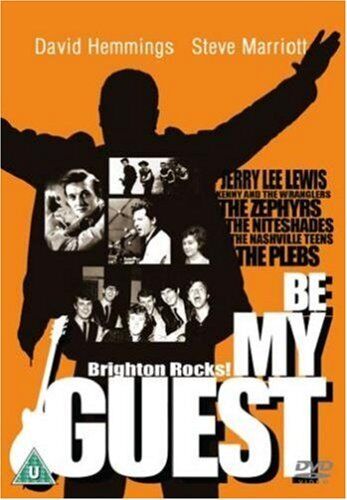
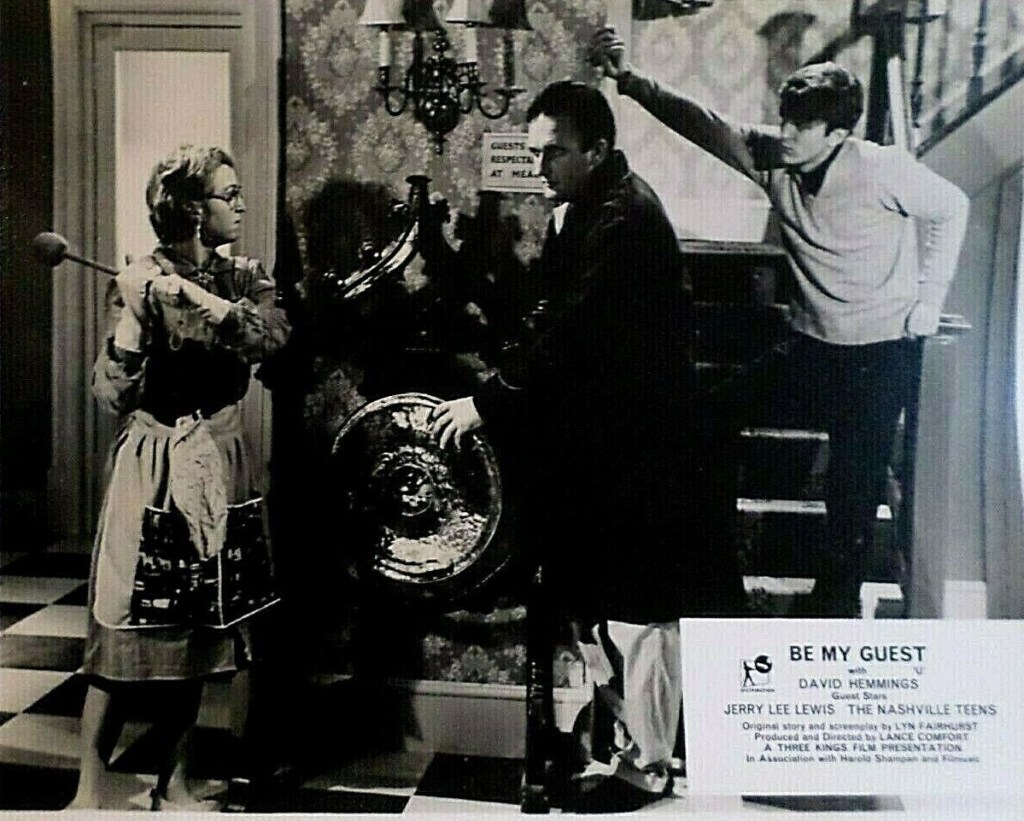
Be My Guest (1965) ***

Every genre produced a B-movie spin-off and the pop music sub-genre, revitalized by the appearance of The Beatles, was soon submerged in quick knock-off numbers that acted primarily as a showcase for various, hopefully, up-and-coming bands and, alternatively, whoever was to hand at the time. They were not viewed as star-making vehicles and the chances of, for example, a debuting player like Raquel Welch in A Swingin’ Summer (1965) hitting the big time was remote.

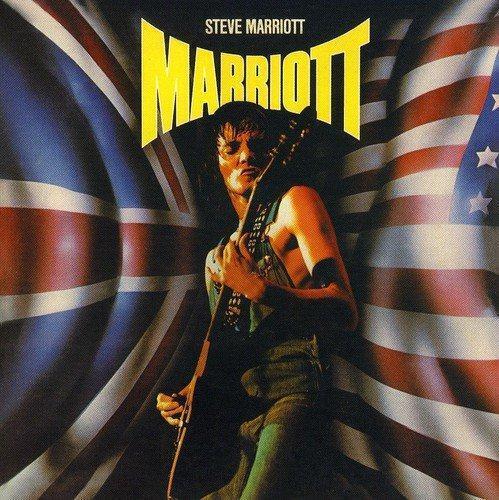
So nobody was counting on floppy-haired youngster David Hemmings (Blow-Up, 1966) making a breakthrough in this ho-hum-plotted let’s-put-on-a-show hardly-slick production set in the musical netherworld of Brighton, England. Had he not surfaced as a potential future star it would remain better known for the appearances of Jerry Lee Lewis and Steve Marriott, predating his fame as guitarist with The Small Faces and Humble Pie.

Astonishingly, this was actually a sequel, Hemmings reprising the character Dave from Live It Up (1964) in which he played a band member. Here, relocated to Brighton where his parents have taken on a hotel, Dave, now an ex-musician, tries his hand at journalism and in due course re-forms his group to participate in a talent contest. 

There’s the requisite American lass, Erica (Andrea Monet), a dancer, and the usual baloney reason for her ending shacked up (though not with Dave – too early in the decade for such blatant permissiveness) in the parental hotel. Most of the running time is taken up with Dave and his band getting into scrapes such as falling out with the local planning officers and blameless ideas misconstrued by those with more lascivious minds.

There’s a marvellous almost 1940s Hollywood innocence about the entire endeavour coupled with a brave, though failed, attempt to inject Beatles-style humor into the proceedings. And if you had any doubt, Hemmings has definite screen appeal. The hair became a trademark, almost a sign of inherent rebelliousness, which suited many of the characters he played. He had a very open face and eyes that, more than revealing internal conflict, were better for reflecting what he saw.

Interesting, too, the difference the camera makes of a persona when an actor is the lead rather than a support. There’s time to play on the features, to let the actor relax, rather than pushing himself forward to steal what few scenes he is in. Previously, he had always been noticeable. Now he acquires an aura and even in a bauble like this he shines. Andrea Monet, in her only movie role, is certainly no rival in the star-building stakes.

And since the movie is not filled with the usual run – or quality – of British character actors there’s no one trying to steal scenes from him, though you might look out for veteran Avril Angers (The Family Way, 1966).

Of course, there’s only so long you can admire an actor when there’s not much genuine acting to do, and this script does him no favors drama-wise. But luckily the music covers up most of the other deficiencies. Apart from Jerry Lee Lewis and Steve Marriott, there’s a chance to gawp at The Zephyrs, The Nashville Teens, Joyce Blair and Kenny and the Wranglers.

Director Lance Comfort (Devils of Darkness, 1965) does his best.

The Charge of the Light Brigade (1968) ****

It’s worth remembering that Britain, led by roughly the same type of commander lampooned here, won the Crimean War and that initially this particular engagement, despite the deaths, was celebrated for its valour by poet Lord Tennyson, in much the same way as famous defeats like Dunkirk and The Alamo somehow managed to achieve the status of some kind of victory in the public perception. It’s also worth noting that the documentary-style realisation of Dunkirk, (2017) and to that extent Coppola’s Apocalypse Now (1979) owe much to Tony Richardson’s approach, both films more interested in the bigger picture than individual acts of heroism.

And our conscience here, dashing cavalry officer Nolan (David Hemmings), is not quite saintly, engaged in an affair with the wife Clarissa (Vanessa Redgrave) of a friend. Despite the director’s rush to judgement, his approach displays a refreshing change to a genre where acts of selfless courage were the norm. Setting aside the occasional self-reverential artistic lapse, it’s an excellent depiction of class-ridden Britain at war in 1854, an era when military advancement was purchased without any consideration to the leadership skills such high-ranking officers required. I’m never sure if John Ford invented the camaraderie of his Cavalry in westerns, where at dances  the officers mixed with the ordinary soldiers, but here the two classes are kept apart.

And while Richardson clearly wants to blame the class system for the military calamity, the outcome is a no-holds-barred ultra-realistic portrayal of war in in all its sordid glory. At its heart are the machinations of senior commanders jostling for position and control and, much as with Field Marshal Montgomery and General Patton in World War Two, allowing personal enmity to affect decisions.

The two biggest culprits are Lord Cardigan (Trevor Howard) and brother-in-law Lord Lucan (Harry Andrews) in charge of the ill-fated charge who openly spout bile at each other, remain deliberately obtuse, and are, nonetheless, a joy to watch. Cardigan is irascible to the point of apoplexy, incredibly brave, vainglorious, a vindictive sex-mad peacock, with an odd selection of principles (refuses to deal with spies, for example). Nothing can beat a quite marvellous spat between the pair over how to pitch tents. Both, however, are a vast improvement on the ineffectual commander-in-chief Lord Raglan (John Gielgud) whose idea of tactics is to “form the infantry nicely” and another commander who refuses to let the simple matter of being under attack ruin his breakfast.

At the other end of the scale are the poor recruits, drawn from the lower classes, so ill-educated they don’t know their left foot from their right (something of a necessity in obeying orders in the field), lured by the promise of glory and a job, and find themselves turned into horsemen in the most brutal fashion.

In the middle is the effete Nolan, initially introduced as the good guy, who believes horses should be treated with kindness and stands up to Cardigan. His romance with Clarissa is a masterpiece of nuance, all furtive glances, hardly a word spoken. And he has a pivotal role in sending the cavalry in the wrong direction at the Battle of Balaclava, causing the fatal charge.

It’s episodic in structure, characters bobbing in and out, some for comedic purposes, and without the battle it’s doubtful the picture would have been made for, excepting the high-level squabbling, there’s little inherently dramatic. And possibly that’s to the movie’s benefit for it clears the way to concentrate on how an army operates and goes to war, the focus, unlike most war or historical pictures, being as much on what goes wrong as goes right. So the horses dying during the voyage and callously dumped overboard and the men marching through Crimean heat and afflicted by cholera take centre stage rather than lavish sequences of soldiers on splendid parade.

On the downside, you have to accept the director’s version of the war’s causes, British imperialism don’t you know, rather than Russian aggression as a result of religious conflict in the Middle East. And there’s narrative indecision, various characters permitted interior monologue for no particular reason except artistic impulse. Mrs Duberley (Jill Bennett) wife of the paymaster (Peter Bowles) is permitted to accompany the expedition for the sole purpose it would appear of being shagged by Cardigan.

The detail of what exactly went wrong on the battlefield is obscured by the fact that Nolan, who hand-delivered the famous order to attack, itself unclear, died in battle, so it’s like one of those Netflix documentaries about unsolved murders, fascinating but ultimately annoying. If incompetence is measured in casualties, apart from this one charge the British came out better than the other participants, 40,000 dead compared to three times as many among their French allies and more than ten times as many among the Russian enemy.

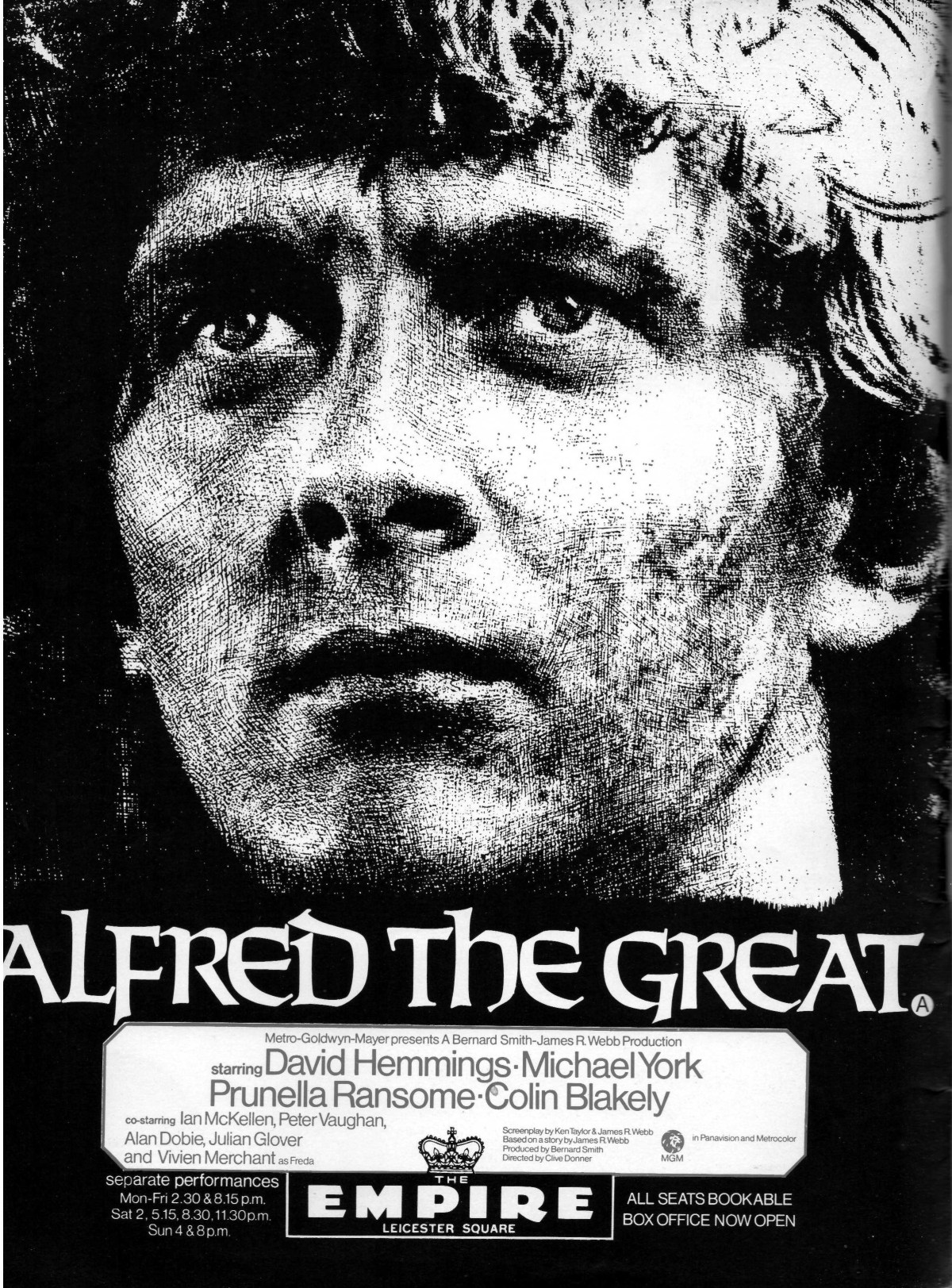
The acting is of a very high quality, David Hemmings (Alfred the Great, 1968) as good as I’ve ever seen him, Vanessa Redgrave (Blow-Up, 1966), except for her deception a Stepford Wife Victorian-style, Trevor Howard (Von Ryan’s Express, 1965) brilliantly outrageous and John Gielgud (Sebastian, 1968) who turns befuddlement into a high art.

Tony Richardson (Tom Jones, 1963) makes some bold choices, not least in what is included and what is left out, the battle of the tents, fake news (from The Times!), soldiers facing the lash, the dashing charge and its terrible aftermath, the animated sequences, and his revolutionary soundtrack. Sergio Leone might have claimed the artistic high ground with the buzzing fly at the start of Once Upon a Time in the West (1969) but there’s little in film music of the time – beyond Bernard Herrmann’s Psycho score – to compare with the sound of a fly playing over the end credits or its inclusion during the march when men are literally dropping like flies. This is a very different kind of curate’s egg, absolutely brilliant in parts, and never dull.

Unfortunately, there’s a topical parallel, Crimea having been invaded several years back by Russia and now the whole region aflame.

This was the first home-grown excursion into the all-star-cast business – other British movies in that ilk, originating from these shores, previously headlined by a Hollywood star like Gregory Peck (The Guns of Navarone, 1961),  Kirk Douglas (The Heroes of Telemark, 1965) or George Peppard (The Blue Max, 1966). And I can see why the new box office stars David Hemmings and Vanessa Redgrave, repeating their Blow-Up (1966) teaming, would have, in the narrative sense, occupied center stage. But given nobody knew for certain what caused the disastrous charge and that it would taken place anyway in the picture, the far more entertaining approach would be to concentrate entirely on the likes of the feuding Cardigan and Lucan, two characters who leapt off the screen. Outside of the battle itself, Nolan’s sole purpose, it would seem, was to point out that the army treated its horses badly, a point the audience would have easily picked up without Nolan’s display of alternative horsemanship. Still, all told, at the risk of repeating myself, an excellent watch.

Discover WordPress

A daily selection of the best content published on WordPress, collected for you by humans who love to read.

The Atavist Magazine

by Brian Hannan

WordPress.com News

The latest news on WordPress.com and the WordPress community.