Surprisingly somber, unusually reflective and exceptionally well-constructed. Except for taking the easy way out at the end, could easily have found itself in the classic finale stakes in the same league as Casablanca (1942) or The Third Man (1949) where true love is thwarted. More than enough aerial action for aficionados and an excellent battle sequence.
In addition we have that very contemporary trope of the human shield and the argument by British officers of obeying orders that would take on a different significance from the enemy perspective at the end of World War Two. Throw in an unexpected slug of guilt, a number of understated scenes, and a very clever wheeze from the Germans and you have a movie that rises well above the standard programmer.
Quint Munroe (David McCallum) is an orphan, taken in at a young age by the family of Squadron Leader “Scottie” Scott (David Buck) whom he regards as a brother. Also a pilot, Quint watches Scottie’s plane explode in a bombing raid over France. Next in line for promotion, Quint, with the usual survivor’s guilt, takes over.
In the first of the sequences that are notably out of place in a standard gung-ho World War Two picture, Quint is sent to tell the bad news to Scottie’s wife Beth (Suzanne Neve). He doesn’t have to say a word. She recognizes the look on his face. Quint had barely escaped from his own burning cockpit, a fact that’s gone unreported to Beth, but when she comes to her husband’s quarters at the air base, she gasps at the burn marks on the back of his jacket. There are four or five instances, again understated, in this scene when Beth is brutally reminded of her husband’s death. And Quint’s colleague Douglas (David Dundas) rejoices in the fact that he’s lost an arm because that’s saved his life, it’s his “ticket” to remain earthbound, and he can safely get married in the knowledge his wife won’t be receiving a knock on the door anytime soon.
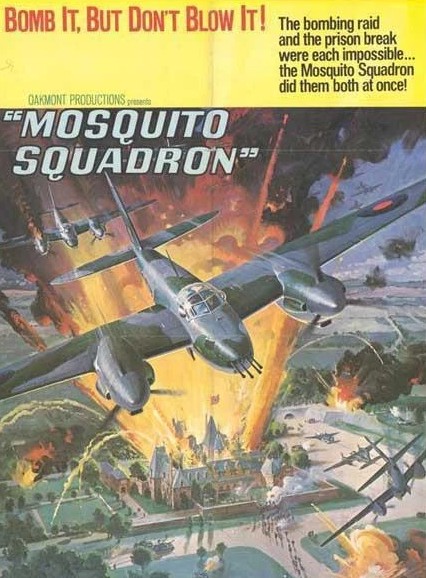
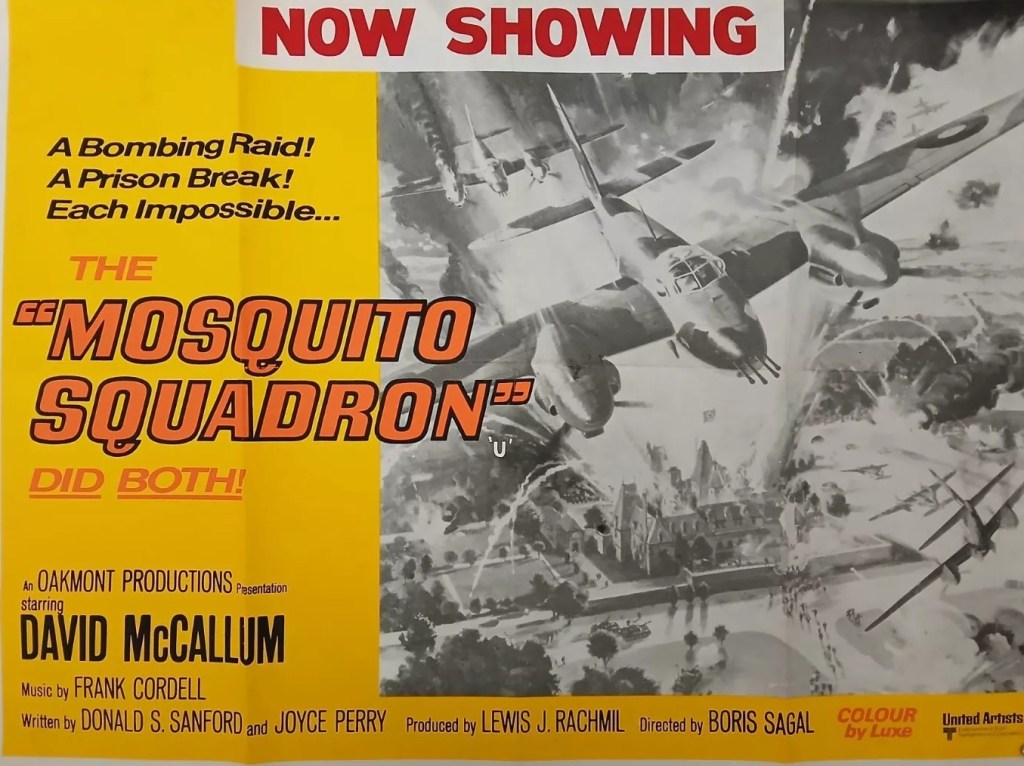
This is a mission picture in case you haven’t noticed from my concentration on the other more interesting aspects of the movie. The RAF needs to bomb an experimental station developing the next range of German rockets that’s buried underneath a chateau in France. Flattening the area in the normal fashion won’t do it, the bombers need to be able to hit a very small target indeed, the entrance of the secret hideaway. So they turn to a version of Barnes Wallis bouncing bomb (see The Dam Busters, 1955) and have to practise like billy-oh against a very tight deadline to hit such a target.
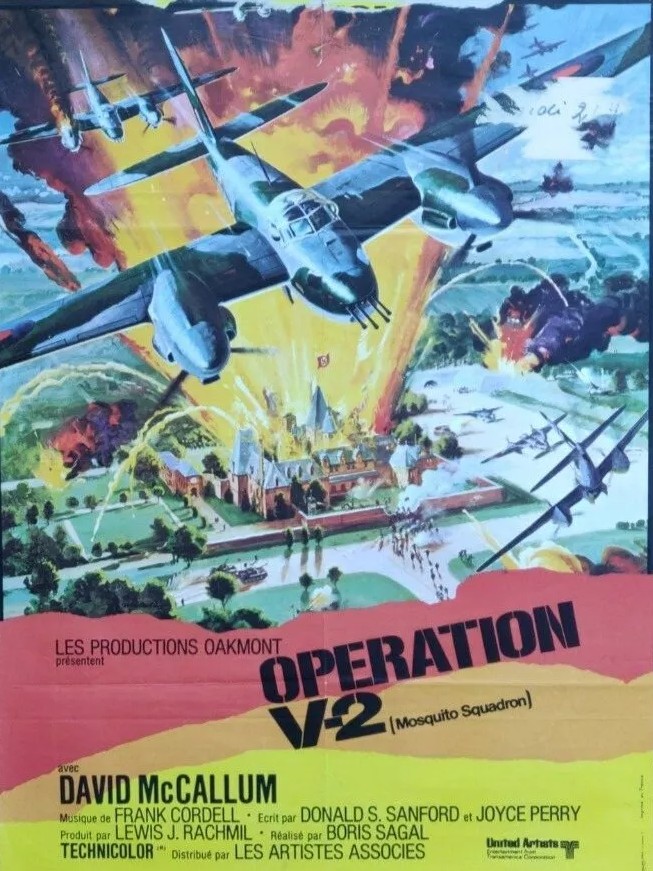
Meanwhile…meanwhie…meanwhile. There are three dramatic meanwhiles. Quint begins an understated romance with Beth, he filled with remorse at stealing his dead pal’s wife, she less concerned because there was a hint of earlier romance between them. The Germans protect the chateau behind a human shield of captured RAF pilots. In carrying out the attack, the pilots are condemning colleagues to death, a worry knocked on its head by the gung-ho likes of Air Commodore Hufford (Charles Gray), but other more sensitive high-ranking officers resort to the “obeying orders” routine. Final twist: among the prisoners is Scottie.
Nobody outside the base is permitted to know about the prisoners in case taking such an action damages public morale, so now Quint is in a bind. There’s a final twist to the twists – Scottie has lost his memory so badly that even if he could return to Britain it’s doubtful if he would know who Beth was, though, of course, they would still be married, so that would scupper Quint’s chances unless the story went onto a fourth act in the vein of Random Harvest (1942).
The French Resistance are called in to launch a daring raid to free the prisoners and assuage guilt all-round. Quint is shot down and joins the brutal battle action in which, as predicted by Hufford, the escapees are mown down by superior German firepower. He finds Scottie, who doesn’t recognize him at all. Scottie is also of the gung-ho brigade and dies stopping a German tank.
Meanwhile, Douglas has got into trouble for telling too many people about the prisoners. He’s very good friends with Beth.
You can see the cinematic opportunity. Quint returns knowing he is free to marry Beth only to find Beth turns away from him because he went on an expedition that could kill her husband. But the producers bottle it and go for the happy ending instead.
David McCallum (Sol Madrid/The Heroin Gang, 1968) remains in low gear throughout, and though Suzanne Neve (Naked Evil, 1966) more than makes up for him, you would wonder at the wife of a dead pilot taking up with another flier who could end up the same way.
Director Boris Sagal (Made in Paris, 1966) is to be commended for spending so much time on the themes of guilt and loss and keeping reality to the forefront. Some of the sequences have been stolen from other movies or are stock footage. Written by Donald S. Sanford (The Thousand Plane Raid, 1969) and actress Joyce Perry in her big screen debut.
Raises far more issues than the normal war movie, certainly blown away at the box office by the bigger-budgeted all-star-cast Battle of Britain the same year, but more than holds its own, and if it had been an American low-budgeter with some better-known lesser stars would have probably been re-evaluated long before now.
Impressive.
 The Magnificent 60s