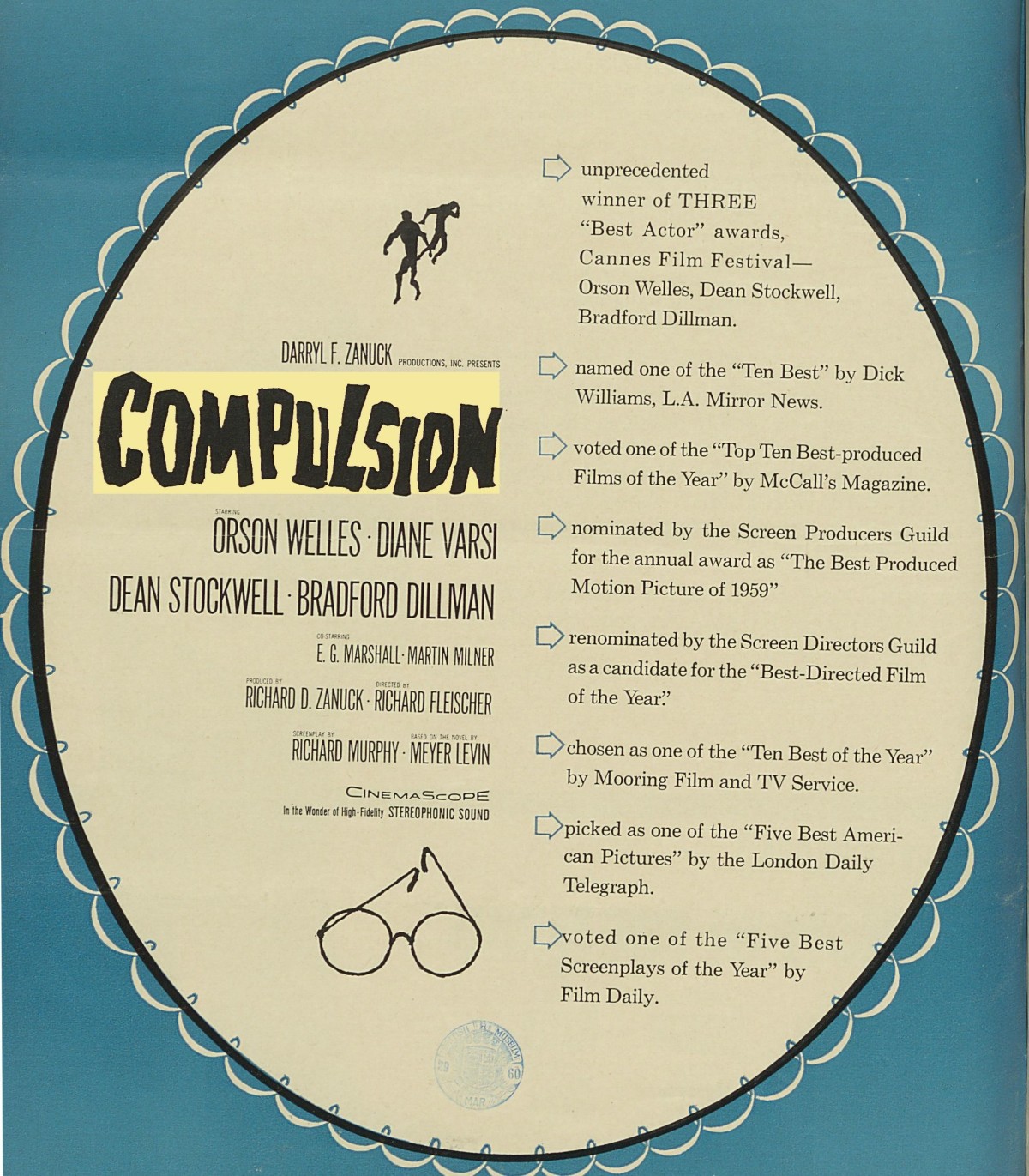
Behind the Scenes: “Compulsion”(1959)

Controversy breeds controversy. Convicted killer Nathan Leopold was furious when author Meyer Levin reneged on his deal to write a book concentrating only on the murderer’s prison time, instead churning out a fictionalized account of the “crime of the century.” Levin’s novel, published in October 1956 by Simon & Schuster in the U.S., was snapped up by Darryl F. Zanuck for an upfront fee of $150,000 and the same again when the movie appeared.

A play, also ensnared in controversy, preceded the movie. Broadway producer Michael Myerberg was so dissatisfied by Levin’s script that he called in Robert Thom as co-writer. For his efforts Thom was due one-fifth of Levin’s share of the stage royalties. The play opened at the Ambassador in New York on 24 October 24, enjoying a healthy 18-week run.

There was contemporary feel to the cast given that, like now, Broadway was recruiting big names from Hollywood including Rex Harrison, Richard Burton, Walter Pidgeon, Anne Baxter, Joan Blondell, Paulette Goddard and for Compulsion rising star Dean Stockwell (Gun for a Coward, 1956). Actually, there was a heck of cast. As in the movie Stockwell played Judd. Roddy McDowell (Five Card Stud, 1968) played Arthur. But the big sensation was an “obscure actor” understudy Michael Constantine (Beau Geste, 1966), thrown into the limelight by illness, in the key role of the defense attorney. Also in small roles were Ina Balin (The Commancheros, 1961), Barbara Loden (Fade In, 1968), Suzanne Pleshette (Nevada Smith, 1966) and John Marley (The Godfather, 1972).

Levin complained he had been forced “under duress” to take on Thom as a co-writer and refused to pay him. The case went to court. Levin lost but he won a victory of a sort in writing Thom out of the play when it made its London West End debut. Meanwhile, Leopold was intent on his own revenge, on release from prison on parole in 1958 and having published his own autobiography, suing Levin and Zanuck, among others, for $1.5 million. He, too, was a loser in court.

In an early version of the nepo baby, Darryl F. Zanuck gave son Richard a leg-up by assigning him to be producer of the movie.

When  director Richard Fleischer entered the equation Orson Welles was already cast as the defense attorney modelled after Clarence Darrow. The director might well have signed up on the strength of the script by Oscar-nominated Frank Murphy (Broken Lance, 1954). “It was the best I ever read,” he said. Among other things, Murphy had tightened up on the action of the play, removing scenes set in prison long after event, and taking a documentary-style approach to the film.

On hearing Welles was involved, “my tongue was hanging out,” admitted Fleischer. Given Welles’ murky finances, time was always going to be of the essence. Tax problems limited the amount of time – ten days exactly – he was available for shooting. And nobody was going to waste any of that valuable time on rehearsals. He arrived from Mexico on the day of the shooting and was booked onto a voyage to China the night filming finished.

Welles always supplied himself with a false nose, and that was the director’s first astonishing encounter with his star, on the first day of shooting. Welles explained his real nose was “just a button” and only once had appeared with it in a movie. He claimed Laurence Olivier was prone to the same insecurity. That wasn’t the actor’s only peccadillo.

He had trouble remembering lines. To cover this up he would claiming he was “reaching” for the words, actorspeak for showing thinking on camera. Fleischer discovered the way to challenge the actor over this was to tell him his reaching was so “realistic” it looked like he had forgotten his lines. In addition, Welles hated having anyone in his eye line, couldn’t cope with eye contact at all. So when it came for his part of a two-person scene he would play it to a blank wall, but with pauses, laughter, “exactly as though there were someone speaking to him.”

In the normal course of filming such a problem could be accommodated. It was a different story when it came to the movie climax, an 18-minute speech, the longest uninterrupted monologue in movie history. It was impossible to film it in one take. Apart from anything else, a movie camera only held ten minutes of film. So it needed broken down into smaller sections, some of which  were quite long in themselves. As some of the speech was directed in general terms to the courtroom that didn’t demand eye contact so Welles was safe there.

But other sections had to be directed to the prosecutor (E.G. Marshall) and his team. To get round the problem of maintaining eye contact, Welles had a simple solution. All the other actors had to keep their eyes closed. And that’s what they did. Fleischer recalled as “a ludicrous but memorable sight” seeing all the actors “line up, listening intently, with their eyes closed.”

Only four days were left for the speech. So the director pointed his three cameras in one direction and shot every section of the speech that applied to, then moved the cameras around until he had completed a 360-degree rotation. However, the last section was filmed in one complete, technically complicated, three-minute section. It was rehearsed to fulfil the technical criteria and then Welles was left alone on the set for a couple of hours to do his own rehearsal. He didn’t want Fleischer to see any of his performance beforehand, just come in and film it. In other words, trust the actor. A dangerous proposition given this was the second last day Welles was available. However, Welles delivered a virtuoso performance captured by intricate camerawork.

To save money, the studio had revamped a set from another picture, dressed up with “a little paint, some different trim…a set for almost no cost.” Fleischer had redressed an older that set lacked one wall. Welles, clearly unaware of budgetary problems, wanted to make his exit from the scene through the side that had no wall. Told that was impossible, Welles noted that, if director, he would have stood up to the studio, forced them to build a wall so he could exit in the manner that seemed most appropriate. “That’s why I’m directing this picture and not you,” was the director’s prompt reply.

Needless to say, Welles was not always on his best behaviour. Sometimes, he was playing to the gallery, especially if the producer hove into view, or if he was feeling narked that a director with conspicuously lesser directorial skills was in charge. Among those to receive both barrels were a hapless stills photographer and a publicity man guilty of an imaginary slight. Both these incidents could be brushed off, the collateral of tension on any movie. It was a different story when the director was in the legendary actor’s sights, as occurred when Welles had the opportunity to view dailies. He took the film apart, “a total disaster from beginning to end.” Explanation for the unexpected explosion came from the fact that his salary had been “garnished” by a tax official, meaning he wouldn’t be paid.

At Cannes the three stars shared Best Actor honors. Fleischer was nominated for a Bafta and a DGA. Despite fears that to avoid stirring up old controversy Chicago would be denied a release, that city proved one of the earliest to show the movie. It did well in the big cities, less well elsewhere. Rentals were a disappointing $1.8 million, ranking it 48th for the year. In London, exhibitors exploited the old gimmick of denying patrons entrance once Orson Welles lumbered to his feet for his big speech.

Despite success in the big-budget adventure field with movies like 20,000 Leagues under the Sea (1954) and The Vikings (1958), Fleischer hankered after independence. He set up his own shingle Nautilus but complained that with so many “properties” tied up by the studios, and likewise marquee names, he was reduced to “combing library shelves and finding properties major studios had missed.” He had three projects on his planned indie slate – Willing Is My Lover, an original screenplay by Frank Murphy, an adaptation of Tolstoy’s Resurrection and Trouble in July by Erskine Caldwell. But none ever saw the light of day.

SOURCES: Richard Fleischer, Just Tell Me When To Cry, Carroll & Graf, 1993, p161-175; “Writers Harvest,” Variety, December 5, 1956; “Compulsion Producer,” Variety, September 25, 1957, p1; “Legit Increasingly Recruits Players from Film,” Variety, October 9, 1957, p63; “Shows on Broadway,” Variety, October 30, 1957, p82; “Levin Withholds Thom Royalties for Compulsion,” Variety, December 11, 1957, -p73; “Meyer Must Pay,” Variety, March 12, 1958, p73; “Meyer Levin to London,” Variety, December 28, 1958, p49; “Old Gimmick, New Pic,” Variety, May 13, 1959, p12; “Properties, Stars Monopolized,” Variety, July 22, 1959, p10; “Now-Free Slayer Sues on Privacy,” Variety, October 7, 1959, p21.
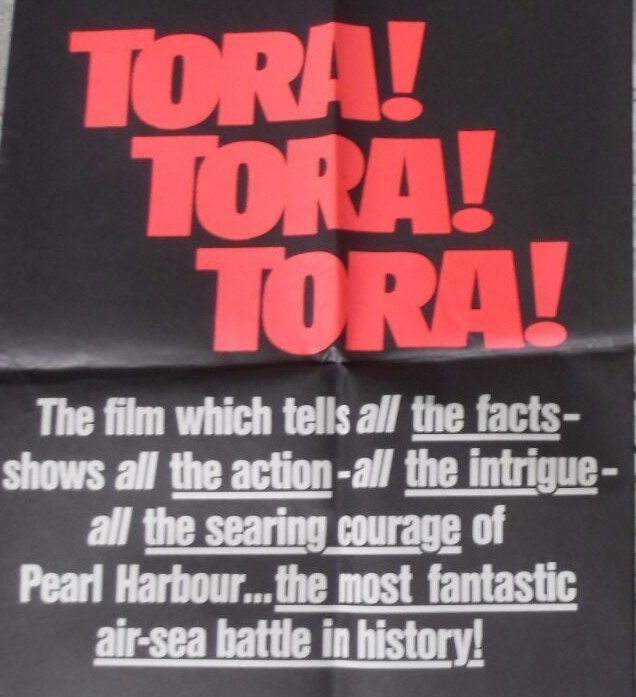
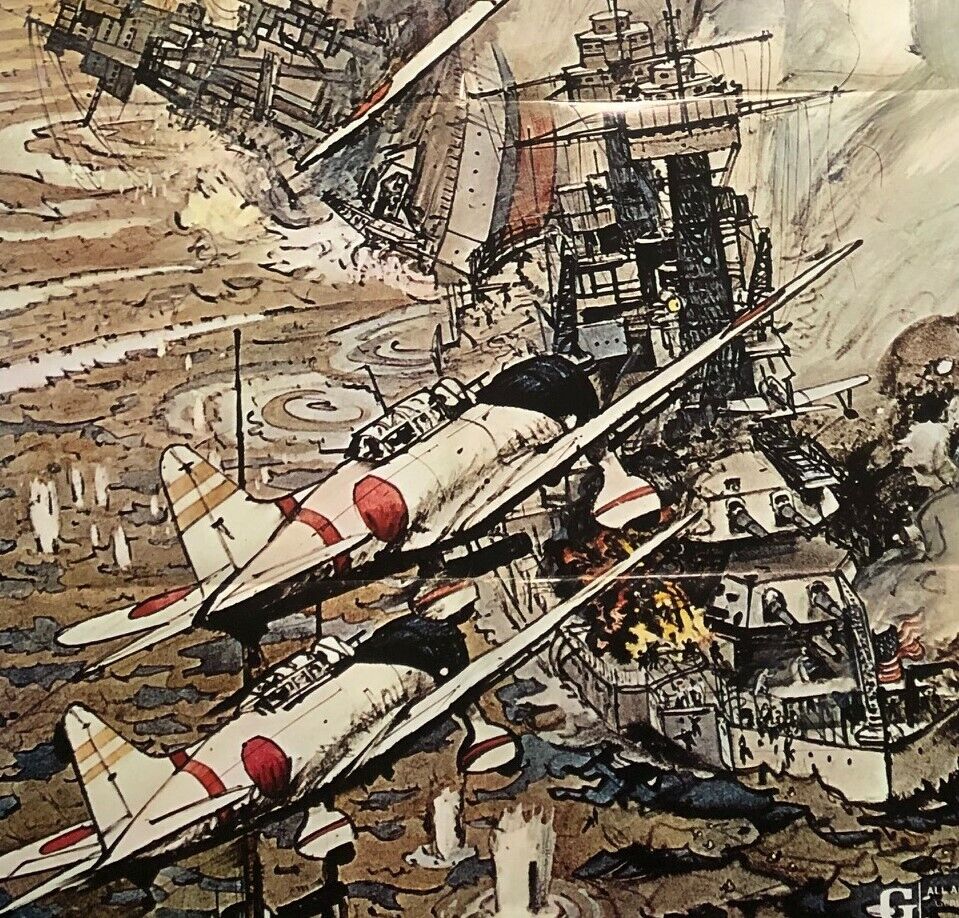
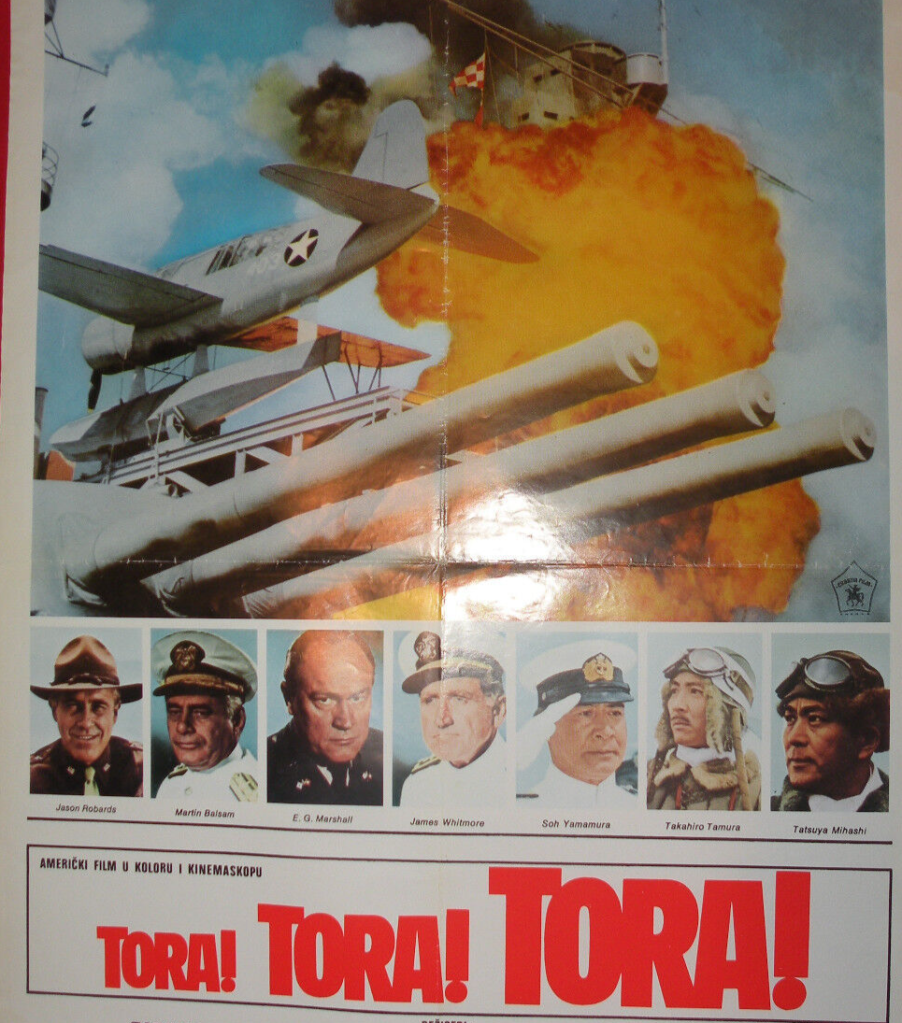
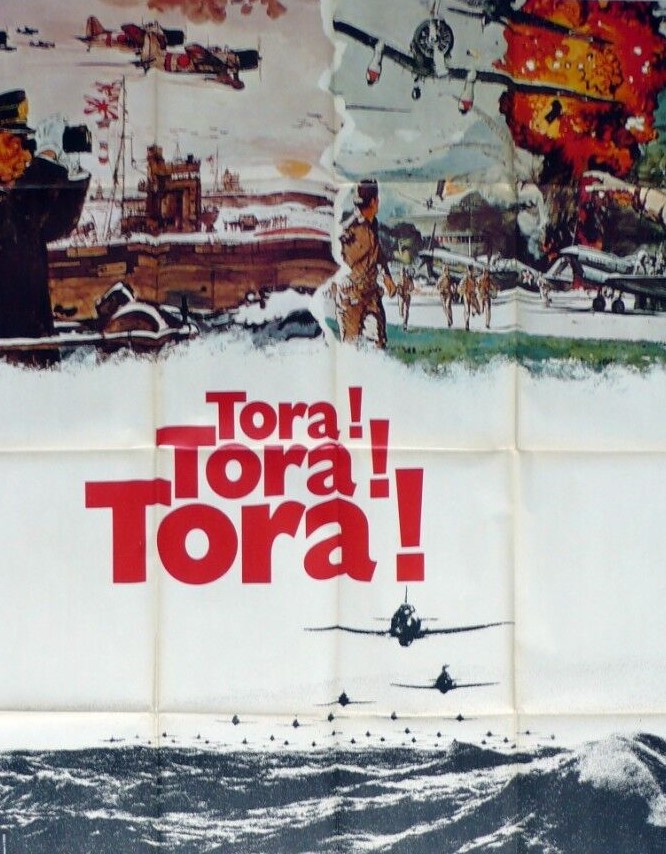
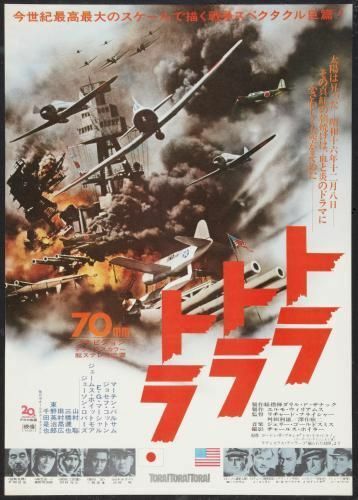
Behind the Scenes: “Tora! Tora!” Tora!” (1970)

In cinematic terms director Richard Fleischer’s work on a Pearl Harbor project had begun in 1962, for a proposed movie called Zackary, the true story of an American spy living in Japan prior to the infamous attack. Fleischer signed a one-year contract with Dino de Laurantiis, the Italian producer behind the director’s previous movie Barabbas (1962). Italian screenwriters had a crack at the tale, then, in a foretaste of things to come, de Laurentiis turned to a Japanese writer whose idea of a screenplay was restricted to a document less than two pages in length. And so began one of the director’s periods in movie purgatory.

After Zackary was abandoned, Fleischer was put to work on four other concepts, none of which made their way to the screen. Worse, the pay-checks stopped coming and Fleischer sued Dino for a million dollars. Next up was The Nightrunners of Bengal from the bestseller by John Master for Samuel Bronston (El Cid, 1961). That, too, ended up in the courts.

If those rollercoasters weren’t enough, Fleischer revived his career with Fantastic Voyage (1966) and nearly sunk it with the financially disastrous Doctor Dolittle (1967), resuscitated his standing again with The Boston Strangler (1968) and dug another commercial hole with Che! (1969).

But he was the first port of call when producer Elmo Williams and his paymaster Darryl F. Zanuck, for whom Fleischer had made The Big Gamble (1961), decided on the biggest gamble in Hollywood history outside of Gone with the Wind (1939) and Cleopatra (1963).  In some respects Fleischer was on board as makeweight. For the undeniable directorial star of the show was intended to be legendary Japanese helmsman Akira Kurosawa (Seven Samurai, 1954). Never mind that the vast bulk of the global paying public had never heard of him, let alone pronounce his name, Kurosawa undoubtedly represented a critical coup. American critics responsible for building appreciation of him in academic circles were unlikely to lambast him for working with Hollywood, especially as, in the even-handed manner of this project, Kurosawa would be telling the story of the attack on Pearl Harbor from the Japanese point-of-view.

In fact, it wasn’t so much one epic, as two parallel films, telling the tale from opposing perspective, edited together.

But just getting to the filming stage had required research of Cecil B. DeMille proportions. Dr Gordon Prang of Maryland University had spent years on the subject, interviewing every participant on either side. He broke down the research into a daily accounting of the year prior to December 7, 1961, and a second-by-second analysis of the day before the attack. Every incident used in the film came from this research.

The bigger problem was assembling a Japanese fleet. Only one destroyer remained of the Japanese World War Two taskforce. The rest had been sunk. To do the movie justice, Twentieth Century Fox had to someow conjure up – just from the Japanese side – six aircraft carriers and the 353 aircraft they transported plus another 27 vessels that made up the escort. Whether the U.S. Navy would have been keen on lending a hand, it wouldn’t be much help either in providing the necessary material since most of its fleet from that period had long since been mothballed.

A million dollars was spent on a set that comprised half a battleship that could float and be towed. The rest was miniatures, but given the scale, most of these would come in around the 40-foot mark. There were 19 Japanese miniatures and 10 American.  

There were no Japanese Zero planes either. So 28 Vultee AT-6 aircraft were stretched six feet and adapted to resemble the Japanese plane. The production team raided the country for Flying Fortresses, P-40s and VT-13s that could serve the purpose if reconditioned. Dozens of vehicles from the era period were rescued from junkyards and repaired, restored and repainted.

Coordinating the work of the two directors was always going to be the main problem. How would the styles fit? For the scheme to work did one of Fleischer or Kurosawa have to assume supreme commander status? It didn’t help that neither could speak the other’s language. The few meetings held between the two directors were entirely about the Kurosawa section of the screenplay. To Fleischer’s astonishment, at the rather aggressive nudging of Elmo Williams, Kurosawa made concessions.

Fleischer came up with the practical solution to melding the two separate movies. His suggestion was: don’t do it. He intended showing the Americans as sloppy and overly-relaxed while Kurosawa wanted to emphasize the spit and polish of the Japanese Navy. The contradictory approaches would make each section appear such opposites as to make the entire production seamless.

Surprisingly, the studio won some cooperation from the U.S. government in the shape of the loan of an aircraft carrier. But such goodwill did not go unnoticed and the studio was forced to repay the Defense Department $515,000 for its use. But, in general, the Government was not inclined to cooperate, wanting paid for everything they supplied.  Off-duty soldiers and sailors were received standard Hollywood fees to act as extras. Every piece of machinery had to be rented. Tugs, Elmo Williams soon discovered, were available only at extortionate cost.

Water explosions were not only time-consuming but if the production encountered too much delay they become waterlogged and didn’t explode. Extras found it hard not to react to the explosions all around and just as difficult to wait for cues.

The biggest, most expensive and most spectacular, scene was the one battleship, the USS Nevada, that somehow managed to escape the harbor only to be attacked by dive-bombers. As mentioned, the only battleship constructed was only half-built. Part of what was missing were the engines. So it needed to be towed into position and allowed to drift on the current past five strategically-placed cameras with dozens of waters explosions synchronized to split-second timing. There were explosions on the deck, too, and stuntmen ready to be blown overboard. The planning and choreography required to show all hell breaking loose was staggering. The sequence was so expensive it would be impossible to re-stage.

Disaster on a movie set does not require everything possible to go wrong. Just one thing. In this case the ship got underway sooner than expected. With everyone on set working to sight cues, naturally they just did what was expected. Except it was unexpected. And the worst kind of unexpected. The water was ripped apart by explosions, the stuntmen were diving into the water, bullets and bombs were raining everywhere.

And the cameras had not turned an inch. The battle was half over before anything was photographed.

Fleischer and Williams had no alternative but to send their footage to the labs anyway. It would be processed overnight and screened the next morning to studio bosses. Fleischer expected to be fired. Luckily, they had filmed sufficient action for Zanuck to send a congratulatory telegram.

But the Fleischer experience – his section of the movie came in ahead of time – was nothing as bad as the Japanese one.  Kurosawa hired business tycoons with no acting experience for “all but the leading roles” in the hope they would finance his next picture. He was as obsessive over detail as David Lean, shutting down production to repaint the set or replace a set of books on a wall. Kurosawa’s production also required a fake battleship, at a cost of $1.6 million. He built it wrong. The rate of filming was catastrophically slow. An unhappy atmosphere turned disastrous when the director turned on an assistant. The upshot was the most feted Japanese director of all time was fired.  

Fleischer blamed the studio for forcing Kurosawa to work in the Hollywood manner, interfering with the work of a director who had achieved his fame by being autonomous. The only scene filmed by Kurosawa that ended up in the picture was that of the American ambassador in the US embassy in Tokyo.

Unsurprisingly, many took issue with the notion of making the film at all. In the U.S., Representative John M. Murphy called it “an affront to americans fighting in vietname…every ethical standard is besmisrched by the Hollywood-Pentagon hook-up to produce a film glorifying the Japanese attack on Pearl Harbor.2  

One of the last 70mm roadshows and erroneously viewed as a financial disaster on account of its performance in the United States, in fact the movie made a reasonable profit from its global release and, of course, a fortune in the course of its lifetime, counting television, DVD and streaming.

SOURCES: Richard Fleischer, Just Tell Me When To Cry, (Carroll and Graf, 1993) p227-233, 273-287; “Controversy Boils Up As Tora! Opens,” Desfret News, September 25, 1970, p8C.

Tora! Tora! Tora! (1970) *****

Thankfully devoid of the empty triumphalism that marred In Harm’s Way (1965) and Pearl Harbor (2001) and the gritty backs against the wall heroism and snatching some kind of victory from the jaws of defeat of The Alamo (1960) and Zulu (1964), and with a documentary-style approach much more acceptable these days than then, there is an immense amount to appreciate and absorb in this last-gasp 70mm roadshow from a financially flailing Twentieth Century Fox.

Shorn, too, of the traditional all-star cast bar Jason Robards (Hour of the Gun, 1967) – who might not count – nor the regiment of rising talent stuffed into such epics in the hope one might catch the eye and float to the top. And there’s no room to ram in a distracting romance such as in the previous and future films focusing on the military disaster. Instead, stuffed with dependable supporting players like Martin Balsam (Harlow, 1965), E.G. Marshall (The Chase, 1966) and James Whitmore (The Split, 1968) stops audience rubber-necking in its tracks, unlike producer Darryl F. Zanuck’s previous The Longest Day (1962), in favor of forensic analysis of what went wrong in the defence and what went so brilliant right in the attack.

Like most of the best war epics – The Longest Day, Battle of the Bulge (1965), taking an even-handed approach in presenting both sides of the battle, except here you could argue considerably more time is spent with the Japanese, beginning with the opening credits where the camera floats in and around a giant battleship.  Despite the sudden attack which went against all the traditions of war – a timing error apparently – the Japanese are presented as honorable and even arguing against going to war as well as worrying about the consequences of poking the tiger.

And there is none of the endless owing and scraping and not attempting to rise above your station in the traditional Western-view of the Japanese. Here, from the outset, superior officers are questioned possibly in manner that would be permitted among the opposing forces.

The first half is given up to the superb organisation of the attack, including the bold use of using aerial torpedoes – proven to work by the British in an earlier assault on a harbor without the apparent depth of water required – and contrasting it with the general U.S. ineptness, bureaucracy, interdepartmental battles and overall lack of preparation even though several personnel believed an attack imminent. The Yanks had even broken the Japanese codes so could easily have taken heed of obvious omens, had working radar on site though its employment was handicapped by being limited to three hours a day and initially lacking a means of communicating findings. Someone had even worked out that the Japanese would need six aircraft carriers to mount an attack and that the ideal time would be early morning on a weekend, someone even predicting an attack down to the exact time except a week out.

Of course, the U.S. at this point was not at war and so could be excused switching off in the evening or being uncontactable in the morning because they were still out carousing from the night before or sedately riding a horse. While there is a growing sense of alarm, the chain of command is woefully stretched often in the wrong direction and at one point stops before it reaches the President.

Fearful of sabotage, the Americans shift planes away from the perimeter of airfields smack bang into the runway where they can be more easily destroyed. Perhaps the greatest irony is that in shifting the U.S. fleet from its home base in San Diego, the Americans made such an attack possible.

When it gets under way, the battle scenes are superb, especially given none of the CGI Pearl Harbor could call upon, and yet with the U.S. aircraft carriers by luck still at sea failed to deliver a killer blow for the Japanese.

It’s handled superbly by director Richard Fleischer (The Boston Strangler, 1968), Kinju Fukasaku (Battle Royale, 2000) and Toshio Masuda (The Zero Fighter, 1962).  The American flaws are dramatized rather than being dealt with by info-dump. Larry Forester (Fathom, 1967) and long-time Akira Kurosawa confederates Hideo Oguni (Ikiru, 1952) and Ryuzo Kikushima (Yojimbo, 1961) fashioned a sharp screenplay from mountains of material.

Long rumored to be a box office flop it turned out to have made a decent profit, albeit not in the U.S.

The documentary approach adds immensely to the movie and it remains one of the all-time greats precisely because of the lack of artificial drama.

Behind the Scenes: Access All Areas at Twentieth Century Fox

No one would have invited journalist John Gregory Dunne to observe the inner workings of Twentieth Century Fox in 1967 had they know how badly the project was going to backfire. The studio was enjoying a commercial peak, The Sound of Music (1965) continuing to set records, the public turning out in droves for the critically-lambasted Valley of the Dolls (1967). Fattening up studio coffers were Von Ryan’s Express (1965), The Blue Max (1966) and spy franchise Our Man Flint (1966) and In Like Flint (1967). By the time Dunne’s book, The Studio, was published however, in 1969, the studio was in financial meltdown.

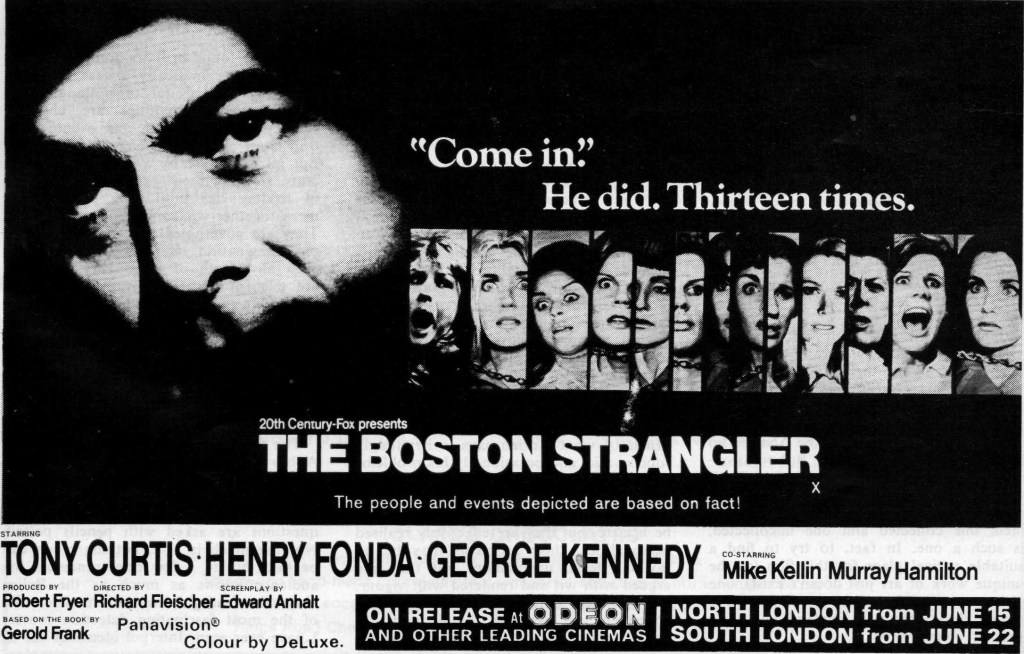
On a hubris high was studio chief Darryl F. Zanuck, who a few years before had saved Fox from bankruptcy. Dunne (later a screenwriter, most notably of A Star Is Born, 1976) had carte blanche to sit in on all sorts of meetings. The studio was going for broke with big-budget musicals, $18 million on Doctor Dolittle starring Rex Harrison (My Fair Lady, 1964) , $12 million for Star! with Julie Andrews (The Sound of Music), both actors considered bankers for their previous work in musicals. There was even $4.5 million allocated to The Boston Strangler which lacked any star commitment.

There were actually two Zanucks. Father Darryl and whizz-kid son Richard who was in charge of production and with whom Dunne had most of his dealings. Dunne observed first-hand how the younger Zanuck whittled down director Martin Ritt’s salary from $350,000 to $200,000 by threat of legal action.  

Script problems had pushed back production on The Boston Strangler, a first attempt by English playwright Terence Rattigan (The VIPs, 1963) rejected and the project now in the hands of Edward Anhalt (Becket, 1964). And it lacked a star.

Robert Shaw was one possibility. He was being paid $300,000 for a picture that would never be made, The Nine Tiger Man, to be directed by George Cukor, deemed too expensive at $7.2 million.  Zanuck could save money if Shaw accepted The Boston Strangler as an alternative. He didn’t. Or another, cheaper, project A Severed Head. He didn’t. Instead, Zanuck dumped A Severed Head (released by Columbia in 1971).

Christopher Plummer also walked away without doing any work. When Rex Harrison quit Doctor Dolittle, Plummer (The Sound of Music) signed up as his replacement for $300,000, Harrison said he hadn’t meant to quit. That wasn’t the only issue Harrison caused. He refused to pre-record his numbers and then mouth the lyrics to a playback. The Harrison, more expensive, method was to be recorded live.  As if producer Arthur P. Jacobs (Planet of the Apes, 1968) hadn’t already been through the mill. Alan Jay Lerner (My Fair Lady) was contracted to do the music. But after 15 months: nada. Jacobs turned to Leslie Bricusse. The budget had risen by 50 per cent, from $12 million to $18 million.

It was hoped the 50-plus companies involving in licensing and contributing $12 million in overall marketing spend would bring in the public. Over 300 items would be sold on the back of the picture, resulting in 45,000 displays in retail stores.  This was a picture you couldn’t miss. Expecting a soundtrack bonanza, the initial print run was set at half a million copies – bigger than that for The Sound of Music. Jacobs was perturbed to learn he would have to pay for window space – retailers paid with free copies.

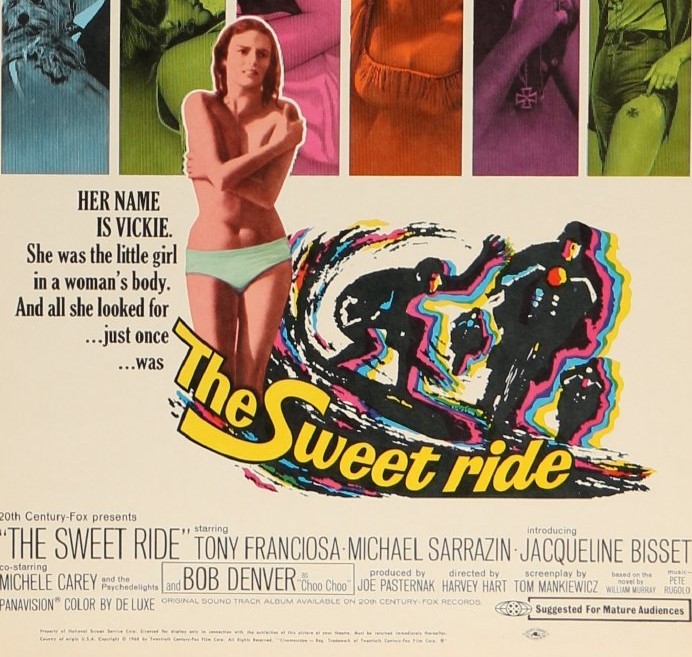
Legendary producer Joe Pasternak was making his 100th movie The Sweet Ride. One of his concerns was that Jacqueline Bisset’s bikini didn’t look tight enough. “It looked baggy in the rushes,” complained Pasternak. Bisset countered, “It fits when it’s dry. It just got a terrible pounding when I was in the water.” She mentions the scene where it got such a pounding in fact that the sea whipped the top off. She reckons that crossing her arms to protect her modesty prevented her tugging the pants on tighter. Once that picture was finished so was Pasternak – he never made another picture.

Another legendary producer Pandro S. Berman was trying to interest English directors John Schlesinger or Lindsay Anderson in Justine (directed by George Cukor in 1969) and on that basis wanted to hire a writer Laurence Marcus (Petulia, 1968) to rewrite the existing Ivan Moffat script in order to entice them. Zanuck’s take: he expected a director to make script changes but couldn’t see the point of altering a script to suit a director you didn’t know would be interested. Nonetheless, Marcus got signed.

All the time agents and directors were pitching movies. Agent Phil Gersh pushed a comedy version of Candy – screenplay by English writing duo Keith Waterhouse and Willis Hall (it ends up minus the Englishmen at Cinerama Releasing). Veteran director Henry Koster’s idea for a musical was nixed. As was the original trailer for Tony Rome, Zanuck hating the voice-over.

On Deadfall (1968), the Michael Caine heist movie directed by Bryan Forbes, actress Giovanni Ralli was having trouble with her English and her contract prevented her being dubbed. It would mean the actress having to lip-synch in post-production. The solution – “tell her she’s got 500 loops and when she hears that maybe she’ll get discouraged and let someone else dub her.” The studio had come up with 14 alternative titles to The Magus (1968) including Seduced by Fate and The Goddess and the Demon.

Fred Zinnemann was priming a $10 million western about Custer. He thought he might save $3 million by shooting in Mexico. The picture was to have no big stars. The only actor who could pull it off was John Wayne and he hated Custer. So Zinnemann planned to go with big names in cameo roles and Toshiro Mifune as Crazy Horse. That picture, too, would be dumped.

Also in the wings, Hello, Dolly! which would get made and Tom Swift, which would be canned despite advance work on building his aeroship, which would not. Nor would another Berman project John Brown’s Body.  

Apart from insights into the way movies are made, marketed and released, Dunne’s book captures the extraordinary Hollywood mix – cynicism and greed coupled with fervor and bone-headed optimism.

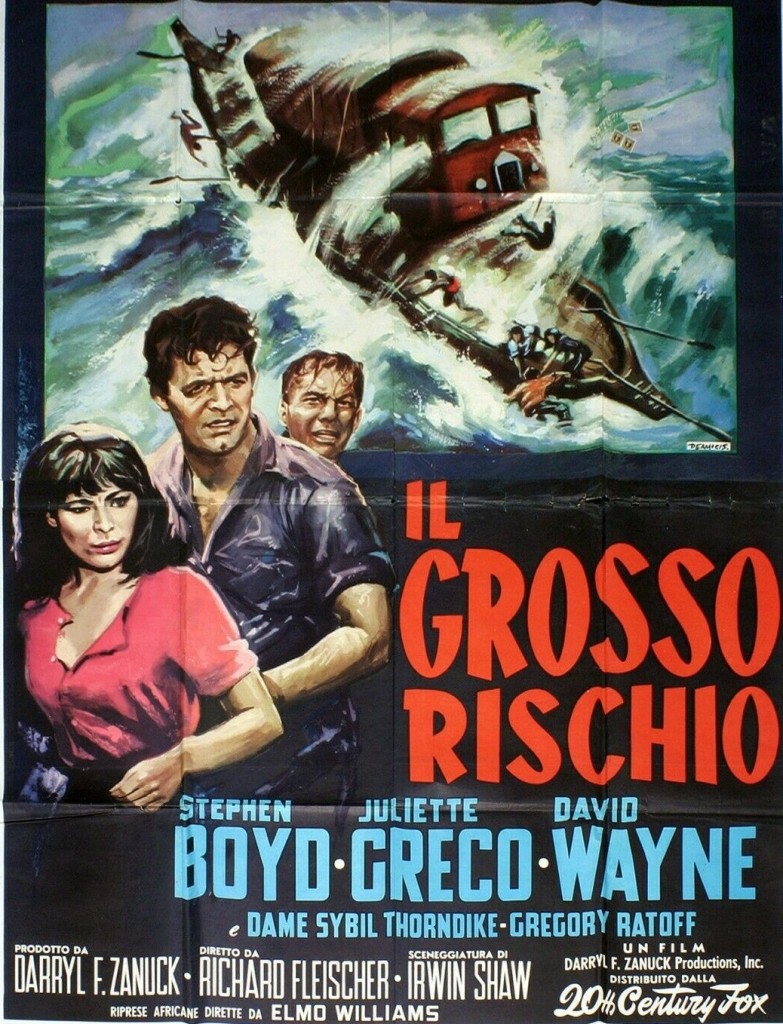
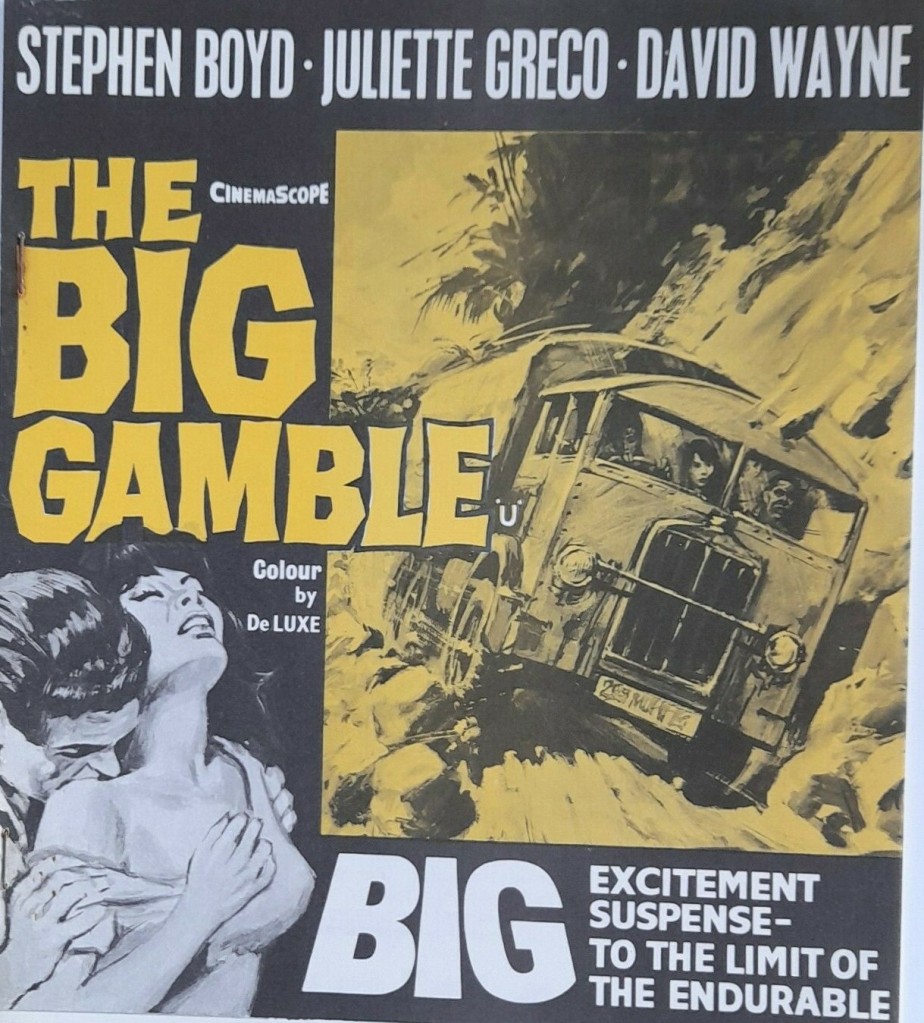
The Big Gamble (1961) ***

If only there had been some serious money put behind this picture it would have been an absolute cracker, custom-made for the likes of Cinerama which didn’t go down the dramatic route until a few years later. It’s a bit “Hell Drivers or Wages of Fear Goes to Africa” but with some really quite stunning sequences.

Whatever French chanteuse Juliette Greco (Crack in the Mirror, 1960) had to offer on stage and in a personal capacity – lovers included Miles Davis and this film’s producer Darryl F. Zanuck – never seemed to translate to the screen in this particular role and the most we get is a kind of tomboyish perkiness. It’s a medium-grade cast, the lead taken by Northern Irishman Stephen Boyd (here playing a Dubliner). David Wayne (The Three Faces of Eve, 1957) is the sad sack brother who joins the other two in a bold plan to set up a haulage business on the Ivory Coast in Africa.

The opening sequence demonstrates the dreary Irish life Boyd is trying to escape with a sparkling cameo from Sybil Thorndike (Shake Hands with the Devil, 1959) as the family matriarch before the African sequences kick in. Apart from scenes shot at Ardmore Studios in Bray, Ireland, the rest is clearly filmed on pretty dangerous locations if the unloading of a lorry onto what looks like little more than a large canoe is anything to go by. After an unpromising start, the intrepid trio (well, two are bold, Wayne is not) set off into the wilderness.

There are two edge-of-the-cliff sequences that would have The Italian Job fans frothing at the mouth, a runaway lorry in the best Cinerama tradition and an astonishing section crossing a swollen river where clearly the actors did their own stunts (and Boyd was in reality saved from drowning by his co-star). In between we have snippets of genuine Africa, especially canoeists braving the surf and an African funeral party. Emotionally, beyond Boyd sticking out his chin as much as possible, the main drama focuses on fraternal rivalry with Wayne trying to pull himself together in the face of a mission he believes doomed to failure.  Their plans are further hit by sabotage by the German Kaltenberg (Gregory Ratoff in his final role).

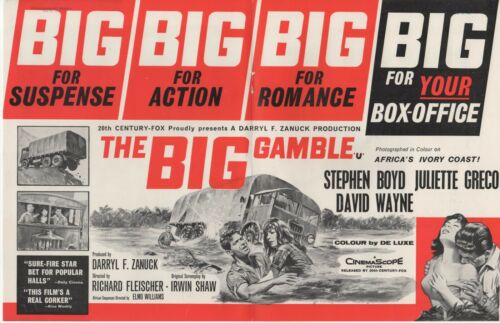
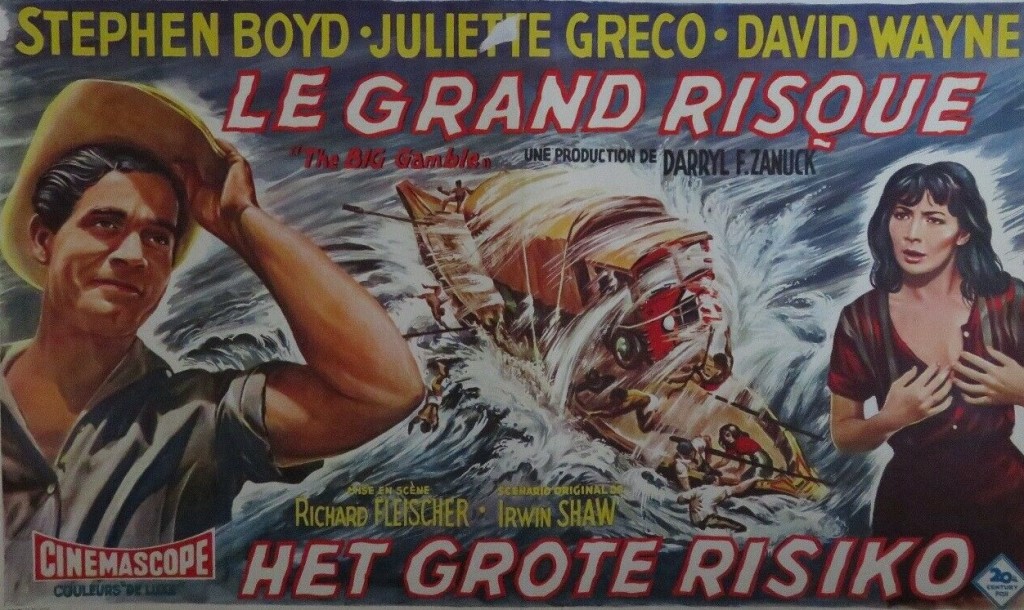
While some of the posters highlight the river crossing, others focus on the cliff-top sequences.

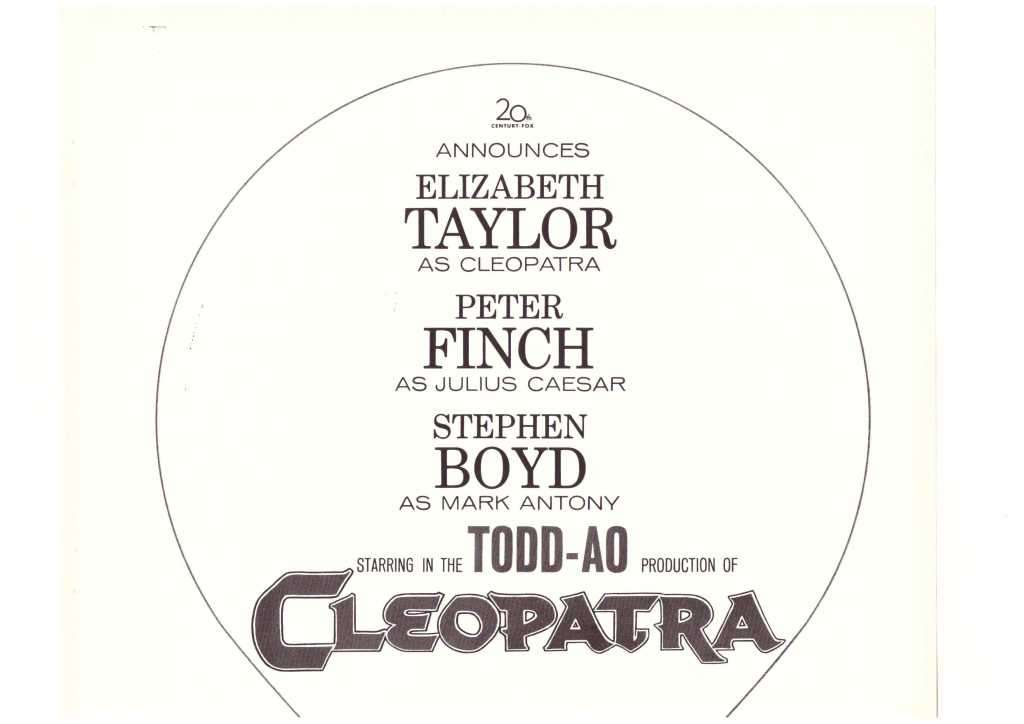
This was Boyd’s bid for stardom. Five years into a seven-year contract with Twentieth Century Fox, he had worked his way up the ranks at that studio to become male lead to top-billed females like Susan Hayward (A Woman Obsessed, 1959) and Hope Lange (The Best of Everything, 1959) before his career received a massive boost after a loan-out deal to MGM for Ben-Hur (1959). He might have been hotter yet had Fox not abandoned its first Rouben Mamoulian-directed version of Cleopatra in which he played Mark Anthony, a role that later brought Richard Burton worldwide fame and a new wife. Boyd would be hot at various times during his short-lived career (he died at 45) while equally never making the transition to major star.

One of the great Hollywood what-ifs – how would Boyd’s career have developed
if he had followed up “Ben-Hur” with “Cleopatra.”

Directed by the underrated Richard Fleischer, best known for 20,000 Leagues under the Sea (1954), Compulsion (1959), Crack in the Mirror (1960) and later The Boston Strangler (1968) and here with some help for the African sequences from Elmo Williams (The Longest Day, 1962) – the nerve-wracking clifftop sequences and river crossing were actually shot in France – it has a decent enough script from novelist Irwin Shaw (The Young Lions).

All-in-all this tight little film more than does justice to its miserable budget with some genuinely exciting sequences.  Filmed in CinemaScope, this is one of the films of the era which does justice to the widescreen. As a wee bonus, if you listen hard to Maurice Jarre’s score you will hear strains of some themes that turned up in Lawrence of Arabia.

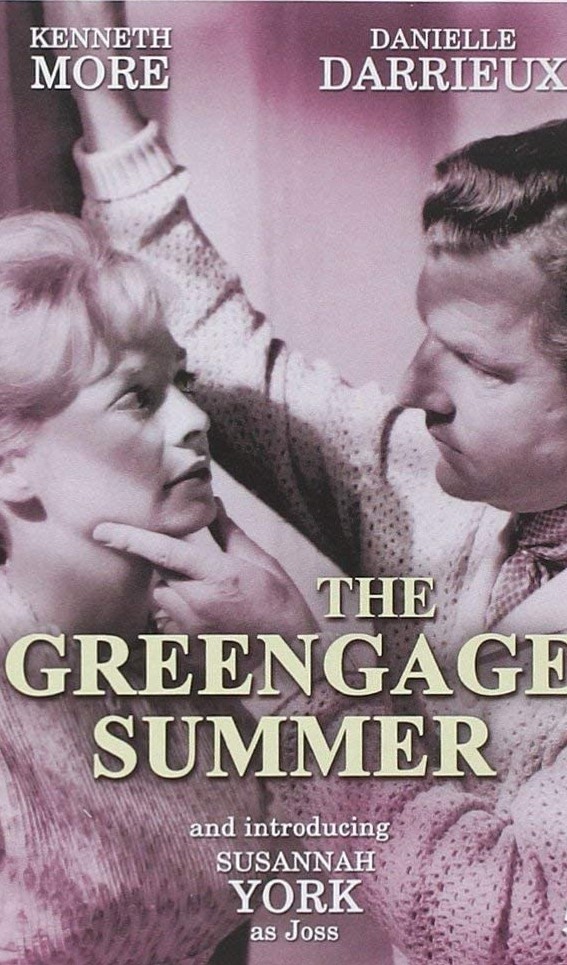
The Greengage Summer (1961) *** aka Loss of Innocence

The alternative title assumed nobody in America knew what a greengage was – it’s a type of plum – but it was actually pretty apposite.

Until then director Lewis Gilbert had been known mostly for Second World War pictures like Reach for the Sky (1954) and Carve Her Name with Pride (1955) so this was a considerable change of pace, and filmed on location.

Susannah York, who had sparkled in a small role in Tunes of Glory (1960), now took center stage as a girl on the brink of womanhood who experiences powerful emotions for the first time – love and its perpetual bedfellow jealousy – as well as rite-of-passage experiences like getting hammered on champagne.

She is the oldest of four siblings stranded in a French chateau when their mother takes ill. Left to her own devices, she promptly falls for the suave and much older Kenneth More who is having an affair with chateau owner Danielle Darrieux (another of Darryl F. Zanuck’s girlfriends).

By modern standards, this is a gentle tale, but not without some harsh moments and York is superb as she undergoes a transformation from uncertain schoolgirl to a woman realizing the power her beauty can exert. She flares from child to adult and back again in seconds. York was headstrong in real life and insisted on being drunk during the drunken scene, which ruined a day’s work.

That was not the only crisis – there were no greengages due to poor weather so they had to be flown in from Britain and sewn onto the trees. Jane Asher plays the more sensible younger sister who is not above violent emotion herself such as fisticuffs with a local lad. Kenneth More is at his charming best in the kind of affable role he had generally moved away from.

The dialogue is surprisingly good and Darrieux is convincing as an aging beauty willing to do anything. The scenery is a bonus as are the snatches of provincial French life. All in, an engaging piece of work, with York delivering a star-is-born kind of turn.      

https://www.amazon.co.uk/Greengage-Summer-DVD-Kenneth-More/dp/B002X7TXDS/ref=sr_1_1?crid=38KFOWT9944AW&dchild=1&keywords=the+greengage+summer+dvd&qid=1593761026&s=dvd&sprefix=the+greengage+summer+%2Cdvd%2C172&sr=1-1

Discover WordPress

A daily selection of the best content published on WordPress, collected for you by humans who love to read.

The Atavist Magazine

by Brian Hannan

WordPress.com News

The latest news on WordPress.com and the WordPress community.