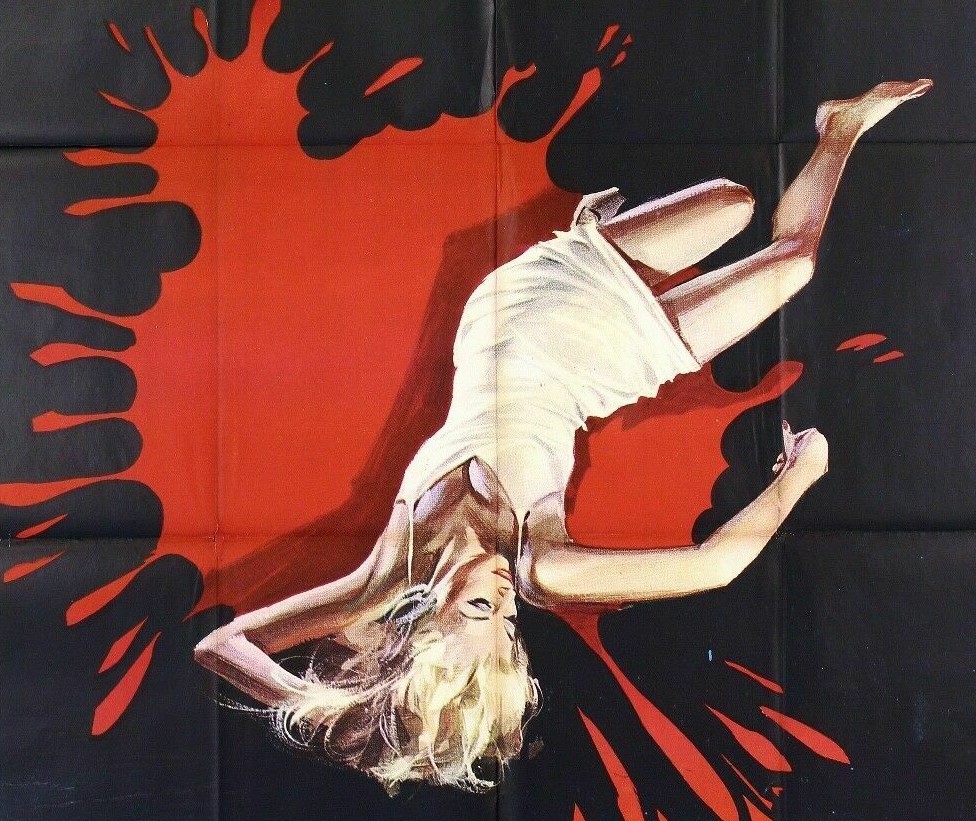
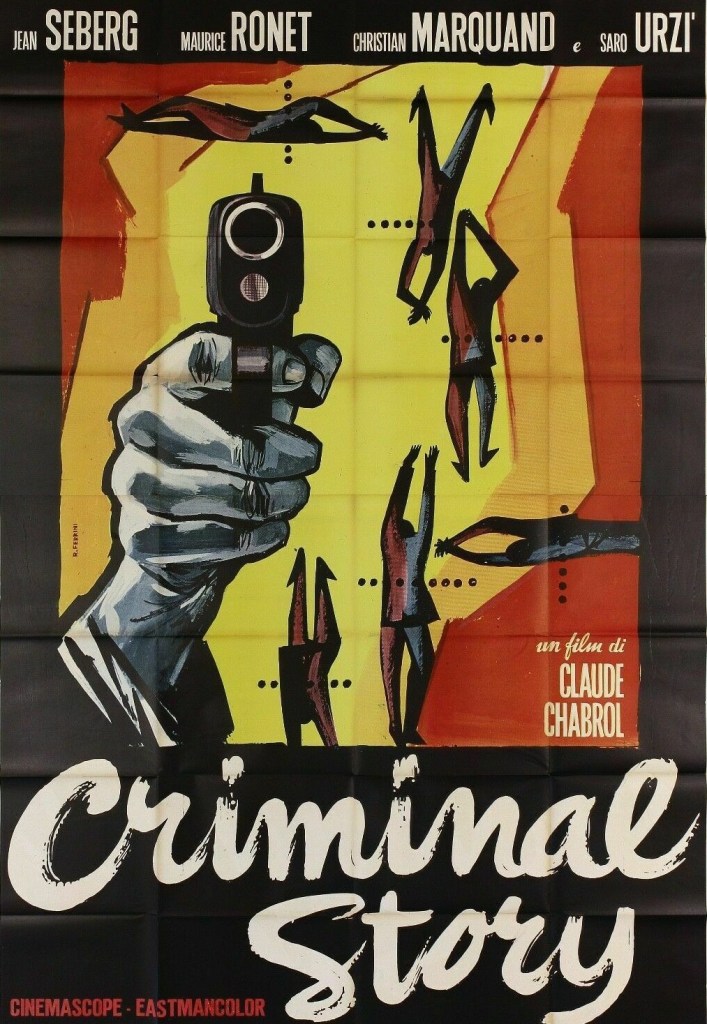
The Road to Corinth (1967) ***

Top-class cast and occasional stylish direction get in the way of a thriller that can’t make up its mind whether it is in reality just a spoof. On the one hand we have a killer in a white suit complete with straw boater and a secret service boss who sells Turkish Delight, on the other hand a story not so much from James Bond but from Bond imitators.

Agent Robert Ford (Christian Marquand) is on the trail of black boxes that prevent missiles launching. When wife Shanny (Jean Seberg) is framed for his murder she determines to uncover the real killer, aided by Dex (Maurice Ronet), and find the maker of the boxes.

But that’s an over-simplification of an over-complicated plot so it’s best to concentrate on the highlights. For example, when customs officials stop a magician they find white rabbits and doves in his vehicle and, despite severe interrogation, he can, magically, release himself from his bonds enough to swallow a concealed cyanide pill. Instead of the usual cute children that proliferate in these kind of films, there’s a really annoying one. Shanny, imprisoned, has to make dolls. Greek Orthodox priests play a significant role.
Throw in kinky secret service boss Sharps (Michel Bouquet) who relishes being slapped for his inappropriate overtures to Shanny, a porn film starring Madame Phiphi, the heroine dangled from a crane and later lashed down to a dumper, and a villain willing to give up his villainy for the love of a good woman.

But mostly it’s a picture in a rush. There are chases galore and nods to Hitchcock and lush Greek scenery.

It would be easy to assume that in eye-catching outfits Jean Seberg (Moment to Moment, 1966) is mostly there to provide eye candy but she does manage to outwit her pursuers from time to time although she seems equally to have a knack for being caught. Maurice Ronet (Lost Command, 1966), Christian Marquand (The Corrupt Ones, 1967) and especially Michel Bouquet (La Femme Infidele, 1969) bring an air of quality to the proceedings.  

Apart from the occasional stunning image, this is not the Claude Chabrol (Les Biches, 1968) that lovers of his thrillers would expect.

There’s a print of this on Youtube. Amazon Prime has this for certain regions. Otherwise it will be Ebay.

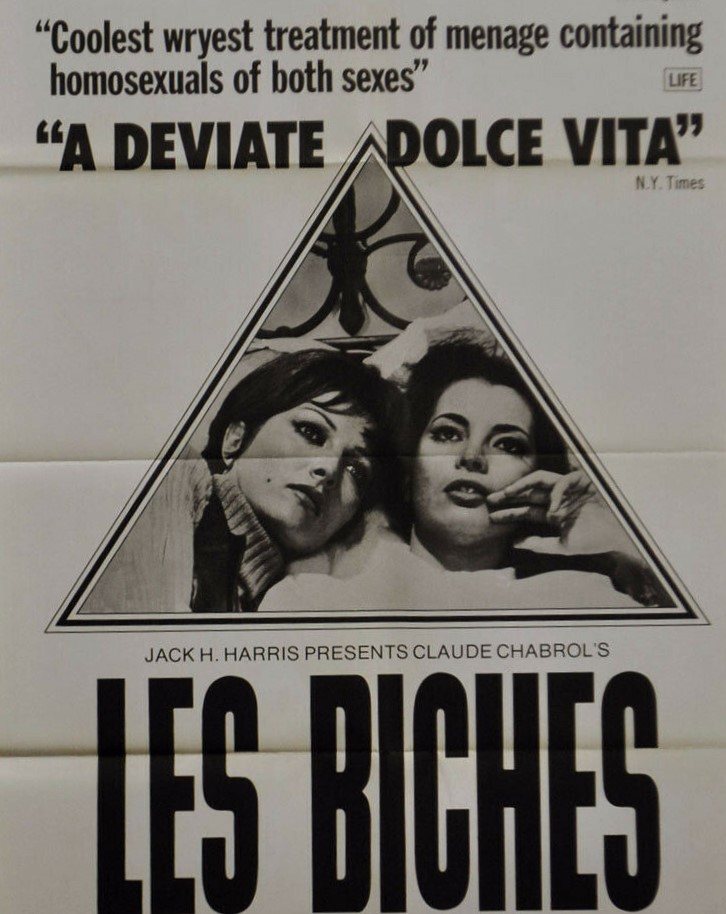
Les Biches (1968) *****

Innocence and experience alike are corrupted by the destructive power of love in this elegant and compelling early masterpiece from French director Claude Chabrol. Although he owed much of his later fame to slow-burning thrillers, this is more of a three-hander drama with a twist and it says much for his skill that we sympathize in turn with each of these amoral characters.

Wealthy stylish Frederique (Stephane Audran), in an iconic hat, picks up younger pavement artist, the artistically named Why (Jacqueline Sassard) in Paris. They decamp to St Tropez where Audran keeps a rather discordant house, indulging the antics of two avant-garde house-guests. Sassard loses her virginity to architect Paul Thomas (Jean-Louis Trintignant) who soon abandons her in favor of Frederique. Each is guilty of betrayal and although a menage a trois might have been one solution instead the lovers dance from one to another with Frederique apparently in control, in one scene stroking Why’s hair with her hand and caressing Paul’s face with her foot. In an attempt to win the man back, Why dresses like her rival down to hairstyle, make-up and even the older woman’s beauty spot.    

At no point is there angry confrontation, nor does Frederique simply dismiss Why from the household, but the story works out in more subtle insinuation, Frderique clearly expecting either that Why makes herself scarce or, alternatively, make herself available for whenever the bisexual Frederique tires of male companionship. The movie’s focus is the baffled Why. When the older pair disappear to Paris, the camera follows Why through off-season St Tropez, chilly weather replacing glorious sunshine. Frederique and Paul are the sophisticates who expect Why to know how to play the game. The younger woman has wiles enough to see off the avant-garde irritants.

It looks for a while as if it might be a coming-of-age tale or of young love thwarted but every time Frederique enters the picture her dominance is such that proceedings, no matter how deftly controlled, have an edge and so it becomes a study of something else entirely. At one point, each has power over the other. What appears on the surface, how each character is initially represented, disguises their interior lives. If Why has learned anything it is restraint, so the movie never descends to tempestuous passion. She also learns, in a sense, to submit, since the impoverished can never compete with the rich. In the end her revolt takes the only other option available, against which even the wealthy have no defense.

Not that it makes much difference unless you were going to analyse the picture to the extreme but clearly the names have significance. Frederique is a feminization of a male name, Paul Thomas is two male names (perhaps indicating alpha male) while Why is obviously not a real name, and either meant to represent anonymity or intrigue. Luckily, the acting is of such a high standard we are not left only in thrall to the intricacies of naming characters.

Jean-Louise Trintignant was the best known of the stars following the international success of A Man and a Woman (1966). Stephane Audran, wife of the director, had been in movies for a decade, this her best part to date. Jacqueline Sassard had broken through with Joseph Losey’s Accident (1967). Claude Chabrol, a driving force behind the French New Wave, had enjoyed conspicuously less success than compatriots Jean-Luc Godard and Francois Truffaut until finding his metier in crime thrillers The Champagne Murders (1967) and The Road to Corinth (1967) but it was Les Biches that marked him out as a sensational talent.

Discover WordPress

A daily selection of the best content published on WordPress, collected for you by humans who love to read.

The Atavist Magazine

by Brian Hannan

WordPress.com News

The latest news on WordPress.com and the WordPress community.