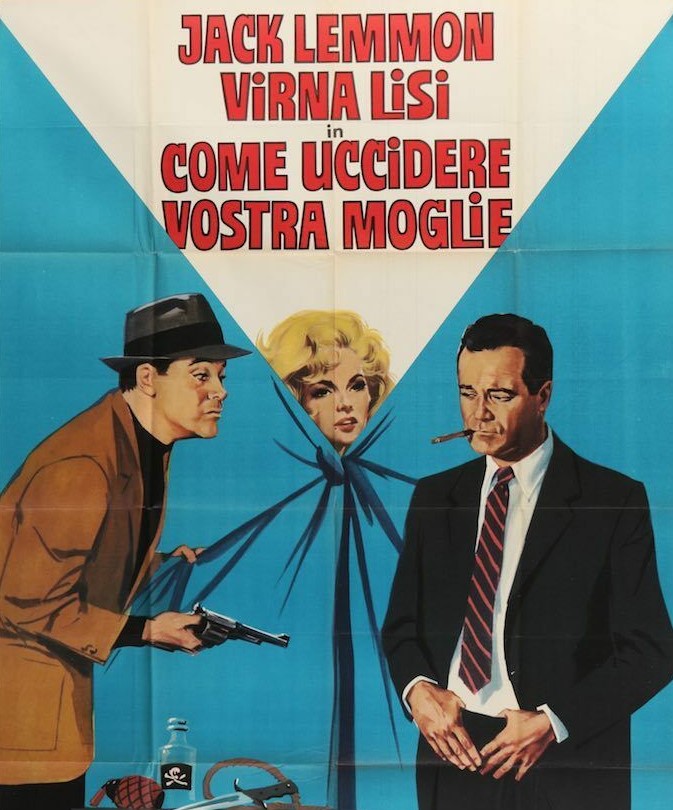
The Cape Town Affair (1967) **

It was too much to hope that a remake of Sam Fuller’s Pickup on South Street (1953) could match the original. Universal had made a decent job of a second bash at Beau Geste (1966) and Madame X (1966) and Twentieth Century Fox should be applauded for having the cojones to even attempt a reimagining of the John Ford classic when it tackled Stagecoach (1966). Generally speaking, remakes were seen as opportunities to feature up-and-coming talent rather than established marquee names.

So it was no surprise that Fox opted for rising stars in James Brolin (The Boston Strangler, 1968) and Jacqueline Bisset (The Detective, 1968), graduates of its talent school, though perhaps more of a stretch to relocate the Fuller classic to South Africa’s  Cape Town. Interestingly, the key role of the informer went to Claire Trevor, star of the original Stagecoach (1939). But while she is a decent replacement for six-time Oscar nominee Thelma Ritter (Move Over, Darling), Brolin was no match for the snarling Richard Widmark (The Bedford Incident, 1964) and Bisset pales when set against Jean Peters (Viva Zapata, 1952).

It’s really the acting that lets it down because it’s virtually the same plot as Pickup on South Street. On a bus in Cape Town pickpocket Skip McCoy (James Brolin) steals a wallet from the purse of Candy (Jacqueline Bisset). Unknown to him, she’s a courier, the wallet containing microfilm of a state secret. Unknown to her, she’s working for the Communists. Unknown to either of them she’s being tailed.

Sometime tie salesman, sometime hooker, sometime police informant Sam (Claire Trevor) identifies Skip as the most likely suspect. Secret service agents investigating his beach shack find nothing. Candy has better luck, Skip a sucker for a pretty face – and a sucker punch. She’s a bit quick in falling in love, he’s a bit too ready to ask for money, but eventually they work together to sniff out the Commies, not that that takes much. The fights are somewhat desultory and the only decent twist comes at the end when, by now loved-up, he is treating her to a romantic dinner, but still up to his pickpocketing tricks purloins the cash to pay from her handbag.
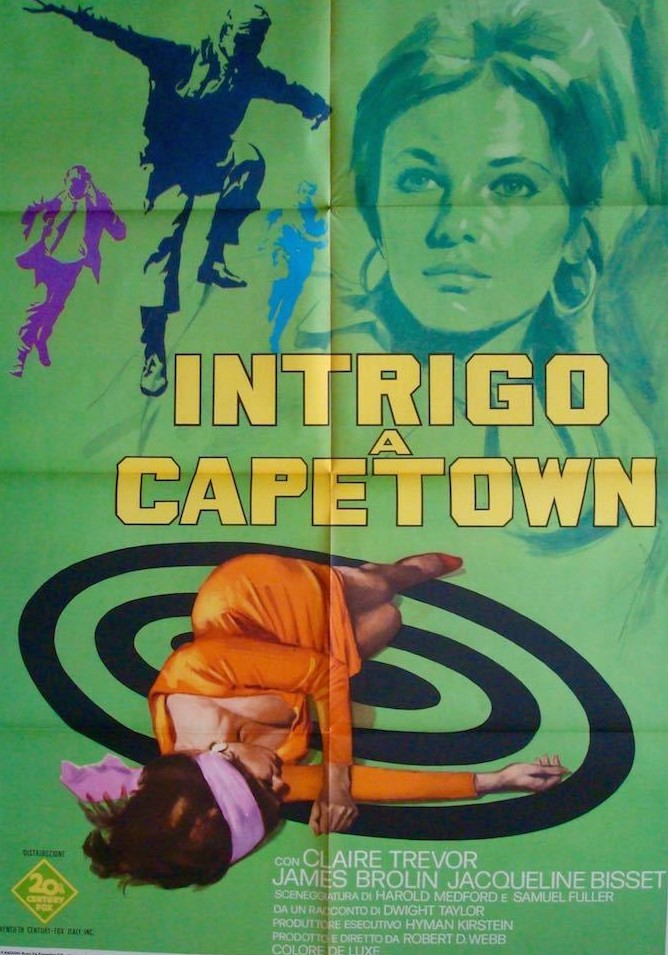
Brolin doesn’t do much but shout and come over like a male model while Bisset turns on the waterworks at the drop of a hat. If it wasn’t for the title, you wouldn’t even know this was set in Cape Town, no focus on city landmarks. There doesn’t look as if there was any budget to speak of.

Robert D. Webb (Pirates of Tortuga, 1961) directed without a hint of the comedy he injected into the swashbuckler. You can’t really blame Harold Medford (Fate Is the Hunter, 1964) for the actors messing up his screenplay.

Worth seeing if you want an example of how a rising star can surmount a debacle. Bisset went straight from this into The Sweet Ride (1968), The Detective (1968) and Bullitt (1968). But Brolin had no such luck. After a supporting role in The Boston Strangler he wouldn’t make another picture for four years and not win another starring role until Gable and Lombard (1976).

I had come at it, as is the undoing of many a movie fan, with the idea of finding a hidden gem, the long lost film of stars at the outset of the careers. Beyond the fact that Bissett looked classy and had a steal of a voice, and Brolin had at least looks, there was little worth finding. But, hey, you might be a completist and think this worth the effort.
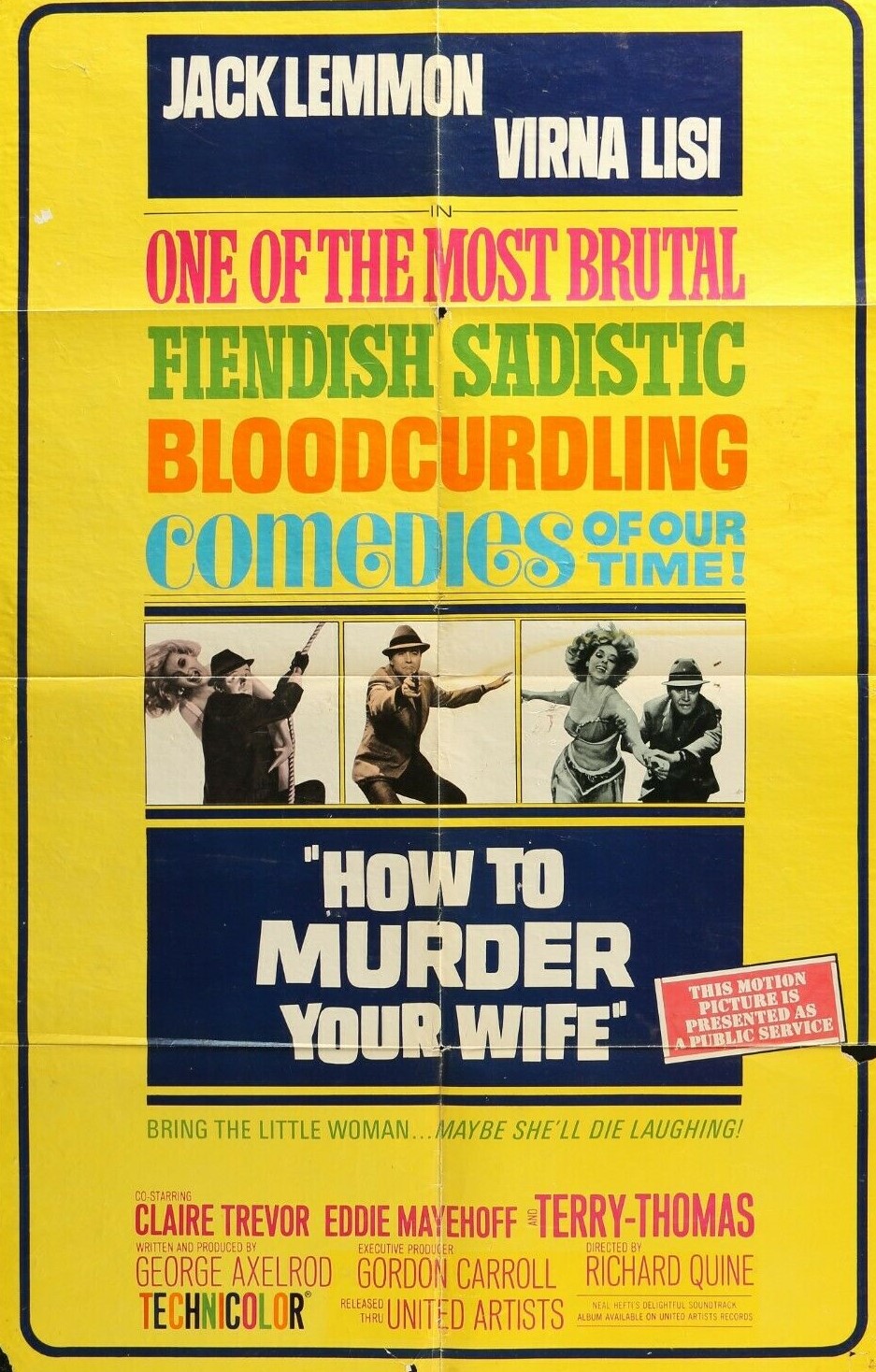
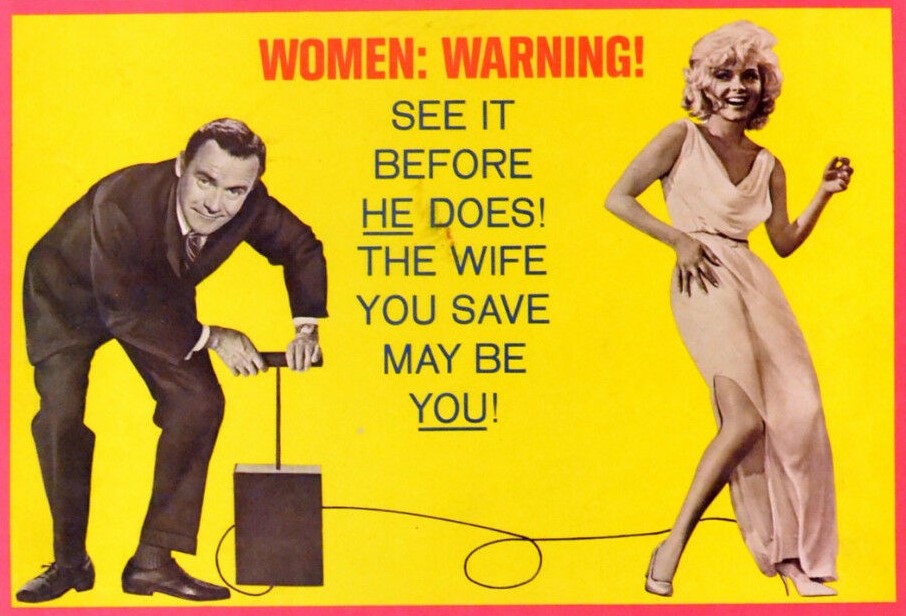
How To Murder Your Wife (1965) ***

Men had a hell of a time in the 1960s to judge from this riff on marital strife that starts off like Walter Mitty meets The Odd Couple. It’s one of those daft comedies that only work on their own terms – and for the most part this works very well.

Dedicated bachelor Stanley Ford (Jack Lemmon), enjoying a host of one-night stands, ensconced in almost a bromance with butler and kindred spirit, the very English Charles (Terry-Thomas), makes the mistake of getting hammered at a drunken party and ends up married to a beauty queen (Virna Lisi). Although she is gorgeous and very loving – most scenes end on a fade as she devours him in kisses – and a good cook (though a bit lax by the high housekeeping standards of Charles), Stanley resents being burdened with a wife, especially when it costs him the services of his butler. 

The biggest casualty is his self-image. He has fashioned his persona after his Bash Brannigan comic strip, syndicated to hundreds of newspapers, that permitted him the fantasy of being secret agent/adventurer/detective, fighting off bad guys and rescuing damsels in distress. Marriage inflicts a devastating change in his mental state, and he transforms from hero into hen-pecked booby.

In a bid to restore his self-esteem, and provide a fictional glimpse of freedom, he plans to murder his wife, if only in the comic strip. It has been Stanley’s working practice to act out and have photographed all the elements of his stories so Charles records the whole episode, from getting advice on how to drug Mrs Ford to (using a dummy) incarcerating her in cement. Unfortunately, Mrs Ford, outraged on discovering the illustrations for this particular comic strip episode, vanishes, leaving no explanation for her disappearance, except that various people witnessed him carrying out the supposed murder. He is arrested and put on trial.

You couldn’t make this up, but strangely enough, it is all very believable. The opening section where Stanley enacts the part of his action man Bash Brannigan in “The Case of the Faberge Navel” is just a delight. When the future Mrs Ford comes to explain exactly why she came to be jumping out of a birthday cake in a bikini, it is as daft as everything else.

However, the picture’s overall theme, the war between men and women, where men feel controlled, is somewhat dated. You might expect such a war to go nuclear when Mrs Ford dares to infringe on the sanctuary of a men-only enclave. The trial scene is particularly laborious in trying to determine that men are victims of controlling women. Despite that, there are some very funny lines that hit the nail on the head – men “are always guilty about something” declares Mrs Ford’s confidante Edna (Claire Trevor) whose strategy is always to keep men off-balance.

Jack Lemmon (The Apartment, 1960) has ploughed this path before, conspirator to the illicit,  although generally to be found in the loser camp rather than, as, effectively here, despite his complaints to the contrary, in the winner’s circle with an enviable lifestyle and willing girlfriends to hand. There’s a gleefulness in his performance, the little boy getting away with everything, that turns into a small boy’s sullenness when it is all apparently taken away.

Italian star Virna Lisi (Assault on a Queen, 1966), in her Hollywood debut, is a delight.  Her frothy sexuality goes down a treat but she is far from a dumb blonde, learning English from television, excellent cook, and wise enough not to go down Edna’s route of dealing with men. Terry-Thomas (Bang! Bang! You’re Dead!, 1966) delivers just as interesting a confection, a touch of ruthlessness to the stiff upper lip, high chieftain of the Male Protection League, reveling in the prospect of ridding the world of insidious influences like Mrs Ford. And there’s a welcome role for Claire Trevor (Stagecoach, 1966), especially when, in a party scene, she really lets go.

The other males, ranging from dumb and dumber to dumbest,  totally lacking in Jack Lemmon’s charm, perfectly illustrate the need for a woman’s firm hand, among them Eddie Mayehoff (Luv, 1967), Sidney Blackmer (A Covenant with Death, 1967) and Harold Wendell (My Blood Runs Cold, 1965).

Richard Quine (The World of Suzie Wong, 1960) directed from an original screenplay by George Axelrod (The Secret Life of an American Wife, 1968).

Discover WordPress

A daily selection of the best content published on WordPress, collected for you by humans who love to read.

The Atavist Magazine

by Brian Hannan

WordPress.com News

The latest news on WordPress.com and the WordPress community.