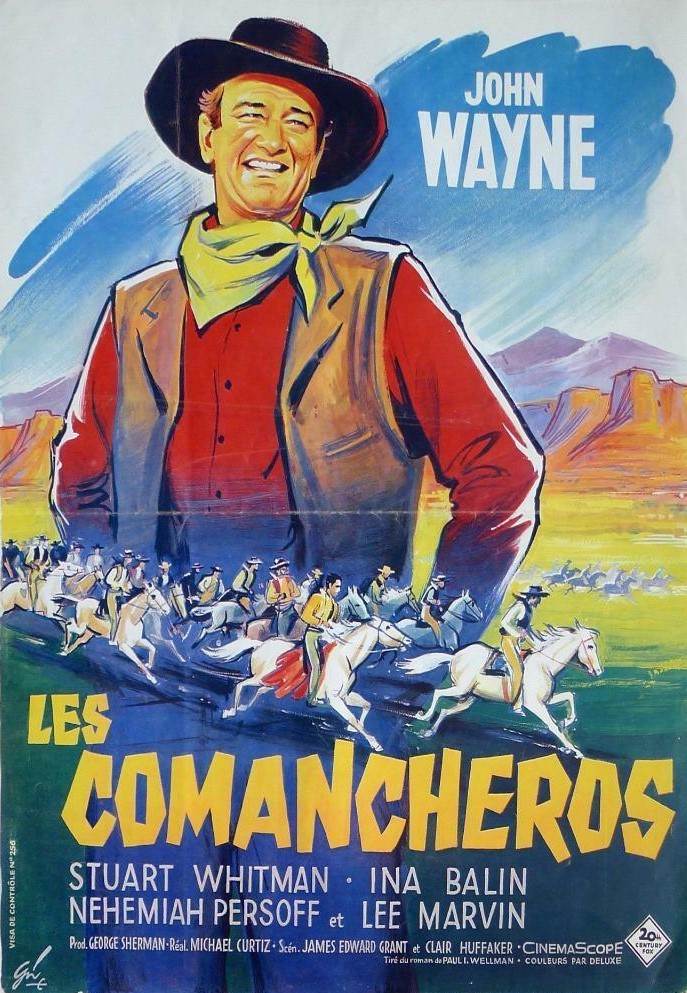
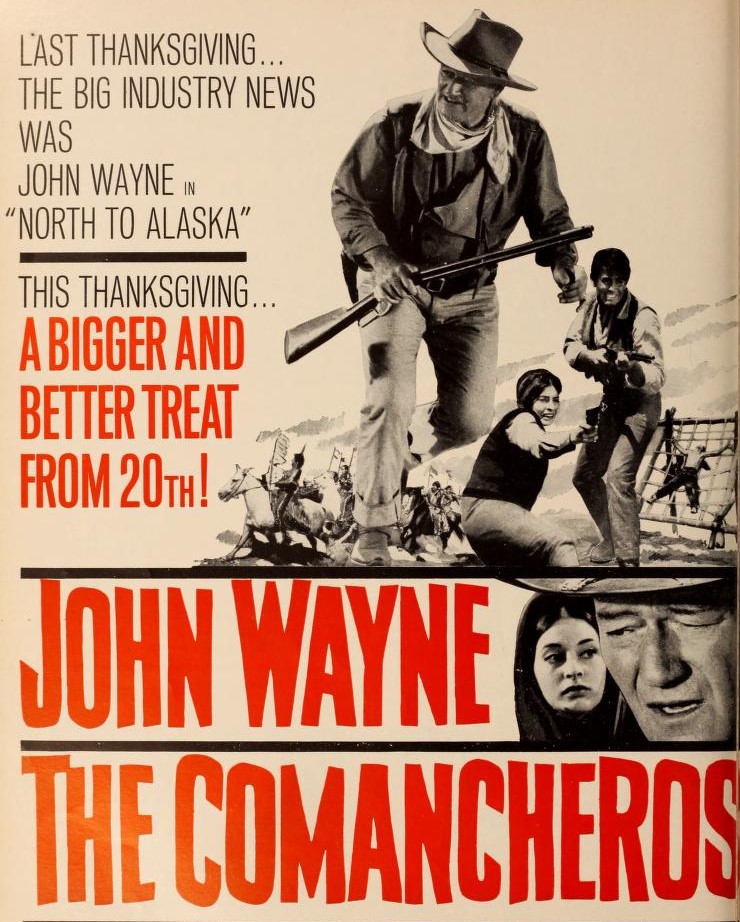
You can always tell a studio is piling a lot behind a rising actor when the top-billed star is absent, except for a fleeting moment during the credits, for the first 10 minutes. In this case, Twentieth Century Fox was showcasing two new talents, Stuart Whitman (Murder, Inc. 1960) and Ina Balin (From the Terrace, 1960).
I’m sticking my neck out a little on this one, not considered as top-notch as Duke’s other great westerns of the decade – The Man Who Shot Liberty Valance (1962), El Dorado (1967) and True Grit (1969) – but it’s an unusual story, hardly following a standard narrative, has a great score by Elmer Bernstein but most importantly because it’s real old-school film-making with the emphasis on the classic long shot and the horizon line.
And it takes a surprisingly feminist approach with gypsy Pilar (Ina Balin) making the running in the seduction stakes. Indeed, should she be willing to surrender an iota of her hard-won independence for a long-term relationship sticks to the view that in love there is always a dominant one and a subservient one, with no question about which she is. Plus, although the nickname “Pilgrim” became a famed element of The Man Who Shot Liberty Valance this is where the nickname notion began when lawman Jake (John Wayne) assigns prisoner Paul Regret (Stuart Whitman) the appellation “Monsoor” because he’s of French heritage.
Meshes effortlessly three storylines – Jake taking prisoner Regret back to base, Regret turning from western tenderfoot to accomplished hand, and Jake and his captive infiltrating the Comancheros of the title, a secret society of white men who utilize Comanche power to its own ends. You could argue this is ushered in the “buddy” movie, the repartee between the two principals a delight. Plus, you would have to take note that legendary director Michael Curtiz (Casablanca, 1942), in his final picture, has done something remarkable in getting the Duke to speak proper, not hi-hat English, but without that Wayne trick of breaking up his sentences so it appears he’s thinking.
Curtiz is pretty nifty when it comes to setting up scenes, interrupting gentle moments with elements of stunning ferocity. When Jake arrives at a ranch, the camera tracks back from his arrival to reveal the corpses hanging upside down under the ranch gateway. Later, Jake is tucking into a meal at the home of another rancher when that man’s pregnant wife in the background suddenly sits up and from her point-of-view we see through a window as big as the entire screen a band of renegades in attack mode charging through a river.
Regret isn’t one to hang around either when he can escape during the ensuing melee, but no sooner has he gone than he returns with a bunch of Texas Rangers, thus redeeming himself in Jake’s eyes. And there’s a great cut between Jake being knocked unconscious in the blazing sun and waking up in the pouring rain.
And it’s chock-full of reversal, not just that Pilar dumps her pick-up Regret when their riverboat docks at Galveston, but Regret, forced to ride a mule in handcuffs to prevent his escape, gets the jump on his captor at the saddest scene in the picture, the burial of a family killed by Comanches. Later, after taking on the alias McBain, he encounters Regret at a poker table and the wanted man does not give him away.
After a bit of legal chicanery, Regret is a free man, although with the proviso he teams up with Jake to go undercover into the Comancheros camp. This doesn’t work out too well, the pair strung up by suspicious crippled leader Graile (Nehemiah Persoff) until rescued by, surprise, Pilar. Love works its mysterious way and soon Pilar is on Regret’s side, resulting in a classy finale.
Along the way we encounter Lee Marvin (Raintree County, 1957) having another scene-stealing ball as the Comancheros contact. Clever screenwriters James Edward Grant (Circus World/The Magnificent Showman, 1964) and Clair Huffaker (Hellfighters, 1968) find an entirely believable method of getting him out of the way. And in passing we learn that Jake’s wife died “two years, two months and 13 days” ago and without an ounce of revealing dialog between them that Jake would like to take up with widow Melinda (Joan O’Brien). Meanwhile, initially presented as a man of such honor that he will fight a duel to protect such notions of nobility, Regret goes from gambler, wanton lover, and prisoner to revert to his original state.
Expect chunks of western lore – don’t give a hot horse water until it has cooled down is one takeaway. And men who swear by an unwritten code. Here, it’s “words are what men live by.” What’s so refreshing is that lore and code alike arequickly punctured. The follow-up to the code annoncement to which Regret shows indiference is a pronouncement from Jake: “You must’ve had a real careless upbringing. ” that’s not forgetting characters remembering to be characters in the midst of all the uproar as with the bedridden pregnant wife instructing her husband to make sure Jake eats off the “best china.”
It’s not only a well-structured movie but it’s filled with moments that reveal character and even when Curtiz feels duty bound to include standard tropes such as the bar-room brawl or the drunk there are enough twists to have you believe the clichés have been bitten in half.
A superb ending to Curtiz’s career, terrific performances all round, great double act from Wayne and Whitman, with the latter afforded considerably more leeway acting-wise than any time in his career, and Ina Balin in a prize role.
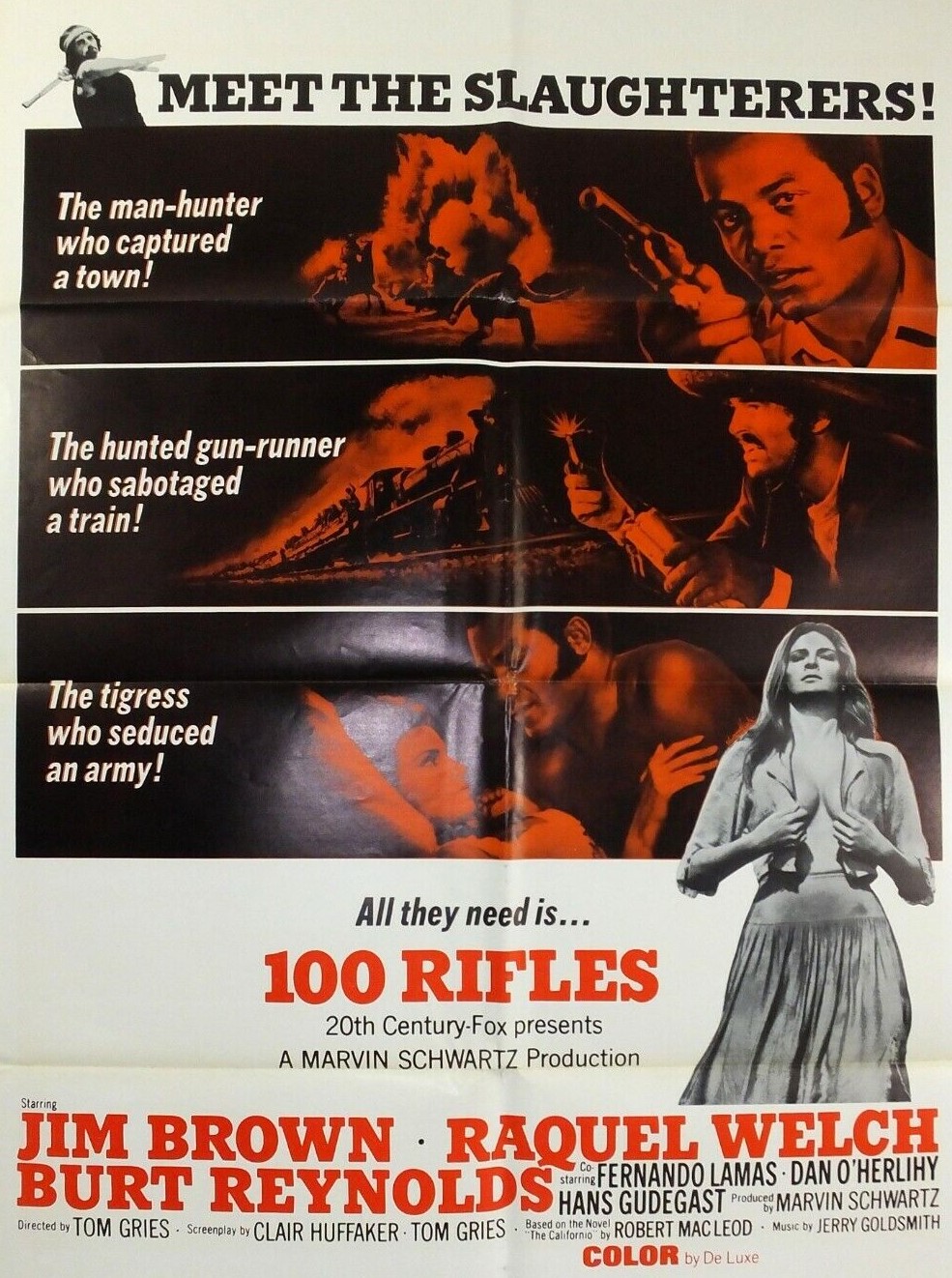
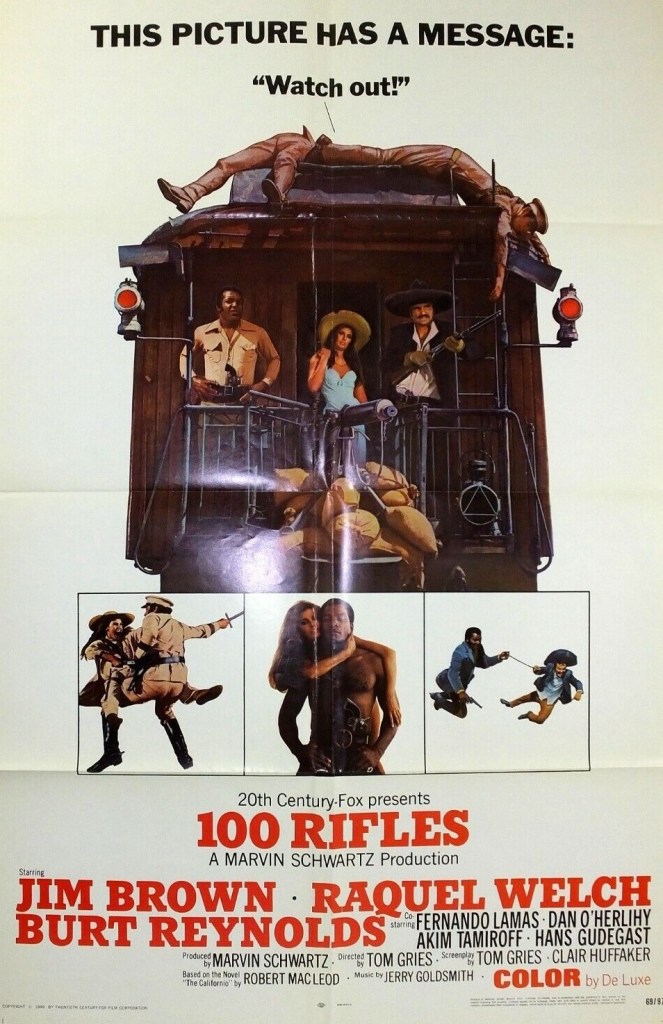
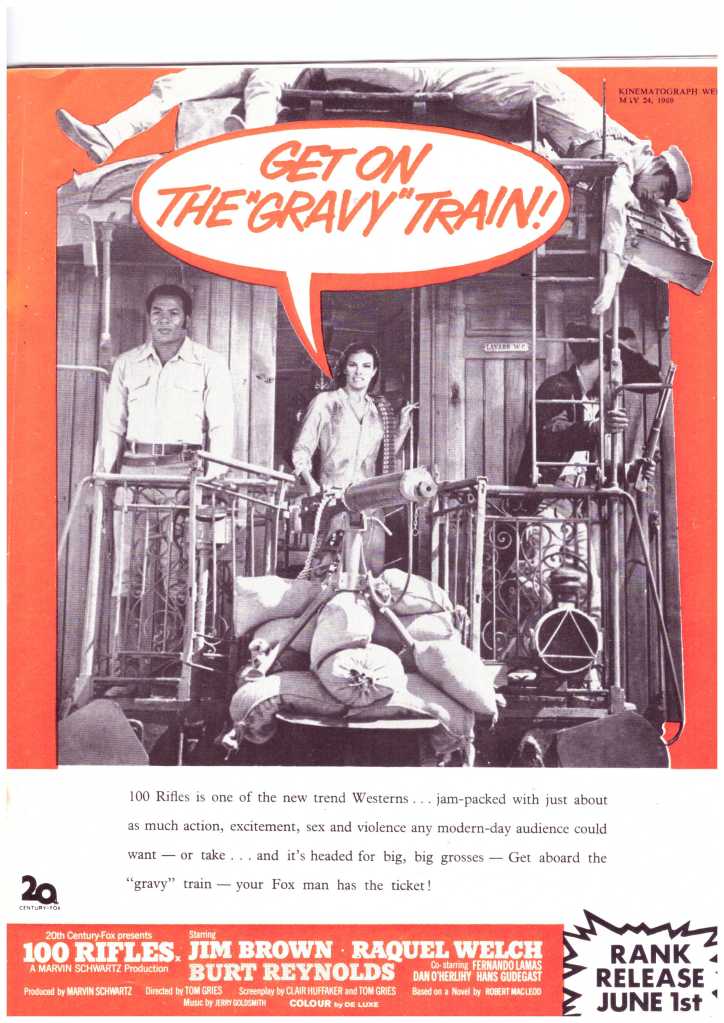
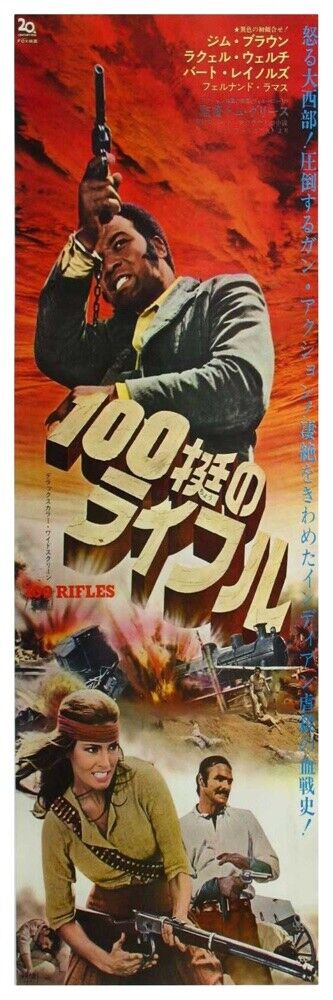
100 Rifles was easily the most underrated film of the year. Even if the sum of all its parts did not add up to greatness, it had a lot more going for it than has generally been attributed. For a start, there was the attempt to build Jim Brown into a mainstream African American star. Secondly: the return of the bold female character that had largely disappeared since the heyday of Barbara Stanwyck, and Joan Crawford. Thirdly: the conjunction of these first two elements in a sex scene raised the issue of miscegenation that Hollywood had otherwise sought to avoid.
Fourthly, and perhaps most hard- hitting of all: the issue of genocide, the mass slaughter of the Yaqui Indian population providing an uneasy parallel not just to the United States treatment of its own indigenous Native American population but also to its actions in Vietnam.
But there was a danger that, without both incisive direction and potent performances, the movie would spiral downwards into another simple case of “When Beefcake (Jim Brown) Met Cheesecake (Raquel Welch).” Since nobody had expected Sidney Poitier to ascend the Hollywood ladder so fast, and in so doing set a trend, the industry had nobody lined up to ride in his wake and exploit what now appeared to be, at the very least, acceptance of African Africans as stars in their own right, with an audience ready to embrace a new kind of hero. Although MPAA president Jack Valenti called for more African Americans in more African American films, the number of highly touted big- budget African American–oriented pictures that offered stardom potential rarely made it out of the starting blocks.
But there was one potential crossover star waiting in the wings: Jim Brown. While lacking Poitier’s acting chops, he had the physique, looks and charisma. Cleveland Browns football legend with strong supporting roles in The Dirty Dozen (1967), Dark of the Sun (1968) and Ice Station Zebra (1968), top-billing had been limited to low-budgeters like Kenner (1968), The Split (1968) and Riot (1969).
But Variety had singled him out at the start of 1969 as one of its “new stars of the year” and judged him “the strongest contender to inherit some of Sidney Poitier’s earning power.” 100 Rifles had double the budget of any of his previous pictures.
Raquel Welch was in a similar situation to Jim Brown regarding Hollywood acceptance. However, she was not in a minority as far as female stars were concerned. The 1960s had been dominated by the likes of drama queen (in more ways than one) Elizabeth Taylor, comedy queen Doris Day and musical queen Julie Andrews, not to mention Audrey Hepburn, (Breakfast at Tiffany’s, 1961), Italian import Sophia Loren (El Cid, 1961), Jane Fonda (Cat Ballou, 1965), Natalie Wood (Sex and the Single Girl, 1964) and Shirley MacLaine (Sweet Charity, 1968). There was also an overabundance of new talent in Julie Christie (Doctor Zhivago, 1965), Vanessa Redgrave (Blow Up, 1966), Lynn Redgrave (Georgy Girl, 1965), Mia Farrow (Rosemary’s Baby, 1968) and Faye Dunaway (Bonnie and Clyde, 1967).
But those stars had more to offer than mere beauty, whereas Welch, having made her name primarily as a pin- up and as eye candy in movies like One Million Years B.C. (1966) and Fantastic Voyage (1966), had trouble shaking off the idea that she won more parts on the basis of her body than for the acting skills, appearing in a dry bikini in Fathom (1967) and a wet one in Lady in Cement (1968).
However, like Jim Brown, she was actively looking to fill a niche, and set out her stall as a player of dramatic intensity, and she found it in the most unlikely of places: the western. That she chose 100 Rifles was interesting given her other choices. She was offered the Katharine Ross part in Butch Cassidy and the Sundance Kid when the lead roles had been offered to Steve McQueen and Warren Beatty and again when Paul Newman came into the frame. She was also up for the Faye Dunaway role for The Crown Caper (title later changed to TheThomas Crown Affair), again with McQueen, and a film with Terence Stamp (which was never made). But she clearly felt those roles were more decorative.
At one time, the female western star had been a staple. Claire Trevor was the star of Stagecoach (1939) and Texas (1941). Gene Tierney made her name with The Return of Frank James (1940) and Belle Starr (1941). Barbara Stanwyck carved out her own niche as a western icon after taking top billing in Union Pacific (1939), California (1947), The Furies (1950), Cattle Queen of Montana (1954), The Maverick Queen (1956) and Forty Guns (1957). While Maureen O’Hara took second billing in Rio Grande (1950), McLintock! (1963) and The Rare Breed (1965), she was the star of Comanche Territory (1950), The Redhead from Wyoming (1953) and The Deadly Companions (1961). Yvonne De Carlo headlined Black Bart (1948), The Gal Who Took the West (1949) and Calamity Jane and Sam Bass (1949). Rhonda Fleming had the female lead in The Redhead and the Cowboy (1951), The Last Outpost (1951), Pony Express (1953) and Gunfight at the O.K. Corral (1957). Johnny Guitar (1954) achieved classic status largely on the performance of Joan Crawford.
There had even been modern precedent: Inger Stevens had nearly cornered the recent market after A Time for Killing (1967), Firecreek (1968), Hang ’Em High (1968) and 5 Card Stud (1968) while Claudia Cardinale went from a supporting role in The Professionals (1966) to top billing in the forthcoming Once Upon a Time in the West.
Raquel Welch set out to follow suit. In Bandolero (1968) she proved capable not only of holding her own against veterans James Stewart and Dean Martin but as adept on the pistol- packing side of things. While Welch professed herself “no Anne Bancroft,” she was pleased that she was not “running around half- naked all the time.” After that punched a hole in the box office, she was offered the female lead in 100 Rifles to be directed by Tom Gries who had made his name as a director with his unflinching portrayal of the cowboy in Will Penny (1968).
The basis of the film was Robert MacLeod’s The Californio, published in 1966, and the essence of the story concerned a “reckless stranger” who refused to turn the other cheek while innocent people were being killed. After Clair Huffaker turned in his screenplay, Gries wrote two further drafts. It is safe to assume that the casting of Jim Brown came after the Huffaker script had been handed in. When Huffaker did not like the way his work had ended up on screen, he insisted on using the pseudonym Cecil Dan Hansen, as he had done on The Second Time Around.
For 100 Rifles, he was so upset at the end result that he demanded either his name removed or the pseudonym installed, complaining that the finished product “bears absolutely no resemblance to my script.”
The story of The Californio bears little resemblance to 100 Rifles. Not only is the hero of the book, Steve McCall, white, he is a rawboned young man and not a lawman in his 30s. He is not a gunman either, being more proficient with the lasso. In fact, when forced into bloody action, he discovers that he abhors violence. The book could more aptly be described as a “rite of passage” novel where a young man, sent south “on legitimate business in the interests of the (U.S.) Federal Government,” leaves home for the first time, becomes a man, loses his virginity and kills his first man.
Nor is Yaqui Joe a bank robber in the book, and after meeting up with McCall, they embark on further legitimate business. Maria, named Sarita in the film, is most like her feisty movie counterpart, and although in the MacLeod version she is married, that does not prevent her taking Steve’s virginity. Of the villains, Verdugo (the name means “Hangman”), while not elevated to general, is still as ruthless, but the foreign adviser is not.
Most of the film’s action was invented by the screenwriters, including the concept of the 100 Rifles, Sarita’s sexy shower as a way of stopping the troop train, and the children being taken hostage (although in one episode in the book, children are shot). Trying to reshape the book to suit the new requirements of the characters makes the picture unnecessarily complicated. Burt Reynold’s solution was simpler: “Keep his shirt off and her [Raquel Welch’s] shirt off and give me all the lines,” he reportedly advised producer Marvin Schwartz.
The movie was shot over a ten- week period in Spain beginning in July 1968. Although that country had become a viable alternative for westerns looking to keep budgets low, in part in 1968 due to the devaluing of the peseta against the dollar, the volume of films shot there had declined by nearly a third compared to the previous year.
Despite the popularity of the location, Almeria, the actual area of countryside where most spaghetti westerns were shot, was very small. This resulted in a limited variety of available landscapes compared with films shot in the U.S. such as The Stalking Moon. The actors had to contend with extreme heat, and Gries was laid low for three days after contracting typhus. Gries decided to get the sex scene out of the way on the first day of shooting, probably to ensure that tension about the content was not allowed to linger until later in the shoot. However, it had the opposite effect. Neither Brown nor Welch had been given time to get to know one another nor to adjust to different styles of acting and to understand the perspectives of each other’s characters. Welch was not happy with the scene and tensions between the two stars continued throughout the film, some press reports putting this down to squabbles over close- ups, others to unresolved sexual tension. Welch later complained that scenes edited out of the picture had reduced audience understanding of her motivations. The MPAA also did some judicial trimming, axing Welch’s shrieks during lovemaking.
Critical reception ranged from sniffy to downright hostile. Perhaps like The Stalking Moon, advance publicity, although not this time pointing in the direction of the Oscars, had served to put critics off what sounded like an exploitative film. For the western traditionalist, sex scenes were off- putting, and although naked breasts had started appearing in a handful of movies, there were precious few full- on sex scenes, never mind one that featured miscegenation. Variety judged it a “routine Spanish- made western with a questionable sex scene as a possible exploitation hook.” On the plus side, Welch’s performance was “spirited” as was the Jerry Goldsmith score; Brown and Reynolds were just “okay.” The Showmen’s Servisection took a different view: “Fast pace, fine performances lift western several notches above the ordinary.” Roger Ebert in the Chicago Sun- Times called it “pretty dreary.” Howard Thompson, the New York Times’ second- string reviewer, said it was a “triumphantly empty exercise.”
Twentieth Century–Fox had been affected by recent financial disasters such as Doctor Dolittle (1967) and Star! (1968); the former collecting $6.2 million in domestic rentals on a budget of $17 million, the latter $4.2 million in rentals after costing $14.5 million. To counter mounting exhibitor panic about production being slashed, Fox had drawn up an ambitious program for 1969, promising one new movie every month. The program kicked off with a $7.7 million adaptation of the Lawrence Durrell classic Justine with Dirk Bogarde (January), followed by Michael Caine and Anthony Quinn in the $3.77 million film of the John Fowles bestseller The Magus (February) and the trendy $1.1 million Joanna from new director Mike Sarne (March). British star Maggie Smith in the $2.7 million The Prime of Miss Jean Brodie (April) came next with 100 Rifles (May) and another Marvin Schwarz production, Hard Contract starring James Coburn, costing $4 million (June). Summer highlights were Omar Sharif in the $5.1 million biopic of Che! directed by Richard Fleischer (July) and Gregory Peck in the $4.9 million Cold War thriller The Chairman (August). Come fall it was the turn of Paul Newman and Robert Redford in the western Butch Cassidy and the Sundance Kid coming in at $6.8 million (September), Richard Burton and Rex Harrison as aging homosexuals in The Staircase costing $6.3 million (October) and Warren Beatty and Elizabeth Taylor in George Stevens’ $10 million The Only Game in Town (November). The year ended with John Wayne and Rock Hudson in the $7.1 million Civil War western The Undefeated (December).
The studio needed several box office home runs because the following year it was already committed to three roadshows—Tora! Tora ! Tora!, Hello, Dolly and Patton—costing over $60 million. By spring it was clear that the first two movies in the schedule had been major flops, Justine bringing in only $2.2 million in rentals, The Magus $1 million. Income from Joanna and The Prime of Miss Jean Brodie barely exceeded costs.
By the time 100 Rifles swung into action with two largely untried leads and a director making only his second major picture, the pressure was on. “
At the box office 100 Rifles got off to a great start and Twentieth Century–Fox reported with delight that it had outgrossed Bandolero! by 40 percent in Washington (and by 500 percent in the ghetto areas), and by 300 percent in Philadelphia. In Baltimore it grossed $50,000 from a single theater compared to $80,000 from eight for Bandolero! and in Atlanta first run it had been $61,000 for the new film compared to $38,000 for the previous one. However, while Brown and Welch fans were out in force in certain areas, that did not make up for less interest in regions where westerns were associated with bigger or more traditional names. Ultimately, 100 Rifles fell short of expectations given the budget. U.S. rentals amounted to $3.5 million, and it registered in 29th position on the annual chart— the sixth highest- grossing western of the year and ahead of Mackenna’s Gold, The Stalking Moon, Paint Your Wagon and Once Upon a Time in the West.
But, of course, the domestic performance did not take into account the popularity of westerns overseas and the distinct following Raquel Welch had accumulated. So where some of the studio’s major dramas stumbled in the global market, 100 Rifles hit the ground running.
SOURCES: This is an abbreviated version of much longer chapter devoted to the film that ran in The Gunslingers of ’69: Western Movies’ Greatest Year (McFarland, 2019) by Brian Hannan (that’s me). All the references mentioned can be found in the Notes section of that book.
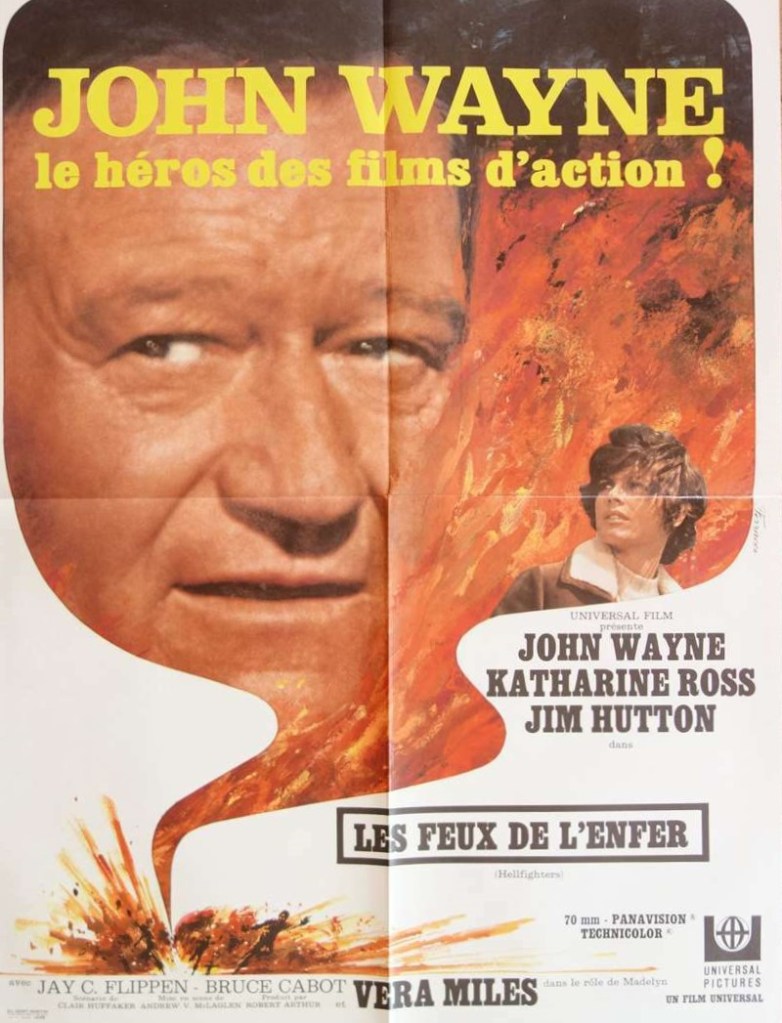
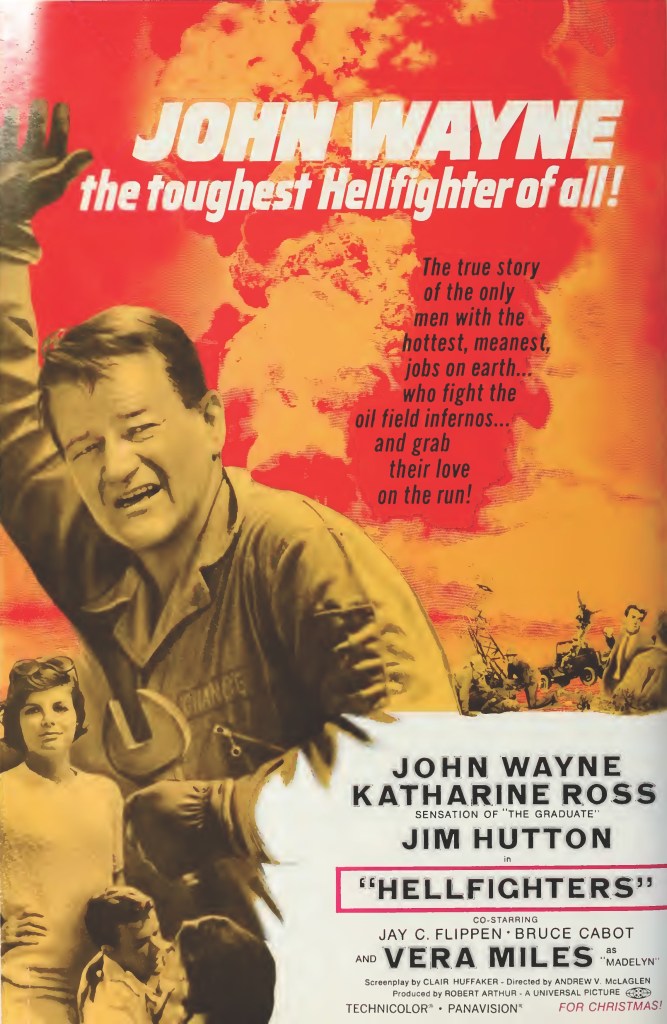
I’m sticking my neck out on this one – under-rated would be an understatement – and primarily because it’s the Duke’s most intriguing film of the decade and possibly ever. For a start we have John Wayne The Quitter (the hell you say!). Then he ducks out of the picture for a full quarter of an hour (he does what?). Fast forward a couple of years and this would have led the disaster cycle pack – a little tinkering with the structure and you would have all four principals fighting fires in South America in the middle of a revolution (beat that, The Towering Inferno.) But most enthralling of all this is a family drama masquerading as an action picture.
And it led me to thinking if True Grit (1969) had not landed on Wayne’s doorstep whether he would have continued down the dramatic rather than the action road for the tail end of his career. He had just collected his first million-dollar fee so in box office terms he was untouchable. And just for the record, the action scenes, especially given the absence of CGI, are terrific. Sure, the oil’s a little bit too thin to pass for real oil, but it does gets sloshed over all concerned, including the Duke, by the bucketload.
And it might be a shade on the episodic side, Chance Buckman (John Wayne) and compadres racing from one hellish event to another, but it’s wrapped around a tight dramatic core, Chance vs independent daughter Tish (Katharine Ross), Chance vs one-time sidekick and now Tish’s husband Greg (Jim Hutton), Chance vs. Tish’s mother Madelyn (Vera Miles) and Chance vs. all the dimwits on the board of the company he quit his own operation to join.
Chance is based on the real-life Red Adair, an oilman who had invented the extremely scientific but extremely dangerous method of putting out oil-well fires. When a gazillion gallons of oil spurting unchecked out of the ground catch fire you’ve got a helluva problem on your hands. A gazillion gallons of water ain’t going to cut it. The only solution is to cut off the oxygen supply long enough to cap the well. Red Adair’s technique: blast the oxygen out of the way. He’d attach drums filled with massive amounts of nitro-glycerine, roll them into the blaze on the end of cranes, hide behind nothing more resilient than hazard suits and shields made of corrugated iron, and detonate them. The resulting explosion did the trick.
The picture opens with this stunt, although after being accidentally injured, Chance is hospitalized, bringing estranged daughter and ex-wife into the dramatic frame. After a pretty frosty meet-cute, Tish and Greg hit it off and get married, forcing Tish to confront the fear that drove Chance and Madelyn apart, that, like the wife of a Formula One driver, she never knows if her husband will come back. This bothers the feisty Tish a lot less than the weary Madelyn. And she even ignores all protocol and rushes to her husband’s side, regardless of the danger.
Meanwhile, Chance decides not only has he had enough of dicing with danger but he can leave his company in the safe hands of Greg. His life now on a more mundane keel, Madelyn is attracted back. But of course it wouldn’t do for Chance to live out retirement with nothing more testy than board meetings so he comes back into the fray during a rebellion in Venezula and both women have to confront their true feelings.
The action, considering the lack of CGI, or the kind of budget available to The Towering Inferno, is first-class. This is the ideal movie reversal. Instead of running away from a fire, these characters race towards it. There are some hair-raising moments. At one blowout, gas is leaking from the ground, poisoning everyone in sight, Greg is trapped underwater. And should complacency sneak in, fire, being on the unpredictable side, is prone to sudden explosion.
John Wayne (The Undefeated, 1969) has always excelled at restrained emotion and here he gets both barrels. Having got rid of the over-protective wife he’s now saddled with a daughter he’s desperate to protect from the hell he put his wife through. He’s faultless here, given considerably more acting scope than normal and not, as in McLintock (1963), just able to tan a woman’s backside, presenting a more contemporary male, perhaps as puzzled by female behavior as any of his cowboys, but taking a more modern approach to resolving his feelings.
Katharine Ross (Tell Them Willie Boy Is Here, 1969) has her best role, not a mere appendage as in her other films of this period, but driving forward the action through her independence. Jim Hutton (Walk, Don’t Run, 1966) is growing on me. I’ve reversed my view of him as a lightweight. Vera Miles (The Man Who Shot Liberty Valance, 1962) does a pretty good job of playing older – she was not yet 40 – and essays a complicated character, more rounded than was often the case with the female lead in Wayne pictures. Veterans Jay C. Flippen (Firecreek, 1968) and Bruce Cabot (The Undefeated) head the support.
The perennially underrated Andrew V McLaglen (The Undefeated) does a pretty good job with the action, as you might expect, but is also savvy enough to let the dramatic scenes flow. Clair Huffaker (Rio Conchos, 1964) penned the screenplay.
Guilty pleasure personified, you might say, but I’d retort that this is a damn fine picture erroneously ignored – rating only two paragraphs in Scott Eyman’s 650-page biography of John Wayne for example – possibly because it appeared in between the critically-reviled The Green Berets (1968) and the critically-acclaimed True Grit.
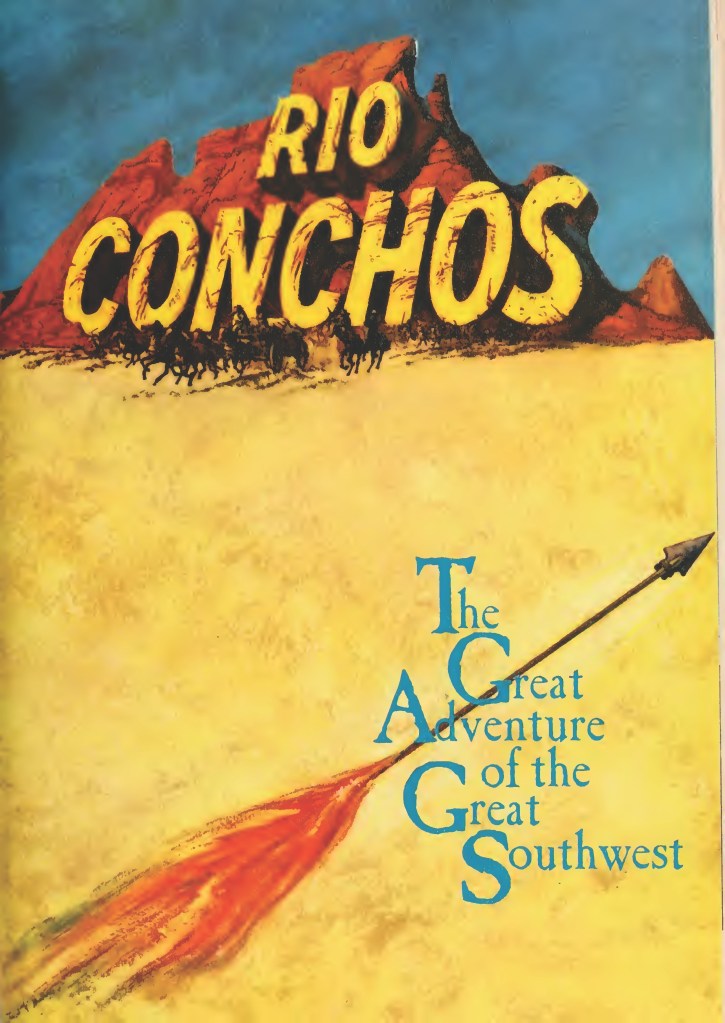
Starts and ends as a rootin’-tootin’ western but sags badly in between. The chance of turning it into The Magnificent Four or even The Dirty Pair go a-begging and it’s both revenge- and redemption-driven without either taking enough precedent. And there’s a curious dynamic in that the murderers are clearly smarter than the soldiers. Set in the aftermath of the Civil War, it’s engaging enough but too episodic and far short of a classic.
Lassiter (Richard Boone) kills Apaches with brutal efficiency in revenge for losing wife and child to them. But there’s no law against murdering Native Americans, not even when they form a harmless burial party, and when arrested by Captain Haven (Stuart Whitman) it’s for buying a stolen rifle, part of a consignment of 2,000 feared to be heading into the hands of the Apaches and a rogue Confederate Col Pardee (Edmond O’Brien), under whom Lassiter once served.
Charged with going undercover to get the weapons back is Haven, who lost the cargo in the first place, and another soldier Franklyn (Jim Brown), posing as gunpowder salesmen. Lassiter is freed from jail along with exceptionally vain murderer Rodriguez (Anthony Franciosca). From captured Apache Sally (Wende Wagner) they discover the Apaches are hooking up three days hence with Pardee in Rio Conchos in Mexico.
Mostly, it’s tension between the soldiers and their captives-turned-colleagues. There’s an incident with a dead baby at a house attacked by Apaches, Lassiter shooting the tortured mother. Lassiter attacks a saloon keeper for refusing to serve Franklyn. Pardee is building an army to re-start the war. There’s a brutal scene of the men being dragged behind horses. While Haven plans to use the gunpowder to blow up the Apaches and/or the rifles, Lassiter and Rodriguez nurture plans to steal the cargo.
Lassiter is pretty smart, twice outwitting the Apaches by using fire as a distracting device, easily getting the better of Haven and more than a match for the duplicitous Rodriguez. But there’s a powder keg waiting to explode in more ways than one, the chances of Lassiter toadying along to Apaches seeming remote.
Richard Boone (Night of the Following Day, 1969) coming off Have Gun –Will Travel (1957-9163) and The Richard Boone Show (1963-1964) is impressive as the wily renegade. Here’s one of those actors you never quite know what he’s going to do and that unpredictability adds continuous tension, but it would probably have helped if the audience was fully filled in on his intentions, rather than being surprised all the time. Given he was the star here, he was allotted time to be seen making up his mind in various situations, something he would be denied as a later supporting actor. So when there’s not really much going, he creates tension.
Stuart Whitman (Sands of the Kalahari, 1965) doesn’t really have enough to do what with Boone’s character always being one step ahead and clearly more attuned to danger. Anthony Franciosca (A Man Could Get Killed, 1966) has a gem of role, adding to his characterization withlittle bits of scene-stealing business, sharpening a knife on a wagon wheel, recovering a knife from the stomach of a victim being dragged away by a horse, snaffling a packet of cigarettes, and never ceasing to admire his attraction to women.
Jim Brown (The Split, 1968) makes a solid movie debut, offering more by his presence than in action terms since for the most part he is just the sidekick. Wende Wagner (Guns of the Magnificent Seven, 1969) has more screen time but mostly just smolders or looks sullen apart from a nice scene mourning the baby and another defying her tribe. Look out for Edmond O’Brien (The Man Who Shot Liberty Valance, 1962) and silent child actor Warner Anderson.
The action sequences are well done and director Gordon Douglas (Robin and the Seven Hoods, 1964) also deserves credit for allowing Boone such scope while the opening scene and the death of the unseen woman are exceptional. He has a great gift for the widescreen, but the movie could have done with more clarity. It’s not his fault the poster was misleading and led me into the picture with different expectations. The screenplay by Joseph Landon (Von Ryan’s Express, 1965) and Clair Huffaker (The War Wagon, 1967).was based on the latter’s book.




 The Magnificent 60s