Warning Shot (1967) ****

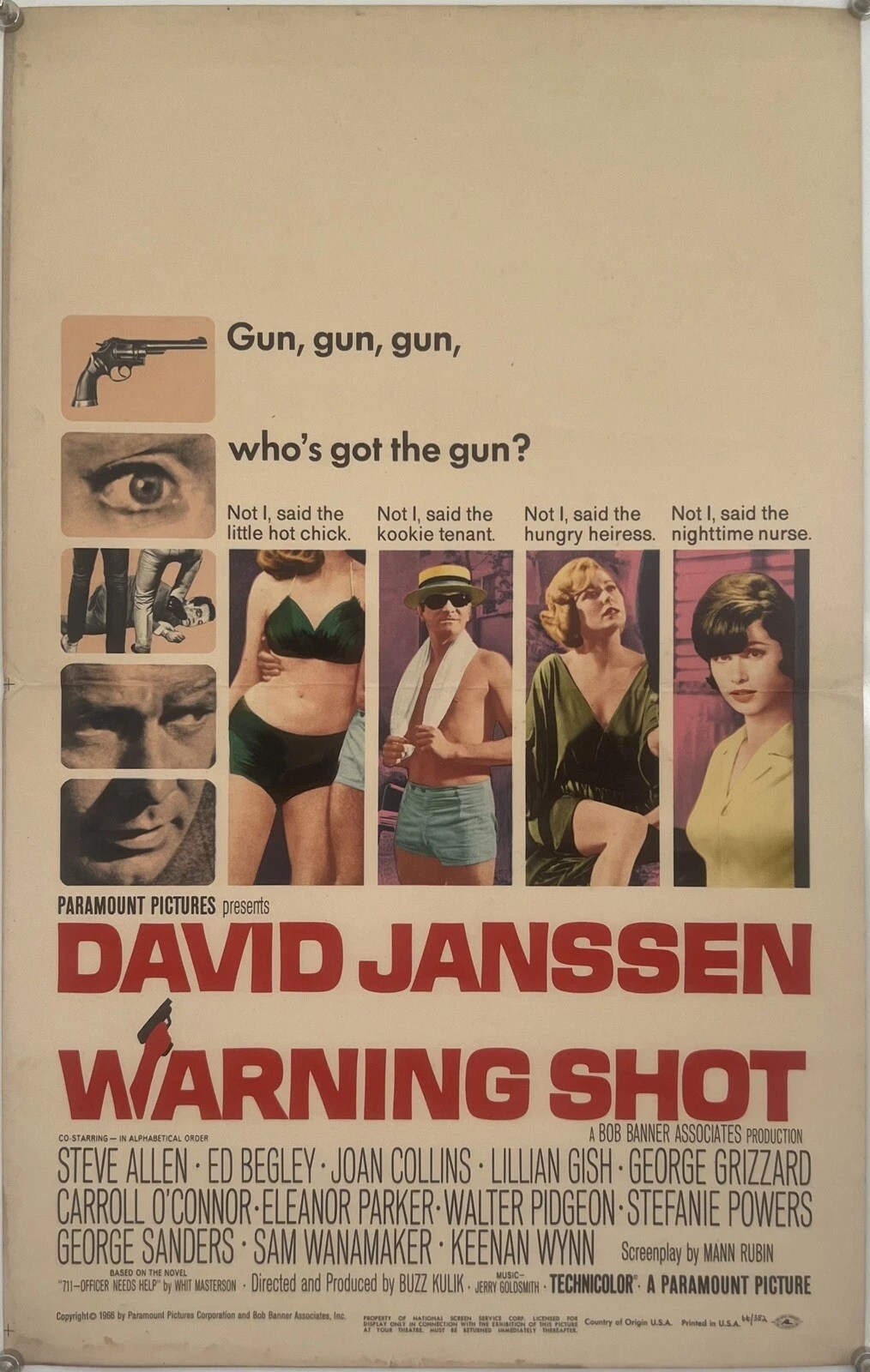
So underrated it doesn’t even feature on Wikipedia’s chart of 1960s crime pictures, this tight little gem, with an early reflection on police brutality, dream cast, violence in slow motion  (prior to The Wild Bunch, 1969, mind you)  and stunning score from Jerry Goldsmith is definitely in need of resurrection.  Astonishing to realize that cop pictures had fallen so out of fashion, that this was the first Hollywood cop film of the decade – outside of a drama like The Chase (1966) – the entire previous output focusing on gangsters with a rare private eye (Harper, 1966) thrown in. With none of the vicious snarl of Madigan (1968) or the brutality of Coogan’s Bluff (1968), this was more in keeping with the later In the Heat of the Night (1967) in terms of the mental and physical barrage endured by the cop.

In thick fog on a stakeout for a serial killer at an apartment block Sgt Tom Valens (David Janssen) kills a potential suspect, wealthy Dr Ruston. Valens claims the suspect was reaching for his gun. Only problem – nobody can find the gun. Up on a potential manslaughter charge, Valens is pressured by boss (Ed Begley), lawyer (Walter Pidgeon) and wife (Joan Collins) to take the rap and plead guilty.  The public and media rage about police brutality. Putting Valens’ testimony in doubt is a recent shooting incident, which left Valens with a stomach wound, and which may have clouded his judgement.

Although suspended, Valens has no alternative but to investigate, interviewing elderly patient Alice (Lillian Gish) whom the doctor was visiting, patient’s neighbour playboy pilot Walt (George Grizzard), doctor’s assistant Liz (Stefanie Powers), doctor’s wife   Doris (Eleanor Parker), doctor’s stockbroker (George Sanders) with nothing to show for his efforts but a savage beating, filmed in slow motion, inflicted by the doctor’s son and pals, and an attempt on his life. He gets into further trouble for attempting to smear the doctor as an abortionist (a crime at the time).

The missing gun remains elusive though the direction at times suggests its existence is fiction. The detection is superb, red herrings aplenty, as Valens, the odds against him cheating conviction lengthening by the day, a trial deadline to beat, everyone turning against him, openly castigated as the killer cop, struggles to uncover the truth. And it’s clear he questions reality himself. He has none of the brittle snap of the standard cop and it’s almost as if he expects to be found guilty, that he has stepped over the line.

Along the way is some brilliant dialogue – the seductive drunk wife, “mourning with martinis” suggesting they “rub two losers together” and complaining she has to “lead him by the hand like every other man.”  Cinematography and music combine for a brilliant mournful scene of worn-down cop struggling home with a couple of pints of milk. The after-effects of the stomach injury present him as physically wounded, neither the tough physical specimen of later cop pictures nor the grizzled veteran of previous ones.

David Janssen (King of the Roaring 20s, 1960) had not made a picture in four years, his time consumed by the ultra-successful television show The Fugitive, but his quiet, brooding, internalized style and soft spoken manner is ideal for the tormented cop. This is also Joan Collins (Esther and the King, 1960) first Hollywood outing in half a decade.

Pick of the supporting cast is former Hollywood top star Eleanor Parker (Detective Story, 1951) more recently exposed to the wider public as the Baroness in The Sound of Music (1965) whose slinky demeanor almost turns the cop’s head. The cast is loaded with simialr sterling actors.

In the veteran department are aforementioned famed silent star Lillian Gish (The Birth of a Nation, 1915), veteran Brit  George Sanders (The Falcon series in the 1940s), Walter Pidgeon (Mrs Miniver, 1942) also in his first film in four years,  Ed Begley in only his second picture since Sweet Bird of Youth (1962) and Keenan Wynn (Stagecoach, 1966). Noted up-and-coming players include Stefanie Powers (also Stagecoach), Sam Wanamaker (The Spy Who Came in from the Cold, 1965), George Grizzard (Advise and Consent, 1962) and  Carroll O’Connor (A Fever in the Blood, 1961). American television star Steve Allen (College Confidential, 1960) plays a hypocritical pundit.

A sophomore movie for noted television director Buzz Kulik (Villa Rides, 1968), this is easily his best picture, concentrating on character with a great eye for mood. Screenwriter Mann Rubin (Brainstorm, 1965) adapted the Whit Masterson novel 711  – Officer Needs Help. The score is one of the best from Jerry Goldsmith (Seconds, 1966).

Has this emanated from France it would have been covered in critical glory, from the overall unfussy direction, from the presentation of the main character and so many memorable performances and from, to bring it up once again, the awesome music.
Doctors Wives (1971) ***

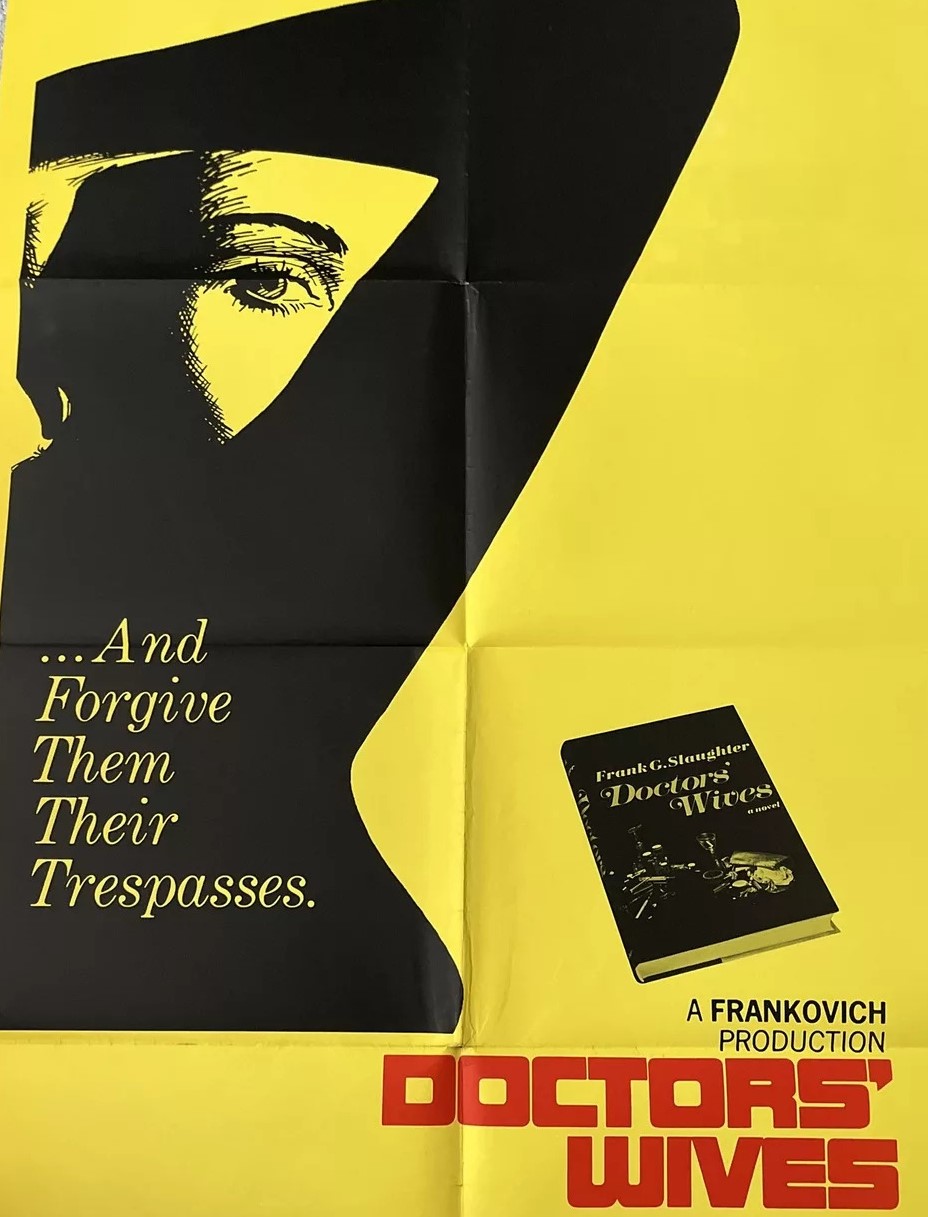
Five-star so-bad-it’s-good. Every now and then, especially approaching the annual touting of earnest films for Oscar consideration, we need reminded of just how good Hollywood is at producing hugely enjoyable baloney. Excepting the proliferation of recent MCU disasters, cinematic train wrecks don’t come along nearly often enough. Such botched jobs are always better if they are stuffed full of the worthy – Oscar recipients or nominees. Gene Hackman, Dyan Cannon, Rachel Roberts, Ralph Bellamy and screenwriter Daniel Taradash fulfil that requirement here.

A cross between Sex and the City and ER, with a third act that takes off like a rabbit desperately seizing on any convenient narrative hole. And a first act that pulls the old Psycho number of killing off the star before the picture really gets going. That old murder MacGuffin works every time.

“I’m horny” is about the third line in the movie, announced by sex-mad Lorrie (Dyan Cannon) to a tableful of over-refreshed doctors wives playing sedate poker in a country club at one table while at another table where you would expect the doctor husbands to be telling dirty jokes and whispering inuendoes they are boring each other with shop talk.

Unable to get the others to engage in revealing snippets about their sex lives, Lorrie rounds off the evening by informing the ladies that she plans to have sex with all their husbands to tell them where they are all going wrong, meanwhile gaily proclaiming she’s halfway there already. Which, of course, sets off a round of suspicion and accusations from wives to husbands.

Just to keep you straight on the who’s who: Lorrie is married to Dr Mort Dellman (John Colicos), Dr Peter Brennan (Richard Crenna) to Amy (Janice Rule), Dr Dave Randolph (Gene Hackman) to Della (Rachel Roberts), and Dr Paul McGill (George Gaymes) to Elaine (Marian McCargo) while Dr Joe Gray (Carroll O’Connor) and his ex- Maggie (Cara Williams) still hang around with the group.

As you might expect, every marriage is already in trouble, except, apparently, Lorrie’s because her husband, equally sex-mad Mort, appears to indulge his wife’s whims. Except, he’s not so easy-going, given he puts a bullet in her back when he discovers her making love to one of his colleagues.

Exactly which one remains a mystery for just long enough for the wives to rack up the suspicion level, and all the audience has to go on is the naked arm waving limply trapped under the naked dead weight of the corpse.

You might think, what with Dyan Cannon’s name being top-billed and she quite the rising star after an Oscar nomination for Bob & Carol & Ted & Alice (1969), that we’re going to flip into a series of flashbacks to accord her more screen time. But, no, all we get is that opening risqué scene and her naked corpse.

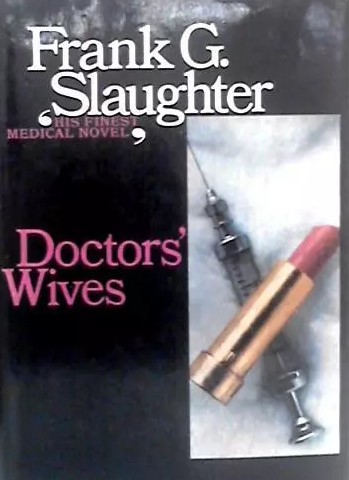
Before ER’s creator Michael Crichton came calling a couple of decades later, the surgical profession was mostly represented in formulaic soap opera of the Dr Kildare small screen or The Interns (1962) big screen variety. But author Frank G. Slaughter, himself a practising physician,  had made his name with a series of bestsellers that went into the intricacies of surgery and involved genuine medical jargon. So, before the identity of the illicit lover can be revealed, his life has got to be saved – after all he’s got a bullet in his heart. Cue even bloodier surgical shenanigans than kept fans of Mash (1970) hooked.  

By the time we discover the victim was Dr McGill any chance of his wife stomping around in a huff at his infidelity is already off the menu because she’s been dallying with an intern.

I won’t go into all the all-round marital strife – triggered by alcoholism, drug addiction, infertility, ambition – that allows Oscar winners and nominees to try and act their way out of trouble because this picture has another absolute zinger to throw at you.

The murderer blackmails all four doctor pals for having a fling with his wife. To that cool $100,000 he adds quarter of a million from Lorrie’s wealthy dad Jake (Ralph Bellamy) for agreeing to make no claim on his wife’s estate. You kind of wonder what the heck use is all this dosh going to be in the slammer or Death Row. But that’s before you consider the zinger.

Mort’s a specialist and there happens to be a young patient desperate for his surgical skills. Young lad is son to head operating nurse Helen (Diana Sands) who is having an affair with Dr Brennan. So, a deal is done – you can’t wait for this humdinger, can you – wherein the D.A. is agreeable to release Mort from custody so he can perform this emergency operation while Dr Brennan and Jake – wait for it – agree to help him escape abroad.

As everyone knows you can’t tell one masked surgeon from another, so the first part of the plans works and while the cops keep a close eye on the fake Mort as he emerges from the operating theater the real Mort escapes in a parked car with the keys in the ignition. Except Jake isn’t quite a dumb or gullible as Dr Brennan and removes the keys so the killer can’t escape. Which was a shame because this picture could have gone on for another bonkers 20 minutes or so watching Mort outwit the cops.

As it is, there’s more than enough to fill in the time. Amy, something of a clothes horse with an extraordinary array of clothes and especially hats, goes all slinky in what looks like day-glo leggings to perform a bizarre seduction on her husband. Which elicits the movie’s best line, Nurse Helen complaining, “I don’t appreciate you sleeping with your wife.”

Unbeknownst to her, Lorrie has a female disciple who seduces every male in sight for research purposes, tape-recording every moment of the activity, so her victims are pretty much always in the coitus interruptus position.

And I can’t let you go without mentioning that Lorrie was also bisexual and counted among her conquests Della.

Except for the unlikely success of The French Connection later in the year which offered a different route in top-billing, Gene Hackman, had he continued taking on roles like this,  might have ended up a perennial third potato. Bear in mind he already had two best supporting actor nominations in the bank when, third-billed, he took this on. Maybe he never read the whole script. Maybe this was the best offer going.

He’s not even the best thing in it. Too earnest for a start. Husband-and-wife murderer-victim tag team John Colicos (Anne of the Thousand Days, 1969) and Dyan Cannon take the honors. Directed by George Schaefer (Pendulum, 1969) and scripted by Daniel Taradash (Castle Keep, 1969). .

An absolute hoot.

Lonely Are the Brave (1962) ***

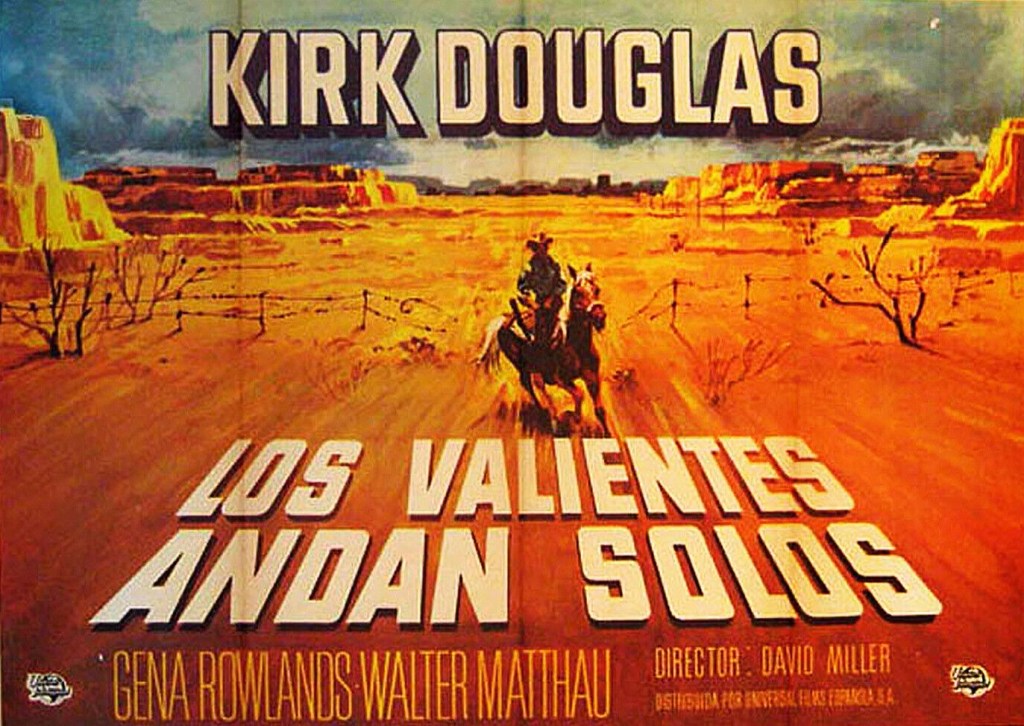
Wannabe blood brother to The Misfits (1961) but more like a distant cousin, cowboy out-of-time yarn too pre-emptive for its own good.  Freedom-loving, don’t-fence-me-in Jack Burns (Kirk Douglas) falls foul of the law by escaping prison and is pursued into the hills by competent and sympathetic Sheriff Morey Johnson (Walter Matthau) who is saddled with an incompetent law enforcement team out of their depth up against a true man of the west. You can see the end coming a mile off, a truck that interrupts the narrative for no particular reason.

The only problem for me are certain inconsistencies.  A man who refused to be tamed tames a wild horse, his freedom coming at the expense of a captive animal, hobbled overnight to prevent escape. And instead of leading a frightened beast across a busy highway rides him in clear danger.

And I don’t get this voluntary incarceration malarkey, highly principled though it appears, breaking into jail in order to break out a friend Paul (Michael Kane) who just wants to serve out his relatively short sentence instead of being faced with a longer one as an escapee.

Jack won a Purple Heart in Korea but although he was 22 when World War Two broke out there’s no mention of that war record. And it seems a bit of an unlikely cliché that you can still break out of prison in the 1960s with just small hacksaw.

David (Hammerhead, 1968) Miller’s film tries too hard to make a very obvious point, forgetting that it was cowboys like Jack who turned the West into the antithesis of freedom. There are some unexpected touches. Jack, wanting to start a brawl as a means of being arrested, finds himself with a tougher customer than he envisaged, a World War Two veteran who doesn’t take prisoners. There’s a nod towards immigrants swarming into America. Paul, knowing he has crossed a line in the contemporary world, just wants to pay his debt and move on, rather than trying to disappear into a fantasy life. Cops, with all the modern accoutrements, find themselves undone by a man with old world skills.

R.F.D. stands for Rank Film Distributors, patting itself on the head for getting
the picture off to a good start in the London West End.

Once the movie heads into the hills, which is what all this lengthy preamble is for, it becomes more interesting, if only because in what is intended to be a game of cat-and-mouse, the cop cats are revealed as the mice.

But Kirk Douglas, having lit a fire for freedom in Spartacus (1961), seems more intent on going down a similar route than creating a proper character. And, as usual, given he is top-billed, reveals acting insecurity, or arrogance, trying to steal every scene, tipping back his hat just one of his many bits of business to ensure the audience eye follows him.  

On the plus side is some notable playing by Walter Matthau (Mirage, 1965), encumbered with a bunch of lazy cops who spend more time eating and sleeping than doing their job and easily outgunned in the wilderness by a cowboy for whom it spells home.  Gena Rowlands (Machine Gun McCain, 1969) is impressive as Paul’s worn-down wife with a soft spot for Jack though she finds it hard to stand by a dumb man. George Kennedy (Cool Hand Luke, 1967) makes a mean sadistic cop. And there’s an early role for Carroll O’Connor (The Devil’s Brigade, 1968). If you’re talent-spotting Bill Bixby (television’s The Incredible Hulk, 1977-1982) is a helicopter pilot.

Kirk Douglas and business partner Edward Lewis were the producers and hired the former blacklisted Dalton Trumbo (Spartacus) to script Edward Abbey’s novel Brave Cowboy.

I thought the title was a bit of misnomer: Lonely Are the Foolhardy might be more accurate.

Discover WordPress

A daily selection of the best content published on WordPress, collected for you by humans who love to read.

The Atavist Magazine

by Brian Hannan

WordPress.com News

The latest news on WordPress.com and the WordPress community.