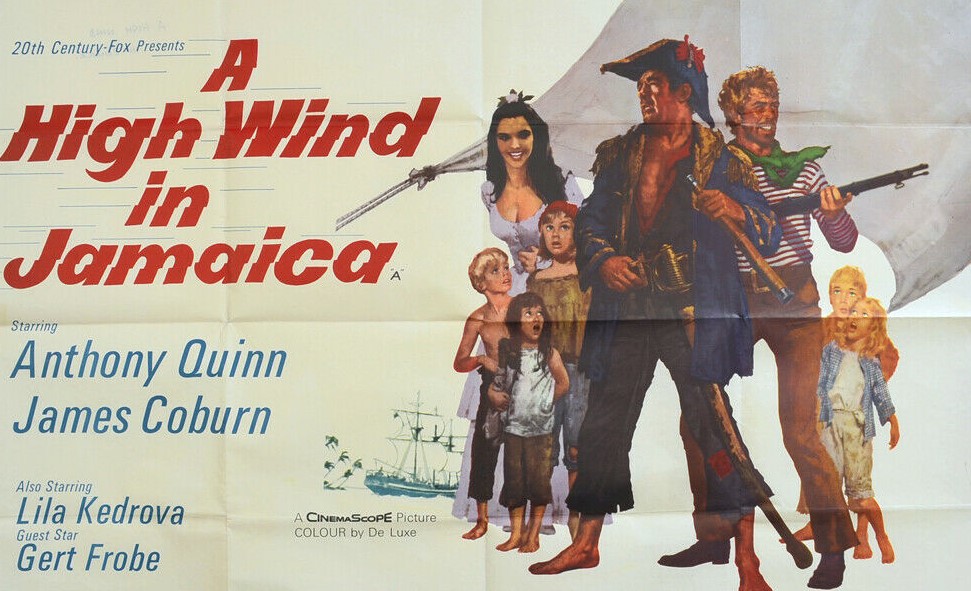
A High Wind in Jamaica (1965) ***

Forget swashbuckling shenanigans in the Captain Blood (1935) and Pirates of the Caribbean (2003) vein, this has more in keeping with Lord of the Flies (1963) as a bunch of third-rate pirates get more than they bargained for after kidnapping a bunch of English children.

The pirates are clever enough when required, using the ruse of pretending to be a ship in distress to defeat an enemy, capable of torturing a captured captain into revealing concealed treasure, or hiding from pursuit by disguising the masts with palm leaves, but generally short on intelligence. That the kidnapping is unintentional, no sensible pirate wanting the British Navy breathing down its neck, gives an indication of the mentality of Captain Chavez (Anthony Quinn) and his mate Zac (James Coburn). Nor are the children Disney-cute and far from being petrified they see it as a great adventure while the crew are superstitious about having the youngsters aboard.
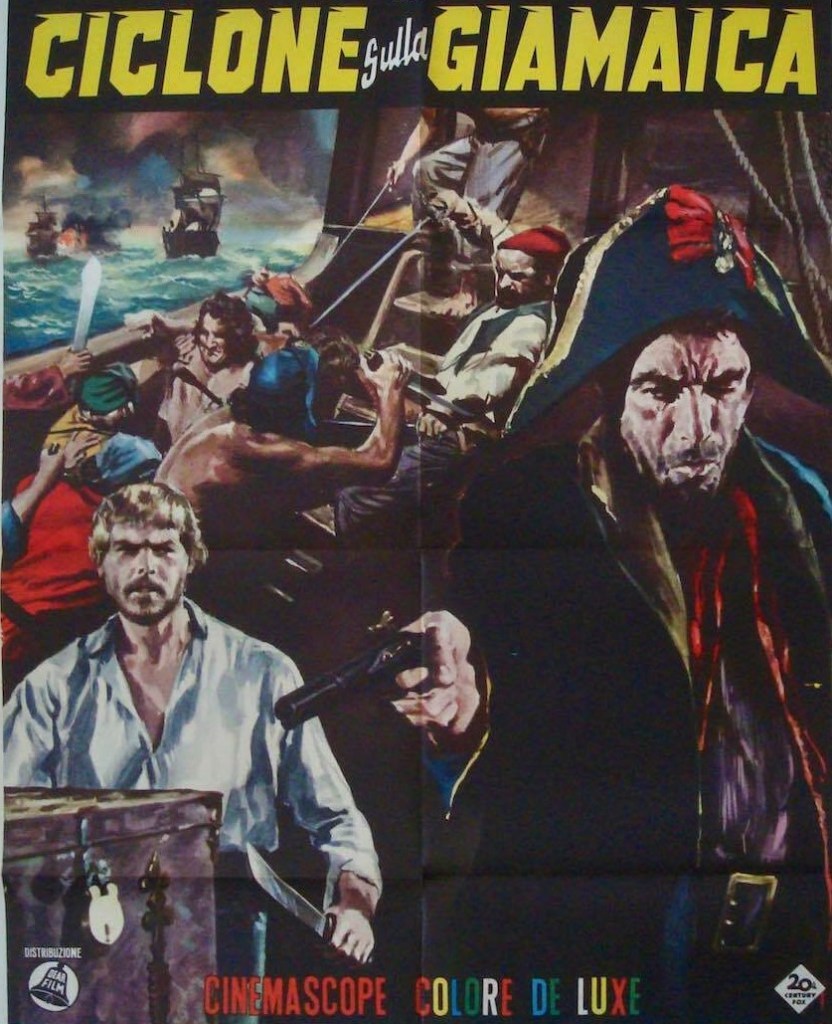
The kids have great fun running rings round the pirates, stealing Chavez’s hat, climbing the rigging, and ringing the bell, while turning round the ship’s figurehead provokes another bout of superstition. When the kids are eventually imprisoned in a rowboat to prevent upsetting the crew they still manage to do so by playing a game that the crew take too seriously.

An attempt to abandon the children on the island of Tampico fails when the oldest boy John (Martin Amis) dies by accident. The children are unperturbed by his death, the only question raised is who can have his blanket. Much to his surprise Chavez discovers he has a strong paternal side, protective when he discovers that one of his captives is a young woman rather than a child, and going against the wishes of his crew when he tends to a knife wound on Emily (Deborah Baxter).

The children are far more grown-up and matter-of-fact than the childish crew, consumed by superstition, and Chavez, consumed by emotion. Although there is considerable comedy to be had from the children’s endeavors, it’s largely an adult film about children. In general, they don’t react the way they would in a Disney picture, nor in the manner which many adults would expect. The sexual tension of the book is considerably underplayed. But the fact that the adults are brought into harm’s way by sheer folly, and their reactions to life are essentially childish, creates a contrast with the more savage attitudes of the children. Emily essentially exposes Chavez’s guilty conscience.
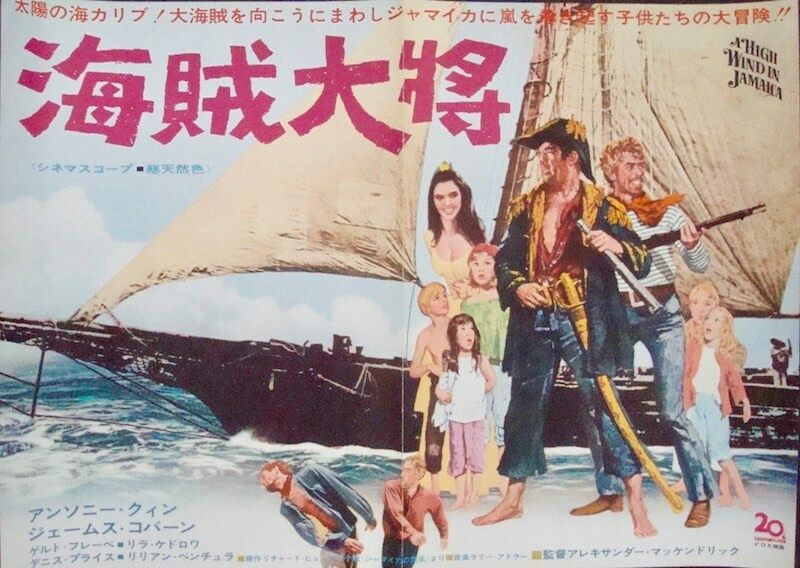
While there is ambivalence aplenty, the depths the book explored go unexplored here, much to the benefit of the picture. The movie dances a tightrope as the children who would otherwise expect to trust an adult grow to learn how to distrust, a rather sharper lesson in growing up than they might have anticipated from their middle-class innocent lives.

Alexander Mackendrick (The Ladykillers, 1955) excels in ensuring the tightrope remains in place while taking advantage of the opportunity for comedy, the realization that this adventure is far from fun only becoming gradually apparent.

Anthony Quinn (Shoes of the Fisherman, 1968) reins in his tendency to ham things up, and his development from unbridled pirate to responsible adult is an interesting one. James Coburn (Dead Heat on a Merry-Go-Round, 1966) reins in the flashing teeth and reveals a more ruthless side than his captain anticipated. Deborah Baxter (The Wind and the Lion, 1975) is easily the pick of the kids although future novelist Martin Amis with his trademark sneer gives her a run for her money.

Lila Kedrova (Torn Curtain, 1966) appears as a brothel madam, Nigel Davenport  (Sebastian, 1968) as the father and Gert Frobe (Goldfinger, 1964) as the captured captain. The cast also includes Dennis Price (Tamahine, 1963) and Vivienne Ventura (Battle Beneath the Earth, 1967).

Stanley Mann (Woman of Straw, 1964), Ronald Harwood (The Dresser, 1983) and Denis Cannan (Woman of Straw) wrote the screenplay based on the celebrated Richard Hughes novel.

The Truth about Spring (1965) ***

Although a truly innocent movie about young love, wrapped up in a sunken treasure scenario, the marketeers then and now could not resist trying to inject elements of sexuality, the poster for the original movie highlighting what would be Hayley Mills’ second screen kiss (following a smacker from Peter McEnery in The Moon-Spinners the year before), the poster for the DVD sticking the star in a bikini that she does not wear in the film.

The film was based on the 1921 novel Satan: A Romance of the Bahamas (filmed as Satan’s Sister in 1925 with Betty Balfour) by Henry de Vere Stacpoole, who had previously dallied with young love in The Blue Lagoon.  Despite the title, there was a complete absence of the demonic. In the book, she is sailing with her brother. That character was eliminated in favour of a father.

The 1960s teen movie that could as easily morph into angst (Splendor in the Grass, 1961), blackmail (Kitten with a Whip, 1964) or madness (Lilith, 1964) was generally more at home with innocence. The beach party movies and series like Gidget rarely involved more than a stolen kiss, the characters all clearly virgins, and certainly did not go down the brazen sexuality route that would mark the second half of the decade.

Hayley Mills is on charming form as tomboy Spring Tyler (hence the title) sailing the Caribbean as mate to her conman father Tommy (played by her real-life father John Mills). Their idyllic life is heading for the rocks since the father didn’t “figure on the little girl growing up.” With one eye on providing a suitor for his daughter, the skipper takes on board a Harvard Law School graduate William (James MacArthur) ostensibly to give him experience of fishing.

True love takes its time since the girl has no intention of growing up and prefers a life of independence. Initially, they are sparring partners – she mocks the fact that he wears pyjamas. But once the story kicks off, they find they have more in common.

The sunken treasure element, while slim, is enlivened by some over-the-top acting by Jose (Lionel Jeffries) and Judd (Harry Andrews). The three leads are actually quite good, John Mills (Tunes of Glory, 1960) totally convincing as a effectively a spiv on the high seas with Hayley Mills (The Family Way, 1966) as the independent woman (“I’m me so don’t expect anything else”) and the confident sailor becoming entangled in unexpected emotions.

Surprisingly, James MacArthur, also a graduate from the Disney acting school, though a decade older than Hayley Mills, shows unexpected subtlety, and this would be a springboard to more demanding roles in cold war thriller The Bedford Incident (1965) and WW2 epic Battle of the Bulge (1965). Cocky and rich, he is quickly brought down earth when she proves a faster swimmer and plays tricks on him. But he soon proves his worth.

Director Richard Thorpe’s career was winding down after four decades in the business and this was a far cry from MGM spectaculars Ivanhoe (1952) and Knights of the Round Table (1953) and even Jailhouse Rock (1957) but he keeps a tight rein on the narrative, makes good use of the scenery (Spain doubling for the Caribbean) and walks the delicate line of allowing the adolescents to explore their feelings with tipping over into anything more overt.

He was a better director than the material deserved, but then so was writer James Lee Barrett who the same year would receive screen credit for The Greatest Story Ever Told and western Shenandoah. However, their involvement made it an accomplished little picture and gave audiences a taste of what Hayley Mills could do in a film that did not tether her to child star mode.

The New York Times second-string reviewer Howard Thompson, in tagging the star “this delectable miss, now all of 18” opined (review, June 17, 1965) that the “two young people are the most winning advertisement for young love in a long time.”

https://amzn.to/3SKJ4Q2

Discover WordPress

A daily selection of the best content published on WordPress, collected for you by humans who love to read.

The Atavist Magazine

by Brian Hannan

WordPress.com News

The latest news on WordPress.com and the WordPress community.