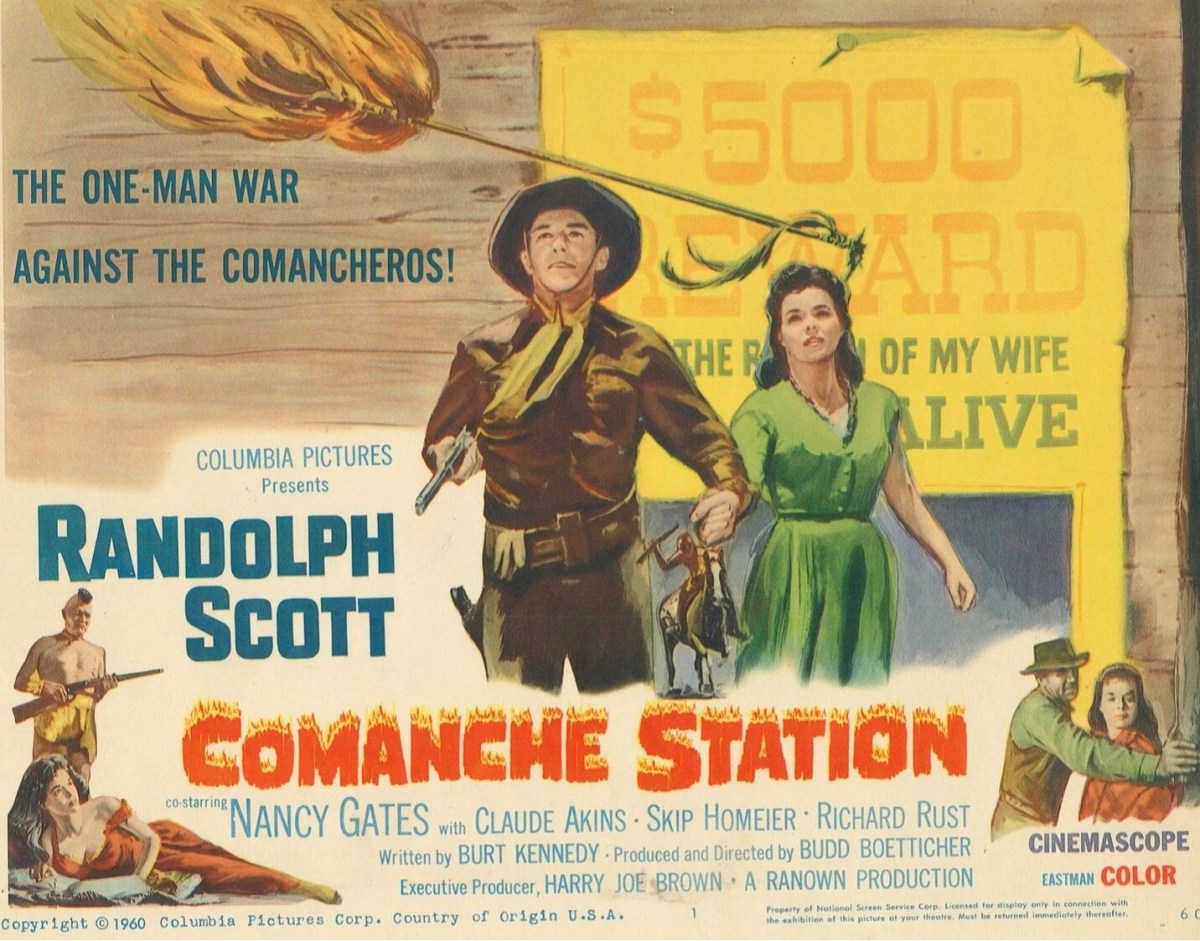
The Canadians (1961) ***

You ever wondered what happened to the Native Americans after they wiped out Custer at the Battle of the Little Big Horn. Well, they scarpered north to Canada, which flew the British flag, being part of the very powerful British Commonwealth, and where they were, effectively, out of reach of any pursuing forces. Any legitimate forces, that is. Nothing to stop an irate Yank rancher crossing the border to claim back a herd of horses he reckons the Sioux stole during their escape.

Otherwise, the Sioux would be relatively safe. But that safety was conditional. The might of Canada would not bear down on them as long as they didn’t resort to violence against that country’s citizens, as long as a rifle wasn’t shot in anger or a cartridge found beside the body of a white man.

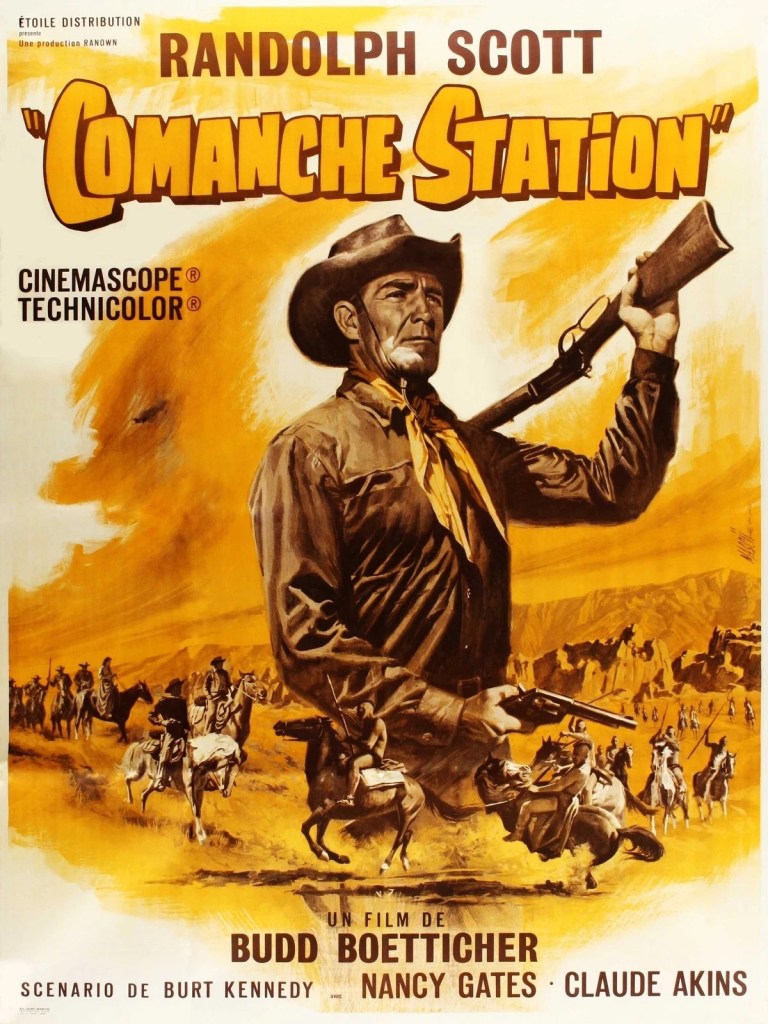
Sure is a misleading poster, suggesting some kind of full-scale cavalry attack, when the grand total of Canadians involved is three.

So that was quandary number one. Quandary number two was that the unit set on enforcing this rule was the Royal Canadian Mounted Police. And though part of the uniform was a splendid leather holster, it was empty. They didn’t carry guns. They didn’t need to, as is sanctimoniously explained, because using weapons in law enforcement only caused more killing and, in fact, it was reckoned, there would be a lot less American outlaws if they had not been brought up in a society that worshipped guns.

And that lack of weaponry creates another predicament for the RCMP because rancher Boone (John Dehner) is going on the principle that killing a Native American is not a crime in his homeland and raids the Sioux camp, shooting people, including a two-year-old child, and kidnapping the child’s mother, an unnamed white squaw (Teresa Stratas). The kidnapping will justify any action he takes. Because if she’s been stolen from America, then it’s not a kidnap but a rescue, and that justifies any violence.

But RCMP leader Gannon (Robert Ryan), inevitably, in the only cliché in the picture, about to retire, reckons that’s up to a judge to decide. So with his two colleagues, the experienced McGregor (Torin Thatcher) and a rookie Springer (Burt Metcalfe) he’s intent on bringing them in. He’s helped in this enterprise by the Sioux acting as distant bodyguard.

Though naturally it’s only a matter of time before the Americans try to escape, especially as it soon transpires that Boone is lying when he says he knows the woman and has come north expressly to bring her back.

And this would be quite a curiosity, given the only real tension is how the RCMP can hold onto their captives for the week it takes to reach a town, and whether the Native Americans might reckon justice won’t be served and hand it out their own way.

You might remember the audience shock when Henry Fonda gunned down a young boy in Once Upon a Time in the West (1969), those baby blues turned steely. Well, that brutality has its unexpected precedent here, although, except for the mourning mother, not so much is made of it.

With the Canadians outnumbered – there’s three other Americans, all of the outlaw persuasion, Greer (Jack Creley), Ben (Scott Peters) and Billy (Richard Alden) – and unable to use weapons, you’re thinking how in heck is this going to last the pace. But, in fact, though presented as some kind of western, it’s a character-driven piece.

Gannon is an unlikely singleton, but he’s got too high hopes for a lawman and never found a  woman he wanted to settle down with, and he’s got that principled look about him so he’s probably not one for one-night stands or creeping around brothels. The squaw’s child wasn’t the result of rape. Although initially trying to escape captivity, she fell in love with a Native American because he looked at her in a way no white man had, since she was so physically unprepossessing, and a bit like Lin in The Green Berets (1968) knows that she is likely to be ostracized by her own people if she returns to her home town.

You have to feel sorry for Boone, too. He’s not some kind of entitled whelp who inherited land and wealth. He saved up his hard-earned cash working as a ranch hand and bought one horse, then its mate, then started breeding, building up his herd the slow way, and he can’t afford to lose upwards of forty horses.

But the one you would extend most sympathy for is Greer. Being a legal outlaw – employed for gunslinging skills on a legitimate enterprise – is not his long-term goal. He repeatedly asks Boone for a job back at the ranch when this task is complete, only to be turned down with utter contempt. And he has a code. He won’t kill an unarmed man. Boone will, and an unarmed female to boot. Ben has no such code and reckons any woman is ripe for the taking and attempts to rape the squaw.

So the tension is mostly wondering how this is going to end, with the Canadians outnumbered and only able to call on their fists as weapons, and you soon work out there’s not enough time left in the picture to get to that destination and go through all the malarkey of a trial, or for the lonely Gannon to strike up a romance with the woman.

The Sioux come to the rescue once the Yanks have escaped and killed the woman. And it’s a peach of a solution. Remember, they can’t fire a shot. So they don’t. They get a herd of wild horses, for all we know the ones Boone is looking for, to do the dirty work. They stampede the horses and drive the bad guys over a cliff.

Very interesting debut for writer-director Burt Kennedy (The Rounders, 1965). Rare starring role for Robert Ryan (Ice Palace, 1960) who makes the most of it. Teresa Stratas was an opera singer so gets to sing.  Otherwise, Jack Creley, who had a long-running role in the Marvel television series in the 1960s, is the pick.

Much better than I expected.

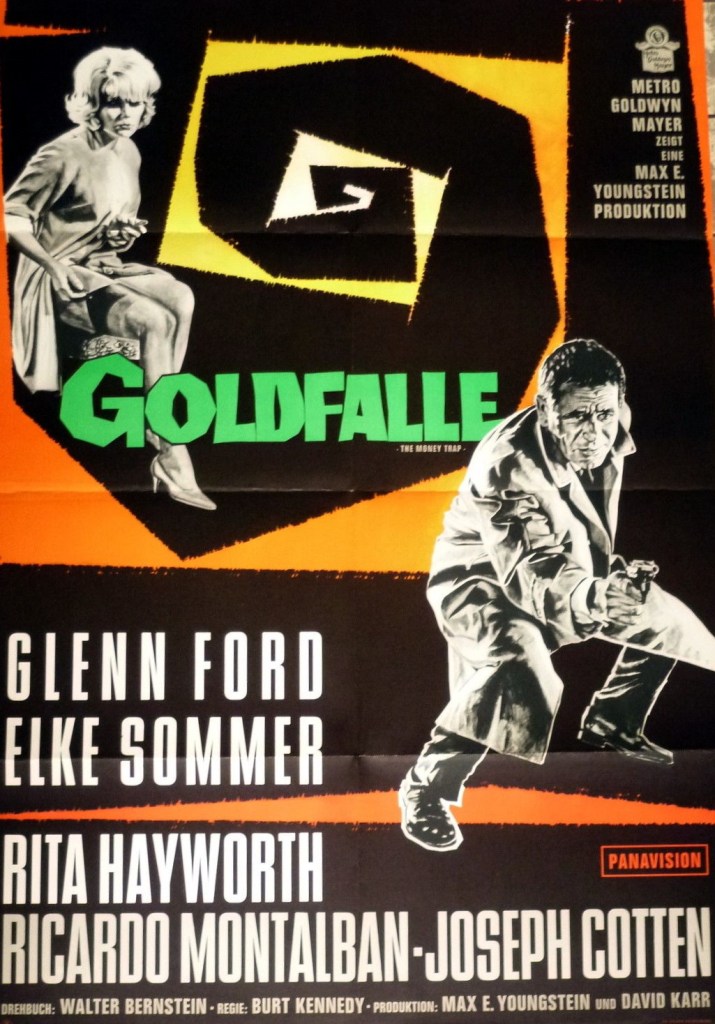
The Money Trap (1965) ****

Film noir morality play. Highly under-rated, especially unfair since all four principals put in excellent performances, plus a nifty screenplay, and generally erratic director Burt Kennedy on very solid cinematic ground, even if he has a predilection for showing legs, and not just of the female variety.

Film noir is at its best when the plot is simple, usually good guy inveigled into taking a wrong turn through avarice, revenge or a femme fatale. This takes an unusual route. Idealistic cop Joe (Glenn Ford) worries beautiful wealthy spendthrift wife Lisa (Elke Sommer) will abandon him for a richer guy since her allowance has dried up.

Assuming she is already making her play, Joe has a one-night stand with old flame Rosalie (Rita Hayworth), a lush married to a murdered burglar. His partner Pete (Ricardo Montalban), envious of his buddy’s wealth, blackmails him into robbing the safe of Mafia doctor Van Tilden (Joseph Cotten) who, in self-defence, killed the burglar. Meanwhile, as contrast,  the pair are investigating the murder of a sex worker trying to earn extra money to shore up her husband’s miserable income.  

While it’s got all the requisite of film noir, atmospheric use of light given it’s shot in black-and-white, that unusual footage of legs, and feet, especially when Rosalie is followed by Tilden’s thug Matthews (Tom Reese), cunning villain, the unexpected twist, neither of the femmes it transpires is much of a fatale, greater backbone than you might expect.

But mostly, it focuses on decision and consequence. Will Joe accept he could lose his wife, will Lisa make the jump into a lower standard of living in order to hold onto her husband, or will Joe distrust that his wife can change and find a way to bring the loot he thinks will keep her satisfied? Lack of trust all round proves their undoing.

There’s the usual, silent, heist, though quite where Joe and Pete acquired their safecracking skills is never discussed. It is the perfect robbery, a dodgy doctor unlikely to call in the cops, especially as they might get suspicious as to just why he is such a common burglary target. Except it’s not. For what’s in the safe is too hot for any cop and Van Tilden, more streetwise than the police, is always one step ahead. Instead of it being the greedy Lisa who could ruin their otherwise stable and loving marriage, it’s Joe.

There are a handful of clever twists, not least that Joe’s dalliance with Rosalie signs her death warrant, but I won’t give those away. It’s too tightly told to spoil it. That’s part of the beauty here, it’s a neat 90 minutes, short and to the point, temptation and consequence.

If ever there was an actor under-rated during this decade it’s Glenn Ford (Rage, 1966). He was hardly ever cast in a big-budget picture except as part of an “all-star cast”, and mostly, given the extravagances elsewhere, in A-pictures whose budgets in reality turned them into B-pictures, and he ended the decade in a rut of westerns, all as under-rated as him. But he brought a tremendous intensity to every role, equally believable as romantic hero and potential heel, and in action, as here, he moves with lethal speed. He had a unusual gift as an actor – you always knew he was thinking. And was very likely to be saying one thing and thinking or meaning another.

Here he acts his socks off. You wonder just what has he got to live in such a fancy house with a rich gorgeous damsel and it doesn’t take long to find out his attraction to him, that right stuff that would rarely come an heiress’s way, more likely to trundle her way through endless marriages and affairs seeking a stability that wealth does not bring.

Elke Sommer (They Came To Rob Las Vegas, 1968) is a revelation, mostly because the script builds her a proper character, loving wife temporarily distracted by potential loss of wealth, but knowing enough about her husband to recognise she’s be better off with him than without him.

Rita Hayworth (The Happy Thieves, 1961) makes the most of her last meaningful role, not lit to shimmering glory by a black-and-white camera, but while shown at her blowsy physical worst redeemed by mental strength. Ricardo Montalban (Cheyenne Autumn, 1964) , usually relegated to a supporting role, provides not only the narrative impetus, but his character twists and turns throughout. Joseph Cotten (Petulia, 1968) has cold blood running through his veins.

This is early-promise Burt Kennedy (Dirty Dingus Magee, 1970) and with a tight script by Walter Bernstein (Fail Safe, 1964) delivers a surprisingly effective very late period film noir.

Terrific acting, by twisty plot held in check by realistic consequence.

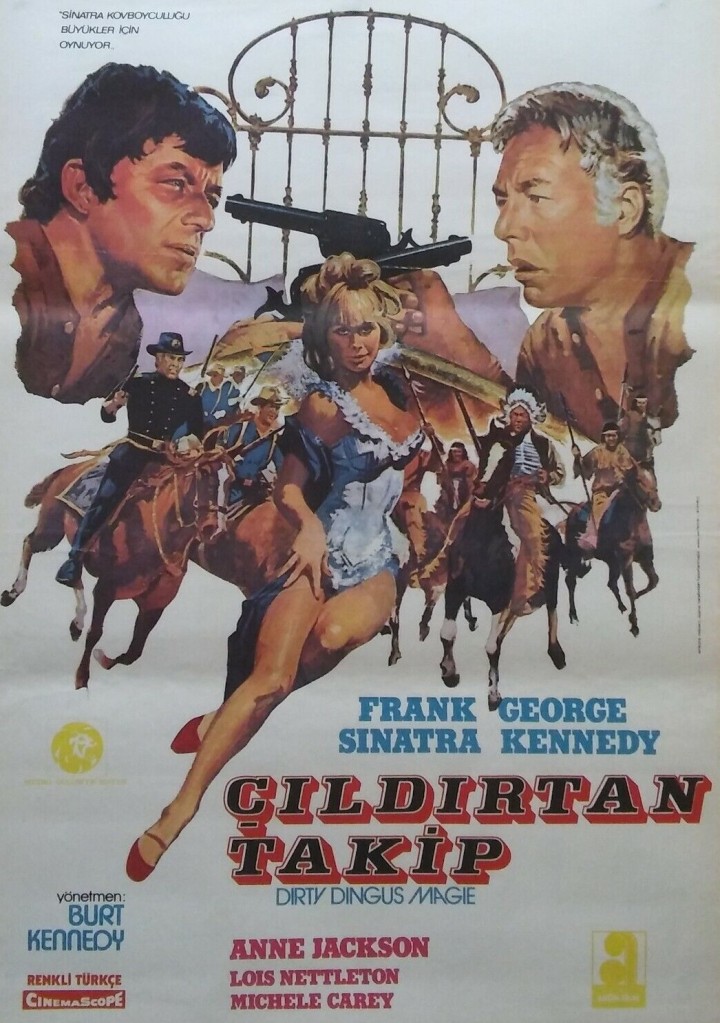
Dirty Dingus Magee (1970) ***

The boldest role ever undertaken by a major star of Frank Sinatra’s generation – and little thanks he got for it. Not only was he virtually unrecognisable under a slab of make-up that George Hamilton would have envied but the role was a complete reversal of his screen persona. Admittedly, he had flipped that persona for Tony Rome (1967) and as the cuckolded cop in The Detective (1968), but this was on a completely different level.

Sinatra was no Tom Hanks or Daniel Day-Lewis, known for inhabiting different types of characters, and, while he did have a vulnerability that he put to good use in The Manchurian Candidate (1962) and The Man with the Golden Arm (1955), he was best known on screen as the guy in charge.

That was far from the case here. Dumb and dumber might be more apposite. Dingus Magee (Frank Sinatra) is a scamp, an outlaw so useless he is worth only $10 in reward money, who steals the stash of old rival Hoke Birdsill (George Kennedy), triggering a revenge caper that is complicated by a host of unnecessary complications by director Burt Kennedy (Welcome to Hard Times, 1967) who has set his heart on some kind of satirical comedy western with a revisionist slant.

So we get a female mayor, Belle (Anne Jackson), who happens to own the local brothel, whose commercial prospects are endangered when the local Cavalry are called away to fight the Native Americans, an Indian chief Crazy Blanket desperate to trade his daughter for a rifle, and when that looks like not working out calling on any available squaw to seal the deal,  predatory schoolteacher Prudence (Lois Nettleton) and a running gag involving a Brown Derby hat that results in a gunfighter (Jack Elam) being mistaken for Magee.

It’s a bit long on complications and short on satire and is rescued by the double act of Magee and Birdsill, who constantly get in each other’s way or try to pull a fast one. Birdsill, as it happens, is appointed sheriff, since that’s in the purview of the mayor, and, on the right side of the law for the first time in his life, makes an ill-fated attempt to do good.

Magee tries to help him along. In exchange for the sheriff turning a blind eye for a period of time to Magee’s nefarious activities, the reward for the outlaw will mushroom, permitting greater kudos for the sheriff on his capture.

The main problem is that Kennedy directs with a very heavy hand, very obvious musical cues for a start, and there’s not enough that’s intrinsically funny. Though there is a reversal of an obvious joke of Birdsall being sent to the brothel to locate the mayor, expecting to find a client not the owner.

But both Sinatra and George Kennedy (The Sons of Katie Elder, 1965) are a delight, the latter also playing against type rather than his usual dominating character. Their dumbness takes some beating. Sinatra just about gets the upper hand, but there’s not much in it.

The best thing about the picture is the sense of reality. The U.S. Cavalry spend more time in the brothel than out hunting Native Americans. Law and order can go to hell as long as everyone is having illicit fun. The respectable schoolmarm proves a skilled seductress. Peace is desirable because it is more profitable than war. And the bulk of the outlaws in the Wild West are far from achieving legendary status, just two-bit punks.

Not surprisingly, this was a massive flop and killed off Sinatra’s movie career for the rest of the decade – not that he was overly concerned, “My Way” having reignited his singing career and he was a Vegas regular. But it’s a shame the acting was so vilified, Roger Ebert blamed Sinatra rather than the director for its failure, in particular taking him to task for the one-take approach that Gena Rowlands previously exalted (but what does she know, she’s just an acclaimed actress and knows how a movie works better than a critic).

Well overdue for a reappraisal and if you go in duly warned you might even enjoy it, or at least the Sinatra-Kennedy double act.

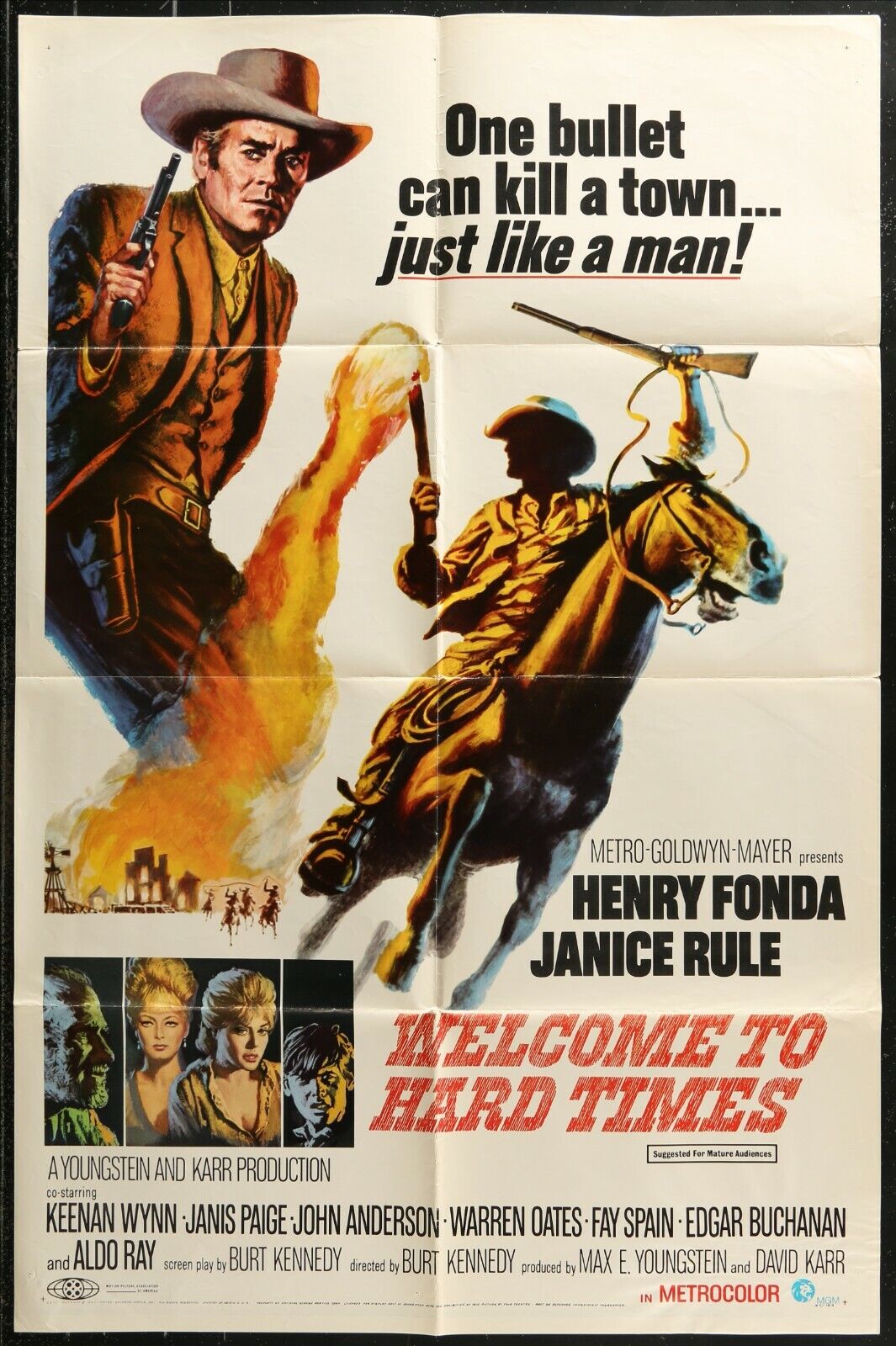
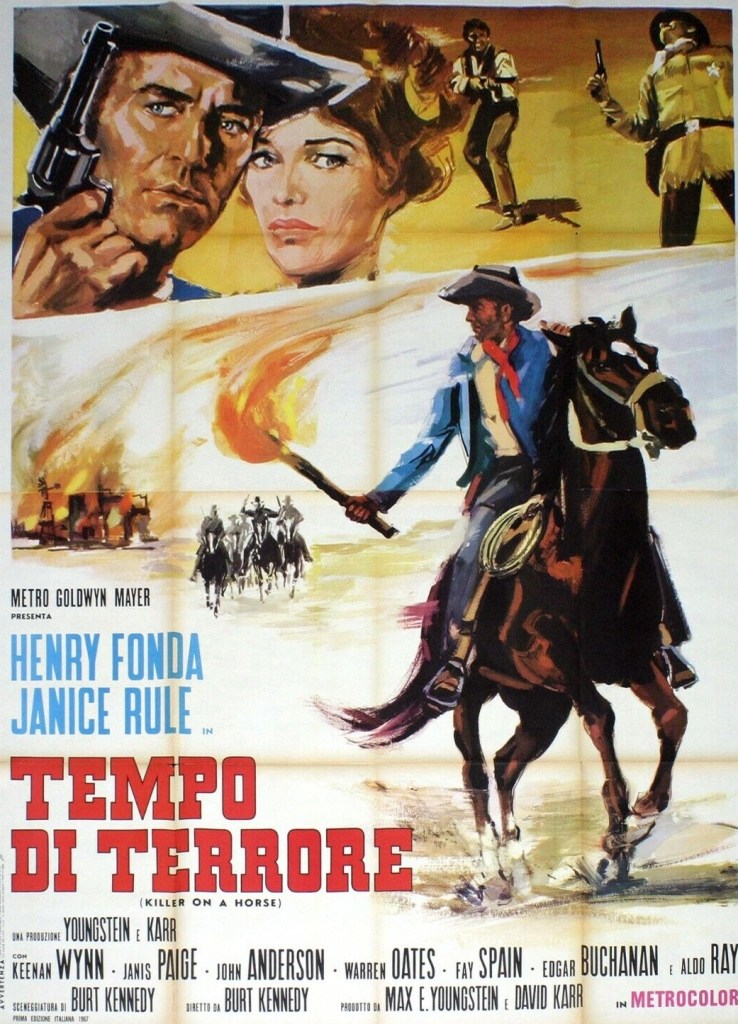
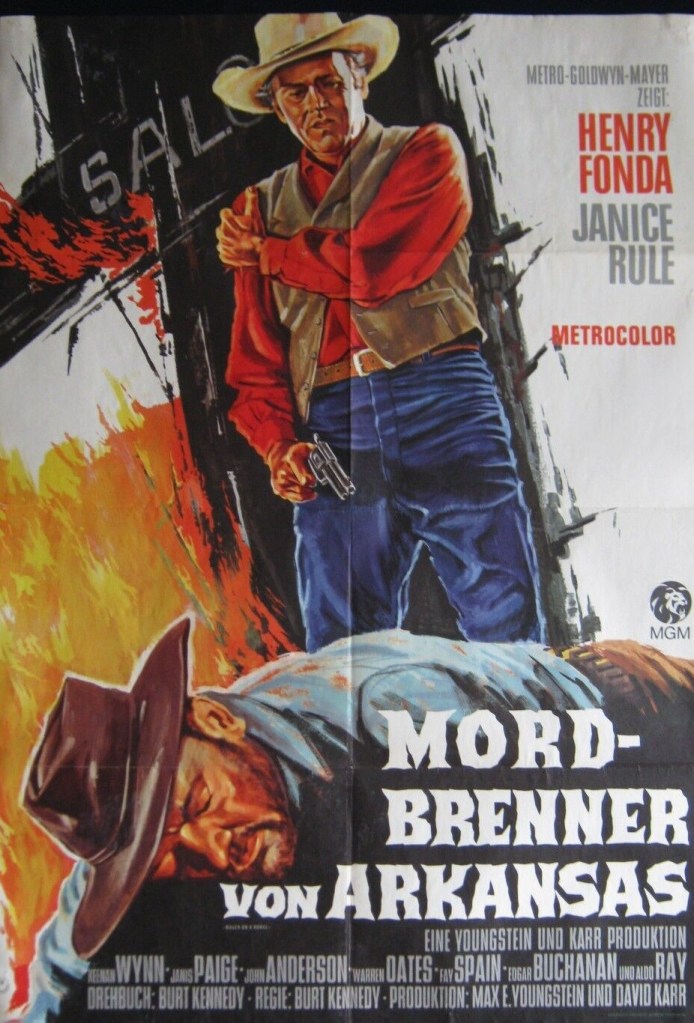
Welcome to Hard Times (1967) ****

Director Burt Kennedy’s record with westerns was very much hit or miss. This revisionist effort is one of the former though it could as easily tipped into the latter, beginning with a shrill soundtrack that telegraphs every incident and the no-name villain. And you might also wonder if irony had taken such a hold of settlers that they would actually name their town “Hard Times” when there was a gold strike over the hills.

Anyway, this is certainly a town that lives up to its name. Can’t have been more than a dozen houses, a saloon of course, but it’s the muddiest place west of No Name City (Paint Your Wagon, 1969) and the meanest to hove into view since High Noon, with the townspeople in thrall not to an entire gang, but one nameless stranger (where have we seen that before).

The Man from Bodie (Aldo Ray), as he is known, is the bad guy from Hell. He shoots anyone who stands up to him like Fee (Paul Birch) or shows the slightest dissent like undertaker Hanson (Elisha Cook Jr) and rapes Fee’s girlfriend Flo (Ann McCrea) before dumping her corpse on the saloon stairs.  

Will Blue (Henry Fonda), lawyer not lawman, hasn’t the guts to stand up to him, but comes the closest of the cowardly bunch. When The Man has done as much rampaging as a tiny town will allow he burns it to the ground. Most people leave, but Blue,  having done too much running in his life, decides to stay to look after Fee’s orphaned son Jimmy (Michael Shea).

If Blue’s vengeful Oirish girlfriend Molly (Janice Rule) also remains it’s mostly to hate him for abandoning her to the madman – Blue had used her to distract the Man but then retreated when the going got tough leaving her to be raped at will. She sets up her own League of Desperadoes, recruiting new arrival Jenks (Warren Oates) and the orphan, to tackle the bad guy on his inevitable return.

Meanwhile, a mobile unit of sex workers, complete with tent, turns up to service the nearby gold workers.  Their entrepreneurial boss Zar (Keenan Wynn) spots opportunity and helps Blue rebuild the town. Of course, everyone’s just waiting for Bodie Man to return.

Anyone that’s likeable or got anything approaching character is killed off at the start, so we’re left with an unlikeable, ambivalent, but realistic, crew. For all his later hi-falutin’ principles and pioneer spirit, Blue is still a coward who, to save his own skin, sacrificed Molly. Hoping to redeem himself by acting as surrogate father to Jimmy doesn’t result in him winning any respect from Molly.

This is one raped woman who found out the man on whom she was depending was no protector. Why should she ever love him again? And she’d be crazy to put her life in his hands once more. Of course, she could have got herself her own shotgun or pistol and ambushed Brodie Man when he took another shine to her, but instead she plays pretty please with Jenks, which is understandable, and the young Jimmy, which is deplorable.

That the sex worker magnate becomes one of the town’s foremost citizens might cleave closer to the bone than many viewers would like, but corruption was as endemic in America then as it presumably is now.

And it begs the question when all those pioneers headed out West how many of them were scum like Bodie Man? And how did the settlers think law-and-order was going to work out?

On the downside we have a villain, who, not content with killing and raping, demonstrates just how mean he is by smashing whisky bottlenecks because he hasn’t the patience to extract the cork with his teeth. Fee is dumb enough to take on the bad guy with a bit of log. Molly’s Irish accent is all over the place. And we could do with less music. And there’s a climactic twist that belonged to a horror film and is not only completely out of place but undoes the realistic tone by providing a somewhat sanctimonious ending.

But if you are expecting a movie along High Noon lines, with the good guy beating the bad, and winning the town’s respect, then you will be disappointed. On the other hand if you come prepared for one of the darkest westerns of the decade where the terrorizing outlaw exerts such fear that the townspeople, in defending themselves, pull down the shades between good and evil, then you will be amply rewarded.

The boldness of director Kennedy (The War Wagon, 1967) in reimagining the West as a place of venal proportions should be applauded. The direction might take a wrong turn here and there but the aim is effective. Henry Fonda (Firecreek, 1968) is good as ever and although I could do without the awful accent Janice Rule (Alvarez Kelly, 1966) is superb as the vengeful woman refusing Blue forgiveness and willing to use a youngster as a weapon.

A sound supporting cast includes Keenan Wynn (Warning Shot, 1967), Edgar Buchanan (Move Over, Darling, 1963), Janis Paige in her final movie outing, John Anderson (5 Card Stud, 1968) in a double role, Aldo Ray (The Power, 1968) and Warren Oates (The Wild Bunch, 1969).

Kennedy wrote the screenplay form the book by E.L. Doctorow.

Will make you flinch but worth a look.

Discover WordPress

A daily selection of the best content published on WordPress, collected for you by humans who love to read.

The Atavist Magazine

by Brian Hannan

WordPress.com News

The latest news on WordPress.com and the WordPress community.