Ulzana’s Raid (1972) ****

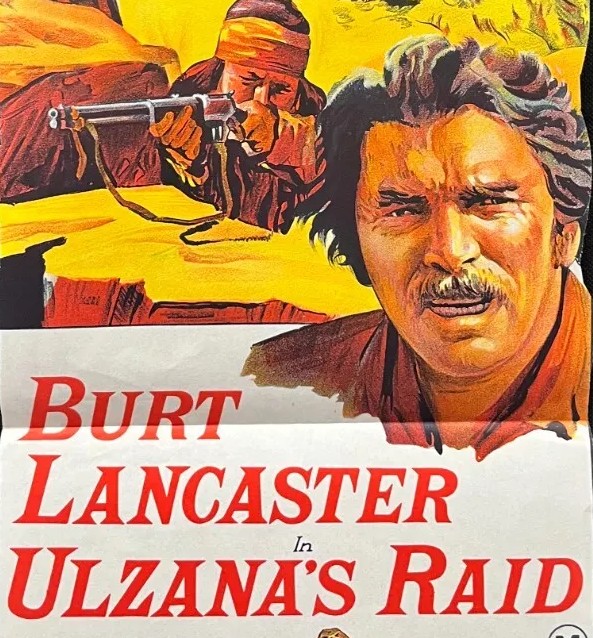
Still stands up as an allegory for the Vietnam War, superior American forces almost decimated by a small band of Apaches engaging in guerilla warfare. After the consecutive flops of Castle Keep (1969) and The Swimmer (1969), Burt Lancaster had unexpectedly shot to the top of Hollywood tree on the back of disaster movie Airport (1970) and consolidated his position with a string of westerns, which had global appeal, of which this was the third. After the commercial high of The Dirty Dozen (1967), director Robert Aldrich had lost his way, in part through an ambitious attempt to set up a mini-studio, his last four pictures including The Legend of Lylah Clare (1968) and The Killing of Sister George (1969) all registering in the red.  

Riding a wave of critical acclaim was Scottish screenwriter Alan Sharp whose debut The Last Run (1971) turned on its head the gangster’s last job trope, and its lyrical successor The Hired Hand (1971) had stars and directors queuing up. Here he delivers the intelligent work for which he would become famous, melding Native American lore with a much tougher take on the Indian Wars and the cruelty from both sides.
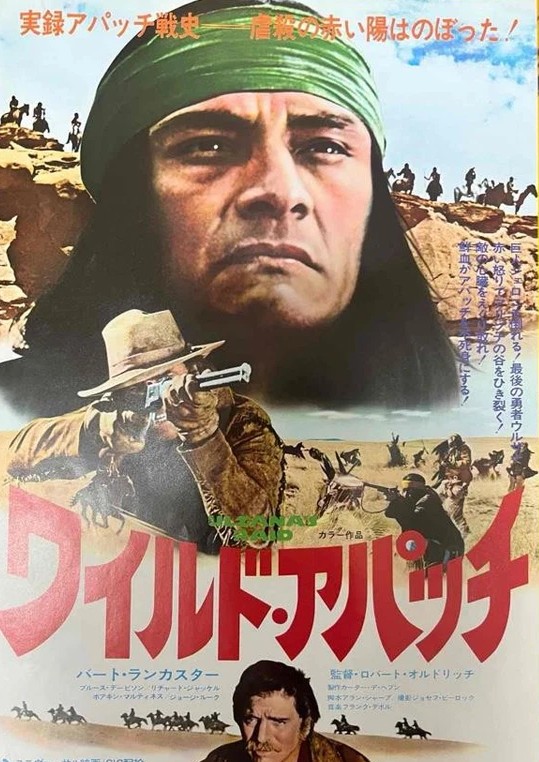
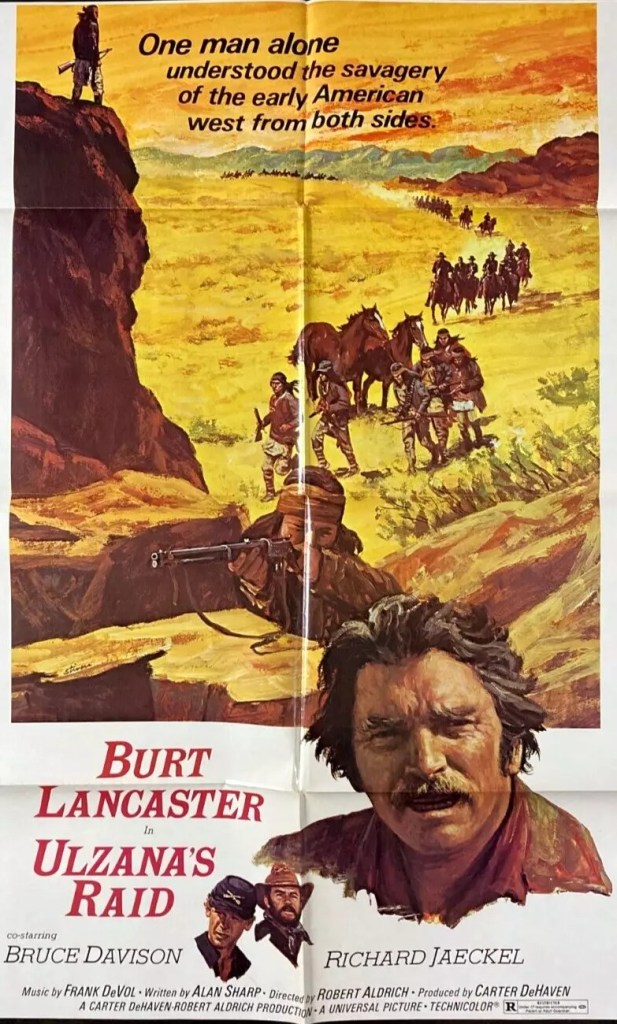
The narrative follows two threads, the duel between Ulzana (Joaquin Martinez), who has escaped from the reservation, and Army scout MacIntosh (Burt Lancaster); and the novice commander Lt DeBuin (Bruce Davison) earning his stripes. In between ruminations on Apache culture, their apparent cruelty given greater understanding, and some conflict within the troops, bristling at having to obey an inexperienced officer, most of the film is devoted to the battle of minds, as soldiers and Native Americans try to out-think each other.

Shock is a main weapon of Aldrich’s armory. There’s none of the camaraderie or “twilight of the west” stylistic flourishes that distinguished Butch Cassidy and the Sundance Kid (1969) or The Wild Bunch (1969). This is a savage land where a trooper will shoot dead the female homesteader he is escorting back to the fort rather than see her fall into the hands of the Apaches, following this up by blowing his own brains out so that he doesn’t suffer the same fate.

What such fate entails is soon outlined when another homesteader is tortured to death and another woman raped within an inch of her life, the fact that she survives such an ordeal merely a ploy to encourage the Christian commander to detach some of his troops to escort her safely home and so diminish his strength. Instead, in both pragmatic and ruthless fashion, she is used as bait, to tempt the Apaches out of hiding.
The Apaches have other clever tools, using a bugle to persuade a homesteader to venture out of his retreat, and are apt to slaughter a horse so that its blood can contaminate the only drinking water within several miles.

Key to the whole story is transport. The Apaches need horses. These they can acquire from homesteaders. Once acquired, they are used to fox the enemy, the animals led across terrain minus their riders, to mislead the pursuing cavalry and set up a trap.  MacIntosh and his Native American guide, Ke-Ni-Tay (Jorge Luke), uncover the trickery and set up a trap of their own. However, the plan backfires. Having scattered the Apache horses, the Apaches redouble their determination to wipe out the soldiers in order to have transport.

There’s a remarkable moment in the final shootout where the soldiers hide behind their horses on the assumption that the Apaches will not shoot the horses they so desperately need. But that notion backfires, too, when they are ambushed from both sides of a canyon.

The twists along the way are not the usual narrative sleight-of-hand but matter-of-fact reversals. The soldiers do not race on to try and overtake their quarry. To do so would over-tire the horses, and contrary to the usual sequences of horsemen dashing through inhospitable terrain, we are more likely to see the soldiers sitting around taking a break. Ulzana is not captured in traditional Hollywood fashion either, no gunfight or fistfight involving either MacIntosh or the lieutenant. Instead, it’s the cunning of Ke-Ni-Tay that does the trick.  

There are fine performances all round. Burt Lancaster is in low-key mode, Bruce Davison (Last Summer, 1969) holds onto his Christian principles so far as to bury the Apache dead rather than mutilate them, as was deemed suitable revenge by his corps, but his ideas of extending a hand of friendship to the enemy are killed off. Richard Jaeckel (The Dirty Dozen) communicates more with looks exchanged with MacIntosh than any dialog. Robert Aldrich is back on song, but owes a great deal to the literate screenplay.

Quentin Tarantino acclaimed this and I can’t disagree.

Suitable Flesh (2023) *** – Seen at the Cinema

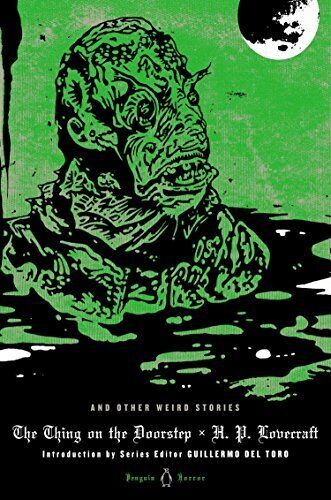
Lollapalooza! Trash horror is back. Step aside the relatively classy Blumhouse offerings and the torture porn of the Saw dynasty, what the world needs now is a throwback to the so-bad-it’s-good style of horror where blood flows like a burst dam and reanimated corpses trail yards of intestines.

Not forgetting that the star turns are either pop-eyed or garnish every line with a smirk. H.P. Lovecraft may well be turning in his grave, or relishing every camped-up ramped-up moment of this updating of his tale of gender-bouncing possession The Thing on the Doorstep. Throw in hypnosis, bdsm, smoking treated as illicit pleasure, and the kind of sexuality that used to be the prerequisite of the DTV scene.

Dr Derby (Heather Graham) has to be the dumbest psychiatrist ever to hit the screen, breaking the golden rule of never seeing a client, especially one as deranged as Asa (Judah Lewis), in their house. But, sensing a book or at least a write-up in a journal, she discovers he’s possessed by nasty father Ephraim (Bruce Davison). Or by a creature going back centuries whose main aim in life/death is to jump like an eternal parasite from person to person, indifferent to gender.    

Such transference works magic with the sex genes, the good doctor soon capable of playing the kind of sex games her husband never imagined while the snarky Asa is turned into a sex god with magnetic appeal to women. So, when everyone isn’t at it like rabbits, they get a tad worried about seizures.

In a nod to Dracula, it’s brains not hearts that have to be put out of commission, and there’s a whole bunch of demonic mumbo-jumbo served up to make this sound believable but by this point the audience is beyond caring. More, we call out, give us more – gore, sex, transgendering gone mad, references to Dunwich, bitchfights, corpses that won’t die – who the hell cares.

Mostly, it’s the kind of slam-bam horror fest that dominated the 80s/90s, with prime specimens of either sex to the fore. There’s a desultory pair of cops who do little more than add narrative confusion: who died, or did they even die, and was it all in Dr Derby’s mind? And once the sly Dr Upton (Barbara Crampton), also a dumb psychiatrist, who is either Derby’s sister or best pal, with a shady past, enters the picture the possibilities multiply.

Whoever is in charge of pushing a movie into cult territory better have a look at this especially when you consider the ropey camerawork – shaky or spinning screens dominate – not to mention that idea that was once the preserve of cartoons where the screen disappears into a dot. Cinematically, if anyone is remotely interested in that, there’s one scene of note, where the usual stunt of following action in a rearview mirror becomes seeing it from a vehicle’s reversing screen.

At times Heather Graham looks as if she’s walked in from playing the pop-eyed innocent of Austin Powers: The Spy Who Shagged Me (1999), other times she’s time traveling back to the uninhibited Killing Me Softly (2002). Whatever, she has worked out subtlety is not required. Judah Lewis pays homage to Bruce Willis and Mickey Rourke by reviving their trademark smirk. Johnathan Schaech (That Thing You Do, 1996) spends most of his time shirtless, showing off his pecs and hairy chest, and trying to get obsessive wife to drop her  workload and jump into the sack. Craching additiont to the Bruce Davison (Last Summer, 1969) can, and Barbara Crampton (Alone with You, 2021) has a sackload of this kind of thing (left on a doorstep or not) in her closet.

Dennis Paoli (Re-Animator, 1985) did the updating, Joe Lynch (Point Blank, 2019) the camping up to high heaven.

Judging from size of the cinema audience when I saw it, this isn’t going to last more than a week at your local multiplex. So drop your planned schedule and get there now.

Otherwise Shudder has this for streaming in January.

Call the cult police!

https://amzn.to/3MsP8J1

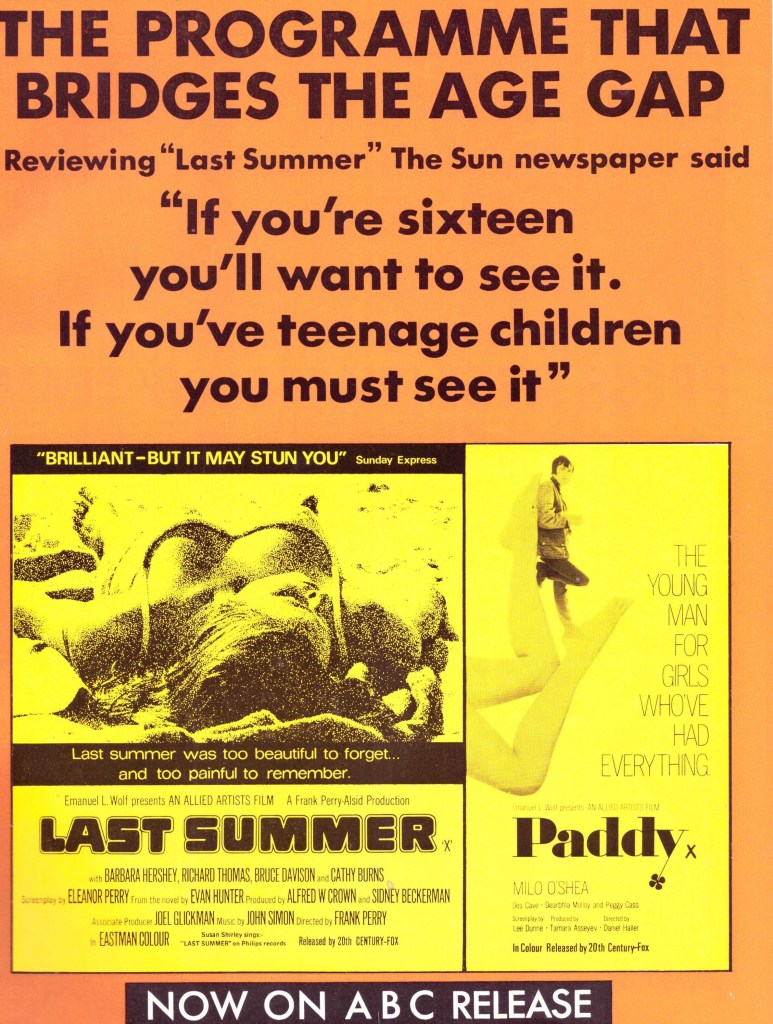
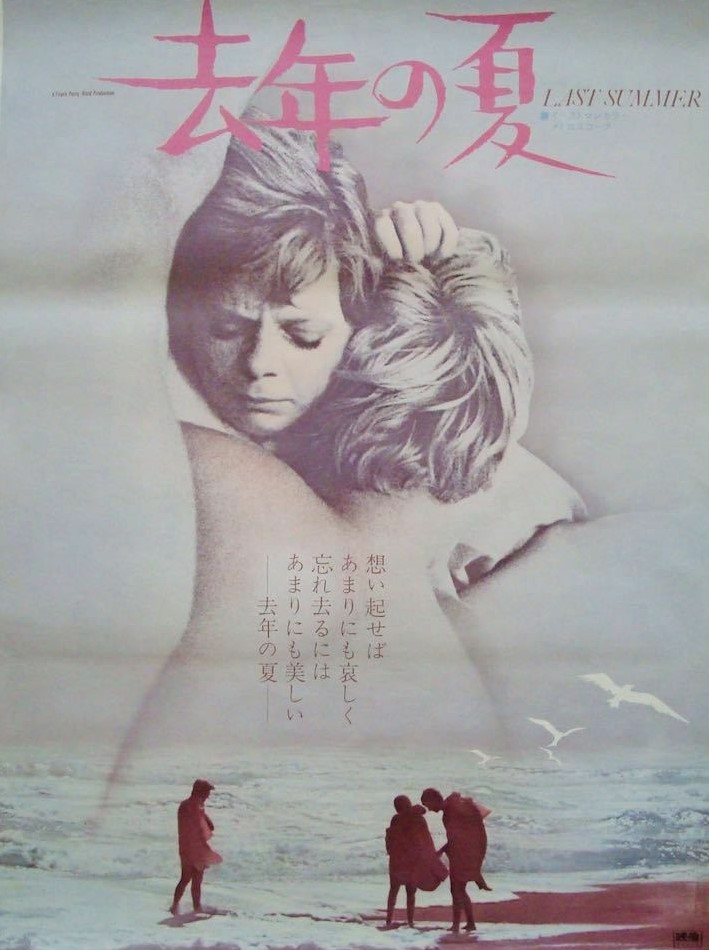
Last Summer (1969) ****

Given the severity of the crime involved, you leave Frank Perry’s coming-of-age-drama wondering what happened to the four principals. Did the aggressive three young demi-gods of a golden age go on to pursue similar acts of cruelty? While one of them might show remorse, or at least suffer from guilt, of the other two I have my doubts. They would find ways to blame the injured party. And what about the victim? Would she have the courage to report the crime, or suffer in shame for decades.

It’s odd how time changes entirely the shape of a movie. In its day this was seen as a bold exposition of frank adventure by teenagers seeking their first experiences of growing up and experimenting with sex and drugs (pilfered from a parental stash). Although there is little focus on dysfunctionality, both Sandy (Barbara Hershey) and Rhoda (Cathy Burns) are missing a parent, the former’s father running off with another woman, the latter’s mother drowned by stupid misadventure. Both have been abused, unable to prevent the wandering hands of males. All are vulnerable, if only by youth.

Of the boys, Dan (Bruce Davison) is the more confident, Peter (Richard Thomas), while easily swayed, the gentler of the two. Dan merely seeks his first taste of sex, Peter the more likely to need love as well. Sandy is sexually precocious, somewhat on the exhibitionist side, peeling off her bikini top with apparently at times no idea of the effect it will have on the boys, at other times clearly uncomfortable with the notion that the guys might have nothing else on their minds but staring at her breasts. But she is the one who wants to continue watching a gay couple cavorting on the beach while Dan is embarrassed. Sometimes the frank sexuality is rite-of-passage stuff, other times it is distinctly creepy. In the cinema both men grope her breasts. She claims to have been excited by the experience, but you can’t help thinking at least one of the men should have shown restraint, not treating her as if she was some kind of sex toy.

The movie begins on a clearer note. The guys come across Sandy nursing a wounded gull and perhaps entranced by her good looks help her remove a hook from the bird’s throat, provide convalescence and eventually help the bird recover the confidence to fly again. It’s a cosy trio, but edgy, too, Sandy allowing them considerable latitude. But, of course, the guys do the same to her. When she bludgeons the bird to death because it bit her (“the ungrateful bastard”), the pair, initially shocked, are not shocked enough to reject her, afflicted by unassailable male logic, the kind that drove film noir, that maintained a beautiful woman could not have a black heart. 

Separated from the other two, Peter displays a gentler side, teaching the shy Rhoda to swim, kissing her in far more considerate fashion than the boys treat Sandy. But, effectively, she is a pet, and it’s only a matter of time before the unsavory aspect of Sandy’s character breaks out. After setting Rhoda up on a date, the trio do everything they can to spoil it, angry at the poor girl for not getting the “joke.”

Worse is to follow. Date-rape we’d call it today. Retreating to the cool forest, Sandy taunts Rhoda by removing her bikini top. When the horrified Rhoda refuses to do the same, Sandy attacks her, holding her down along with Peter while Dan rapes her. That’s where the film ends, no consequences, no repercussion. Back in the day it was a shock ending, an act of violence to mar an otherwise relatively innocent summer. After the deed is done, the camera pulls back into an aerial shot to observe the  guilty trio walking back to the beach, but without drawing conclusion or offering moral judgement. It’s hard to know what to make of the ending. These days, of course, we’d be appalled. But back then it didn’t appear to appall, certainly not drawing the outrage that accompanied similar scenes in The Straw Dogs (1971) or A Clockwork Orange (1971) perhaps because the perpetrators were so attractive and it was, after all, a coming-of-age picture, as if such things could be expected.

Roger Ebert, writing in the Chicago Sun-Times, for example, judged that the conclusion “is not really important to the greatness of the movie.” Andrew Sarris of Village Voice noted that “Perry retreats from the carnal carnage” to end with a shot that “prefers symbolic evocation to psychological exploration.” In other words adolescence is fraught with risk and Rhoda is just collateral damage.

Certainly the acting is uniformly excellent for such inexperienced actors, coping with many changes in dramatic focus, from early exhilaration through growing pains to violence.  Barbara Hershey (Heaven with a Gun, 1969) would go on to become a major star. Amazing to realise that Bruce Davison (Willard, 1971) and Cathy Burns, Oscar-nominated for her role, were making their movie debuts and for Hershey and Richard Thomas (Winning, 1969) their sophomore outings.

Director Frank Perry (The Swimmer, 1968) had a special affinity with the young as he had proved with David and Lisa (1962) and at times the whole affair had an improvised free-wheeling style. Eleanor Perry (David and Lisa) wrote the screenplay based on the novel by Evan Hunter (The Birds, 1963).

This is very hard to find, it turns out, so Ebay might be your best bet.

My thanks to one of my readers, Mike, for digging up this story of the disappearance of Catherine Burns from the movie business.

https://www.hollywoodreporter.com/movies/movie-features/catherine-burns-inside-50-year-disappearance-an-oscar-nominee-1275646/

Discover WordPress

A daily selection of the best content published on WordPress, collected for you by humans who love to read.

The Atavist Magazine

by Brian Hannan

WordPress.com News

The latest news on WordPress.com and the WordPress community.