Behind the Scenes: United Artists’ Mea Culpa: Why Flops Flopped, 1969-1971, Part Three

Box office hits like Never on Sunday (1960), La Dolce Vita (1960), Zorba the Greek (1964), A Man and a Woman (1966) and Z (1969) gave Hollywood the wrong idea. Studios believed they could take advantage of the cheaper costs of shooting in Europe, set up alliances with critically acclaimed French, Italian, Greek, German and Swedish directors as well as several top overseas marquee names, and create a pipeline of product to fill out release schedules with pictures that were as acceptable to neighborhood cinemas as to arthouses.

The reliance of United Artists on this source was as much to blame for the box office crisis it endured as the other films covered in the first two articles in this series. In many cases, the studio gave directors their head, not reining them in on budgets, allowing several final cut, and assuming that critics and awards at festivals like Cannes, Berlin and Venice would do the job of selling the product to the domestic market.
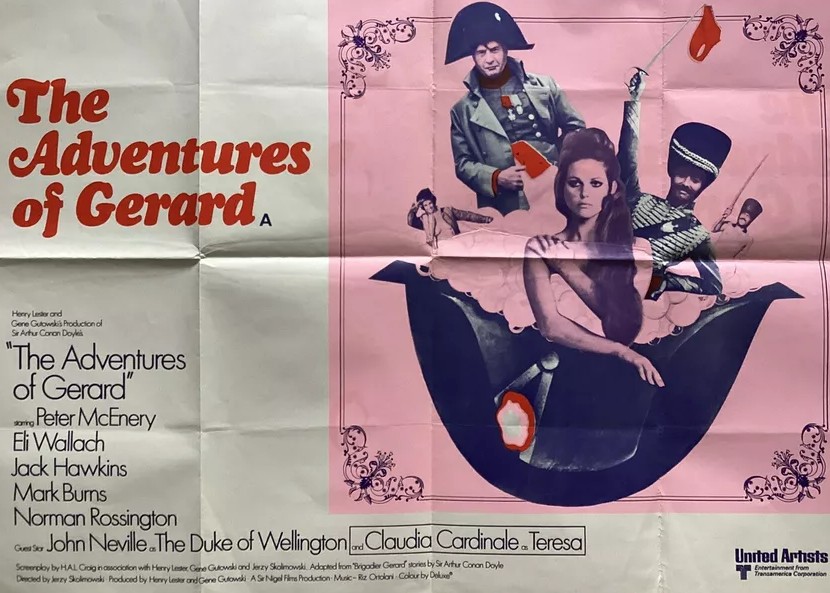
On the basis of Polish director Jerzy Skolimowski winning the Golden Bear at Berlin for Le Depart / The Departure (1967) starring Jean-Luc Godard protege Jean-Pierre Leaud – and its subsequent arthouse success – UA bequeathed him big-budget The Adventures of Gerard (1970), set during the Napoleonic War, based on a book by Sherlock Holmes creator Arthur Conan Doyle, and headlined by rising British star Peter McEnery (Negatives, 1968) and established Italian import Claudia Cardinale (The Professionals, 1966) and a supporting cast including Jack Hawkins and Eli Wallach.

“The picture turned out to be one of the worst disasters in the history of the company,” the company directors told the shareholders. “It was the result of reliance on one of the new fashionable foreign film directors. The picture was beset by problems due to the unprofessional excesses…indulged in by the director.” The outcome was a movie that could not be reshaped into a “more acceptable form” and that ending up occupying “a limbo area between adventure and farce.” Prospects were so poor, the studio doubted if it would even recoup marketing and advertising costs never mind any of the production costs.

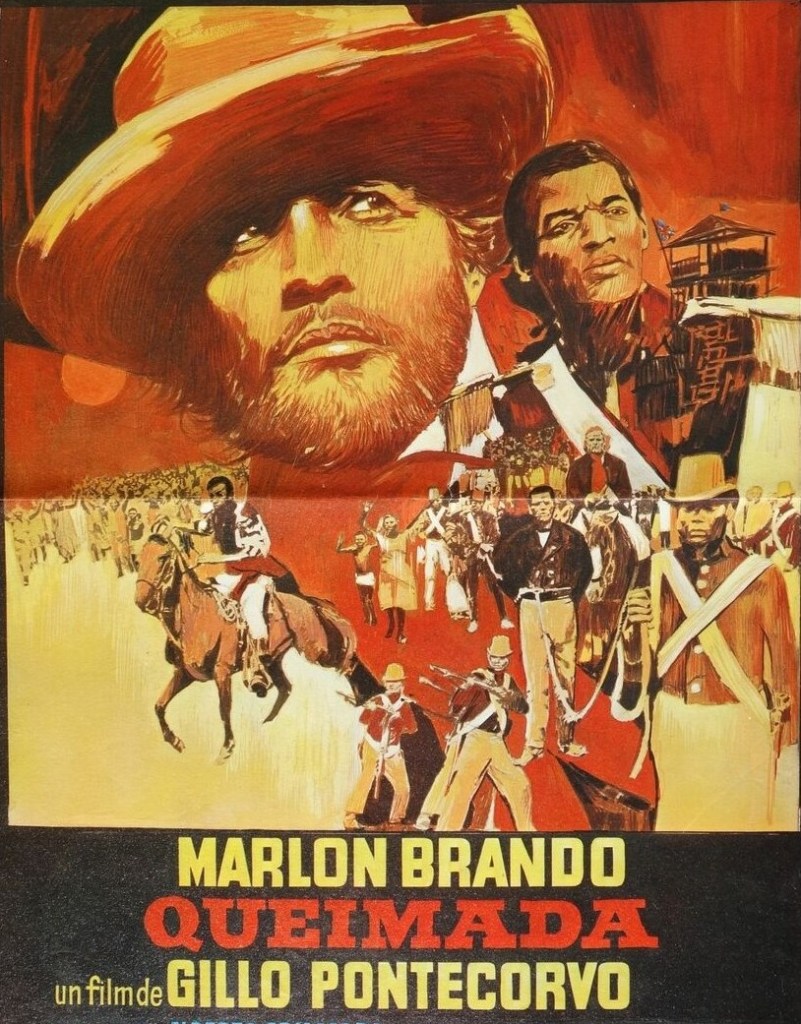
Theoretically, Burn! / Quiemada (1969) should have fared better. At least it had a proper star in Marlon Brando, even though his marquee value was being questioned. This had been placed in the hands of Italian director Gillo Pontecorvo whose The Battle of Algiers (1966) had been nominated for the Best Foreign Language Film Oscar. The studio had hoped to “combine interesting message with entertainment values.” However, personality conflict between director and star saw the picture to go “way over budget.” Prospects remained dim because “despite all efforts to persuade the director to reduce it to realistic length,” it was deemed overlong and “badly cut.” It fell between the stools of the arthouse audience who would have appreciated the message and the action audience who would have welcomed the more commercial elements. It was marked down for “a substantial loss.”

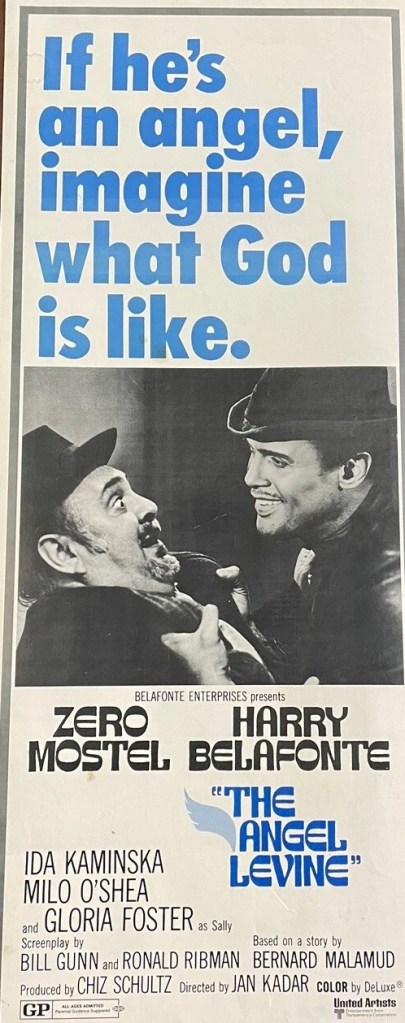
On the strength of a nomination for the Palme D’Or at Cannes for The Shop on Main Street (1965), the studio backed a project by its Hungarian director Jan Kadar.  The Angel Levine (1970) attracted investment because the director had achieved “a certain cult,” the recording career of star Harry Belafonte had reached new heights, and the story was supposed to have a special appeal to ethnic groups. “Everything went wrong. The direction and performance came out slow and leaden. The story…didn’t work.” The picture was over budget and overlong. “The director could not be persuaded to make the necessary cuts” resulting in expectation of another “substantial loss.”
Italian director Elio Petri had enjoyed cult success with the offbeat sci fi The 10th Victim (1965) starring Marcello Mastroianni and Ursula Andress. For A Quiet Place in the Country (1968) he had lined up top British Oscar-nominated actress Vanessa Redgrave and rising Italian star Franco Nero who had played lovers in Camelot (1967). It was greenlit at a time when the studio believed there was a wider market among discriminating audiences for foreign films previously restricted to arthouses. But it had become clear that films in this category faced “inevitable loss.”

You probably haven’t heard of That Splendid November (1969), greenlit to “fulfill a pay-or-play commitment to Italian star Gina Lollobrigida” (Strange Bedfellows, 1965). While targeting the European market, it was hoped it would do additional business in America. It didn’t. Once again, the director (Mauro Bolognini) was allowed too much leeway. He had not been “persuaded to make the changes that would improve its chances” while the studio discovered that La Lollo had lost her marquee luster.

However, United Artists had also committed to potential “breakout” pictures, foreign movies aimed at American arthouses. The bulk of the overseas pictures that had thrived in the U.S. had done so via the arthouse circuit after being favorably reviewed by critics. These were considered relatively low-cost and low-risk investments. But, as events proved, these were as big a gamble as more high-budget projects.

Red, White and Zero / The White Bus (1967) proved “an utter failure” despite the presence of three top British directors, Lindsay Anderson (This Sporting Life, 1963), Oscar-winner Tony Richardson (Tom Jones, 1963) and Peter Brook. Although made for the arthouse market, these proved fewer in number than anticipated when the film was greenlit.

A French heist film entitled Score “would not be made today,” admitted the UA executives. Hoping to capitalize on the caper genre, the studio discovered no one was interested. Three French pictures, Philippe de Broca’s Give Her the Moon (1970) starring Philippe Noiret, The American and Lent in the Month of March (1968), were written off due to the softening of the arthouse market, as was Yugoslavian number It Rains in My village (1968) starring Annie Girardot. French/Brazilian Pour Un Amour Lointain (1968), “one of the poorer foreign pictures,” had such dismal prospects it was denied U.S. distribution. German picture Gentlemen in White Vests (1970) lacked appeal even its home market.

SOURCE: “Comments supplementing notes to Balance Sheet and Statement of Operations of United Artists Corporation for 1970,” United Artists Archive, Box 1 Folder 12 (Wisconsin Center for Theater and Film Research).

Behind the Scenes: The 20th Century Fox Box Office, Part One – U.S. Rentals

While I was aware that Hollywood had faced financial catastrophe at the beginning and end of the 1960s, I wasn’t so familiar with just how hard it proved for the studios to actually make a buck. If hadn’t been for the bounty of The Sound of Music (1965) and to a lesser extent Butch Cassidy and the Sundance Kid (1969), a studio as big as Twentieth Century Fox would have posted an overall loss for the decade.

Sure, audiences were in decline and production stultified but there was a fair chance those obstacles could have been overcome through the combination of roadshow, the reinvigoration of the dormant spy genre via James Bond and his imitators, the onset of more liberal material – i.e. sex and violence – thanks to changes to the Production Code and the decade-end “youthquake.”

From 1960-1969, according to the Aubrey Solomon digest of releases, which was my main source for this article, Twentieth Century Fox invested $434 million in 107 movies at an average cost of $4 million. Overall rentals – the amount returned to studios once cinemas had taken their cut of the gross – amounted to $478 million. A total profit of $44 million for the decade was probably, given the various crises, not a bad return. But once you removed The Sound of Music’s  $83 million rentals bonanza from the equation, the result was less convincing.

Break-even might have appeared a good result given the doomsayers predicting complete collapse but it says a lot for the vagaries of the business that only 42 pictures – about 40 per cent of the movies greenlit – generated a profit. You will be familiar with the big loss-makers of course: Cleopatra (1963) $16 million in the red on initial U.S. release (though most of that clawed back from overseas rentals, reissue and television sale), calamitous musical Doctor Dolittle (1967 – only $6 million in domestic rentals) and Star! (1968 – only $4 million). 

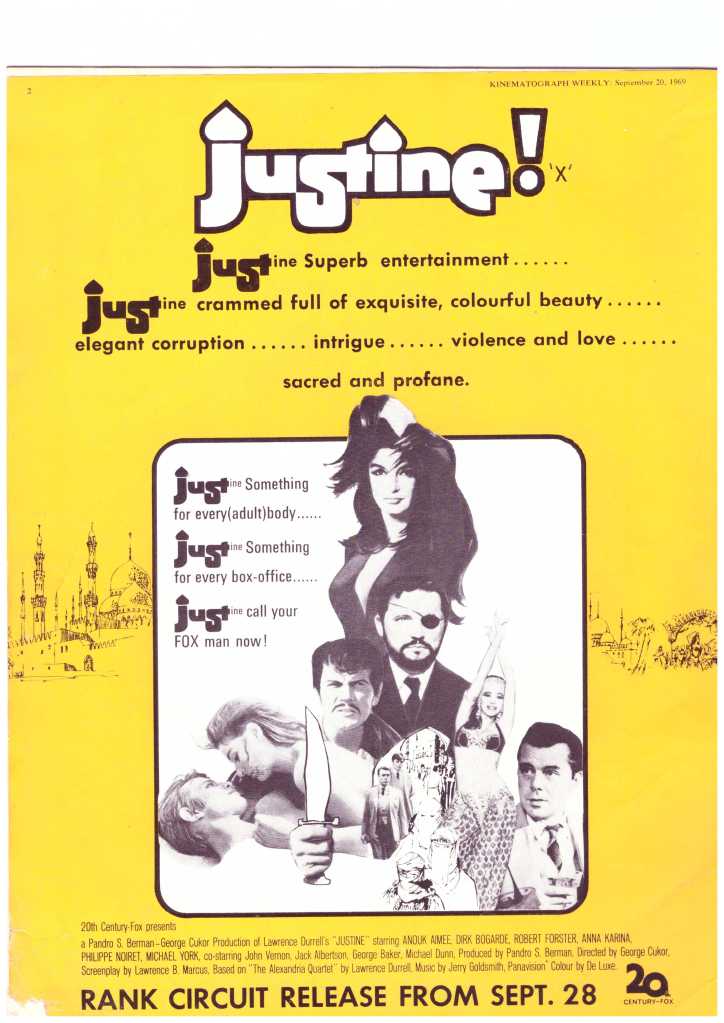
You might wonder what possessed the studio to invest $7.87 million in George Cukor’s Justine (1969). When original director Joseph Strick threw in the towel you might have imagined the studio would do the same given the stars – Dirk Bogarde, Anouk Aimee and Michael York – were hardly standout box office figures. Loss on the U.S. rentals was $5.67 million. Staircase (1969) at least had a stellar cast – Richard Burton fresh from worldwide hit Where Eagles Dare (1968) and Rex Harrison whose Oscar-winning success in My Fair Lady (1964) appeared to grant him box office immunity. But U.S. audiences only returned $1.85 million in rentals from a budget of $6.37 million.

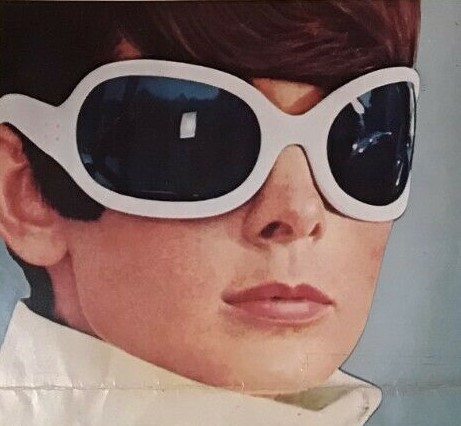
Iconic fashion accessories sported by Audrey Hepburn couldn’t save
“Two for the Road”

Another star-laden vehicle – the Paris-set caper picture How To Steal a Million (1966) teaming Audrey Hepburn (My Fair Lady) and Peter O’Toole (Becket, 1964) – came unstuck, losing $2.08 million on a budget of $6.48 million. Hepburn was at fault again the following year, losing, oddly enough, exactly the same amount for Two for the Road with Albert Finney (Tom Jones, 1963) directed by Stanley Donen (Charade, 1963) out of a budget of $5.48 million.

Other casualties were: William Holden in The Lion (1962, $3 million loss), biopic Tender Is the Night (1962 –  $2.65 million), George C. Scott as The Flim-Flam Man / One Born Every Minute (1967, also $2.65 million), Nine Hours to Rama (1963, $2.61 million), Doris Day spy comedy Caprice (1966, $2.59 million), Gregory Peck in Cold War thriller The Chairman / The Most Dangerous Man in the World (1969, $2.41 million), James Stewart in desert drama The Flight of the Phoenix (1965 – $2.33 million) and James Coburn and Lee Remick in Hard Contract (1969 – $2.32 million).

Even John Wayne stiffed. Civil War western The Undefeated (1969), on a budget of $7.1 million only brought in $4.5 million in rentals. Charlton Heston/Rex Harrison roadshow The Agony and the Ecstasy (1965), on a similar budget, lost more – $3.17 million. Michael Caine/Anthony Quinn drama The Magus (1968) barely brought in $1 million from a $3.77 million budget.

Unexpected winners included Valley of the Dolls (1967 – $15.31 million profit), Planet of the Apes (1968 – $9.2 million), Those Magnificent Men in Their Flying Machines (1965 – $7.5 million), The Boston Strangler (1968 – $3.9 million), Our Man Flint (1966 – $3.87 million) – though only $1.2 million in the black for sequel In Like Flint (1967) – and The Blue Max (1966 – $3.4 million).

Frank Sinatra proved a safe bet. The Detective (1968) turned a profit at the U.S. ticket wickets of just over £2 million and Von Ryan’s Express (1965) just under that figure although Tony Rome (1967) registered a small loss. Raquel Welch just about squeaked home – $1 million profit for Bandolero (1968), $380,000 profit for Fantastic Voyage (1966) balanced out by $420,000 loss for 100 Rifles (1969).

Of course, there was always the possibility that foreign revenues would save the day. And although occasionally the likes of United Artists’ The Magnificent Seven (1960) on initial release had earned considerably more in the overseas market than in the U.S., that was, unfortunately, rarely the case. There was no guarantee that certain genres – comedies, musicals – would travel. Hollywood studios generally received a smaller percentage from movies released abroad while facing increases in distribution costs.

Overseas business was viewed as icing on the cake rather than an essential element of the box office. There was also the problem that foreign cinema owners could check out U.S. box office figures in advance – unlike now there was no instant global release system – and should a movie falter on its U.S. debut would assume they were going to be renting a flop, therefore reduce marketing back-up and renegotiate terms.

SOURCE: Aubrey Solomon, Twentieth Century Fox, A Corporate and Financial History (The Scarecrow Press, 2002) pp 228-231, 252-256.

Behind the Scenes: Top of the Flops, United Artists 1965-1969, Global Box Office – Part Two

United Artists took an unholy bath on George Stevens’ all-star The Greatest Story Ever Told (1965), shouldering a colossal loss of $9.1 million in global rentals (not gross), one of the biggest financial disasters of the decade. In second place, by a long margin, was Blake Edwards’ anti-war comedy What Did You Do in the War, Daddy? (1966). The presence of James Coburn at  a career-high thanks to the Flint spy pictures couldn’t prevent this ending up $2.75 million in the red.

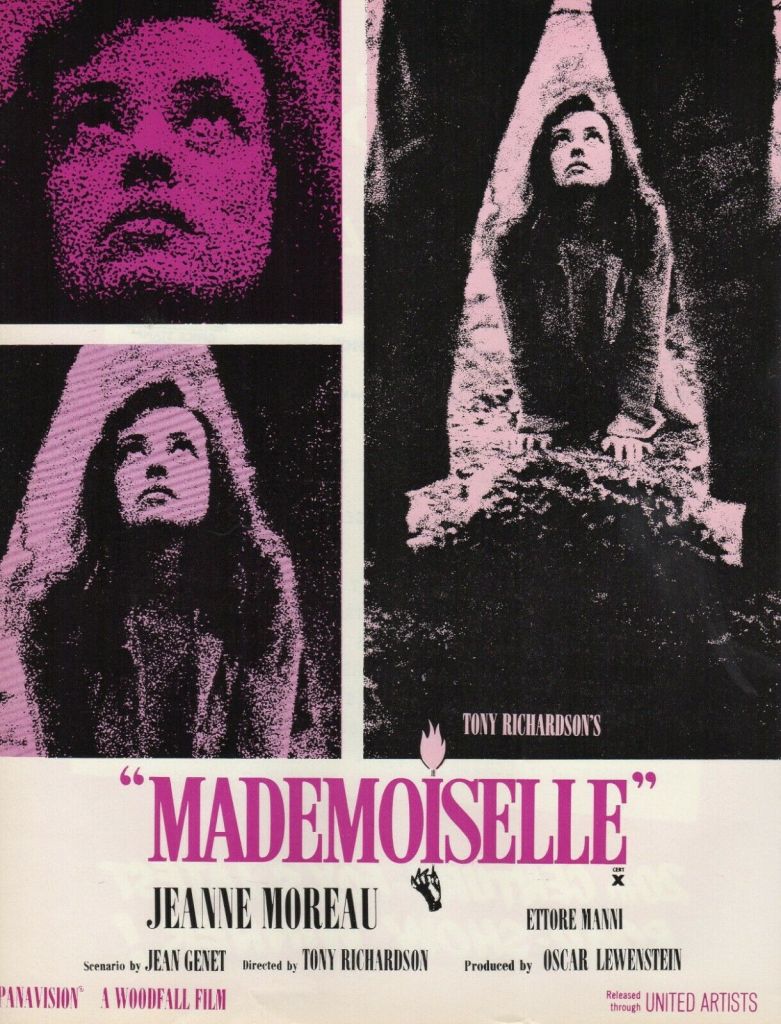
Another all-star prestige war movie, though this time set in the Crimea, Tony Richardson’s The Charge of the Light Brigade (1968) ran it close, registering a deficit of $2.59 million. This was not the first time the studio’s faith in Richardson proved unfounded. He had lost $1.17 million on Sailor from Gibralter (1967) and another $1 million Mademoiselle (1966), both starring French actress Jeanne Moreau, cited in divorce proceedings brought by his wife Vanessa Redgrave.

History was also unkind to John Huston, coming unstuck with romp Sinful Davey (1969), also set in Britain, and starring newcomer John Hurt. With only $250,000 in rentals in the U.S. market it dropped a total of $2.4 million. Richard Lester was also well off the mark with anti-nuke comedy The Bedsitting Room (1969) which imploded to the tune of $1.42 million.

Although Dick Van Dyke justified his fee for the studio’s Chitty,Chitty Bang Bang, his marquee status proved decidedly unjustified in two other pictures. Some Kind of Nut (1969) lost $1.36 million while Fitzwilly (1967) was $312,000 short of break-even.

British star Michael Caine also fell into the questionable category. Billion Dollar Brain (1968), his third outing as spy Harry Palmer, proved a dud, $1.18 million down while Second World War picture  Play Dirty (1968) lost out at the box office wickets to the tune of $350,000.

Others in the million-dollar-loser class were: The Honey Pot (1967) despite the presence of Rex Harrison and Cliff Robertson; Alan Arkin’s ill-fated attempt to emulate Peter Sellers as Inspector Clouseau (1968); Jules Dassin’s 10.30pm Summer (1966); and A Twist of Sand (1967) with Richard Johnson and Honor Blackman.  And Peter Sellers himself misjudged the material for After the Fox (1966) for it came home $432,000 short of the target.

The Witches (1967) failed to coast home on the back of new sensation Clint Eastwood in the cast plus an all-star directing team including Vittorio De Sica, Luchino Visconti and Pier Paolo Pasolino and lost $880,000.

World War Two pictures proved too often problematic in registering global appeal. Michael Winner’s Hannibal Brooks (1969) starring Oliver Reed shed $650,000, John Guillermin’s The Bridge at Remagen (1969) was on the downside of $526,000, Richard Lester’s How I Won the War (1967) was $257,000 shy of budget and even low-budget numbers that were expected to at least break even failed to do so, The 1,000 Plane Raid (1969) missing out by $316,000 and Submarine X-1 starring James Caan by $156,000.

The notion that westerns had universal appeal turned out to be a dodgy proposition for some products. Whereas foreign made a distinctive impact in the box office for a film like Guns of the Magnificent Seven (1969) it did not always play out that way. Though John Sturges’ Hour of the Gun (1967) toplining  James Garner and Jason Robards did better aboard than at home that still wasn’t enough to offset losses of $627,000. Overseas rentals matched domestic for Young Billy Young (1969) starring Robert Mitchum but that still kept it out in the cold with another half a million needed to get over the line.

You would think minimal budgets would be a guarantee against outright failure, but too often promise remained unfulfilled. Charlotte Rampling and Sam Waterston were touted as rising talents when cast in Three (1969). The budget was a miserly $355,000. Yet it still lost $305,000, generating rentals of just $25,000 both at home and abroad. Bryan Forbes’ The Whisperers (1967), with Edith Evans winning an Oscar nomination, lost $180,000 on a budget of just under $400,000. The Russian version of Hamlet (1966) dropped $55,000 on a $75,000 budget.  Don’t Worry We’ll Think of a Title (1966) starring Morey Amsterdam only earned back $50,000 on its $181,000 cost.

Some movies came pretty close to break-even – another $16,000 would have seen Danger Route (1968) also with Richard Johnson reach the magic mark, American football drama Number One (1969) with Charlton Heston required another $40,000.  

SOURCE: “United Artists Corporation and Subsidiaries Motion Picture Negative Costs for Pictures Released in the Year Ended 1965, 1966, 1967, 1968 and 1969,” United Artists Files, Wisconsin Center for Film and Theater Research, University of Wisconsin.

Box Office Poison 1960s Style

The success in 1968 of such disparate movies as The Graduate (1967), Valley of the Dolls (1968) and 2001: A Space Odyssey (1968) with no discernible stars got Hollywood thinking whether they needed stars anymore. Stars were viewed as insurance. Their names were attached to pictures in the hope that they would bring a sizeable audience.

But for some time that had proved not to be the case. Certainly actors with the box office clout of Paul Newman, Julie Andrews, Elizabeth Taylor, Lee Marvin, John Wayne, Richard Burton and Elvis Presley justified their extravagant salaries. But exhibitors had begun to complain that studios were forcing them to carry the cost of stars who did not deliver, the salaries inflating “the terms that theatres must pay for films.”

Big names viewed as box office poison in 1968 included Marlon Brando, Tony Curtis, William Holden and Natalie Wood. An investigation by trade magazine Variety uncovered the fact that in each case the last four pictures of each star – who earned $250,000 or more per movie – had flopped. Average movie budgets by now had climbed to $3-$4 million not counting marketing costs so most movies had to bring in over $10 million at the global box office to break even

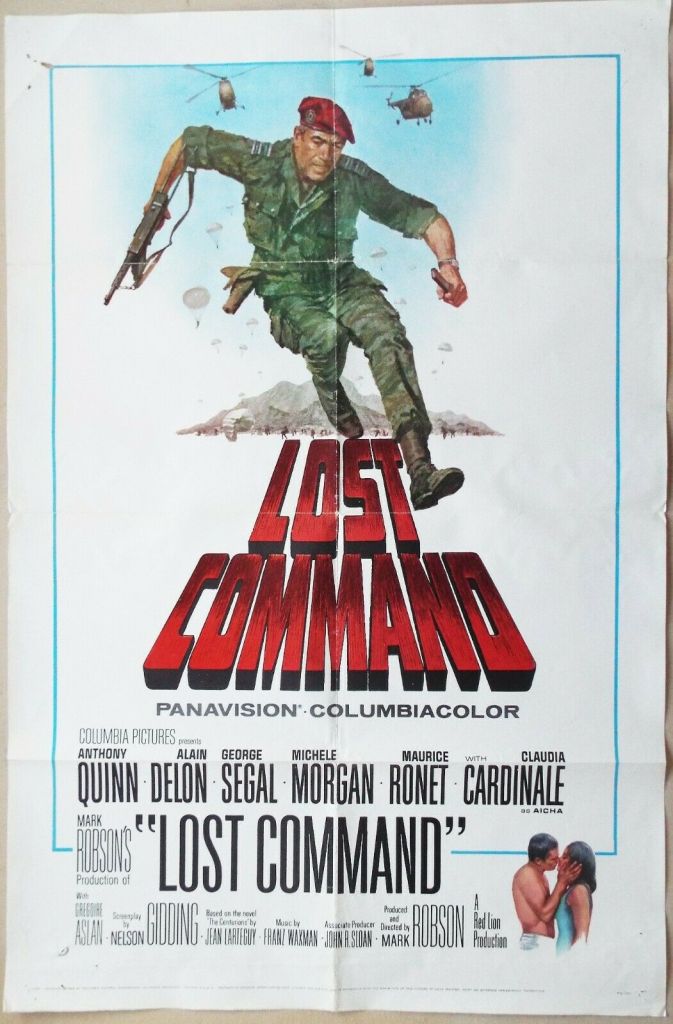
The star with the worst track record was Anthony Quinn. Average rental for his past four pictures – $800,000. While Zorba the Greek (1964) had been an unexpected hit, what followed was anything but. Discounting a cameo in Marco the Magnificent (1965), the box office duds comprised adventure A High Wind in Jamaica (1965), Lost Command (1965), war film The 25th Hour and misconceived hippie comedy The Happening (1967).

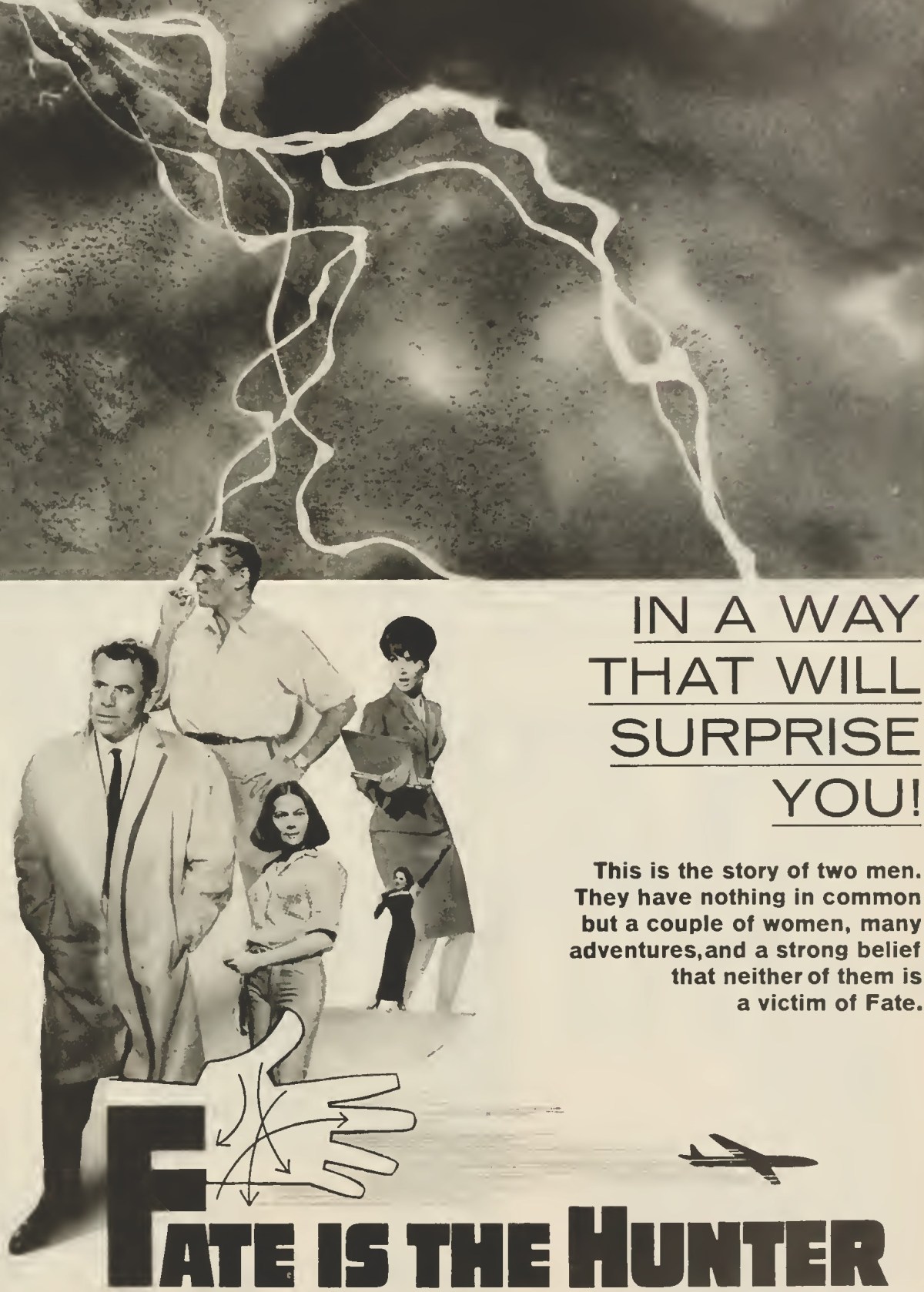
Not far behind was Glenn Ford, a star from the days of Gilda (1946), The Blackboard Jungle  (1955) and The Sheepman (1958). He had begun the current decade badly with big-budget losers Cimarron (1960) and The Four Horsemen of the Apocalypse (1962) and his career never recovered. His last eight pictures brought in an average of less than $1 million apiece in rentals. The sad bunch were: comedy western Advance to the Rear, Dear Heart and aerial drama Fate Is the Hunter (all 1964) followed by western The Rounders and thriller The Money Trap (both 1965) as well big budget war epic Is Paris Burning? (1966), rabies drama Rage (1966) and western The Long Ride Home (1967).

Scarcely any better was William Holden, star of David Lean Oscar-winner Bridge on the River Kwai (1957), John Ford western The Horse Soldiers (1959) and The World of Suzie Wong (1960). His last four efforts – The Lion (1962), romantic comedy Paris When It Sizzles (1964), war drama The 7th Dawn (1964) and Civil War western Alvarez Kelly (1966) – returned an average of $1.05 million in rentals. Variety reckoned he was struggling with the problem of how to “gracefully mature his screen image.”

James Garner, once seen as the natural successor to Clark Gable, had failed to capitalize on the success of John Sturges’ The Great Escape (1963). Five of his last seven films had dredged up a mere $1.3 million average. Making up the awful quintet were thriller 36 Hours (1964), comedy thriller A Man Could Get Killed (1966), western pair Duel at Diablo (1966) and Hour of the Gun (1967) plus drama Mister Buddwing (1966). Quite why comedy The Art of Love (1965) had done better – $3.5 million in rentals – nobody could ascertain and even though roadshow Grand Prix (1966) was a hit Garner, who was billed below the title, was not considered a reason for it, with some insiders claiming his name had held it back and it would have done much better with someone else in his role.

Morituri (1965), Cast a Giant Shadow (1966), The Poppy Is Also a Flower (1966), western sequel Return of the Seven (1966), Triple Cross (1966) and The Long Duel (1967) had mustered an average of $1.4 million leaving observers to the conclusion that Yul Brynner’s “brand of sex appeal” no longer attracted audiences in America.

Marlon Brando had generated just $8.4 million in total rentals – an average of $1.6 million – for his previous six films. No matter what he did, regardless of genre, he had lost his box office spark whether it was comedies like Bedtime Story (1964) and The Countess from Hong Kong (1966), dramas like The Chase (1966) and Reflections in a Golden Eye (1967), western The Appaloosa (1966) or thriller Morituri (1965). From the industry perspective he was by far the worst performer since his movies cost so much in directors (Charlie Chaplin, John Huston), co-stars (Elizabeth Taylor. Sophia Loren) and sets.

A string of comedies had sounded the box office death knell for Tony Curtis. Boeing, Boeing (1964), Not with My Wife You Don’t (1966), Arrivederci, Baby! (1966) and Don’t Make Waves (1967) delivered a lamentable $1.77 million on average.

Rock Hudson had fallen far from the pedestal of being the country’s top male star in the early 1960s. Two romantic comedies Strange Bedfellows (1965) and A Very Special Favor (1965), a brace of thrillers Blindfold (1966) and Seconds (1965) plus war film Tobruk (1967) did nothing to restore his standing with just $1.86 million in average rental.

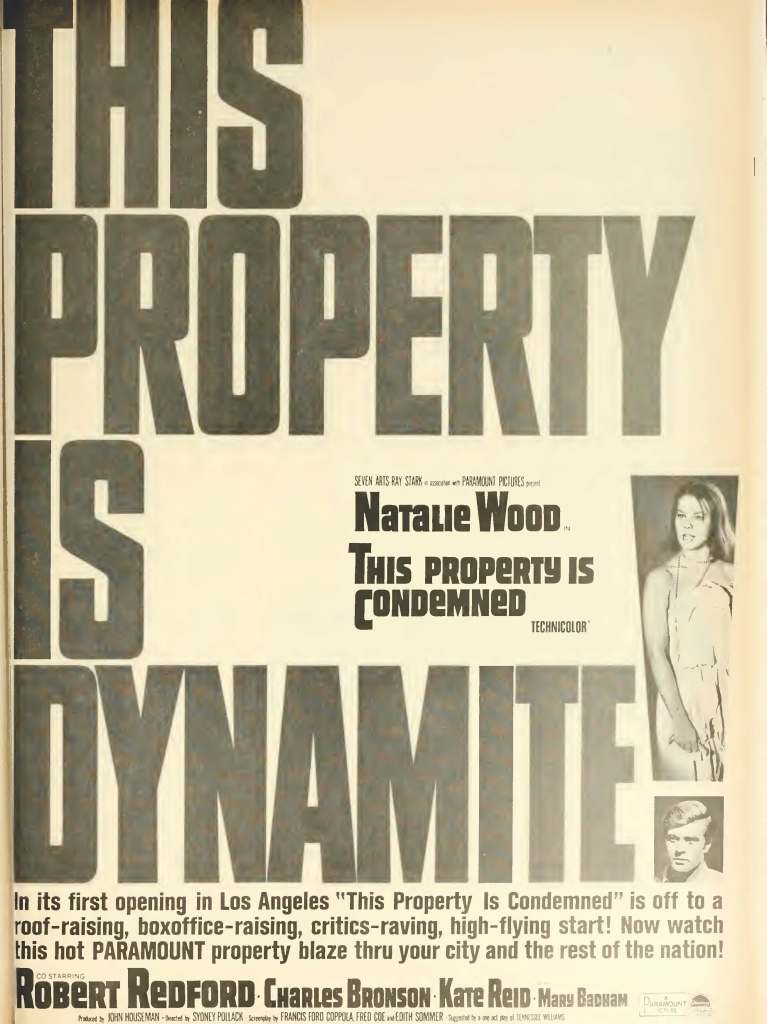
Added to the list of dubious stars was Natalie Wood whose career was considered to be in such jeopardy that she had not made picture in two years. Small wonder after dramas Inside Daisy Clover (1965) and This Property Is Condemned (1966) and crime caper Penelope (1966) which averaged $2.2 million.

Whether anybody’s career could be resuscitated after these disasters was anybody’s guess.

Strangely enough, some did regain at least a measure of their former glory, Marlon Brando the obvious example after The Godfather (1972). James Garner had his biggest-ever hit with Support Your Local Sheriff (1969). Tony Curtis revived his fanbase with The Boston Strangler (1968). William Holden returned to favor after the double whammy of The Devil’s Brigade (1968) and The Wild Bunch (1969). Natalie Wood hit the spot in Bob and Carol and Ted and Alice (1969) and Yul Brynner as a robotic gunslinger turned his career around in Westworld (1973).

But Glenn Ford’s career was coming to an end and Anthony Quinn followed up this bunch of flops with two more of the same ilk in the Shoes of the Fisherman (1968) and The Magus (1968) although he would still be offered starring roles for more than a decade.

Of course, luckily, decades on, we are not so much guided by the box office various films had and many pictures that were once dubbed flops are now being re-evaluated by a new generation of film fans.

SOURCE: Lee Beaupre, “Rising Skepticism on Stars,” Variety, May 15, 1968, p1

Discover WordPress

A daily selection of the best content published on WordPress, collected for you by humans who love to read.

The Atavist Magazine

by Brian Hannan

WordPress.com News

The latest news on WordPress.com and the WordPress community.