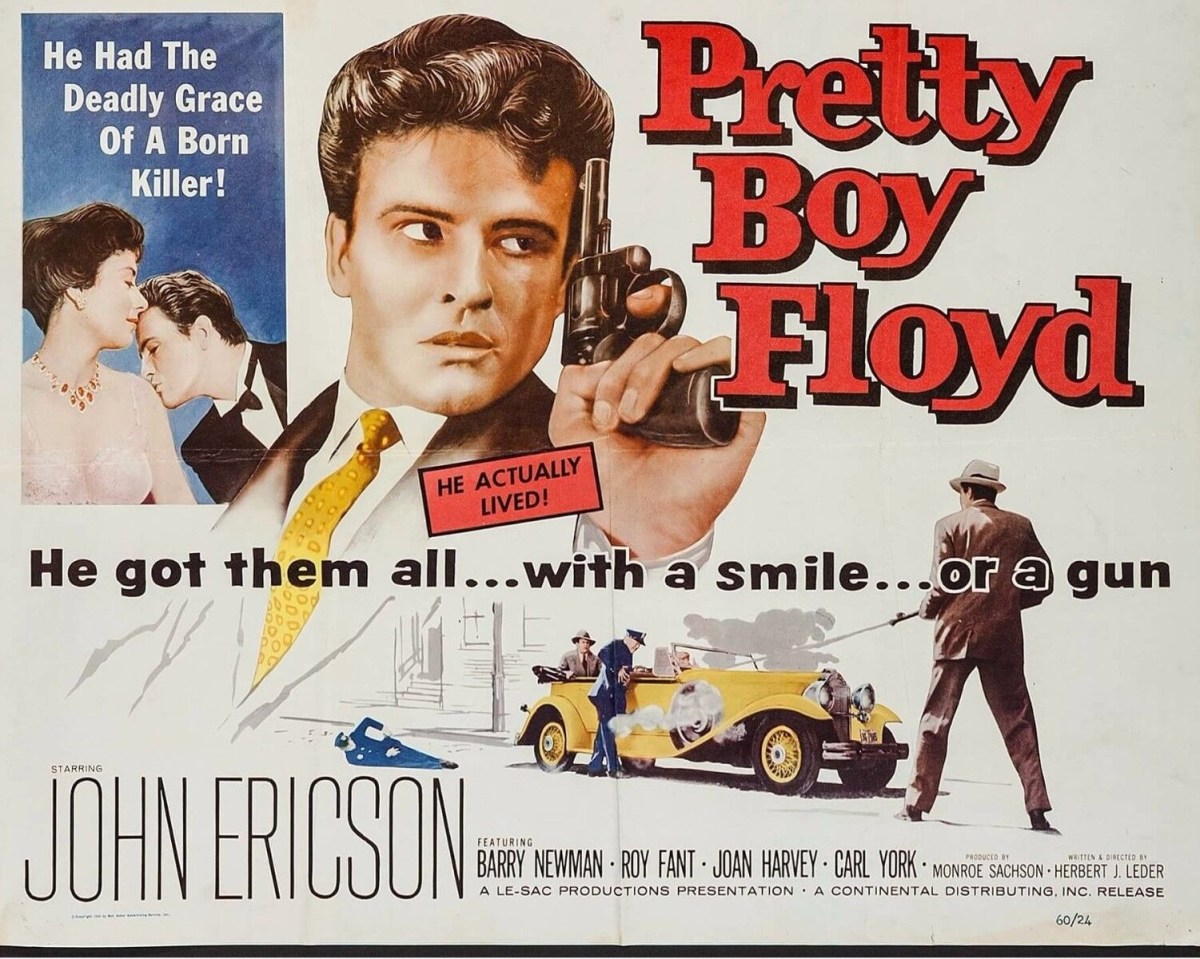
Pretty Boy Floyd (1960) ***

The makers of Oppenheimer (2023) and Napoleon (2023) cast light on the major problem of a biopic – what to leave out. Here, no such problem was actually countenanced. Hell, they just threw everything in – some job given the lean running time. That does mean, however, some mighty info dumps, as we are filled in on the gangster’s past and present. Not much of his life goes unturned.

There was a spate of gangster pictures around the turn of the decade. The success of Machine Gun Kelly (1958) starring Charles Bronson, The Bonnie Parker Story (1958) and Al Capone (1959) spurred a hot lead deluge the following year including Murder Inc (Lepke), Ma Barker’s Killer Brood, Pay or Die, The Rise and Fall of Legs Diamond and Pretty Boy Floyd. In 1961 came Mad Dog Coll, Portrait of a Mobster (Dutch Schulz) and King of the Roaring 20s (Arnold Rothstein).
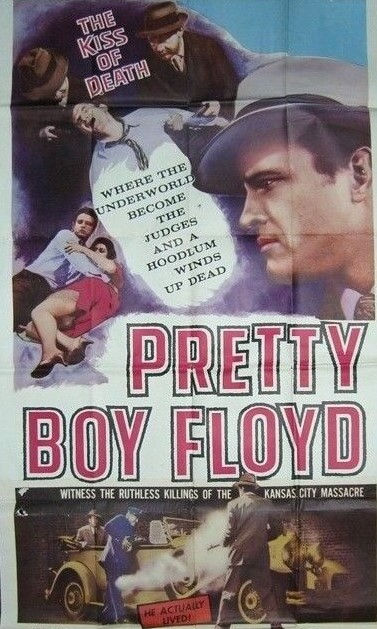
But if you thought this would lead to a noir revival, think again. Nobody would give finesse the time of day. Not with so many facts to pack in. And to explain – love of power and ambition the only psychological insight available – why of all the millions of Americans brought to their knees by the Great Depression Floyd was one of the few who turned to violent crime. His own saving grace – if it can be called that, given the length of the murder sheet – is his Robin Hood-ism, he gives way a lot of his stolen loot

We pick up Pretty Boy Floyd (John Ericson) towards the end of his short-lived boxing career – by which time he’s already been sent away for five years by Sheriff Blackie (Jason Evers), annoyed the gangster had taken up with his sister. Floyd now beats up the husband of his lover, works on the oil rigs but loses his job for concealing his criminal record. Returning to Oklahoma, he discovers his father has just been shot by a character called Grindon, who got away with the crime.
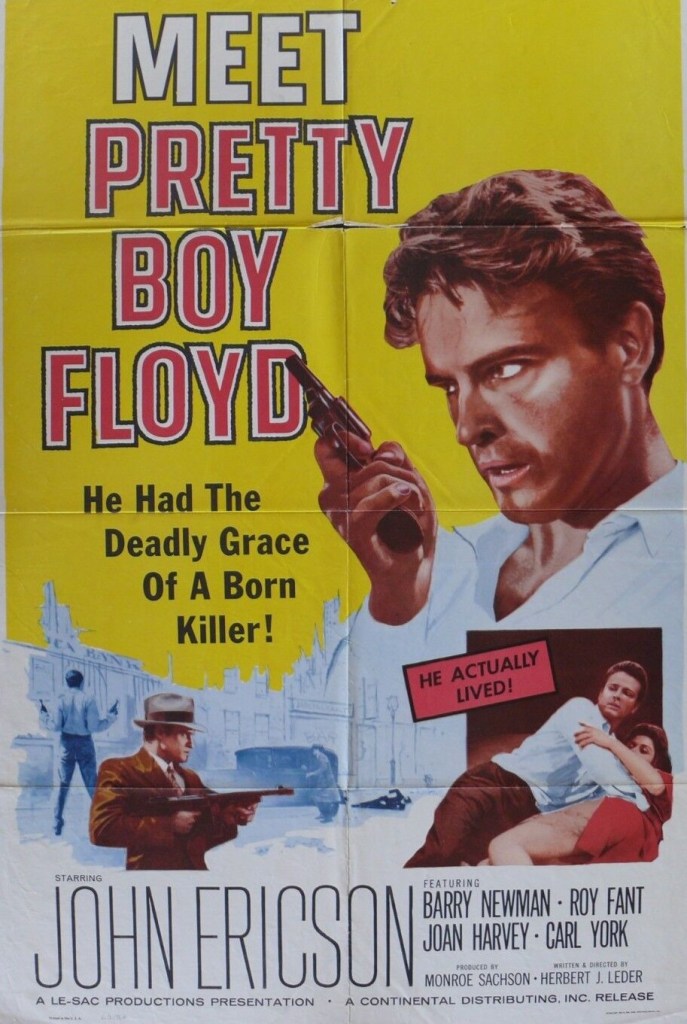
He tries to go straight but is turned down for a loan by the bank. He locates Grindon and ices him. Partnering with hood Shorty Walters (Peter Falk), he enters the bank-robbing business, but Shorty’s loud mouth gets them caught. On the way to prison, they escape and rob the bank that refused him a loan.

He heads for Kansas City because until the FBI came along you could commit a crime in one state and vanish over the border to another knowing you were out of the original jurisdiction and couldn’t be tracked down. He finds another married woman, Lil Courtney (Joan Harvey), to romance, but the husband wants to turn him in for the reward, by now substantial. Returning to Oklahoma and teaming up with the vulnerable childhood pal Curly (Carl York), he gets into his stride, robbing a bank every two weeks.

You get the picture. This is biopic at full throttle. Every “I” is dotted and every “t” is crossed and still we don’t get any real idea what made him tick beyond he was as mad as hell and wasn’t going to take it anymore. I could have got all of this from a book.

The one ace fact I learned was where the term “kiss of death” comes from. Apparently, if you committed a crime against the mob – such as killing someone you were paid to rescue – you were put on trial before three Mob guys. The verdict had to be unanimous and was decided thus: a gun was passed between the three men, if each of them picked up the pistol and kissed it you were a dead duck.

The problem with all the gangster pictures is they all end the same way. Nobody is long for this world and nobody can evade justice.

This is straightforward stuff, shot on a tiny budget, and except for the info dumps and pausing here and there for a spot of philosophy/psychology or sympathy, tears along at a fair old pace. That’s very much on the plus side. On the minus side is the lack of depth and you would have to say lack of acting.

It’s not much of a stretch for John Ericson (The Money Jungle, 1967) to look mean, but he’s closer to James Dean than Charles Bronson. Peter Falk (Machine Gun McCain, 1969) is generally perceived as the standout but my money is on Barry Newman (Vanishing Point, 1970) as Floyd’s trainer and later criminal partner. Shame Joan Harvey (Hand of Night, 1962) only made three pictures, as she excels in a small part.  

The whizz-bang approach from writer-director Herbert J. Leder (It!, 1967) ensures that, like Napoleon, you need Google open to check out the flood of names racing towards you. You might be baffled and confused, but never bored.

Worth it for the “kiss of death.”
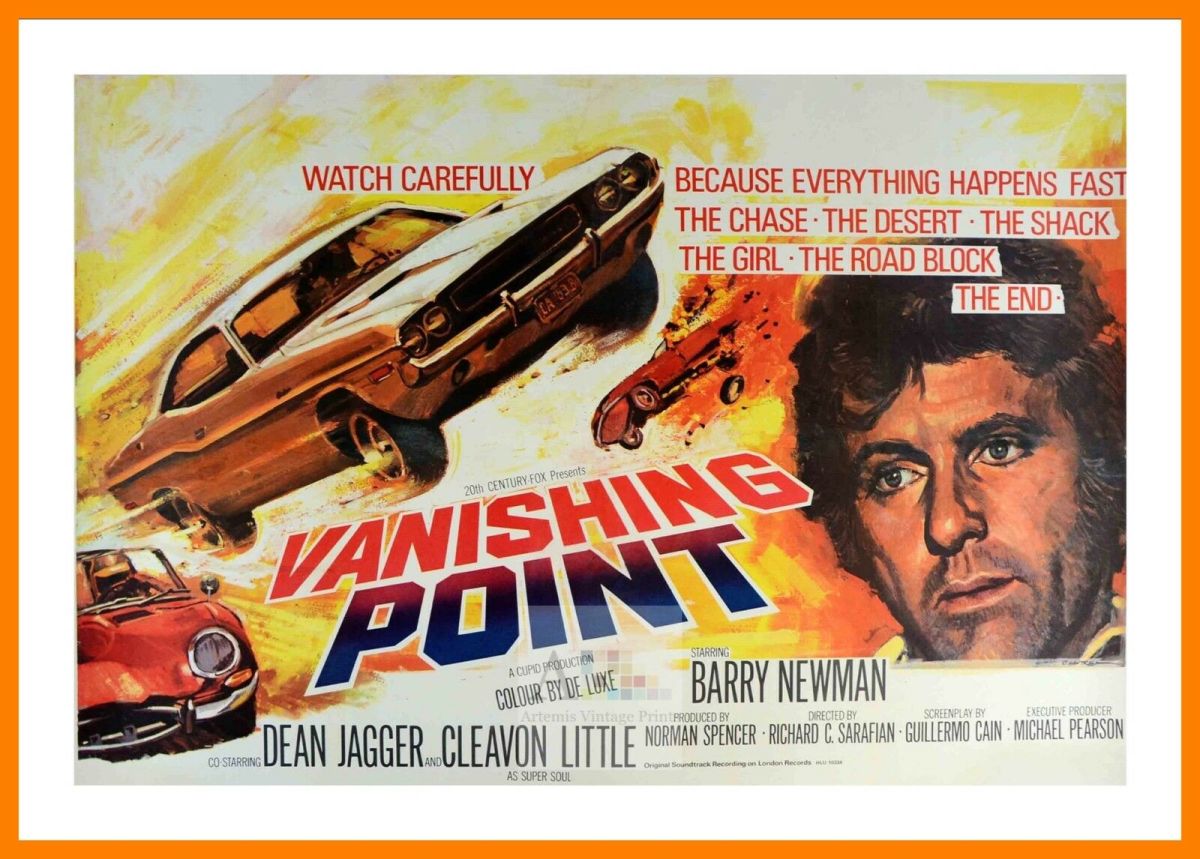
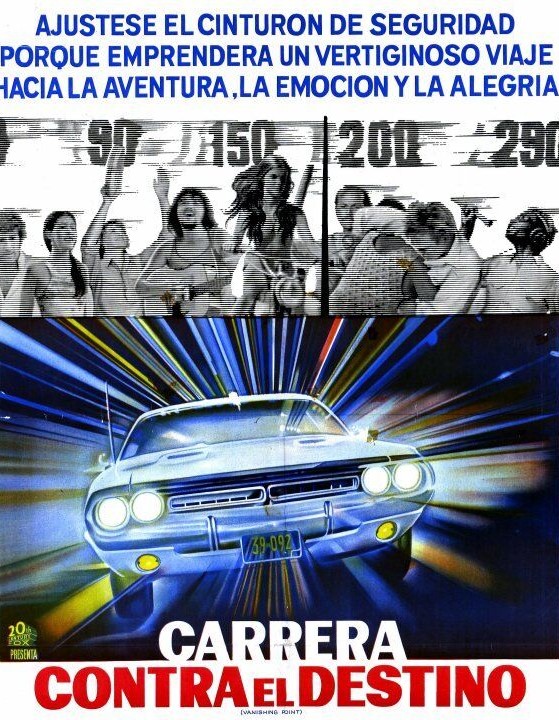
Vanishing Point (1971) *****

There always was an existential element to speed. Destination was another symbolic aspect. A “vanishing point” has an artistic meaning; relating to perspective it’s the place where parallel lines cross. But it also means something so diminished as to be unimportant, and you could argue this movie is a place where the figurative and metaphorical collide. Throw in a couldn’t-care-less driver and you have all you need for a cult film, a cross between the thoughtful paeon to speed of Easy Rider (1969), Sugarland Express (1974) and the camped-up chase characteristics of the later Smokey and the Bandit (1977).

It has less in common with the city-bound Bullitt (1968) and The French Connection (1971), whose protagonists had the excuse of being on the right side of the law. And where Easy Rider is majestically scenic, the route here is through Backwater U.S.A.

With a little bit more planning, Kowalski (Barry Newman), tasked with delivering a car from Denver, Colorado, to San Francisco, could easily have driven the 1250 miles (see Note) roughly within the 16.5-hour deadline he set himself – and very easily within the target set by his employer – without breaking the law. But he’s got no intention of easing his foot off the accelerator. Instead of pulling over, he sends the first pair of speed cops into the ditch.

And that sets the tone. Countless cops set out to stop him, countless cops are driven off the road, the authorities increasingly infuriated by constant humiliation. Kowalski is helped by blind DJ Super Soul (Cleavon Little), who has infiltrated police radio, and whoops up public support.

Director Richard C. Sarafian could have hit the existential mother lode by making Kowalski mysterious, akin to the western’s anonymous lone rider, or to a contemporary audience “the last American hero.” Or he could have dressed him up in more contemporary colors. But instead of being a long-haired drugged-up sex-mad hippie, he’s a decorated war vet, a stock car racer and a cop who exposed corruption and prevented a colleague raping a young girl. Unlike the drug peddlers of Easy Rider or the hostage-takers of Sugarland Express, he doesn’t start out as a law-breaker (setting aside his intake of Benzedrine) and the most he’ll be charged with is a misdemeanor.

Apart from a desire for the freedom of the open road untrammelled by petty rules, we don’t get much of an idea why Kowalski is so intent on risking his life, beyond a hint that an idyllic loved-up beach lifestyle had been shattered. There’s a fatalism that Ridley Scott ripped off for Thelma and Louise (1991).

The awe-inspiring driving across arid country is interrupted by episodes uncovering the underside of the American Dream and the nascent counter-culture. He is almost robbed by a couple of gay hitchhikers, encounters an old man (Dean Jagger) living off the land, trapping rattlesnakes and trading them for supplies, and a youth-oriented revivalist group who make music their mantra. He turns down free sex and marijuana offered by a beautiful nude motorcycle rider (Gilda Texter) while her boyfriend (Timothy Scott), with a stolen police siren, guides Kowalski through roadblocks.

Mostly, though, the focus is on the driving. Kowalski’s white 1970 Dodge Challenger R/T 440 Magnum, souped-up to reach 160 mph, leaves a Jaguar E-Type in the dust, and makes a mockery of the succession of wannabe cop speedsters.

He can leap over gaps, race off-road, charge through the desert, hide from pursuing helicopters, and could probably have hidden out till the heat died down except his blood is up and his eyes are starting to glaze over and he’s got a peculiar smile on his lips.  

Even on a small screen the full-throttle driving hits the spot. But it scores on many other emotional and intellectual levels. It strikes a chord with the disaffected. It’s the ultimate in defiance of authority, innate skills belittling superior forces. The fastest man will always have an audience rooting for him. If you can’t win, choosing how this will end means you remain in control. Speed puts a man in the zone, where you are reduced to an essence of being.

On paper, this should hardly work at all. In the hands of director Richard C. Safarian (Fragment of Fear, 1970) it works like a dream. Barry Newman (The Lawyer, 1970) is superb with very little to go on, nothing but a buttoned-up driving machine. Cleavon Little (Blazing Saddles, 1974) on the other hand goes nuclear as the hippest of the hip disc jockeys. Oscar-winning Dean Jagger (Firecreek, 1968) makes his mark and you might like to know Gilda Texter went on to become a successful costume designer. Depending on what version (not the one I caught) you see, you’ll get a glimpse of Charlotte Rampling (Three,1969).

Stone cold classic. Gets the adrenaline going, but leaves you thoughtful.

The DVD is worth buying just for Sarafian’s commentary.

NOTE: That’s according to Google. Though estimates vary. One reference puts it at 15 hours of non-stop driving, another between 19 and 22 hours. Without breaking the speed limit of 70mph and allowing for not hitting any big cities necessitating curbing your speed, I reckoned he would only cover 1150 miles within his deadline but there are clearly plenty stretches of remote road where you would be able to crank up your speed without any bother. It’s noticeable that Kowalski sets off during the night but we never see him doing any night-time driving, he only attracts the attention of the cops during the day.

Discover WordPress

A daily selection of the best content published on WordPress, collected for you by humans who love to read.

The Atavist Magazine

by Brian Hannan

WordPress.com News

The latest news on WordPress.com and the WordPress community.