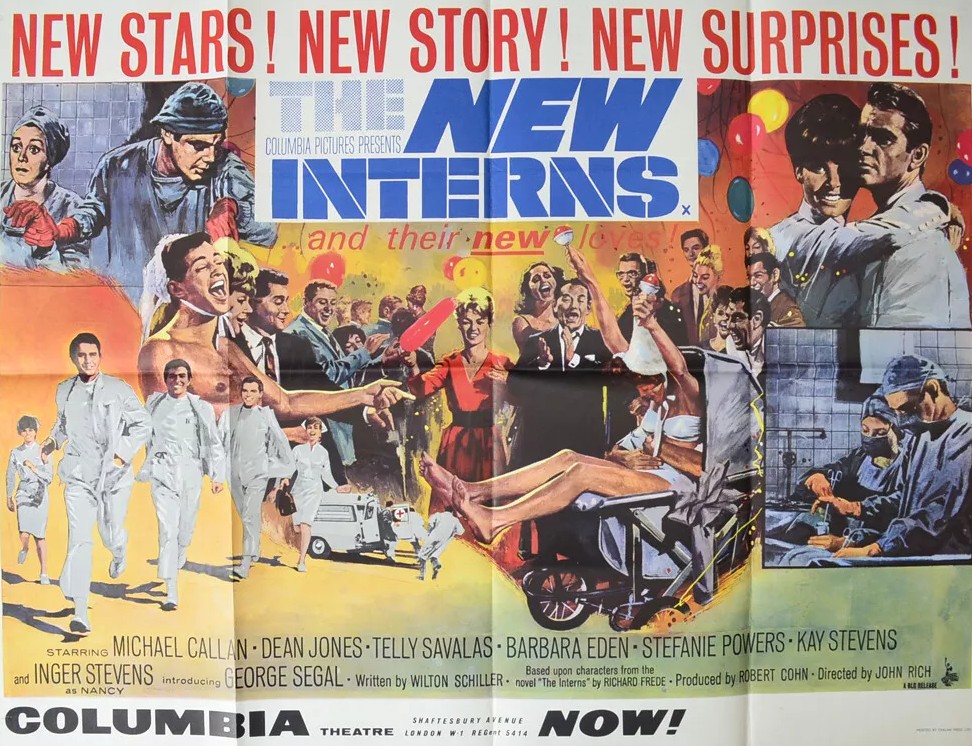
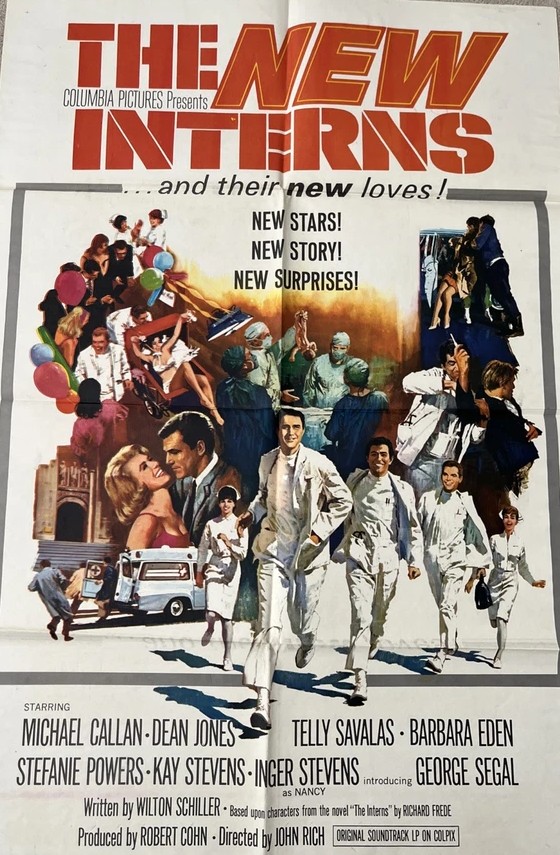
Columbia had turned this series into a glorified New Talent Contest. It didn’t spend much cash buffing up the sequel in terms of narrative or characters, so it’s mostly enjoyable to see just how well the studio was at spotting talent. In that regard this outing was as profitable as the original. This marked the debut of George Segal (The Quiller Memorandum, 1966) who quickly became a major marquee name. Also brought into the mainstream was Inger Stevens (Five Card Stud, 1968). Receiving a welcome career boost was rising star Dean Jones, though Disney (The Love Bug, 1967) rather than Columbia took better advantage of his skills, and in the comedic rather than the dramatic vein.
Various stars reprised their roles including top-billed Michael Callan (You Must Be Joking, 1965), signed up to a long-term deal. But most of the others in this category made their names through television. Telly Savalas (The Assassination Bureau, 1969) was the cop Kojak (1973-1978); Stefanie Powers (Warning Shot, 1967) flourished as The Girl from U.N.C.L.E. (1966-1967) and in Hart to Hart (1979-1984); and Barbara Eden went quickly into I Dream of Jeannie (1965-1970).
The upshot is that, depending on your taste, you might end up talent spotting yourself, shrieking with glee at spotting an old favorite, or perhaps so many of them, in what was, effectively, an all-star (of the minor kind) cast and paying less attention to the various storylines.
Most of the narrative energy revolves around various characters coming together in romantic entanglement – Dr Alec Considine (Michael Callan), while more inclined to play the field, ends up with Nurse Laura Rogers (Barbara Eden); despite initially being at odds Dr Tony Pirelli (George Segal) and social worker Nancy Terman (Inger Stevens) hook up; and various other romances are short-lived.
Outside of this, newlyweds Dr Lew Worship (Dean Jones) and wife Gloria (Stefanie Powers) discover he is sterile. The more powerful sequence relates to Nancy being sexually assaulted by juvenile delinquents who grew up in the same tough neighbourhood as Tony. As you might expect, the thugs end up in hospital and cause a fracas in which Alec is injured.
Tony has all the best lines. Invited to chance his arm with the nurses, he snaps that he didn’t come to the hospital to “learn to kiss.” Pushed out of the way by resident Dr Riccio (Telly Savalas) he retorts that he didn’t come to deliver messages. And so on, the most driven of the new intake, and the most surly, his initial encounter with Nancy has him upbraiding her for crying in front of a patient.
Decent soap opera as soap operas go, but without the more challenging aspects of the original. In an era when the series movie was beginning to take shape – primarily in the espionage arena – you can see why Columbia thought this might run and run and eventually the studio had another go at the concept, but this time as a television series.
Directed by John Rich (Boeing, Boeing, 1965) and written by big screen debutant Wilton Schiller from the bestseller by Richard Frede.
As difficult as it was to guess which films would hit the box office target and which would turn into irredeemable flops, Hollywood studios and exhibitors stewed as much over the potential of the next generation of stars. This was an era when talent schools still existed, youngsters taken on at modest wages and provided with both standard acting lessons and other important elements of movie education such as riding a horse or sword-fighting as well as breaking in the actors and actresses with small roles. They would be given progressively larger roles until they emerged, hopefully, as genuine candidates for box office glory.
Of course, the studios had their own ideas which of their youngsters was likely to make the grade, the most obvious marker being the types of parts they were handed, but exhibitors helped the process along by taking part in an annual survey organized by trade paper Box Office.
So I’ve chosen a year – 1965, midway through the decade – at random to see how many of the new generation of stars made the grade. According to the Box Office survey the top six males (in order) were Peter Fonda, Robert Walker Jr, Patrick Wayne, Keir Dullea, Doug McClure and Tommy Sands. The top six females were: Patty Duke, Stefanie Power, Nancy Sinatra, Rita Tushingham, Rosemary Forsyth and Barbara Eden.
You can see from the list that a recognizable name goes a long way, a full one-third of the candidates blessed with a father with a famous name, Peter the son of Henry Fonda, Patrick the son of John Wayne, Nancy the daughter of Frank Sinatra. Robert Walker had never been in that elite class but it appeared his name was still strong enough for his son to capture public attention.
What exactly a rising star embodied appeared to be in the eye of the beholder. Some of the stars already had a decent portfolio, others not so much. (The survey was published in early 1966 so I assuming it took into account acting performances up to the end of 1965.)
On acting talent alone the front runners should have been Rita Tushingham, Patty Duke and Keir Dullea. Britisher Tushingham had won Best Actress at Cannes for A Taste of Honey (1961) and was tipped for a Bafta for The Knack (1965) – she did in fact win. In both films she was top-billed and again for The Trap (1966). Patty Duke had won an Oscar for The Miracle Worker (1962) and been top-billed in Billie (1965) but her popularity surge was largely thanks to her eponymous television show which ran from 1963 to 1966.
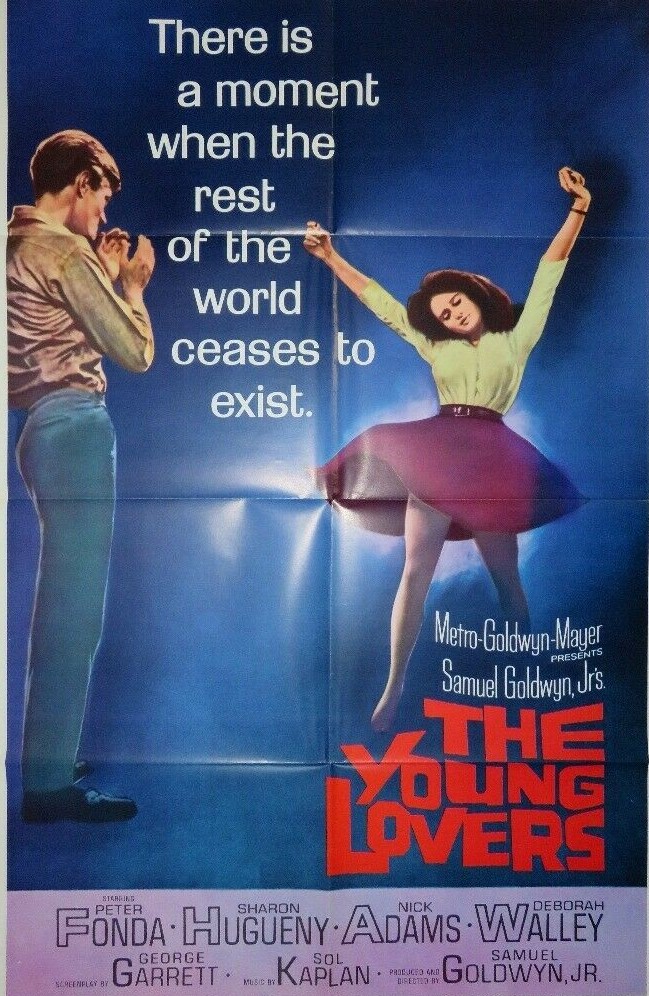
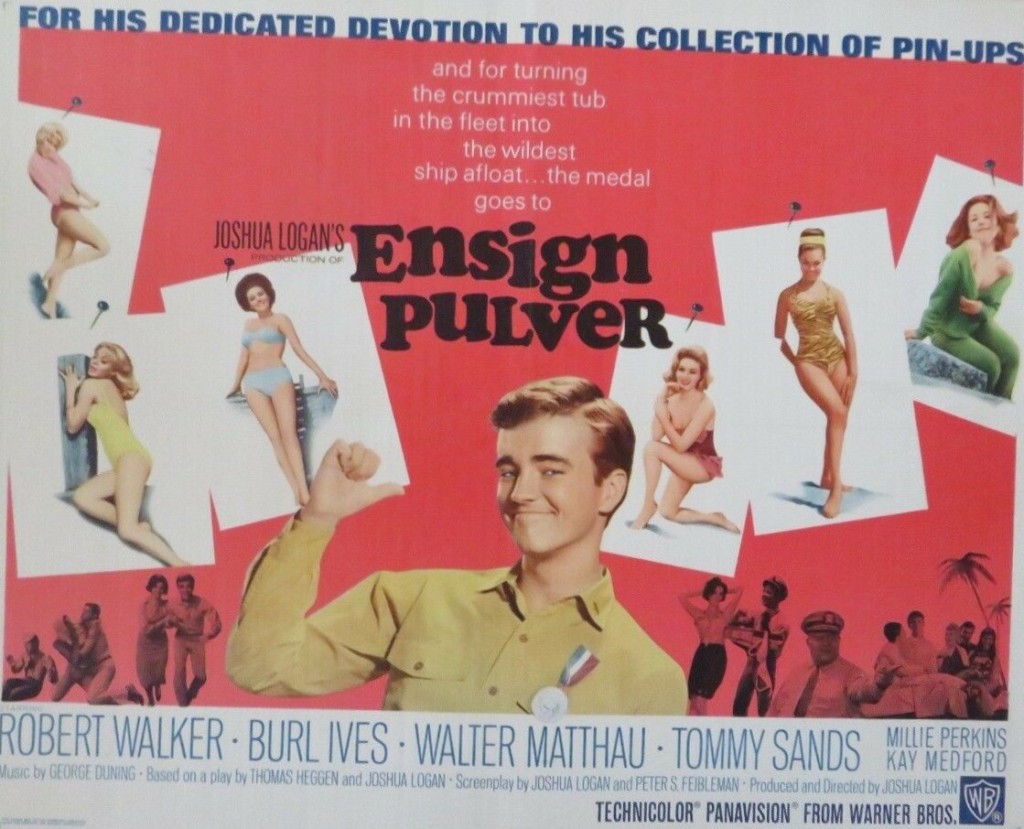
Since starring in David and Lisa (1962). Dullea’s career appeared jeopardized by offbeat choices, The Thin Red Line (1964) and The Naked Hours (1964), in both top-billed, before sliding down the credit rankings for Otto Preminger’s Bunny Lake Is Missing (1965). Peter Fonda appeared to be heading for success as a romantic star after appearing in fluff like Tammy and the Doctor (1963) and his first top-billed role in The Young Lovers (1964). Robert Walker Jr, top-billed in Ensign Pulver (1964), had followed this up with Italian oddity The Touching and Not Touching (1965) thus demonstrating versatility.
Stefanie Powers was clearly a rising star, smaller roles in The New Interns (1964) and Love Has Many Faces (1965) had led to second-billing in Die! Die! My Darling (1965) and her forthcoming role in Stagecoach was expected to solidify her mainstream career. Barbara Eden was dependent on television for her high placing, after I Dream of Jeannie kicked off in 1965. Most heavily dependent on nepotism were Patrick Wayne and Nancy Sinatra. Wayne was by far the least proven, riding very much on his father’s coat-tails, but fourth-billed in Shenandoah (1965) and a leading role in television series The Rounders which had kicked off in 1966. Sinatra was the longest shot, just bit parts so far.
Television’s The Virginian had been the launch pad for Doug McClure but he had since ventured out into Shenandoah (1965) and Beau Geste (1966), second-billed each time. Apart from his reputation as a singer, it’s hard to see why Tommy Sands ended up so favored, with just a couple of bit parts to his name. But you could see why Rosemary Forsyth, after the female lead in The War Lord (1965) was attracting industry attention.
So what happened to the prospects? Were the talent-spotters proved right? As you might expect, yes and no is the answer.
Keir Dullea and Peter Fonda proved the standouts. Dullea followed the offbeat The Fox (1967) with the big-budget big hit 2001: A Space Odyssey (1968). Fonda quickly transitioned to The Wild Angels (1966) and starred in the decade’s most unexpected hit, Easy Rider (1969), and long-term was easily the most successful graduate of the Class of ’66.
Patty Duke was second-billed in big hit Valley of the Dolls (1967) and won outright top billing for Me, Natalie (1968). After The Wild Angels (1966) Nancy Sinatra became a pop star in her own right before sharing the billing with Elvis Presley in Speedway (1968) but that was the highlight of her movie career. Patrick Wayne took longest to find his feet but snagged several top-billed roles, mostly leading with his chin in fantasy pictures such as Beyond Atlantis (1973), The People That Time Forgot (1977) and Sinbad and the Eye of the Tiger (1977). Rita Tushingham starred in a string of films including The Trap (1966) Smashing Time (1968), The Guru (1969) and The Bed Sitting Room (1969) that failed to click with U.S. mainstream audiences.
Doug McClure was second-billed in Beau Geste (1966) and top-billed for swashbuckler The King’s Pirate (1967) and comedy Nobody’s Perfect (1968) before drifting back into television to emerge years later as a credible top-billed star of Hellhounds of Alaska (1973), The Land Time Forgot (1974) and At The Earth’s Core (1976). Stefanie Powers only managed top-billing for Crescendo (1970) and had to wait over a decade to realize her potential, and then in television show Hart to Hart (1979-1984).
Roy Walker Jr.’s career never took off, his biggest success as Young Billy Young (1969) was a flop. Rosemary Forsyth got as high as leading lady on Texas Across the River (1966) and Where It’s At (1967) but then drifted down the credits into the ranks of supporting players. Barbara Eden only managed a few television movies. Tommy Sands’ movie career died the death except for third billing in biker picture The Violent Ones (1967).
Screenwriter William Goldman coined the phrase “nobody knows anything” in relation to movies but it might equally apply to industry expectation of hot prospects, some of whom crashed and burned, and some never were even hot.
SOURCE: “12 most popular players of ’65,” Box Office, February 28, 1966, p76-77.


 The Magnificent 60s